Skip to content
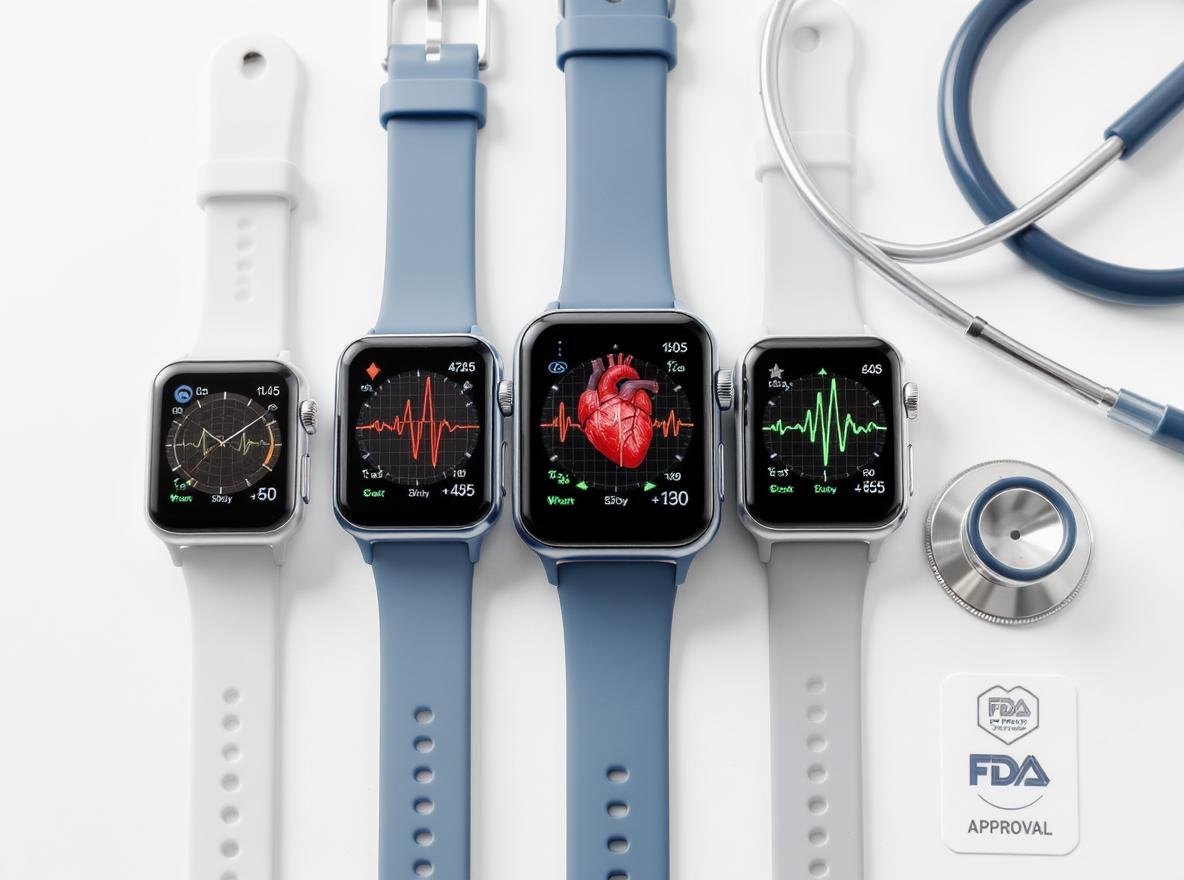
Heart health monitoring has revolutionized wearable technology, creating unprecedented wholesale opportunities. If you’re sourcing smartwatches with reliable ECG capabilities for your business, understanding FDA clearance is crucial for making informed decisions that protect your reputation and satisfy health-conscious customers.
Currently, several major smartwatch brands offer FDA-cleared ECG functions, including Apple Watch Series 4-10 and Ultra models, Samsung Galaxy Watch Active2/3/6 series, Withings ScanWatch and ScanWatch 2, Fitbit Sense models, and Garmin Venu 2 Plus with expanding availability. These devices achieved FDA 510(k) clearance for atrial fibrillation detection with clinical-grade accuracy ranging from 83-99% sensitivity.
Understanding FDA clearance differences and clinical validation helps wholesale buyers make strategic inventory decisions in this rapidly growing market.
What Does FDA Clearance Mean for ECG Smartwatches?
FDA clearance provides the regulatory foundation that separates legitimate medical devices from fitness accessories.
FDA clearance for ECG smartwatches means the device obtained 510(k) premarket notification approval, classifying it as a Class II medical device substantially equivalent to existing approved devices. This clearance authorizes over-the-counter use for adults 22+ years old to detect atrial fibrillation and normal sinus rhythm, though it cannot replace professional medical diagnosis.
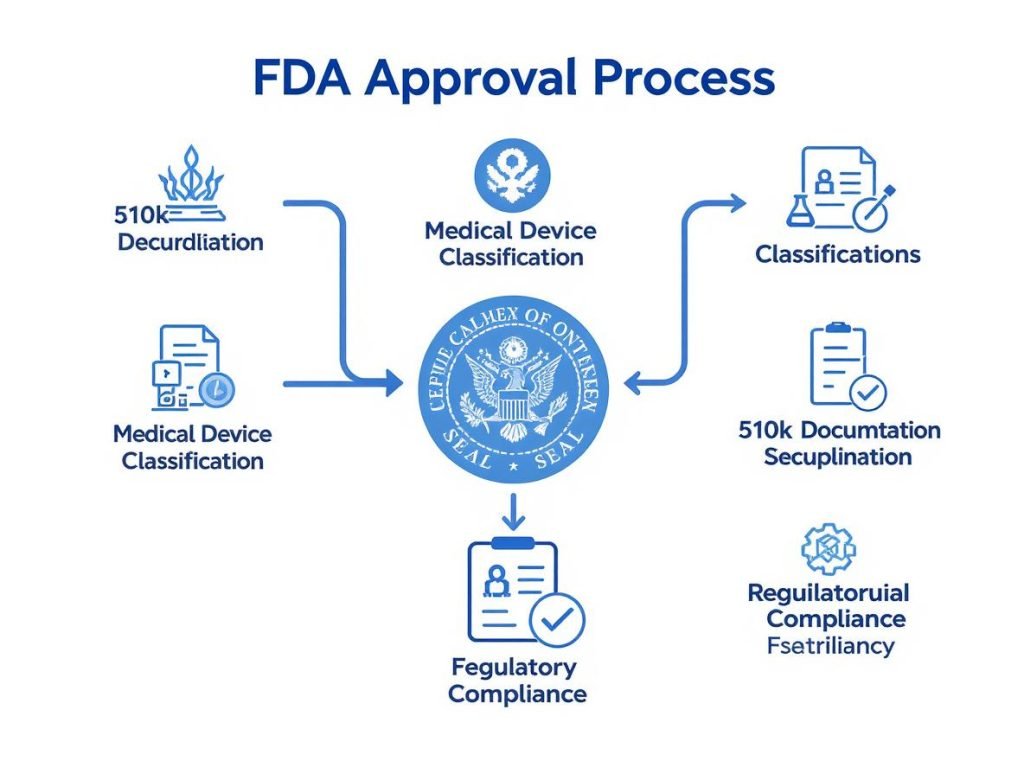
The 510(k) clearance process requires extensive clinical validation and safety testing. Unlike full FDA approval, clearance demonstrates the device poses similar risks and benefits to predicate devices already on the market. This regulatory pathway has enabled consumer access to medical-grade heart monitoring technology.
Key FDA Clearance Requirements:
- Classification as Class II medical device under 21 CFR 870.2345
- Clinical validation studies proving safety and efficacy
- Specific labeling requirements and medical disclaimers
- Age restrictions (22+ years) and contraindication warnings
Important Limitations for Wholesale Buyers:
- Cannot diagnose heart attacks or other cardiac conditions beyond arrhythmias
- Not recommended for users with known arrhythmias other than AFib
- Results require healthcare professional interpretation
- Devices supplement, never replace, traditional diagnostic methods
| Clearance Aspect | Requirement | Business Impact |
|---|---|---|
| Clinical Studies | Sensitivity/specificity validation | Higher wholesale credibility |
| Age Restrictions | 22+ years only | Affects target market size |
| Medical Disclaimers | Required labeling | Legal compliance necessity |
| Professional Consultation | Results need physician review | Educational marketing opportunity |
Which Apple Watch Models Have FDA-Cleared ECG?
Apple pioneered consumer ECG technology and maintains the most comprehensive FDA-cleared portfolio.
All Apple Watch models from Series 4 through Series 10, plus Apple Watch Ultra and Ultra 2, feature FDA-cleared ECG functionality. Apple’s ECG app can detect atrial fibrillation with 96-99.5% sensitivity and 91-99% specificity in clinical studies, making it the most clinically validated consumer ECG platform.
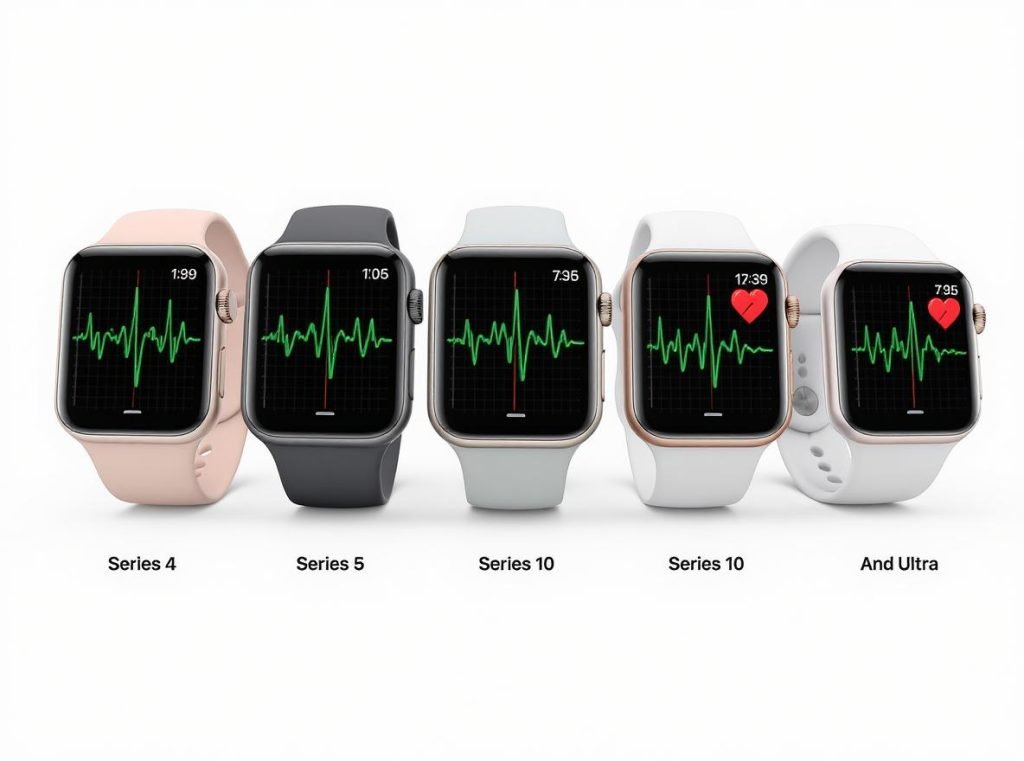
Apple received initial FDA clearance in September 2018 for the Series 4, becoming the first smartwatch manufacturer to achieve this milestone. The company has continuously refined their ECG technology across subsequent generations while maintaining regulatory compliance.
Apple’s ECG Implementation Advantages:
Apple’s single-lead ECG creates medical-grade readings in 30 seconds by having users place their finger on the Digital Crown. The technology has achieved additional recognition beyond basic FDA clearance, with the Apple Watch AFib History feature becoming the first digital health tool qualified under the FDA’s Medical Device Development Tools (MDDT) program in 2024.
Clinical Validation Results:
Multiple peer-reviewed studies demonstrate Apple Watch ECG accuracy exceeding traditional screening methods. The device shows particularly strong performance in real-world conditions, maintaining high sensitivity even with user movement and varying skin conditions.
Wholesale Considerations:
- Premium pricing but strong brand recognition globally
- Extensive clinical validation supports marketing claims
- Regular software updates maintain regulatory compliance
- Integration with Apple Health ecosystem drives customer loyalty
Apple Watch models command higher wholesale prices but offer proven medical credibility that health-conscious customers trust, making them excellent choices for premium market segments.
What Samsung Galaxy Watch Models Include FDA-Cleared ECG?
Samsung has systematically expanded ECG functionality across their Galaxy Watch ecosystem with impressive clinical results.
Samsung Galaxy Watch Active2, Galaxy Watch 3, Galaxy Watch 6, Galaxy Watch 6 Classic, and the new Galaxy Watch Ultra all feature FDA-cleared ECG monitoring. Samsung achieved 98% sensitivity and 96% specificity in clinical validation studies, with additional FDA clearance for Irregular Heart Rhythm Notifications (IHRN) providing passive background monitoring.
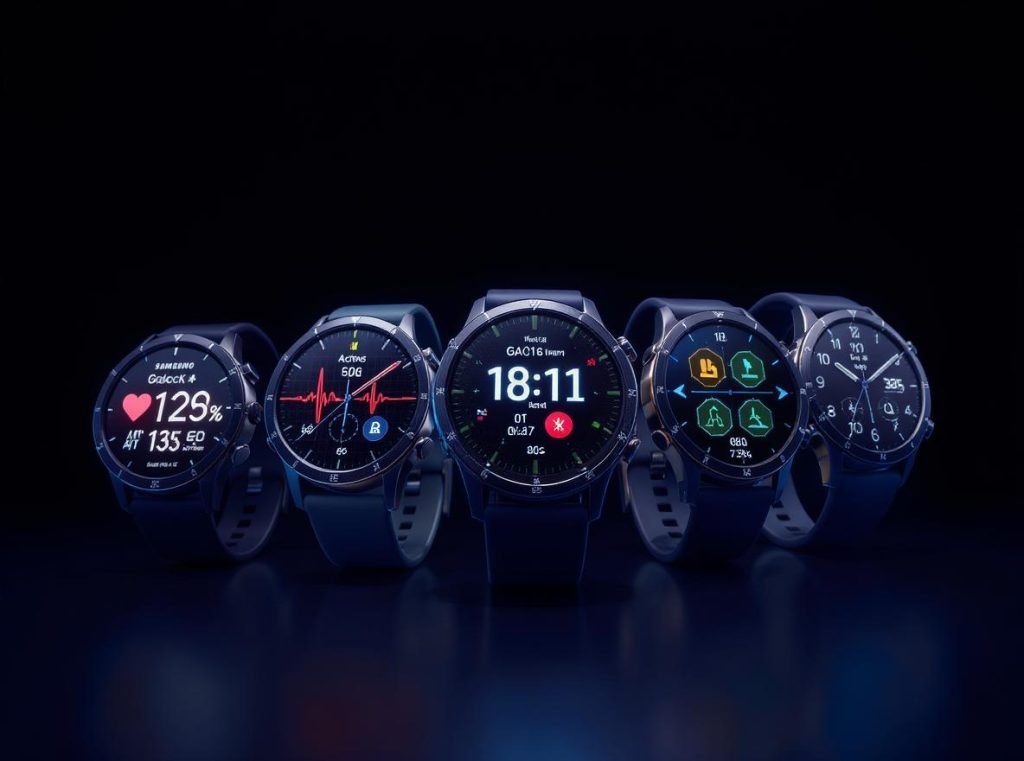
Samsung received FDA clearance for ECG functionality in 2020 and expanded capabilities with IHRN approval in 2023. This dual clearance allows both on-demand ECG readings and continuous background arrhythmia detection, providing comprehensive heart health monitoring.
Samsung’s Technical Implementation:
The Galaxy Watch series uses BioActive Sensor technology integrated with the Samsung Health Monitor app. Users can perform 30-second ECG readings and receive immediate results, with all data syncing to create comprehensive health records.
Key Features for Wholesale Markets:
Advanced Detection Capabilities:
- On-demand ECG readings with immediate classification
- Background irregular rhythm notifications throughout the day
- Integration with Samsung Health ecosystem for comprehensive tracking
- PDF export functionality for medical consultations
Market Positioning Advantages:
- Strong Android ecosystem integration
- Competitive pricing compared to Apple Watch
- Regular feature updates and long-term support
- Global availability with consistent ECG functionality
| Galaxy Watch Model | ECG Features | Additional Health Monitoring |
|---|---|---|
| Galaxy Watch Active2 | FDA-cleared ECG | Blood pressure, SpO2, stress |
| Galaxy Watch 3 | ECG + enhanced sensors | Blood pressure, fall detection |
| Galaxy Watch 6/6 Classic | ECG + IHRN | Body composition, advanced sleep |
| Galaxy Watch Ultra | Latest ECG + IHRN | Extended battery, rugged design |
Does Withings ScanWatch Have FDA-Cleared ECG?
Withings offers a unique approach by focusing specifically on medical-grade health monitoring in hybrid smartwatch designs.
Yes, both Withings ScanWatch and ScanWatch 2 have FDA clearance for ECG monitoring and SpO2 measurement. Withings received FDA clearance in October 2021, with the ScanWatch 2 now featuring an over-the-counter ECG app that eliminates previous medical validation requirements, making ECG functionality immediately accessible to users.
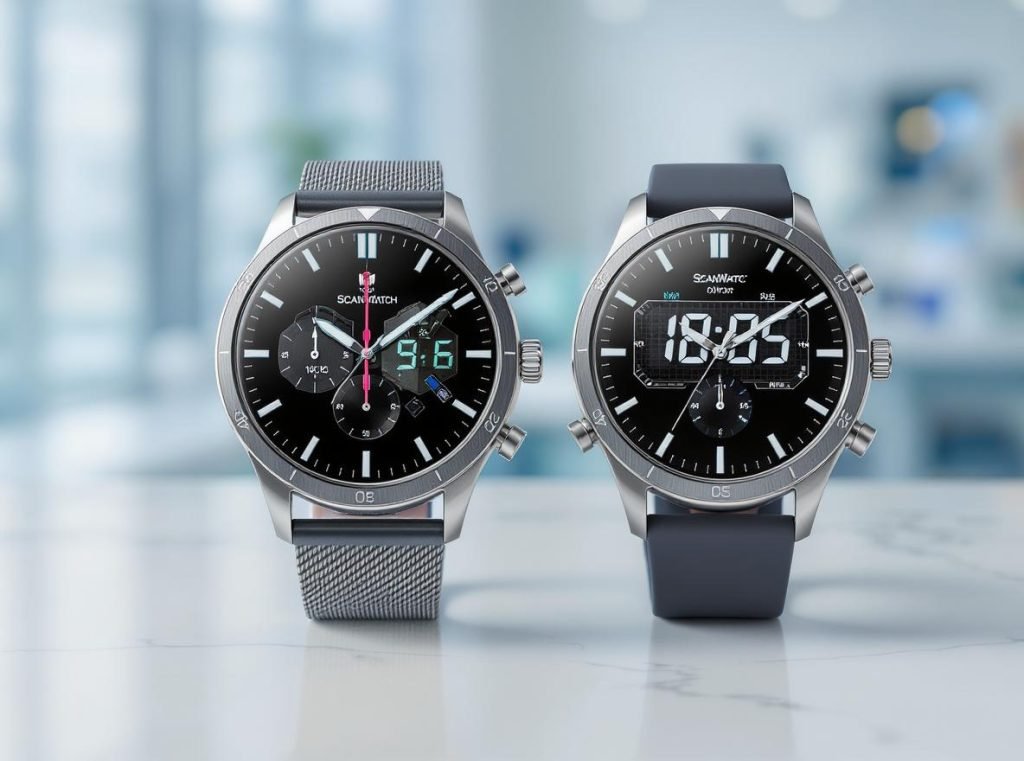
Withings differentiates itself by targeting health-focused consumers who prefer traditional watch aesthetics combined with medical-grade monitoring capabilities. The ScanWatch maintains analog watch appearance while incorporating sophisticated health sensors.
Withings ScanWatch Distinctive Features:
Medical-Grade Focus:
Unlike mainstream smartwatch brands prioritizing entertainment features, Withings designed the ScanWatch specifically for health monitoring. The device achieves medical device accuracy while maintaining up to 30-day battery life, making it ideal for continuous health tracking.
Hybrid Design Benefits:
The ScanWatch combines traditional analog aesthetics with digital health sensors, appealing to users who want medical monitoring without typical “tech” appearance. This design approach targets professional and mature demographics often overlooked by mainstream smartwatch brands.
Clinical Integration:
- Single-lead ECG recording in 30 seconds
- Atrial fibrillation detection with clinical accuracy
- Sleep apnea monitoring capabilities
- Comprehensive health data export for medical consultations
Wholesale Market Positioning:
For wholesale buyers targeting health-focused or professional markets, Withings offers a premium alternative to mainstream smartwatch brands. The extended battery life and medical focus create strong differentiation in crowded wearable markets.
Are There Other FDA-Cleared ECG Smartwatches Worth Considering?
The ECG smartwatch market extends beyond major brands with several specialized and emerging options offering unique value propositions.
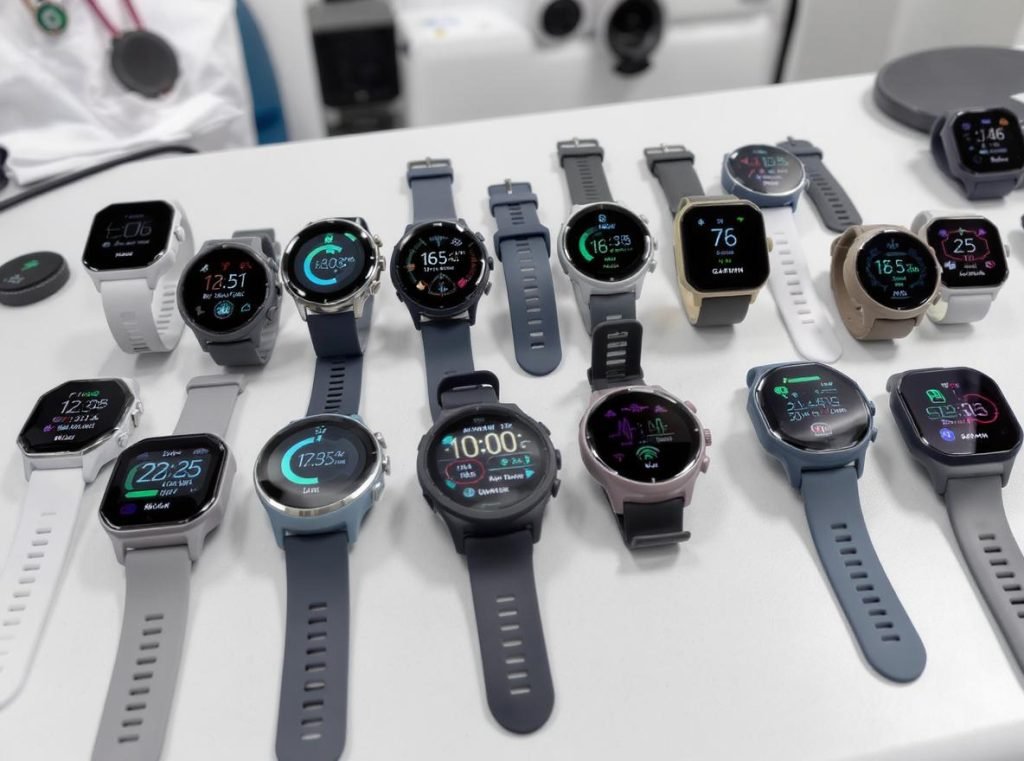
Beyond Apple, Samsung, and Withings, Fitbit Sense models achieved FDA 510(k) clearance with 98.7% AFib detection sensitivity, while Garmin launched FDA-cleared ECG functionality in 2023 starting with Venu 2 Plus and expanding to Venu 3 and Fenix 8 series. Additionally, specialized medical devices like the Masimo W1 received FDA clearance for clinical environments.
Fitbit Sense Series:
Google’s Fitbit Sense and Sense 2 received FDA clearance in 2020, demonstrating exceptional clinical performance with 98.7% sensitivity in detecting atrial fibrillation. The devices integrate with Google’s health ecosystem and offer comprehensive fitness tracking alongside medical-grade ECG monitoring.
Garmin’s Expanding ECG Portfolio:
Garmin launched their first FDA-cleared ECG app in 2023, initially available on the Venu 2 Plus and now expanding across their premium lineup. Garmin’s approach targets serious athletes and outdoor enthusiasts who need medical-grade heart monitoring during intense activities.
Specialized Medical Devices:
Professional Healthcare Applications:
- Masimo W1 Medical Watch: FDA-cleared specifically for hospital and clinical environments
- AliveCor KardiaMobile 6L: FDA-cleared 6-lead ECG monitoring (separate device, not integrated smartwatch)
- Emerging Manufacturers: Several companies claim FDA approval, though verification requires careful scrutiny
| Device Category | Target Market | Key Advantages | Wholesale Considerations |
|---|---|---|---|
| Fitbit Sense | Fitness + Health | Google ecosystem integration | Strong brand recognition |
| Garmin ECG Models | Athletes + Outdoor | Rugged design, sports focus | Premium pricing, niche market |
| Medical Devices | Healthcare Professionals | Clinical-grade accuracy | Higher costs, specialized sales |
| Emerging Brands | Price-conscious consumers | Lower costs, basic features | Verify FDA claims carefully |
What Should Wholesale Buyers Look for in ECG Smartwatches?
Making informed wholesale decisions requires understanding regulatory compliance, technical specifications, and market positioning to protect your business and satisfy customers.
Wholesale buyers should prioritize verified FDA 510(k) clearance numbers, clinical validation studies showing 85%+ sensitivity for AFib detection, companion app functionality, target market alignment, and manufacturer support infrastructure. Focus on established brands with proven regulatory compliance and ongoing software update commitments.

Regulatory Compliance Verification:
Always confirm actual FDA clearance through official databases rather than relying solely on marketing claims. The FDA’s 510(k) database provides clearance numbers, intended use descriptions, and specific device classifications that verify legitimate medical device status.
Technical Specifications to Evaluate:
Clinical Performance Metrics:
- Sensitivity rates for atrial fibrillation detection (target 85%+ based on meta-analysis data)
- Specificity rates to minimize false positives (target 88%+ from clinical studies)
- Validation in diverse population studies
- Real-world performance data beyond controlled clinical trials
Practical Implementation Features:
- Battery life impact during ECG monitoring
- Companion app quality and data export capabilities
- Integration with major health platforms (Apple Health, Google Health, etc.)
- User interface design for medical data interpretation
Market Positioning Strategy:
Target Demographic Analysis:
Different ECG smartwatches serve distinct market segments with varying price sensitivity and feature requirements. Understanding your customer base helps optimize inventory selection and marketing positioning.
Brand Infrastructure Evaluation:
- Customer support availability and quality
- Software update frequency and long-term support commitments
- Warranty terms and service infrastructure
- Training materials and marketing support for retailers
| Evaluation Criteria | Premium Brands (Apple, Samsung) | Emerging Brands | Specialized Medical |
|---|---|---|---|
| FDA Verification | Established clearances | Requires careful verification | Clinical-grade clearances |
| Price Points | $250-$500 | $100-$300 | $400-$800 |
| Target Markets | Mainstream health-conscious | Price-sensitive consumers | Healthcare professionals |
| Support Infrastructure | Comprehensive global support | Variable support quality | Specialized technical support |
How Accurate Are FDA-Cleared ECG Smartwatches?
Understanding accuracy helps wholesale buyers set proper customer expectations and avoid potential liability issues while highlighting genuine medical benefits.
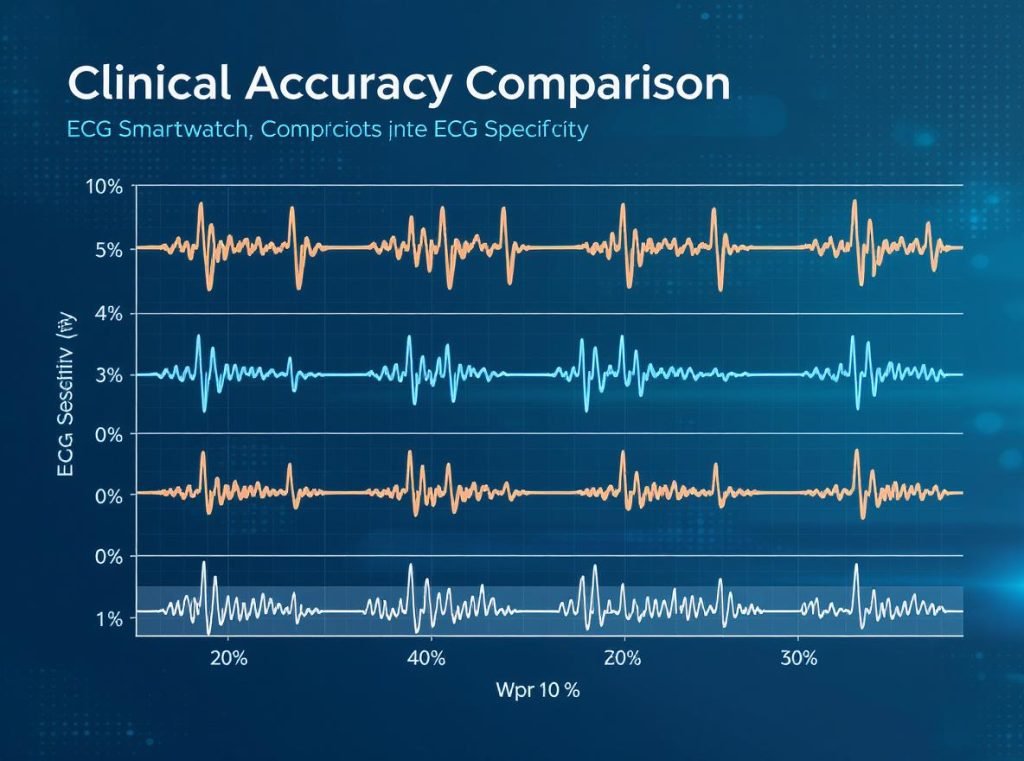
Recent meta-analyses of FDA-cleared ECG smartwatches show pooled sensitivity of 83% and specificity of 88.4% for atrial fibrillation detection, with individual devices achieving higher performance. Apple Watch demonstrates 96-99.5% sensitivity, Samsung Galaxy Watch achieves 98% sensitivity, and Fitbit Sense reaches 98.7% sensitivity in clinical validation studies.
Comprehensive Clinical Performance Data:
A 2024 meta-analysis examining multiple ECG smartwatch studies provides authoritative accuracy benchmarks for the industry. The pooled analysis reveals significant variation between devices and study conditions, emphasizing the importance of selecting clinically validated products.
Individual Device Performance:
Apple Watch consistently shows the highest accuracy rates across multiple independent studies, with sensitivity ranging from 96-99.5% and specificity from 91-99%. Samsung Galaxy Watch demonstrates 98% sensitivity and 96% specificity in clinical validation studies. Fitbit Sense achieved 98.7% sensitivity with 100% specificity in FDA submission data.
Real-World Performance Factors:
Environmental and User Variables:
- Motion artifacts during measurement can affect accuracy
- Proper watch fit and skin contact critical for reliable readings
- User compliance with measurement protocols impacts results
- Environmental factors like temperature and humidity influence sensor performance
Clinical Context and Limitations:
Single-lead ECG provides less comprehensive information than medical-grade 12-lead systems used in hospitals. Smartwatch ECG excels at detecting atrial fibrillation but cannot diagnose heart attacks, other arrhythmias, or structural heart problems requiring multi-lead analysis.
Wholesale Communication Strategy:
Educating customers about both capabilities and limitations builds trust and reduces returns. Emphasize that FDA-cleared devices provide medical-grade AFib detection while clarifying they supplement rather than replace professional medical care.
For wholesale success, position ECG smartwatches as valuable health monitoring tools with proven clinical accuracy while maintaining realistic expectations about their diagnostic scope.
What’s the Future of ECG Technology in Smartwatches?
Understanding technology trends helps wholesale buyers make strategic inventory decisions and identify emerging market opportunities.
ECG technology in smartwatches is evolving toward AI-powered predictive analytics, multi-lead monitoring capabilities, real-time clinical integration, and expanded health biomarker detection. The market is projected to grow from $1.5 billion in 2024 to $5.2 billion by 2033, driven by aging populations and increasing health consciousness.
Technological Advancements Expected by 2025-2026:
AI-Powered Predictive Health:
Next-generation smartwatches will incorporate machine learning models trained on millions of health data points to provide cardiovascular risk predictions 48+ hours before cardiac events. These systems represent a shift from reactive monitoring to proactive health management.
Enhanced Integration Capabilities:
- Real-time Clinical Connectivity: Direct physician access to ECG data for remote patient monitoring
- Personalized Risk Scoring: AI-driven stroke and heart attack risk assessments
- Medication Effectiveness Tracking: Non-invasive monitoring to assess treatment response
- Continuous Glucose Integration: Combined ECG and glucose monitoring in single devices
Multi-Lead ECG Implementation:
Future devices may incorporate multi-lead ECG capabilities through additional sensors or body-worn configurations, improving diagnostic accuracy for broader cardiac conditions beyond atrial fibrillation.
Market Growth and Opportunities:
Industry Projections:
The ECG smartwatch market shows exceptional growth potential with a 15.2% compound annual growth rate projected through 2033. This expansion creates substantial opportunities for wholesale distributors who understand evolving technology trends.
Regulatory Evolution:
The Apple Watch’s success in gaining FDA Medical Device Development Tools (MDDT) qualification suggests future smartwatches may achieve higher levels of medical device integration, potentially leading to prescription-grade wearables for specific patient populations.
Emerging Technology Integration:
- Advanced Material Sciences: More comfortable, longer-lasting sensors with improved biocompatibility
- Continuous Multi-Biomarker Monitoring: Integration of ECG, glucose, blood pressure, and other health metrics
- Predictive Analytics: Machine learning algorithms identifying health events before symptom onset
Wholesale Market Implications:
Prepare for rapidly evolving regulatory landscapes, increased competition from medical device manufacturers entering consumer markets, and growing demand for clinically validated accuracy. Success will favor manufacturers with strong regulatory compliance and proven clinical outcomes.
By 2026-2027, ECG smartwatches will likely transition from fitness accessories to essential health monitoring devices, potentially prescribed by physicians for cardiovascular management and integrated into comprehensive care systems.
Summary
FDA-cleared ECG smartwatches represent a significant growth opportunity for wholesale buyers targeting health-conscious consumers and medical markets. Apple Watch Series 4+, Samsung Galaxy Watch series, Withings ScanWatch, Fitbit Sense, and Garmin’s expanding ECG lineup lead the market with proven clinical accuracy ranging from 83-99% sensitivity for atrial fibrillation detection. Success requires understanding FDA clearance verification, clinical performance data, target market alignment, and manufacturer support infrastructure while preparing for rapid technological advancement toward AI-powered predictive health monitoring.
Ready to capitalize on the growing demand for FDA-cleared ECG smartwatches? Contact Osmarto today to explore our comprehensive smart watch manufacturing capabilities and learn how we can help you enter this rapidly expanding market. Our experienced team understands regulatory requirements, clinical validation standards, and market positioning strategies essential for success in medical-grade wearable technology. Whether you need private label solutions, custom feature development, or guidance on FDA compliance pathways, we provide the expertise and manufacturing excellence to support your business growth. Send us your inquiry to discover how our proven track record in health-focused wearables can accelerate your market entry and drive sustainable wholesale success.