Skip to content
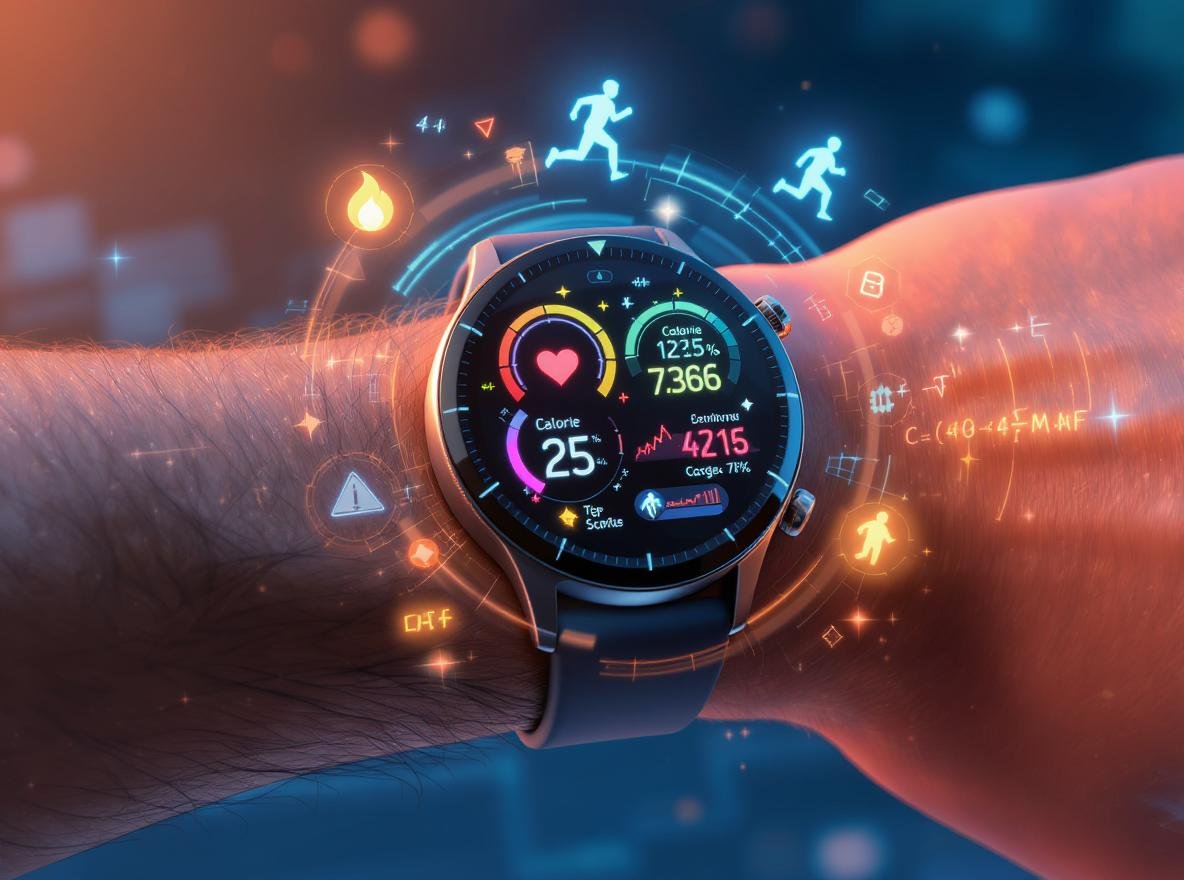
Ever wondered why your smartwatch shows different calorie counts than your friend’s device after the same workout? You’re not alone. With fitness trackers becoming essential health companions, understanding how these devices calculate your energy expenditure has become crucial for making informed fitness decisions.
Smartwatches calculate calories by combining your Basal Metabolic Rate (BMR) with data from heart rate sensors, accelerometers, and gyroscopes. They use algorithms that incorporate your personal information (age, weight, height, gender) with Metabolic Equivalent (MET) values to estimate energy expenditure. However, research shows even the best devices have error rates of 27% or higher, with some showing inaccuracies up to 93%.
But there’s much more to understand about this complex technology and why the numbers on your wrist might not tell the whole story.
What’s the Science Behind Smartwatch Calorie Calculations?
Understanding how your device transforms sensor data into calorie estimates reveals both the sophistication and limitations of current wearable technology.
Smartwatches calculate your Total Daily Energy Expenditure (TDEE) using four components: Basal Metabolic Rate (BMR), Non-Exercise Activity Thermogenesis (NEAT), Thermic Effect of Food (TEF), and Exercise Activity Thermogenesis (EAT). Most devices use established formulas like the Mifflin-St. Jeor equation, incorporating your age, sex, weight, and height to determine your baseline calorie burn.

Understanding Your Basal Metabolic Rate
Your BMR represents the calories your body burns at rest to maintain essential functions like breathing, blood circulation, and cellular repair. This accounts for 60-70% of your total daily calorie expenditure for most people.
The Mifflin-St. Jeor equation commonly used by smartwatches calculates BMR as:
- Men: (10 × weight in kg) + (6.25 × height in cm) – (5 × age) + 5
- Women: (10 × weight in kg) + (6.25 × height in cm) – (5 × age) – 161
The Four Components of Energy Expenditure
Your smartwatch attempts to estimate all four energy expenditure components:
| Component | Description | Percentage of TDEE |
|---|---|---|
| BMR | Energy for basic bodily functions | 60-70% |
| NEAT | Calories from non-exercise activities | 15-30% |
| TEF | Energy to digest and process food | 8-10% |
| EAT | Calories burned during intentional exercise | 15-30% |
How Do Smartwatch Sensors Actually Work?
The accuracy of your calorie calculations depends entirely on how well your smartwatch’s sensors can detect and interpret your body’s signals.
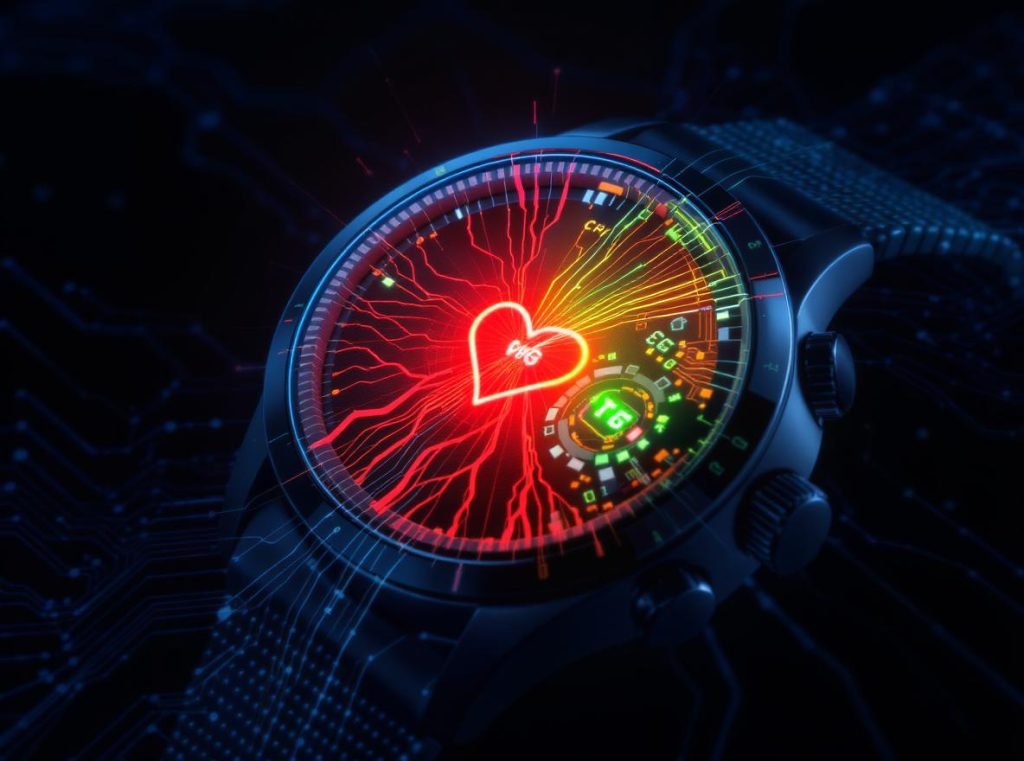
Modern smartwatches use photoplethysmography (PPG) sensors that emit LED light onto your skin and measure reflected light changes as blood flows with each heartbeat. Combined with accelerometers and gyroscopes that track movement patterns, these sensors provide the raw data for calorie algorithms.
Optical Heart Rate Technology
PPG sensors work on a simple principle: blood absorbs more light than surrounding tissues. When your heart beats, blood volume in your capillaries increases, affecting how much light reflects back to the sensor.
This technology has inherent limitations:
- Wrist movement can cause inaccurate readings
- Sweat, dirt, or tattoos interfere with light transmission
- Skin pigmentation affects sensor accuracy significantly
- Poor device fit leads to inconsistent skin contact
Motion Detection Systems
Your smartwatch uses multiple motion sensors working together:
Accelerometers measure acceleration forces in three directions (X, Y, Z axes), detecting steps, movement intensity, and activity patterns. These sensors can distinguish between walking and running based on impact patterns and frequency.
Gyroscopes detect rotational movements and orientation changes, helping identify specific activities like cycling versus running. They also help filter out false readings from arm movements unrelated to exercise.
GPS modules in outdoor activities provide distance and elevation data, allowing more precise calculations for running, cycling, and hiking.
Why Are Smartwatch Calorie Counts Often Wrong?
Despite sophisticated technology, multiple studies reveal significant accuracy problems that every user should understand.
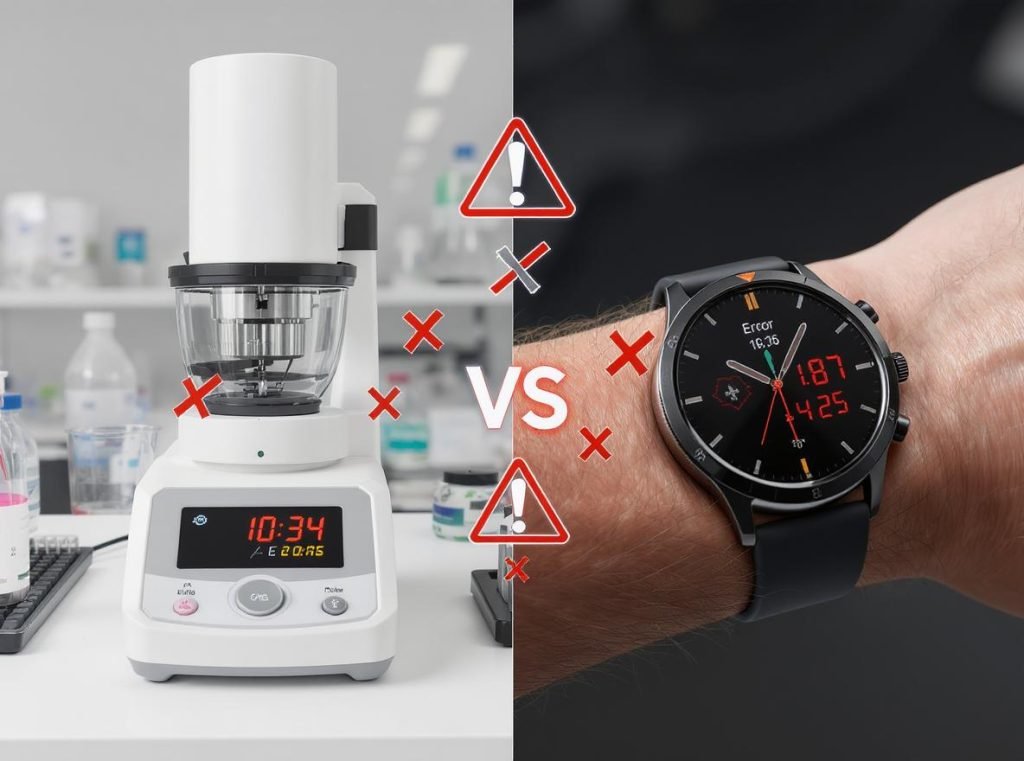
Research from Stanford University and other institutions shows that even the most accurate smartwatches have error rates of 27% or higher for energy expenditure. Some devices can be off by 40-80%, with the worst performers showing errors up to 93%. The Apple Watch, considered the most accurate, still shows potential variations of 18-40% from actual calorie expenditure.
The Heart Rate Problem
While heart rate monitoring is generally accurate within 5% for most devices, using heart rate to estimate calorie burn creates fundamental issues:
Heart rate responds to factors unrelated to energy expenditure including caffeine consumption, stress levels, fatigue, dehydration, ambient temperature, and medication effects. A stressed person sitting at a desk might have an elevated heart rate similar to someone doing light exercise, leading to overestimated calorie burn.
Individual Metabolic Differences
The biggest challenge for any algorithm is individual variation. Two people of identical weight, age, and gender can have vastly different calorie expenditures for the same activity due to:
- Metabolic efficiency variations of up to 25% between individuals
- Body composition differences (muscle burns more calories than fat)
- Fitness level impact (trained athletes burn calories more efficiently)
- Genetic factors affecting metabolism and energy utilization
Algorithm Limitations
Current algorithms were primarily developed using data from healthy, non-obese populations. Recent research shows significant accuracy issues for people with obesity, who may have different gait patterns and metabolic responses that standard algorithms don’t account for.
| Error Factor | Impact Level | Common Causes |
|---|---|---|
| Individual metabolism | High | Genetic variation, fitness level, body composition |
| Environmental conditions | Medium | Temperature, humidity, altitude changes |
| Device positioning | Medium | Poor fit, sensor obstruction, movement artifacts |
| Activity type | High | Irregular movements, upper body exercises |
Which Activities Give You the Most Accurate Calorie Counts?
Not all exercises are created equal when it comes to smartwatch tracking accuracy, and understanding these differences can help you interpret your data more effectively.
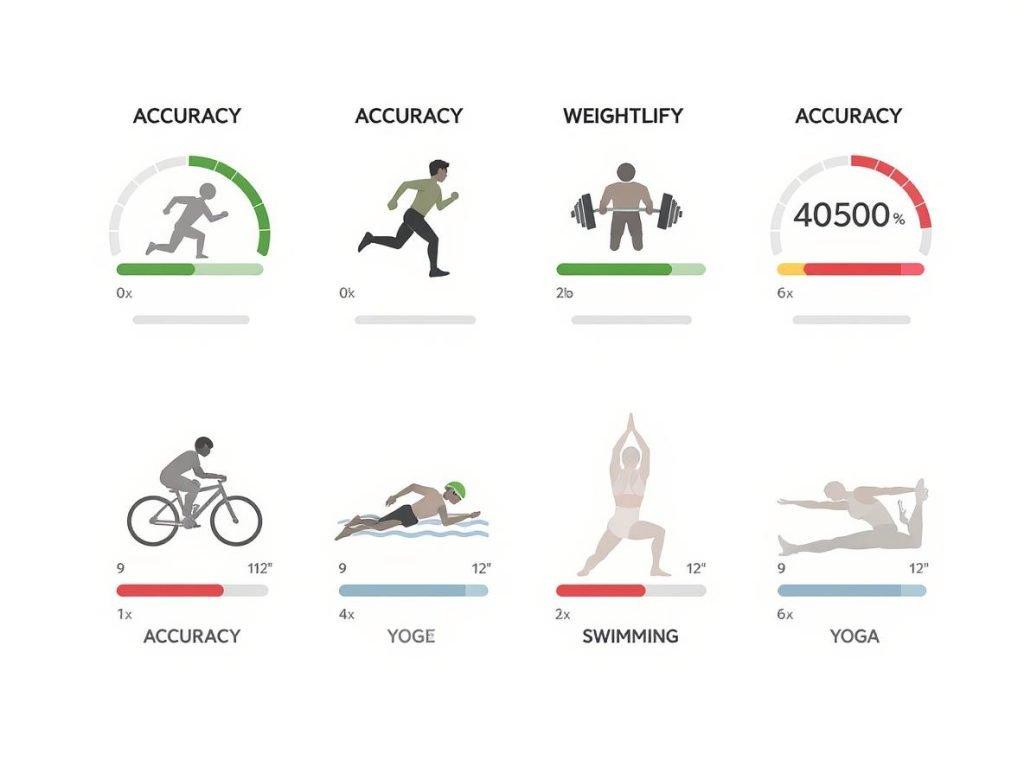
Smartwatches perform most accurately during steady-state cardio activities like walking and running, with error rates as low as 4.3% for some devices. However, they struggle significantly with strength training, high-intensity interval training (HIIT), yoga, and activities involving primarily upper body movement, showing error rates of 40-80% or higher.
High-Accuracy Activities
Running and Jogging: These activities provide the most consistent and predictable data for smartwatch algorithms. The repetitive nature, clear movement patterns, and sustained heart rate elevation make running ideal for accurate tracking.
Walking: While generally well-tracked, walking can sometimes show higher error rates (up to 53.5% in some studies) because the heart rate response is less dramatic and movement patterns vary more between individuals.
Cycling: Outdoor cycling with GPS provides good accuracy due to distance and speed data, though wrist-based heart rate monitoring can be less reliable due to grip positioning and vibration.
Challenging Activities for Smartwatches
Activities that consistently challenge smartwatch accuracy include:
- Strength training: Intermittent high heart rates don’t correlate with sustained calorie burn
- HIIT workouts: Rapid heart rate changes and recovery periods confuse algorithms
- Yoga and stretching: Low heart rates despite genuine physical effort
- Sports requiring equipment: Tennis, golf, and similar activities where wrist movement doesn’t reflect whole-body effort
- Swimming: Water interference with sensors (though newer devices have specific swimming modes)
Activity-Specific Accuracy Tips
To improve tracking for different exercises:
- Use dedicated workout modes when available
- Start tracking only when actual exercise begins, not during warm-up
- For strength training, focus on consistency trends rather than absolute numbers
- Consider chest-mounted heart rate monitors for activities with significant arm movement
How Do Different Smartwatch Brands Compare for Calorie Accuracy?
The choice of smartwatch brand significantly impacts the accuracy of your calorie tracking, with each manufacturer taking different approaches to the challenge.
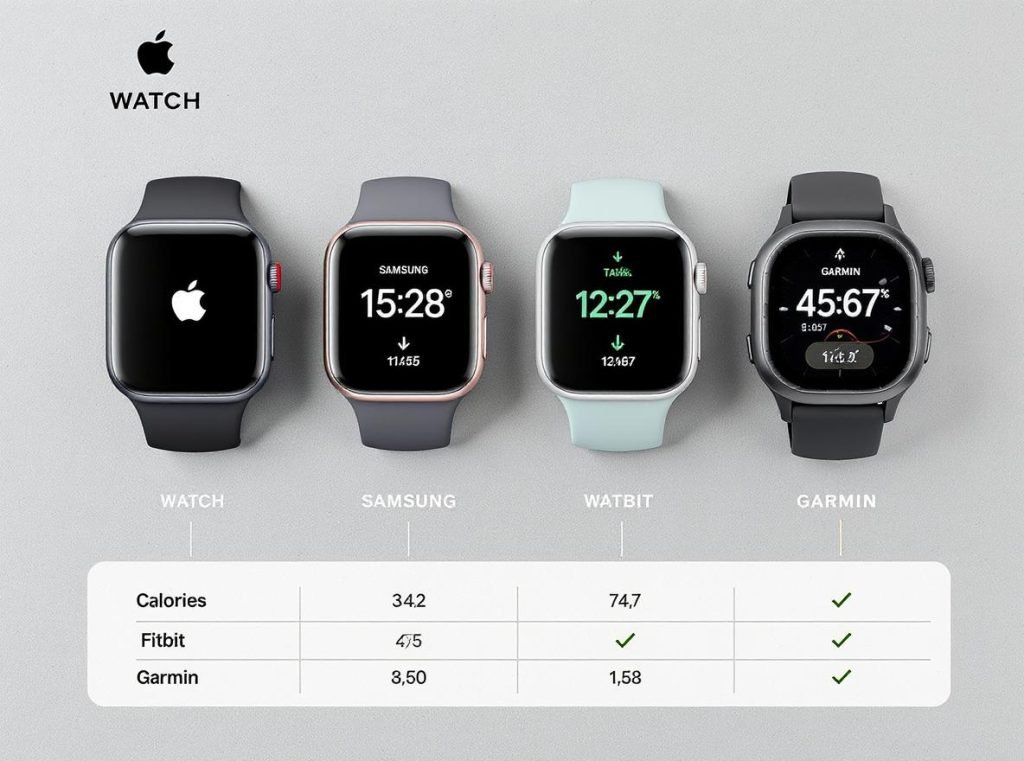
Multiple independent studies consistently identify the Apple Watch as having the best overall accuracy for calorie tracking among consumer devices, with the lowest median error rates. However, user reports show significant differences between brands: Fitbit devices tend to overestimate calories by 500+ per day, Samsung Galaxy Watches typically underestimate by 300-500 calories, while Garmin devices provide more conservative estimates favored by serious athletes.
Apple Watch: The Current Accuracy Leader
Stanford research and multiple independent studies consistently rank Apple Watch as the most accurate consumer device for calorie tracking. The Apple Watch showed just 4.3% error for running in controlled studies, though walking accuracy was significantly lower at 53.5%.
Apple’s approach emphasizes:
- Regular software updates improving algorithm accuracy
- Machine learning for personalized activity recognition
- Integration with comprehensive health data ecosystem
- Emphasis on keeping personal information current
Fitbit: User-Friendly but Often Overestimates
Fitbit devices consistently show higher calorie counts compared to other brands, with users reporting 500-1000+ more calories per day than competing devices. This overestimation can be problematic for weight management goals.
Fitbit’s strengths include:
- Excellent battery life for continuous tracking
- Strong social features and motivation tools
- Simple, accessible interface design
- Comprehensive sleep tracking integration
Samsung Galaxy Watch: Conservative Estimates
Samsung devices typically show lower total daily calorie expenditure, often 300-500 calories less than Apple Watches or Fitbits for the same activities. While this might seem more accurate, it can also represent underestimation.
Samsung’s approach features:
- Integration with Samsung Health ecosystem
- Advanced sleep and stress monitoring
- Rotating bezel interface for easy navigation
- Good accuracy for basic activities like walking and running
Garmin: The Athlete’s Choice
Garmin devices often show more conservative calorie estimates and are generally preferred by serious athletes and endurance sports enthusiasts. They incorporate advanced metrics like VO2 max estimation and Firstbeat algorithms.
| Brand | Daily Calorie Tendency | Best For | Accuracy Range |
|---|---|---|---|
| Apple Watch | Moderate estimates | General fitness, health monitoring | ±18-40% variation |
| Fitbit | Overestimates | Casual users, motivation | Often +500+ calories |
| Samsung | Underestimates | Android users, all-day wear | Often -300-500 calories |
| Garmin | Conservative | Athletes, outdoor activities | Generally consistent |
What Are the Major Technical Limitations You Should Know About?
Understanding why perfect calorie tracking remains impossible with current technology helps set realistic expectations for your fitness journey.
Current smartwatch technology cannot directly measure caloric expenditure – this requires laboratory equipment like indirect calorimetry that analyzes oxygen consumption and carbon dioxide production. Smartwatches must rely on algorithmic estimates based on limited sensor data, creating inherent inaccuracies that users should account for in fitness planning.
The Gold Standard vs. Wearable Reality
The most accurate method for measuring calorie burn is indirect calorimetry, which measures oxygen consumption (VO2) and carbon dioxide production (VCO2) in laboratory settings. This method directly correlates with energy expenditure at the cellular level.
Doubly labeled water studies, considered the ultimate gold standard, track how quickly H2O and CO2 are expelled from your body over several days. This provides the most accurate real-world calorie expenditure measurements but requires specialized laboratory facilities.
Sensor Technology Constraints
Wrist-based measurements face fundamental limitations:
Location limitations: The wrist provides convenient access but isn’t ideal for accurate physiological monitoring. Chest-mounted heart rate monitors typically show 2-5% better accuracy than wrist-based sensors.
Environmental interference: Temperature extremes, humidity, and altitude changes affect both heart rate and sensor performance in ways unrelated to actual energy expenditure.
Motion artifacts: Even small amounts of wrist movement during exercise can cause significant reading errors, particularly during activities like weightlifting or tennis.
Algorithm Development Bias
Most calorie calculation algorithms were developed and validated using data from specific populations, creating accuracy issues for users who don’t match these profiles:
- Limited data from people with obesity or significant health conditions
- Bias toward younger, healthier test subjects
- Insufficient representation of different ethnic backgrounds
- Gender-specific metabolic differences not fully accounted for
How Can You Significantly Improve Your Smartwatch’s Accuracy?
While perfect accuracy isn’t achievable, several proven strategies can substantially improve your device’s calorie estimates and make the data more useful for your fitness goals.
The most effective accuracy improvements come from maintaining current personal information, ensuring proper device fit, performing regular calibration activities, and choosing appropriate workout modes. These steps can reduce error rates by 10-20% and provide more consistent tracking over time.

Essential Personal Data Management
Weight Updates: Your weight directly impacts calorie calculations through BMR formulas. Update your weight monthly or after significant changes (5+ pounds). A 10-pound weight change can affect daily calorie estimates by 50-100 calories.
Activity Level Settings: Many devices allow you to set activity levels or fitness classifications. Update these settings after completing training programs or during periods of changed activity levels.
Age and Health Status: Some devices incorporate age-related metabolic changes. Ensure your birthdate is correct and update any relevant health information your device tracks.
Optimal Device Setup and Maintenance
Proper Positioning: Wear your smartwatch 1-2 inches above your wrist bone, positioned on the top of your wrist rather than the side. The device should be snug during exercise but can be looser during daily wear.
Sensor Cleanliness: Clean your device regularly, especially after sweating. Dried sweat, lotion, and dirt can interfere with optical sensors. Remove any hair from the sensor area for consistent skin contact.
Calibration Workouts: Perform manufacturer-recommended calibration exercises monthly:
| Device Brand | Calibration Method | Frequency | Expected Improvement |
|---|---|---|---|
| Apple Watch | 20-minute outdoor walk/run | Monthly | 5-15% accuracy gain |
| Garmin | GPS-tracked activities | Bi-weekly | 8-12% accuracy gain |
| Fitbit | Stride length adjustment | As needed | 3-8% accuracy gain |
| Samsung | Manual distance corrections | Monthly | 5-10% accuracy gain |
Advanced Optimization Strategies
Workout Mode Selection: Always choose the most specific workout mode available. Using “strength training” instead of “workout” applies different algorithms more appropriate for resistance exercise.
Heart Rate Zone Setup: Configure your maximum heart rate manually if known from testing, rather than relying on age-based estimates (220 minus age). This improves heart rate zone accuracy and related calorie calculations.
GPS Optimization: For outdoor activities, wait for full GPS connection before starting workouts. This can take 30-60 seconds but significantly improves distance and pace accuracy.
Should You Base Your Fitness Decisions on Smartwatch Calorie Data?
The critical question isn’t whether smartwatches are perfect, but how to use their data effectively within your broader health and fitness strategy.
Smartwatches should not be relied upon for precise calorie counting, especially for weight management decisions, due to error rates of 27-93%. However, they excel at tracking trends, maintaining motivation, and providing relative activity comparisons. The data is most valuable for understanding patterns and progress over time rather than making day-to-day dietary adjustments.
When Smartwatch Data Is Most Valuable
Trend Analysis: Your device excels at showing whether you’re more or less active than previous weeks or months, even if absolute numbers aren’t perfect. A consistent upward trend in activity indicates real improvement.
Motivation and Accountability: The psychological benefits of tracking often outweigh accuracy concerns. Research shows that people who track their activity consistently are more likely to maintain exercise habits.
Comparative Workouts: Comparing similar activities over time provides valuable insights. For example, noticing that your heart rate is lower for the same running pace indicates improved cardiovascular fitness.
When to Be Skeptical
Weight Management Calculations: Don’t use smartwatch calorie burns to determine how much you can eat. The margin of error is too large for accurate dietary adjustments.
Device-to-Device Comparisons: Comparing your numbers directly with friends using different devices or brands isn’t meaningful due to algorithm differences.
Medical or Professional Decisions: For serious athletic training or medical purposes, consider professional metabolic testing or chest-mounted heart rate monitors during workouts.
Building a Comprehensive Approach
The most effective fitness tracking combines multiple data sources:
- Subjective measures: How you feel during and after exercise
- Performance metrics: Speed, distance, strength improvements over time
- Body composition changes: Not just weight, but how clothes fit and body measurements
- Sleep and recovery data: Your device’s sleep tracking can be more accurate than calorie estimates
- Long-term trends: Focus on monthly and seasonal patterns rather than daily fluctuations
Alternative Strategies for Accurate Tracking
For weight management, many fitness professionals recommend focusing on consistent calorie intake targets and monitoring weight trends over time rather than trying to match calories consumed to device-estimated calories burned. Apps like MacroFactor use actual weight and food intake data to calculate individual metabolic rates more accurately than any wearable device.
Summary
Smartwatches calculate calories through sophisticated algorithms combining heart rate data, motion sensors, and personal information with established metabolic formulas. However, research consistently shows error rates of 27-93%, with even the best devices like the Apple Watch showing 18-40% variation from actual expenditure. The technology works best for steady-state cardio activities and struggles with strength training, HIIT, and irregular movements. While not suitable for precise calorie counting or strict dietary decisions, smartwatches excel at tracking fitness trends, maintaining motivation, and providing relative activity comparisons over time. Understanding these limitations while optimizing device setup can maximize the value of your wearable fitness technology.
Ready to incorporate advanced calorie tracking technology into your product lineup? At Osmarto, we specialize in manufacturing precision smartwatches with cutting-edge PPG sensors, advanced motion detection, and optimized algorithms for accurate fitness tracking. Whether you’re a distributor seeking reliable devices for health-conscious consumers, a retailer looking to offer premium wearables, or a brand developing custom fitness solutions, our team delivers the accuracy and innovation your customers demand. Contact us today to explore our comprehensive smartwatch manufacturing capabilities and discover how our R&D expertise can help you succeed in the competitive fitness technology market.