Skip to content
Traveling with your smartwatch can feel confusing with all the different airline rules and security procedures. Many passengers worry about battery safety, security screening complications, or potential interference with aircraft systems.
The simple answer is yes – it’s completely safe to wear your smartwatch on an airplane. The Federal Aviation Administration classifies smartwatches as Personal Electronic Devices (PEDs) and has determined they pose no safety risk to aircraft systems when used properly.
Let’s dive deeper into everything you need to know about traveling with your smartwatch.
Can I Wear My Smartwatch Through Airport Security?
Understanding TSA regulations helps you prepare for a smooth security experience and avoid unnecessary delays at the checkpoint.
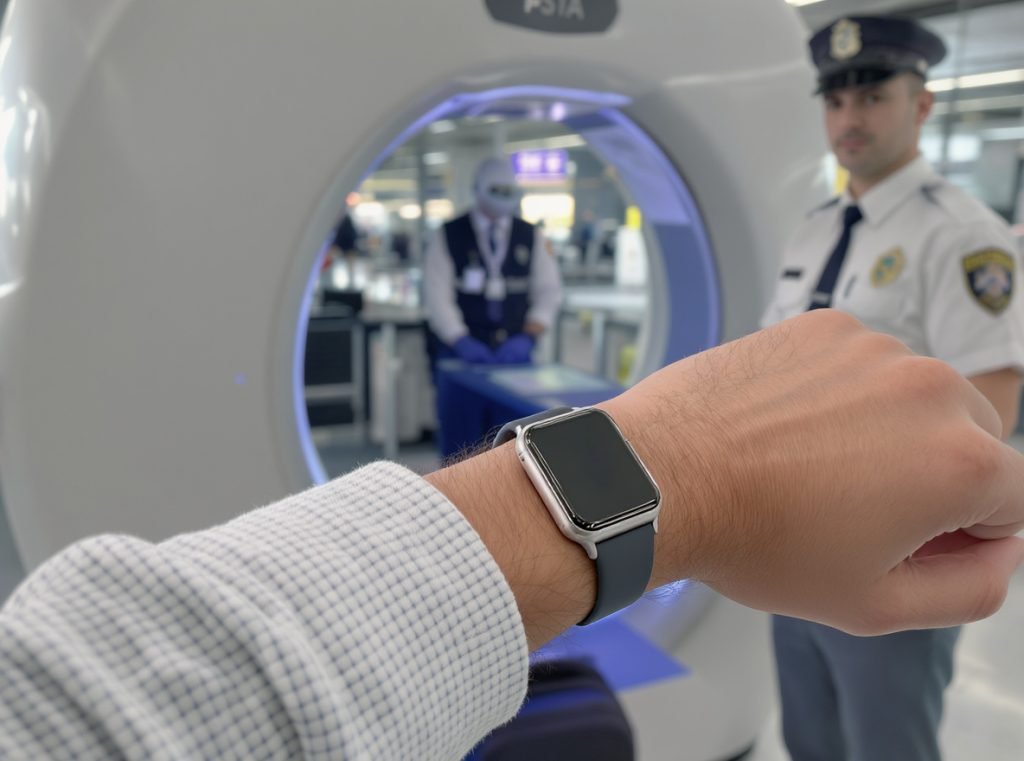
Yes, you can wear your smartwatch through airport security screening without removing it from your wrist. Testing with various smartwatch models, including Apple Watch Series 3 with cellular functionality, has confirmed successful passage through both TSA PreCheck and standard security lines without triggering alarms.
Security Screening Process
Most modern airports use advanced imaging technology that can detect smartwatches without requiring removal. The TSA has not established specific policies for smartwatches, treating them case-by-case under general screening procedures. However, be prepared for these scenarios:
- Body scanners: Your smartwatch will be visible but won’t trigger alarms
- Metal detectors: Smartwatches successfully pass through without issues
- Random inspections: TSA officers always have final say and may request removal in rare cases
- Placement precaution: If removal is required, avoid placing the device at the bottom of scanning bins where it could be lost
Pro Tips for Security
| Scenario | Best Practice | Why It Matters |
|---|---|---|
| Standard Screening | Keep watch on wrist | Prevents loss or damage |
| Additional Screening | Follow officer instructions | TSA has final authority in screening process |
| International Travel | Keep on person | Some countries have stricter examination of wearable devices |
What About Lithium Batteries in Smartwatches?
Lithium battery regulations are crucial for air travel safety, and smartwatches contain these power sources.
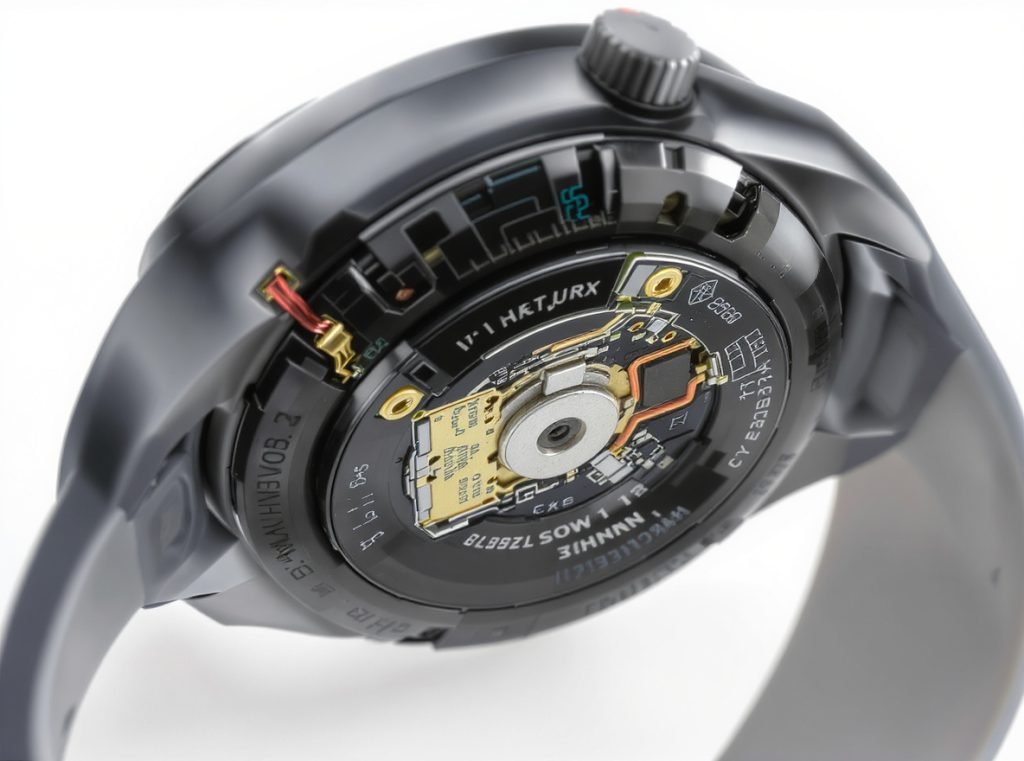
Smartwatches with lithium batteries are permitted in both carry-on and checked luggage. The batteries in smartwatches are well under the 100 watt-hour threshold that requires special handling, making them low-risk devices for air travel.
Battery Safety Guidelines
The Federal Aviation Administration has specific rules for lithium-powered devices:
- Smartwatches fall under the “small portable electronic devices” category
- Batteries are considered low-risk due to small size and integrated design
- Devices should be completely powered off when placed in checked luggage
- Unlike spare batteries, smartwatch batteries aren’t subject to carry-on-only requirements
Airlines prefer passengers wear or carry smartwatches rather than pack them in checked bags. This reduces the risk of damage and makes security screening easier.
Do I Need to Use Airplane Mode on My Smartwatch?
Flight regulations require specific wireless settings during different phases of air travel.
Yes, you must activate airplane mode on your smartwatch during flight, but you can manually re-enable Bluetooth while keeping airplane mode active. This allows you to use Bluetooth headphones or maintain connection with your smartphone if the airline permits it.

When to Enable Airplane Mode
Flight attendants will announce when to switch devices to airplane mode, typically:
- Before takeoff procedures begin
- During taxi and climb phases
- Throughout descent and landing
After reaching cruising altitude, many airlines allow Wi-Fi usage if the aircraft offers onboard internet service.
Airplane Mode Benefits
Beyond compliance, airplane mode offers practical advantages while maintaining functionality:
- Extends battery life significantly during long flights
- Prevents unwanted cellular notifications and distractions
- Allows selective re-enabling of Bluetooth for headphones
- Maintains core smartwatch functions like fitness tracking and timekeeping
- Wi-Fi can be separately re-enabled if airline offers in-flight internet service
Will My Smartwatch Interfere With Aircraft Systems?
Passenger concerns about electronic interference with flight systems are understandable but largely outdated.
Modern smartwatches pose no interference risk to aircraft navigation or communication systems when used in airplane mode. Aviation authorities have extensively tested portable electronics and updated regulations based on current technology.

Why Interference Isn’t a Concern
Commercial aircraft use sophisticated shielded systems that aren’t affected by small consumer electronics:
The Federal Communications Commission and Federal Aviation Administration continuously study electromagnetic interference. Their research shows that properly functioning smartwatches generate minimal radio frequency emissions.
Pilots and crew members regularly use similar devices without operational issues. Airlines wouldn’t permit these devices if they posed legitimate safety risks.
Industry Standards
| Safety Measure | Implementation | Result |
|---|---|---|
| Aircraft Shielding | Faraday cage design | Blocks external interference |
| Device Testing | Rigorous certification | Ensures emission compliance |
| Crew Training | Regular safety updates | Maintains awareness of risks |
What Smartwatch Features Work During Flight?
Understanding which functions remain available helps you make the most of your device while traveling.
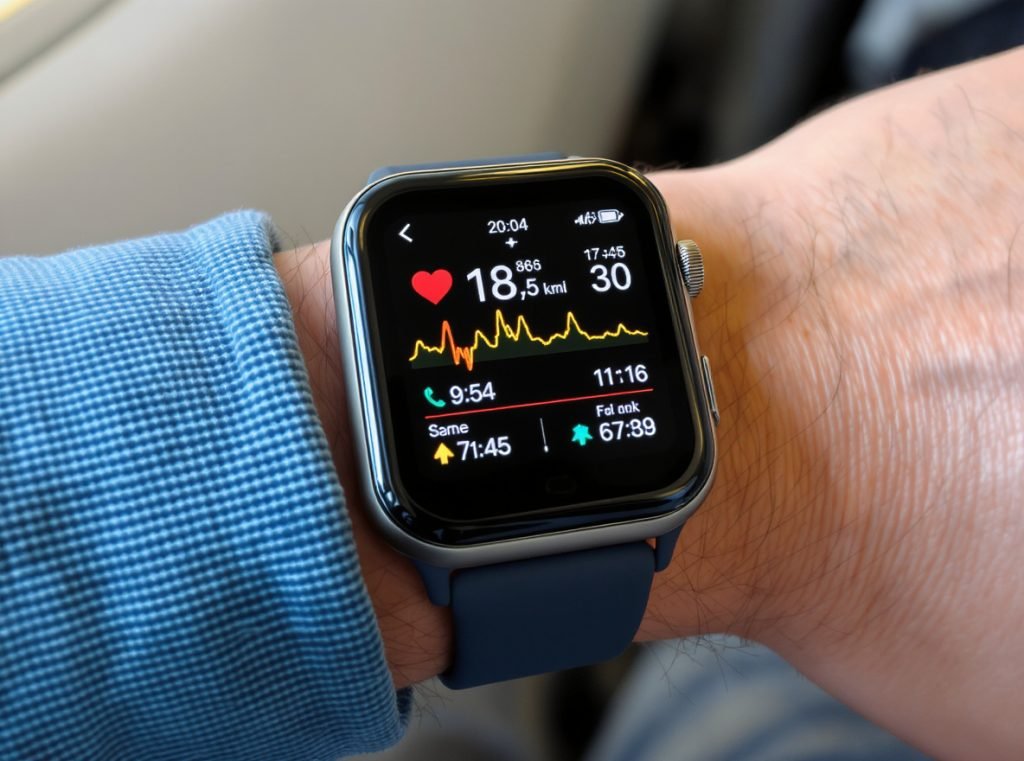
In airplane mode, your smartwatch retains core features like fitness tracking, timekeeping, alarms, and stored music playback. Connected features requiring internet or cellular service will be unavailable.
Available Features
Core smartwatch functionality continues working throughout your flight:
- Fitness tracking: Steps, heart rate, sleep monitoring
- Time functions: Multiple time zones, alarms, timers
- Stored content: Music, photos, offline apps
- Health monitoring: Blood oxygen, stress levels (model dependent)
- Bluetooth connectivity: Can be manually re-enabled for headphones if airline permits
Unavailable Features
Network-dependent functions won’t work without connectivity:
- Cellular calls and text messaging
- Email notifications and social media updates
- GPS navigation requiring real-time map downloads
- Real-time weather and news updates
- App store downloads and updates
Can I Charge My Smartwatch on the Plane?
Keeping your device powered during long flights requires planning ahead.
Most modern aircraft provide USB charging ports at passenger seats, making it possible to charge your smartwatch during flight. However, availability varies by airline and aircraft type.

Charging Options
Different aircraft configurations offer various charging solutions:
- Seat-back USB ports: Found on most newer long-haul aircraft
- Armrest outlets: Common on premium cabin seats
- Portable batteries: Allowed in carry-on bags for backup power
Charging Strategy
Plan your charging approach based on flight duration and recent safety updates:
For flights under 4 hours, a fully charged smartwatch should last the entire journey. Longer flights may require strategic charging during cruise portions when you’re not actively using the device.
Important safety note: Recent airline updates require power banks and portable chargers to remain visible and within reach during use, not stored in overhead bins. Keep your smartwatch charger in your personal item rather than carry-on luggage stored overhead.
Many smartwatches can be charged directly from smartphones with USB-C ports, eliminating the need for separate charging adapters and providing flexible charging options during travel.
Are There Any Airline-Specific Restrictions?
Different carriers may have varying policies regarding electronic devices and smartwatch usage.
Most major airlines (Delta, American, JetBlue, United) follow standard FAA guidelines for electronic devices, but each airline sets its own specific rules. Smartwatches are generally permitted across all carriers, though smaller regional airlines may not have implemented the latest FAA guidelines as quickly.

Regional Variations
International travel may involve different regulatory standards:
- International flights: May follow stricter security practices than domestic flights
- European Union: Generally follows similar guidelines to US regulations
- Asia-Pacific: Most countries align with international standards
- Some countries: Customs officers may be more thorough about examining wearable devices
Premium vs. Budget Airlines
Full-service carriers typically offer more flexibility with electronic devices, while budget airlines may enforce stricter interpretations to simplify operations. Some international carriers have also implemented restrictions on certain Bluetooth tracking devices in checked baggage, though these primarily target devices like AirTags rather than worn smartwatches.
What About International Travel Customs?
Crossing borders with electronic devices involves additional considerations beyond flight safety.
Smartwatches are generally not subject to customs declaration unless they’re high-value luxury items purchased abroad. For expensive smartwatches bought internationally, US travelers are legally required to declare the purchase to Customs and Border Protection upon reentry, with a typical duty rate of 3% of the purchase price.

Customs Considerations
Be prepared for these scenarios when traveling internationally:
Declaration requirements: For expensive smartwatches purchased abroad, failure to declare can result in penalties up to 4 times the duty amount and potential device confiscation.
Wearing vs. carrying: Many travelers wear their smartwatch during customs screening to avoid declaration requirements, though this technically violates customs regulations for items purchased abroad. Customs officers rarely question worn devices unless they appear obviously new.
Documentation: Keep purchase receipts if your smartwatch is expensive or appears new. This helps prove personal ownership and purchase location.
Business Travel
Wholesale buyers and distributors traveling with multiple smartwatches should:
- Declare commercial samples properly and carry invoices
- Research import regulations for destination countries
- Consider temporary import permits for trade shows
- Understand that different countries have varying certification requirements (like the Eurasian Economic Union’s specific technical regulation compliance)
- Ensure compliance with electromagnetic compatibility requirements and radio equipment directives
How Do I Prepare My Smartwatch for Travel?
Proper preparation ensures smooth travel and optimal device performance throughout your journey.
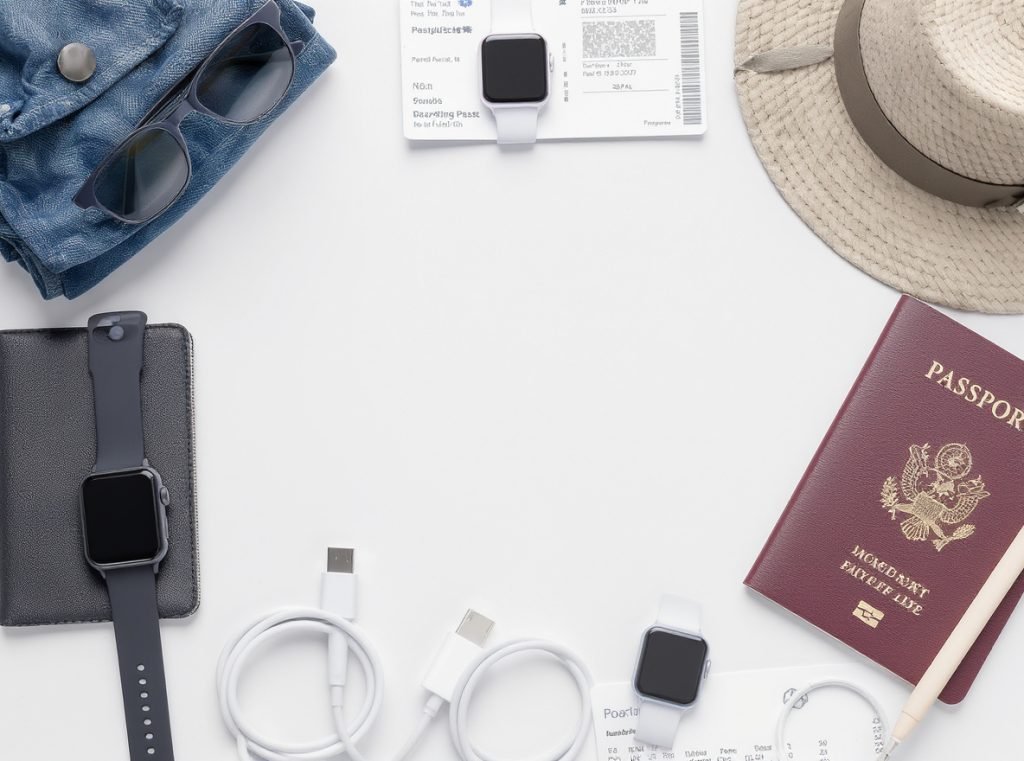
Charge your smartwatch fully before departure, update software, download offline content, and customize settings to minimize distractions. Enable power-saving modes during long flights by turning off display features and reducing background activity.
Pre-Flight Checklist
Complete these preparations before leaving home:
- Full charge: Ensure 100% battery before departure
- Software updates: Download latest firmware and apps
- Offline content: Sync music, offline maps, and essential travel apps
- Notification settings: Disable unnecessary alerts to avoid distractions
- Essential travel apps: Currency converters, language translation tools, flight tracking applications
- Health tracking setup: Configure fitness routines for maintaining activity during travel
Travel Accessories
Pack essential smartwatch accessories in your carry-on:
| Item | Purpose | Travel Tip |
|---|---|---|
| Charging cable | Power restoration | Keep in easily accessible pocket |
| Portable battery | Extended usage | Must be carry-on, not checked |
| Screen protector | Damage prevention | Apply before travel |
| Extra straps | Comfort options | Helpful for long flights |
What Should Wholesalers and Distributors Know?
Business travelers in the smartwatch industry face additional considerations when traveling with inventory or samples.
When transporting large quantities of smartwatches, distributors must follow dangerous goods regulations for lithium battery transport. While individual devices pose minimal risk, bulk shipments require proper documentation and handling procedures to comply with international shipping regulations.

Commercial Travel Considerations
Business professionals should understand these key points:
Regulatory compliance: Wholesalers and distributors must ensure smartwatches meet aviation safety standards and carry appropriate certifications for international markets, including electromagnetic compatibility requirements.
Bulk transport requirements: Large quantities require dangerous goods documentation for lithium batteries, even though individual devices are low-risk.
Market-specific certifications: Different markets have varying requirements. For example, the Eurasian Economic Union requires specific technical regulation compliance, while other regions may have different radio equipment directive requirements.
Working With Osmarto
At Osmarto, we understand the complexities of international smartwatch distribution. Our experienced team helps partners navigate:
- International shipping regulations and documentation
- Product certification requirements for different markets
- Customs procedures for trade samples and demonstrations
- Technical support for product showcases and client meetings
Whether you’re a wholesaler, distributor, retailer, or brand manufacturer, we provide comprehensive support for your smartwatch business needs. Contact our team to discuss how we can streamline your international operations and ensure compliance with all relevant regulations.
Summary
Wearing a smartwatch on an airplane is completely safe and generally hassle-free. The TSA allows smartwatches through security screening, and modern aircraft systems aren’t affected by these devices when used in airplane mode. Remember to charge your device fully, enable airplane mode during takeoff and landing, and follow airline crew instructions. For business travelers working with smartwatch inventory, proper documentation and understanding customs requirements ensures smooth international operations.

Ready to explore wholesale smartwatch opportunities for your business? Contact Osmarto today to discuss our comprehensive product range and international shipping solutions.