Skip to content
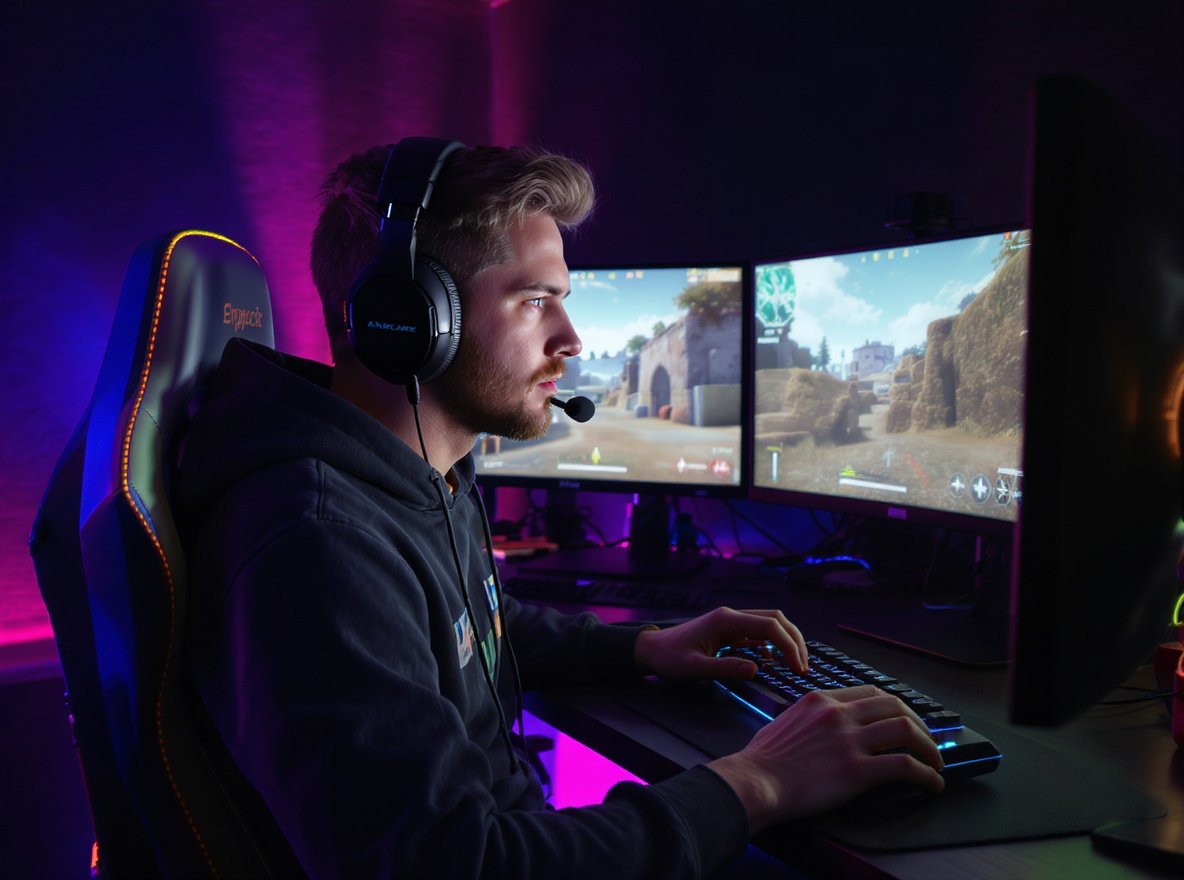
Every millisecond counts in competitive gaming. High latency creates a frustrating disconnect between what you see and what you hear, potentially costing you crucial victories. Research shows that humans can easily detect about 25ms of audio latency, making the wrong headphones a serious handicap.
For competitive gaming, the best wired headphones achieve virtually zero latency (5-10ms), while premium 2.4GHz wireless headsets like the Razer BlackShark V3 Pro deliver ultra-low 10ms latency. Standard Bluetooth headphones with 150-300ms delays remain unsuitable for serious competitive play.
Let’s explore the technical specifications and market leaders that can give you the competitive edge you need.
What Is Audio Latency and Why Does It Matter for Gaming?
Understanding audio latency becomes critical when competing at higher levels. Many casual gamers underestimate how this technical specification directly impacts their win rates and overall performance.
Audio latency represents the delay between when an audio signal is created and when it’s heard through your headphones, measured in milliseconds. Humans can easily detect about 25ms of audio latency, and reducing latency by 100ms results in 2% better accuracy and 2 more points per minute in competitive Counter-Strike gameplay.
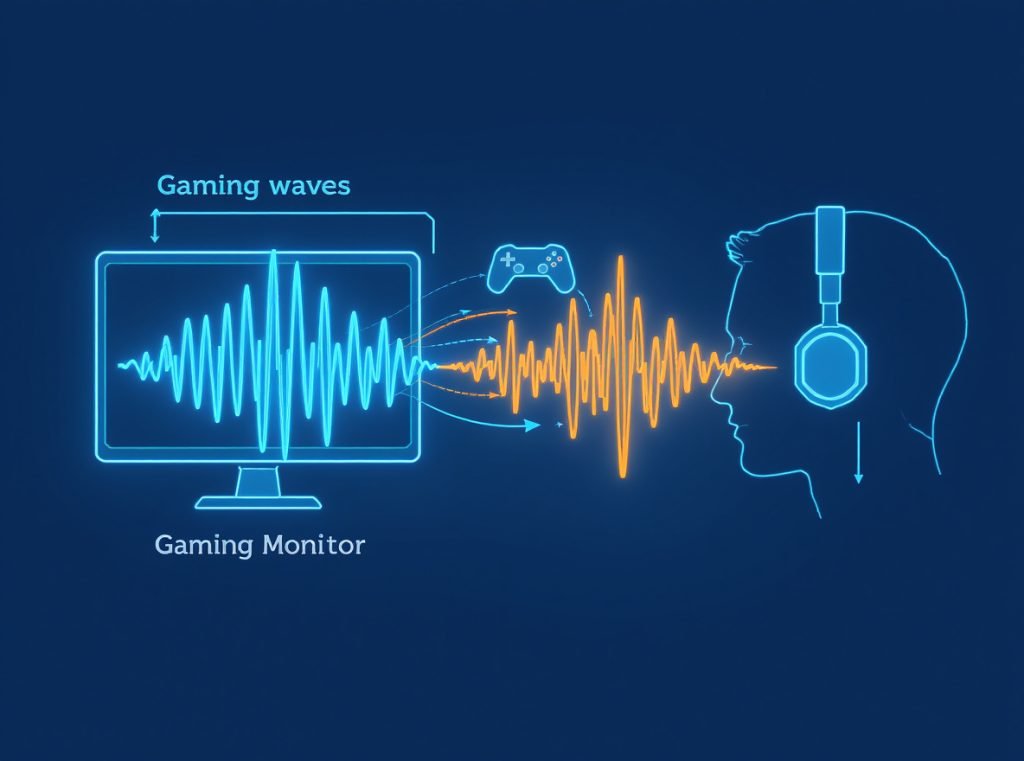
This translates to approximately one extra kill per minute—a significant advantage that determines match outcomes. In fast-paced first-person shooters, enemy footsteps reveal crucial positioning information. When audio lags behind visual cues, your brain struggles to process information quickly, affecting reaction times and decision-making precision.
The impact varies significantly by game type:
• First-person shooters: Require sub-30ms for optimal performance, with 100ms being the maximum acceptable threshold
• Strategy games (RTS/MOBA): Can tolerate up to 50ms ideally, with 120ms being the upper limit for competitive play
• Casual/turn-based games: Generally acceptable up to 250ms without noticeable impact
Research from competitive Counter-Strike testing reveals that player scores at 25ms average 20% higher than scores at 125ms, demonstrating the tangible performance impact of low-latency audio equipment.
Are Wired Headphones Always Better for Low Latency Gaming?
The traditional wired versus wireless debate has evolved dramatically with modern technology advances. Professional testing reveals surprising developments in wireless performance that challenge conventional wisdom.
Wired headphones deliver virtually zero latency at 5-10ms when used in passive mode, making them the gold standard for competitive gaming. However, premium 2.4GHz wireless headsets now achieve 10-25ms latency, making them competitive with wired alternatives while offering superior convenience.
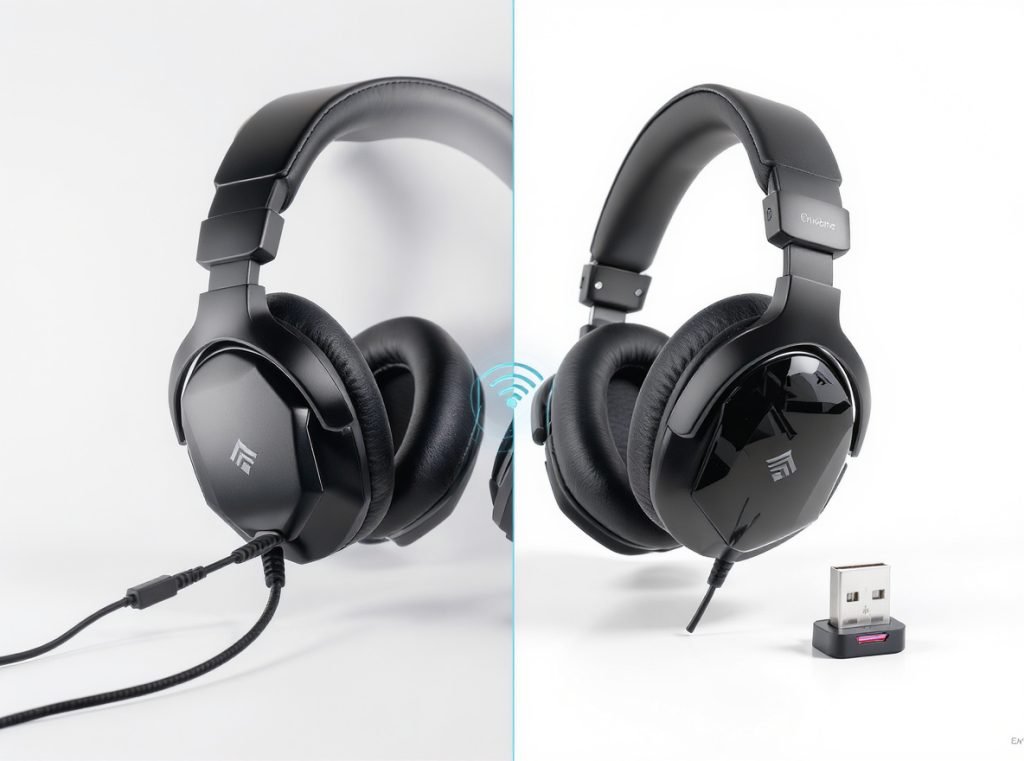
Wired headphones maintain their advantage through direct electrical connection with no signal compression, digital processing, or transmission delays. This makes them virtually lag-free and explains why many professional esports players continue preferring wired setups for tournament play.
Modern wireless technology has dramatically narrowed this performance gap through several key innovations:
2.4GHz Proprietary Protocols
Premium gaming brands like Razer, SteelSeries, and Logitech have developed proprietary 2.4GHz systems that bypass Bluetooth’s inherent delays entirely. These dedicated protocols achieve polling rates up to 1000Hz (1ms), providing gaming-grade performance through USB dongles.
Advanced Signal Processing
Modern wireless headsets use sophisticated digital signal processing to minimize encoding and transmission delays while maintaining audio fidelity suitable for competitive gaming.
The practical advantages of premium wireless solutions now often outweigh the minimal latency difference:
| Connection Type | Typical Latency | Competitive Suitability | Key Advantages |
|---|---|---|---|
| Wired (Passive) | 5-10ms | Optimal | Zero latency, universal compatibility |
| 2.4GHz Wireless | 10-25ms | Excellent | Freedom of movement, clean setup |
| Bluetooth LL | 40-80ms | Good | Multi-device connectivity |
| Standard Bluetooth | 150-300ms | Poor | Basic wireless convenience only |
Which Connection Types Deliver the Lowest Gaming Latency?
Different wireless technologies offer vastly different latency performance levels. Understanding these technical differences helps you choose the optimal connection type for your competitive gaming requirements.
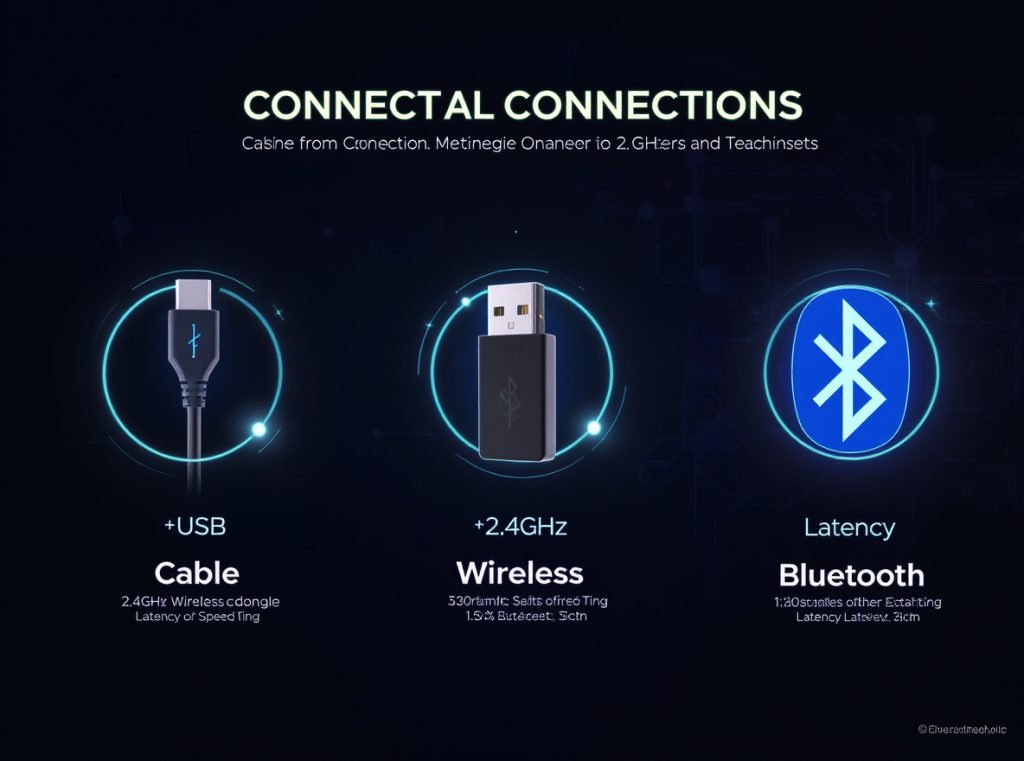
2.4GHz proprietary wireless connections offer the lowest latency among wireless options, typically achieving 10-25ms. The best models like the Razer BlackShark V3 Pro reach 10ms ultra-low latency, while premium alternatives achieve sub-25ms performance suitable for professional esports.
2.4GHz Proprietary Systems
These represent the current wireless performance leaders, using dedicated USB dongles with proprietary protocols optimized specifically for gaming applications. Unlike Bluetooth, these systems support polling rates up to 1000Hz, ensuring gaming-grade responsiveness.
Current market leaders achieve impressive specifications:
• Razer BlackShark V3 Pro: 10ms (HyperSpeed Wireless Gen-2 technology)
• SteelSeries Arctis Nova 7: Sub-25ms performance
• Logitech G Pro X 2 Lightspeed: Sub-30ms latency
Advanced Bluetooth Implementation
Modern Bluetooth has improved significantly through low-latency codec implementation:
• aptX Low Latency: ~40ms
• FastStream: ~40ms (gaming-optimized)
• aptX Adaptive: 50-80ms
• LE Audio (LC3): ~50ms
• LE Audio (aptX Lite): ~25ms
Standard Bluetooth Limitations
Traditional Bluetooth using SBC codec suffers from 150-220ms latency, making it completely unsuitable for competitive gaming but acceptable for single-player experiences.
The 2.4GHz wireless market continues expanding rapidly, with manufacturers investing heavily in proprietary low-latency technologies. This creates excellent opportunities for distributors and retailers to offer cutting-edge wireless solutions that don’t compromise competitive performance.
What Latency Specifications Should Competitive Gamers Target?
Setting appropriate latency expectations depends on your competitive level and gaming preferences. Professional testing and research provide clear benchmarks for different competitive tiers.
Professional competitive gamers should target headphones with latency specifications under 20ms for optimal performance. Research demonstrates that player scores at 25ms average 20% higher than scores at 125ms, making sub-30ms the practical target for serious competitive play.

Professional Tier (0-20ms)
Esports professionals and tournament players need absolute minimum latency. This typically requires wired headphones or premium wireless systems with advanced proprietary protocols. The Razer BlackShark V3 Pro at 10ms and Audeze Maxwell at 18ms represent current wireless performance leaders.
Competitive Tier (20-60ms)
Most competitive gamers perform excellently within this range. Quality 2.4GHz wireless gaming headphones fit perfectly here, offering superior performance with added convenience and freedom of movement during intense gaming sessions.
Semi-Competitive (60-100ms)
Players who enjoy competitive games but aren’t pursuing professional careers find this latency range very playable. Advanced Bluetooth headphones with gaming modes often achieve these specifications.
Consider these specific gaming requirements:
• Counter-Strike/Valorant: Demand lowest possible latency for precise audio positioning and timing
• Battle Royale games: Require low latency for environmental audio cues and enemy detection
• MOBA games: Can tolerate slightly higher latency due to different gameplay mechanics and pacing
The key involves matching your latency requirements with competitive ambitions, gaming genres, and budget constraints while understanding that diminishing returns occur below 20ms for most players.
How Do Gaming Modes and Low Latency Features Work?
Modern gaming headphones incorporate specialized gaming modes designed to minimize latency through various technical optimizations. Understanding these features helps maximize their effectiveness for competitive performance.
Gaming modes typically reduce latency by switching to faster audio codecs, increasing transmission power, and optimizing buffer sizes. These modes can reduce latency from standard 150ms Bluetooth to 40-80ms gaming-optimized performance, representing significant improvements for competitive play.

Codec Switching Technology
When gaming mode activates, headphones switch from high-quality codecs prioritizing audio fidelity to faster, lower-latency alternatives. This trade-off prioritizes speed over audio quality, which proves worthwhile for competitive scenarios where reaction time matters more than audiophile-grade sound reproduction.
Buffer Size Optimization
Gaming modes reduce audio buffering to minimize delay between signal generation and audio output. While this occasionally causes minor audio dropouts during wireless interference, the latency improvement usually justifies the trade-off for serious competitive gaming.
Transmission Power Management
Some premium headphones increase wireless transmission power during gaming mode, ensuring stronger, more stable connections that reduce latency spikes and connection instability during crucial gaming moments.
Different manufacturers implement varying levels of gaming mode effectiveness:
| Brand Tier | Gaming Mode Impact | Typical Improvement |
|---|---|---|
| Premium (Razer, SteelSeries) | Proprietary protocols | 10-25ms absolute latency |
| Mid-range brands | Codec optimization | 40-80ms from standard modes |
| Budget models | Marketing feature | Minimal measurable improvement |
For manufacturers and distributors in the headphone industry, developing effective gaming modes represents a crucial differentiator in the competitive gaming market, with technical performance directly translating to consumer purchasing decisions.
Which Specific Headphone Models Offer the Best Gaming Latency?
Current market analysis reveals clear performance leaders across different price segments. These models represent the benchmark for competitive gaming latency performance based on professional testing and user feedback.
The Razer BlackShark V3 Pro leads the market with 10ms ultra-low latency through HyperSpeed Wireless Gen-2 technology, while the Audeze Maxwell achieves 18ms true latency using proprietary wireless protocols. Budget options like the HyperX Cloud Alpha Wireless offer solid low-latency performance with exceptional 300-hour battery life.
Ultra-Low Latency Champions (10-20ms)
Razer BlackShark V3 Pro ($249.99) delivers market-leading 10ms latency through HyperSpeed Wireless Gen-2 technology, representing a 33% reduction from typical 15ms competitor performance. Features include hybrid Active Noise Cancellation, TriForce Bio-Cellulose 50mm drivers, and 12mm microphone with 48kHz sampling rate.
Audeze Maxwell Wireless achieves approximately 18ms true latency according to manufacturer testing, utilizing proprietary wireless technology rather than standard 2.4GHz protocols. The Maxwell features premium planar magnetic drivers and supports Bluetooth LE Audio with LC3+ codecs for versatility.
Premium Competitive Options (15-30ms)
SteelSeries Arctis Nova Pro Wireless offers dual wireless connectivity with “Speed” mode delivering sub-25ms performance. The system includes swappable batteries, GameDAC controls, and simultaneous Bluetooth connectivity for maximum versatility.
Logitech G Pro X 2 Lightspeed provides sub-30ms latency with graphene drivers and exceptional 50-hour battery life. This headset supports multiple connectivity options including 2.4GHz wireless, Bluetooth, and wired 3.5mm connections.
Budget-Conscious Solutions
HyperX Cloud Alpha Wireless delivers solid competitive latency with an exceptional 300-hour battery life, making it ideal for extended gaming sessions without performance compromise.
Turtle Beach Stealth 600 (Gen 3) achieves low USB dongle latency with 85-hour battery life and effective microphone performance for team communication.
These models represent the current performance hierarchy, with consistent innovation driving latency specifications lower while improving battery life and feature sets.
Do Wireless Gaming Headphones Match Wired Performance Today?
The wireless versus wired performance gap has narrowed dramatically through technological advancement. Professional testing and esports adoption patterns reveal significant shifts in competitive viability.
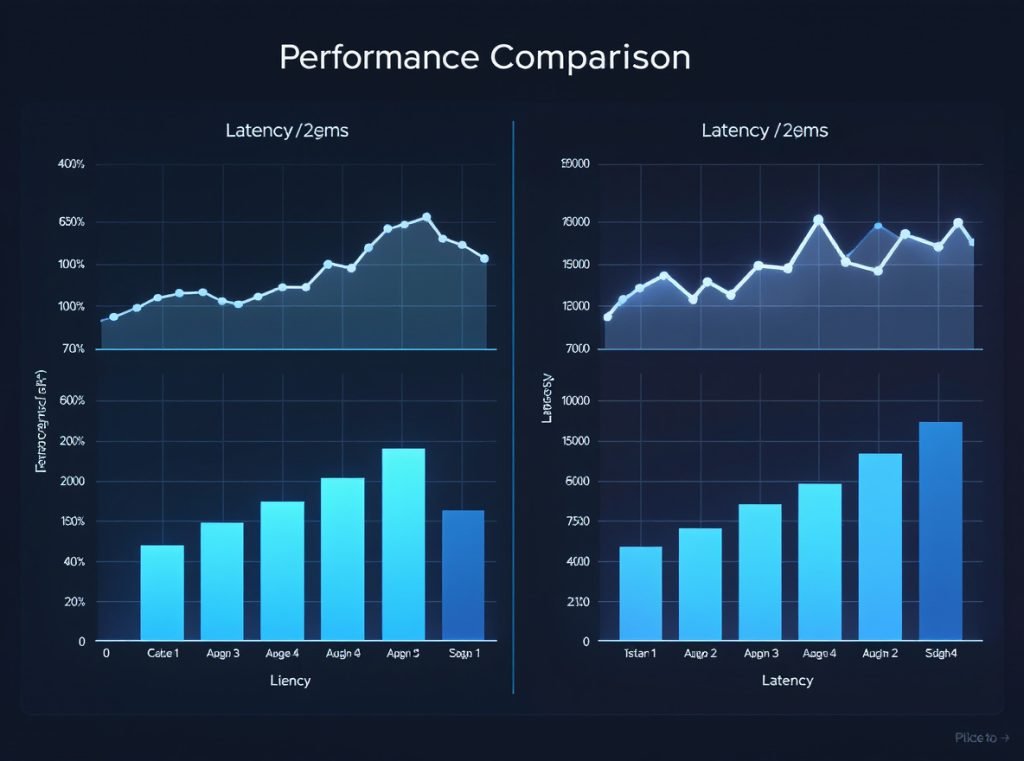
Modern wireless gaming headphones now achieve latency levels virtually identical to wired alternatives, with premium 2.4GHz wireless systems reaching 10-25ms compared to wired headphones’ 5-10ms. For most competitive gamers, this 10-15ms difference proves imperceptible during actual gameplay.
Technology Convergence
Premium wireless gaming technology has advanced dramatically over recent years. The best wireless gaming headsets with USB dongles achieve the lowest possible wireless latency, often matching or nearly matching wired performance while offering superior convenience and functionality.
Professional Esports Adoption
Many professional esports players now use wireless gaming headphones during tournaments and streaming, indicating that performance differences have become minimal at the highest competitive levels. This professional endorsement drives consumer confidence in wireless solutions.
The practical advantages of wireless often outweigh minimal latency differences:
• Freedom of movement: Eliminates cable snags during intense gaming sessions and tournament play
• Clean setup aesthetics: Reduces cable management complexity in streaming and gaming setups
• Platform versatility: Easy switching between gaming platforms without cable reconnection
• Advanced features: Simultaneous Bluetooth connectivity, swappable batteries, and multi-device pairing
Remaining Wired Advantages:
• Absolute minimum latency: 5-10ms passive mode performance
• Unlimited battery life: No charging concerns during extended gaming sessions
• Universal compatibility: Works across all platforms without driver requirements
• Lower cost for equivalent audio quality: No wireless technology premium
The market trend clearly favors wireless solutions, creating significant opportunities for manufacturers and distributors to focus on wireless gaming audio products that meet professional performance standards.
How Can You Test and Measure Your Headphones’ Gaming Latency?
Understanding your headphones’ actual latency performance helps verify manufacturer specifications and optimize gaming setups. Several testing methods exist for measuring audio delay with varying accuracy levels.
Professional reviewers use sophisticated round-trip latency testing with controlled audio loops and high-speed cameras, while consumers can use smartphone apps like OboeTester or desktop applications that measure round-trip latency using audio loopback methods to get reasonably accurate measurements.

Professional Testing Methods
Organizations like RTINGS use sophisticated equipment including audio interfaces (Focusrite Scarlett 18i20), Digital Audio Workstations (Reaper, Pro Tools), and high-speed cameras for visual confirmation. These methods involve generating controlled audio signals, recording looped-back audio, and calculating time offsets using normalized correlation algorithms.
Consumer Testing Solutions
Desktop applications can generate test tones while measuring delay between signal generation and audio output. Popular options include audio editing software with latency monitoring features and specialized testing applications.
Mobile Testing Apps
Smartphone applications like OboeTester provide convenient latency testing by using the phone’s microphone to detect when audio plays through headphones. These apps offer quick, reasonably accurate measurements for general performance verification.
Practical Testing Guidelines:
• Test in your actual gaming environment with typical volume levels and ambient conditions
• Compare wireless versus wired performance if both options available
• Test with gaming modes both enabled and disabled to measure effectiveness
• Measure latency across different connected devices (PC, PlayStation, Xbox, mobile)
• Document results for future reference and performance comparison over time
Regular testing helps ensure optimal gaming setup performance and identifies any latency increases that might develop through firmware updates, hardware aging, or environmental interference.
What Should Wholesalers Know About the Low-Latency Gaming Market?
The competitive gaming headphone market presents exceptional growth opportunities driven by esports expansion and increasing performance awareness among casual gamers. Understanding market dynamics and customer requirements drives successful wholesale strategies.
The global gaming headsets market expects to reach $4.60 billion by 2030, growing at 9.60% CAGR, with low-latency wireless technology adoption identified as a key growth driver contributing +1.5% impact on CAGR forecasts. The U.S. market specifically targets $1.36 billion by 2030 with 6.20% CAGR growth.

Key Market Growth Drivers
Esports and competitive gaming expansion represents the strongest market driver, contributing +2.1% CAGR impact globally. Cross-platform compatibility demand shows +2.3% CAGR impact, while rapid adoption of low-latency wireless chips contributes +1.5% CAGR growth.
Premium Product Positioning
Premium wireless headsets with sub-20ms latency command significantly higher margins than basic wireless models. Platform-specific optimization (PC, PlayStation, Xbox variants) creates multiple SKU opportunities for maximum market coverage.
Critical Wholesale Specifications:
• Sub-20ms wireless latency: Essential for competitive market positioning and premium pricing
• 2.4GHz + Bluetooth dual connectivity: Provides versatility appealing to broader customer base
• Platform-specific variants: Ensures maximum compatibility across gaming ecosystems
• Professional esports endorsements: Builds credibility and drives aspirational purchasing patterns
• Extended battery life: 50+ hours or swappable batteries for convenience and user satisfaction
Market Opportunities
Esports sponsorship visibility drives consumer demand for tournament-grade specifications, creating strong aspirational purchasing patterns. The technical specifications directly translate to competitive advantages, making this an attractive category for wholesalers targeting serious gaming demographics.
For businesses seeking to enter or expand in the gaming audio market, partnering with experienced manufacturers like Osmarto provides access to cutting-edge low-latency technologies and market insights. Contact our wholesale team to discuss opportunities in this high-growth segment and learn about the latest gaming headphone innovations that can help your business succeed in the dynamic competitive gaming market.
Summary
Low-latency headphones significantly impact competitive gaming performance, with wired options achieving 5-10ms and premium wireless systems like the Razer BlackShark V3 Pro reaching 10ms latency. Modern 2.4GHz wireless technology now offers performance nearly matching wired alternatives while providing superior convenience for competitive gaming applications.