Skip to content
If you’ve ever stood in the audio section wondering whether to grab headphones, earbuds, or earphones, you’re not alone. These terms get thrown around interchangeably, leaving many people confused about what they’re actually buying for their business or personal use.
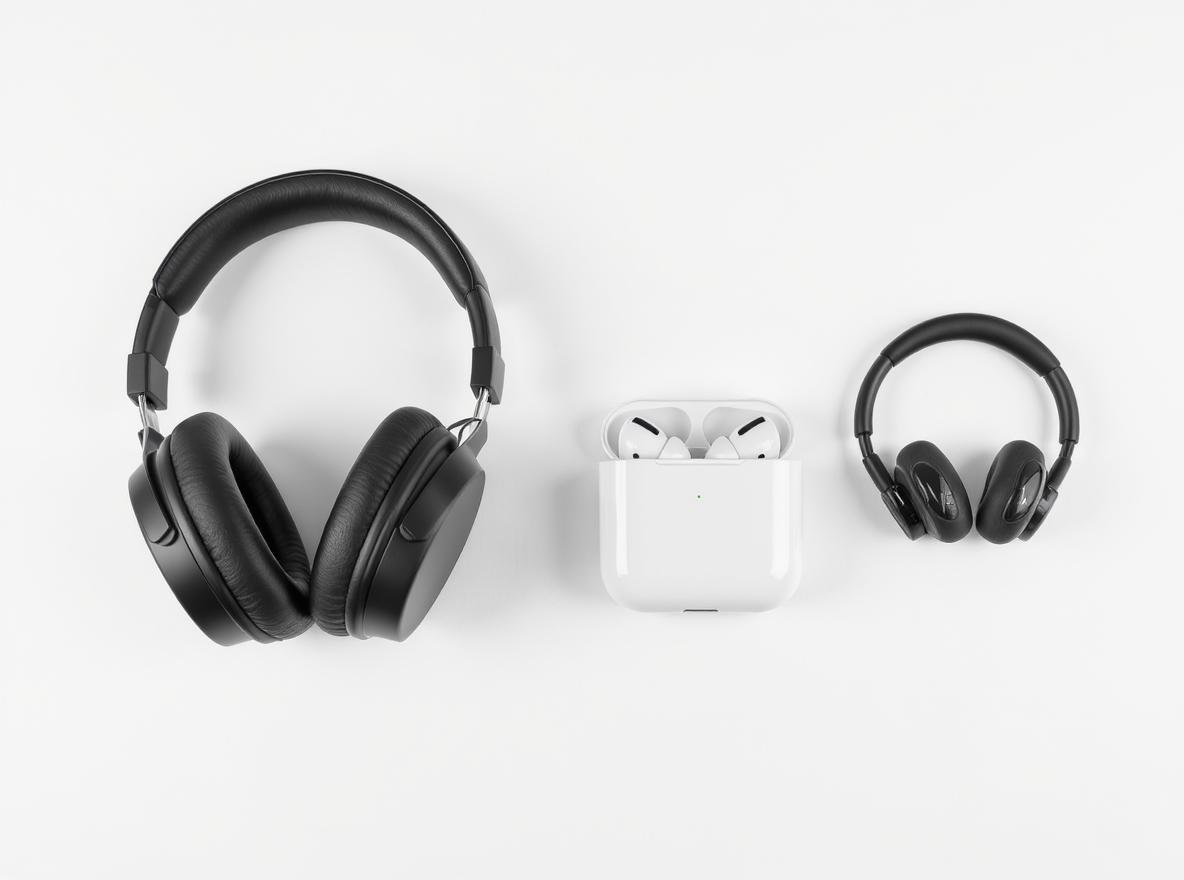
The main differences lie in design and ear placement: headphones feature ear cups connected by a headband that sits over your head, earbuds rest in the outer ear (concha) without entering the ear canal, and earphones are inserted directly into your ear canal with silicone or foam tips. Each type offers distinct advantages for sound quality, comfort, portability, and noise isolation.
Let’s dive deeper into these differences so you can make the right choice for your wholesale business or customer needs.
Are Headphones and Earbuds Actually the Same Thing?
Understanding the terminology matters whether you’re sourcing audio products for retail or choosing the right type for your customers’ specific needs.
No, headphones and earbuds are completely different products with distinct designs. Headphones feature drivers housed in ear cups connected by a headband, while earbuds are small devices that rest in the outer ear without any headband or connecting structure between units.

The confusion often stems from people using “headphones” as an umbrella term for all personal audio devices. However, in manufacturing and wholesale, these distinctions are crucial for accurate product descriptions and customer satisfaction.
Headphones come in two primary configurations that affect their performance characteristics significantly. Over-ear (circumaural) models completely enclose your ears with large ear cups, creating an acoustic seal around the entire outer ear. On-ear (supra-aural) headphones rest directly on your ears with smaller cups, offering a compromise between portability and sound quality.
Earbuds rest against the ear canal opening in the concha (outer ear) but don’t form a seal inside the canal. They typically feature hard plastic housing without silicone tips and allow ambient sound to pass through naturally. Classic examples include Apple AirPods standard models and traditional iPod earbuds.
| Feature | Headphones | Earbuds |
|---|---|---|
| Design | Headband with ear cups | Individual units, no headband |
| Placement | Over or on ears | Rest in outer ear (concha) |
| Seal Type | Around or on ear | No ear canal seal |
| Driver Size | 30-50mm typically | 6-12mm typically |
| Noise Isolation | Good to excellent | Minimal |
What Makes Earphones Different from Earbuds?
This distinction is particularly important for wholesale buyers who need to understand product specifications and customer applications accurately.
Earphones, also called in-ear headphones or in-ear monitors (IEMs), are designed to be inserted directly into the ear canal with silicone or foam tips that create an acoustic seal. Earbuds sit in the outer ear without entering the canal, providing no seal and minimal noise isolation.
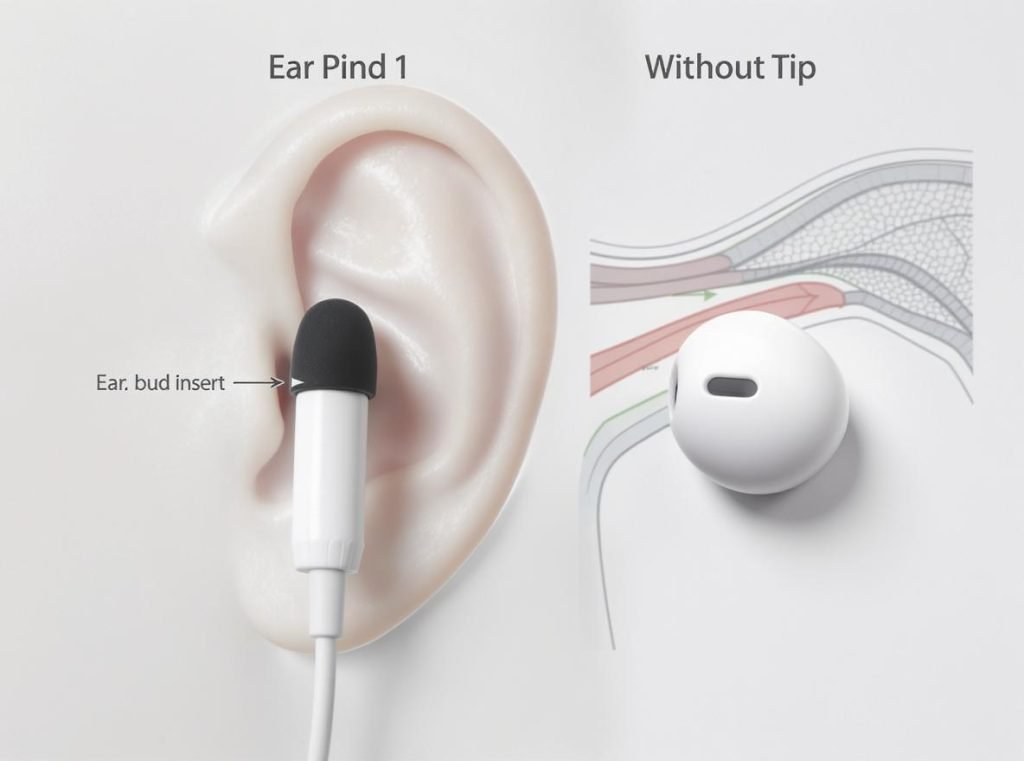
The positioning difference dramatically impacts both acoustic performance and user experience. Earphones create a seal within your ear canal, typically providing 15-23dB of passive noise isolation depending on tip design and insertion depth. This seal prevents sound leakage and blocks external noise effectively.
Earbuds rely entirely on their shape to stay positioned within the outer ear structure. Without an ear canal seal, they can’t provide meaningful noise isolation, and sound leakage occurs in both directions – audio escapes to annoy others, while ambient noise interferes with listening.
From a manufacturing perspective, earphones require more precision engineering to achieve proper fit across different ear anatomies. Quality models include multiple ear tip sizes and materials to accommodate various ear canal shapes and sizes.
Deep-sealing earphones can provide approximately 23dB of noise isolation, while shallow-sealing variants offer around 15dB. This difference significantly affects their suitability for different environments and use cases.
- Earphones advantages: Superior noise isolation, minimal sound leakage, secure fit during movement, intimate sound delivery
- Earbuds advantages: Comfortable for extended wear, situational awareness, easier insertion/removal, no ear canal pressure
Which Type Offers Superior Sound Quality?
Sound quality considerations vary significantly between categories, directly affecting customer satisfaction and your product positioning in competitive markets.
Headphones generally provide superior sound quality due to larger drivers (30-50mm) and better acoustic engineering capabilities. High-end earphones can match headphone performance in certain frequency ranges, while earbuds typically offer the most compromised audio experience due to their open design.
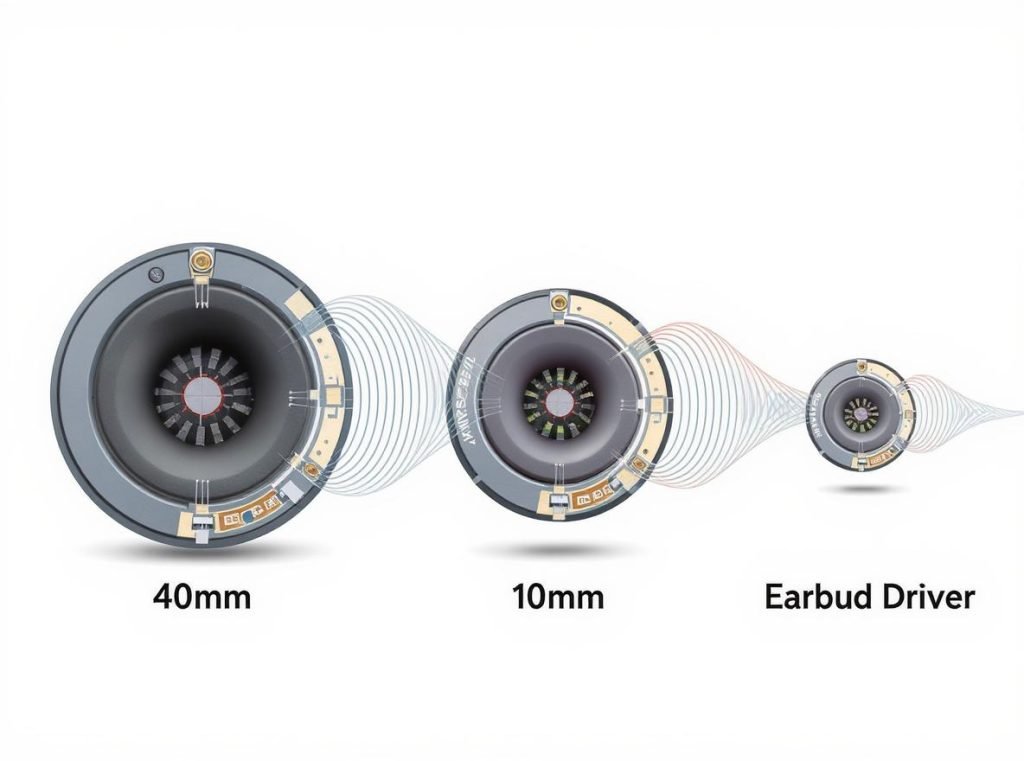
The relationship between driver size and audio performance is fundamental to understanding quality differences. Larger drivers in headphones can move more air volume, resulting in more powerful bass response and better handling of complex musical passages. Most quality headphones use drivers between 40-50mm, allowing superior frequency range and dynamic range compared to smaller alternatives.
Headphones also benefit from their positioning away from the ear canal, creating a more natural soundstage similar to listening to speakers in a room rather than having sound injected directly into your ears. This positioning advantage contributes to their continued preference among audio professionals and serious listeners.
However, premium earphones can deliver exceptional clarity and detail due to their proximity to the eardrum. This close positioning allows for efficient sound delivery with minimal power requirements, though the experience feels less natural than headphone listening for most users.
Modern wireless earbuds have improved significantly with advanced driver technology and digital signal processing, but still face physical limitations due to tiny drivers (6-12mm) and battery constraints affecting amplification capabilities.
| Audio Characteristic | Headphones | Earphones | Earbuds |
|---|---|---|---|
| Bass Response (20-250Hz) | Excellent | Good with seal | Poor without seal |
| Soundstage Width | Wide, natural | Narrow, precise | Very limited |
| Detail Retrieval | Very good | Excellent | Good |
| Volume Capability | High | High | Moderate |
| Frequency Range | 20Hz-20kHz+ | 20Hz-20kHz | 40Hz-17kHz typical |
How Do Comfort Levels Compare During Extended Use?
Comfort directly impacts user satisfaction and return rates, making this a crucial consideration for retailers, distributors, and end-user recommendations.
Comfort varies significantly based on individual anatomy and intended use duration. Over-ear headphones distribute weight across the head and generally provide the best comfort for sessions exceeding 2-3 hours. Earphones offer excellent stability but may cause ear canal fatigue. Earbuds provide comfortable wear for most people during short to medium sessions.
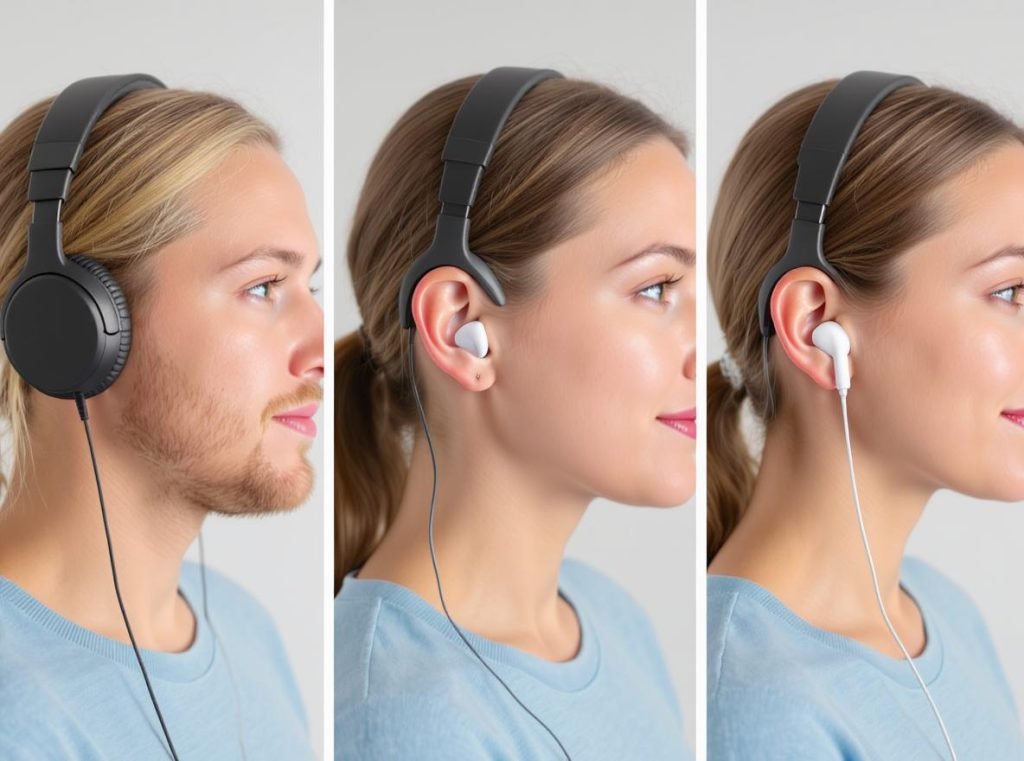
Headphone comfort depends heavily on several engineering factors including padding quality, clamping force distribution, and overall weight management. Well-designed over-ear models with proper padding can be worn comfortably for 6-8 hours, making them ideal for professional applications. However, cheaper models often cause pressure points on the head and ears, leading to discomfort within 1-2 hours.
The headband design also affects hairstyle preservation, which some users consider problematic for professional or social situations. Weight distribution becomes critical for extended use – lighter materials and ergonomic design significantly improve long-term comfort.
Earphone comfort depends almost entirely on proper tip selection and insertion technique. When fitted correctly with appropriate silicone or foam tips, quality earphones can provide excellent comfort for 4-6 hours. However, improper fit or low-quality tips can cause ear canal irritation, pressure sensations, or pain within 30-60 minutes.
Earbuds strike a middle ground by resting gently in the outer ear without creating internal pressure or requiring significant clamping force. They’re exceptionally easy to insert and remove, making them convenient for frequent use throughout the day. However, their loose fit makes them unsuitable for physical activity or situations requiring secure positioning.
What About Portability and Real-World Convenience?
Transportation, storage, and usage convenience significantly impact product appeal, especially for mobile professionals, travelers, and active users.
Earbuds dominate portability with compact charging cases that fit easily in pockets. Earphones offer good portability but require more space for cables or larger charging cases. Headphones present the biggest portability challenge, requiring dedicated bag space or neck-wearing during transport.
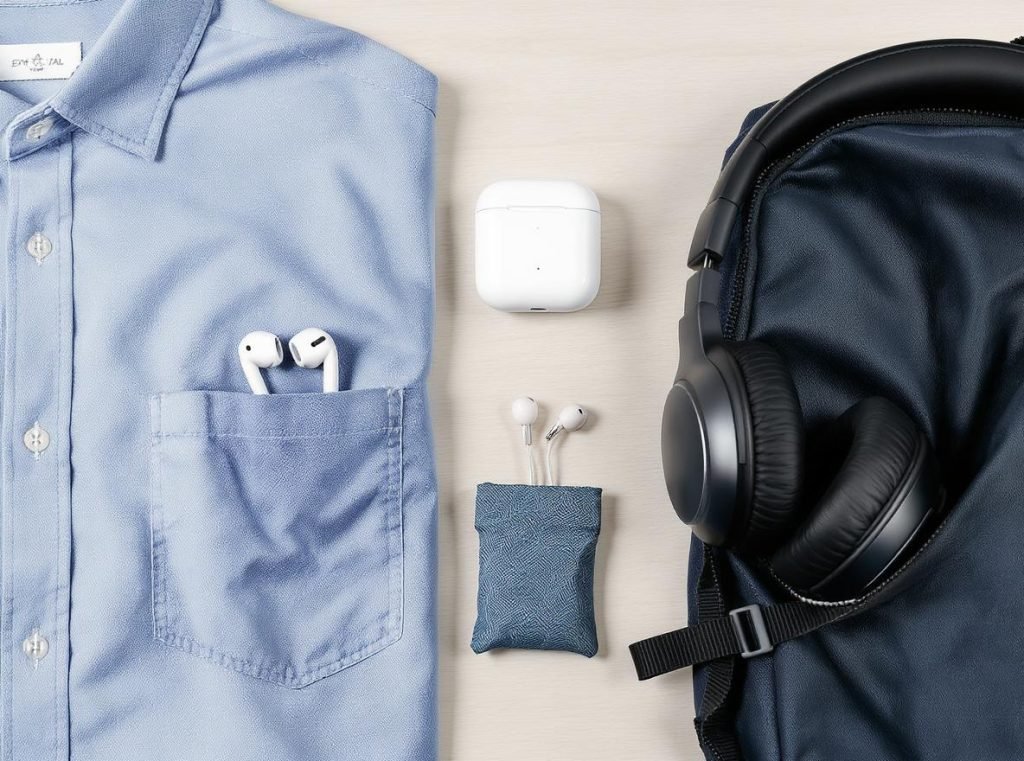
Modern true wireless earbuds represent the pinnacle of portable audio convenience. Complete systems typically weigh under 100 grams including charging cases and occupy minimal pocket space. The charging case provides additional battery life while protecting the earbuds from damage and loss.
Wireless earphone systems require larger charging cases due to increased battery capacity needs and often include cable management solutions for wired variants. While more portable than headphones, they still require dedicated pocket or bag space and careful handling during transport.
Even foldable headphones present significant portability challenges. Their weight makes pocket storage impractical, and their bulk requires dedicated bag compartments or carrying cases. Many users resort to wearing them around their necks when not in use, which can be uncomfortable and unprofessional in business settings.
The portability factor has driven massive market growth in the true wireless segment, with convenience often outweighing minor sound quality compromises for mobile users.
- Business travel implications: Compact audio devices command premium pricing in travel and corporate markets
- Storage solutions: Foldable designs and protective cases address headphone portability concerns
- Activity considerations: Secure fit becomes crucial for fitness and outdoor applications
Which Option Offers the Best Durability and Longevity?
Product longevity affects both customer satisfaction and total cost of ownership, making durability analysis essential for wholesale purchasing decisions.
Headphones typically offer superior longevity with 15-25+ year lifespans when properly maintained, due to larger construction and fewer failure points. Quality earphones can last 5-10 years with replaceable cables extending usability. Wireless earbuds face the most durability challenges, typically lasting 2-4 years due to battery degradation and miniaturized components.

Headphone durability benefits from robust construction with serviceable components. Quality models feature replaceable ear pads, detachable cables, and repairable drivers. The larger housing provides better heat dissipation and component protection, while solid-state electronics can function for decades with proper care.
Professional-grade headphones often include user-replaceable parts and comprehensive warranty coverage, making them cost-effective for long-term use in commercial applications.
Wired earphones can achieve excellent longevity when the cable remains intact, with detachable cable models offering significant advantages for commercial use. The primary failure points typically occur at cable stress points near connectors, making cable replaceability a valuable feature.
Wireless earbuds face multiple durability challenges that limit their commercial lifespan. Tiny lithium batteries degrade significantly after 300-500 charge cycles, effectively limiting usable life to 2-3 years regardless of other component condition. Miniaturized electronics, small charging ports, and sealed construction make repairs economically unfeasible.
| Durability Factor | Headphones | Earphones | Earbuds |
|---|---|---|---|
| Expected Lifespan | 15-25+ years | 5-10 years | 2-4 years |
| Repairability | High | Medium | Very low |
| Common Failures | Cable, pads | Cable, tips | Battery, charging |
| Replacement Parts | Widely available | Limited | Rarely available |
| Commercial Viability | Excellent | Good | Limited |
How Do Price Points and Value Propositions Compare?
Understanding price positioning across categories helps retailers and distributors make informed inventory decisions and provide accurate customer guidance.
Price ranges overlap significantly across categories, but entry-level positioning differs substantially. Budget earbuds start around $20-30, basic headphones begin at $30-50, and quality earphones typically start at $40-60. Premium products in each category can reach similar high-end price points, with professional headphones often commanding the highest absolute prices.
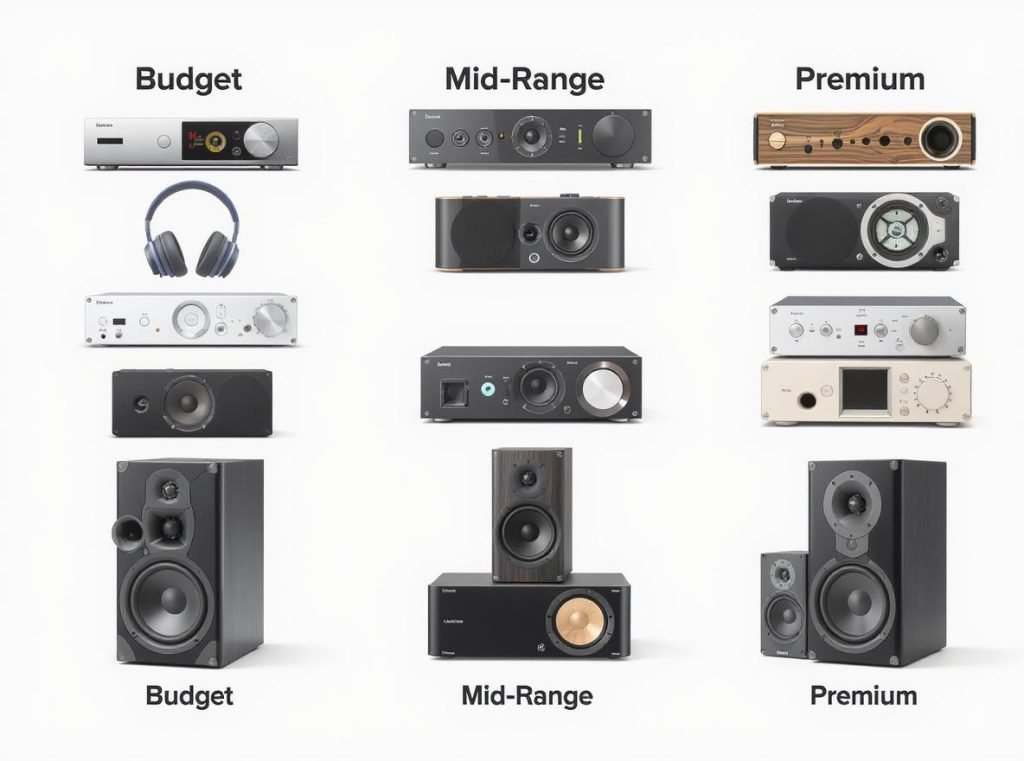
The budget segment reveals important distinctions in value delivery. Basic earbuds can provide acceptable performance for casual listening at very low price points, making them attractive for volume sales and promotional products. However, quality improvements are dramatic as prices increase to the $60-100 range.
Entry-level headphones require higher minimum pricing due to more complex construction and larger drivers, but they often provide better sound quality than similarly priced earbuds. The $50-150 range represents the sweet spot for quality headphones with good materials and engineering.
Earphones typically require higher entry-level pricing due to precision manufacturing requirements for proper fit and seal. However, mid-range earphones ($80-200) often provide the best balance of sound quality, portability, and features for most users.
Premium pricing reveals different market dynamics. Audiophile headphones can exceed $1,000 with professional studio monitors reaching several thousand dollars. High-end earphones typically peak around $500-800, while flagship wireless earbuds max out at $300-400.
The wireless technology premium significantly affects pricing across all categories. Wireless versions typically cost 50-100% more than wired equivalents due to additional components including batteries, Bluetooth chips, charging cases, and associated engineering complexity.
| Price Segment | Headphones | Earphones | Earbuds |
|---|---|---|---|
| Budget ($20-60) | Basic on-ear | Entry IEMs | Wireless basics |
| Mid-range ($60-200) | Quality over-ear | Premium IEMs | Feature-rich wireless |
| Premium ($200-500) | Audiophile grade | Professional IEMs | Flagship wireless |
| Ultra-premium ($500+) | Studio reference | Custom IEMs | Limited options |
Which Type Should Different Customer Segments Choose?
Providing clear guidance helps customers make confident purchases while reducing returns and improving satisfaction across your customer base.
The optimal choice depends on primary use case and individual priorities. Recommend headphones for home listening, professional work, and situations prioritizing sound quality. Suggest earphones for active use, commuting, and applications requiring noise isolation. Point customers toward earbuds for maximum convenience, casual listening, and situations requiring frequent insertion/removal.

Headphone recommendations work best for customers who prioritize sound quality above convenience factors. They excel for home offices, gaming applications, professional audio work, and any situation where portability isn’t a primary concern. The superior driver size and acoustic engineering make them ideal for critical listening and long-duration use.
Their comfort advantage during extended sessions makes them particularly suitable for remote workers, content creators, and anyone spending multiple hours daily with audio devices.
Earphone recommendations suit customers with active lifestyles, noisy commuting environments, or specific needs for sound isolation. They provide the best balance of portability and sound quality while offering secure fit for physical activity. The noise isolation capabilities make them excellent for concentration in busy environments and travel applications.
Professional applications like live sound monitoring, aviation, and industrial environments often favor earphones due to their secure fit and isolation characteristics.
Earbud recommendations work best for customers prioritizing ultimate convenience and portability. They’re perfect for casual listening, quick phone calls, and situations requiring frequent device insertion and removal. The situational awareness they provide makes them suitable for urban environments where safety requires ambient sound awareness.
Many satisfied customers ultimately own multiple types for different situations – headphones for home use and earbuds for mobile convenience, maximizing utility across various scenarios.
What About Future Technology Trends and Market Direction?
Understanding market evolution helps wholesale buyers make informed inventory investments and anticipate customer demands.
The audio market continues evolving toward wireless convenience while improving sound quality across all categories. True wireless earbuds show the strongest growth, driven by smartphone integration and lifestyle convenience. However, headphones maintain their position for quality-focused applications, while earphones evolve toward hybrid designs combining wired reliability with wireless convenience.
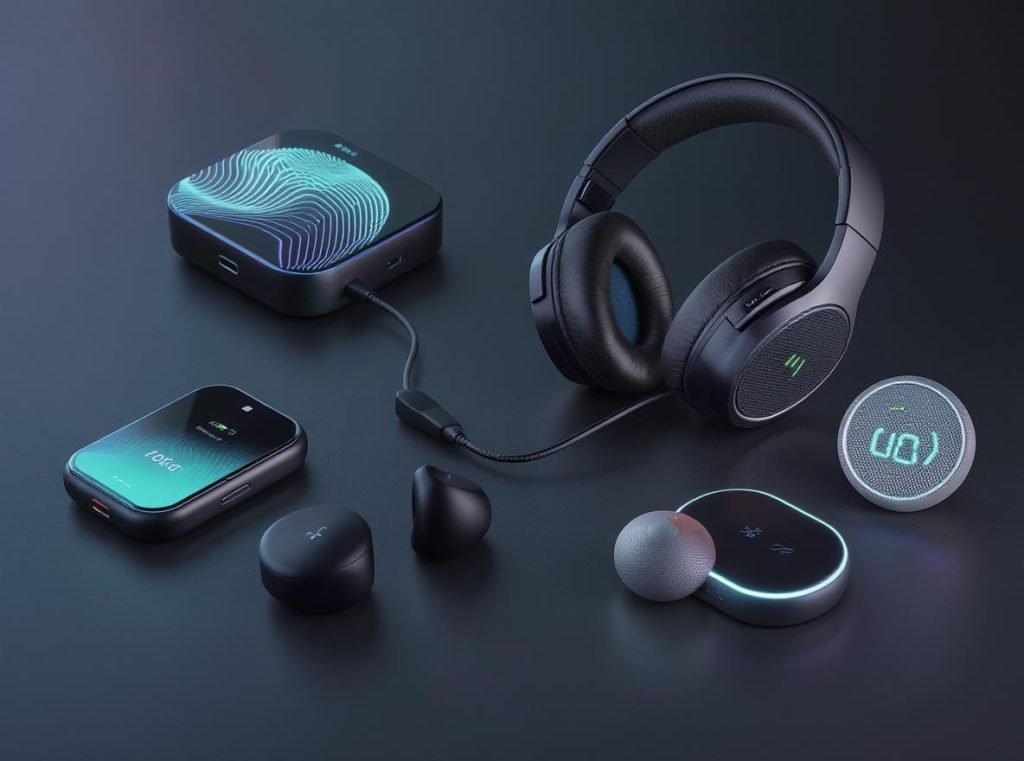
True wireless technology has fundamentally changed consumer expectations, with convenience often outweighing minor sound quality compromises. Advanced features like active noise cancellation, spatial audio, and health monitoring are becoming standard in premium segments across all categories.
Battery technology improvements and more efficient drivers are extending wireless device lifespans while reducing size constraints. However, the fundamental physics of sound reproduction still favor larger drivers and proper acoustic design.
Professional and audiophile markets continue to value wired connections for reliability and ultimate sound quality, creating sustained demand for traditional headphone and earphone designs alongside wireless innovations.
The convergence of audio with smart device ecosystems creates new opportunities for features like automatic device switching, voice assistant integration, and personalized sound profiles that adapt to individual hearing characteristics.
- Wireless technology: Improved codecs and connection stability across all categories
- Smart features: Integration with health monitoring, voice assistants, and ecosystem connectivity
- Sustainability: Increased focus on repairability and recyclable materials
- Customization: Personalized fit and sound tuning becoming more accessible
Summary
Understanding the differences between headphones, earbuds, and earphones enables better purchasing decisions for both businesses and consumers. Each type serves distinct market segments with specific performance characteristics, comfort profiles, and use case advantages.
Ready to source quality audio products for your business? Contact Osmarto today for competitive wholesale pricing on headphones, earbuds, and earphones. Our experienced team can help you select the right product mix for your target market and provide comprehensive support for your audio product needs.