Skip to content
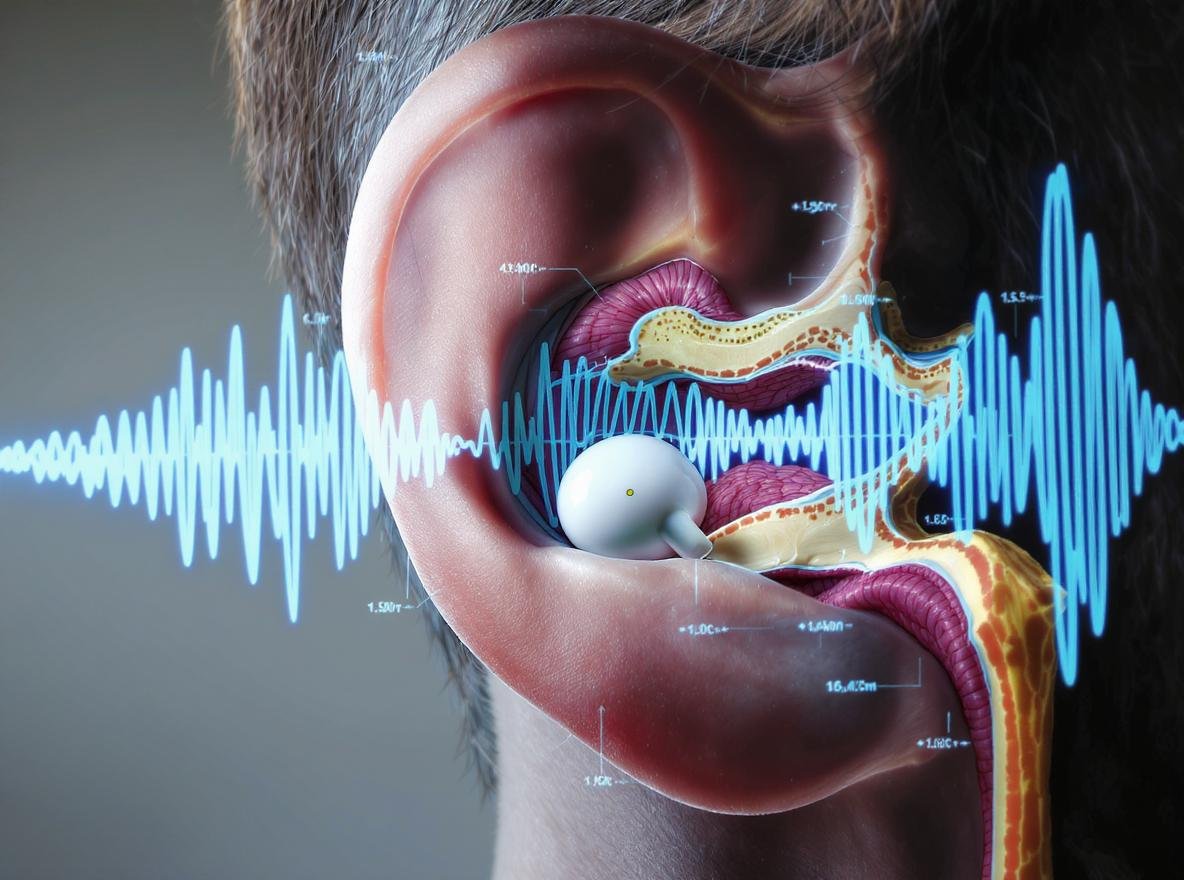
Ever wondered why your voice sounds unnaturally hollow or “boomy” when wearing certain earbuds? You’re experiencing the occlusion effect – a measurable acoustic phenomenon that affects millions of earbud users worldwide, creating that uncomfortable “talking in a barrel” sensation.
The occlusion effect occurs when earbuds seal your ear canal, causing bone-conducted sounds from your own body to become trapped and amplified by 20-25 dB at low frequencies (200-500 Hz), making your voice, footsteps, and chewing sounds unnaturally prominent. This happens because vibrations that normally escape through your open ear canal get reflected back toward your eardrum when the canal is blocked.
Understanding the science behind this effect and implementing proven solutions will transform your earbud experience from uncomfortable to enjoyable.
What Exactly Is the Occlusion Effect?
The occlusion effect is a scientifically documented acoustic phenomenon that significantly impacts comfort and usability for earbud users across all demographics.
The occlusion effect is the measurable increase in sound pressure level (20-25 dB or more) that occurs when your ear canal is sealed, causing bone-conducted vibrations from speaking, chewing, and walking to reflect back toward your eardrum instead of naturally escaping through the open ear. This creates an objectively quantifiable difference between occluded and open ear conditions.
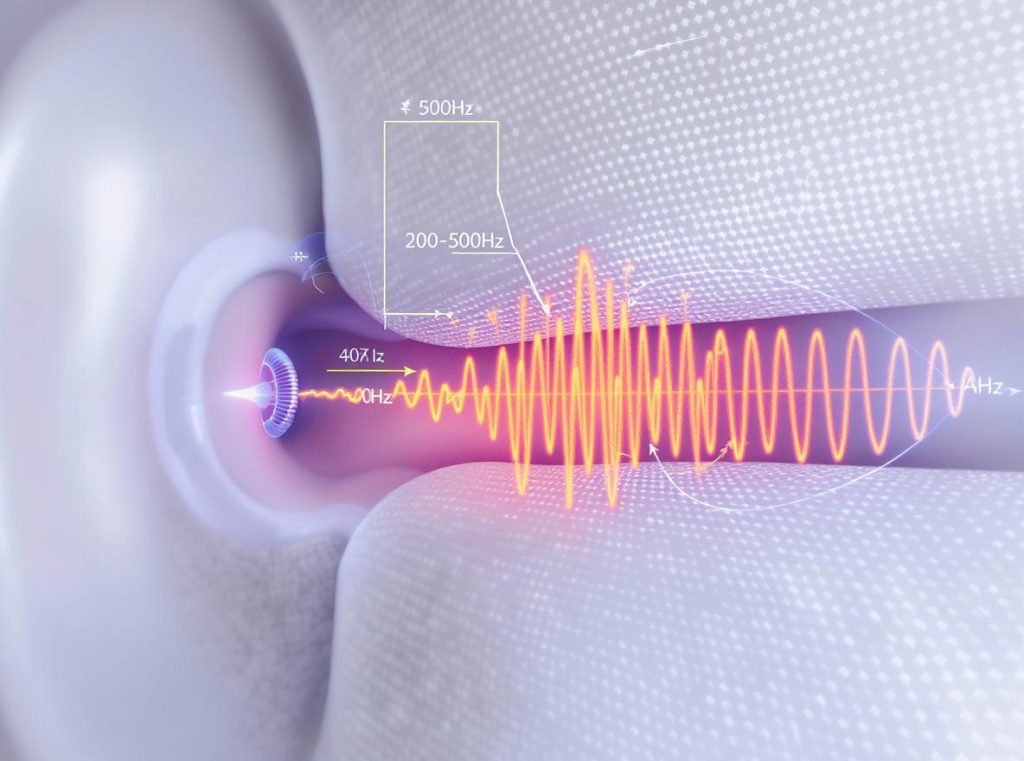
When you speak, laugh, chew, or walk, vibrations travel through your skull and jawbone directly to your inner ear via bone conduction. In normal circumstances, these low-frequency sounds (primarily 200-500 Hz) escape through your open ear canal. However, when earbuds create a seal, these vibrations become trapped in the enclosed air space and amplify significantly.
The effect manifests as:
- Your own voice sounding hollow, boomy, or echoing
- Amplified chewing and swallowing sounds
- Footsteps resonating unnaturally in your head
- Breathing sounds becoming prominently audible
- General feeling of being “plugged up” or isolated
Research shows the occlusion effect is most pronounced at frequencies below 1 kHz, with the strongest impact occurring in the 200-500 Hz range where speech fundamentals reside. Individual sensitivity varies significantly – some users barely notice mild occlusion while others find it completely intolerable.
For wholesale buyers and distributors, understanding occlusion sensitivity is crucial since it’s one of the primary reasons customers return or avoid certain earbud styles, directly impacting business success.
Why Do Some Earbuds Cause More Occlusion Than Others?
Earbud design fundamentals directly determine occlusion intensity, making design knowledge essential for both users and industry professionals sourcing products.
The depth of insertion, seal quality, and enclosed air volume are the primary factors determining occlusion intensity – counterintuitively, deeper insertion actually reduces occlusion effects because it places the seal in the less vibration-sensitive bony portion of the ear canal. Understanding these relationships helps explain why different earbud designs produce vastly different user experiences.
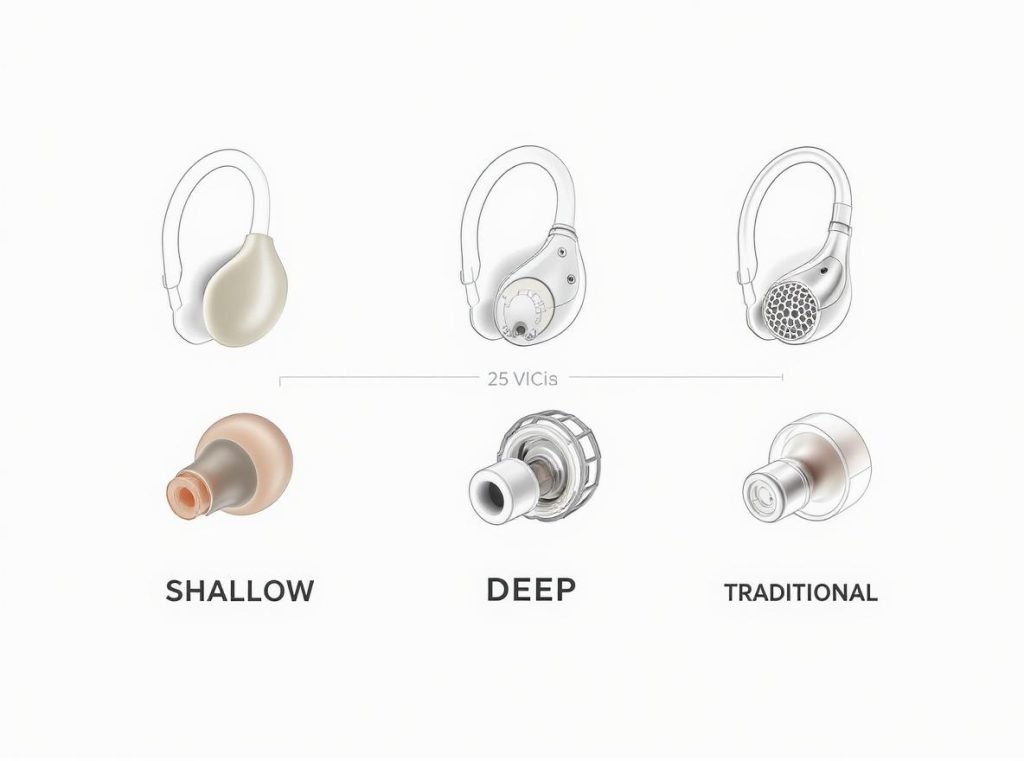
Critical Design Factors:
| Design Element | Occlusion Impact | Scientific Explanation |
|---|---|---|
| Shallow insertion | Highest occlusion | Seals cartilaginous ear canal where vibrations are strongest |
| Deep insertion | Lower occlusion | Positions seal in bony canal portion with less vibration transmission |
| Large air volume | Reduced occlusion | More space allows pressure waves to dissipate |
| Tight seal quality | Higher occlusion | Complete seal traps more vibrations |
Earbud Type Comparison:
Closed-Fit In-Ear Models:
Create complete ear canal seals for maximum noise isolation but typically produce the strongest occlusion effects. These designs prioritize external noise blocking over internal comfort.
Receiver-in-Canal (RIC) Designs:
Position the speaker element inside the ear canal, reducing the distance sound must travel and minimizing reflection patterns that contribute to occlusion. This approach often provides better occlusion management.
Open-Fit and Semi-Open Designs:
Intentionally allow some air circulation around the earbud, significantly reducing trapped air volume and associated occlusion effects while maintaining reasonable audio quality.
At Osmarto, our engineering team specifically addresses these design challenges by offering multiple earbud architectures within our product lines. We work closely with distributors to help them understand which designs serve different market segments, particularly customers with occlusion sensitivity who represent a significant portion of the premium earbud market.
How Can I Choose Earbuds That Minimize Occlusion?
Selecting earbuds with appropriate occlusion management features requires understanding both design principles and individual user needs.
Prioritize earbuds with open-fit designs, RIC (Receiver-in-Canal) architecture, built-in venting systems, or modern Active Noise Cancelling models with transparency modes that use digital processing to counteract occlusion effects. The key is matching earbud design philosophy with your specific comfort requirements.
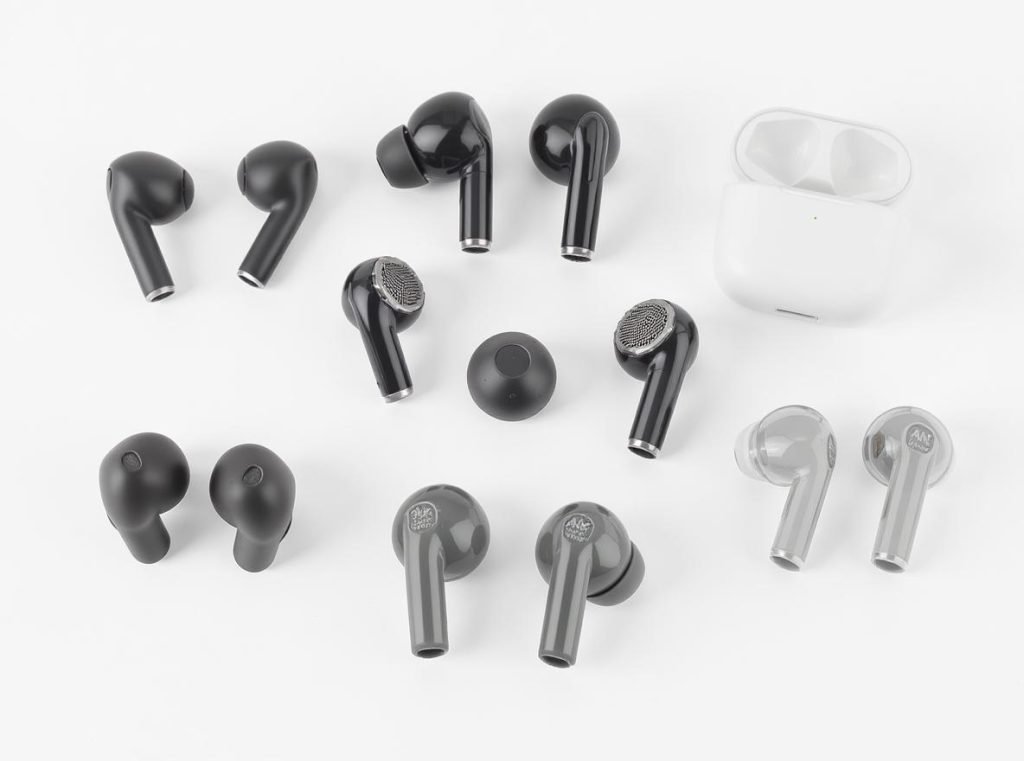
Open-Fit and Semi-Open Designs:
Modern open-ear earbuds use air conduction technology to deliver clear sound without creating complete ear canal seals. These designs eliminate most occlusion effects while maintaining situational awareness – particularly valuable for active users or professional environments.
RIC (Receiver-in-Canal) Models:
Choose earbuds where the driver sits inside your ear canal rather than in the main housing. This configuration minimizes sound reflection paths and reduces the enclosed air volume that contributes to occlusion effects.
Earbuds with Intentional Venting:
Look for models with acoustic ports or venting channels designed to release trapped low-frequency pressure. While this may slightly reduce bass response, it dramatically improves comfort for occlusion-sensitive users.
Advanced ANC with Transparency Technology:
Modern Active Noise Cancelling earbuds often include sophisticated “hear-through” or transparency modes that use external microphones and digital signal processing to actively counteract occlusion effects while maintaining noise isolation benefits.
Business Considerations for Bulk Buyers:
When sourcing earbuds for retail or distribution, offering diverse design types ensures you can serve the entire market spectrum. Our experience at Osmarto shows that approximately 30% of users experience significant occlusion sensitivity, making this a crucial market segment for business success.
Consider stocking:
- Open-fit models for occlusion-sensitive customers
- Traditional sealed models for noise isolation priority
- Hybrid designs that balance both requirements
- ANC models with advanced transparency features
What Are the Best Earbud Tip Materials for Avoiding Occlusion?
Tip material selection significantly impacts both seal characteristics and occlusion intensity, making material knowledge crucial for optimal user experience.
Silicone tips generally create less occlusion than foam tips because they provide effective seals without the complete canal filling that foam expansion creates – however, the specific durometer (hardness) and design features matter more than material type alone. Understanding material properties helps predict user experience outcomes.
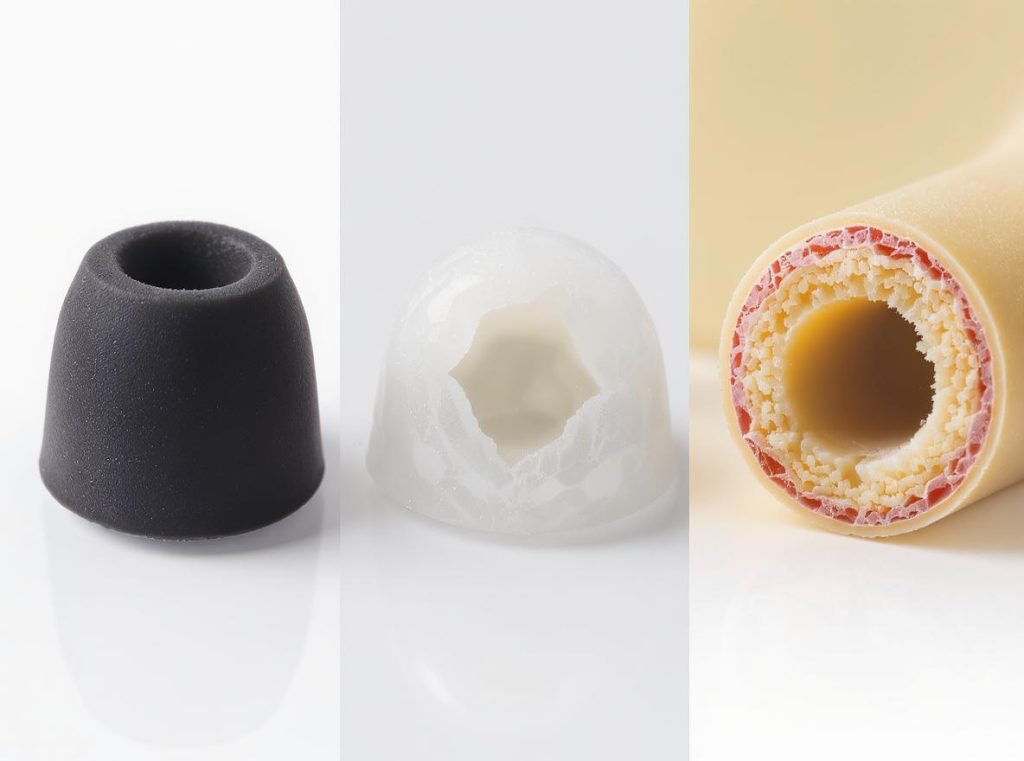
Detailed Material Comparison:
Silicone Tips Performance:
- Create consistent, predictable seals without excessive pressure
- Allow slight air movement around the seal perimeter
- Maintain stable fit characteristics over time
- Generally produce moderate occlusion levels
- Easy to clean and maintain for long-term use
Foam Tips Characteristics:
- Expand to completely fill ear canal shape for maximum isolation
- Create the tightest possible seals, often increasing occlusion effects
- Provide superior noise isolation but at comfort cost for sensitive users
- Require 10-20 seconds expansion time for proper fitting
- Need more frequent replacement due to material degradation
Advanced Hybrid Solutions:
Modern tip designs combine materials strategically – silicone exteriors for durability with softer interior materials for comfort, or foam cores with silicone outer layers for controlled expansion.
Professional Sourcing Considerations:
For wholesale and distribution businesses, offering comprehensive tip variety packs significantly reduces customer dissatisfaction and returns. Our analysis at Osmarto shows that providing multiple tip options reduces occlusion-related complaints by over 70%.
Recommended Tip Variety Strategies:
- Include 3-4 silicone sizes plus 2-3 foam sizes
- Offer different durometer silicone options (soft/medium/firm)
- Provide specialty tips like vented or flanged designs
- Consider seasonal variations based on regional preferences
This approach allows end customers to find their optimal balance between isolation and comfort, while reducing your support burden and increasing customer satisfaction.
How Do I Properly Fit Earbuds to Reduce Occlusion?
Proper fitting technique can reduce occlusion effects by 50% or more, even with standard sealed earbud designs, making technique knowledge valuable for any user.
Insert earbuds deeper rather than shallower to reduce occlusion – the bony portion of your ear canal deeper inside vibrates significantly less than the cartilaginous outer portion, so deeper seals create less sound reflection and amplification. This counterintuitive approach contradicts most users’ instincts but provides scientifically proven results.
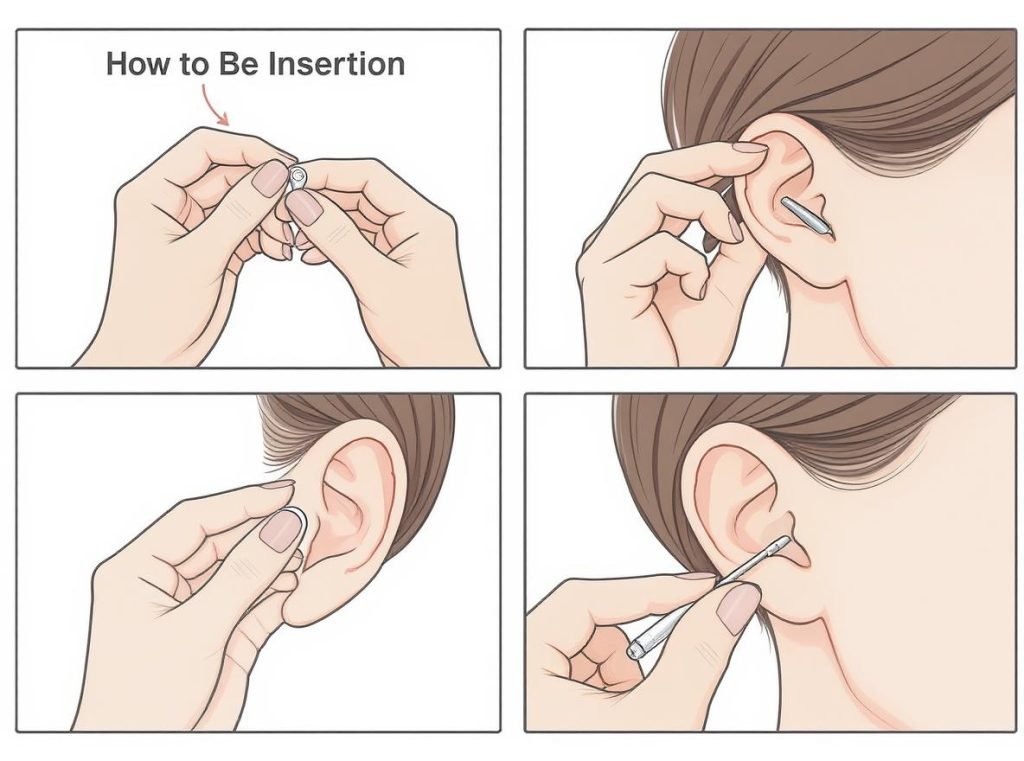
Step-by-Step Professional Fitting Process:
- Select appropriate tip size – start with medium, adjust based on comfort and seal
- Prepare your ear canal – gently pull outer ear up and back to open the canal
- Insert with controlled depth – push slightly deeper than feels natural initially
- Use twisting motion – rotate gently while inserting to ensure proper seating
- Allow foam expansion – wait 10-20 seconds for foam tips to fully expand
- Perform occlusion test – count aloud 1-5 to assess voice naturalness
Common Fitting Mistakes to Avoid:
Many users instinctively avoid deep insertion, thinking it’s uncomfortable or unsafe. However, research consistently shows that deeper insertion in the bony canal portion reduces occlusion while improving audio quality and retention.
The Professional “Sweet Spot” Method:
Find the insertion depth where you achieve good bass response and retention without excessive occlusion. This typically occurs when the tip seal sits in the transition zone between cartilaginous and bony ear canal portions.
Size Selection Strategy:
If you experience significant occlusion with properly fitted medium tips, try smaller sizes rather than larger ones. Smaller tips may create adequate seals with less complete canal filling, reducing trapped air volume.
Business Application:
For retailers and distributors, providing simple fitting instruction cards or video links significantly reduces customer support calls and returns. At Osmarto, we supply comprehensive fitting guides to our wholesale partners, helping them support their customers effectively while building brand loyalty.
Are There Technical Solutions Built Into Modern Earbuds?
Cutting-edge earbud technology now includes sophisticated solutions specifically designed to eliminate occlusion effects while maintaining audio quality and noise isolation.
Active Occlusion Cancellation (AOC) technology uses dedicated microphones and digital signal processing to detect and actively cancel the low-frequency buildup that causes occlusion, similar to how ANC works but focused specifically on internal body sounds. These advanced systems represent the current pinnacle of earbud comfort technology.

Active Occlusion Cancellation Systems:
Premium earbuds increasingly feature dedicated AOC processing that uses internal microphones to detect bone-conducted sounds and generate inverse signals to cancel the occlusion effect. This technology can provide 15-20 dB reduction in perceived occlusion while maintaining full noise isolation capabilities.
Dynamic Venting Technology:
Revolutionary MEMS (Micro-Electro-Mechanical Systems) technology enables solid-state vents that can open and close dynamically. These “smart vents” allow earbuds to switch between fully sealed (for maximum isolation) and vented (for occlusion reduction) configurations based on user preferences or automatic detection.
AI-Enhanced Sound Processing:
Advanced earbuds now incorporate artificial intelligence algorithms that distinguish between external environmental noise and internal occlusion-causing sounds, applying different processing strategies to each type for optimal user experience.
Virtual Sensing and Predictive Processing:
Sophisticated earbuds use virtual sensing technology to estimate acoustic conditions at the eardrum without requiring additional internal microphones, enabling precise occlusion management while maintaining compact form factors.
Manufacturing and Business Implications:
These advanced technologies typically command premium pricing but offer significant competitive advantages in high-end market segments. For wholesale buyers, understanding which technologies provide genuine benefits versus marketing claims helps in product selection and pricing strategies.
At Osmarto, we continuously evaluate emerging technologies for practical implementation in our product lines. Our engineering team works closely with component suppliers to integrate proven occlusion management technologies while maintaining cost-effectiveness for our wholesale partners.
What Should I Do If I Still Experience Occlusion?
Even with optimal earbud selection and fitting techniques, some users may continue experiencing problematic occlusion due to individual ear anatomy or heightened sensitivity.
Consider alternative audio delivery methods such as bone conduction headphones, open-back earbuds, or over-ear headphones that completely bypass ear canal occlusion, or consult with an audiologist for custom solutions if occlusion significantly impacts your daily activities. Sometimes the best solution involves choosing different technology rather than trying to overcome anatomical limitations.
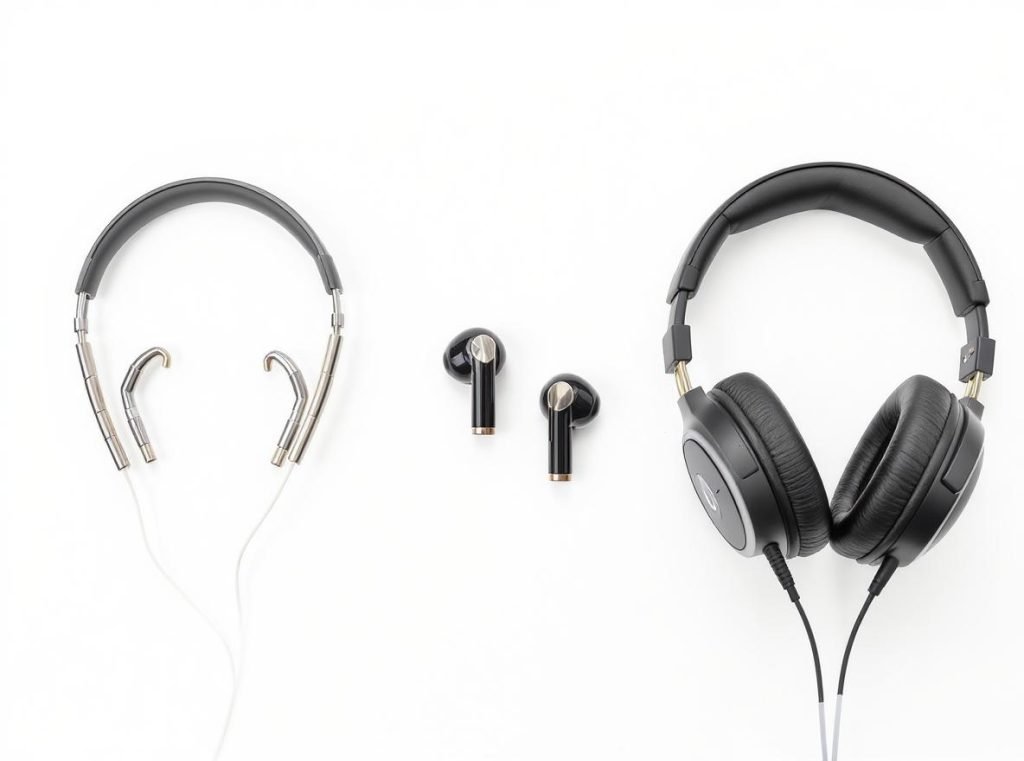
Immediate Alternative Solutions:
Bone Conduction Technology:
These devices transmit sound through your cheekbones, completely bypassing ear canal insertion. While audio quality differs from traditional earbuds, they eliminate occlusion entirely while maintaining situational awareness.
Open-Back Earbud Designs:
Specialized earbuds designed for completely open-ear listening eliminate occlusion while providing reasonable audio quality for most applications. These work particularly well for active users or office environments.
Professional Over-Ear Options:
Full-size headphones avoid ear canal insertion entirely while often providing superior audio quality and comfort for extended use sessions.
Custom-Molded Solutions:
Audiologists can create custom ear molds designed specifically for your ear anatomy, optimizing the balance between seal effectiveness and occlusion reduction. While more expensive, these solutions often provide the best long-term comfort for severely affected users.
Medical Considerations:
Persistent occlusion sensitivity across multiple earbud types may indicate underlying ear canal issues, earwax impaction, or heightened sensitivity that warrants professional evaluation.
Business Strategy for Persistent Cases:
For retailers and distributors, having relationships with alternative product categories (bone conduction, over-ear headphones) ensures you can serve customers with severe occlusion sensitivity rather than losing them entirely.
At Osmarto, we understand that no single solution works universally. Our comprehensive product portfolio includes options for users across the sensitivity spectrum, and we work with our partners to develop referral strategies for cases where traditional earbuds aren’t suitable.
Summary
The occlusion effect occurs when earbuds seal your ear canal, amplifying bone-conducted sounds by 20-25 dB at low frequencies and creating uncomfortable “barrel voice” sensations. You can minimize this effect through proper earbud selection (open-fit, RIC designs, or advanced ANC models), appropriate tip materials (typically silicone over foam), correct fitting techniques (deeper insertion reduces occlusion), and modern technologies like Active Occlusion Cancellation.
Ready to source high-quality earbuds engineered with advanced occlusion management for your customers? Contact Osmarto today for wholesale pricing on our comprehensive earbud lines designed to address comfort challenges while delivering exceptional audio quality. Our technical team provides complete support to help you select the optimal products for your market and reduce customer satisfaction issues that impact your business success.