Skip to content
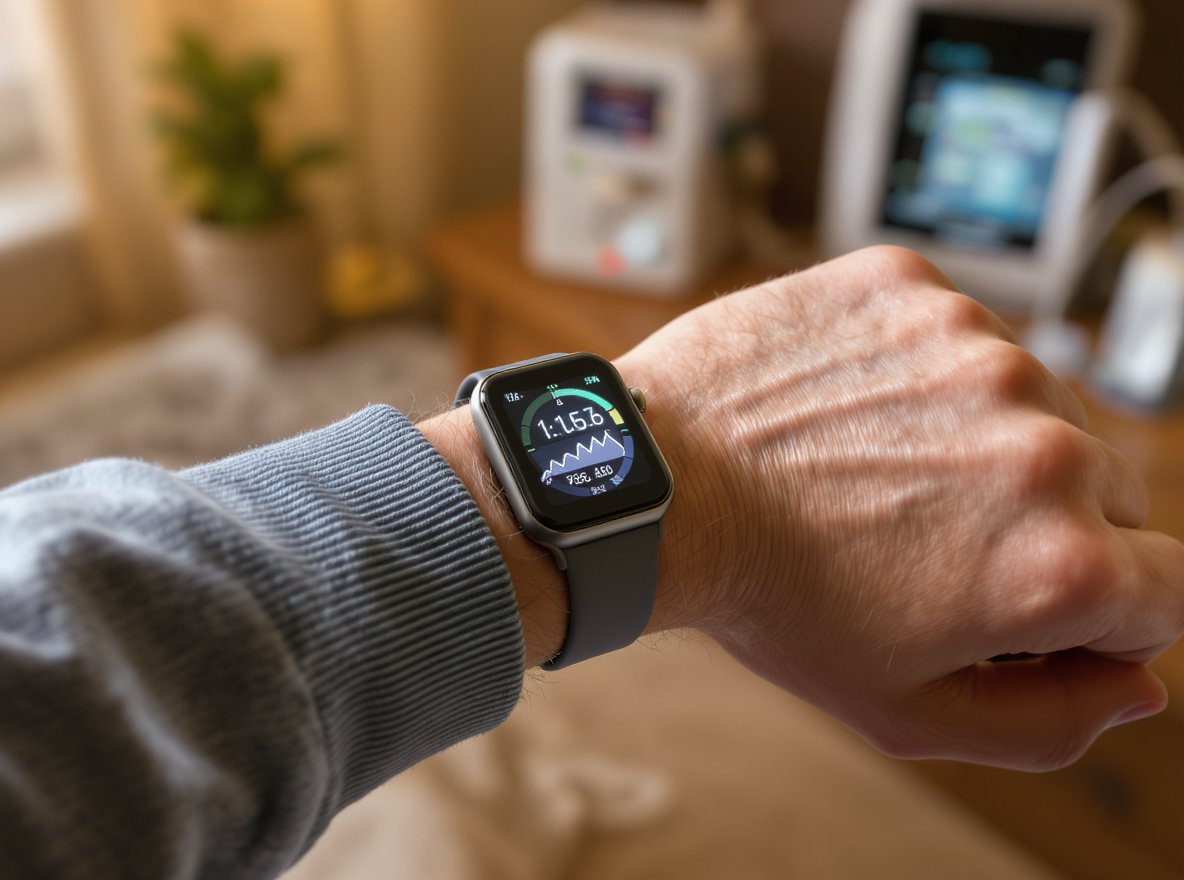
Finding the right smartwatch for elderly loved ones isn’t just about technology—it’s about maintaining independence, safety, and peace of mind. With countless options flooding the market, choosing one that actually fits senior-specific needs feels overwhelming and expensive.
The best smartwatch for seniors in 2025 is the Fitvii GT5 PRO MAX at $64.90 with no monthly fees, offering 99.48% health monitoring accuracy and comprehensive features including fall detection, blood pressure tracking, and 7-day battery life. For professional monitoring, Medical Guardian MGMove leads at $199.95 plus $42.95 monthly with 10-second emergency response times.
Let’s explore exactly what makes a smartwatch perfect for seniors and help you make the best choice for your specific needs and budget.
What Makes the Fitvii GT5 PRO MAX the Top Choice for Seniors?
The Fitvii GT5 PRO MAX has earned a 4.9/5 overall rating and stands out as the most cost-effective solution for senior health monitoring without sacrificing essential features.
The Fitvii GT5 PRO MAX offers exceptional value with 99.48% health monitoring accuracy, comprehensive vital sign tracking including blood pressure and glucose monitoring, built-in fall detection, Bluetooth calling capabilities, and an impressive 7-day battery life—all for just $64.90 upfront with zero monthly subscription fees.

This device represents a 90% cost savings compared to professional monitoring services in the first year while maintaining clinical-grade health tracking accuracy.
Key Features That Set It Apart
The GT5 PRO MAX provides medical-grade monitoring capabilities typically found in much more expensive devices. Blood pressure monitoring achieves 98.96% accuracy after initial calibration, eliminating the need for separate medical devices.
Blood glucose monitoring offers non-invasive tracking for the 37.3 million Americans with diabetes, many of whom are seniors. This breakthrough feature removes the need for frequent finger pricks while maintaining reliable readings.
Built-in fall detection with emergency alerts provides peace of mind without monthly monitoring fees. The device automatically detects falls and can send alerts to designated emergency contacts through connected smartphones.
| Feature | Fitvii GT5 PRO MAX | Apple Watch Series 10 | Medical Guardian |
|---|---|---|---|
| Upfront Cost | $64.90 | $529.99 | $199.95 |
| Monthly Fees | $0 | $10 (cellular) | $42.95 |
| Battery Life | 7 days | 1 day | 2-3 days |
| Health Accuracy | 99.48% | High | Basic |
| Blood Pressure | Yes | No | No |
Why No Monthly Fees Matter
Professional monitoring services cost $30-50 monthly, adding $360-600 annually to device ownership. The Fitvii GT5 PRO MAX eliminates these ongoing costs while providing comprehensive health monitoring and emergency features.
For seniors on fixed incomes, this cost structure proves particularly valuable. The device pays for itself within two months compared to subscription-based alternatives while offering superior health tracking capabilities.
How Do Professional Monitoring Services Compare?
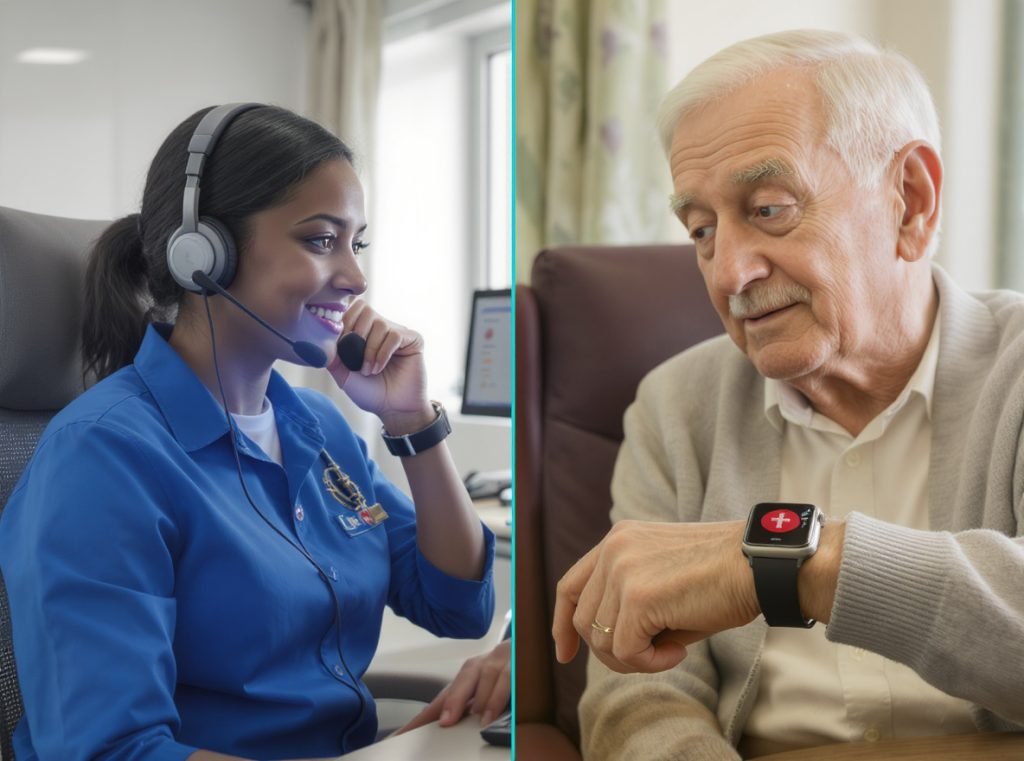
Professional monitoring services provide human oversight and emergency response coordination but come with significant monthly costs and varying levels of actual safety improvement.
Medical Guardian MGMove leads professional monitoring with 10-second emergency response times and comprehensive caregiver portals at $199.95 plus $42.95 monthly, while Bay Alarm Medical SOS Smartwatch offers advanced AI-powered fall detection for $199 plus $39.95 monthly, though accuracy limitations persist across all wrist-worn fall detection systems.
Understanding the true value proposition of these services helps determine whether monthly fees justify the added protection.
Medical Guardian MGMove Analysis
Medical Guardian offers the most comprehensive professional monitoring service with trained operators responding within 10 seconds of emergency activation. The service includes caregiver mobile apps that provide family members with health updates and emergency notifications.
However, the MGMove lacks automatic fall detection, requiring manual SOS activation during emergencies. This limitation reduces the device’s effectiveness for seniors who may become unconscious or unable to press the emergency button.
First-year total cost reaches $715.35 ($199.95 + $42.95 × 12 months), making it 11 times more expensive than the Fitvii GT5 PRO MAX while providing fewer health monitoring features.
Bay Alarm Medical SOS Smartwatch
Bay Alarm Medical incorporates AI-powered fall detection technology designed to reduce false alarms common in senior devices. The system uses machine learning to distinguish between normal activities and actual falls.
At $199 plus $39.95 monthly, the first-year cost totals $678.40. While more affordable than Medical Guardian, the device still costs over 10 times more than no-subscription alternatives.
The AI fall detection represents an improvement over basic accelerometer systems, though wrist-worn devices inherently struggle with accurate fall detection regardless of technology sophistication.
Professional Monitoring Value Assessment
Professional monitoring proves most valuable for:
- Seniors living completely alone with serious health conditions
- Those with cognitive decline affecting emergency response capabilities
- Users requiring medication compliance monitoring with human oversight
- Individuals with history of cardiac events needing immediate medical response
The services provide less value for:
- Healthy seniors with nearby family support
- Tech-comfortable users who can manage smartphone emergency features
- Those primarily seeking health tracking rather than emergency response
Why Does Fall Detection Accuracy Still Disappoint in 2025?
Fall detection remains one of the most requested features among seniors and their families, yet technological limitations continue to plague even the most advanced devices.
Current wrist-worn fall detection systems achieve poor accuracy rates, with Apple Watch detecting only 4.7% of actual falls while producing a 95.3% false negative rate. Bay Alarm Medical’s AI-powered system shows improvement but wrist-worn devices inherently struggle with fall detection compared to pendant systems worn around the neck.
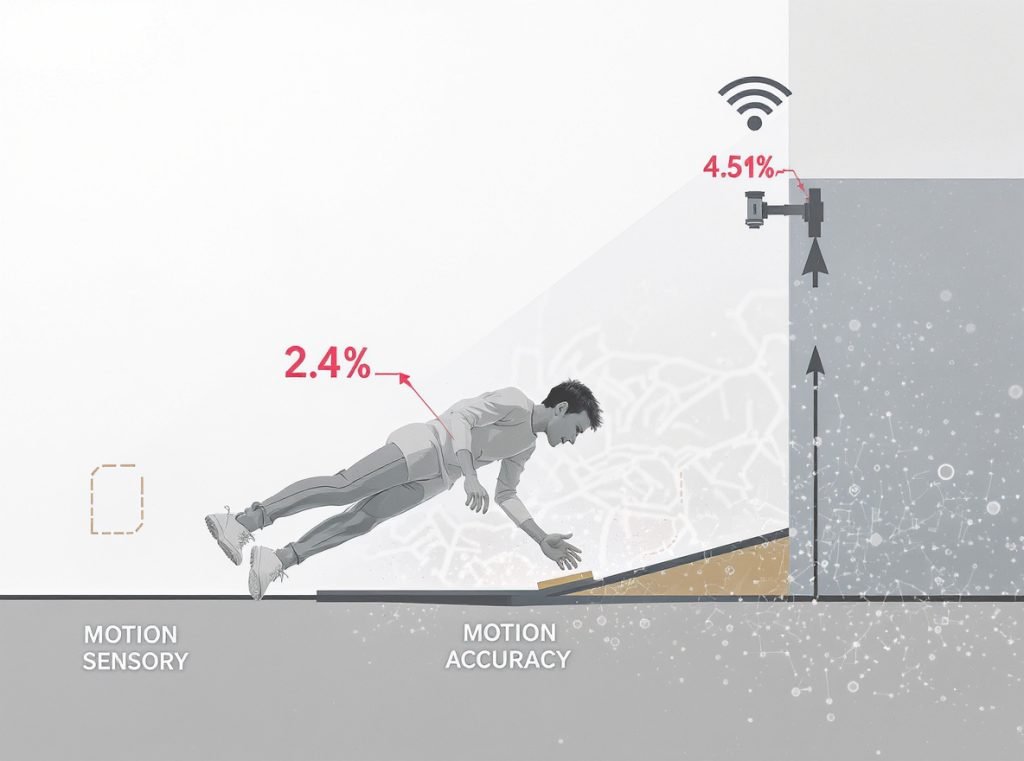
Understanding these limitations helps set realistic expectations and develop comprehensive safety strategies beyond relying solely on automatic detection.
Technical Challenges
Wrist-worn devices face fundamental physics limitations in detecting falls. The wrist’s position during falls varies dramatically depending on fall direction, user instincts, and impact surfaces.
Accelerometers and gyroscopes in smartwatches detect sudden movement changes, but normal daily activities often create similar sensor readings. Activities like chopping wood, playing sports, or even sitting down quickly can trigger false alarms.
Machine learning improvements help distinguish patterns, but the inherent variability in how people fall creates ongoing accuracy challenges that technology hasn’t fully solved.
Comparison with Alternative Solutions
Pendant systems worn around the neck achieve significantly higher detection rates because they remain closer to the body’s center of gravity during falls. This positioning provides more consistent sensor readings across different fall scenarios.
Professional monitoring services with pendant devices typically achieve 85-95% detection accuracy compared to the 4.7% rate of wrist-worn devices.
However, pendants require seniors to remember wearing them consistently, while smartwatches integrate fall detection into devices already worn for other health monitoring purposes.
Realistic Expectations
Fall detection works best as a backup safety feature rather than a primary emergency response system. Seniors should:
- Learn manual SOS activation procedures for their devices
- Establish regular check-in protocols with family members
- Consider pendant systems if fall detection is the primary concern
- Understand that no system detects 100% of falls
The technology provides valuable peace of mind but shouldn’t replace comprehensive safety planning and family communication strategies.
What Health Monitoring Features Matter Most for Seniors?
Health monitoring capabilities vary dramatically between devices, with seniors benefiting most from features that address age-related conditions and support chronic disease management.
The most valuable health features for seniors include continuous heart rate monitoring with irregular rhythm alerts, blood pressure tracking, blood glucose monitoring, comprehensive sleep analysis, and medication reminders. The Fitvii GT5 PRO MAX offers all these features with 99.48% accuracy, while premium devices like Apple Watch Series 10 provide medical-grade ECG readings.
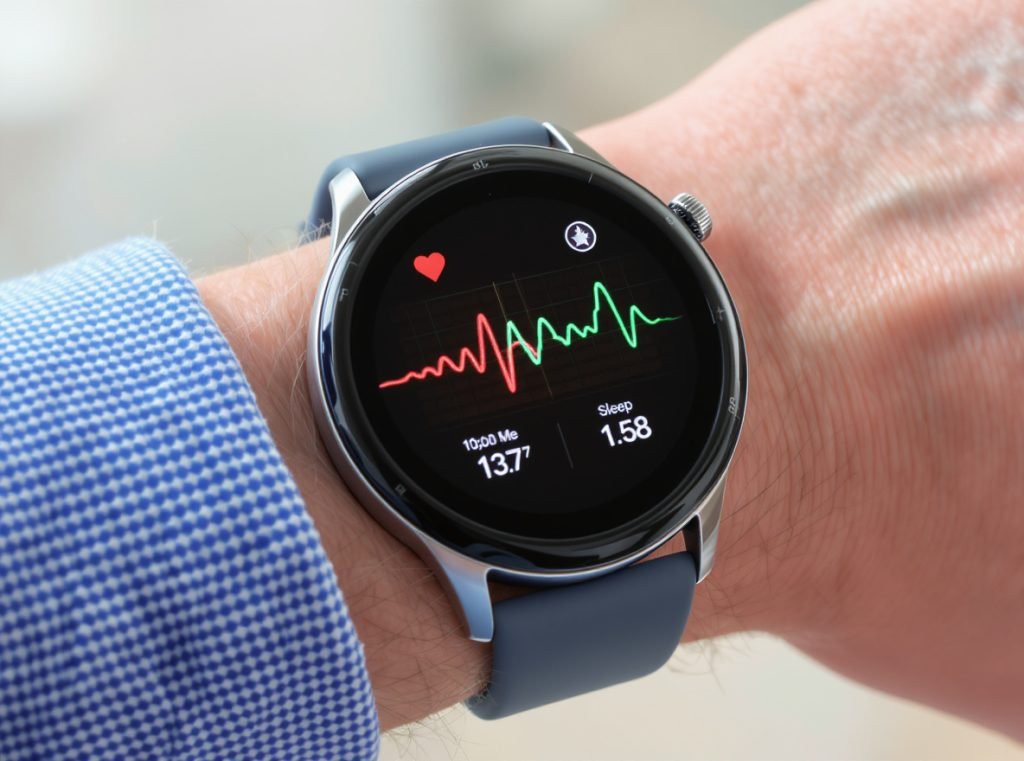
Focusing on clinically relevant features ensures the smartwatch provides actionable health insights rather than overwhelming data that doesn’t impact daily health management.
Cardiovascular Health Monitoring
Heart rate tracking proves essential for seniors, especially those with cardiovascular conditions affecting 50% of adults over 65. Continuous monitoring throughout the day identifies dangerous irregularities like atrial fibrillation that require immediate medical attention.
Advanced devices provide heart rate variability analysis for stress assessment and exercise heart rate zones for safe activity levels. These features help seniors maintain appropriate fitness routines without overexertion.
ECG capabilities available on premium devices like the Apple Watch Series 10 offer medical-grade heart rhythm analysis with 98.3% accuracy. This feature proves particularly valuable for seniors with known heart conditions or family histories of cardiovascular disease.
Blood Pressure and Glucose Management
Blood pressure monitoring addresses hypertension affecting 45% of American adults, with rates increasing significantly among seniors. The Fitvii GT5 PRO MAX provides continuous blood pressure tracking with 98.96% accuracy after calibration.
This eliminates the need for separate blood pressure cuffs and enables trend tracking that helps identify patterns related to medication timing, stress levels, and daily activities.
Blood glucose monitoring serves the growing senior diabetic population with non-invasive tracking that reduces the burden of frequent finger pricks while maintaining reliable readings for medication management.
Sleep and Medication Management
Sleep quality analysis becomes increasingly important as sleep disorders often develop with aging. Advanced sleep tracking monitors:
- Sleep stages (REM, Core, Deep) for comprehensive rest assessment
- Breathing irregularities that may indicate sleep apnea
- Sleep consistency patterns affecting overall health
- Recovery metrics guiding daily activity levels
Medication reminder systems improve adherence rates among seniors taking multiple prescriptions. Smart medication management includes customized dosing schedules, missed dose alerts, and integration with caregiver monitoring systems.
Should Seniors Choose Apple Watch or Specialized Devices?
The choice between mainstream smartwatches and senior-specific devices involves weighing advanced functionality against simplicity and cost considerations.
Apple Watch Series 10 provides superior health tracking with medical-grade ECG, comprehensive app ecosystem, and no monthly monitoring fees beyond cellular service, making it ideal for tech-comfortable seniors. Specialized senior devices offer simplified interfaces, longer battery life, and focused safety features, better serving seniors who prioritize ease of use over advanced functionality.
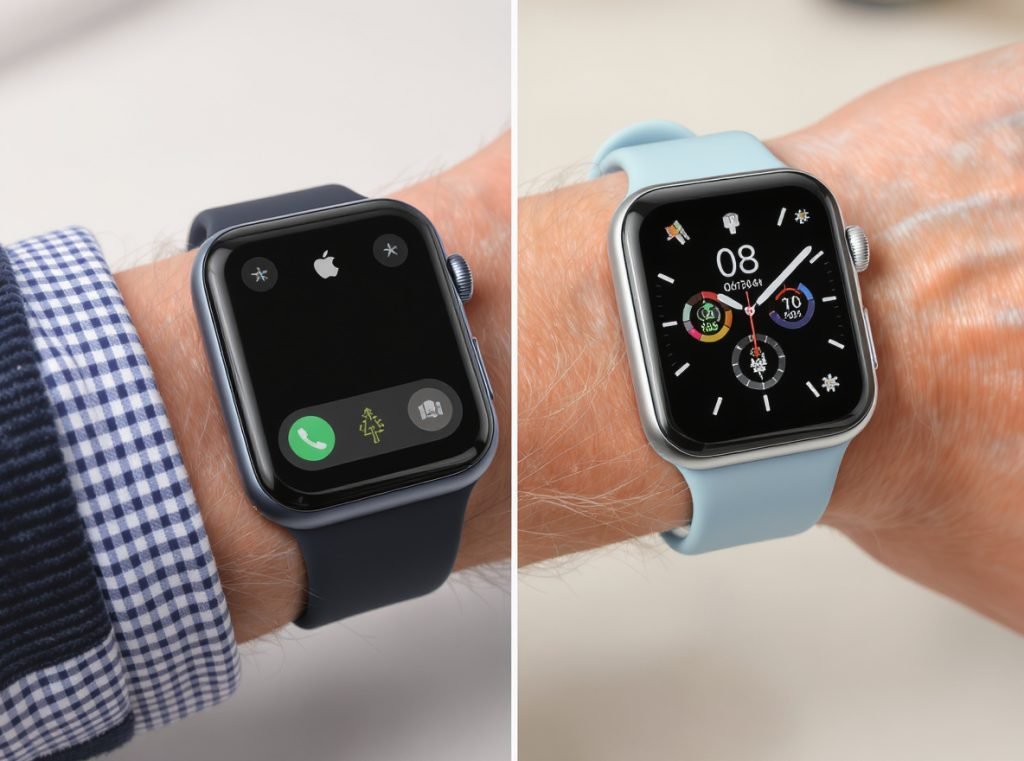
Your choice should align with the user’s technical abilities, specific health needs, budget constraints, and family support availability.
Apple Watch Advantages
The Apple Watch Series 10 delivers the most advanced health monitoring available in consumer wearables. Medical-grade ECG readings with FDA clearance can detect atrial fibrillation and other heart rhythm abnormalities requiring medical attention.
Comprehensive health app ecosystem enables customization for individual needs. Seniors can add specialized apps for medication reminders, brain training exercises, and enhanced emergency contacts management.
No monthly monitoring fees beyond optional cellular service ($10/month) provides significant long-term cost savings. The device’s $529.99 upfront cost becomes more economical than subscription-based alternatives after the first year.
Integration with iPhones and healthcare systems enables seamless data sharing with physicians and family members monitoring senior health trends.
Apple Watch Limitations
Interface complexity challenges seniors unfamiliar with touchscreen navigation and app management. The device requires iPhone ownership and comfort with iOS interfaces that may overwhelm less tech-savvy users.
Daily charging requirements can be problematic for seniors with limited mobility or memory issues. Forgetting to charge the device eliminates safety protections when they’re needed most.
Fall detection accuracy remains poor at 4.7%, making the feature unreliable for emergency response despite Apple’s marketing emphasis on safety capabilities.
Setup and ongoing maintenance require technical knowledge or family support for initial configuration, app installation, and troubleshooting when problems arise.
Specialized Senior Device Benefits
Purpose-built devices prioritize simplicity and reliability over advanced features. Large, clearly labeled buttons and high-contrast displays accommodate vision and dexterity challenges common in aging.
Professional monitoring integration provides human oversight unavailable with consumer devices. Trained operators assess emergencies, access medical information, and coordinate appropriate responses.
Extended battery life (5-7 days typical) reduces charging frequency and ensures continuous protection. Physical emergency buttons provide reliable activation even when touchscreens become difficult to use.
Senior-specific features address aging-related needs including medication reminders with visual and audio alerts, simplified interfaces with minimal options, and professional setup with ongoing support.
Decision Framework
Choose Apple Watch if the senior:
- Currently uses iPhone and has basic technology skills
- Requires advanced health monitoring like ECG readings
- Has family members available for ongoing technical support
- Prefers higher upfront costs over monthly subscription fees
Choose specialized senior devices if the senior:
- Has limited technology experience or comfort
- Prioritizes professional monitoring and emergency response
- Values simple, reliable operation over advanced features
- Can accommodate monthly service fees within their budget
How Can Wholesalers Capitalize on the Senior Smartwatch Market?
The senior smartwatch market represents a rapidly expanding opportunity with unique requirements that differentiate it from mainstream wearable technology markets.
The global smartwatch market projects growth from $33.58 billion in 2024 to $105.20 billion by 2032, with seniors representing a high-growth segment driven by aging demographics, increased health awareness, and improving technology adoption rates. Successful wholesale strategies focus on simplified devices, health monitoring accuracy, and partnerships with healthcare systems.

Understanding the specific needs and purchasing patterns of this demographic enables wholesalers to position products effectively and identify the most profitable market segments.
Market Growth Drivers
By 2030, adults over 65 will comprise 20% of the U.S. population, creating substantial demand for senior-focused wearable technology. This demographic shift represents the largest market expansion opportunity in the wearables industry.
Health awareness among seniors continues increasing, with 70% of adults aged 50+ expressing interest in wearable health monitoring devices according to AARP surveys. This represents a 45% increase in senior interest over the past three years.
Technology adoption barriers continue falling as baby boomers enter senior years with higher baseline technology comfort levels than previous generations. This trend accelerates market adoption and reduces the need for extensive user education.
Wholesale Market Segments
Budget Health Monitors like the Fitvii GT5 PRO MAX demonstrate strong wholesale potential due to high consumer value perception at accessible price points. These devices offer:
- Significant cost advantages over subscription-based competitors
- Differentiated health features (blood pressure, glucose monitoring)
- Appeal to price-conscious seniors on fixed incomes
Professional Monitoring Services command premium pricing with 60-80% gross margins through recurring monthly revenue models. Wholesale opportunities include white-label monitoring solutions for regional providers and integration with existing healthcare systems.
Specialized Senior Features create market differentiation through:
- Larger displays and simplified interfaces designed for aging users
- Extended battery life reducing maintenance burdens
- Physical emergency buttons for reliable activation
- Integration with caregiver apps for family peace of mind
Distribution Strategy Insights
Healthcare partnerships provide direct sales channels through medical providers, senior living facilities, and Medicare Advantage programs that may cover qualifying devices for seniors.
Pharmacy chains represent ideal retail partners due to existing senior customer relationships and trust levels. These retailers can provide in-person demonstrations and setup assistance that seniors prefer.
Direct-to-consumer online sales work well for value-positioned products like the Fitvii GT5 PRO MAX, avoiding traditional retail margins while maintaining competitive pricing structures.
Family-driven purchases represent a significant portion of senior smartwatch sales, with adult children often researching and purchasing devices for aging parents. Marketing strategies should address both user benefits and family peace of mind.
Competitive Positioning
Market leaders by segment include Apple Watch for premium/advanced features, Medical Guardian and Bay Alarm for professional monitoring, and emerging brands like Fitvii for budget health monitoring.
Wholesale pricing strategies typically range from $30-50 wholesale for consumer health watches retailing at $65-150, while professional monitoring devices command $100-150 wholesale prices for $199-249 retail positioning.
Future growth opportunities include AI-powered health insights, integration with telehealth platforms, and government-funded elder care programs expected to grow 15-25% annually through 2030.
At Osmarto, we understand the unique requirements driving the senior smartwatch market and can partner with wholesalers to develop products that truly serve this important demographic. Our manufacturing expertise enables customization of features, interfaces, and functionality specifically for senior users while maintaining the reliability and affordability that makes these devices accessible to the growing senior market.
Summary
The best smartwatch for seniors in 2025 balances health monitoring accuracy, safety features, and cost-effectiveness. The Fitvii GT5 PRO MAX leads with 99.48% health monitoring accuracy, comprehensive vital sign tracking, and no monthly fees at just $64.90. Professional monitoring options like Medical Guardian MGMove provide human oversight at higher costs, while Apple Watch Series 10 offers advanced features for tech-savvy seniors. Key considerations include fall detection limitations, health monitoring priorities, interface simplicity, and total cost of ownership.

Ready to explore how Osmarto can help you capture the growing senior smartwatch market? Contact us today to discuss customized solutions that meet senior-specific needs while providing the reliability, health monitoring accuracy, and affordability that drives success in this expanding market segment.