Skip to content

Tired of constantly switching between devices when using your headphones? Whether you’re answering calls on your phone while working on your laptop, or jumping between your tablet and smartphone, managing multiple devices with traditional Bluetooth headphones can be frustrating and time-consuming.
Bluetooth multipoint is a revolutionary technology that allows a single pair of wireless headphones to establish and maintain simultaneous connections to multiple devices at once. This eliminates the need to manually disconnect and reconnect your headphones every time you want to switch between devices, making your workflow seamless and efficient.
Ready to discover how this game-changing technology can transform your audio experience? Let’s explore everything you need to know about Bluetooth multipoint and find the perfect headphones for your business needs.
How Does Bluetooth Multipoint Technology Actually Work?
Understanding the technical mechanics behind Bluetooth multipoint helps you appreciate why this feature has become essential for modern users and businesses.
Multipoint technology operates by establishing multiple simultaneous Bluetooth connections using sophisticated profile management algorithms. The headphones maintain active links with multiple devices through complex audio stream prioritization and quick switching protocols that determine which device’s input or output is currently active.
Technical Foundation
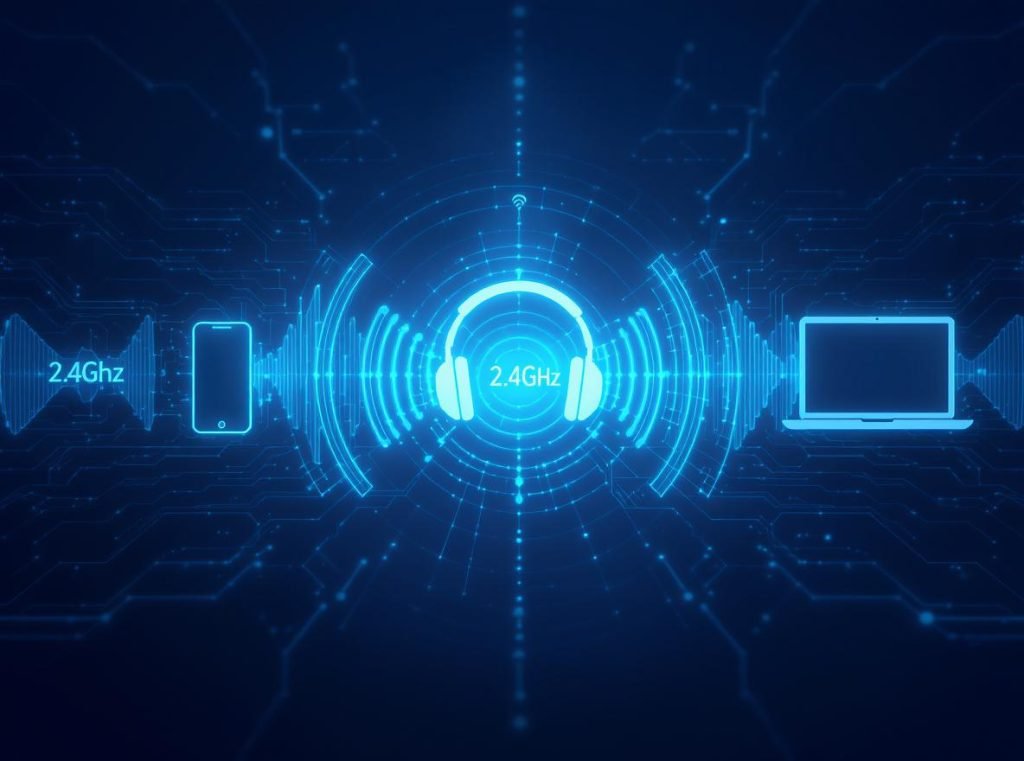
The technology uses the 2.4 GHz frequency band common to both Bluetooth and Wi-Fi, with 79 available channels that devices can switch between. This channel-hopping capability helps maintain stable connections while minimizing interference from other wireless devices in busy environments.
Profile Management System
- A2DP (Advanced Audio Distribution Profile) handles high-quality audio streaming
- HFP/HSP (Hands-Free Profile/Headset Profile) manages voice calls and commands
- The headphones act as the central hub, controlling interactions between paired devices
Intelligent Prioritization
Modern implementations use sophisticated algorithms to manage different audio types:
| Audio Type | Priority Level | Typical Behavior |
|---|---|---|
| Phone calls | Highest | Always interrupts other audio |
| Voice assistant requests | High | Overrides music, yields to calls |
| Media notifications | Medium | Brief interruptions |
| Music/media playback | Lowest | Paused during higher priority events |
This intelligent switching ensures you never miss important communications while maintaining seamless entertainment experiences.
Why Is Bluetooth Multipoint Important for Business Users?
Studies show that productivity can improve by 40-50% when using professional headsets with multipoint capabilities in workplace environments. This dramatic improvement stems from eliminating the friction of device switching and maintaining constant connectivity.

Enhanced Professional Workflow
Business users can seamlessly manage communications across laptop, work phone, and personal devices without interruption. This capability is particularly valuable for remote workers, sales professionals, and executives who juggle multiple communication channels throughout their day.
Advanced Call Management Features
- Put one call on hold while answering another from a different device
- Maintain connections to both personal and work phones simultaneously
- Switch between video conferences and phone calls without reconnection delays
- Stay available across all devices while focusing on primary work tasks
Measurable Business Benefits
The technology provides tangible improvements beyond convenience:
- Reduced downtime: Eliminates 30-60 seconds per device switch, saving hours weekly
- Improved responsiveness: Never miss important calls while working on other devices
- Enhanced multitasking: Manage multiple communication streams efficiently
- Better work-life integration: Maintain professional availability without device juggling
For wholesale buyers sourcing headphones for corporate clients, multipoint functionality represents a premium feature that directly addresses workplace productivity challenges, justifying higher price points and generating customer satisfaction.
What Are the Main Benefits of Multipoint Headphones?
The advantages of multipoint technology extend far beyond simple convenience, offering measurable improvements to user experience and operational efficiency.
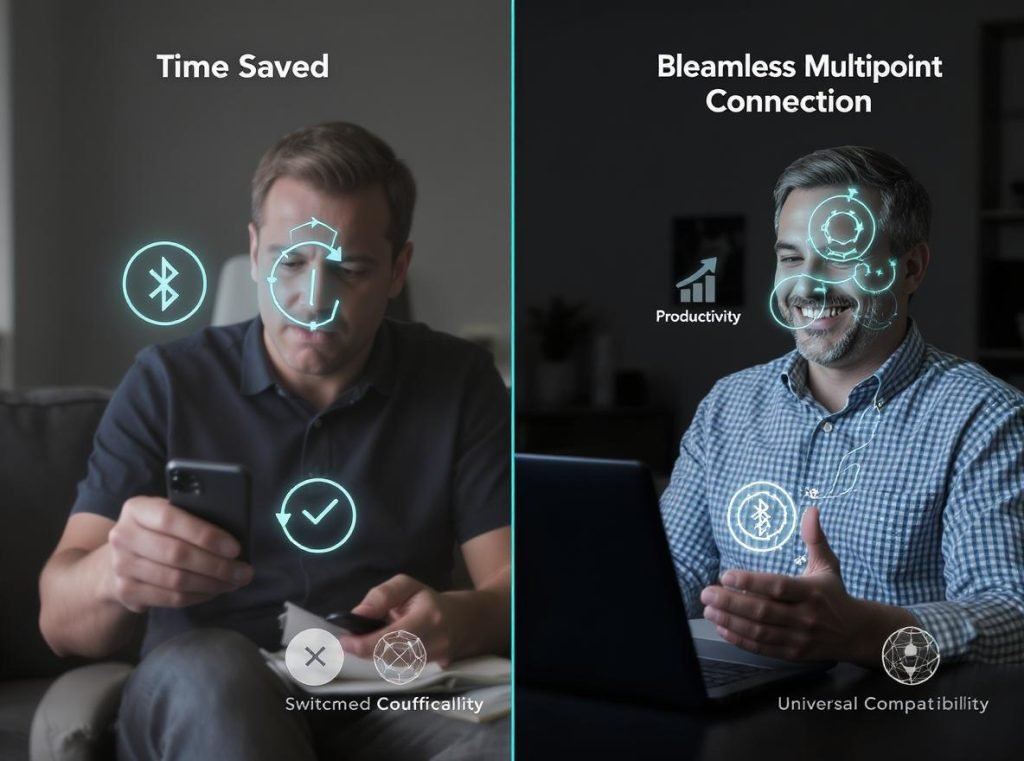
The primary benefit is seamless device management – you can maintain active connections to multiple devices while the headphones intelligently prioritize audio based on activity type and importance.
Productivity Enhancement
Traditional Bluetooth headphones force users to choose between devices, creating artificial barriers in modern multi-device workflows. Multipoint eliminates these barriers entirely.
Universal Compatibility Advantage
- Works across all platforms (Windows, macOS, Android, iOS)
- No ecosystem lock-in like proprietary switching solutions
- Consistent experience regardless of device manufacturer combinations
- Future-proof connectivity as you change devices
Professional Communication Benefits
| Traditional Bluetooth | Multipoint Bluetooth |
|---|---|
| Single device connection | Simultaneous multi-device connection |
| Manual switching required | Automatic intelligent switching |
| 30-60 second reconnection delays | Instant transitions |
| Risk of missing calls during switches | Always available across devices |
| Device-specific limitations | Universal compatibility |
Real-World Applications
The technology excels in scenarios where users regularly switch between:
- Work laptop and personal smartphone
- Desktop computer and business phone
- Tablet for presentations and mobile for calls
- Gaming console and smartphone notifications
For businesses purchasing headphones in bulk, multipoint functionality provides demonstrable ROI through improved employee productivity and reduced communication friction.
Which Types of Headphones Support Bluetooth Multipoint?
Modern multipoint support spans across all major headphone categories, from premium over-ear models to compact true wireless earbuds, though implementation quality varies significantly between form factors and price points.
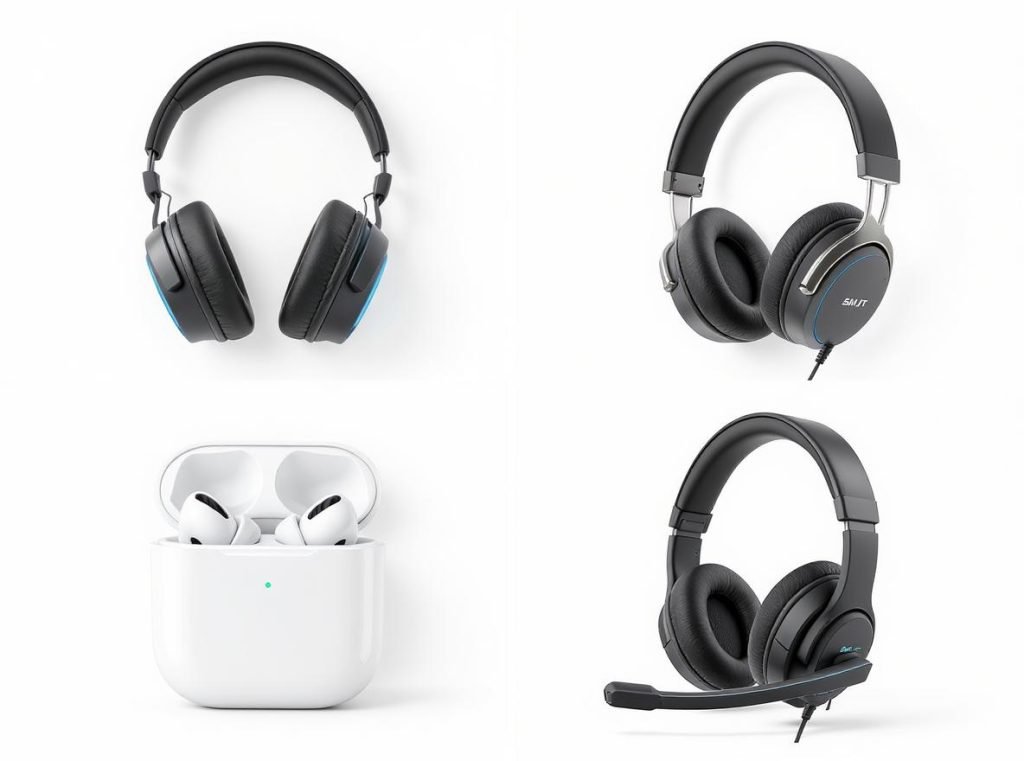
Over-Ear Headphones: Premium Performance
Over-ear models typically offer the most robust multipoint implementations due to their larger size allowing for more powerful processors and better antenna systems. Leading examples include:
- Sony WH-1000XM5/XM4: Industry-leading multipoint with excellent switching performance
- Bose QuietComfort Ultra: Reliable connectivity across different ecosystems
- Sennheiser Momentum 4: App-controlled multipoint management with advanced features
True Wireless Earbuds: Compact Capability
Increasingly, premium earbuds support multipoint despite size constraints. Notable examples include the Jabra Elite 7 Pro, Technics EAH-AZ60, and Google Pixel Buds Pro.
Professional Headsets: Business-Optimized
Business-focused headsets often prioritize multipoint functionality, with brands like Jabra, Plantronics, and Shokz offering dedicated professional models with advanced call management features.
Manufacturing Considerations for Wholesale
| Form Factor | Multipoint Advantages | Typical Limitations |
|---|---|---|
| Over-ear | Most stable connections, advanced features | Higher cost, larger size |
| On-ear | Balanced portability and performance | Limited battery for multipoint |
| True wireless | Maximum portability | Connection stability challenges |
| Professional headsets | Optimized call management | Specialized use cases |
When sourcing multipoint headphones for wholesale, consider your target market’s primary use cases. Business customers prioritize reliability and call quality, while consumer markets may prefer compact form factors with good music performance.
At Osmarto, we focus on proven chipsets and robust antenna designs that deliver consistent multipoint performance across our product range, ensuring your customers receive reliable functionality regardless of their device combinations.
How Do You Set Up Multipoint on Your Headphones?
The setup process varies by manufacturer but follows similar general principles, with most modern headphones supporting straightforward pairing procedures.

Universal Setup Process
Step 1: Primary Device Connection
Connect your headphones to the first device using standard Bluetooth pairing procedures. Ensure the connection is stable before proceeding to the second device.
Step 2: Secondary Device Pairing
- Put headphones back into pairing mode (methods vary by manufacturer)
- Some models automatically enter multipoint pairing after initial connection
- Others require specific button combinations or app activation
Step 3: Connection Verification
Test switching between devices to ensure proper functionality and audio prioritization.
Brand-Specific Setup Examples
Sennheiser Momentum 4: Hold the power button for 5 seconds until hearing the second pairing tone, then connect each device sequentially.
JBL Models: After first connection, press the Bluetooth button to enter pairing mode for the second device.
Troubleshooting Common Issues
| Problem | Solution | Prevention |
|---|---|---|
| Second device won’t connect | Clear Bluetooth cache and retry | Keep devices within 30 feet during setup |
| Audio lag during switching | Update device Bluetooth drivers | Ensure firmware is current |
| Inconsistent connections | Reset headphones to factory settings | Avoid radio-congested environments |
| One device keeps disconnecting | Check power management settings | Disable aggressive power saving |
Professional Setup Tips
For business deployments, create standardized setup procedures that IT departments can follow. Document device-specific quirks and maintain firmware update schedules to ensure consistent multipoint performance across your organization.
What Should You Look for When Buying Multipoint Headphones?
Selecting quality multipoint headphones requires evaluating several technical factors beyond basic connectivity, as implementation quality varies dramatically between manufacturers.
Focus on connection stability, switching speed, audio quality maintenance, and the specific type of multipoint implementation rather than just the presence of the feature.
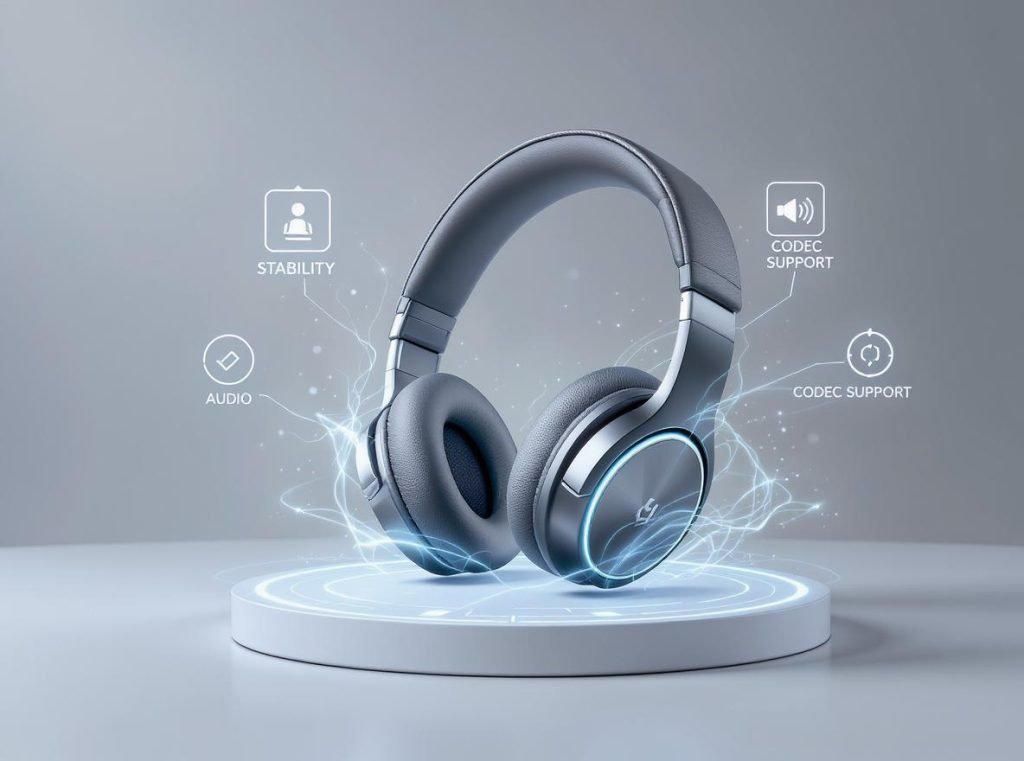
Implementation Quality Assessment
Look for headphones that support advanced multipoint with call management features like call hold, rather than simple multipoint that only provides basic two-device connection.
Audio Quality Considerations
- Codec support consistency during multipoint operation
- Minimal audio degradation when switching between devices
- Consistent volume levels across different source devices
- Clear call quality with effective noise cancellation
Technical Specifications to Evaluate
| Feature | Basic Implementation | Advanced Implementation |
|---|---|---|
| Device connections | 2 devices maximum | 2-3 devices with intelligent management |
| Switching speed | 2-5 seconds | Near-instantaneous |
| Call management | Basic answering only | Hold, transfer, conference features |
| Audio quality | May revert to basic codecs | Maintains high-quality codecs |
| Battery impact | 20-30% reduction | Optimized power management |
Manufacturing Quality Indicators
When sourcing for wholesale distribution, evaluate:
- User review patterns specifically mentioning multipoint reliability
- Manufacturer track record with Bluetooth technology development
- Frequency of firmware updates addressing connectivity issues
- Technical support quality for multipoint-specific problems
- Return rates related to connection stability
Codec Compatibility Assessment
Many headphones revert to basic SBC or AAC codecs when using multipoint, potentially sacrificing audio quality. Look for models that maintain higher-quality codecs during multipoint operation.
At Osmarto, our engineering team specifically tests multipoint implementations across diverse device combinations, including smartphones, laptops, tablets, and professional communication systems. We prioritize stable connections and fast switching times while maintaining audio quality, ensuring your customers receive premium performance that justifies wholesale pricing.
Are There Any Limitations to Bluetooth Multipoint?
While multipoint technology offers significant advantages, understanding its current limitations helps set appropriate expectations and avoid potential customer dissatisfaction.
Despite connecting to multiple devices, most headphones can only play audio from one source at a time, and switching between sources may require manual intervention or result in brief audio interruptions.
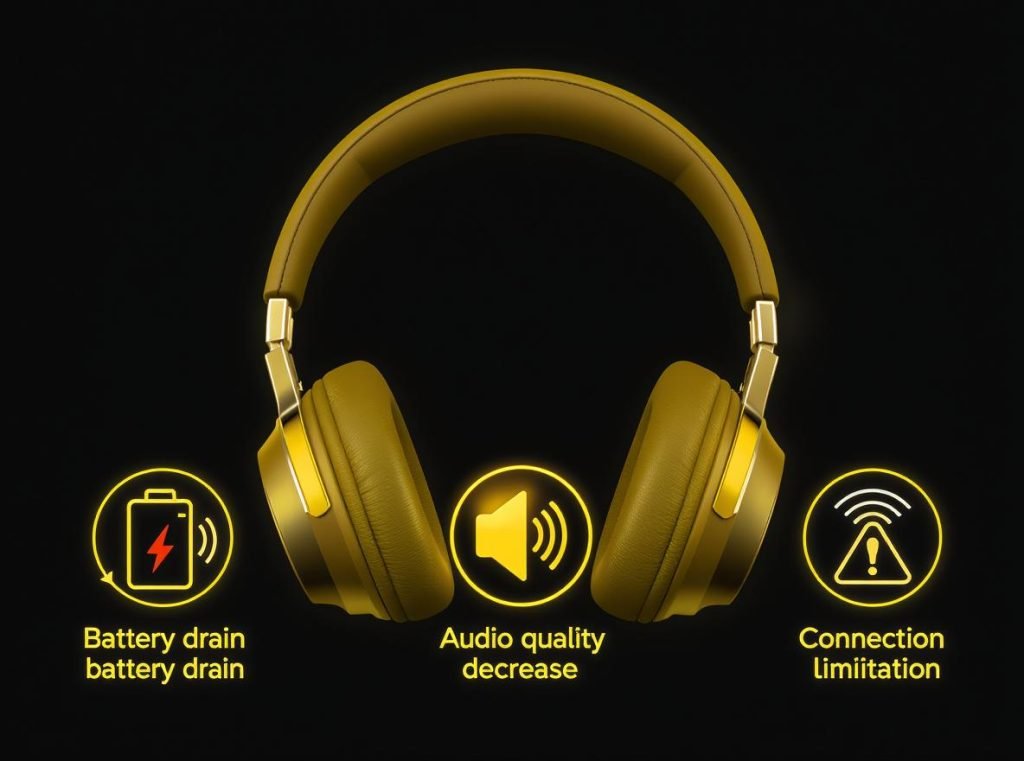
Technical Performance Constraints
Audio Quality Compromise: Many implementations restrict available Bluetooth codecs, forcing devices to use basic SBC or AAC instead of higher-quality options like aptX or LDAC.
Power Consumption Impact
- Multipoint functionality increases power consumption by 15-30% compared to single-device use
- Battery life reduction affects all-day usage scenarios
- Some models lack intelligent power management for multipoint operation
Connection Stability Challenges
| Issue | Impact | Frequency |
|---|---|---|
| Audio artifacts during switching | Brief crackling or static | Occasional |
| Prioritization errors | Connects to wrong device | Device-dependent |
| Range sensitivity | Reduced stability in congested areas | Environment-dependent |
| Codec degradation | Lower audio quality | Implementation-dependent |
Real-World Usage Limitations
Some users experience connection instability, particularly with certain device combinations or in radio-congested environments. These issues are more common with budget implementations and older Bluetooth chipsets.
Compatibility Inconsistencies
- Older devices may not support modern multipoint protocols
- Gaming consoles often have limited multipoint compatibility
- Some proprietary features only work within specific ecosystems
Managing Customer Expectations
For wholesale partners, transparency about these limitations prevents returns and support issues. Emphasize multipoint’s strengths in appropriate use cases while being clear about current technological constraints. Most limitations stem from early-generation implementations and continue improving with newer chipsets and firmware updates.
Which Brands Offer the Best Multipoint Implementation?
Implementation quality varies significantly between manufacturers, with some brands consistently delivering superior performance through advanced algorithms and robust hardware design.
Jabra consistently delivers superior multipoint performance across their professional headset lineup. The Evolve2 series demonstrates exceptional call management capabilities with advanced features like call hold and seamless switching.
Professional-Grade Leaders
Jabra: Industry leader in business multipoint implementations
- Advanced call management with hold and transfer features
- Reliable switching across diverse device ecosystems
- Comprehensive app control for connection preferences
- Proven track record in enterprise deployments
Consumer Market Excellence
Sony: The WH-1000XM series offers reliable multipoint with excellent switching performance. Users report smooth transitions between devices with minimal connection issues.
Premium Audio Specialists
Sennheiser: The Momentum 4 provides sophisticated multipoint management through their Smart Control app, though some users report occasional prioritization quirks with Apple devices.
Competitive Analysis for Wholesale Sourcing
| Brand | Strengths | Considerations | Best For |
|---|---|---|---|
| Jabra | Professional reliability, advanced call features | Higher price point | Business customers |
| Sony | Consumer-friendly, stable connections | Limited professional features | General market |
| Sennheiser | Premium audio quality, app control | Apple compatibility quirks | Audio enthusiasts |
| Bose | Brand recognition, comfort | Mixed user experiences | Consumer market |
| Google/JBL/Anker | Value proposition, decent performance | Basic implementations | Budget-conscious buyers |
Emerging Competitive Opportunities
Brands like JBL, Anker Soundcore, and Technics provide solid multipoint implementations at various price points, offering opportunities for competitive positioning.
Osmarto’s Competitive Position
At Osmarto, we’ve invested in proprietary multipoint algorithms that compete directly with established brands while offering superior wholesale value. Our engineering team has developed connection stability improvements and faster switching times that outperform many premium competitors.
Key differentiators include:
- Advanced chipset selection for stable multipoint operation
- Rigorous testing across 50+ device combinations
- Intelligent power management reducing battery impact
- Comprehensive quality control preventing connection issues
For wholesale partners, this means offering premium multipoint performance at competitive prices, enabling better margins while satisfying demanding customers who expect reliable connectivity across their device ecosystem.
Summary
Bluetooth multipoint technology has evolved from a premium feature to an essential capability for modern wireless headphones, enabling simultaneous connections to multiple devices with intelligent switching based on audio priorities. This technology addresses real productivity challenges in our multi-device world, particularly for business users who require seamless connectivity across phones, computers, and tablets.

For wholesale buyers and distributors, multipoint headphones represent a significant market opportunity. The technology provides demonstrable value through improved productivity, universal compatibility, and enhanced user experience, justifying premium pricing while addressing genuine customer pain points.
Ready to expand your product line with cutting-edge multipoint headphones that compete with industry leaders? Contact Osmarto’s wholesale division today to explore our advanced multipoint headphone collection. Our engineering team has developed proprietary algorithms that deliver superior connection stability and switching performance at competitive wholesale prices. Let us help you provide reliable, professional-grade audio solutions that keep your customers connected and productive across all their devices.