Skip to content
You’ve seen those mysterious numbers on headphone specs – 32Ω, 80Ω, 250Ω – but what do they actually mean? These numbers represent impedance, and understanding them can save you from buying headphones that sound terrible with your devices or require expensive amplifiers you don’t need.
Impedance is the electrical resistance that headphones present to an audio signal, measured in ohms (Ω). It determines how much power your headphones need to reach acceptable volume levels and affects how they interact with different audio sources. Most consumer headphones range from 8Ω to 600Ω, with 32Ω being fairly standard for modern models.
But there’s much more to this story that affects your listening experience and wallet.
What Exactly Is Impedance in Headphones?
Understanding impedance helps you match headphones with the right audio sources for optimal performance.
Impedance is the opposition to electrical current flow in your headphones’ voice coils. When an audio signal tries to pass through your headphones, it encounters resistance from the voice coil design in the headphone drivers. This resistance, measured in ohms, determines how much voltage your headphones need to achieve proper volume levels.

The impedance comes primarily from the voice coil construction. Thinner, lighter voice coil wire creates higher impedance but can also produce clearer, more precise sound when properly powered. However, this higher impedance means the headphones need more voltage to achieve the same volume levels as lower impedance models.
Most headphones fall into these categories:
- 8-32Ω: Mobile-friendly, work with smartphones and tablets
- 32-80Ω: Versatile range, suitable for most consumer devices
- 100-300Ω: Professional/audiophile range, often need amplification
- 300Ω+: Studio/reference headphones, definitely need dedicated amps
| Impedance Range | Power Requirements | Best For | Amplification Needed |
|---|---|---|---|
| 8-32Ω | Low voltage (0.3-1V) | Smartphones, portable devices | No |
| 32-80Ω | Moderate voltage (1-2V) | Laptops, gaming consoles | Usually no |
| 100-300Ω | High voltage (2-4V+) | Audio interfaces, hi-fi systems | Yes |
| 300Ω+ | Very high voltage (4V+) | Professional studio equipment | Always |
Think of impedance like water flowing through pipes. Low impedance headphones are like wide pipes – electrical current flows easily through them. High impedance headphones are like narrow pipes – you need more pressure (voltage) to push the same amount of current through.
Do I Need High or Low Impedance Headphones?
Your choice between high and low impedance depends entirely on what you’ll be using to power your headphones.
For most people, low impedance headphones (under 100Ω) offer the best versatility. They work well with smartphones, laptops, and most consumer electronics without requiring additional amplification. As a rule of thumb: headphones below 100Ω are designed for mobile use, while those above 100Ω are intended for stationary systems with adequate amplification.
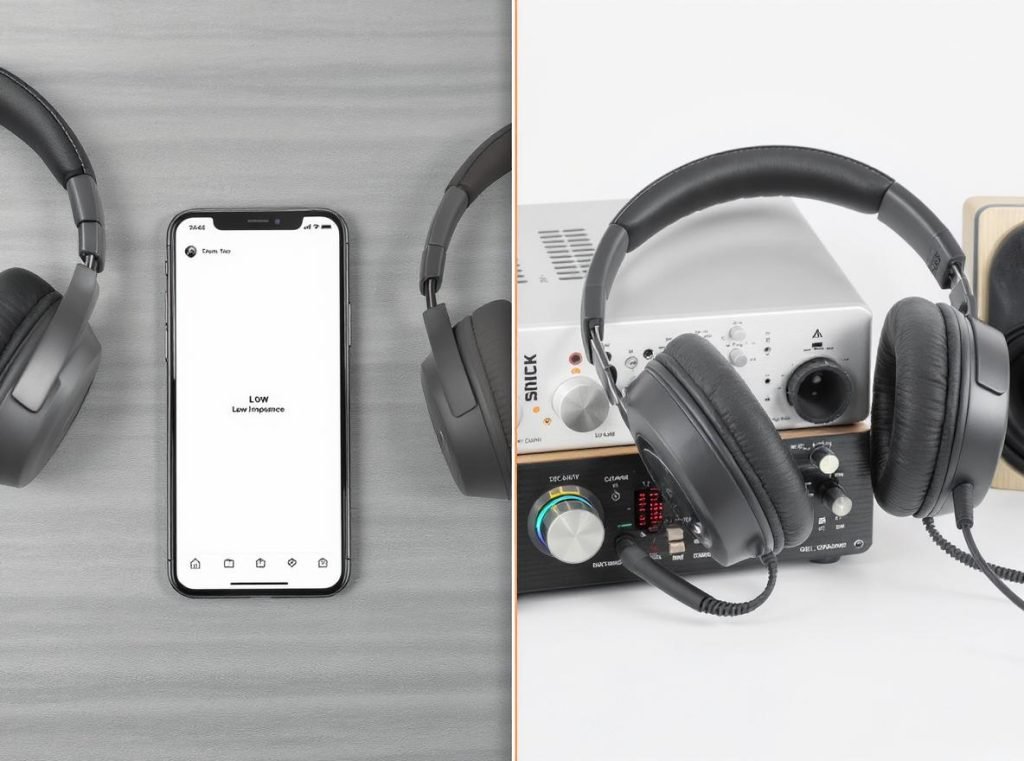
Low impedance headphones excel in several scenarios:
- Smartphones and portable devices where battery life matters
- Laptops and tablets with limited power output
- General consumer use where convenience trumps absolute quality
- Budget setups without dedicated amplification
- Users who frequently switch between different devices
High impedance headphones serve specific purposes. They often offer more refined frequency response when properly amplified, better control and damping from the amplifier, and reduced distortion in some designs. However, these benefits only manifest when paired with appropriate amplification.
Consider high impedance if you:
- Have dedicated audio equipment with proper amplification
- Prioritize maximum sound quality over convenience
- Work in professional audio or music production
- Listen primarily in quiet environments with hi-fi systems
- Plan to invest in a complete audio setup
The key principle: match your headphone impedance to your weakest audio source, since that’s likely where you’ll encounter problems if the impedance is too high.
Will My Phone Power High Impedance Headphones?
Most smartphones struggle to properly drive high impedance headphones, leading to disappointing performance.
Most smartphones provide 3-5 volts from their batteries and can adequately drive headphones up to about 60Ω, with performance declining significantly beyond that point. You’ll experience very low volume even at maximum settings, reduced dynamics, poor bass response, and overall compressed sound quality when using high impedance headphones with phones.
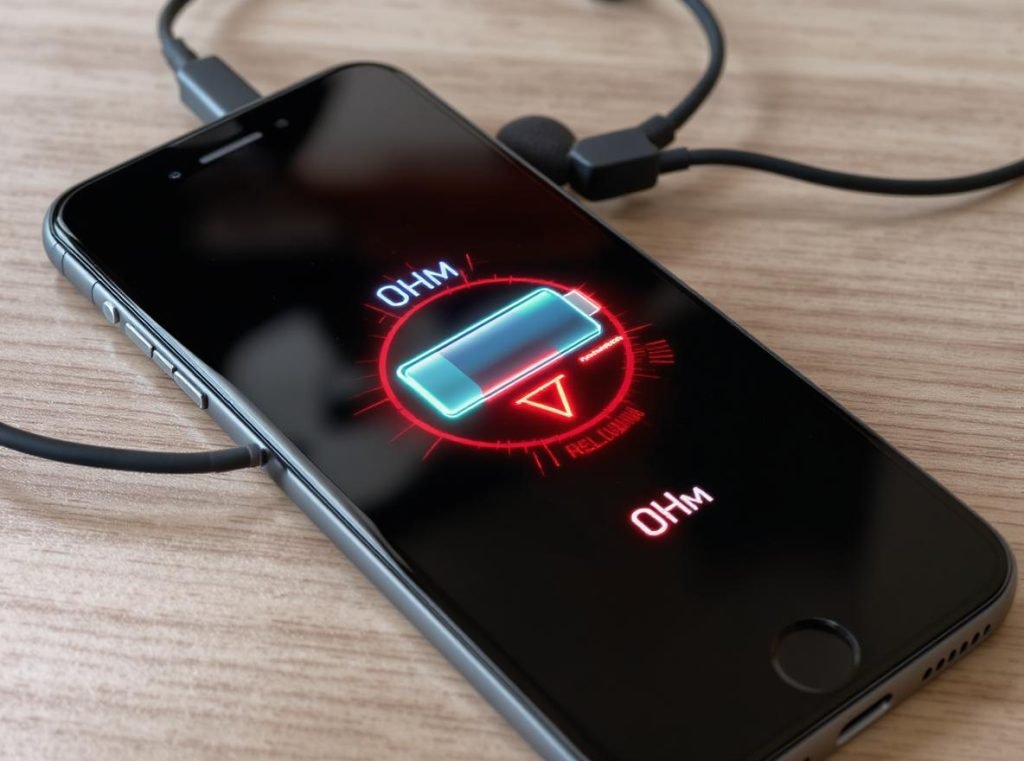
Modern smartphones vary considerably in their power output capabilities. Basic smartphones typically provide 0.3-0.5V, while premium models may reach 0.5-1V. Some specialized phones like certain LG models with quad DACs can handle higher impedances better, but these are exceptions rather than the rule.
When you use high impedance headphones with insufficient power, several problems occur:
- Maximum volume feels inadequate even in quiet environments
- Bass becomes weak and poorly controlled
- Dynamic range compresses, making music sound flat
- Quiet details in complex passages disappear completely
- Overall sound feels thin or hollow compared to proper amplification
| Phone Type | Typical Output | Maximum Recommended Impedance |
|---|---|---|
| Basic smartphones | 0.3-0.5V | 16-25Ω |
| Premium smartphones | 0.5-1V | 25-60Ω |
| Gaming phones | 1-2V | 60-100Ω |
| Specialized audio phones | 2V+ | 100Ω+ |
Some manufacturers try to compensate with software amplification, but this often introduces distortion and reduces battery life significantly.
Does Higher Impedance Always Mean Better Sound Quality?
This is one of the most persistent myths in audio – higher impedance does not automatically mean better sound quality.
Impedance is simply a technical specification that indicates power requirements, not a quality rating. Some of the world’s most respected headphones have low impedance, while some high impedance models may sound mediocre despite impressive specifications. Without proper power, high impedance headphones will actually sound worse than their low impedance counterparts.
The confusion comes from market correlation, not causation. Many high-end headphones happen to have higher impedance because they target serious listeners who own proper amplification equipment. Meanwhile, most low impedance headphones target the mass market prioritizing convenience over ultimate fidelity.
What higher impedance can potentially offer when properly powered:
- More refined frequency response through better driver control
- Superior damping characteristics from the amplifier
- Reduced distortion in certain driver designs
- Greater protection from damage due to amplifier overloading
- Better isolation from electrical interference
However, these advantages only manifest with appropriate amplification. Many premium in-ear monitors operate at 16-32Ω and deliver exceptional sound quality that rivals high impedance models.
Consider these factors that actually determine sound quality:
- Driver technology, materials, and manufacturing precision
- Acoustic design, tuning, and frequency response characteristics
- Build quality, durability, and component selection
- Engineering expertise and quality control standards
Professional studios often use both low and high impedance headphones depending on specific applications, proving that impedance alone doesn’t determine professional suitability.
What Happens If I Use the Wrong Impedance?
Mismatched impedance creates various audio problems but won’t damage your equipment.
Using mismatched impedance won’t harm your headphones, but it will significantly degrade sound quality. The most common issue is high impedance headphones with low-power sources, resulting in insufficient volume, compressed dynamics, weak bass, and loss of detail. The key principle is the “1/8th rule”: your amplifier’s output impedance should be no more than 1/8th of your headphone’s impedance for optimal performance.
When impedance mismatching occurs, several specific problems emerge:
High impedance headphones with weak sources create:
- Insufficient volume levels even at maximum settings
- Compressed dynamic range making all sounds similar in volume
- Weak, poorly controlled bass response
- Loss of detail and clarity in complex passages
- Overall thin, lifeless sound character
Low impedance headphones with high output impedance sources cause:
- Altered frequency response characteristics
- Potential for increased distortion
- Uneven tonal balance across frequencies
- Possible channel imbalance at very low volumes
- Reduced damping factor affecting driver control
The 1/8th rule provides a practical guideline. For example, 32Ω headphones work best with sources having 4Ω or lower output impedance, while 250Ω headphones need sources with 31Ω or lower output impedance.
| Headphone Impedance | Maximum Recommended Source Output Impedance | Typical Compatible Sources |
|---|---|---|
| 16Ω | 2Ω or less | High-quality smartphones, dedicated amps |
| 32Ω | 4Ω or less | Most smartphones, laptops, audio interfaces |
| 80Ω | 10Ω or less | Audio interfaces, headphone amps |
| 250Ω | 31Ω or less | Dedicated headphone amplifiers, mixers |
How Do I Choose the Right Impedance for My Setup?
Selecting appropriate impedance ensures optimal performance and prevents costly compatibility issues.
Start by identifying your primary listening setup and choose impedance that works with your weakest audio source. Consider sensitivity ratings alongside impedance, as higher sensitivity headphones play louder with less power regardless of impedance. Factor in your volume preferences, upgrade plans, and whether you use multiple devices.
Begin by auditing your current audio sources:
For smartphone/tablet-focused users:
- Prioritize 16-50Ω range for maximum compatibility
- Check your device specifications for power output
- Consider efficiency ratings – higher sensitivity means louder output
- Test before committing to expensive purchases
For mixed portable/home use:
- Target 32-80Ω as the best compromise for versatility
- Ensure acceptable performance with your weakest source
- Consider portable amplifiers if you want higher impedance options
- Balance convenience against ultimate sound quality
For dedicated home audio systems:
- Higher impedance options (100-300Ω) become viable with proper amplification
- Match impedance to your amplifier’s specifications
- Consider your listening environment and volume preferences
- Factor in upgrade paths for future equipment purchases
| Use Case | Recommended Impedance | Key Considerations |
|---|---|---|
| Smartphone only | 16-50Ω | Maximum portability, battery efficiency |
| Mixed portable/home | 32-80Ω | Best versatility compromise |
| Home system only | 100-300Ω | Can leverage proper amplification |
| Professional studio | 250-600Ω | Maximum detail and control with pro gear |
Remember that sensitivity ratings matter as much as impedance. A high-sensitivity, moderate-impedance headphone often performs better with weak sources than a low-sensitivity, low-impedance model.
Do I Need a Headphone Amplifier?
Whether you need an amplifier depends on your headphones’ power requirements and your sources’ capabilities.
You need a headphone amplifier if your current source cannot drive your headphones to acceptable volume levels. This typically occurs with headphones above 100Ω when used with smartphones, laptops, or basic audio equipment. Signs you need amplification include inability to reach comfortable volume at 80% maximum, thin sound lacking bass, or distortion at higher volumes.
Determining amplifier necessity involves both specifications and practical testing:
Clear signs you need an amplifier:
- Your headphones have impedance above 100Ω and you’re using portable sources
- You can’t reach comfortable listening levels with volume headroom
- Your headphones sound thin, compressed, or lacking bass punch
- You experience distortion when trying to achieve adequate volume
- Music lacks dynamic contrast between loud and quiet passages
You probably don’t need an amplifier if:
- Your headphones reach good volume with 20% headroom remaining
- You’re satisfied with current sound quality and dynamics
- You’re using in-ear monitors, earbuds, or active noise-canceling headphones
- Your primary sources are audio interfaces or hi-fi equipment
A dedicated headphone amplifier provides:
- Sufficient voltage and current for high impedance headphones
- Lower output impedance for better damping and control
- Cleaner signal path with reduced distortion
- Superior volume control precision and channel matching
- Enhanced dynamic range and detail retrieval
Budget amplifier options range from $30 portable units to $200+ desktop models. USB-powered desktop amplifiers ($50-150) offer good performance for most users, while portable battery-powered options ($30-100) provide flexibility for mobile use.
What About Impedance for Professional Audio Work?
Professional audio applications have specific impedance requirements based on equipment standards and workflow needs.
Professional studios typically use higher impedance headphones (250-600Ω) because they offer better driver control, reduced crosstalk in multi-headphone setups, and are designed to work with professional audio interfaces and mixing consoles that provide adequate power. However, impedance alone doesn’t determine professional suitability – factors like accurate frequency response, build quality, and isolation are equally important.
Professional impedance considerations differ significantly from consumer needs:
Advantages of higher impedance in professional settings:
- Better isolation from electrical interference in complex studio environments
- More precise frequency response when properly amplified
- Greater dynamic range and headroom for critical listening
- Enhanced protection against damage from powerful amplifiers
- Consistent performance across different professional equipment types
- Reduced interaction effects in multi-headphone monitoring systems
Professional applications and typical impedance ranges:
| Application | Recommended Impedance | Typical Equipment | Power Available |
|---|---|---|---|
| Mixing/Mastering | 80-300Ω | Audio interfaces, monitors | 1-4 watts |
| Recording monitoring | 25-80Ω | Headphone distribution amps | Variable |
| Live sound monitoring | 25-100Ω | Wireless systems, mixers | Limited |
| Reference checking | 32-250Ω | Various sources | Variable |
Professional audio interfaces typically provide 1-4 watts per channel at various impedance loads, easily driving even 600Ω headphones to proper levels. This eliminates the power limitations that affect consumer devices.
Studios often prefer models like the Beyerdynamic DT-770/880/990 in 250Ω versions or Sennheiser HD-600/650 series specifically because they perform optimally in professional environments with proper amplification.
For manufacturers like Osmarto serving professional markets, understanding these requirements helps specify appropriate impedance ranges for different applications, ensuring products meet industry standards and user expectations while maintaining compatibility with standard professional equipment.
Summary
Headphone impedance significantly impacts your listening experience and equipment compatibility. Low impedance headphones (under 100Ω) work well with smartphones and consumer devices, while high impedance models (100Ω+) require dedicated amplification but can provide superior performance when properly powered. Choose impedance based on your primary audio sources, following the 1/8th rule for optimal matching, and remember that impedance alone doesn’t determine sound quality – driver design, tuning, and build quality matter more.
Ready to find headphones with the perfect impedance match for your specific setup? Contact Osmarto today for expert guidance on selecting professional-grade headphones that deliver optimal performance with your equipment while meeting your business needs for wholesale, distribution, or retail applications.