Skip to content
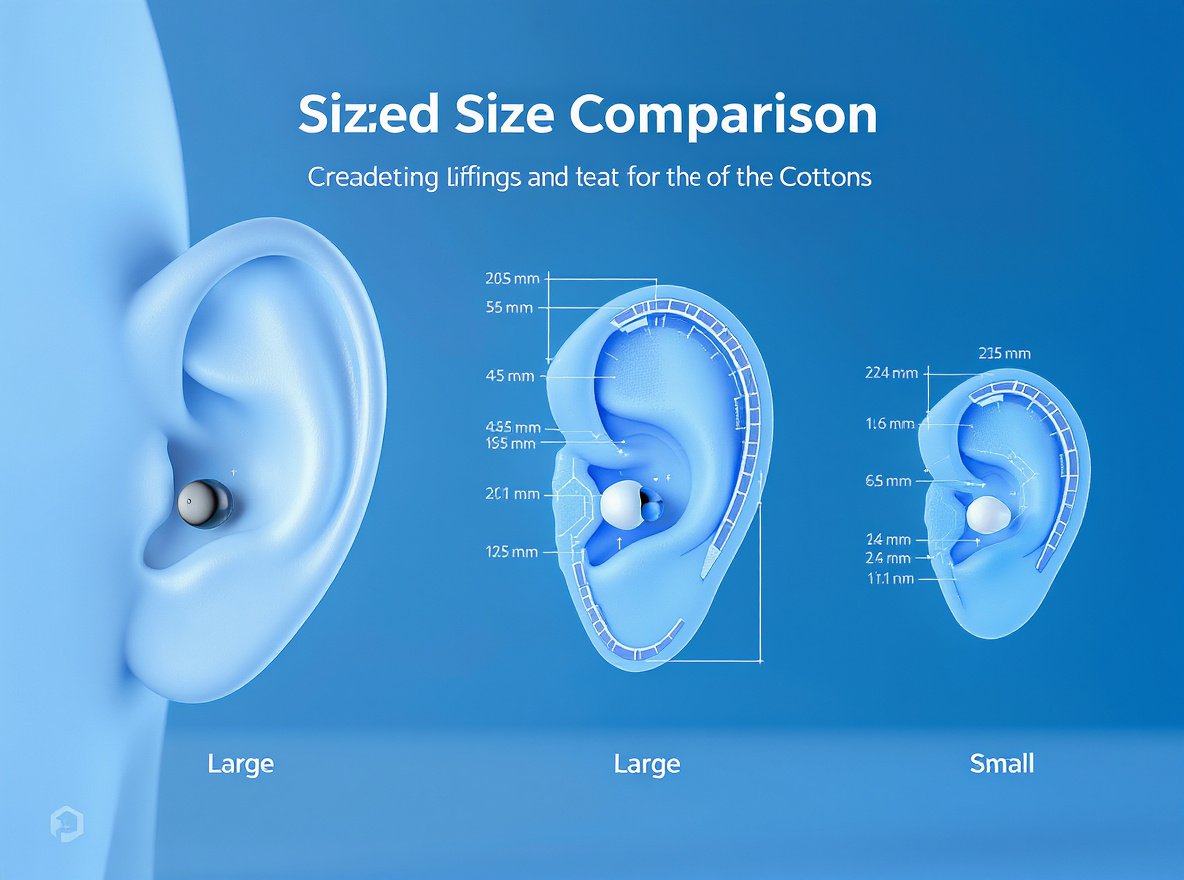
Finding earbuds that actually stay put can feel impossible when you have small ears. You’re tired of constantly pushing them back in, dealing with discomfort, or losing expensive earbuds during workouts. The good news? The right earbuds designed for smaller ear canals can solve these problems completely.
The best earbuds for people with small ears are lightweight models under 6 grams with multiple ear tip sizes including extra-small options, shallow insertion depth, and ergonomic designs. Top options include Sony LinkBuds S (4.8g), JLab JBuds Mini (4.28g), and TOZO T6 (4.5g) with comprehensive size selections.
Let’s explore everything you need to know to find your perfect fit and discover why size matters more than you think.
Why Do Standard Earbuds Fall Out of Small Ears?
Understanding the anatomical reasons helps you make better purchasing decisions and avoid future disappointments.
Research shows that up to 15% of people have notably smaller ear canals than average, yet most earbuds are designed for standard dimensions. Small ears have different shapes, sizes, and canal variations that can’t accommodate typical earbuds, leading to poor seal, discomfort, and constant slippage.
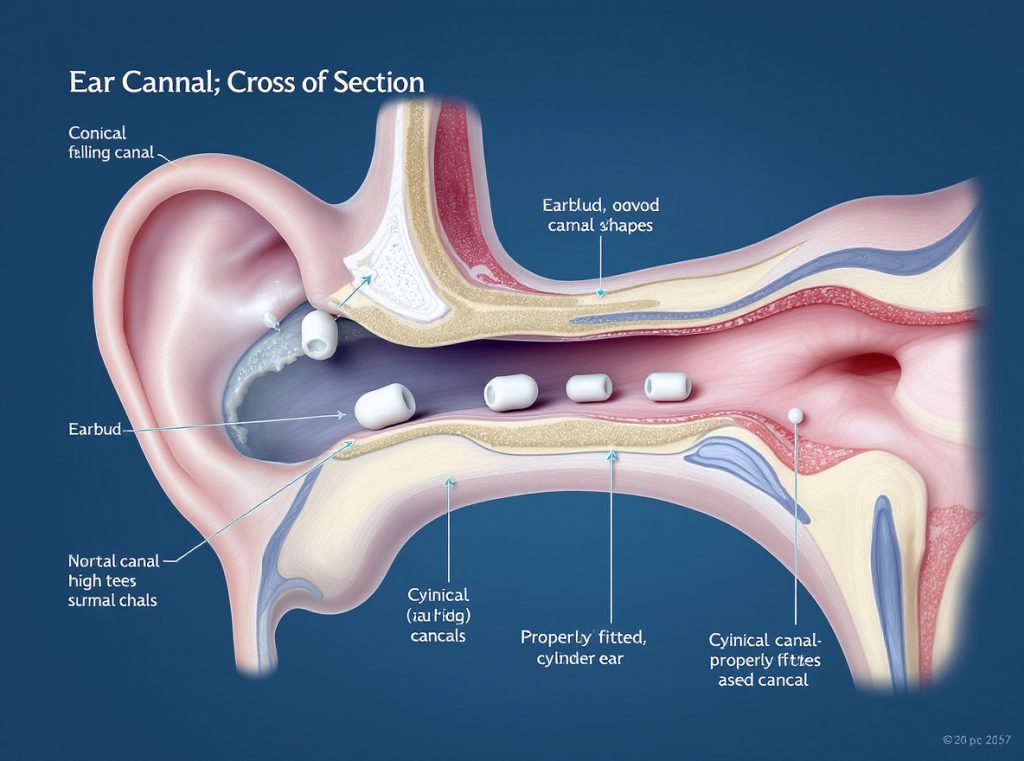
The problem goes beyond simple size mismatch. Studies reveal that ear canal shapes vary significantly across populations, with the most common being conical (64%), followed by ovoid (15.2%), cylindrical (10.8%), reverse conical (6%), and hourglass (3.6%). When earbuds don’t match your specific ear anatomy, they create pressure points and fail to maintain proper positioning.
Jaw movement compounds the issue significantly. The temporomandibular joint (TMJ) sits directly next to your ear canal, so talking, chewing, or yawning can alter ear canal shape and dislodge poorly fitted earbuds. This explains why earbuds might feel secure when stationary but fall out during normal activities.
Key factors causing earbud displacement:
- Anatomical variations in concha, tragus, and ear canal diameter
- TMJ movement affecting ear canal shape during jaw activities
- Poor acoustic seal allowing gradual migration outward
- Gravitational pull from oversized or overweight earbud housings
Your left and right ears aren’t identical either, which explains why one side may fit better than the other. This asymmetry requires careful attention when selecting ear tip sizes for optimal bilateral comfort.
What Features Should You Look for in Small Ear Earbuds?
Knowing the right specifications can save you money and frustration when shopping for your next pair.
Priority features include lightweight construction under 6 grams per bud, multiple ear tip sizes including extra-small options, shallow insertion design, ergonomic teardrop or pill-shaped housing, and nozzle diameter under 5.5mm for optimal small ear compatibility.
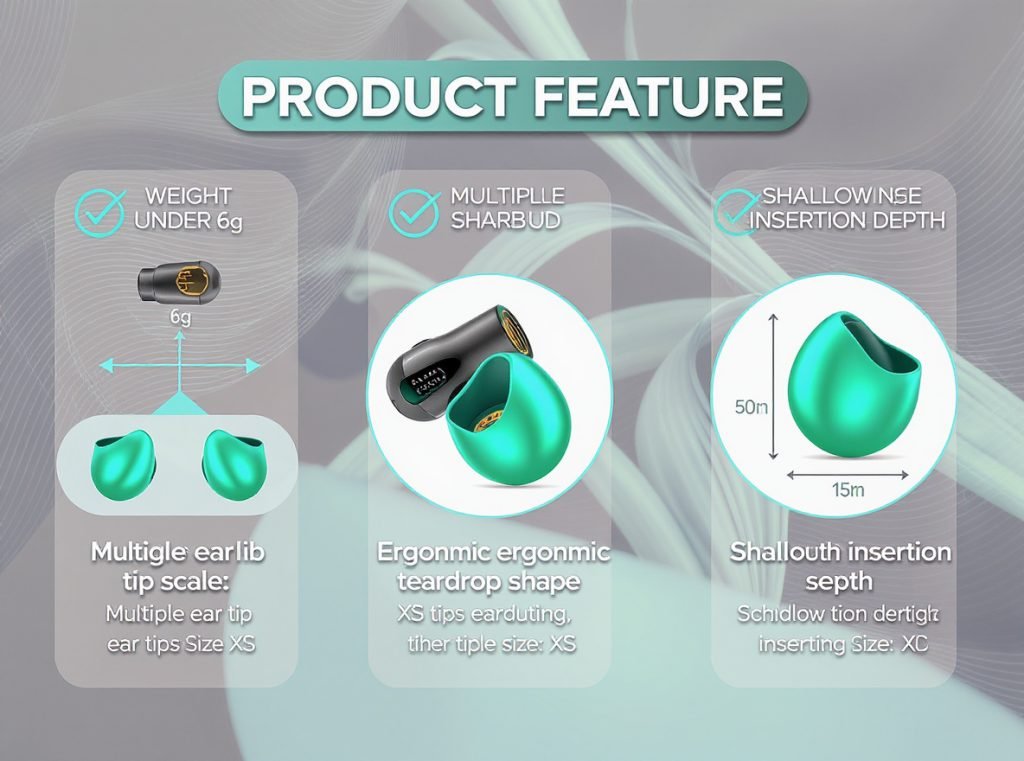
Weight represents the most critical specification for small ears. Ultra-lightweight models like the Sony LinkBuds S (4.8g), JLab JBuds Mini (4.28g), or TOZO T6 (4.5g) significantly reduce gravitational pull that causes earbuds to fall out during movement.
Ear tip variety matters enormously. Look for brands providing 5-6 different sizes including extra-small options. The TOZO T6 includes six ear tip sizes, while Apple AirPods Pro 2 now feature extra-small tips specifically designed for smaller ear canals. This comprehensive sizing ensures you’ll find your optimal fit.
| Feature | Small Ear Specification | Why It Matters |
|---|---|---|
| Weight | Under 6g per bud | Prevents gravitational displacement |
| Tip Sizes | 5-6 options including XS | Accommodates individual ear variations |
| Nozzle Diameter | Under 5.5mm | Fits smaller ear canal openings |
| Housing Shape | Teardrop/pill design | Reduces pressure points |
| Insertion Depth | Shallow-fit design | Works with shorter ear canals |
Advanced considerations for small ears:
- IPX4+ rating for sweat resistance during secure fit testing
- Companion apps with fit test features for optimization
- Memory foam tip compatibility for custom expansion fitting
- Wing tip or ear hook options for additional security
Remember that premium features mean nothing if the earbuds don’t physically fit your ears properly. Prioritize fit specifications over advanced connectivity or sound processing features.
How Do You Determine the Right Ear Tip Size?
Getting the correct ear tip size is crucial for both comfort and sound quality, but systematic testing prevents costly mistakes.
Use the finger test method: start with your pinky finger and gradually increase to larger fingers until you achieve comfortable seal that muffles outside noise. Match this finger diameter to available ear tip sizes. Follow up with the 15-second foam tip expansion test for memory foam options.
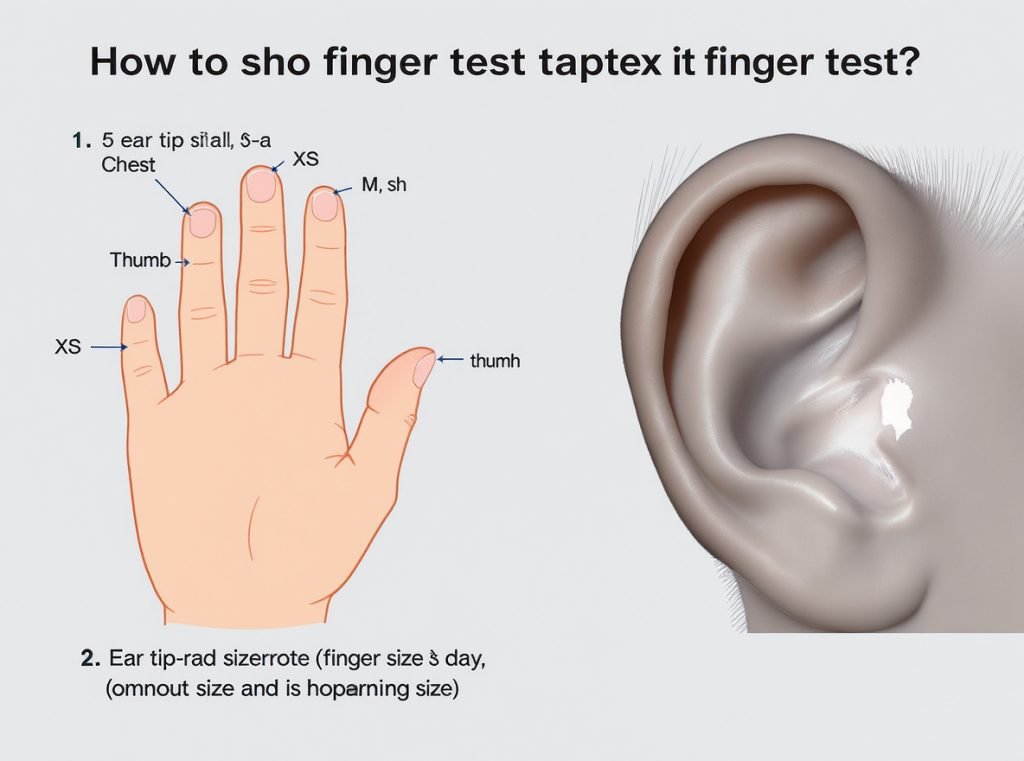
The finger test provides immediate tactile feedback about your ear canal dimensions. Insert your pinky finger gently into your ear canal until you feel light resistance and natural muffling of external sounds. This diameter corresponds to your optimal ear tip size – don’t force larger sizes that require uncomfortable pressure.
For memory foam tips, compress them before insertion and hold the earbuds in place for 15 seconds while the foam expands to fill your ear canal. This creates a custom seal that accommodates irregular ear shapes better than rigid silicone tips.
Professional fitting verification methods:
- Audio seal test: Play bass-heavy music and check for sound leakage
- Fit test apps: Use manufacturer apps for guided optimization
- Movement test: Perform normal activities to verify security
- Comfort duration: Ensure no pressure or pain after 30 minutes
Troubleshooting common fitting issues:
- Tinny sound indicates tips too small (poor seal)
- Pressure or pain means tips too large
- One-sided fit issues require different sizes per ear
- Frequent repositioning suggests wrong material choice
Many people make the mistake of choosing tips that feel “snug” initially but cause fatigue within hours. The correct size should feel secure but never tight or uncomfortable during extended wear.
Which Earbud Brands Make the Best Models for Small Ears?
Certain manufacturers consistently produce earbuds that excel for smaller ear canals based on weight, size options, and ergonomic design.
Top-performing brands for small ears include Sony (LinkBuds S at 4.8g), JLab (JBuds Mini at 4.28g), TOZO (T6 model with six tip sizes), Apple (AirPods Pro 2 with XS tips), and Nothing (Ear (a) at 0.17oz per bud). These companies prioritize lightweight construction and comprehensive sizing.
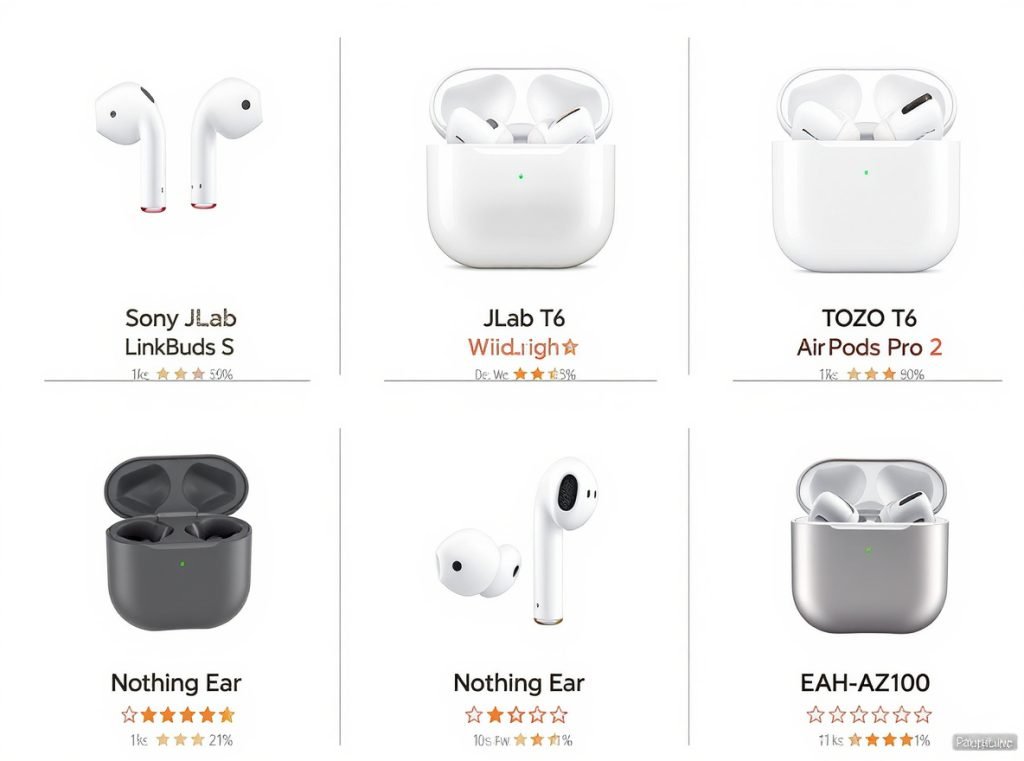
Sony’s LinkBuds S consistently receives top ratings for small ears due to exceptional engineering. At just 4.8g per bud with shallow insertion design, they provide excellent noise cancellation while maintaining comfort during extended wear. The low-profile housing sits nearly flush with your ear opening.
JLab specifically targets this market segment with their JBuds Mini line, engineered to be 30% smaller than their standard models. At 4.28g per bud, they represent among the lightest options available while maintaining full wireless functionality and respectable sound quality.
Comprehensive brand comparison for small ears:
| Brand | Model | Weight/Bud | Tip Sizes | Special Features |
|---|---|---|---|---|
| Sony | LinkBuds S | 4.8g | Multiple + XS | Shallow insertion, noise canceling |
| JLab | JBuds Mini | 4.28g | 6 sizes | 30% smaller design, budget-friendly |
| TOZO | T6 | 4.5g | 6 sizes including XS | Exceptional value, secure fit |
| Apple | AirPods Pro 2 | 5.4g | XS/S/M/L | Redesigned for small ears, fit test app |
| Nothing | Ear (a) | 4.8g (0.17oz) | Multiple | Bubble-shaped case, secure fit |
| Panasonic | EAH-AZ100 | 5.2g | 6 sizes + XS | Twist-lock mechanism |
For wholesale buyers and retailers, working directly with specialized manufacturers like Osmarto allows for custom specifications that major brands might not offer. This includes ultra-small tip development, weight optimization below 4g, and bulk customization for specific demographic markets.
Are Wireless or Wired Earbuds Better for Small Ears?
The connection type significantly affects weight distribution, security, and practical usability for smaller ear canals.
Wireless earbuds are generally superior for small ears because they eliminate cable weight and pulling forces that cause displacement. Modern wireless models under 5g offer optimal weight distribution, while cables on wired earbuds create constant downward pull and snag risks.
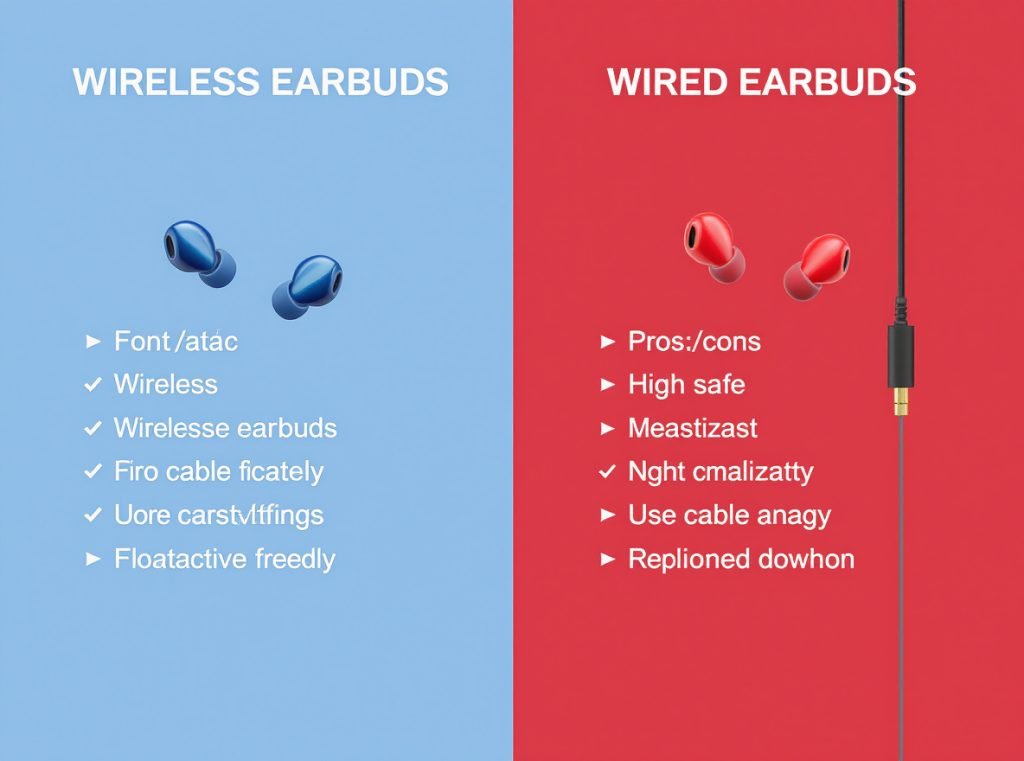
Cable-related issues represent the primary disadvantage of wired earbuds for small ears. Cable weight creates continuous gravitational pull, especially noticeable during movement or exercise. Cables also catch on clothing, objects, or body parts, creating sudden yanking forces that dislodge earbuds unexpectedly.
Modern wireless technology has resolved most connectivity concerns while enabling significant size reductions. Advanced battery chemistry allows 4+ hour playback times in packages weighing under 5 grams, making wireless the practical choice for active users.
Wireless advantages for small ears:
- Zero cable weight or pulling forces
- No snag risks during movement or exercise
- Compact, lightweight individual earpieces
- Modern models achieve 20+ hour total battery life with cases
- Superior for sports, commuting, and active lifestyles
Wired considerations:
- Options like SoundMAGIC E11C cater specifically to smaller ears
- Generally more affordable for equivalent sound quality
- No battery degradation concerns over time
- Unlimited playback duration for long sessions
- Better latency for gaming or video applications
The decision depends primarily on your usage patterns. For exercise, commuting, or active lifestyles, wireless provides clear advantages. For desk work, audiophile listening, or budget constraints, specialized wired options remain viable.
How Can You Improve Earbud Fit Without Buying New Ones?
Sometimes simple modifications can transform poorly fitting earbuds into comfortable, secure options without additional purchases.
Try third-party ear tips like SpinFit CP100+ in SS size (10mm) or Comply foam tips for better conformability, adjust insertion angle and depth, use proper insertion technique with ear positioning, or add aftermarket accessories like ear hooks. Small changes often create dramatic improvements.
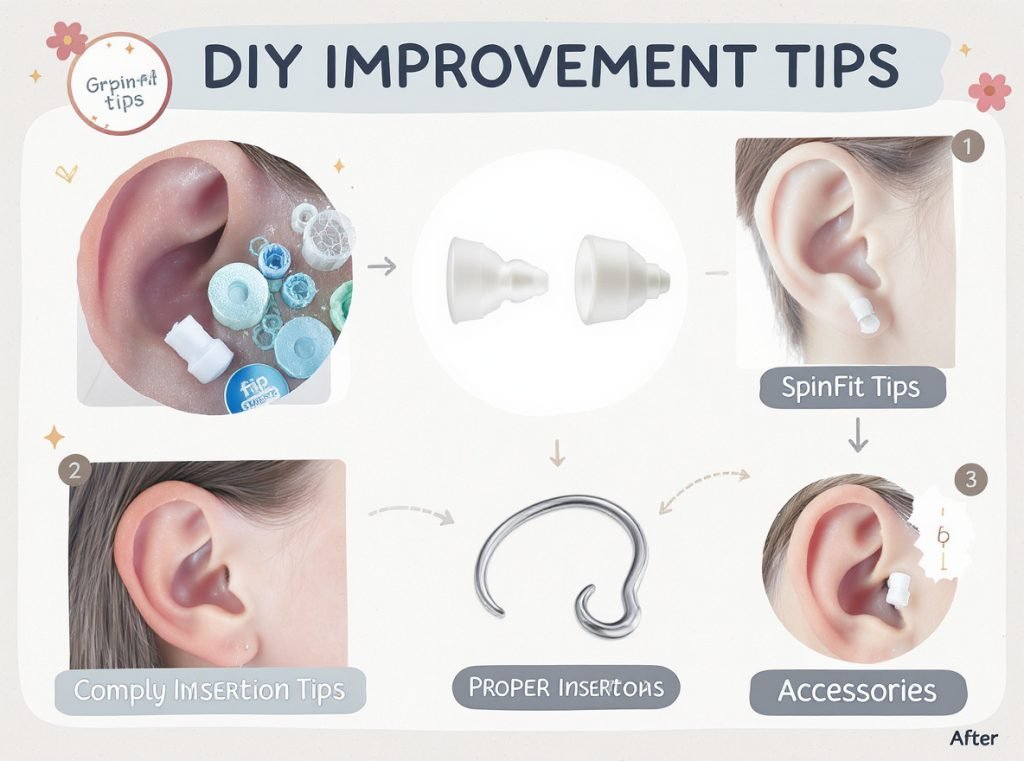
Third-party ear tips deserve special attention for small ears. SpinFit CP100+ tips in SS size (10mm) offer superior comfort and fit compared to most stock silicone tips. Comply foam tips provide customizable compression fitting that accommodates irregular ear shapes better than rigid alternatives.
Proper insertion technique makes enormous difference. Gently pull your earlobe down while inserting to straighten the ear canal, then release to create a natural “lock.” This technique works with your ear’s anatomy rather than forcing against it.
Professional improvement strategies:
- Third-party tips: SpinFit, Comply, or other specialty brands in XS sizes
- Insertion angle: Try rotating earbuds 90-180 degrees for better seating
- Ear positioning: Pull earlobe down during insertion, release for lock
- Regular cleaning: Remove earwax buildup affecting fit quality
- Fit test verification: Use manufacturer apps to optimize current setup
DIY accessories for enhanced security:
- Ear hooks that wrap around outer cartilage for stability
- Memory wire attachments for custom shaping
- Third-party wings or fins for additional anchor points
- Custom sleeves that retrofit existing earbuds with personalized fit
Consider professional ear impressions if you frequently struggle with fit across multiple earbud models. Custom tips made from your ear impressions provide perfect fit but represent significant investment ($185+ from companies like EAR Customized Hearing).
What Are the Most Common Mistakes When Choosing Earbuds for Small Ears?
Avoiding these research-backed pitfalls can save you money and frustration during your search for the perfect fit.
The biggest mistakes include assuming medium tips will work (they fit only a fraction of users), ignoring weight specifications over 6g, choosing bulky designs for features you don’t need, buying based on average-ear reviews, and not testing during jaw movement activities.
The “medium tip assumption” represents the most costly mistake. Most earbuds ship with medium tips pre-installed, but research shows these fit only a small percentage of the population optimally. Always test multiple sizes systematically rather than accepting the default.
Weight specifications tell you more about small-ear compatibility than marketing materials. Models exceeding 6g per bud are significantly more likely to fall out due to gravitational pull, regardless of tip size or design claims.
Research-backed mistake categories:
Fit-Related Errors:
- Assuming one-size-fits-all marketing claims
- Ignoring nozzle diameter specifications (should be under 5.5mm)
- Choosing wrong tip material (silicone vs. foam) for your ear type
- Not testing fit during talking, chewing, or jaw movement
Purchase Decision Errors:
- Buying based on reviews from average or large-ear users
- Prioritizing brand recognition over actual fit specifications
- Focusing on advanced features rather than fundamental comfort
- Not verifying return policies before purchase
Technical Specification Oversights:
- Ignoring stated weight over 6g per earbud
- Overlooking ear tip size variety (need 5+ options including XS)
- Missing companion app fit test features
- Not considering insertion depth requirements
Review bias presents a major challenge since most reviewers have average or large ears. Their fit experiences don’t translate to small-ear needs, yet their recommendations heavily influence purchasing decisions.
Should You Consider Custom-Made Earbuds for Small Ears?
Custom solutions offer the ultimate fit solution but come with significant trade-offs in cost, time, and practical considerations.
Custom earbuds provide perfect fit through professional ear impressions but cost $300-1000+ and require 2-8 weeks manufacturing time. Consider customs only after failing with multiple universal-fit options, or for professional audio applications where perfect fit justifies the investment.
The custom process involves visiting an audiologist for ear impressions identical to hearing aid fittings. These impressions capture your exact ear canal shape, creating earbuds that fit only your ears. The result provides unmatched comfort and acoustic performance through optimal sealing.
Established custom manufacturers include Ultimate Ears, JH Audio, and numerous smaller specialists, with quality varying significantly between providers. EAR Customized Hearing offers custom-fit solutions starting around $185, while premium options can exceed $1000.
Custom earbud investment analysis:
| Pros | Cons |
|---|---|
| Perfect individual fit eliminates all comfort issues | High cost ($300-1500+) typically |
| Maximum comfort for extended wear periods | Long manufacturing time (2-8 weeks) |
| Superior sound isolation and acoustic performance | Cannot be shared, resold, or easily replaced |
| Durable construction designed for years of use | Potential need for adjustments or remakes |
Alternative custom solutions:
- Custom earbud sleeves that retrofit existing earbuds (Chameleon Ears™ PRO)
- Semi-custom options using multiple measurements rather than full impressions
- Custom tip services that create personalized tips for standard earbuds
For most small-ear users, modern specialized models like the Sony LinkBuds S or JLab JBuds Mini provide adequate comfort and performance at much lower cost. Reserve custom options for severe fitting problems, professional audio work, or situations where perfect fit justifies significant investment.
How Do Small Ears Affect Sound Quality in Earbuds?
Understanding the acoustic relationship between ear anatomy and audio performance helps set realistic expectations and optimize your listening experience.
Small ears can actually provide superior sound quality when properly fitted because shorter ear canals create less acoustic interference and better driver-to-eardrum coupling. However, poor-fitting large earbuds in small ears dramatically reduce bass response due to seal leakage.
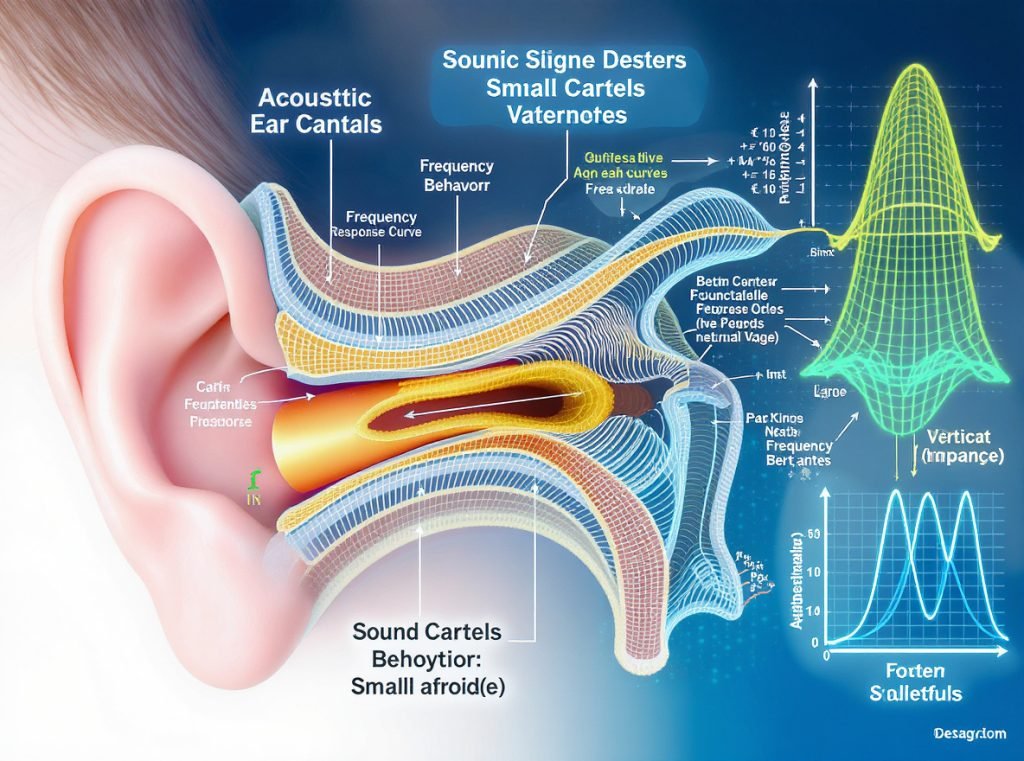
Acoustic physics actually favor small ears with proper fit. Shorter ear canals mean reduced distance for sound wave travel, minimizing high-frequency rolloff that affects longer canals. This can result in clearer, more detailed sound reproduction across the frequency spectrum.
The acoustic seal remains absolutely critical for bass response. Low-frequency sounds require perfect coupling between the driver and your eardrum. Any air leakage destroys this coupling, making bass sound weak, distant, or completely absent.
Sound quality optimization for small ears:
- Proper seal creates full-range frequency response
- Shorter canals can enhance clarity and detail resolution
- Wrong tip sizes eliminate bass frequencies completely
- Over-insertion causes unnatural pressure and distortion
- Correct fit often sounds better than forcing larger earbuds
Tip size impact on frequency response:
Research shows that wider bore ear tips increase treble response while smaller bores enhance bass. The optimal balance depends on your specific ear anatomy and personal preferences. Small ears often benefit from slightly wider bores to maintain treble clarity.
Volume efficiency advantages:
Well-fitted earbuds in small ears often require lower volume levels due to improved efficiency and reduced sound leakage. This provides hearing protection benefits while extending battery life in wireless models.
Professional audio engineers often choose smaller custom earbuds specifically to take advantage of these acoustic benefits. The key lies in finding or creating earbuds that work with your anatomy rather than against it.
What Should Wholesale Buyers Know About Small Ear Market Demand?
Market research reveals substantial opportunities in the underserved small-ear segment with specific demographic and pricing insights.
Approximately 15% of consumers have notably smaller ear canals, representing 1.2 billion people globally in an underserved market segment. The global wireless earbuds market valued at $31.7 billion in 2023 shows 15.4% CAGR growth, with Asia Pacific leading at 35% market share where smaller ear anatomies are more prevalent.

The demographic distribution creates compelling business opportunities. Asia Pacific markets show both the highest growth rates and greater prevalence of smaller ear anatomies, making them ideal targets for specialized small-ear product lines. North America represents 35.24% of the global market with strong purchasing power for premium-fit solutions.
Price sensitivity analysis reveals that products under $100 dominate sales volume, with wholesale prices as low as $6.66 enabling healthy retail margins. However, the small-ear segment shows higher brand loyalty and willingness to pay premium prices for proper fit, creating opportunities for value-added positioning.
Key market opportunity indicators:
- High return rates for standard-sized models (fit-related complaints)
- Premium pricing acceptance for specialized small-ear solutions
- Strong word-of-mouth marketing from satisfied small-ear customers
- Limited competition in specialized sizing categories
- Growing awareness of the sizing issue among consumers
B2B market trends for small ears:
- Wholesale platforms show strong demand for “mini” and “compact” earbud designs
- Products like “Smallest Invisible Mini Earbuds” achieve significant sales despite niche positioning
- Custom sizing options create competitive advantages over major brands
- Demographic targeting (women, youth, Asian markets) shows higher conversion rates
Wholesale partnership advantages:
For wholesale partnerships, manufacturers like Osmarto can provide specialized sizing options, bulk customization, and market-specific designs that major brands overlook. This creates sustainable competitive advantages for retailers serving underserved demographics.
The combination of growing overall market demand ($31.7B+ and expanding), underserved demographic segments (15% of population), and technological miniaturization trends creates compelling opportunities for wholesale buyers focusing on small-ear earbud solutions.
Summary
Finding the right earbuds for small ears requires focusing on weight under 6 grams, comprehensive size options including extra-small tips, and ergonomic designs over premium features. Research-backed models like Sony LinkBuds S, JLab JBuds Mini, and TOZO T6 solve most fitting problems through proper engineering for smaller anatomies.
The 15% of people with smaller ear canals represent a massive underserved market worth targeting with specialized solutions and proper fitting guidance.
Looking for wholesale earbud solutions for small ears? Osmarto specializes in lightweight, compact designs with comprehensive sizing options perfect for underserved markets. With the global wireless earbuds market growing at 15.4% annually and 1.2 billion people having smaller ear canals, this represents significant business opportunity. Contact us today to discuss custom specifications, bulk pricing, and how we can help your business serve customers with unique fitting needs. Send us an inquiry to explore partnership opportunities in this growing market segment!