Skip to content
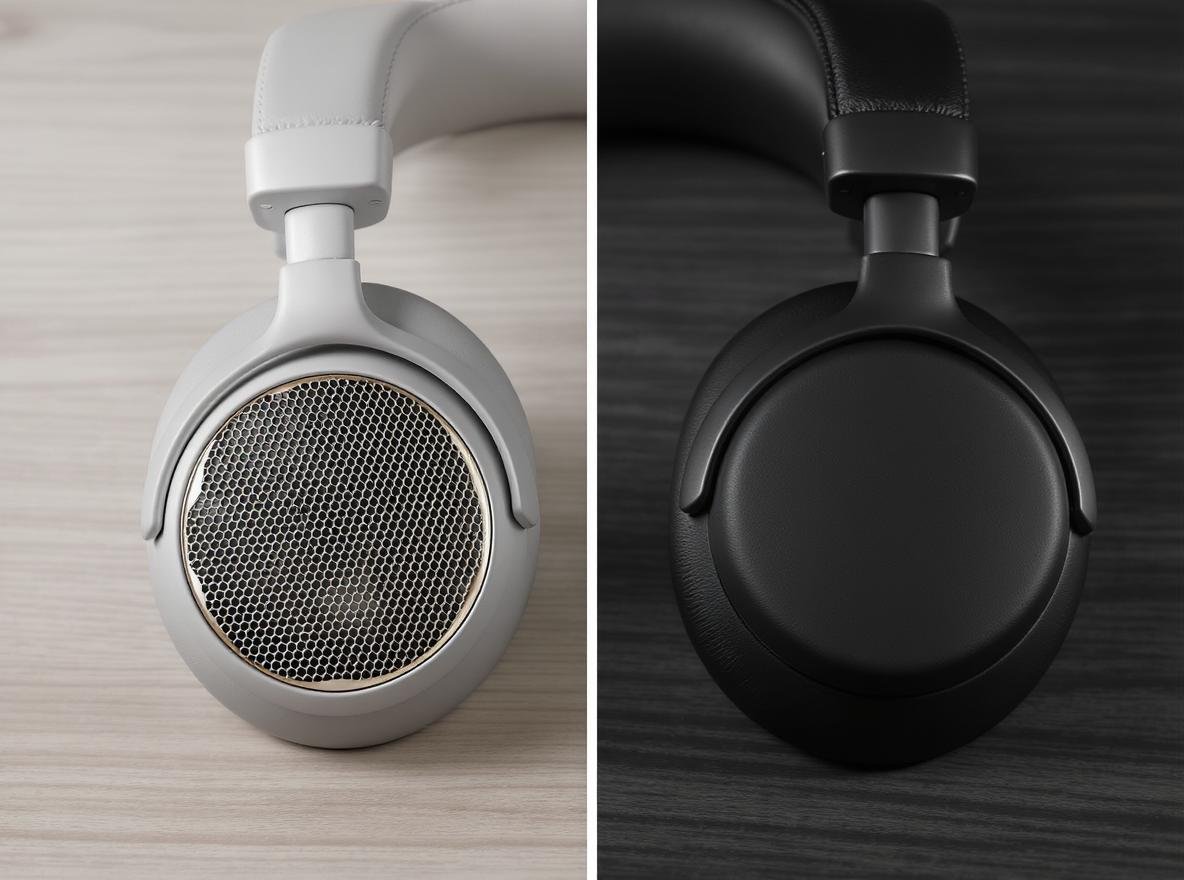
Choosing between open-back and closed-back headphones can feel overwhelming when you’re trying to find the perfect audio solution for your business or personal needs. The design difference affects everything from sound quality to privacy, making this decision crucial for your listening experience and professional applications.
Open-back headphones feature perforated or mesh-like exterior housings that allow air and sound to pass freely through the ear cups, creating natural, spacious sound with superior soundstage but no noise isolation. Closed-back headphones have completely sealed ear cups that prevent sound leakage and block external noise, offering privacy and enhanced bass response with more intimate sound presentation.
Understanding these fundamental differences will help you make the right choice for your specific audio requirements, whether you’re sourcing headphones for retail, professional use, or personal listening.
How Do Open-Back Headphones Actually Work?
Many audio professionals and enthusiasts wonder about the engineering principles that make open-back designs create such distinctive acoustic characteristics.
Open-back headphones work by allowing both sides of the driver diaphragm to generate sound freely. The perforated exterior enables air pressure to equalize naturally, eliminating low-frequency buildup and internal resonances that can muddy audio reproduction in sealed designs.

The open architecture fundamentally changes how sound waves behave inside the headphones. When drivers move back and forth, they displace air that needs somewhere to go. In open-back designs, this air escapes freely through the mesh or grilles, preventing pressure buildup.
This design creates several acoustic advantages:
- Natural soundstage: Music feels like it’s coming from the room around you rather than directly into your head
- Reduced standing waves: No trapped air means cleaner frequency response across the spectrum
- Enhanced instrument separation: Individual elements in recordings appear more distinct and spatially positioned
- Improved heat dissipation: Better airflow keeps ears cooler during extended listening sessions
- Lower distortion: Unrestricted driver movement reduces harmonic distortion
However, this openness comes with trade-offs. The lack of isolation means zero privacy – everyone around you will hear your music, and you’ll hear everything in your environment. This makes them unsuitable for many commercial and professional recording applications.
What Makes Closed-Back Headphones Different?
Understanding closed-back construction reveals why these headphones excel in different scenarios and professional applications than their open counterparts.
Closed-back headphones create a completely sealed acoustic environment where the rear sound waves from drivers are contained within the ear cups. This design provides superior noise isolation and prevents sound leakage, though it can create internal reflections that affect tonal balance.

The sealed design serves multiple acoustic and practical purposes beyond noise blocking. When drivers move, the trapped air creates a different acoustic environment that significantly affects bass response and overall sound character.
| Design Element | Closed-Back Advantage | Acoustic Trade-off |
|---|---|---|
| Sealed Enclosure | 15-30dB noise isolation | Potential internal resonances |
| Contained Air Volume | Enhanced bass impact | Less natural frequency response |
| Zero Sound Leakage | Complete privacy | More intimate, less spacious sound |
| Denser Construction | Better build durability | Heavier weight and heat retention |
Professional applications particularly benefit from this isolation. Recording studios require closed-back headphones to prevent microphone bleed – even minimal sound leakage from open-backs can ruin vocal takes and create feedback loops during tracking sessions.
The sealed design also affects comfort differently. While some users find them warmer due to restricted airflow, others appreciate the complete sonic isolation that helps maintain focus in noisy environments.
Which Type Offers Better Sound Quality for Professional Use?
This question depends on your definition of “better” and specific professional requirements, as both designs excel in different acoustic areas.
For pure sound accuracy and natural reproduction, open-back headphones generally hold the advantage. Industry professionals prefer them for mixing and mastering because they provide more accurate frequency response, superior soundstage, and reduced distortion from internal resonances.

Open-back sound characteristics for professional work:
Open-back designs like the Sennheiser HD 600/650 series and Beyerdynamic DT 1990 have become studio standards because they offer:
- More accurate frequency response across the entire spectrum
- Natural, speaker-like sound reproduction ideal for mix translation
- Superior instrument separation for detailed audio analysis
- Wider soundstage that helps identify spatial positioning in recordings
- Reduced ear fatigue during long mixing sessions
Closed-back advantages in specific professional scenarios:
However, closed-back headphones excel in areas where isolation is paramount:
- Enhanced bass monitoring: The sealed design can provide more impactful low-end response for bass-heavy genres
- Controlled environments: In noisy studios or live venues, isolation actually improves perceived sound quality
- Recording applications: Essential for tracking vocals and instruments without bleed
- Client monitoring: When artists need to hear playback without disturbing recording microphones
Premium closed-back models like the Beyerdynamic DT 1770 PRO ($600) and Focal Stellia ($3,000) achieve exceptional sound quality while maintaining the isolation benefits that professionals require in specific scenarios.
When Should You Choose Open-Back Headphones for Business Applications?
Certain professional and commercial scenarios make open-back headphones the clear choice for optimal audio performance and user satisfaction.
Choose open-back headphones for mixing, mastering, critical listening, content creation, and any application where sound accuracy takes priority over isolation. They’re essential for professional audio work, broadcast applications, and high-end consumer audio markets.

Professional audio production represents the largest market for open-back headphones. Audio engineers consistently choose models like the Sennheiser HD 490 PRO ($400) and HD 800 S ($1,500) for mixing and mastering work because the natural sound reproduction helps ensure mixes translate well to different playback systems.
Broadcast and streaming applications benefit significantly from open-back designs. Content creators can hear their own voice naturally during recording, preventing the “speaking too loudly” phenomenon common with closed-back monitoring.
Gaming market opportunities continue expanding, with open-back models like the Sennheiser PC38X ($169) gaining popularity for competitive gaming due to superior positional audio and soundstage for detecting directional cues.
High-end consumer markets predominantly feature open-back designs in flagship products. Models like the Focal Clear MG ($1,500) target audiophiles who prioritize sound quality over practical considerations.
For distributors and retailers, open-back headphones offer higher profit margins in premium segments, though they require customer education about their specific use cases and limitations.
When Are Closed-Back Headphones the Better Business Choice?
Many commercial applications and market segments demand the isolation and practical benefits that only closed-back designs can provide effectively.
Choose closed-back headphones for recording studios, office environments, portable use, noise-sensitive applications, and markets where privacy and isolation are essential. They dominate the consumer electronics mass market due to their versatility.

Recording and production markets represent a substantial opportunity for closed-back headphones. Every professional studio requires multiple pairs for tracking work, and models like the Audio-Technica ATH-M50x ($150) and Beyerdynamic DT 770 Pro ($160) have become industry standards.
Corporate and office markets increasingly demand closed-back solutions as remote work and open office environments make sound leakage problematic. This represents a growing B2B opportunity for bulk sales.
| Market Segment | Primary Models | Price Range | Key Features |
|---|---|---|---|
| Studio Recording | DT 770 Pro, ATH-M50x | $150-250 | Professional isolation, durability |
| Consumer Electronics | Various wireless models | $50-300 | Convenience, noise cancellation |
| Gaming | DT 770 Pro, K371 | $150-200 | Bass impact, isolation |
| Office/Corporate | Mid-range comfort models | $100-250 | All-day comfort, professional appearance |
Consumer electronics dominate the closed-back market, with wireless options commanding premium prices due to convenience features. This mass market provides volume opportunities for manufacturers and distributors.
Gaming applications often favor closed-back designs for their enhanced bass response in action sequences and ability to block environmental distractions during competitive play.
How Do Price Points and Market Segments Compare?
Understanding pricing structures across both categories helps businesses position products effectively and identify profitable market opportunities.
Both open-back and closed-back headphones span all price ranges from budget to ultra-premium, but market distribution differs significantly. Closed-backs dominate mass market and mid-range segments, while open-backs command higher average selling prices in enthusiast and professional markets.

Entry-Level Market ($50-200):
This segment offers the highest volume potential but lower margins. Popular closed-back options include the Audio-Technica ATH-M50x (~$150) and Beyerdynamic DT 770 Pro ($160), which have achieved widespread adoption in both consumer and professional markets.
Open-back entry points like the Philips X2HR (~$150) and Grado SR80x (~$125) serve audiophile customers seeking better sound quality at accessible prices.
Mid-Range Segment ($200-500):
This represents the sweet spot for both quality and profitability. The Sennheiser HD 6XX (~$220) has become legendary in open-back circles, while closed-back options like the AKG K371 (~$150) and Sennheiser HD 620S ($400) serve different market needs.
Premium Market ($500-1500+):
Open-back headphones dominate this segment, with flagship models like the Sennheiser HD 800 S ($1,500) and Focal Clear MG ($1,500) representing the pinnacle of consumer audio. This segment offers the highest margins for specialty retailers.
Closed-back premium options like the Focal Stellia ($3,000) and Beyerdynamic DT 1770 PRO ($600) serve niche markets requiring both isolation and exceptional sound quality.
Market trends show open-back headphones commanding higher average selling prices due to their appeal to enthusiast markets, while closed-back models achieve higher volumes across diverse consumer segments.
What About Gaming and Entertainment Market Opportunities?
Gaming and entertainment represent rapidly growing markets with specific requirements that influence purchasing decisions and product positioning strategies.
Gaming markets increasingly favor open-back headphones for competitive applications due to superior soundstage and positional accuracy, while casual gaming and entertainment applications often prefer closed-back designs for enhanced bass and isolation benefits.

Competitive gaming advantages of open-back designs include:
Superior soundstage creates better spatial awareness crucial for competitive advantage in games like CS:GO and Valorant. Models like the Sennheiser HD 490 PRO ($400) have gained popularity among professional esports players for their precise directional audio.
Natural voice communication allows gamers to hear themselves speak normally during voice chat, preventing the shouting common with closed-back isolation.
Extended comfort during long gaming sessions benefits from better heat ventilation and reduced pressure buildup.
Casual gaming and entertainment often work better with closed-back designs:
Enhanced bass response makes explosions and action sequences more immersive and exciting for casual players.
Noise isolation helps maintain focus in household environments and prevents disturbing others during late-night gaming sessions.
Microphone compatibility improves because closed-backs prevent audio bleed into streaming microphones.
Entertainment applications breakdown:
- Movies and TV: Open-back for cinematic experiences in quiet environments; closed-back for action content and shared spaces
- Music streaming: Open-back for critical listening; closed-back for portable and public use
- Content creation: Mixed requirements depending on recording vs. monitoring needs
This market diversity creates opportunities for businesses to offer complete gaming solutions rather than single products, increasing average order values and customer lifetime value.
Can Businesses Benefit from Offering Both Types?
Professional audio applications often require different headphone types for different tasks, creating opportunities for comprehensive product offerings and higher sales volumes.
Most professional audio workflows benefit from having both open-back and closed-back headphones available. This creates opportunities for businesses to sell complete monitoring systems rather than individual products, significantly increasing average order values and customer retention.

Studio workflow requirements demonstrate this clearly:
Recording sessions absolutely require closed-back headphones to prevent microphone bleed. Even minimal sound leakage from open-backs can ruin vocal takes and create feedback during tracking.
Mixing and mastering work benefits from open-back designs because they provide the most accurate representation of how mixes will sound on speakers in real acoustic spaces.
Client presentations often need closed-back models to provide isolated monitoring without disturbing recording sessions.
Professional setup examples:
| Application | Primary Choice | Secondary Need | Business Opportunity |
|---|---|---|---|
| Recording Studio | Closed-back (tracking) | Open-back (mixing) | Complete studio packages |
| Broadcast | Open-back (monitoring) | Closed-back (recording) | Broadcast solutions |
| Gaming Setup | Open-back (competitive) | Closed-back (streaming) | Gaming bundles |
| Audio Production | Open-back (mastering) | Closed-back (reference) | Producer packages |
Business advantages of dual-type offerings include:
Higher average order values when customers purchase complete solutions rather than single products.
Increased customer lifetime value through comprehensive product ecosystems.
Better customer education opportunities that build brand authority and trust.
Reduced competition from single-product suppliers who can’t offer complete solutions.
Market differentiation through expertise and comprehensive product knowledge.
For manufacturers like Osmarto, this approach allows targeting multiple market segments simultaneously while building stronger relationships with professional customers who require complete audio solutions.
Summary
Open-back headphones deliver natural, spacious sound ideal for quiet environments, professional mixing, and critical listening, while closed-back designs provide essential noise isolation, enhanced bass, and privacy for recording, public use, and bass-heavy entertainment. Your choice depends on specific environmental requirements, application needs, and whether sound accuracy or isolation takes priority.

Whether you’re a distributor building product portfolios, a retailer educating customers, or a professional requiring reliable audio solutions, understanding these fundamental differences enables better product matching and customer satisfaction. At Osmarto, we manufacture both open-back and closed-back headphones across all price segments, from entry-level consumer models to professional-grade studio monitors. Our engineering team understands the acoustic principles behind each design and can help you select the optimal headphone solutions for your specific market requirements. Contact us today to discuss wholesale opportunities and discover how our comprehensive product range can enhance your audio equipment offerings.