Skip to content
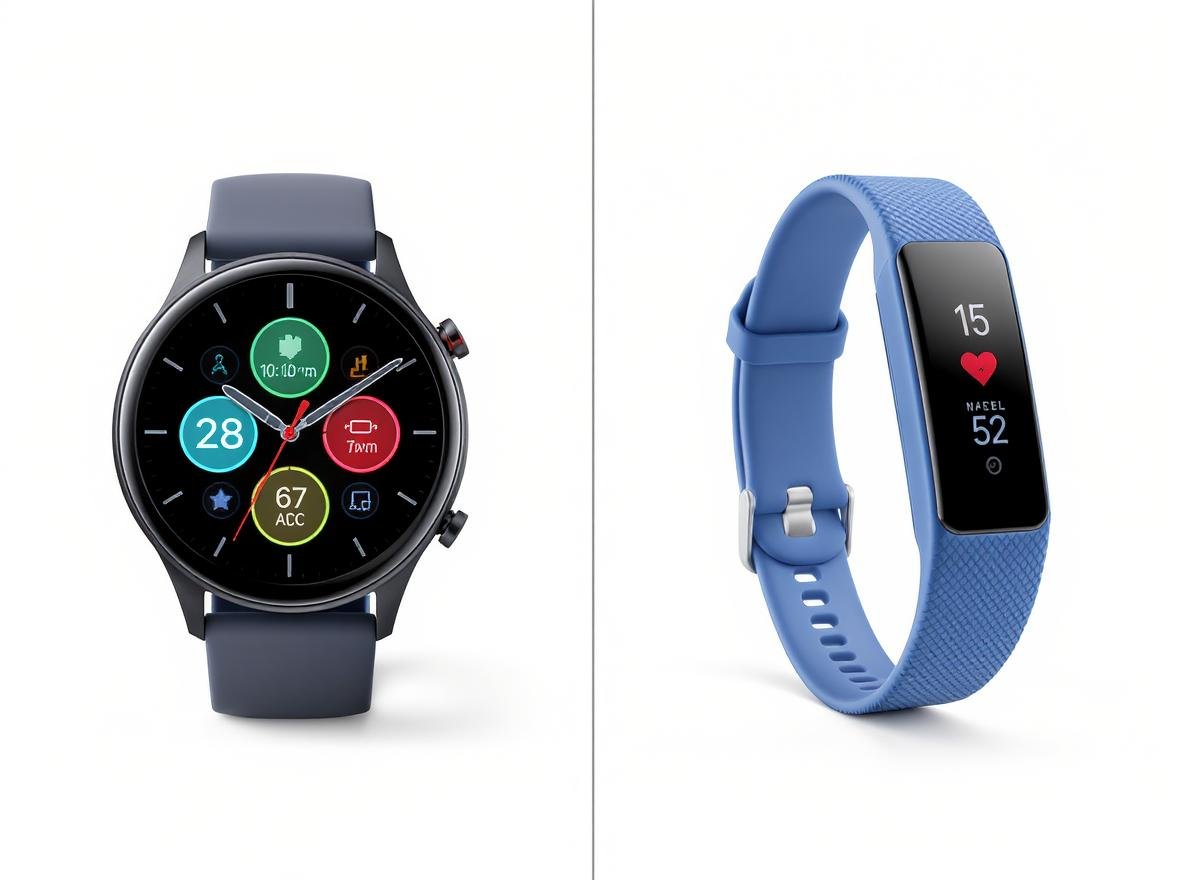
Choosing between a smartwatch and fitness tracker can feel overwhelming with endless options flooding the market. Your customers demand devices that perfectly match their lifestyle and budget, but which wearable technology delivers the best value for their specific needs?
A smartwatch functions as an all-round mobile companion with phone-like features (apps, calls, payments) on your wrist, while fitness trackers focus on continuous health and activity logging with longer battery life and lower costs. The right choice depends on whether you prioritize comprehensive smart features or dedicated fitness functionality with extended battery performance.
Understanding these key differences will help you make the perfect recommendation for your customers and their unique requirements.
What’s the Main Difference Between Smartwatches and Fitness Trackers?
Modern consumers often struggle to distinguish between these two popular wearable categories. Both devices sit on your wrist and track basic health metrics, but their core purposes and design philosophies differ significantly.
Smartwatches serve as comprehensive mobile companions offering messaging, navigation, streaming music, and contactless payments alongside fitness tracking. Fitness trackers concentrate specifically on continuous health and activity logging with simplified interfaces, lightweight designs, and extended battery life optimized for 24/7 monitoring.
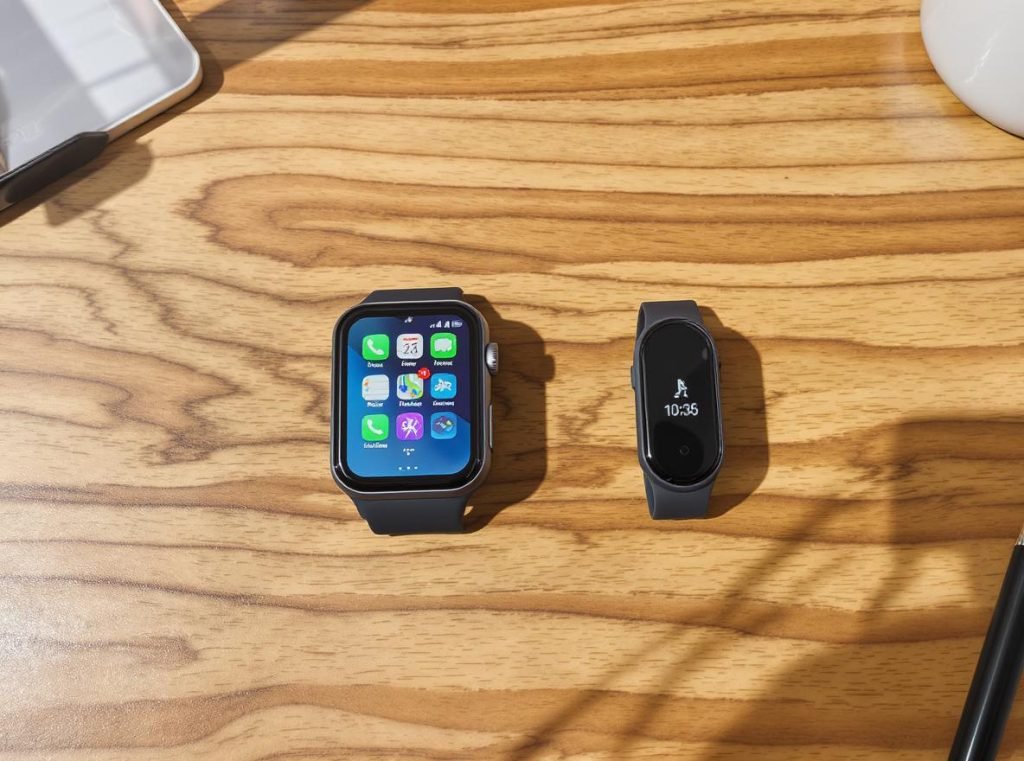
The fundamental distinction lies in their primary function and technical implementation.
Core Functionality Comparison
Smartwatches transform your wrist into a communication and productivity hub. They feature full touch interfaces, rotating crowns or bezels, and rich operating systems like watchOS, Wear OS, or Tizen. Users can respond to messages, answer calls, access social media, and run thousands of third-party applications directly from their wrist.
Fitness trackers prioritize health monitoring above all else, using lightweight RTOS or vendor firmware to maximize battery efficiency. They excel at step counting, heart rate monitoring, sleep tracking, and workout analysis while maintaining slim band or ring form factors that users can wear comfortably 24/7.
| Feature Category | Fitness Tracker | Smartwatch |
|---|---|---|
| Core Purpose | Continuous health & activity logging | All-round mobile companion plus fitness |
| Form Factor | Slim band or ring (typically under 20g) | Watch-style body with large screen (50-70g) |
| Interface | One-touch/tap or button controls | Full touch UI, crown/rotating bezel, voice |
| Operating System | Lightweight RTOS/vendor firmware | Rich OS (watchOS, Wear OS, Tizen) |
| Example Devices | Fitbit Charge 6, Garmin Vivosmart 5 | Apple Watch Series 10, Pixel Watch 3 |
Which Device Offers Better Battery Life?
Battery performance often determines user satisfaction and daily practicality. Your wholesale customers frequently prioritize devices that won’t disappoint end users with frequent charging requirements.
Fitness trackers routinely deliver 7-14 days of battery life in watch mode, while smartwatches typically require charging every 18 hours to 3 days. The Fitbit Inspire 3 lasts 10 days, while the Apple Watch Series 10 requires daily charging at approximately 18 hours of use.
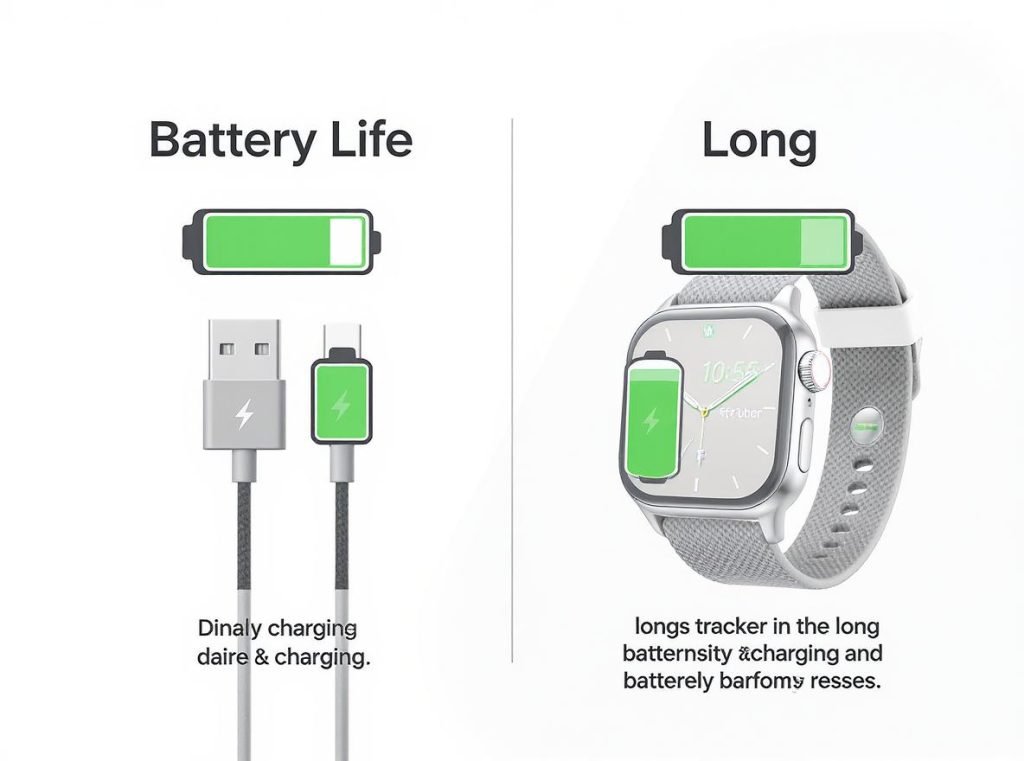
This dramatic battery life difference stems from their distinct hardware architectures and power management approaches.
Power Consumption Factors
Smartwatches consume significantly more power due to bright OLED/AMOLED displays, powerful processors, LTE/Wi-Fi radios, and resource-intensive operating systems. Features like always-on displays, cellular connectivity, and multiple running applications drain batteries rapidly.
Fitness trackers optimize for efficiency using monochrome displays or AMOLED strips, lean operating systems, and minimal wireless radios. They activate power-hungry features like GPS only during specific workouts, preserving battery for continuous health monitoring.
Battery Life Comparison by Device Type:
| Device Type | Average Watch Mode Life | GPS Usage Time | Technical Advantages |
|---|---|---|---|
| Fitness Trackers | 7-14 days | 5-6 hours | Monochrome/AMOLED strips, lean OS, no cellular |
| Standard Smartwatches | 18 hours – 3 days | 4-20 hours | Bright OLED/AMOLED, LTE, Wi-Fi, heavy OS |
| Solar Smartwatches | Up to 36 days | Extended | Transflective displays, solar charging |
Specific Device Examples:
- Fitbit Inspire 3: 10 days
- Amazfit Balance: 14 days
- Apple Watch Series 10: ~18 hours
- Samsung Galaxy Watch 7: ~24 hours
- Garmin Enduro 3 with solar: ~36 days
How Do Price Points Compare Between These Devices?
Cost considerations significantly impact wholesale purchase decisions and end-user adoption rates. Understanding price segments helps you position products effectively for different market segments and customer budgets.
Fitness trackers generally cost 1.5-2× less than comparably built smartwatches due to simpler displays, processors, and radio components. Budget fitness trackers start around $30, while premium smartwatches can exceed $800 for cellular models with advanced features.
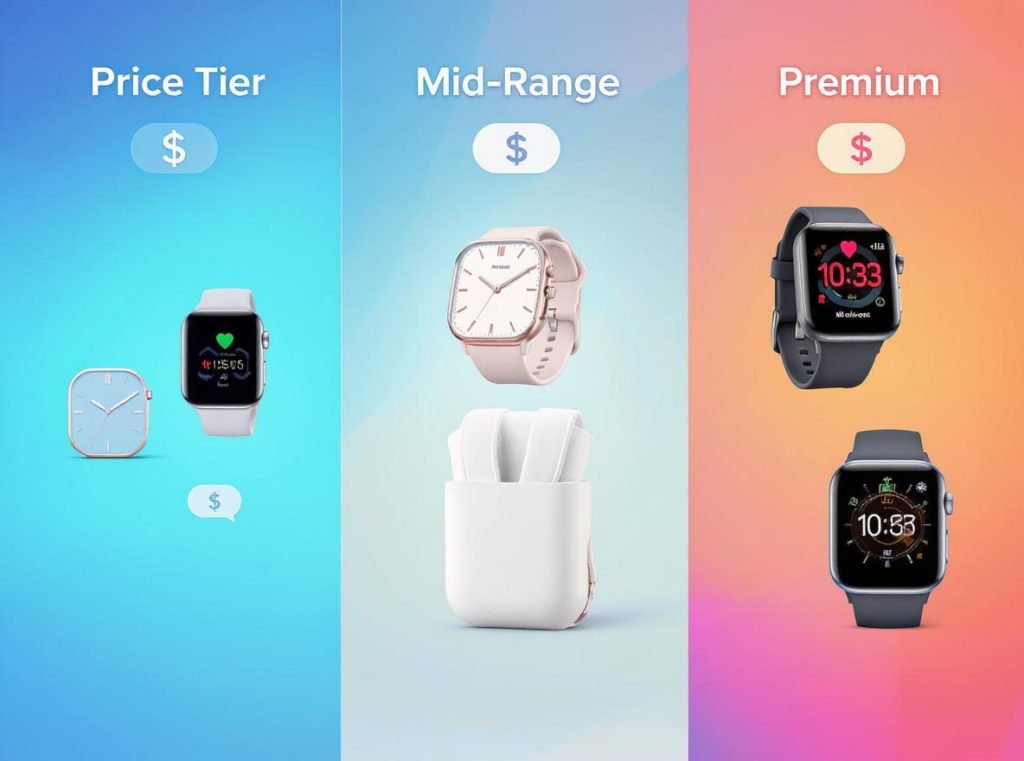
Price differences reflect manufacturing complexity, component costs, and target market positioning.
Market Price Segments and Street Pricing
The wearable market spans multiple price tiers, each targeting specific consumer segments with different feature expectations and budgets.
| Price Tier | Fitness Tracker Range | Smartwatch Range | Key Differences |
|---|---|---|---|
| Budget | $30-$100 | $70-$150 | Basic health tracking vs. limited smart features |
| Mid-Range | $129-$199 | $200-$399 | Advanced sensors vs. full app ecosystems |
| Premium/Pro | $250-$400 | $399-$899+ | Professional features vs. cellular connectivity |
Budget Tier Examples ($30-$150):
- Xiaomi Band 9, Fitbit Inspire 3 vs. Amazfit Bip 5, Redmi Watch 3
- Essential health monitoring with simple interfaces
- Ideal for price-conscious consumers and fitness beginners
Mid-Range Examples ($129-$399):
- Garmin Vivosmart 5, Fitbit Charge 6 vs. Samsung Galaxy Watch 7 BT, Pixel Watch 3 Wi-Fi
- Advanced fitness tracking or comprehensive smart features
- Popular choice for active users wanting reliable performance
Premium Examples ($250-$899+):
- Withings ScanWatch 2, Oura Ring 4 vs. Apple Watch Series 10 Cellular, Apple Watch Ultra 2
- Professional-grade sensors or flagship connectivity features
- Target audience: serious athletes and tech enthusiasts
Which Device Type Offers More Advanced Health Monitoring?
Health tracking capabilities serve as primary purchase motivators for wearable devices. Both categories have evolved significantly, but key differences remain in sensor sophistication and medical-grade features.
Smartwatches typically include more advanced medical-grade sensors like ECG, blood oxygen monitoring, and FDA-cleared irregular rhythm alerts. However, both device types now offer comprehensive basic health monitoring, with fitness trackers excelling at continuous, accurate tracking of core wellness metrics.
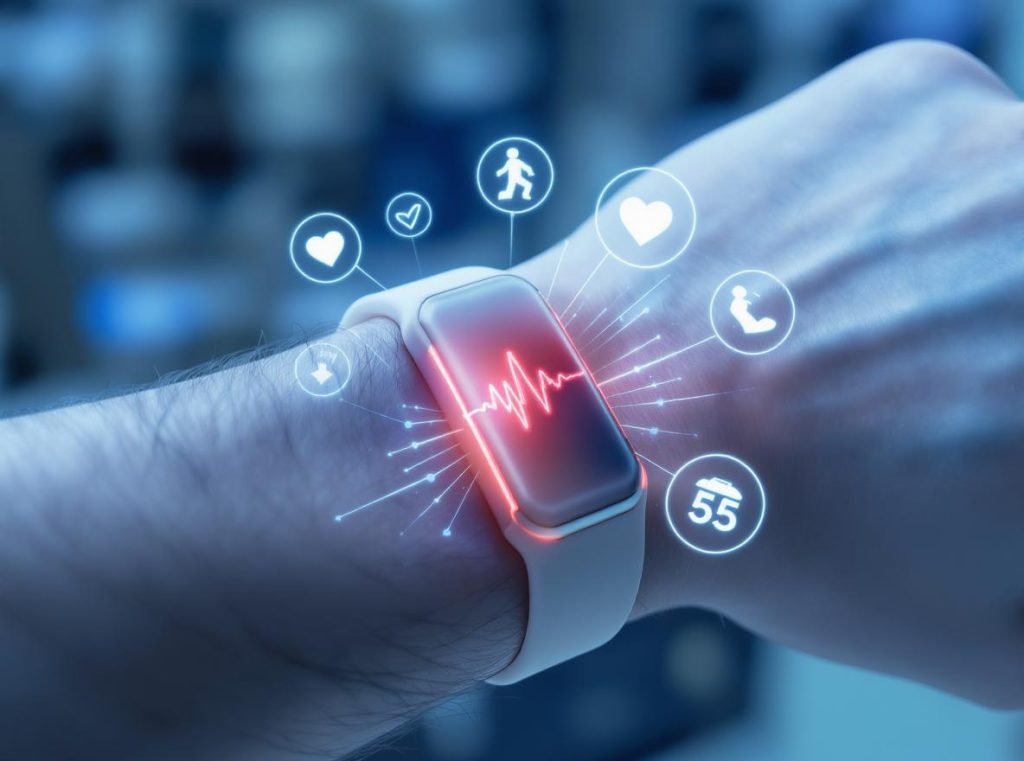
The gap between categories continues narrowing as fitness trackers adopt advanced sensors while maintaining their power efficiency advantages.
Health Monitoring Capabilities Comparison
Modern fitness trackers excel at continuous, accurate monitoring of essential health metrics. They provide detailed insights into daily activity patterns, sleep quality, stress levels, and workout performance with impressive precision optimized for 24/7 wear.
Smartwatches integrate similar monitoring capabilities while adding medical-grade sensors for comprehensive health assessment. Premium models can detect irregular heart rhythms, measure blood oxygen levels, provide fall detection, and even track skin temperature variations.
| Sensor/Metric | Fitness Tracker Availability | Smartwatch Availability |
|---|---|---|
| Steps, distance, calories | Universal | Universal |
| Optical heart rate 24/7 | Universal | Universal |
| SpO₂/blood oxygen | Common on newer bands | Standard on premium watches |
| ECG (single-lead) | Rare (Fitbit Sense 2) | Common on flagship models |
| Blood pressure (cuff-less) | Niche (Huawei Watch D2) | Limited to select models |
| Skin temperature & stress | Increasing (Charge 6) | Standard in major platforms |
Universal Health Features (Both Categories):
- Continuous heart rate monitoring with 24/7 tracking
- Sleep stage analysis and detailed sleep insights
- Step counting, distance tracking, and calorie estimation
- Stress level monitoring and guided breathing exercises
- Menstrual cycle tracking and reproductive health insights
Advanced Smartwatch Exclusive Features:
- ECG readings for detailed heart health analysis
- Fall detection with emergency calling capabilities
- FDA-cleared irregular heart rhythm notifications
- Blood oxygen saturation monitoring during sleep
- Skin temperature sensing for illness detection
How Do Display Quality and User Interface Compare?
Visual experience and interaction methods significantly impact user satisfaction and daily usability. Display technology choices directly affect battery life, outdoor visibility, and overall user engagement with the device.
Smartwatches feature larger OLED/AMOLED panels up to 2 inches with always-on color watch faces and responsive gesture interfaces. Fitness trackers use slim OLED strips or MIP screens with limited touch targets, reducing accidental taps during workouts while sacrificing rich visual experiences.
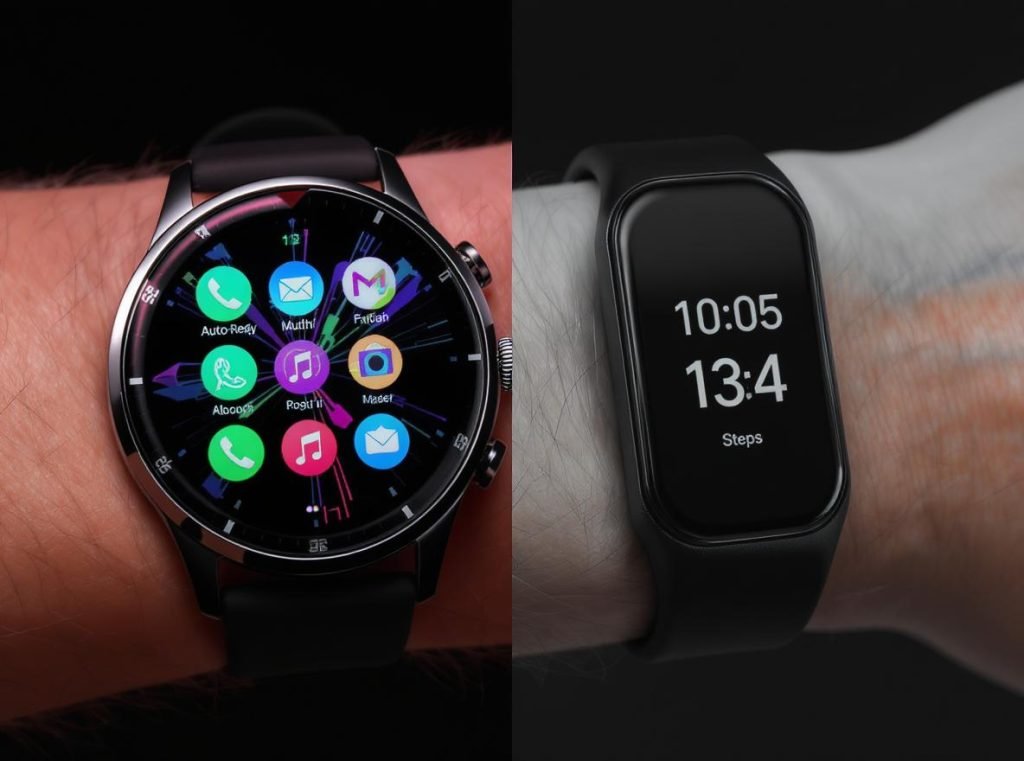
Display choices reflect each device category’s priorities between visual appeal and power efficiency.
Display Technology and Interface Design
Smartwatch displays prioritize visual appeal and comprehensive information presentation. They feature high-resolution color screens capable of displaying detailed app interfaces, photos, rich media content, and customizable watch faces. Touch responsiveness matches smartphone expectations with smooth scrolling and gesture recognition.
Fitness tracker displays focus on essential information clarity and extreme power efficiency. Many use transflective MIP technology or monochrome displays for excellent outdoor visibility while consuming minimal battery power. Information presentation remains simple, focused, and optimized for quick glances during activities.
Display Comparison:
- Smartwatch Advantages: Bright OLED/AMOLED up to 2″, always-on capability, full color watch faces, responsive touch UI
- Fitness Tracker Advantages: Excellent outdoor visibility, minimal battery impact, focused information display, reduced accidental activation
Interface Interaction Methods:
- Smartwatches: Full touch UI, rotating crowns/bezels, voice assistants, gesture controls
- Fitness Trackers: One-touch/tap controls, simple button navigation, streamlined menu systems
Which Device Category Offers Better App Ecosystems?
App availability and quality determine long-term device utility and user engagement. Ecosystem richness affects functionality expansion, customization options, and overall user retention rates for your end customers.
Smartwatches provide extensive app ecosystems with thousands of third-party applications across watchOS (50,000+ apps) and rapidly growing Wear OS platforms. Fitness trackers typically sync data through single companion apps with limited installable applications, focusing on health platform integrations.
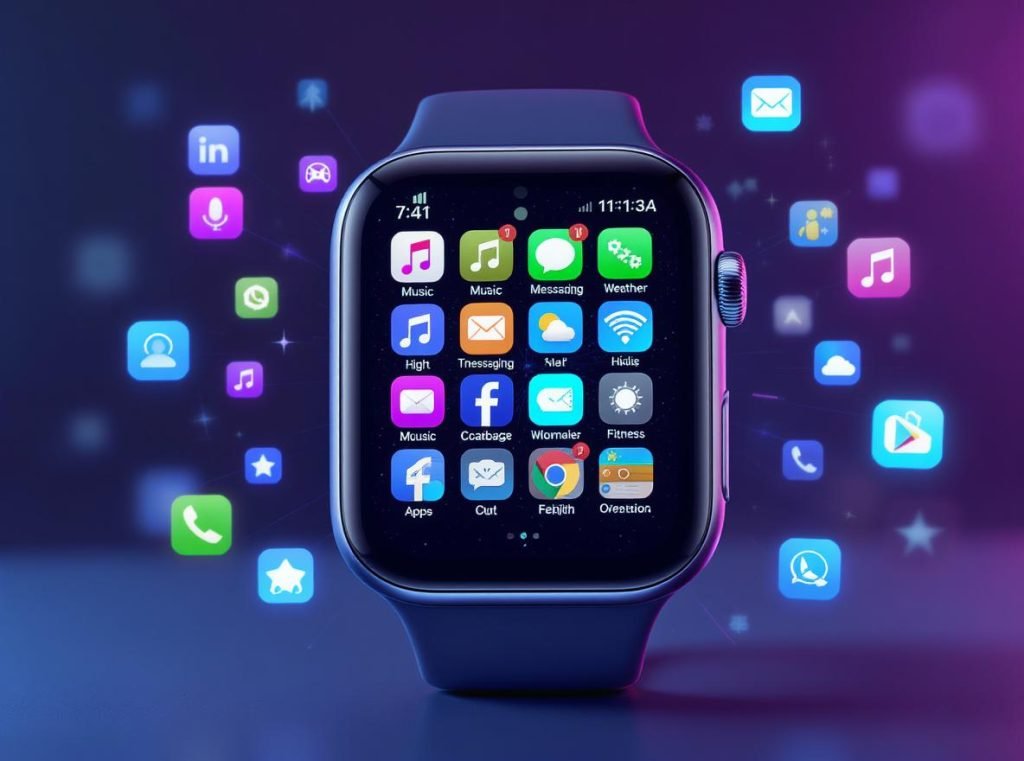
App ecosystem strength directly correlates with device category focus and target market expectations.
Application Platform Comparison
Smartwatch platforms like watchOS, Wear OS, and Tizen support comprehensive app stores with applications spanning productivity, entertainment, health, navigation, and communication. Users can extensively customize their experience through third-party apps, creating personalized digital environments on their wrist.
Fitness tracker applications concentrate exclusively on health, wellness, and activity-related functions. Most integrate seamlessly with popular fitness platforms like Strava, MyFitnessPal, and Google Fit, but don’t support general productivity or entertainment applications that would drain battery life.
App Ecosystem Scale:
- watchOS: 50,000+ total apps with 10,000+ dedicated watch titles
- Wear OS: Rapidly growing with 5× active devices since Wear OS 3 launch
- Fitness Tracker OS: Dozens of apps focused on health data synchronization
Popular Smartwatch App Categories:
- Social media platforms and messaging services
- Productivity tools, calendars, and email clients
- Music streaming services and podcast apps
- Navigation, transportation, and travel apps
- Mobile payment systems and banking apps
- Games, entertainment, and media consumption
Fitness Tracker App Focus:
- Workout tracking and personalized coaching programs
- Nutrition monitoring and hydration tracking tools
- Sleep optimization and recovery analytics
- Meditation, mindfulness, and stress management apps
- Health data synchronization with major platforms
- Activity challenges and social fitness features
How Do Connectivity Options Differ Between These Devices?
Connectivity capabilities determine device independence, integration flexibility, and practical daily utility. These technical specifications significantly affect user experience and determine whether devices can function independently from smartphones.
Smartwatches offer comprehensive connectivity including dual-band Wi-Fi, Bluetooth, optional LTE/eSIM cellular, and NFC payments. Fitness trackers typically provide Bluetooth BLE for smartphone synchronization, with select models adding Wi-Fi for app updates and cloud data syncing.
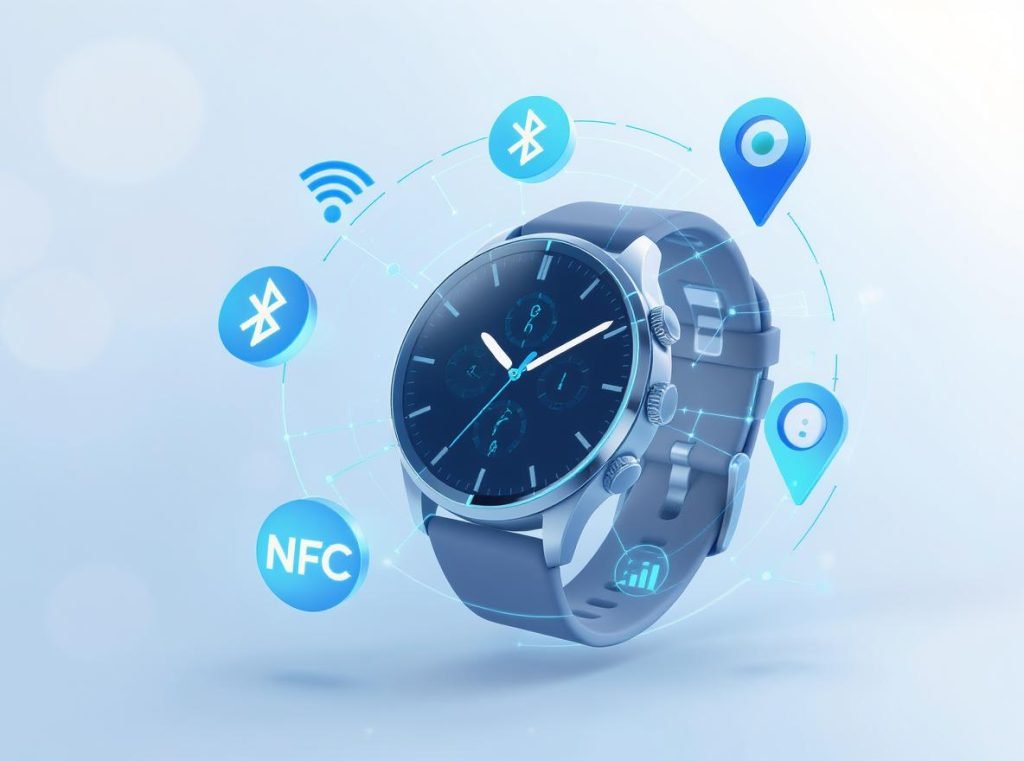
Connectivity differences reflect each category’s intended use patterns and power consumption priorities.
Wireless Communication Technologies
Smartwatches function as independent communication devices when equipped with cellular connectivity. Users can make calls, send messages, stream music, and access internet services without their smartphone nearby. Advanced models include GPS for location tracking and NFC for contactless payments.
Fitness trackers prioritize efficient data transfer with smartphones while minimizing power consumption. Most rely exclusively on Bluetooth BLE for activity data synchronization and basic smartphone notification mirroring, with premium models adding Wi-Fi for firmware updates and cloud backup functionality.
| Connectivity Feature | Fitness Tracker | Smartwatch |
|---|---|---|
| Bluetooth BLE | ✔ (sync + HR broadcast) | ✔ |
| Dual-band Wi-Fi | Rare | Standard on mid/high-end |
| NFC Payments | Limited (Fitbit Pay on Charge 6) | Ubiquitous (Apple Pay, Google Wallet, Samsung Pay) |
| GPS/GLONASS | Select bands (often need phone) | Built-in on nearly all watches |
| LTE/eSIM Cellular | No | Optional on major brands |
Cellular Connectivity Considerations:
- LTE-enabled smartwatches add approximately $10/month to carrier plans
- Cellular capability enables standalone calling and music streaming without phones
- Only smartwatches with eSIM support can replace phones during workouts or emergencies
Which Device Type Is Better for Sports and Fitness Activities?
Athletic performance and fitness goal achievement drive many wearable device purchases. Each category approaches sports tracking with different technical implementations and user experience philosophies.
Serious athletes value multiband GPS accuracy, training load analysis, and VO₂ max estimates commonly found on sports watches. However, fitness trackers offer ultralight, unobtrusive designs ideal for 24-hour wear and extended activity monitoring without charging interruptions.
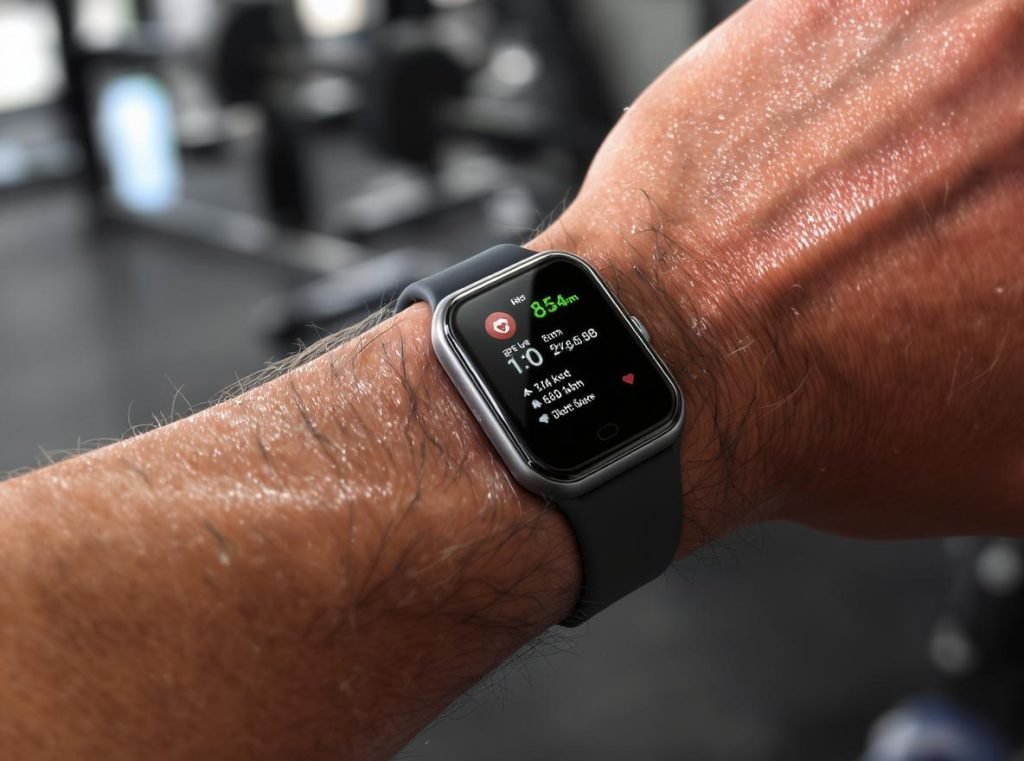
The choice depends on whether users prioritize advanced training metrics or consistent, comfortable long-term monitoring.
Sports Tracking Performance Analysis
Dedicated fitness trackers excel at precise activity monitoring with specialized sensors and algorithms optimized for specific sports. They typically offer more sport-specific modes, detailed workout analysis, and coaching features tailored for serious athletes while maintaining comfortable, lightweight designs.
Smartwatches integrate comprehensive fitness tracking with smart functionality, making them ideal for users wanting everything in one device. Recent models have significantly improved their fitness tracking accuracy and now include features like on-device maps, audio prompts, and custom workout programming.
Athletic Performance Features:
Fitness Tracker Advantages:
- Specialized sensors optimized for activity accuracy
- Extended battery life for ultra-endurance events (7-14 days)
- Ultralight designs under 20 grams for comfortable 24-hour wear
- Detailed performance analytics and personalized coaching
- Focus on training load, recovery, and progress tracking
Smartwatch Advantages:
- Integrated music control and onboard storage
- Real-time coaching with audio prompts and navigation
- On-device maps for route planning and guidance
- Emergency features like fall detection and cellular SOS
- Social sharing and competition platform integration
Professional Athlete Considerations:
- Runners, triathletes, and hikers often prefer rugged GPS sport watches (smartwatch subset)
- Multiband GPS accuracy and training load metrics available on premium sport watches
- Casual step-counting and sleep-logging perfectly served by basic fitness trackers
- Solar charging options extend battery life for multi-day adventures
How Do Subscription Costs Affect Long-term Ownership?
Hidden ongoing costs can significantly impact total ownership expenses and customer satisfaction. Understanding subscription requirements helps you advise customers about true long-term investment costs.
Many wearable devices include optional subscription services that can add $5-15 monthly to ownership costs. Fitbit Premium, Garmin Coach, and Apple Fitness+ provide enhanced features but aren’t required for basic functionality, while cellular smartwatch plans add approximately $10 monthly to carrier bills.
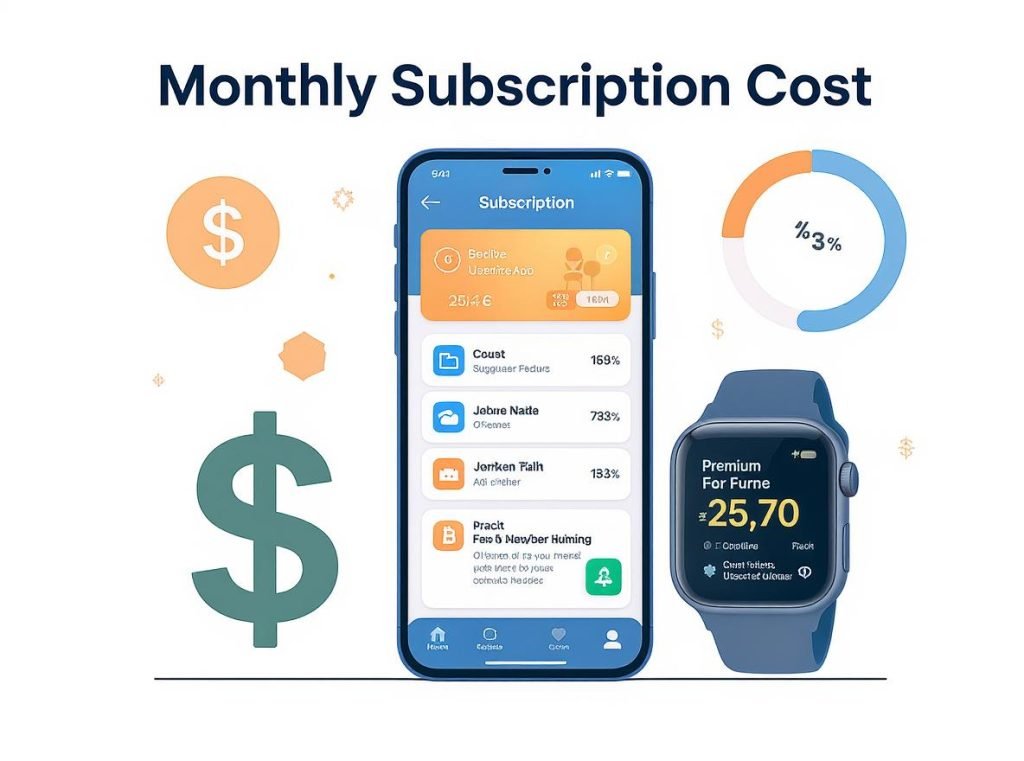
Subscription costs should factor into wholesale pricing strategies and customer education programs.
Subscription Service Breakdown
Premium subscription services enhance device functionality but aren’t mandatory for core health tracking and smart features. These services typically provide advanced analytics, personalized coaching, and cloud storage beyond basic device capabilities.
Common Subscription Services:
- Fitbit Premium: $9.99/month for advanced health insights and coaching
- Garmin Coach: Free basic plans, premium features for detailed training programs
- Apple Fitness+: $9.99/month for workout classes and fitness content
- Cellular Plans: ~$10/month for LTE-enabled smartwatch connectivity
Subscription-Free Alternatives:
Most basic health monitoring, activity tracking, and smart features work without subscriptions. Customers can access step counting, heart rate monitoring, sleep tracking, notifications, and app functionality without ongoing fees.
Which Device Category Offers Better Value for Different User Types?
Making the right recommendation requires understanding your customers’ priorities, budgets, and lifestyle patterns. Different user profiles benefit from different device categories based on their specific needs and usage patterns.
For users prioritizing week-long battery life, low costs, and comprehensive sleep metrics, fitness trackers provide superior value. Choose smartwatches when customers need full smartphone features, messaging capabilities, music streaming, and NFC payments, accepting shorter battery life and higher prices as trade-offs.
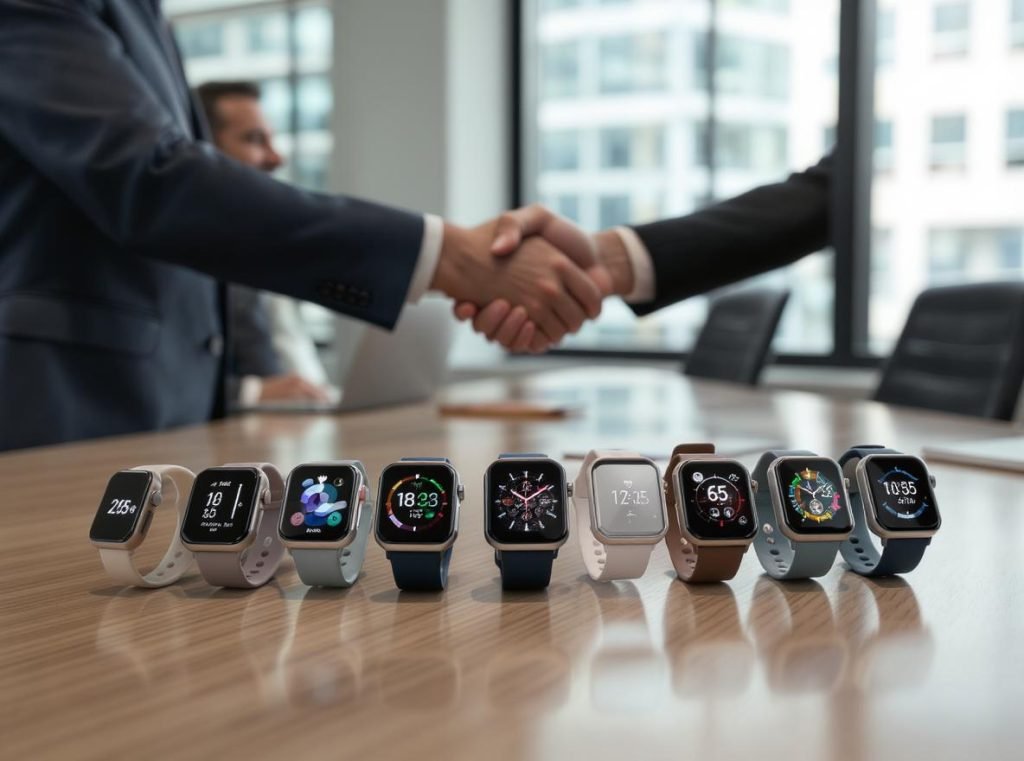
Successful wholesale positioning requires matching device capabilities to customer priorities and budget constraints.
User Profile Recommendations
Understanding customer segments helps you recommend appropriate devices and maximize customer satisfaction while optimizing your inventory mix for different market demands.
| Customer Priority | Recommended Device | Key Reasons |
|---|---|---|
| Week-long battery, low price, sleep metrics | Fitness Tracker | Minimal screen, pared-down OS, extended monitoring |
| Smartphone features, messaging, music, NFC pay | Smartwatch | watchOS/Wear OS app support, comprehensive connectivity |
| ECG, fall detection, cellular emergency features | Premium Smartwatch | Medical-grade sensors + eSIM capability |
| Ultra-light 24/7 comfort | Fitness Tracker/Smart Ring | 20g or less, thin profile, minimal bulk |
| Navigation, customizable faces, voice assistant | Smartwatch | High-resolution AMOLED, microphones, full UI |
| Training load, race pacing, solar charging | Multisport Smartwatch | Rugged build, transflective displays, advanced metrics |
Practical Buying Considerations for Wholesale Customers
Ecosystem Compatibility:
- Apple Watch requires iPhone compatibility, limiting Android market
- Wear OS watches pair with Android and offer limited iOS functions
- Consider customer base smartphone preferences when stocking inventory
Size and Comfort Factors:
- Small wrists prefer 40mm watches or narrow fitness bands
- Large AMOLED smartwatches typically weigh 50-70 grams
- Fitness trackers under 20 grams suit 24-hour wear preferences
Market Positioning Strategy:
- Stock budget fitness trackers ($30-100) for price-conscious segments
- Mid-range smartwatches ($200-399) capture mainstream demand
- Premium devices ($400+) target tech enthusiasts and serious athletes
Summary
Choosing between smartwatches and fitness trackers depends on your customers’ lifestyle priorities and budget constraints. Fitness trackers excel at continuous health monitoring with superior battery life and affordability, while smartwatches provide comprehensive mobile companion features with shorter battery life and higher costs.
As a leading smart watch manufacturer, Osmarto offers both comprehensive smartwatch solutions and dedicated fitness tracking devices designed for wholesale distribution worldwide. Our manufacturing expertise ensures reliable quality and competitive pricing for distributors, retailers, and brand partners. Contact our wholesale team today to explore bulk pricing options and discover how our diverse wearable technology portfolio can meet your market’s specific demands and drive your business growth in the expanding global wearable market.