Skip to content
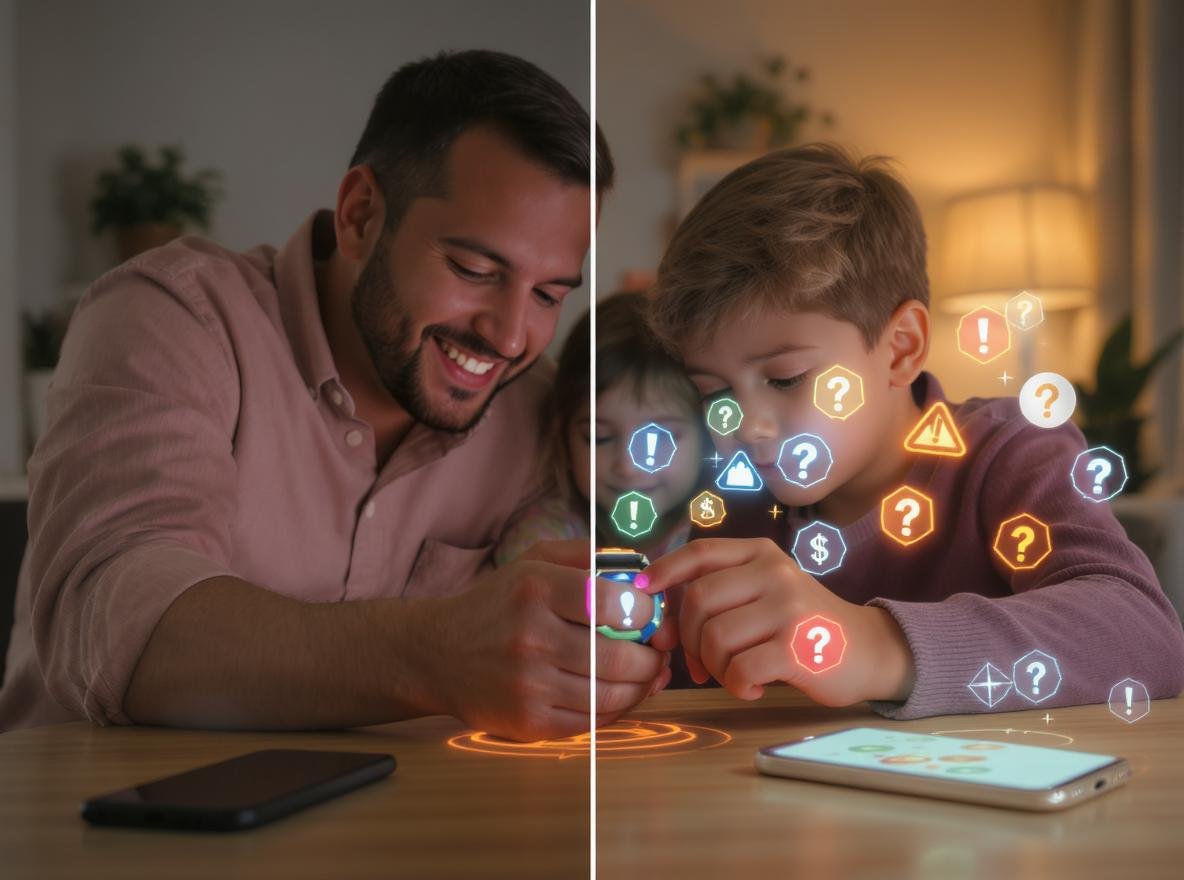
As a parent, you’re facing one of today’s most challenging technology decisions. With children as young as 10 pressuring for smartphones and safety concerns mounting, the choice between a smartwatch and smartphone goes beyond convenience—it impacts your child’s mental health, development, and digital future.
Recent research from 163 countries involving nearly 2 million children reveals that smartwatches offer the ideal middle ground for ages 5-12, providing essential communication and safety features without the documented mental health risks of early smartphone ownership. Studies show that for every year earlier a child receives a smartphone before age 13, their mental health outcomes significantly decline.
Let’s explore why making the informed choice now can protect your child’s wellbeing while building healthy technology habits.
What Age Should a Child Get Their First Connected Device?
Understanding the right timing helps parents resist peer pressure and make decisions based on child development research rather than what other families are doing.
Child development experts and recent large-scale studies provide clear guidance on age-appropriate technology introduction, emphasizing maturity over chronological age as the primary factor.
Smartwatches are suitable for children ages 5-12, with most families introducing them around ages 8-10 when children begin seeking independence. Smartphones should be delayed until at least age 13, with many experts now recommending age 16 for social media access.

Consider these research-backed developmental stages:
Early Elementary (Ages 5-8)
- Basic GPS tracker or simple calling smartwatch
- Focus on emergency communication and location safety
- No internet access or complex features needed
Late Elementary to Middle School (Ages 8-12)
- Full-featured kids’ smartwatch with controlled messaging
- GPS tracking with safe zone alerts
- Pre-approved contact lists for family communication
Early High School (Ages 13+)
- Consider smartphone transition with heavy restrictions
- Gradual introduction of internet access and apps
- Maintain strict social media boundaries initially
| Age Range | Recommended Device | Key Developmental Focus |
|---|---|---|
| 5-8 years | GPS tracker/basic smartwatch | Emergency safety, basic responsibility |
| 8-12 years | Kids’ smartwatch with messaging | Communication skills, independence building |
| 13+ years | Restricted smartphone | Digital citizenship, advanced responsibility |
The current average age for first smartphone ownership is 11.6 years, but 81% of parents who gave devices by age 12 later expressed regret about their decision.
Why Are Smartphones Potentially Harmful for Young Children?
Recent large-scale research reveals alarming connections between early smartphone ownership and serious mental health consequences that parents need to understand.
A groundbreaking 2025 study analyzing data from 163 countries and nearly 2 million children provides the most comprehensive evidence to date about smartphone risks for young minds.
The research found that smartphone ownership before age 13 was directly linked to increased suicidal ideation, poor emotional regulation, diminished self-esteem, and behavioral problems. For every year earlier a child received a smartphone before age 13, their mental health outcomes declined significantly.

Mental Health Crisis Connection
The study revealed particularly concerning patterns:
- Girls showed higher vulnerability to smartphone-related mental health issues
- Suicidal thoughts increased dramatically with earlier smartphone introduction
- Emotional regulation problems persisted into adulthood
- Self-esteem issues became more pronounced over time
Addictive Behavior Patterns
Nearly half of children exhibit high levels of addictive behavior toward mobile phones, with those showing addictive patterns being 2-3 times more likely to experience suicidal thoughts or self-harm by age 14.
Sleep and Attention Disruption
Smartphones significantly impact crucial developmental processes:
- Constant blue light exposure disrupts natural sleep cycles
- Notification systems create anxiety and stress responses
- Multitasking between apps reduces focus and concentration
- Sleep disruption affects physical growth and cognitive development
Social Development Interference
- Reduced face-to-face interaction skills during critical development years
- Increased cyberbullying exposure and social comparison pressure
- Premature exposure to inappropriate content and adult themes
- Decreased empathy development due to digital communication preference
What Are the Key Benefits of Smartwatches for Children?
Smartwatches provide controlled technology introduction that addresses parents’ safety concerns while avoiding the documented risks of smartphones.
Understanding why smartwatches work better for developing minds helps justify this investment in your child’s healthy technology relationship and your family’s peace of mind.
Smartwatches create a “training ground” for digital responsibility while maintaining strong parental oversight. They allow children to experience real-world independence—shopping alone, walking ahead on trails, or taking public transportation—while parents maintain location tracking and emergency communication.
Essential Safety Features
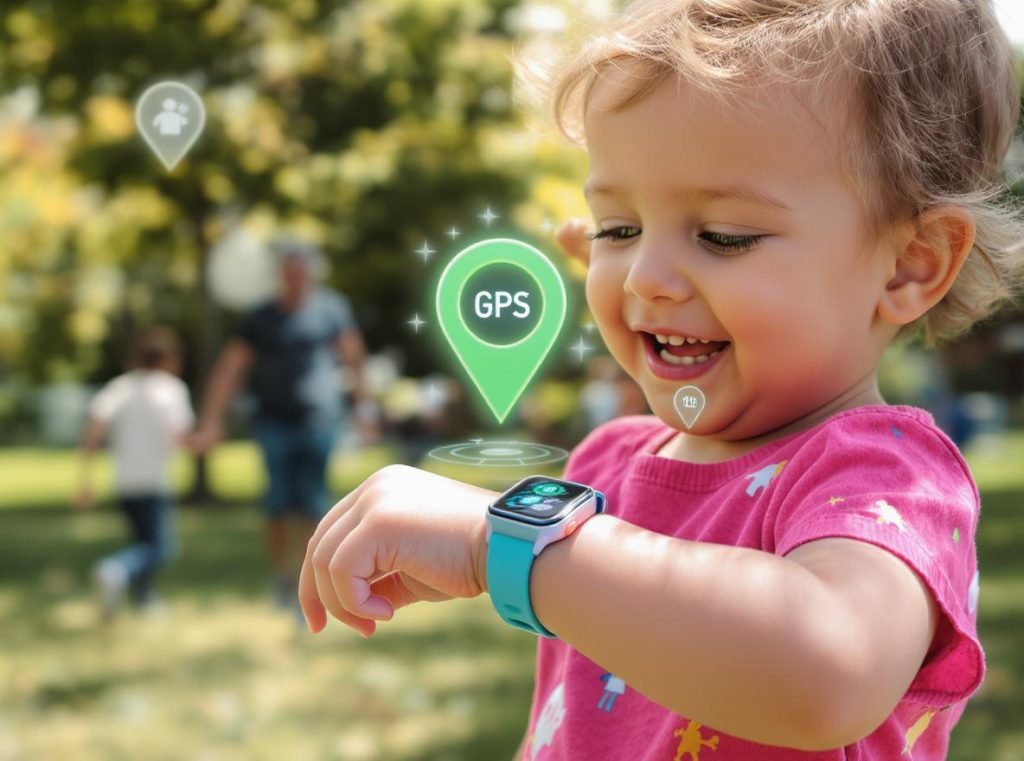
- Real-time GPS tracking with location history and safe zone alerts
- Emergency SOS button providing instant access to help
- Pre-approved contact lists ensuring communication only with trusted individuals
- Geofencing notifications when children enter or leave designated areas
- Water resistance and durability for active lifestyles
Controlled Communication Benefits
- Two-way calling between child and approved contacts only
- Voice and text messaging without internet access
- Video calling capabilities for family connections
- No social media access eliminating cyberbullying risks
- Voice-to-text options accommodating younger children who can’t type well
Educational and Developmental Advantages
- Activity tracking encouraging physical movement and healthy habits
- Time management tools helping children develop scheduling skills
- Basic educational games providing learning without distraction
- Timer and reminder features acting as “training wheels” for internal time awareness
| Smartwatch Advantage | Child Benefit | Parent Benefit | Long-term Impact |
|---|---|---|---|
| Limited connectivity | Reduced digital distraction | Controlled communication access | Healthy tech boundaries |
| GPS tracking | Safe independence building | Real-time location peace of mind | Confidence development |
| Activity monitoring | Health consciousness | Encouragement for physical activity | Lifelong fitness habits |
| Restricted app access | Focus on real-world activities | No inappropriate content concerns | Balanced development |
Cost-Effectiveness for Families
Smartwatches typically cost 50-75% less than smartphones when factoring in both initial purchase and ongoing service fees, making them accessible for more families while providing essential connectivity.
How Do Smartwatches Support Child Independence Safely?
The gradual transition to independence requires structured steps, and smartwatches provide the perfect controlled environment for building responsibility and confidence.
Parents often struggle with balancing safety concerns against children’s growing need for independence. Smartwatches address this dilemma by offering controlled freedom that builds maturity over time.
Smartwatches allow children to experience genuine independence while parents maintain oversight through companion apps, creating opportunities for responsibility building without exposure to digital dangers or overwhelming choices.
Confidence Building Through Controlled Freedom
Children can engage in age-appropriate independent activities:
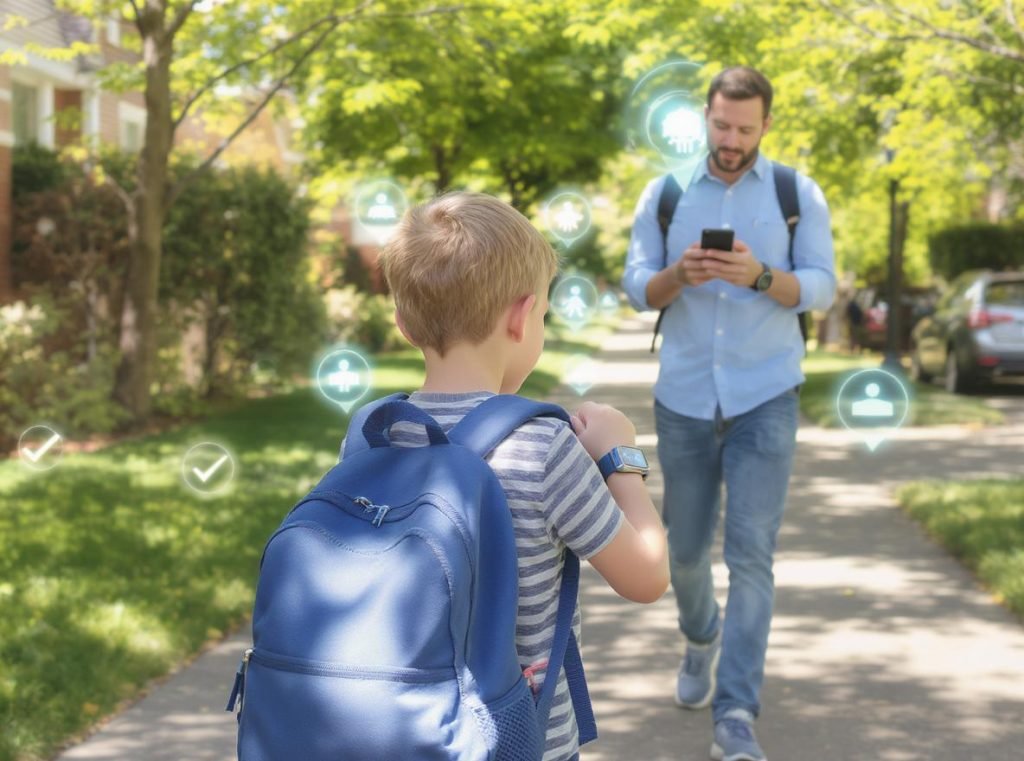
- Walking to school or friends’ houses with location sharing capabilities
- Participating in after-school activities with easy check-in procedures
- Exploring parks or playgrounds while maintaining emergency backup
- Taking public transportation with real-time location monitoring
Digital Communication Skills Development
The structured environment teaches essential digital citizenship:
- Appropriate response timing and communication methods
- Understanding when to communicate versus when to focus on activities
- Basic device care, charging responsibility, and technology maintenance
- Respect for others’ time and boundaries in digital communication
Responsibility Training Without Overwhelm
- Pre-approved contact lists prevent stranger interaction dangers
- Message monitoring capabilities allow gradual independence increase
- Limited features prevent distraction from schoolwork and activities
- Emergency protocols children can practice and understand clearly
Time Management and Self-Regulation
The watch’s timer and reminder features help children develop internal time awareness, making abstract concepts like “five more minutes” concrete and manageable while building executive function skills.
What Features Should You Look for in a Kids’ Smartwatch?
Not all children’s smartwatches offer the same quality or safety features, and choosing the right combination can determine whether the device becomes a valuable tool or expensive frustration.
Understanding essential versus optional features helps parents make informed purchasing decisions that serve their family’s specific needs, budget, and safety requirements.
Essential safety features, reliable communication capabilities, and comprehensive parental controls form the foundation of any quality kids’ smartwatch, while additional features like cameras and games can enhance the experience without compromising core functionality.
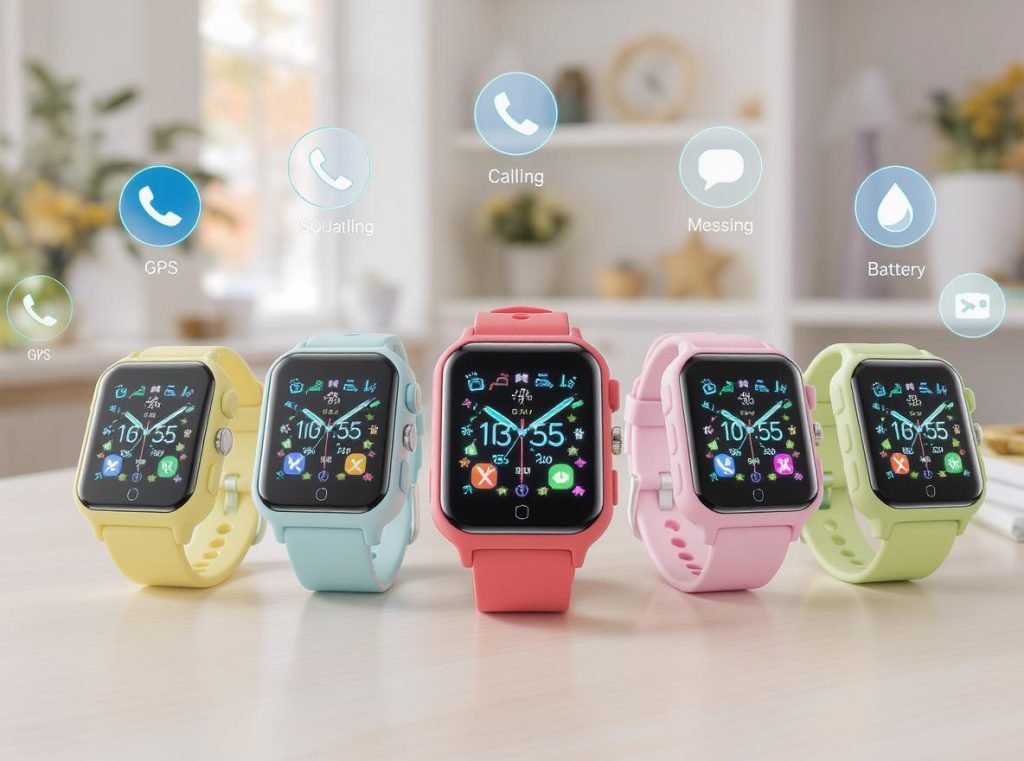
Critical Safety Requirements
- GPS tracking with real-time location and location history access
- Emergency SOS button with automatic calling to designated contacts
- Safe zone alerts and geofencing notifications for key locations
- Water resistance rating (minimum IP67) for daily wear durability
- Robust construction designed for active children’s lifestyles
Communication Must-Haves
- Two-way calling with clear audio quality and reliable connection
- Text and voice messaging capabilities for flexible communication
- Video calling options for family connections and visual check-ins
- Group messaging features for family coordination and updates
- Reliable 4G LTE network connectivity ensuring consistent communication
Parental Control Essentials
- Comprehensive companion app for monitoring and device management
- Complete contact list control with approval requirements for new contacts
- Screen time management and automatic scheduling (school mode)
- App installation approval and blocking capabilities
- Location tracking access with historical data and reporting
| Feature Category | Basic Model ($99-150) | Premium Model ($150-300) | Business Wholesale Consideration |
|---|---|---|---|
| GPS Accuracy | General area location | Precise positioning with history | Critical for safety-focused marketing |
| Battery Life | 1-2 days typical use | 3-5 days extended use | Reduces customer service complaints |
| Water Resistance | Splash-proof (IP65) | Swimming-safe (IP68) | Appeals to active lifestyle families |
| Communication Options | Calling only | Full messaging suite | Meets diverse family communication needs |
| Parental Controls | Basic restrictions | Comprehensive management | Essential for parent peace of mind |
Recommended Brands and Models
Based on comprehensive reviews and parent feedback:
- Xplora XGO3 ($99): Strong parental controls, excellent value
- Garmin Bounce ($150): Fitness-focused with robust tracking
- TickTalk 5 ($179): Comprehensive features, carrier compatibility
- Gabb Watch 3e ($99): Simple interface, affordability focus
How Much Do Kids’ Smartwatches Cost Compared to Smartphones?
Understanding the total cost of ownership helps parents make informed financial decisions while considering the value proposition of different technology choices.
The financial comparison extends beyond initial purchase price to include ongoing service costs, replacement expenses, insurance needs, and potential damage or loss scenarios.
A comprehensive cost analysis shows smartwatches typically cost 50-75% less than smartphones when factoring in device purchase, monthly service fees, and replacement risks, making them significantly more economical for families introducing children to connected technology.

Initial Investment Comparison
- Entry-level kids’ smartwatch: $99-150
- Premium kids’ smartwatch: $150-300
- Basic smartphone for children: $200-400
- Mid-range smartphone: $400-800
- Premium smartphone: $800-1,200
Monthly Service Cost Analysis
- Smartwatch basic plan: $10-14/month (calling and texting)
- Smartwatch premium plan: $15-20/month (enhanced features)
- Smartphone basic plan: $30-50/month (limited data)
- Smartphone unlimited plan: $60-80/month (full features)
First-Year Total Cost Comparison
- Basic smartwatch: $219-318 (device + 12 months service)
- Premium smartwatch: $330-540 (device + 12 months service)
- Basic smartphone: $560-1,000 (device + 12 months service)
- Premium smartphone: $1,520-2,160 (device + 12 months service)
Hidden Cost Advantages of Smartwatches
- Lower replacement cost if damaged or lost (worn on wrist, less attractive to thieves)
- Reduced insurance needs due to lower device value
- Minimal accessory requirements (no cases, screen protectors, chargers)
- Less risk of expensive repairs or screen replacement
- No temptation for costly app purchases or in-app spending
Value Proposition for Wholesale Buyers
The growing children’s smartwatch market presents significant opportunities:
- Higher profit margins compared to competitive smartphone market
- Increasing parental demand for safer technology alternatives
- Less price competition due to specialized feature requirements
- Growing market segment with projected continued expansion
- Lower inventory risk due to reduced theft appeal and damage rates
When Is the Right Time to Transition from Smartwatch to Smartphone?
The transition timing should be based on demonstrated responsibility, emotional maturity, and genuine need rather than peer pressure, arbitrary age limits, or family convenience.
Current research strongly recommends delaying smartphone introduction until at least age 13, with many experts advocating for age 16 for social media access, making the transition a carefully planned process.
The optimal transition occurs when children consistently demonstrate responsible smartwatch use over 1-2 years, show emotional maturity to handle internet access and social pressures, and have legitimate needs that exceed smartwatch capabilities—typically around ages 13-14 with extensive initial restrictions.

Research-Based Readiness Indicators
Look for these evidence-based signs of smartphone readiness:
- Age 13 or older (minimum recommendation from large-scale mental health research)
- Consistent responsibility with smartwatch care, charging, and following usage rules
- Emotional regulation demonstrated during discussions about technology limits
- Academic responsibility showing they won’t be distracted by additional features
- Understanding of consequences regarding digital citizenship and online safety
Transition Planning Strategy
- Extended Assessment Period: Monitor smartwatch behavior patterns for 6+ months
- Digital Citizenship Education: Comprehensive discussions about internet safety, privacy, and appropriate online behavior
- Gradual Introduction Phase: Begin with heavily restricted smartphone access and limited app installation
- Supervised Monitoring Period: Maintain close oversight with regular device check-ins and usage reviews
- Progressive Freedom Expansion: Gradually reduce restrictions based on demonstrated responsibility and maturity
Maintaining Healthy Digital Habits
- Preserve established screen time boundaries and device-free zones
- Continue family technology agreements and regular usage discussions
- Monitor social media introduction extremely carefully with delayed access
- Maintain open communication about digital experiences and online interactions
- Implement regular reviews of apps, contacts, and online activity patterns
Red Flags Indicating Delayed Transition
Consider postponing smartphone introduction if your child:
- Frequently loses, forgets, or damages their smartwatch despite reminders
- Struggles with current screen time limits or becomes argumentative about restrictions
- Shows signs of anxiety, obsessive behavior, or mood changes related to their current device
- Demonstrates poor impulse control in other areas of life or decision-making
- Has difficulty with face-to-face communication or shows withdrawal from family activities
What Do Other Parents Say About Smartwatches vs Smartphones?
Real parent experiences and research data provide valuable insights into how these technology choices work in practice, beyond marketing claims and theoretical benefits.
Harris Poll research and parent community feedback reveal significant patterns in satisfaction, regret, and long-term outcomes that can guide other families’ decisions.
Parent surveys consistently show high satisfaction with smartwatches as first connected devices, while revealing substantial regret among families who chose early smartphone introduction. 81% of parents who gave smartphones by age 12 later expressed regret about their decision.

Smartwatch Success Stories and Benefits
Parents report multiple advantages with smartwatch choices:
- Enhanced peace of mind through real-time location tracking without social media concerns
- Improved family communication for logistics coordination and safety check-ins
- Children’s enthusiasm for their device without constant screen time battles
- Gradual responsibility building without feeling overwhelmed by complex features
- Better sleep routines maintained without bedroom smartphone temptation
Smartphone Introduction Regret Statistics
Harris Poll research reveals concerning parental regret patterns:
- 39% of parents who gave smartphones early wished they hadn’t but felt pressured by peer families
- 54% felt community pressure to allow social media access due to other families’ decisions
- 29% believe they introduced social media access too young for their child’s maturity level
- 22% acknowledge they gave smartphones too early based on hindsight and outcomes
Common Challenges and Practical Solutions
Parents do report some initial smartwatch challenges with effective solutions:
Battery Life Management: Most families successfully establish charging routines and backup communication plans for extended activities.
Feature Limitations: Children may initially want more capabilities, but parents consistently report this limitation becomes beneficial for focus and healthy development.
Social Pressure Navigation: Some children feel different from smartphone-owning peers, but parents find that explaining safety and maturity reasons helps children understand and accept family decisions.
Technical Connectivity Issues: Like any technology, occasional connectivity problems occur, but families report benefits significantly outweigh temporary inconveniences.
Community Movement and Collective Action
Many parent communities are embracing collective agreements for healthier technology introduction:
- 66% of parents support restricting smartphones until high school (age 14)
- 73% want community agreements to delay social media until age 16
- Organizations like “Wait Until 8th” create community pledges for delayed smartphone introduction
- Parent groups report success when multiple families coordinate similar technology timelines
Summary
The choice between a smartwatch and smartphone for your child represents more than a technology decision—it’s an investment in their mental health, safety, and healthy digital development. Research from 163 countries involving nearly 2 million children provides clear evidence that smartwatches offer the optimal middle ground for ages 5-12, delivering essential communication and safety benefits without the documented mental health risks of early smartphone ownership.
Starting with a smartwatch gives your child the independence they seek while protecting them from the proven dangers of premature smartphone exposure. As 81% of parents who gave smartphones by age 12 later expressed regret, making the informed choice now can prevent future challenges and support your child’s healthy relationship with technology.
Are you a wholesaler, distributor, retailer, or brand manufacturer looking to capitalize on the rapidly growing demand for children’s smartwatches? The kids’ smartwatch market is expanding as parents increasingly choose safer technology alternatives for their children. Contact Osmarto today to explore our comprehensive range of high-quality children’s smartwatch solutions designed for safety, durability, and family peace of mind. Our competitive wholesale pricing, customization options, and reliable supply chain support help you serve families making this critical technology transition. Send us your inquiry to discover partnership opportunities in this thriving market segment.