Skip to content
Choosing between over-ear and on-ear headphones can be overwhelming when both styles seem similar at first glance. Many buyers struggle with this decision, unsure whether the extra bulk of over-ear models justifies their benefits, or if compact on-ear designs might compromise their listening experience. Making the wrong choice could mean dealing with uncomfortable pressure points, poor sound isolation, or inadequate portability for your lifestyle.
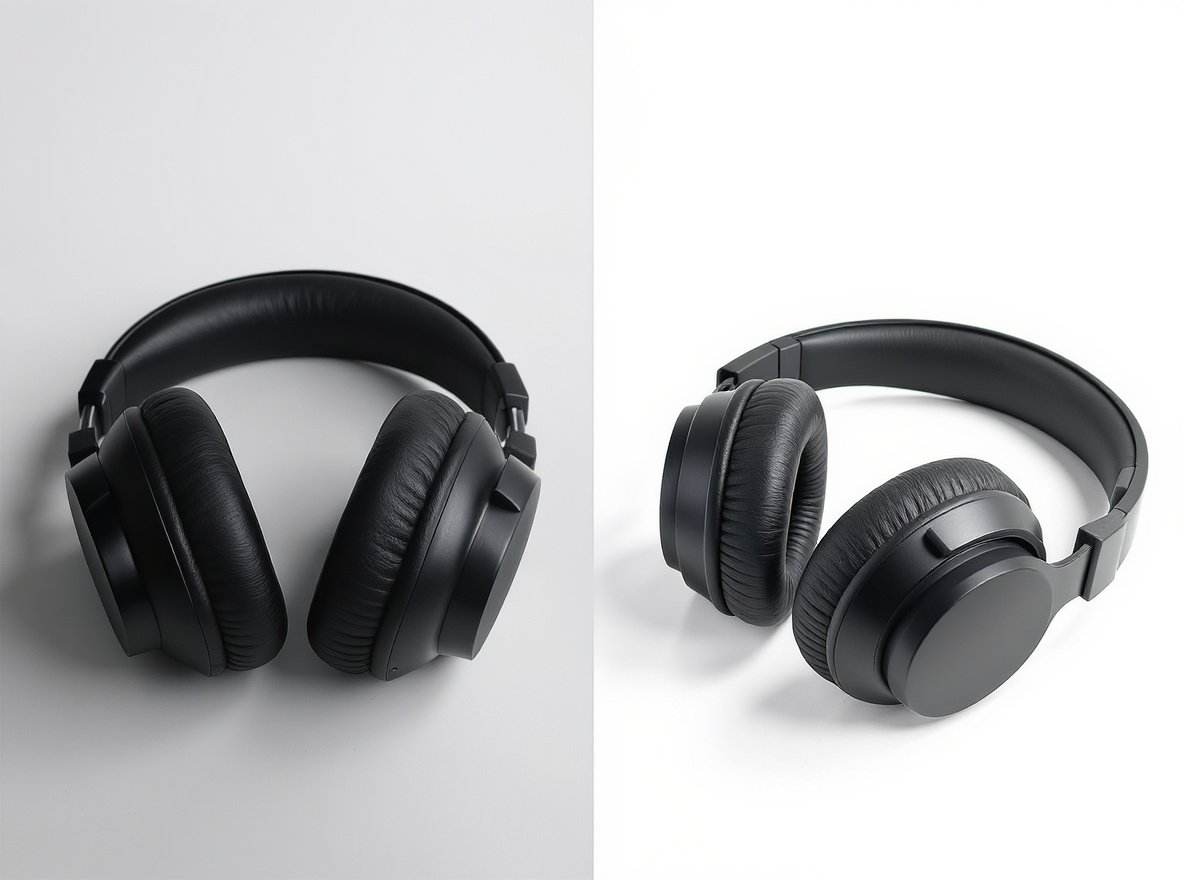
Over-ear headphones (circumaural) completely surround your ears with large ear cups that create a seal around your outer ear, while on-ear headphones (supra-aural) rest directly on your ears with smaller, flatter ear cups. Over-ear models typically offer superior sound quality, noise isolation, and comfort for extended use, while on-ear headphones excel in portability, breathability, and affordability. Your best choice depends on whether you prioritize immersive audio experiences or convenient mobility.
Understanding these fundamental differences and how they impact real-world usage will help you make an informed decision that perfectly matches your listening habits and lifestyle needs.
What’s the Main Physical Difference Between Over-Ear and On-Ear Headphones?
The naming convention clearly indicates the distinction, but the physical differences go much deeper than just ear placement and significantly impact your entire listening experience.
The primary difference lies in ear interaction design. Over-ear headphones feature large ear cups that completely enclose and surround your entire ear, distributing weight across your temple and upper jaw area. On-ear headphones use smaller, flatter ear cups that rest directly on top of your ears, relying on clamping force to stay positioned.

This fundamental design difference creates a cascade of effects throughout your headphone experience. Over-ear models typically weigh over 300 grams due to their larger drivers and more substantial construction, while on-ear headphones often weigh under 200 grams thanks to their compact design.
The size difference is immediately apparent when comparing models side by side. Over-ear headphones can accommodate drivers ranging from 40mm to 50mm or larger, housed in ear cups that completely encompass your outer ear (pinna). This allows for better acoustic interaction and more natural sound reproduction.
| Design Feature | Over-Ear (Circumaural) | On-Ear (Supra-aural) |
|---|---|---|
| Weight Range | 300+ grams | Under 200 grams |
| Driver Size | 40-50mm+ | 30-40mm typical |
| Contact Method | Around ears | Directly on ears |
| Portability | Bulky, needs case | Compact, often foldable |
Many on-ear models feature innovative foldable designs that collapse into remarkably small packages, making them ideal for travel scenarios where every inch of bag space matters.
Which Headphones Offer Superior Sound Quality and Noise Isolation?
Sound quality often serves as the primary deciding factor for serious listeners who demand the best possible audio reproduction from their investment.
Over-ear headphones definitively deliver superior sound quality due to their larger drivers, better acoustic seal, and improved interaction with your outer ear structure. They can accommodate bigger drivers that translate to enhanced bass response, wider frequency range, and more immersive soundstage creation.

The acoustic advantages stem from several technical factors working together. Over-ear designs create a controlled acoustic environment by completely sealing around your ears, preventing sound leakage in both directions while allowing for natural interaction with your pinna (outer ear). This interaction is crucial for creating spatial audio cues that make music sound more three-dimensional and realistic.
Professional audio engineers consistently choose over-ear headphones because they provide the most accurate sound reproduction. The complete ear enclosure allows for better bass extension, as the sealed environment prevents low-frequency energy from escaping before reaching your eardrums.
For noise isolation, over-ear headphones achieve superior passive isolation by creating a physical barrier around your ears. Premium models with active noise cancellation (ANC) can achieve noise reduction levels approaching 30dB around 250Hz, making them extremely effective for travel and noisy environments.
On-ear headphones face inherent acoustic limitations:
- Smaller drivers typically produce less impactful bass due to incomplete acoustic sealing
- Sound leakage occurs where ear cups don’t form complete contact with your ears
- External noise penetrates more easily, requiring higher volumes for clear listening
- Limited soundstage compared to over-ear alternatives
However, on-ear headphones excel at producing clear vocals and mid-range frequencies, creating what many describe as a more “forward” or intimate listening experience. Some listeners actually prefer this direct sound character for specific music genres or casual listening scenarios.
Are Over-Ear or On-Ear Headphones More Comfortable for Extended Listening?
Comfort becomes absolutely critical when you plan extended listening sessions for work, gaming, or serious music appreciation, and the differences between designs are substantial.
Over-ear headphones are definitively superior for long-term comfort because they distribute pressure around your ears rather than directly on sensitive ear cartilage. Professional audio engineers, gamers, and serious listeners can wear quality over-ear models for hours without experiencing fatigue or discomfort.
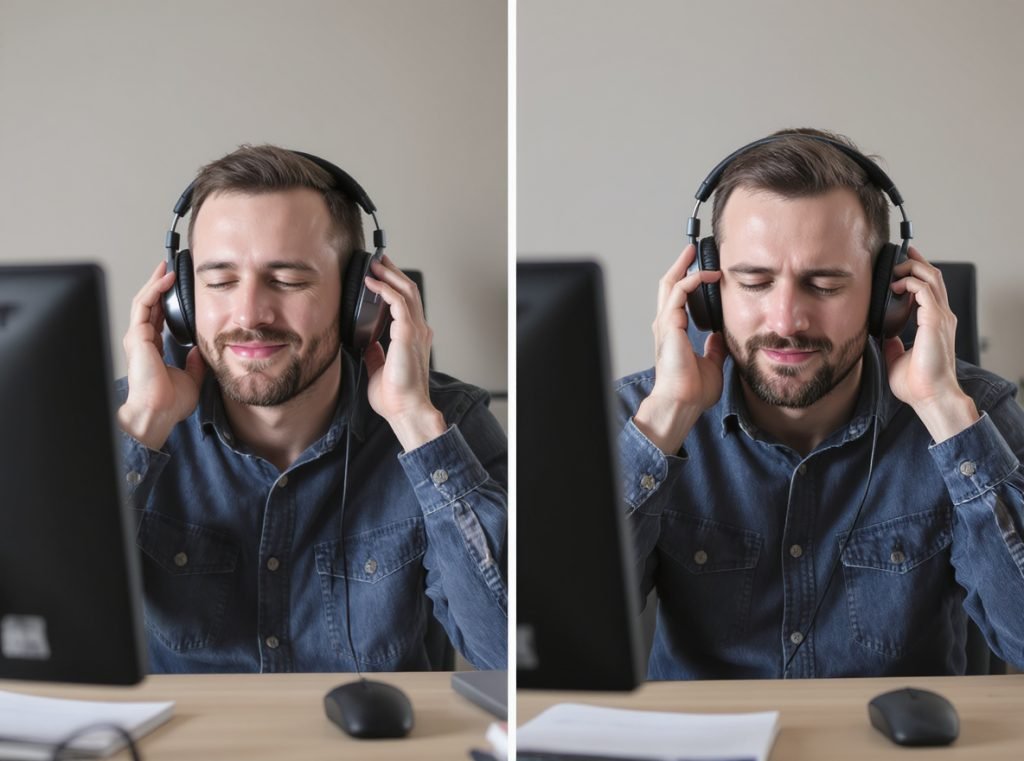
The comfort advantage comes from intelligent weight distribution engineering. Instead of your ear cartilage bearing concentrated pressure, over-ear designs distribute weight across your entire head through padded headbands and ear cup rims that rest around your ears. Models like the Sennheiser HD 500 series and Philips SHP9500 have earned reputations for exceptional comfort, with users reporting they can wear them “indefinitely” during long studio sessions.
Over-ear headphones do present some comfort considerations. Their enclosed design can cause heat buildup around your ears, potentially leading to sweat accumulation during extended use or warm weather. However, premium models address this with breathable padding materials and ventilation design features.
On-ear headphones present different comfort challenges that become apparent during extended use:
Pressure Point Development: Direct contact with ear cartilage typically causes soreness after 1-2 hours of continuous wearing
Clamping Force Requirements: Sufficient pressure to maintain position can lead to headaches over time
Individual Ear Compatibility: People with larger ears or prominent ear features often experience increased discomfort
Hair Interference: The clamping design may pull or press on hair, creating additional pressure points
The trade-off benefit of on-ear designs is superior breathability. The open area around your ears allows better airflow, reducing heat buildup and sweat accumulation that can occur with enclosed over-ear designs.
Which Style Offers Better Portability and Travel Performance?
Travel considerations significantly influence headphone purchasing decisions, especially for frequent commuters, business travelers, and mobile professionals who need reliable audio on the go.
On-ear headphones are clearly superior for portability due to their compact size, lighter weight, and frequently foldable designs that make them ideal for travel, commuting, and mobile use. Many models easily fit in laptop bags or even jacket pockets.
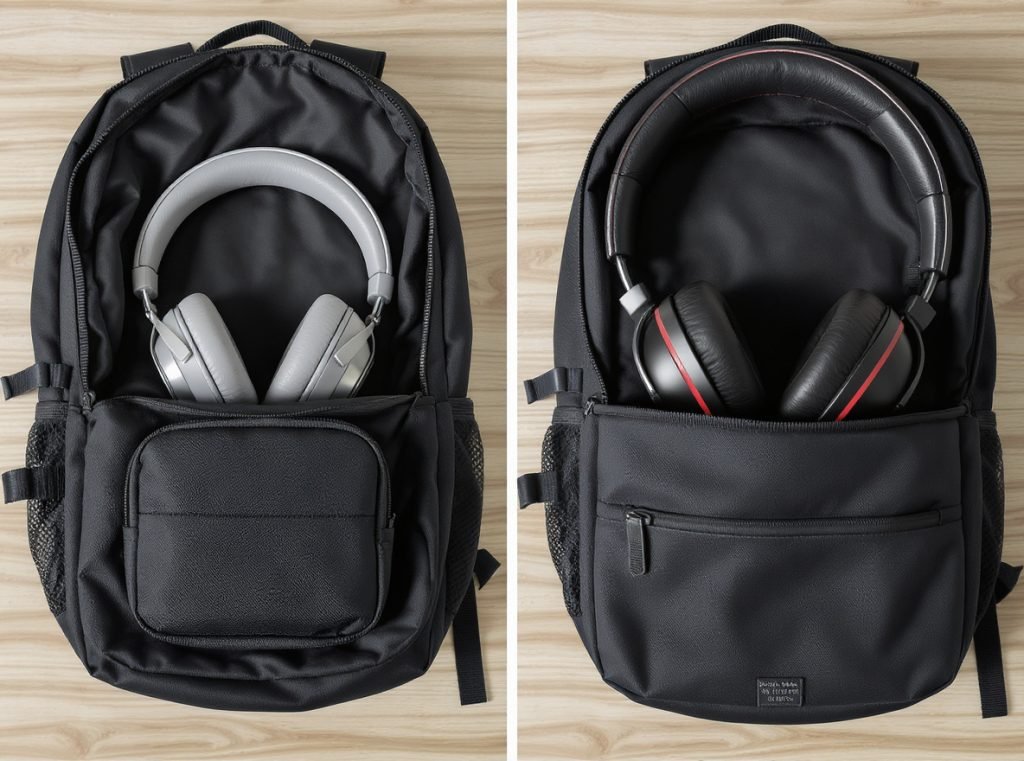
The portability advantages are substantial and measurable. On-ear headphones typically fold down to half the size of comparable over-ear models, while weighing 30-50% less. This size and weight reduction becomes increasingly important for travelers who carry their gear for extended periods or work within strict luggage restrictions.
However, the choice between portability and performance creates interesting trade-offs for travelers. As frequent business travelers note, while over-ear headphones consume significantly more bag space, their superior noise cancellation and comfort become invaluable during long flights and noisy travel environments.
For air travel specifically, the choice often depends on flight duration and personal priorities:
Short Flights (under 3 hours): On-ear portability advantages typically outweigh comfort benefits
Long-Haul Flights (3+ hours): Over-ear comfort and noise isolation become increasingly valuable despite bulk
Business Travel: Professional appearance and quick on/off capability favor on-ear designs
Leisure Travel: Superior audio experience may justify over-ear bulk for entertainment
Premium over-ear models increasingly address portability concerns through innovative folding mechanisms and rigid carrying cases, though they remain substantially larger than on-ear alternatives.
How Do Price Points and Value Propositions Compare?
Budget considerations significantly impact purchasing decisions, and understanding the price-to-performance relationship between designs helps identify the best value for your specific needs.
On-ear headphones typically cost 20-40% less than comparable over-ear models due to simpler construction, reduced material requirements, and smaller driver components. However, over-ear headphones often provide superior long-term value through enhanced durability, comfort, and audio performance.
The price differences stem from fundamental manufacturing economics. On-ear headphones require less material for ear cups, housing components, and internal padding. Their simpler acoustic design also reduces engineering complexity, making quality on-ear headphones more accessible to budget-conscious buyers.
| Price Segment | On-Ear Advantages | Over-Ear Advantages |
|---|---|---|
| Budget ($25-100) | Excellent selection, good value | Limited quality options available |
| Mid-Range ($100-300) | Premium features accessible | Best overall value proposition |
| High-End ($300+) | Fewer premium options | Maximum performance and features |
Value considerations extend beyond initial purchase price to include long-term ownership costs. Over-ear headphones often demonstrate superior build quality and durability due to their robust construction, potentially lasting longer than lightweight on-ear alternatives while maintaining performance standards.
For professional applications, the investment in over-ear headphones frequently justifies itself through improved productivity during extended work sessions. Content creators, audio professionals, and serious gamers often find the enhanced performance and comfort worth the premium price.
The most affordable headphones on the market are generally on-ear models, while the highest-end options tend to be over-ear designs. However, excellent value exists in both categories, with models like the Sony WH-CH720N demonstrating that on-ear designs can deliver premium features at accessible price points.
Which Design Excels for Gaming and Professional Applications?
Gaming and professional audio work place unique performance demands on headphones that can strongly influence the over-ear versus on-ear decision for specialized users.
Over-ear headphones are strongly preferred for gaming and professional applications due to their superior soundstage, better spatial audio positioning, and enhanced comfort during marathon sessions. The immersive audio experience and accurate sound reproduction make them the industry standard for serious applications.

Gaming benefits from over-ear advantages include enhanced spatial audio performance that helps players accurately locate enemies, environmental cues, and directional audio information crucial for competitive play. The superior noise isolation prevents external distractions during intense gaming sessions, while exceptional comfort allows for extended gameplay without fatigue-related performance degradation.
Professional audio applications almost universally favor over-ear designs for several critical reasons:
Studio Recording and Mixing: Better sound reproduction and isolation allow for accurate monitoring without external interference affecting critical listening decisions
Content Creation: Extended wearing comfort during long editing, streaming, or production sessions prevents discomfort-related workflow interruptions
Audio Engineering: The industry standard for professional applications where accuracy and detail matter most
Video Conferencing: Superior microphone integration and noise isolation improve communication quality for remote work
Some professional esports players use in-ear monitors for specific isolation reasons during tournament play, but for home gaming and professional work environments, over-ear headphones provide significant performance advantages that justify their preference among serious users.
Over-ear headphones are “the preferred choice for studio recording, sound engineering, critical listening, and even for an immersive gaming experience” because they deliver the accuracy and comfort that professional applications demand.
How Do Wireless Features and Battery Performance Compare?
Modern headphones increasingly emphasize wireless connectivity, making battery performance and advanced wireless features important considerations for buyers evaluating long-term satisfaction.
Over-ear wireless headphones typically offer substantially longer battery life than on-ear counterparts due to their larger physical size accommodating bigger batteries. Many premium over-ear models achieve 30+ hours of playback, with some exceptional models like the HyperX Cloud Alpha Wireless reaching up to 300 hours of operation.

The battery performance differences stem from both size constraints and power requirements. Over-ear headphones can house larger battery cells within their bulkier construction, while their larger drivers and advanced features require more power but benefit from proportionally larger energy storage.
Typical battery performance comparison across categories:
- Over-Ear Standard: 25-35+ hours playback time
- On-Ear Standard: 20-30 hours playbook time
- With Active ANC: 20-25 hours (both categories)
- Premium Over-Ear: 40+ hours possible (HyperX Cloud Alpha Wireless: 300 hours)
On-ear wireless models face size-imposed battery limitations but still achieve respectable performance, with models like the JBL Live 670NC delivering 54+ hours of playback. However, the smaller battery capacity becomes more problematic as batteries naturally degrade over time, potentially reducing long-term usability more significantly than over-ear alternatives.
Both categories now offer similar advanced wireless features including Bluetooth multipoint connectivity, high-quality codec support (aptX, LDAC), and comprehensive companion apps for customization. Premium over-ear models often include additional features like spatial audio processing and adaptive noise cancellation that leverage their superior processing capabilities.
Fast charging has become standard across both categories, with most modern models providing 2-5 hours of playback from just 15 minutes of charging time, helping mitigate battery life concerns for active users.
Which Should You Choose Based on Your Activities and Lifestyle?
Different activities and lifestyles clearly favor different headphone designs, making the choice highly dependent on your primary use cases and personal priorities rather than one-size-fits-all recommendations.
Choose over-ear headphones if you prioritize immersive sound quality, extended comfort, or need excellent noise isolation for focused work or travel. Choose on-ear headphones if you value maximum portability, prefer lightweight designs, want environmental awareness, or work within budget constraints.

Activity-specific recommendations help identify the optimal choice for your primary use cases:
Over-Ear Headphones Excel For:
- Home listening and serious music appreciation where sound quality matters most
- Professional audio work, content creation, and critical listening applications
- Gaming and extended entertainment consumption requiring comfort and immersion
- Noisy commutes, air travel, and environments where noise isolation provides significant value
- Long study sessions, remote work, or any extended wearing scenarios
- Users who prioritize maximum battery life in wireless models
On-Ear Headphones Work Best For:
- Casual mobile listening where portability outweighs absolute sound quality
- Active lifestyles requiring frequent on/off use throughout the day
- Budget-conscious buyers seeking good performance without premium pricing
- Professional environments where maintaining environmental awareness matters
- Warm weather use where breathability prevents discomfort
- Situations requiring quick, convenient storage and transport
Lifestyle factors significantly influence the optimal choice. Urban professionals with daily commutes might prefer over-ear noise isolation for focus, while active college students might prioritize on-ear portability and affordability for varied campus use.
Consider your 80/20 rule when making this decision. If 80% of your listening happens at home, in quiet offices, or during long entertainment sessions, over-ear headphones align with your primary needs. If you’re constantly mobile and value convenience above absolute performance, on-ear headphones better match your active lifestyle requirements.
Summary
The choice between over-ear and on-ear headphones ultimately depends on your specific priorities and primary use patterns. Over-ear headphones excel in sound quality, long-session comfort, and noise isolation, making them ideal for serious listening, professional applications, and extended use scenarios. On-ear headphones offer superior portability, affordability, and convenience for mobile lifestyles and casual listening. Consider your budget, primary activities, comfort requirements, and portability needs when making this important decision.
Looking to source quality headphones for your business? Whether you need bulk over-ear headphones for corporate clients or portable on-ear models for retail distribution, Osmarto provides comprehensive wholesale solutions with competitive pricing and reliable supply chains. Our experienced team understands the technical differences that matter to your customers and can help you select the perfect product mix for your market. Contact us today to discuss custom specifications, volume pricing, and partnership opportunities that deliver premium audio solutions to your customers worldwide.