Skip to content
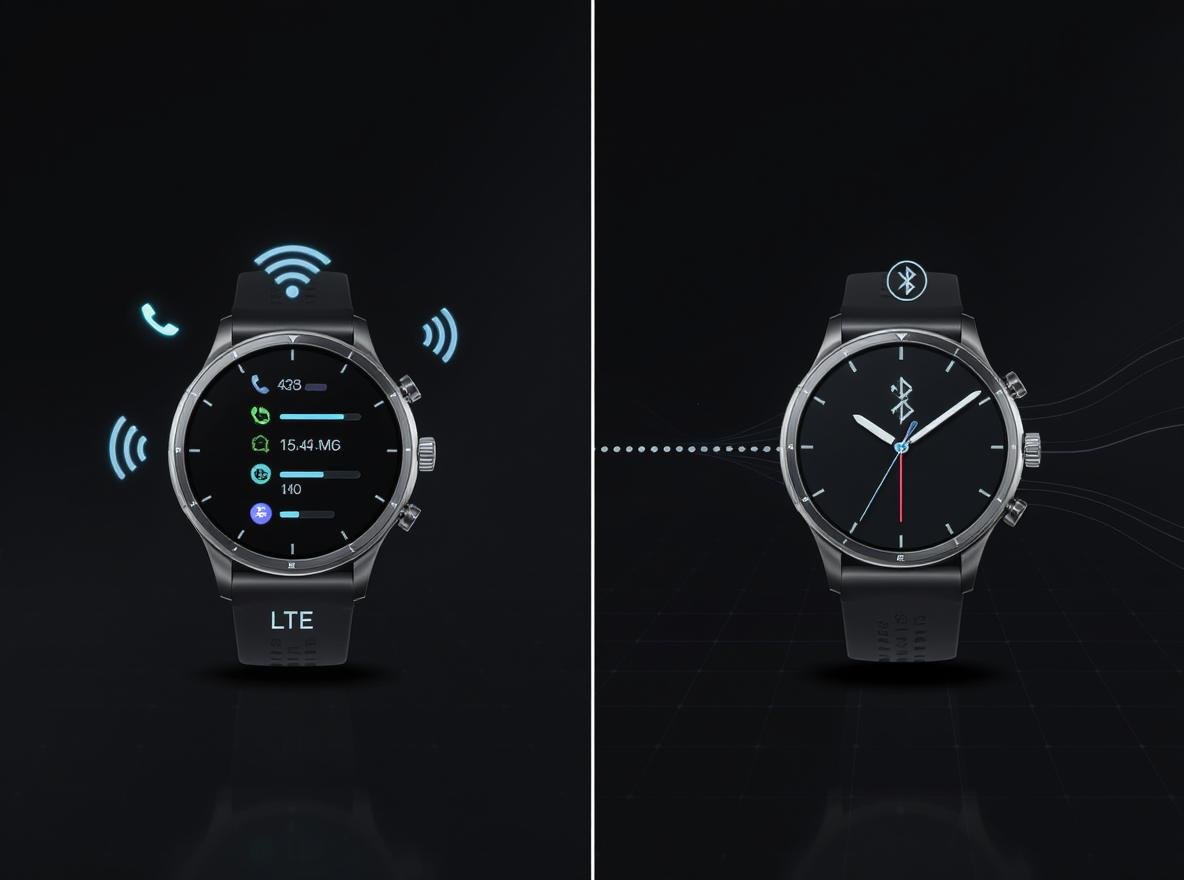
Choosing between an LTE and Bluetooth smartwatch can significantly impact both your budget and user experience. With LTE models costing $50-100 more upfront plus monthly fees reaching $15-17 after taxes, many buyers wonder if cellular connectivity justifies the expense.
The key difference: LTE smartwatches can operate independently with embedded eSIM technology, while Bluetooth models function as smartphone extensions requiring phone proximity. LTE offers complete independence but costs $200-400 more annually than Bluetooth alternatives.
Understanding these distinctions will help you make the right choice for your business needs, whether you’re a retailer, distributor, or brand looking to stock the most suitable smartwatch options.
What’s the Main Difference Between LTE and Bluetooth Smartwatches?
Business owners often ask about the core technological differences when deciding which smartwatch models to stock or recommend.
LTE smartwatches operate independently through embedded eSIM technology and direct cellular network connections, while Bluetooth models function as smartphone extensions requiring proximity within 30-50 feet. LTE watches can make calls, send texts, and use apps without phones nearby.
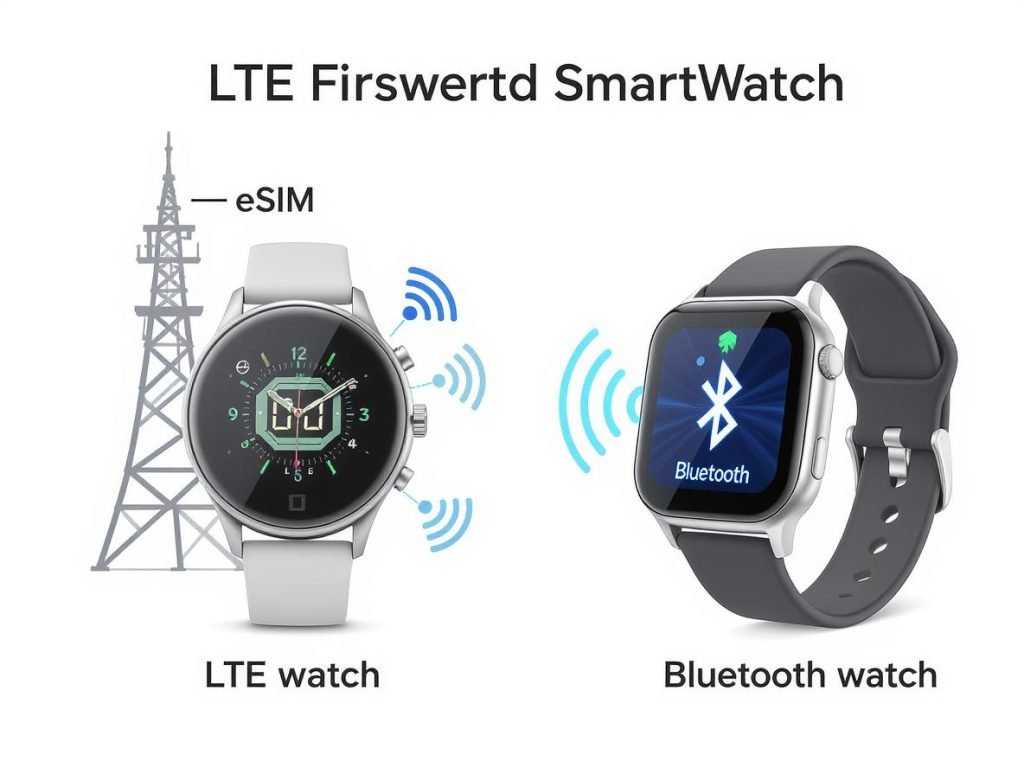
The fundamental distinction lies in connectivity independence. Bluetooth smartwatches create a wireless bridge to your smartphone, losing most features when your phone is out of range. They rely entirely on your phone’s internet connection for data services.
LTE smartwatches contain complete cellular communication systems including built-in modems, eSIM technology, and independent data connections. They can access cellular networks directly, sharing your smartphone’s phone number while operating on separate data lines.
| Feature | LTE Smartwatch | Bluetooth Smartwatch |
|---|---|---|
| Independence | Complete standalone operation | Requires phone within 30-50 feet |
| Calling capability | Direct cellular calling | Phone-dependent calling |
| Data access | Independent cellular data | Phone’s internet connection |
| Range limitation | Unlimited (cellular coverage) | 30-50 feet from phone |
This independence makes LTE watches particularly valuable for outdoor enthusiasts, fitness professionals, and safety-conscious users who need reliable communication without phone dependency.
Can You Use an LTE Smartwatch Without a Phone?
This question frequently arises from customers evaluating smartwatch independence levels for specific use cases.
Yes, LTE smartwatches function as standalone devices when cellular service is activated. You can make calls, send texts, stream music, use maps, and access apps directly without carrying your phone, though some limitations exist.
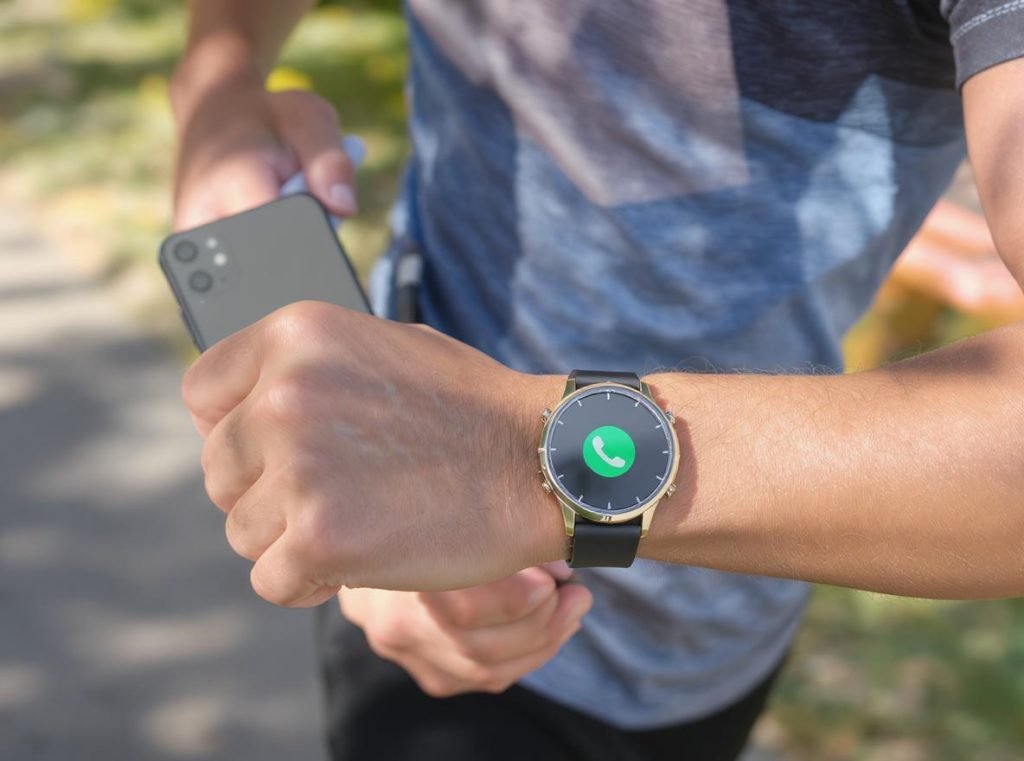
LTE smartwatches provide genuine independence after cellular plan activation. Core standalone functions include:
Complete Independent Capabilities:
- Make and receive phone calls using your existing number
- Send and receive text messages
- Stream music from cloud services like Spotify and Apple Music
- Access GPS navigation with real-time traffic updates
- Use internet-connected apps and services
- Receive email and social media notifications
Important Limitations:
However, certain restrictions apply depending on the platform:
- Some SMS, MMS, and third-party app notifications may require your iPhone to be powered on and connected to Wi-Fi or cellular
- The watch shares your smartphone’s phone number but requires a separate cellular data line
- Advanced features like app installations and major settings changes typically need smartphone connectivity
For wholesale buyers, this means customers get substantial independence while maintaining connection to the broader smartphone ecosystem they expect.
What Are the Key Benefits of LTE Smartwatches?
Retailers and distributors need clear benefit explanations to effectively market LTE smartwatches to end customers.
LTE connectivity provides complete phone independence during activities, enhanced safety features with reliable emergency services, and backup communication when smartphones fail. These watches offer transformative freedom for active users and safety-conscious consumers.

Independence and Activity Freedom:
LTE smartwatches excel for active lifestyles where phone-carrying proves impractical:
- Run, hike, swim, or exercise without bulky smartphone dependency
- Quick errands and activities while staying fully connected
- Outdoor adventures with emergency communication capability
- Professional situations where phones are restricted or impractical
Enhanced Safety and Emergency Features:
Safety benefits represent crucial selling points:
- Reliable SOS calling even when smartphones aren’t available
- More precise location tracking through cellular triangulation
- Emergency connectivity in remote areas with cellular coverage
- Fall detection with automatic emergency calling capability
Backup Communication Reliability:
- Primary communication when smartphones break or die
- Independent connectivity during phone charging periods
- Redundant communication systems for critical situations
| Use Case | Bluetooth Limitation | LTE Advantage |
|---|---|---|
| Solo running/hiking | Must carry phone for safety | Emergency calling without phone |
| Water activities | Phone damage risk | Waterproof independent communication |
| Professional settings | Phone restrictions in hospitals/secure areas | Unrestricted cellular connectivity |
| Travel scenarios | International complications | Local carrier connectivity |
These benefits justify premium pricing for specific customer segments prioritizing independence and safety over cost savings.
What Are the Major Drawbacks of LTE Smartwatches?
Understanding LTE limitations helps businesses set appropriate customer expectations and avoid post-sale dissatisfaction.
LTE watches consume significantly more battery power, cost substantially more through ongoing monthly fees, and face international limitations. Total annual costs reach $200-400 more than Bluetooth models, with battery life dropping to 24-28 hours versus 40-48 hours for Bluetooth versions.

Substantial Cost Increases:
Monthly cellular plans create significant ongoing expenses:
Real-World Monthly Costs (Including Taxes and Fees):
- Verizon: $15-17/month total cost
- T-Mobile: $12-17/month total cost
- AT&T: $15-16/month total cost
- Budget carriers: $5-10/month base rates
Additional one-time costs include $30-35 activation fees and potential device protection plans costing $13-17 monthly.
Dramatic Battery Life Reduction:
LTE connectivity severely impacts battery performance:
Actual Battery Life Comparisons:
- Samsung Galaxy Watch Ultra: 24-28 hours with LTE vs. 3-4 days without
- Apple Watch Ultra 2: 18-36 hours (8 hours continuous LTE use)
- Bluetooth-only Samsung models: 40-48 hours standard operation
International Travel Limitations:
LTE smartwatches face significant global restrictions:
- Most carriers don’t support international roaming for smartwatch plans
- Regional hardware differences prevent foreign network compatibility
- When roaming works, it incurs substantial additional fees
- Mixed success reports with connectivity limited to specific countries
Hardware and Design Compromises:
- Slightly thicker cases accommodating cellular components
- Additional antenna requirements affecting aesthetics
- Marginally heavier construction due to cellular hardware
How Much More Do LTE Smartwatches Actually Cost?
Cost analysis remains crucial for businesses determining inventory mix and pricing strategies.
LTE models cost $50-100 more upfront, plus monthly service fees averaging $15-17 after taxes and activation charges. Annual total cost differences reach $200-400, making three-year ownership costs substantially higher than Bluetooth alternatives.
Hardware Premium by Brand:
Current market pricing shows consistent patterns:
- Apple Watch SE: $50 LTE premium
- Samsung Galaxy Watch: ~$50 LTE premium
- Google Pixel Watch 3: $100 LTE premium
Actual Monthly Service Costs:
Real-world monthly expenses including all taxes and fees:
| Carrier | Base Plan | Taxes/Fees | Total Monthly | Annual Cost |
|---|---|---|---|---|
| Verizon | $10-15 | $2-5 | $15-17 | $180-204 |
| T-Mobile | $10-12 | $2-5 | $12-17 | $144-204 |
| AT&T | $10 | $5-6 | $15-16 | $180-192 |
| Budget carriers | $5-10 | $0-2 | $5-12 | $60-144 |
Three-Year Total Cost Comparison:
- Bluetooth smartwatch: $250 (device only)
- LTE smartwatch: $300 (device) + $180/year × 3 + $35 (activation) = $875
- Total difference: $625 over three years
Business Implications:
The seemingly modest $50 hardware premium masks substantial long-term costs. Retailers should emphasize total ownership costs to help customers make informed decisions and prevent buyer’s remorse.
For wholesale buyers, LTE models require higher inventory investment but justify premium pricing through enhanced features and target market willingness to pay for independence.
Who Should Choose LTE Over Bluetooth Smartwatches?
Market segmentation helps businesses identify target customers and optimize sales approaches.
LTE smartwatches suit outdoor enthusiasts, safety-conscious users, parents with active lifestyles, and seniors requiring independence. Bluetooth models better serve budget-conscious consumers, phone-dependent users, and international travelers avoiding roaming complications.

Ideal LTE Smartwatch Customers:
Outdoor and Fitness Enthusiasts:
- Runners, cyclists, swimmers preferring phone-free workouts
- Hikers and outdoor adventurers needing emergency communication
- Fitness professionals conducting phone-free training sessions
- Water sports participants avoiding phone damage risks
Safety and Independence Focused:
- Parents wanting connectivity during kid-focused activities
- Seniors benefiting from fall detection and emergency calling
- Safety-conscious users prioritizing backup communication systems
- Solo activity participants requiring emergency contact capability
Professional Applications:
- Healthcare workers in sterile environments restricting phones
- Security personnel requiring reliable communication systems
- Field service technicians in remote locations
- Workers in phone-restricted professional environments
Bluetooth Smartwatch Target Market:
Budget-Conscious Segments:
- Students and young professionals with limited income
- Price-sensitive consumers avoiding monthly fees
- Users prioritizing basic fitness tracking over independence
- Technology adopters wanting simplified device ecosystems
Phone-Dependent Users:
- Consumers who consistently carry smartphones
- Casual fitness users with phone-centric lifestyles
- Users primarily interested in notifications and basic smart features
- International travelers avoiding roaming complications
| Customer Profile | Recommended Choice | Primary Benefit |
|---|---|---|
| Daily runners/cyclists | LTE | Phone-free exercise freedom |
| Budget shoppers | Bluetooth | Lower total ownership costs |
| Safety-conscious seniors | LTE | Emergency communication reliability |
| Casual notification users | Bluetooth | Cost-effective smartphone extension |
| Outdoor adventurers | LTE | Emergency connectivity in remote areas |
Do LTE Smartwatches Work in All Countries?
International compatibility concerns significantly affect global wholesale distribution strategies and customer satisfaction.
No, LTE smartwatches face substantial international limitations due to regional hardware differences, carrier partnership restrictions, and limited roaming support. Most LTE watches work only with specific carriers in their original market regions.

Regional Hardware Incompatibilities:
LTE smartwatch manufacturers produce different regional models with varying frequency band support:
Hardware Limitations:
- North American models may not support European/Asian LTE frequencies
- Regional cellular band differences prevent cross-compatibility
- Separate SKUs required for different global markets
- Hardware purchased in one region often unusable in others
Carrier Partnership Restrictions:
LTE functionality depends heavily on local carrier support:
Activation Requirements:
- Local carriers must officially support specific smartwatch models
- Many international carriers don’t offer smartwatch plans
- eSIM activation processes vary significantly between regions
- Carrier partnerships determine available features and pricing
International Roaming Reality:
Contrary to smartphone roaming, smartwatch international connectivity remains extremely limited:
Roaming Limitations:
- Most US carriers don’t support international smartwatch roaming
- When roaming works, it’s limited to specific countries
- High additional fees apply when roaming is available
- Mixed success reports with inconsistent connectivity
Business Distribution Implications:
For international distributors and wholesalers:
- Research local carrier partnerships before inventory investment
- Understand regional frequency requirements for target markets
- Consider Bluetooth models for global distribution simplicity
- Evaluate local competition and pricing structures carefully
| Region | Carrier Support | Hardware Compatibility | Roaming Availability |
|---|---|---|---|
| North America | Excellent | Full feature support | Limited countries |
| Europe | Variable by country | Mixed compatibility | Very limited |
| Asia | Carrier-dependent | Regional variations | Minimal support |
Bluetooth smartwatches avoid these complications entirely, making them more suitable for global distribution networks and international customer bases.
Which Offers Better Battery Life: LTE or Bluetooth?
Battery performance directly impacts customer satisfaction and influences purchasing decisions for wholesale buyers.
LTE smartwatches provide 24-28 hours of battery life compared to 40-48 hours for Bluetooth models. Cellular connectivity consumes substantially more power even during standby, with battery life dropping to 20 hours during intensive LTE usage.
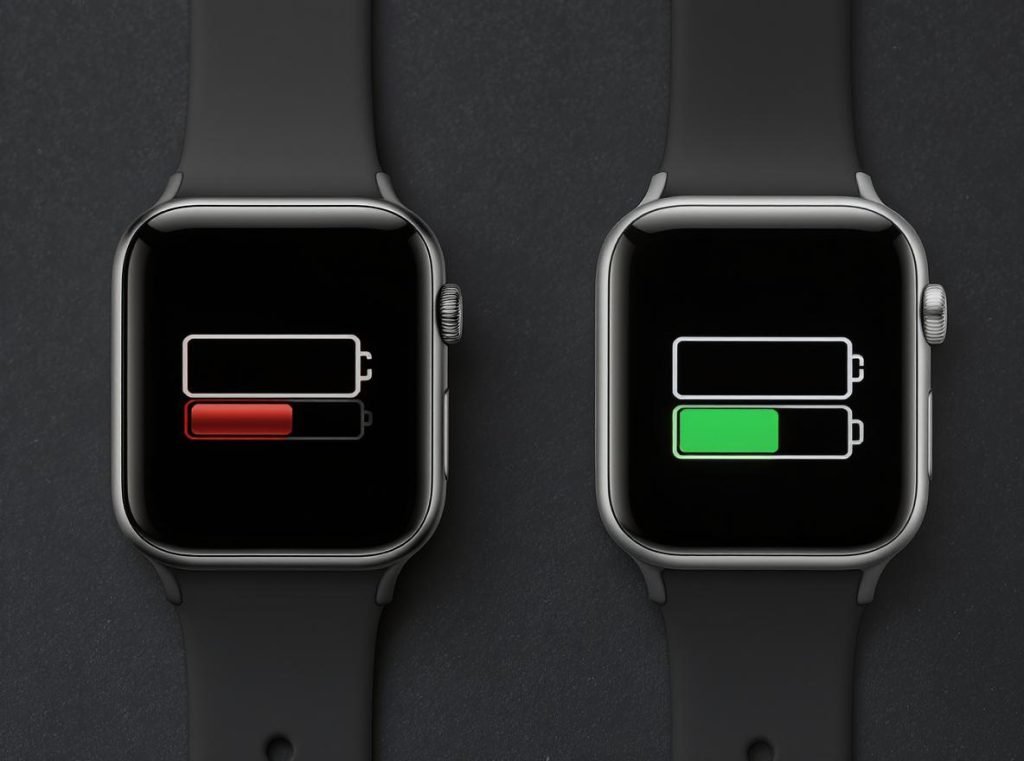
Documented Battery Performance Differences:
Real-world testing reveals significant battery life gaps:
LTE Smartwatch Performance:
- Samsung Galaxy Watch Ultra: 24-28 hours with LTE active, extending to 3-4 days when LTE is disabled
- Apple Watch Ultra 2: 18-36 hours normal use, 8 hours continuous LTE operation
- Google Pixel Watch 3: Up to 24 hours with cellular connectivity
Bluetooth Smartwatch Performance:
- Samsung Galaxy Watch (Bluetooth mode): 40-48 hours standard operation
- Extended optimization can achieve 60+ hours battery life
- Consistent multi-day performance without cellular power drain
Power Consumption Factors:
LTE Power Requirements:
- Cellular modem operation requires continuous network scanning
- Data transmission during calls and internet usage increases drain
- Signal strength directly affects battery consumption – weaker signals demand more power
- Background app synchronization occurs independently, consuming additional energy
Battery Optimization Strategies:
Modern LTE smartwatches include power management features:
| Usage Scenario | LTE Mode | Bluetooth Mode | Improvement |
|---|---|---|---|
| Light use (notifications) | 24-28 hours | 40-48 hours | 60-70% longer |
| Moderate use (calls, apps) | 18-24 hours | 32-40 hours | 80% longer |
| Heavy use (streaming, GPS) | 12-18 hours | 24-32 hours | 100% longer |
Customer Education Strategies:
For wholesale buyers, battery differences require proactive customer education:
- Set realistic expectations during sales consultations
- Demonstrate battery optimization features and settings
- Emphasize situational LTE usage rather than constant activation
- Consider bundling portable charging accessories with LTE models
The battery trade-off becomes acceptable for customers prioritizing independence, but budget-conscious users often prefer Bluetooth models for superior battery performance.
Can You Turn Off LTE and Use Only Bluetooth?
Flexibility options matter to customers wanting occasional rather than constant cellular connectivity.
Yes, all LTE smartwatches can operate in Bluetooth-only mode, providing identical functionality to Bluetooth-only models while preserving cellular capability for specific situations. This flexibility extends battery life to match Bluetooth performance when cellular isn’t needed.
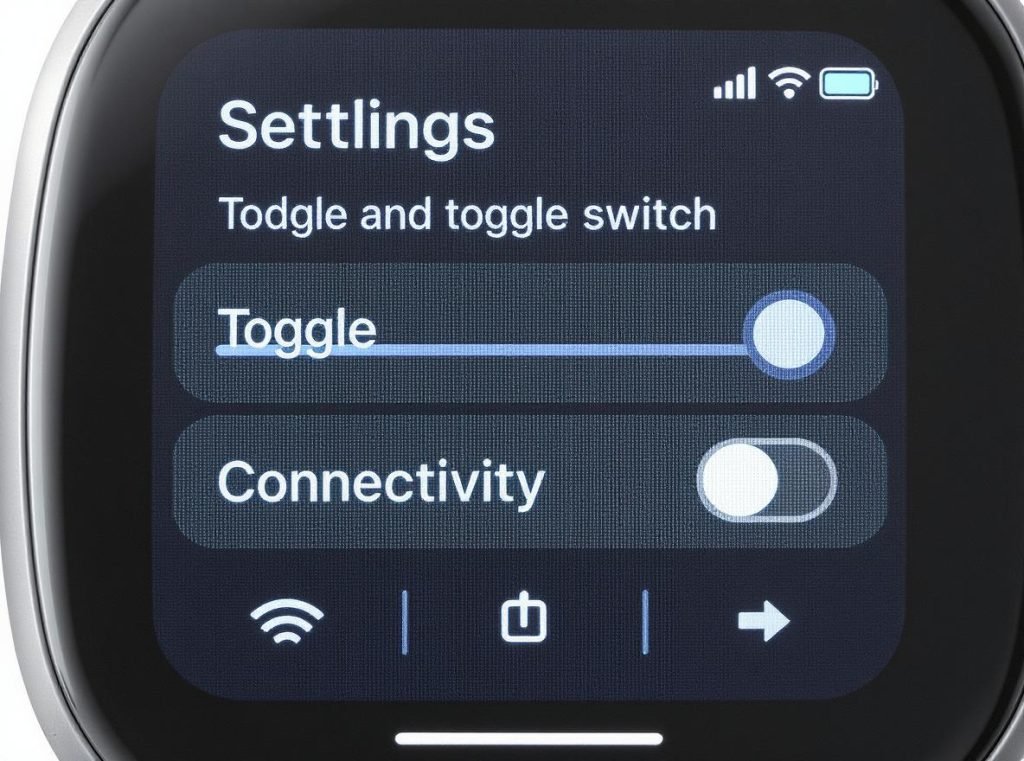
Multiple Operating Mode Options:
LTE smartwatches offer exceptional versatility through configurable connectivity modes:
Available Connectivity Settings:
- Full LTE mode: Complete cellular independence with all features active
- Bluetooth priority: Cellular backup activation when phone becomes unavailable
- Bluetooth-only mode: Cellular completely disabled for maximum battery conservation
- Airplane mode: All wireless connections disabled for specific environments
Practical Benefits of Mode Switching:
Battery Life Management:
Users can dramatically extend battery life by switching to Bluetooth-only during phone-available periods. One user reported Samsung Galaxy Watch battery life extending from 24-28 hours to 3-4 days when disabling LTE.
Cost Control Applications:
Some cellular plans charge based on data consumption. Bluetooth-only operation eliminates cellular data usage while maintaining emergency cellular capability when needed.
Environmental Requirements:
Certain locations (hospitals, aircraft, secure facilities) require cellular disabling while permitting Bluetooth for basic smartwatch functionality.
Automatic Switching Capabilities:
Advanced LTE watches support intelligent connectivity management:
- Automatic LTE activation only when phone disconnects
- Scheduled cellular connectivity during specific hours
- Smart switching based on location and usage patterns
- Remote connection optimization to minimize battery drain
| Situation | Optimal Mode | Primary Benefit |
|---|---|---|
| Office work with phone nearby | Bluetooth only | Extended battery life |
| Evening run without phone | Full LTE | Complete independence |
| International travel | Bluetooth only | Avoid roaming charges |
| Emergency backup scenarios | LTE standby | Peace of mind connectivity |
Investment Justification:
This mode flexibility makes LTE smartwatches attractive long-term investments. Customers receive Bluetooth performance when desired plus cellular independence when needed, justifying premium pricing for versatility-conscious buyers.
Are There Any Hidden Costs with LTE Smartwatches?
Complete cost transparency helps wholesale buyers provide accurate customer information and avoid post-sale complications.
Beyond advertised monthly fees, LTE smartwatches incur activation charges ($30-35), taxes and regulatory fees ($3-6 monthly), potential device protection costs ($13-17 monthly), and international roaming limitations that can create unexpected expenses.

Comprehensive Fee Structure:
Initial Setup Expenses:
- Activation fees: $30-35 one-time charges for new cellular lines
- SIM programming: Some carriers charge additional $5-15 for eSIM configuration
- Account setup: Administrative fees for adding smartwatch lines to existing plans
Monthly Service Reality:
Advertised rates don’t reflect total monthly costs:
Actual Monthly Breakdown:
- Base plan: $10-15 advertised rate
- Taxes and regulatory fees: $3-6 additional monthly charges
- Real monthly cost: $15-17 total expense
Optional Protection and Services:
- Device protection plans: $13-17 monthly for damage/loss coverage
- Premium cellular features: Enhanced international calling capabilities
- Family plan additions: Limited options with geographic restrictions
International Travel Complications:
Roaming Limitations:
- Most carriers don’t support international smartwatch roaming
- When available, daily roaming charges reach $5-15 per day
- Hardware compatibility issues prevent foreign network access
- Family setup plans specifically exclude international roaming capability
Contract and Plan Restrictions:
Service Commitments:
- Minimum service periods: 12-24 month contracts with early termination penalties ($100-300)
- Plan change limitations: Restrictions on downgrading service levels
- Postpaid requirements: Many carriers don’t offer prepaid smartwatch plans
- MVNO incompatibility: Budget carrier plans often unsupported
| Hidden Cost Category | Typical Range | Frequency | Impact |
|---|---|---|---|
| Activation fees | $30-35 | One-time | Immediate |
| Monthly taxes/fees | $3-6 | Monthly | Ongoing |
| International roaming | $5-15/day | Per travel day | Travel-dependent |
| Early termination | $100-300 | Contract cancellation | Switching penalty |
Business Communication Strategy:
Wholesale buyers should proactively address total ownership costs with customers. Transparent discussions prevent dissatisfaction and returns while building long-term customer trust and repeat business relationships.
Consider creating comprehensive cost calculators showing three-year ownership totals compared to Bluetooth alternatives, helping customers make fully informed purchasing decisions.
Summary
LTE smartwatches offer genuine independence and emergency reliability at substantial cost premiums, while Bluetooth models provide cost-effective functionality for phone-carrying users. Real-world monthly costs reach $15-17 after taxes, making annual expenses $200-400 higher than Bluetooth alternatives, but specific user segments benefit significantly from cellular connectivity.
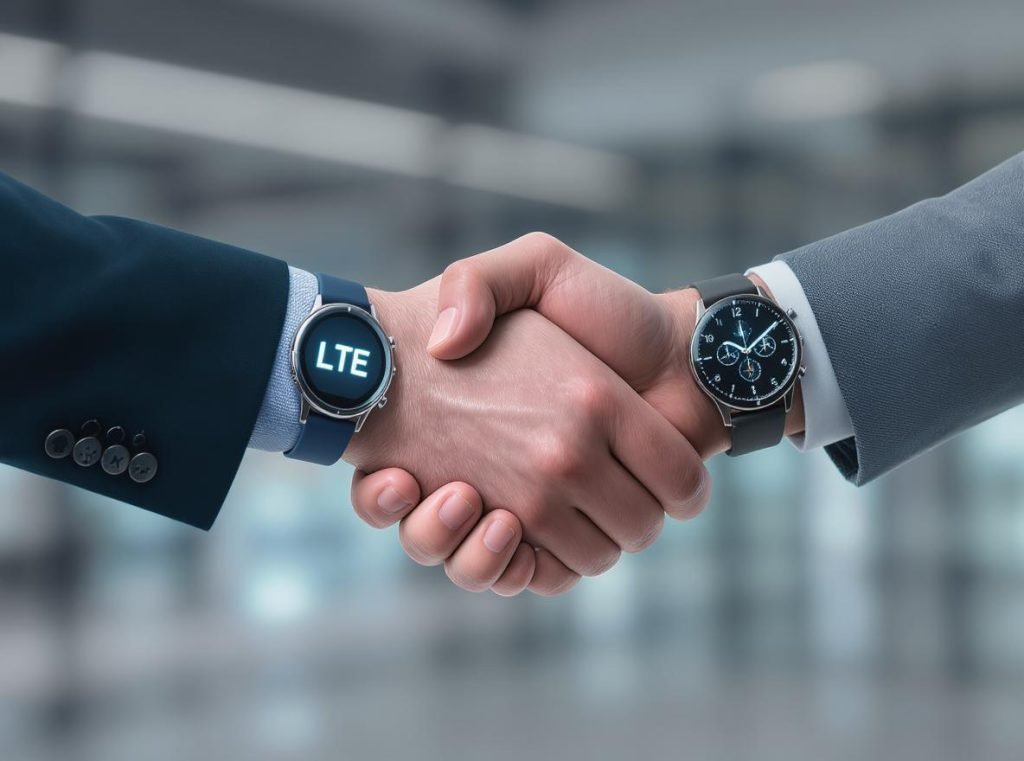
Choose LTE for outdoor enthusiasts, safety-conscious users, and independence-seeking customers. Select Bluetooth for budget-conscious buyers, casual users, and international markets where cellular compatibility remains problematic.
Ready to Stock the Right Smartwatches for Your Market?
As a leading smartwatch manufacturer, Osmarto provides both LTE and Bluetooth models designed for wholesale distribution worldwide. Our experienced team helps distributors, retailers, and brand manufacturers select optimal product mixes based on target market analysis, regional carrier compatibility, and customer cost sensitivity.
Our wholesale specialists understand the complexities of LTE smartwatch distribution, including carrier partnership requirements, international compatibility issues, and customer education needs for successful market penetration.
Contact Osmarto today to discuss your smartwatch inventory strategy. We provide detailed market analysis, competitive pricing structures, and technical specifications to maximize your smartwatch business success in both LTE and Bluetooth segments.
Get your custom wholesale quote now – reach out to our team for personalized consultation on LTE and Bluetooth smartwatch models tailored to your target market needs.