Skip to content
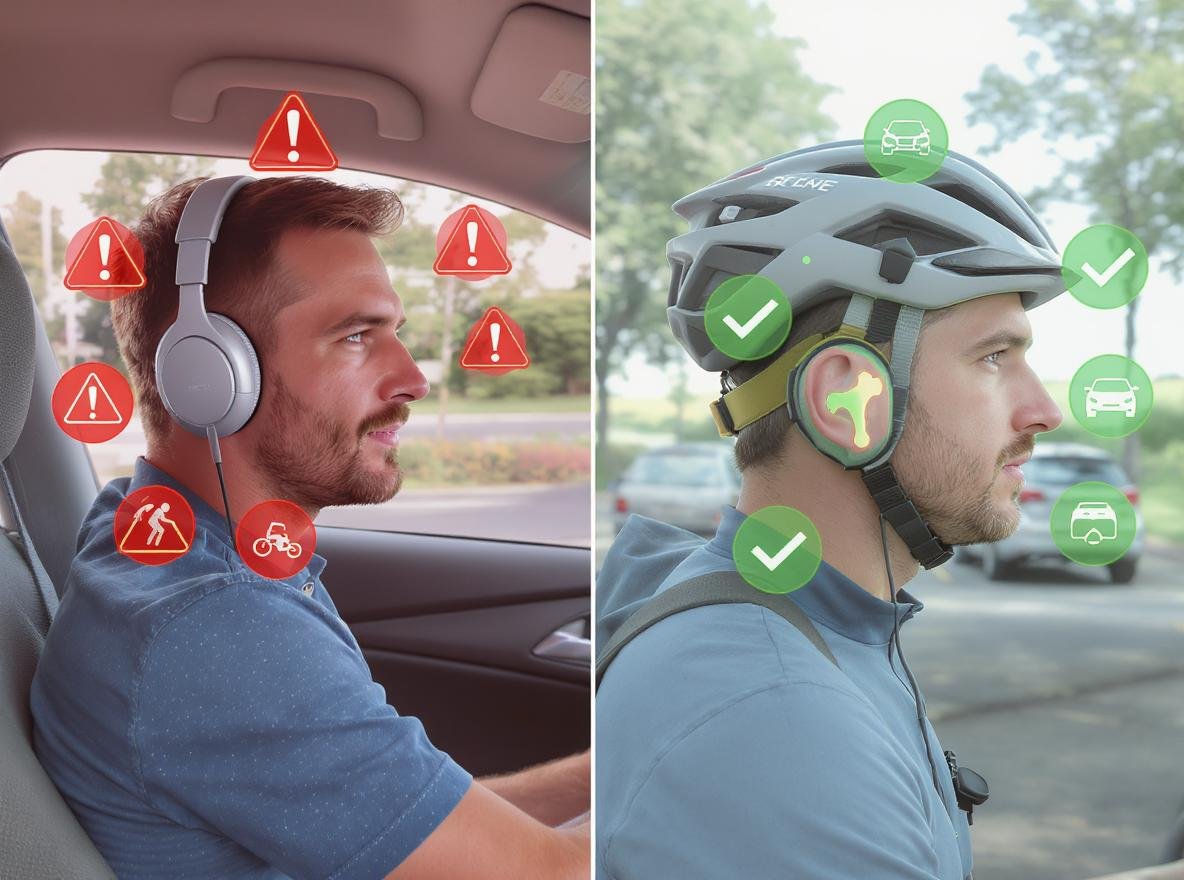
Whether you’re commuting to work or enjoying a weekend ride, many people wonder if it’s safe and legal to wear headphones while driving or cycling. This question becomes increasingly important as wireless headphones become more popular for both entertainment and hands-free communication during transportation.
The short answer is: it depends on your location and the type of headphones you use. Currently, 16 states have laws restricting or banning headphone use while driving, with no federal law governing their use. Even where it’s legal, wearing headphones significantly reduces situational awareness and reaction time, increasing accident risk by creating “inattentional blindness” where drivers physically see hazards but don’t mentally process them.
If you’re concerned about safety while staying connected, keep reading to understand the complete picture of headphone laws, safety risks, and better alternatives for drivers and cyclists.
What Are the Legal Requirements for Wearing Headphones While Driving?
Understanding headphone laws while driving can be confusing since regulations vary significantly between states, with currently 16 states having specific restrictions.
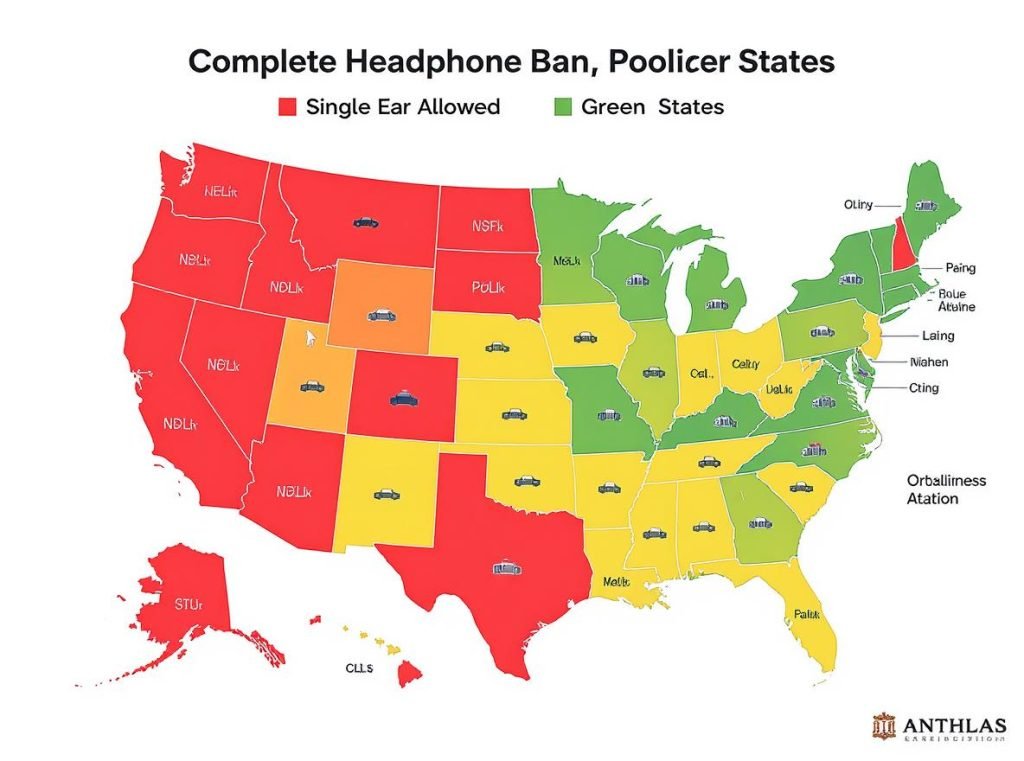
Six states completely prohibit wearing headphones covering both ears while driving: California (Vehicle Code Section 27400), Louisiana, Maryland, Minnesota, Virginia, and Washington. Several other states allow single-ear use for hands-free calling while prohibiting dual-ear coverage. Violating these laws can result in fines and potential license points, with 34 states currently having no specific headphone restrictions.
Complete Prohibition States
The following six states have complete bans on dual-ear headphone use while driving:
California operates under Vehicle Code Section 27400, which specifically prohibits headphones covering both ears. This law applies to all motor vehicle operators and carries enforcement penalties for violations.
Louisiana enforces restrictions through Louisiana Revised Statutes Title 32: §295.2, making dual-ear headphone use a traffic violation. The state considers headphone use a form of distracted driving that impairs safety awareness.
Maryland, Minnesota, Virginia, and Washington maintain similar complete prohibition laws through their respective transportation codes. These states recognize the significant safety risks associated with complete auditory isolation while operating motor vehicles.
Partial Restriction States (Single-Ear Allowed)
Several states permit single earbud usage while maintaining safety awareness:
Florida (Florida Statutes §316.304) specifically permits single-ear use with cellular phones for hands-free communication. This compromise allows necessary communication while preserving environmental awareness.
New York prohibits more than one earphone while driving, recognizing the need for hands-free communication in professional and emergency situations. The state maintains strict enforcement of dual-ear violations.
Georgia, Illinois, Ohio, Colorado, Massachusetts, Pennsylvania, and Rhode Island have similar single-ear exceptions. These states typically allow one-ear headsets for communication purposes while prohibiting entertainment-focused dual-ear usage.
States with No Restrictions
Currently, 34 states have no specific laws prohibiting headphone use while driving:
| Region | No Restriction States |
|---|---|
| South | Alabama, Arkansas, Delaware, Kentucky, Mississippi, North Carolina, South Carolina, Tennessee, West Virginia |
| West | Arizona, Hawaii, Idaho, Montana, Nevada, New Mexico, Oregon, Utah, Wyoming |
| Midwest | Indiana, Iowa, Kansas, Michigan, Missouri, Nebraska, North Dakota, South Dakota, Wisconsin |
| Northeast | Connecticut, Maine, New Hampshire, New Jersey, Vermont |
| Other | Alaska, Texas |
However, drivers in these states can still face distracted or reckless driving charges if headphone use contributes to unsafe operation or accidents.
Are Headphones Legal for Cyclists?
Cycling headphone laws are generally more permissive than driving regulations, but important restrictions exist in several key states.
Most U.S. states allow cycling with headphones, but several states impose restrictions. California prohibits headphones in both ears while cycling but allows one earbud. New York makes riding with headphones illegal under Vehicle and Traffic Law § 375(24-a). Oregon prohibits operating a bicycle with one or both ears covered by headphones. Despite legal permissions in many areas, cyclists can still be held liable if headphone use contributes to accidents.

States with Specific Cycling Restrictions
California follows the same logic as driving laws, prohibiting headphones in both ears while cycling. The state allows single earbud use, recognizing cyclists’ need for navigation and communication while maintaining safety awareness.
New York takes a stricter approach with Vehicle and Traffic Law § 375(24-a), making headphone use while cycling completely illegal. The state considers cycling headphone use a significant safety risk in urban environments.
Oregon prohibits operating bicycles with one or both ears covered by headphones, treating cycling safety with the same seriousness as motor vehicle operation. The state recognizes that cyclists share roadways with vehicles and need full environmental awareness.
Florida doesn’t have specific cycling headphone laws, but the state cycling guide actively advises against headphone use, recognizing the safety implications for cyclists sharing roads with motor vehicles.
States with No Cycling Restrictions
Most states, including Utah, Idaho, Iowa, Arizona, Nevada, Texas, and New Mexico, have no specific laws restricting headphone use while cycling. However, this legal permission doesn’t eliminate liability concerns.
Legal Liability Considerations:
- Cyclists can be held responsible for accidents where headphone use contributed to unsafe operation
- Insurance companies may consider headphone use as contributory negligence
- Local ordinances may impose additional restrictions beyond state laws
- Private bike trails and paths may have their own headphone policies
What Are the Safety Risks of Using Headphones While Driving or Cycling?
Research demonstrates that headphone use while operating vehicles or bicycles creates multiple serious safety hazards that extend beyond simple hearing impairment.
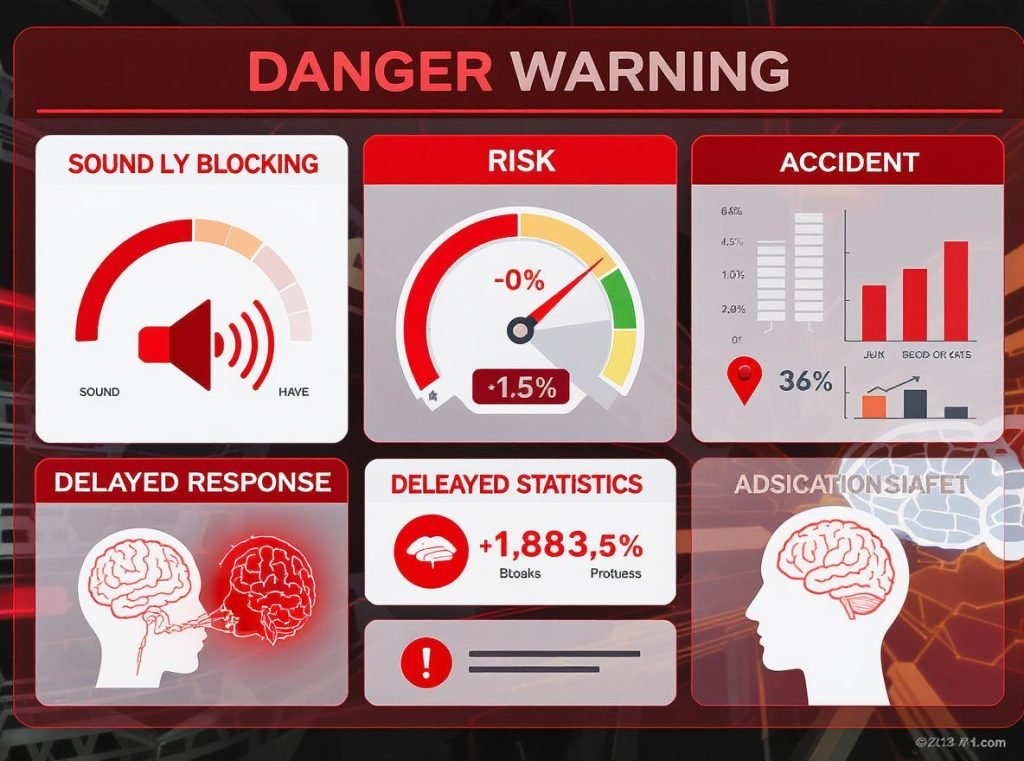
Studies show that drivers wearing headphones experience increased accident risk due to reduced situational awareness, cognitive distraction, and “inattentional blindness.” The National Highway Traffic Safety Administration reports that distracted driving contributed to approximately 3,142 deaths, representing 9% of all traffic fatalities. A 2021 Ford study found that 27% of near misses or accidents involved drivers wearing headphones.
Reduced Situational Awareness
Headphones create significant auditory masking effects that block critical safety sounds:
Emergency Vehicle Sounds:
Emergency sirens from ambulances, fire trucks, and police vehicles become completely inaudible with dual-ear headphones. These audio cues provide essential advance warning that allows drivers and cyclists to safely move aside for emergency responders.
Traffic Communication Sounds:
Car horns serve as the primary warning system between drivers, alerting others to dangerous situations, lane changes, or visibility issues. Headphones eliminate this crucial communication channel between road users.
Environmental Hazard Detection:
Railroad crossing signals, tire squealing indicating emergency braking nearby, and engine problems become undetectable. These sounds often provide the only advance warning of developing dangerous situations.
Cognitive Distraction Impact
AAA research demonstrates that headphone use creates “inattentional blindness” where drivers physically see hazards but don’t mentally process them because their attention is divided between audio content and driving tasks.
Attention Competition Effects:
- Music with lyrics requires language processing resources that compete with driving concentration
- Podcast content demands sustained focus and comprehension that reduces traffic awareness
- Phone conversations create “cognitive tunneling” effects that narrow attention focus
Visual Processing Impairment:
Even when eyes function normally, the brain’s ability to process visual information becomes compromised when audio content demands cognitive resources. This leads to missed traffic signals, failure to notice pedestrians, and delayed recognition of changing road conditions.
Statistical Safety Impact
Recent research provides concrete data on headphone-related safety risks:
| Risk Factor | Impact Measurement | Safety Consequence |
|---|---|---|
| Reaction Time Increase | 27-40% slower response | Additional stopping distance at highway speeds |
| Accident Involvement | 27% of near misses | Significantly higher collision risk |
| Fatality Contribution | 9% of traffic deaths | Over 3,000 annual fatalities linked to distraction |
Physical Entanglement Risks
Wired headphones pose additional mechanical dangers:
Vehicle Control Interference:
Headphone cords can become tangled in steering wheels, gear shifts, or door handles during emergency maneuvers. This physical interference can prevent proper vehicle control when quick reactions are most critical.
Emergency Exit Complications:
In accident situations, headphone cords may impede rapid exit from vehicles or interfere with safety belt operation. These seconds can prove critical in emergency situations requiring immediate evacuation.
Which Types of Headphones Are Safer for Driving and Cycling?
Not all headphone technologies present equal safety risks, and understanding these differences helps inform better choices for transportation use.
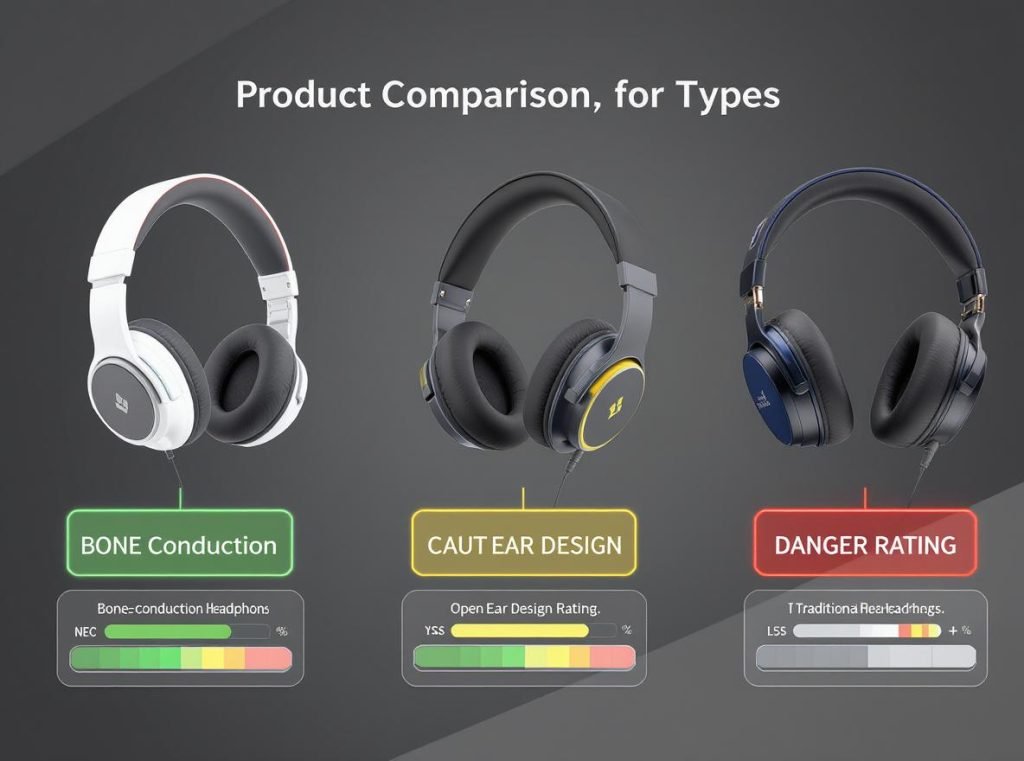
Bone conduction headphones represent the safest option for transportation use because they transmit sound through cheekbone vibrations while leaving ears completely open for environmental awareness. Open-ear designs and single-ear solutions provide compromises between audio functionality and safety, while traditional over-ear and in-ear headphones with active noise cancellation pose the highest risks due to complete sound isolation.
Bone Conduction Technology
Bone conduction headphones offer the most significant safety advantages for transportation use:
Technical Advantages:
Bone conduction technology transmits sound through cheekbone vibrations directly to the inner ear, completely bypassing the ear canals. This allows full environmental sound awareness while providing clear audio transmission.
Safety Benefits:
- Emergency vehicle sirens remain fully audible
- Traffic communication sounds are not blocked
- Environmental hazards can be detected immediately
- Compatible with safety equipment like helmets and protective gear
Popular Options:
AfterShokz (now Shokz) leads the bone conduction market with wireless headphones offering waterproof ratings from IP55 to IP67, extended battery life (6-8 hours), and lightweight designs specifically optimized for active use.
Limitations:
- Audio quality may be lower than traditional headphones in very noisy environments
- Higher cost compared to basic earbuds
- May cause mild discomfort during extended use for some users
- Less effective bass response compared to conventional speakers
Open-Ear Headphone Designs
Open-ear headphones provide a middle-ground solution between traditional headphones and complete environmental awareness:
Design Features:
- Speakers positioned near but not blocking ear canals
- Secure fit designed for movement and activity
- Ambient sound penetration while delivering clear audio
- Reduced sound leakage compared to traditional open-back designs
Safety Advantages:
- Maintain significant environmental awareness
- Suitable for recreational cycling on dedicated paths
- Legal in most jurisdictions without specific restrictions
- Compatible with safety equipment and helmets
Single-Ear Bluetooth Solutions
Where legally permitted, single-ear devices offer practical compromises:
Professional Applications:
Commercial drivers, delivery personnel, and field workers often use specialized single-ear communication devices designed for situational awareness while maintaining communication capabilities.
Features:
- Extended battery life for full-day use
- Noise-canceling microphones for clear communication
- Secure fit designed for active work environments
- Often include ambient sound amplification features
Transparency Mode Technology
Modern earbuds with transparency or ambient sound modes enhance safety through electronic environmental awareness:
Technical Implementation:
- External microphones capture and amplify ambient sounds
- Electronic mixing allows adjustment of environmental sound levels
- Some models provide enhanced environmental awareness beyond natural hearing
- Real-time processing maintains audio quality while preserving safety awareness
Safety Features:
- Adjustable transparency levels for different environments
- Automatic adjustment based on detected sound levels
- Enhanced conversation capabilities without device removal
- Maintenance of spatial audio awareness for directional sounds
What Are the Best Alternatives to Headphones for Drivers and Cyclists?
Smart alternatives provide audio functionality while maintaining complete situational awareness, offering superior safety profiles compared to any headphone technology.
Vehicle-integrated audio systems, external speakers, and smart accessory integration provide the safest alternatives to headphones. Built-in car audio systems with Bluetooth connectivity, bicycle-mounted speakers, and professional communication systems maintain full environmental awareness while delivering necessary audio functionality for navigation, communication, and entertainment.

Vehicle-Integrated Audio Solutions
Automotive Systems:
Modern vehicles offer comprehensive audio integration that eliminates headphone safety concerns entirely. Bluetooth connectivity allows wireless streaming from smartphones while maintaining full environmental awareness through the vehicle’s existing speaker system.
Advanced Integration Features:
- CarPlay and Android Auto provide seamless smartphone connectivity
- Voice control systems enable hands-free operation without manual interaction
- Steering wheel controls allow audio management without taking hands off the wheel
- Automatic volume adjustment based on vehicle speed and ambient noise
Aftermarket Solutions:
For older vehicles, aftermarket stereo systems provide modern connectivity:
- Professional installation ensures proper integration with vehicle electrical systems
- Backup camera integration enhances overall safety
- USB charging ports support device connectivity during travel
- Digital signal processing improves audio quality in challenging acoustic environments
Bicycle-Specific Audio Solutions
Handlebar-Mounted Speakers:
Bicycle-mounted Bluetooth speakers provide shared audio experiences without compromising safety awareness. These systems offer weather-resistant designs suitable for outdoor environments and cycling conditions.
Features:
- Quick-release mounting systems for security
- Extended battery life for long rides
- Water-resistant ratings (IPX4-IPX7) for weather protection
- Directional audio to minimize noise impact on others
Professional Cycling Communication:
Competitive and professional cyclists use specialized communication systems:
- VELO Cycling Intercom systems enable team communication during races
- Cardo Systems provide motorcycle-grade Bluetooth intercoms adapted for cycling
- Helmet-mounted options integrate with safety equipment
- Long-range capabilities support group ride coordination
Smart Helmet Integration
Built-In Audio Systems:
Smart helmets incorporate audio without traditional headphone risks:
- Speakers mounted inside helmet padding direct audio toward ears without sealing
- Integrated communication systems support hands-free phone calls
- Emergency features include automatic crash detection and emergency calling
- LED lighting systems can synchronize with audio alerts for enhanced visibility
Examples of Smart Helmet Technology:
- Aleck wireless audio systems provide helmet integration with smartphone connectivity
- Smart bike computers offer audio navigation prompts through helmet speakers
- Professional racing helmets include team communication systems
- Some models integrate radar detection with audio collision warnings
External Speaker Solutions for Cyclists
Portable Options:
Cyclist-specific portable speakers offer flexibility and safety:
Mounting Solutions:
- Handlebar-mounted speakers with secure attachment systems
- Frame-integrated options that don’t interfere with cycling mechanics
- Backpack-mounted directional speakers for personal audio zones
- Helmet-compatible external speakers that work with existing safety gear
Considerations:
- Local noise ordinances may restrict volume levels in urban areas
- Courtesy toward other trail users requires appropriate volume management
- Weather resistance ratings ensure functionality in various conditions
- Battery life considerations for extended rides and multi-day tours
How Do Professional Drivers and Cyclists Handle Audio Needs?
Learning from professionals who depend on safe transportation for their livelihood provides valuable insights into practical audio management strategies that prioritize safety over entertainment.
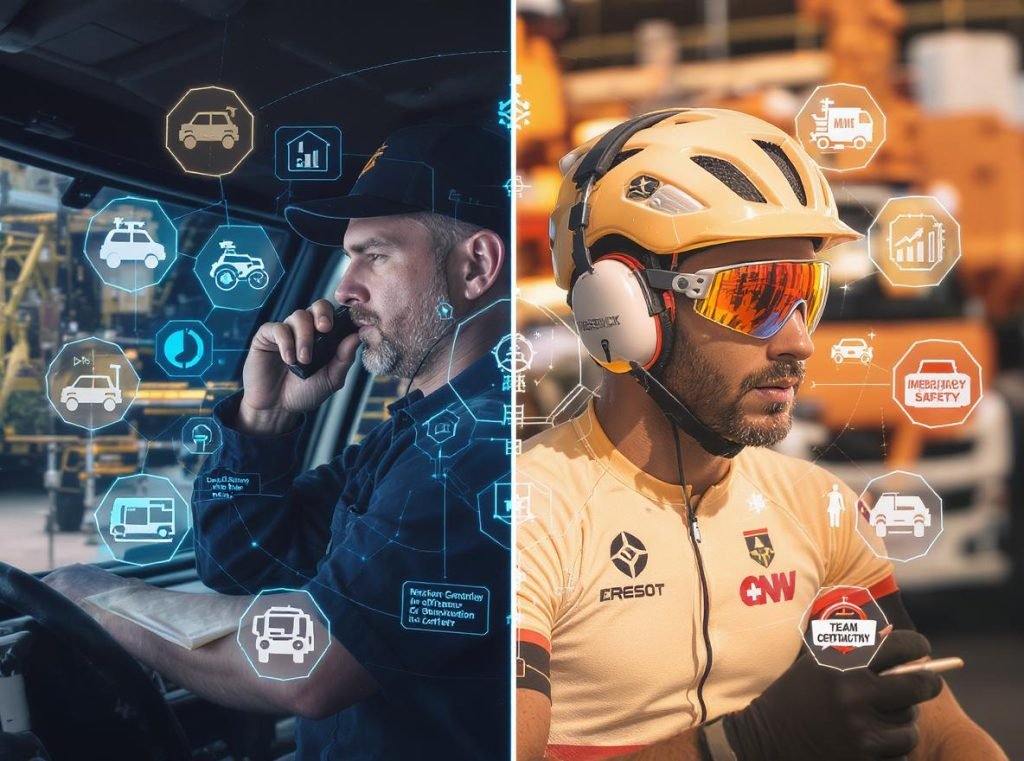
Professional drivers and cyclists prioritize communication and navigation audio over entertainment, using fleet communication systems, professional-grade single-ear devices, and ambient-aware technology. They follow strict protocols emphasizing safety over comfort, including mandatory silence periods during high-risk situations and specialized equipment designed for safety-critical environments.
Commercial Driver Standards
Fleet Communication Requirements:
Commercial transportation industries have developed comprehensive protocols for audio use that prioritize safety and regulatory compliance:
- Two-way radio systems with external speakers maintain team communication without hearing obstruction
- Hands-free phone systems integrate with vehicle controls to minimize distraction
- Emergency communication channels remain always accessible regardless of entertainment audio use
- Professional-grade equipment meets OSHA requirements for hearing protection when necessary
Industry-Specific Equipment:
- ISOtunes industrial hearing protection with communication capabilities
- OSHA-compliant hearing protection with Bluetooth connectivity for noisy environments
- Sensear communication headsets designed for high-noise industrial applications
- Volume-limited devices ensure compliance with hearing protection regulations
Safety Protocols:
Professional drivers follow established protocols that amateur drivers should emulate:
- Complete audio silence during backing, parking, or complex maneuvering situations
- Pull-over requirements for any audio content requiring focused attention
- Regular hearing checks to verify maintained environmental awareness
- Emergency communication channel monitoring supersedes all entertainment audio
Professional Cycling Audio Management
Competitive Cycling Communication:
Professional and competitive cyclists employ sophisticated communication systems:
Team Communication Systems:
- Professional racing teams use VELO Cycling Intercom systems for race coordination
- Cardo Systems provide military-grade communication adapted for cycling environments
- Helmet-mounted systems integrate with aerodynamic racing equipment
- Long-range capabilities support distributed team tactics and safety coordination
Training Applications:
- Power meter audio feedback systems provide performance data without visual distraction
- Heart rate zone alerts through ambient-aware speakers maintain training intensity
- Navigation prompts for training routes use helmet-integrated audio systems
- Professional coaching audio delivered through bone conduction technology
Emergency Services and Law Enforcement
Professional Equipment Standards:
Emergency responders and law enforcement offer critical lessons for civilian audio use:
Communication System Requirements:
- Multi-channel communication systems with priority override capabilities
- Backup communication methods ensure redundancy during equipment failure
- Weather-resistant equipment tested under extreme environmental conditions
- Integration with protective equipment maintains safety ratings
Operational Protocols:
- Clear audio priority hierarchies ensure emergency communications override entertainment
- Regular equipment testing and maintenance schedules prevent failure during critical situations
- Comprehensive training programs for audio equipment use during high-stress scenarios
- Documentation requirements for communication equipment use in incident reports
Delivery and Field Service Professionals
Specialized Solutions:
Field workers and delivery professionals require audio solutions that balance productivity with safety:
Equipment Categories:
- Bone conduction headphones for environmental awareness during outdoor work
- Bluetooth speakers attached to work gear for hands-free communication
- Single-ear commercial headsets specifically designed for professional use
- Neck-worn speaker systems that provide audio without ear obstruction
Workplace Integration:
- Professional equipment meets workplace safety requirements and insurance standards
- Multi-device connectivity supports smartphones, two-way radios, and GPS systems simultaneously
- Extended battery life accommodates full work shifts without charging interruption
- Rugged construction withstands industrial work environments and weather exposure
What Should Wholesalers Know About Headphone Safety Features?
The growing awareness of headphone safety creates significant market opportunities for wholesalers who understand safety-focused product development and regulatory compliance requirements.
Wholesalers should prioritize products with transparency modes, bone conduction technology, volume limiting features, and regulatory compliance documentation. The market increasingly demands safety-first designs with ambient awareness, professional-grade build quality, and integration capabilities. Key growth areas include transportation-safe audio solutions, professional communication systems, and health-conscious designs that protect hearing while maintaining functionality.
Essential Safety Technologies for Wholesale
Priority Product Features:
Modern consumers and professional buyers expect specific safety technologies:
Ambient Awareness Technology:
- Transparency/ambient sound modes that electronically amplify environmental sounds
- Bone conduction technology for complete ear canal freedom
- Open-ear designs that don’t obstruct natural hearing
- Volume limiting technology prevents hearing damage (typically 85dB maximum)
Professional Features:
- Wind noise reduction for outdoor and transportation use
- Sweat and weather resistance ratings (IP55-IP67 minimum for active use)
- Multi-device connectivity for professional applications
- Extended battery life (8+ hours for commercial use requirements)
Regulatory Compliance Requirements
Safety Standards:
Products marketed for professional or transportation use must meet specific standards:
| Standard Type | Requirements | Applications |
|---|---|---|
| ANSI Testing | NRR ratings for hearing protection | Industrial and construction use |
| OSHA Compliance | Volume limits and hearing protection | Workplace safety requirements |
| FCC Certification | Wireless communication device approval | Bluetooth and radio frequency use |
| Professional Grades | Durability and performance standards | Commercial and emergency services |
Documentation Requirements:
- Safety compliance certificates for professional buyers
- Testing documentation supporting safety claims
- User manuals with appropriate use guidelines and legal disclaimers
- Warranty coverage specifically addressing professional use applications
Market Demand Analysis
Growing Market Segments:
Health-Conscious Consumers:
The market increasingly prioritizes hearing health and safety awareness. Consumers seek audio solutions that provide entertainment and functionality without long-term health risks or immediate safety compromises.
Professional Applications:
- Delivery services requiring communication while maintaining situational awareness
- Construction and industrial workers needing hearing protection with communication
- Emergency services requiring specialized communication equipment
- Transportation professionals subject to specific regulatory requirements
Active Lifestyle Markets:
- Cyclists and runners seeking safety-compatible audio solutions
- Commuters requiring legal compliance with local headphone laws
- Fitness enthusiasts wanting environmental awareness during outdoor activities
- Professional athletes needing performance monitoring with safety awareness
Quality Assurance for Wholesale Buyers
Essential Quality Features:
Wholesale buyers should prioritize suppliers offering:
Build Quality Standards:
- Robust construction using appropriate materials for intended use environments
- Consistent performance across temperature and humidity variations
- User-friendly controls accessible during active use
- Professional-grade components that withstand commercial use demands
Support Infrastructure:
- Comprehensive warranties (minimum 1-year for professional applications)
- Professional customer support with technical expertise
- Replacement part availability for commercial users
- Training resources for professional implementation
Partnership Opportunities with Osmarto
Custom Manufacturing Services:
Businesses seeking to enter the safety-focused headphone market can benefit from partnering with experienced manufacturers like Osmarto:
Development Capabilities:
- Bone conduction headphone manufacturing with proven safety benefits
- Single-ear Bluetooth device production for professional applications
- Ambient-aware technology integration for transportation safety
- Custom safety feature development meeting specific market requirements
Wholesale Advantages:
- Competitive pricing structure for bulk safety-focused headphone orders
- Technical expertise in transportation-compatible audio design and development
- Rapid prototyping capabilities for custom safety feature integration
- International shipping and comprehensive logistics support
Quality Assurance Services:
- Comprehensive testing protocols for transportation safety features
- Compliance verification for multiple international markets and regulations
- Extended warranty options specifically designed for professional-use applications
- Ongoing technical support for product customization and market-specific requirements
For wholesalers, distributors, and brand manufacturers looking to capitalize on the growing safety-focused headphone market, establishing partnerships with manufacturers who understand both technology and regulatory requirements ensures access to cutting-edge products and reliable production capabilities. Contact our team to explore specific requirements for transportation-safe audio products and discuss custom manufacturing solutions that meet both safety standards and market demand expectations.
Summary
Headphone safety while driving and cycling involves complex legal, safety, and practical considerations. Currently, 16 states restrict headphone use while driving, with complete bans in six states and single-ear permissions in others. Research shows headphone use increases accident risk through reduced situational awareness and cognitive distraction, contributing to approximately 27% of near-miss situations. Safer alternatives include bone conduction technology, vehicle-integrated systems, and professional communication equipment that maintain environmental awareness while providing necessary audio functionality.
The market increasingly emphasizes safety-first design, creating opportunities for specialized products serving professional users and safety-conscious consumers who need compliant audio solutions for transportation environments.