Skip to content
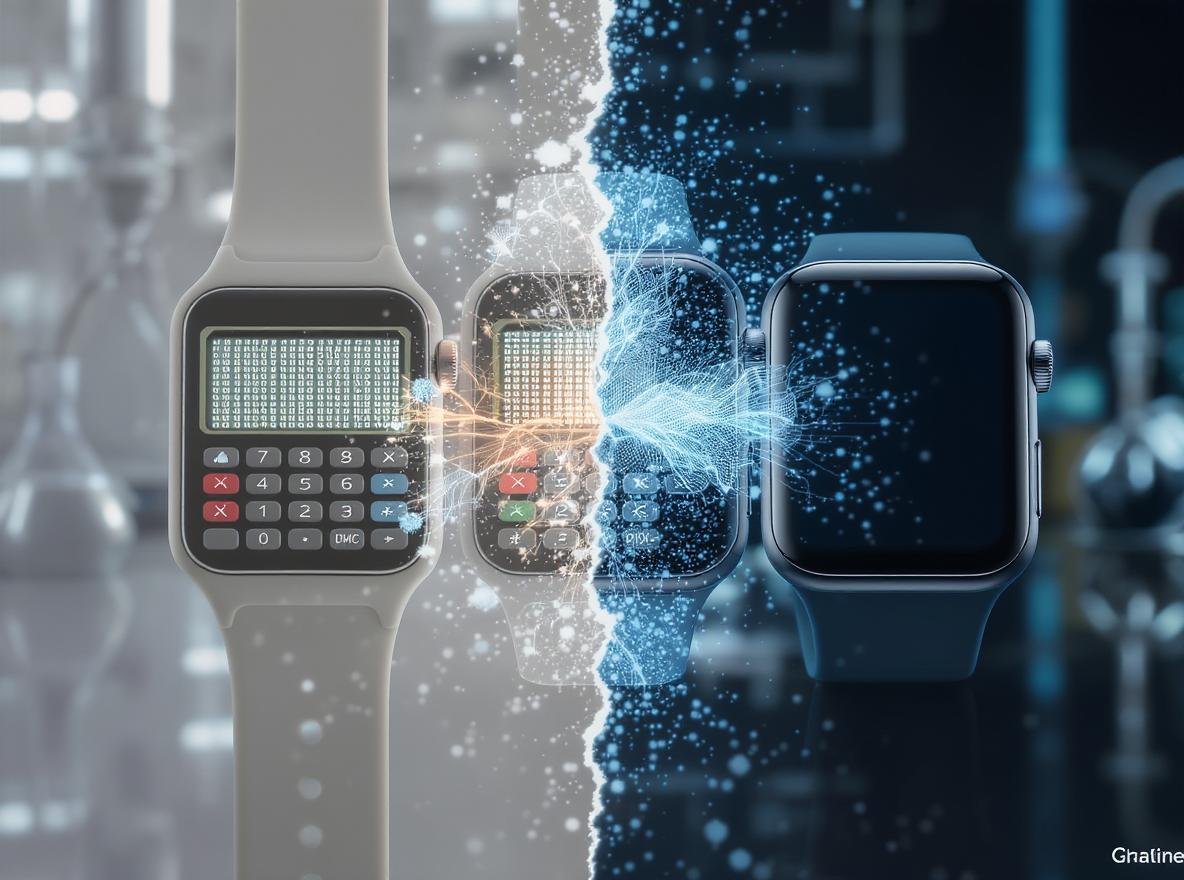
Remember when watches only told time? Today’s smartwatches are mini-computers on your wrist, tracking everything from heart rate to sleep patterns. The transformation has been remarkable, turning simple timepieces into essential health and communication devices that can even detect medical emergencies.
Smartwatches have evolved from basic calculator-equipped timepieces in the 1980s to sophisticated health monitoring devices with ECG capabilities, blood oxygen sensors, and AI-powered coaching. The journey spans over 40 years, with major breakthroughs including Casio’s Databank (1983), Apple Watch’s FDA-cleared ECG (2018), and emerging non-invasive glucose monitoring expected by 2025.
Let’s explore this fascinating evolution and discover what makes modern smartwatches so revolutionary for businesses and consumers alike.
What Were the First Smartwatches Like?
The concept of smart timekeeping began much earlier than most people realize, with pioneering devices that laid the foundation for today’s wrist-worn computers.
The first true smartwatch was the Casio Databank CD-40 (1983), which stored up to 30 phone numbers and featured an 8-digit calculator. Earlier models like the 1972 Hamilton Pulsar offered basic LED time display, but the Databank introduced actual data storage and computing functionality that defined the smartwatch category.

The evolution began with distinct phases:
The Calculator Watch Era (1980s)
The Casio Databank CD-40 revolutionized wrist computing in 1983. This device stored contact information and performed calculations using tiny membrane keys. While primitive by today’s standards, it proved that watches could serve as portable databases.
The First True Computer Watch (1998)
The Seiko Ruputer marked a breakthrough with its 16-bit 3.6 MHz CPU, 2 MB flash memory, and 102×64-pixel monochrome LCD display. Users navigated through PC-like menus using an 8-direction joystick, and the device could run third-party C applications through an SDK.
Microsoft’s Connected Vision (2003-2008)
Microsoft’s SPOT (Smart Personal Objects Technology) watches represented the first attempt at connected wearables. These devices received weather, news, and MSN messages via FM sub-carrier technology, though the $59 annual subscription requirement limited adoption.
Key characteristics of early smartwatches included:
| Feature | 1980s Models | 1990s-2000s Models |
|---|---|---|
| Display | Basic LCD segments | Monochrome bitmap screens |
| Storage | Phone numbers only | 2MB+ with apps |
| Battery Life | Months (minimal use) | Hours to days |
| Connectivity | None | IR/Serial (later FM) |
| Price Range | $50-200 | $300-800 |
These pioneering devices proved wrist computing was possible but were limited by technology constraints of their era.
When Did Smartwatches Become Mainstream?
The transition from niche gadget to mainstream accessory required several technological breakthroughs and market conditions to align perfectly.
Smartwatches achieved mainstream adoption between 2012-2015, beginning with Sony’s SmartWatch (2012) featuring the first color OLED touch panel, accelerating with Pebble’s record-breaking Kickstarter campaign ($10.2 million raised), and culminating with Apple Watch’s 2015 launch that sold over 8 million units in its first year.

The Sony Revolution (2010-2012)
Sony’s LiveView and subsequent SmartWatch introduced the first color OLED touch panel (1.3-inch, 128×128 resolution) with Bluetooth tethering to Android phones. This established the smartphone companion model that dominates today’s market.
Pebble’s Crowdfunding Success (2012-2016)
Pebble’s Kickstarter campaign shattered records by raising $10.2 million, proving massive latent demand existed. The device’s e-paper display offered week-long battery life and sunlight legibility, while its app store eventually featured over 15,000 watchfaces and applications.
Apple’s Market Definition (2015)
The original Apple Watch integrated photoplethysmography heart rate monitoring, Siri voice control, and Apple Pay contactless payments. Its first-year sales of over 8 million units established smartwatches as mainstream consumer electronics.
The mainstream breakthrough required these critical elements:
- Reliable smartphone integration through Bluetooth LE connectivity
- Value-added health metrics beyond basic timekeeping
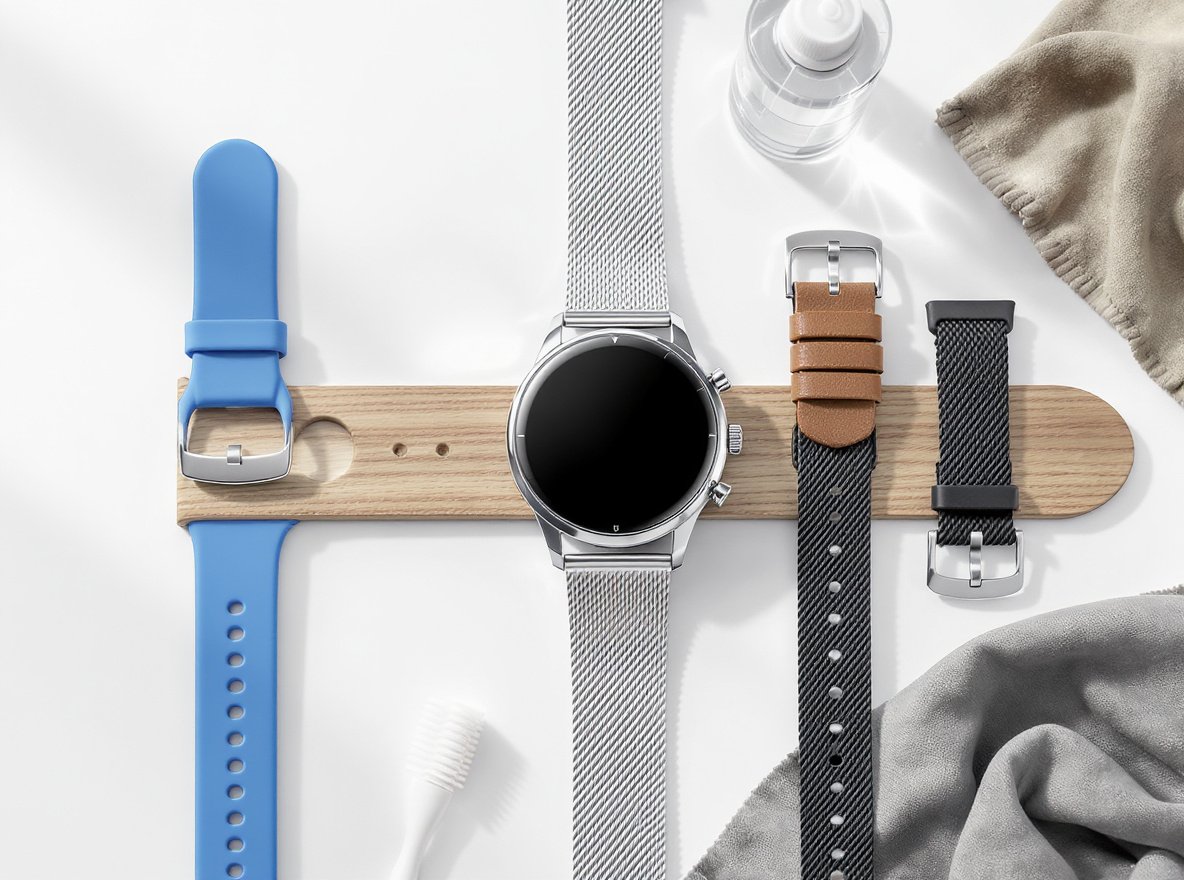
- Customization options including interchangeable bands and watchfaces
- Developer ecosystems supporting third-party applications
- Acceptable battery life lasting at least one full day
What Health Features Have Been Added Over Time?
Health monitoring has transformed smartwatches from tech accessories into legitimate medical devices, with each generation introducing increasingly sophisticated biometric capabilities.
Smartwatch health features evolved through distinct phases: basic step counting (2010-2014), continuous heart rate monitoring (2014-2018), FDA-cleared medical sensors like ECG and blood oxygen (2018-2022), and advanced AI-powered health coaching (2022-present). Modern devices can detect irregular heart rhythms, measure blood oxygen saturation, and even predict ovulation cycles.

Phase 1: Activity Tracking Foundation (2010-2014)
Early smartwatches focused on pedometer functionality and basic fitness metrics. These rudimentary features established the health-focused value proposition that would drive future development.
Phase 2: Continuous Biometric Monitoring (2014-2018)
The integration of optical heart rate sensors revolutionized fitness tracking. Apple Watch’s 2015 debut with continuous photoplethysmography monitoring enabled 24/7 activity rings and workout detection.
Phase 3: Medical-Grade Sensors (2018-2022)
This period marked smartwatches’ transition into medical devices:
| Year | Device | Health Innovation | Medical Significance |
|---|---|---|---|
| 2018 | Apple Watch Series 4 | FDA-cleared single-lead ECG (30 seconds) | Consumer atrial fibrillation detection |
| 2020 | Apple Watch Series 6 | Blood oxygen (SpO₂) monitoring via red/IR LEDs | Sleep apnea research, COVID-19 studies |
| 2020 | Samsung Galaxy Watch Active 2 | Cuff-free blood pressure (Korea regulatory approval) | First consumer BP monitoring on wrist |
| 2022 | Apple Watch Series 8 | Dual-sensor wrist temperature (±0.1°C accuracy) | Retrospective ovulation cycle tracking |
Phase 4: AI-Powered Predictive Health (2022-Present)
Current developments focus on machine learning applications. Fitbit Labs introduced generative AI insights that explain health trends, while Samsung’s Galaxy AI roadmap promises on-device pattern recognition for predictive health warnings.
Crash Detection and Emergency Features
Modern smartwatches can detect severe automobile crashes using accelerometer and gyroscope data, automatically contacting emergency services and sharing location information with designated contacts.
How Has Smartwatch Technology Improved?
The technological advancement in smartwatch hardware represents one of the most dramatic miniaturization achievements in consumer electronics history.
Smartwatch technology has advanced exponentially through processor evolution (from 3.6 MHz to multi-gigahertz chips), display innovation (LED to LTPO OLED to upcoming microLED), battery optimization enabling multi-day life, and connectivity expansion including LTE cellular, GPS, and ultra-wideband positioning.

Processor and Performance Evolution
| Era | Processor Example | Performance | Key Capability |
|---|---|---|---|
| 1998 | 3.6 MHz Ruputer CPU | Basic UI navigation | Simple applications |
| 2013 | STM32F205 120 MHz (Pebble) | Efficient e-paper control | Week-long battery life |
| 2018 | Apple S4 64-bit dual-core | Real-time ECG processing | On-device Siri |
| 2022 | Apple S8 + U1 chip | Machine learning inference | Crash detection |
| 2024 | Qualcomm W5 Gen 1 (4nm) | 2+ GHz multi-core | Advanced AI features |
Display Technology Breakthroughs
The journey from basic LED segments to sophisticated OLED panels shows remarkable progress:
Monochrome LCD Era: Early devices used segmented displays showing only numbers and basic symbols.
E-Paper Innovation: Pebble’s transflective e-paper technology provided excellent sunlight readability with minimal power consumption.
AMOLED Revolution: Sony, Samsung, and Apple introduced vibrant color displays with rich graphics and always-on capabilities.
LTPO OLED Efficiency: Apple’s Series 5+ watches feature low-temperature polycrystalline oxide displays that can refresh as slowly as 1 Hz, dramatically extending battery life.
MicroLED Future: Expected by 2025, microLED technology promises over 2,000 nits brightness with improved efficiency and reduced burn-in.
Connectivity Advancements
Modern smartwatches feature comprehensive connectivity suites. Bluetooth evolved from basic 2.1 to 5.3 LE Audio. Cellular eSIM LTE, introduced in Apple Watch Series 3 (2017), enabled untethered phone calls. Ultra-wideband U1 chips provide precise indoor positioning.
Battery and Power Management
Despite adding numerous sensors and features, battery life has improved through efficient chip design and intelligent power management. The Apple Watch Ultra achieves 36-60 hour battery life while monitoring multiple biometric sensors continuously.
What New Features Are Being Developed?
The smartwatch industry continues pushing technological boundaries, with revolutionary capabilities in development that will further transform these devices into comprehensive health monitoring platforms.
Emerging smartwatch features include non-invasive glucose monitoring through optical spectroscopy (Samsung and Apple R&D), calibration-free blood pressure monitoring, microLED displays with 2,000+ nits brightness, generative AI health coaching, and advanced environmental sensors for air quality monitoring.

Next-Generation Health Monitoring
Non-Invasive Glucose Tracking: Samsung and Apple are developing Raman and near-infrared spectroscopy techniques to monitor blood glucose levels without finger pricks. Garmin has patented HbA1c trend tracking via pulse spectrometry, potentially revolutionizing diabetes management.
Enhanced Blood Pressure Monitoring: While Samsung’s Galaxy Watch Active 2 achieved regulatory approval for cuff-free blood pressure monitoring in Korea, it requires monthly calibration. Next-generation systems aim for calibration-free operation using AI models trained on diverse skin types.
Advanced Biometric Sensors: Future capabilities include sweat analysis for hydration and electrolyte monitoring, skin temperature tracking for illness detection, and environmental sensors for air quality warnings.
Artificial Intelligence Integration
Predictive Health Coaching: Apple reportedly develops “Quartz,” a machine learning coach that fuses watch metrics with iPhone diet logs to suggest personalized daily goals. Fitbit Labs’ generative AI already provides contextual explanations for health trends.
Pattern Recognition: Samsung’s Galaxy AI roadmap includes on-device pattern learning across multiple sensors to predict health issues before symptoms appear.
Current development priorities include:
- Extended Reality Features: Gesture controls and augmented reality display capabilities
- Sustainability Improvements: Solar charging technology and eco-friendly materials
- Professional Applications: Specialized features for healthcare workers, athletes, and industrial use
- Enhanced Security: Biometric authentication and encrypted health data protection
- Smart Home Integration: Advanced control capabilities for connected home ecosystems
Display and Power Innovation
MicroLED technology will trickle down from premium models to standard watches by 2027, offering dramatically improved brightness and efficiency. Solid-state battery prototypes could extend usage to 5-7 days without increasing device size.
How Do Modern Smartwatches Compare to Early Versions?
The comparison between early smartwatches and current models illustrates one of technology’s most remarkable transformation stories, showcasing exponential improvements across every metric.
Modern smartwatches represent a quantum leap from early versions, offering 300x processing power, medical-grade sensors, always-on connectivity, and AI-powered features. While the 1983 Casio Databank stored 30 phone numbers, today’s devices can monitor ECG, track blood oxygen, detect falls, and provide real-time health coaching.

Functionality Revolution
| Capability | 1998 Seiko Ruputer | 2024 Apple Watch Ultra | Improvement Factor |
|---|---|---|---|
| Display | 102×64 mono LCD | 502×410 LTPO OLED always-on | 35x pixel density |
| Processing | 3.6 MHz, 128 KB RAM | 64-bit multi-core >1 GHz | 300x+ performance |
| Storage | 2 MB flash | 64 GB + cloud sync | 32,000x capacity |
| Battery Life | 30 hours active use | 60+ hours with sensors | 2x despite complexity |
| Sensors | None (time only) | ECG, SpO₂, GPS, accelerometer, gyroscope | Medical-grade biometrics |
| Connectivity | Serial port, IR | LTE, WiFi, Bluetooth 5.3, NFC, GPS | Global connectivity |
| Apps | Basic utilities | Thousands via App Store | Complete ecosystem |
Price and Accessibility Transformation
The economic evolution has been equally dramatic. The 1972 Hamilton Pulsar cost $2,100 ($12,300 in today’s money) for basic LED time display. Quality modern smartwatches with comprehensive health monitoring start under $200, making advanced technology accessible to mass markets.
User Experience Evolution
Early smartwatches required technical expertise and patience. The Seiko Ruputer’s joystick navigation and command-line interface appealed primarily to technology enthusiasts. Modern devices offer intuitive touch interfaces, voice control, and seamless smartphone integration that appeals to all demographics.
Market Impact Comparison
The market transformation reflects technology maturation. Early devices sold thousands of units to niche audiences. Current projections estimate 353 million smartwatch shipments by 2027, representing explosive mainstream adoption.
Health Monitoring Advancement
Perhaps the most significant improvement involves health capabilities. Early smartwatches offered no biometric monitoring whatsoever. Today’s devices can detect atrial fibrillation, monitor blood oxygen levels, track sleep stages, and even predict medical emergencies through advanced sensor fusion and machine learning.
Summary
Smartwatch evolution represents one of technology’s most remarkable transformation stories. From the 1983 Casio Databank’s phone number storage to today’s AI-powered health monitoring devices, these wrist-worn computers have revolutionized personal technology. Modern smartwatches combine medical-grade sensors, always-on connectivity, and predictive AI to deliver capabilities that seemed impossible just decades ago.

Partner with Osmarto for Your Smartwatch Business Success
Ready to capitalize on the explosive smartwatch market growth? Osmarto stands at the forefront of smartwatch manufacturing, incorporating the cutting-edge technologies and health monitoring features detailed in this comprehensive evolution story.
As a leading Chinese smartwatch manufacturer, we specialize in developing devices that rival Apple Watch and Samsung Galaxy specifications while offering competitive wholesale pricing for global distribution. Our manufacturing capabilities include FDA-equivalent health sensors, AI-powered coaching features, and the latest connectivity standards that today’s consumers demand.
Whether you’re a wholesaler seeking premium smartwatch inventory, a distributor expanding into wearable technology, or a brand manufacturer developing custom smartwatch solutions, Osmarto provides the technical expertise and production capacity to ensure your success.
Our comprehensive OEM/ODM services cover everything from initial concept development to mass production, quality assurance, and ongoing technical support. We understand the complex requirements of different global markets and can customize features, certifications, and branding to meet your specific regional needs.
Contact Osmarto today to discuss your smartwatch requirements and discover how our manufacturing excellence can power your business growth in this rapidly expanding market. Send us a detailed inquiry to explore partnership opportunities and receive customized product specifications that align with your target market demands.