Skip to content
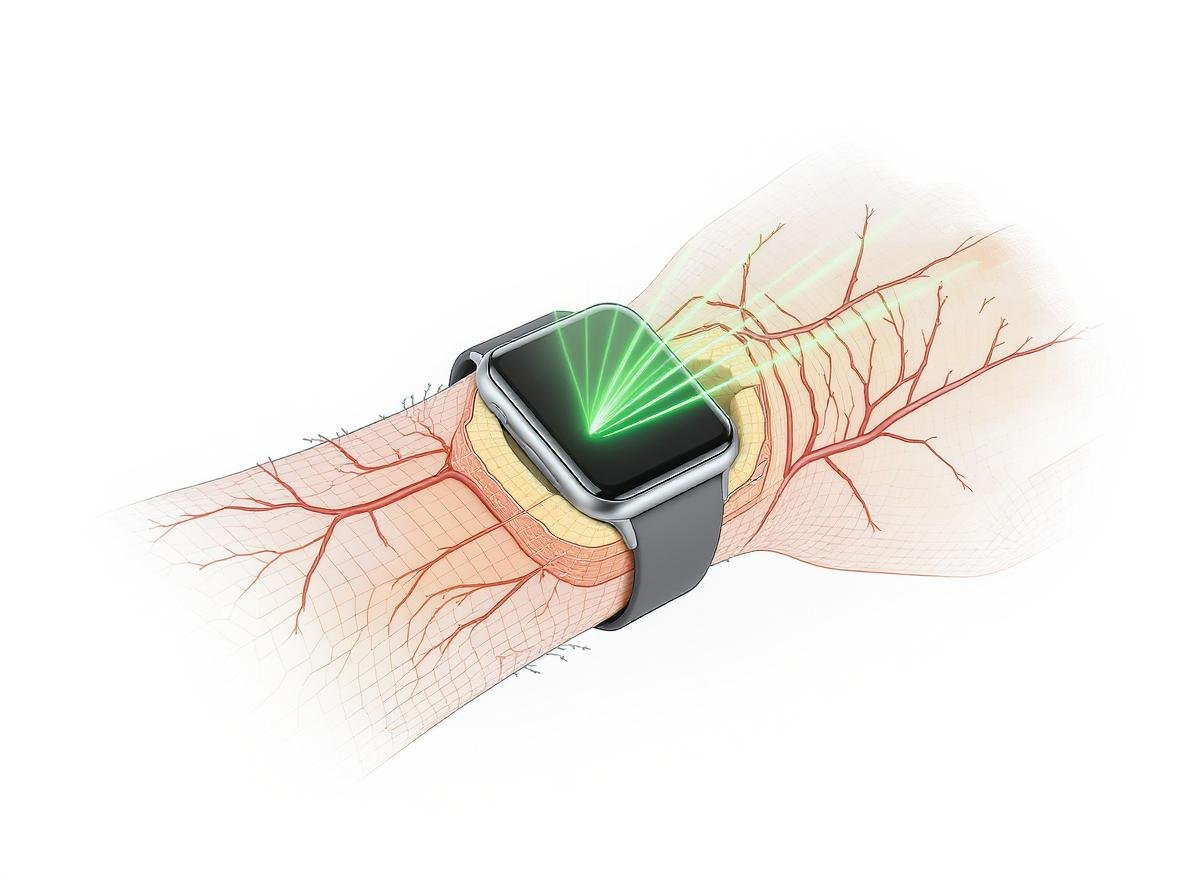
Ever wondered how that tiny device on your wrist can detect your heartbeat with medical-grade precision? Modern smartwatches have revolutionized health monitoring by incorporating sophisticated photoplethysmography technology that delivers continuous, non-invasive heart rate tracking directly from your wrist.
Smartwatches measure heart rate using photoplethysmography (PPG) technology, which employs LED lights and photodiodes to detect blood volume changes in your wrist. This optical sensor technology, originally developed by Dr. David Benaron at Stanford University, analyzes how light absorption changes with each heartbeat, achieving 94-100% accuracy within 5 beats per minute during rest conditions.
Let’s dive deeper into the fascinating science behind this technology and discover why smartwatches have become essential tools for health monitoring.
What Technology Do Smartwatches Use to Measure Heart Rate?
Understanding the core technology helps explain why modern wearables deliver such reliable results for health monitoring applications.
Photoplethysmography (PPG) is the cornerstone technology behind smartwatch heart rate monitoring. This optical technique uses LED lights and photodiodes to measure volumetric changes in blood flow beneath the skin, creating measurable pulse waves that correspond directly to your heart rate.
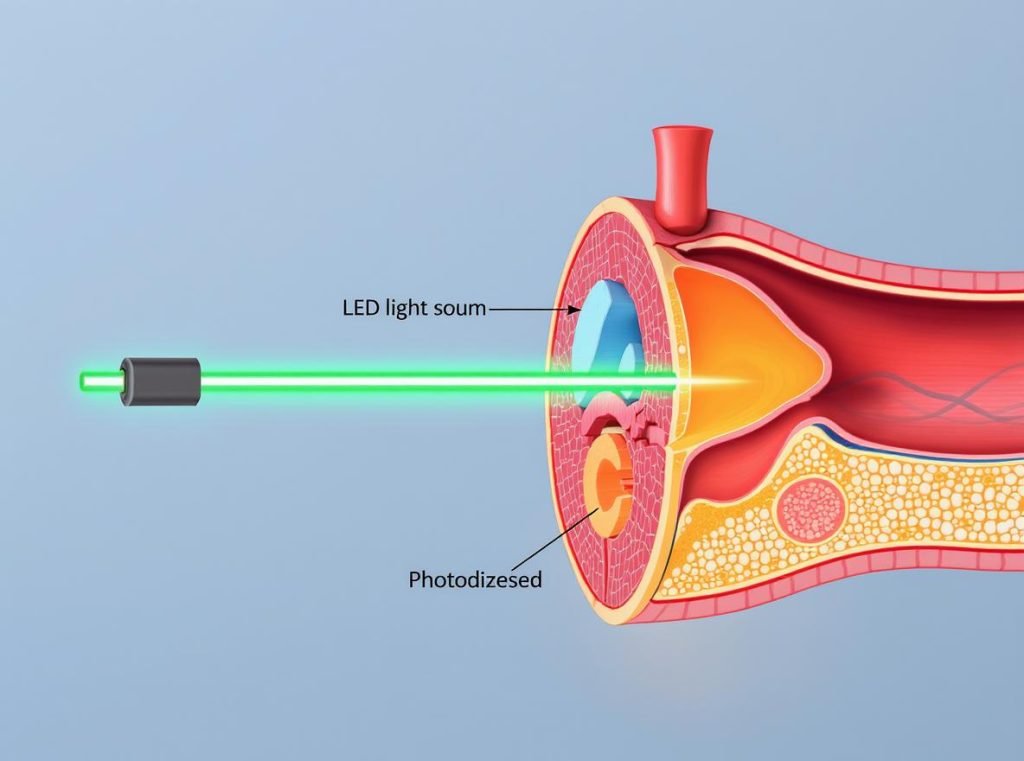
PPG technology operates on a brilliant yet simple principle discovered through extensive research at Stanford University. When your heart beats, blood volume in your capillaries increases during systole (heart contraction) and decreases during diastole (heart relaxation). These changes in blood volume alter how much light is absorbed versus reflected, creating detectable patterns.
The technology consists of two essential components working in perfect harmony:
LED Light Sources emit specific wavelengths of light onto your skin surface. Most smartwatches use green LEDs operating at approximately 530nm wavelength, though advanced models incorporate multiple colors for enhanced accuracy.
Photodetectors measure the amount of light reflected back from tissues beneath your skin. These light-sensitive sensors capture subtle variations in light intensity that correspond to blood volume changes with each heartbeat.
| Component | Function | Technical Specification |
|---|---|---|
| Green LED lights | Illuminate blood vessels at 530nm wavelength | Optimally absorbed by hemoglobin |
| Photodiodes | Detect reflected light variations | Sample at rates up to 1000Hz in professional devices |
| Signal processing algorithms | Convert optical data to heart rate | Filter motion artifacts and environmental interference |
Modern smartwatch manufacturers like Osmarto integrate sophisticated algorithms that process these optical signals in real-time, filtering out motion artifacts and environmental interference to deliver accurate heart rate measurements across diverse conditions and user populations.
Why Do Smartwatches Use Green Light for Heart Rate Detection?
The choice of green light isn’t arbitrary – it’s based on fundamental principles of spectroscopy and hemoglobin absorption discovered through rigorous scientific research.
Green light (approximately 530nm wavelength) is optimally absorbed by hemoglobin, the oxygen-carrying protein in red blood cells. Dr. Benaron’s groundbreaking research revealed that while conventional wisdom suggested red light worked best, green light actually provides superior signal quality for wrist-based measurements.
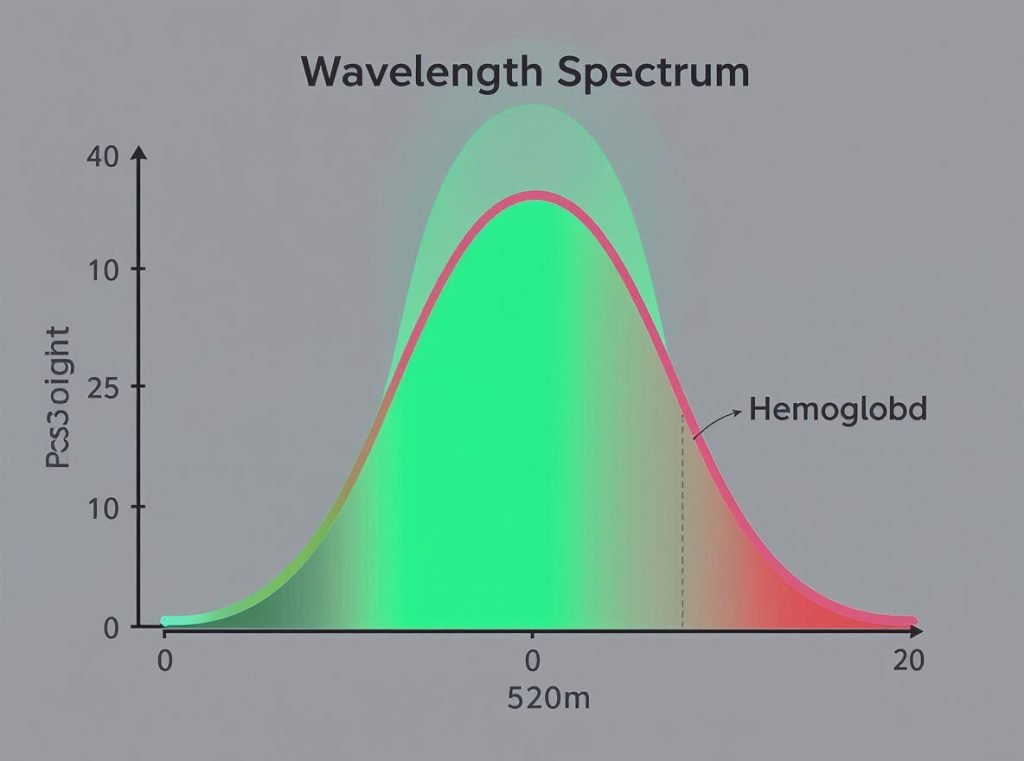
This scientific breakthrough challenged traditional assumptions about optical heart rate monitoring. As Dr. Benaron explained in his research: “Anything that looks pink reflects red and absorbs green… If green light could get into skin, there must be some coming back, even if we don’t see it well by eye.”
The advantages of green light for heart rate detection include several key factors:
Hemoglobin absorption efficiency makes green light the optimal choice for detecting blood volume changes. Red blood cells absorb green light more effectively than red light per molecule, creating stronger contrast between blood-filled and blood-depleted tissues.
Optimal skin penetration allows green light to reach blood vessels while still providing strong reflected signals. Unlike infrared light, which penetrates too deeply, or blue light, which doesn’t penetrate enough, green light reaches the perfect depth for wrist-based measurements.
Universal effectiveness across different skin tones represents a crucial advantage. Green light works effectively from very pale to deeply pigmented skin, making it suitable for diverse user populations that wholesale partners serve globally.
Advanced smartwatches combine multiple wavelengths for enhanced performance:
- Green light (530nm): Primary heart rate detection with optimal hemoglobin absorption
- Red light (660nm): Blood oxygen monitoring and backup heart rate measurement
- Infrared light (940nm): Deep tissue penetration for challenging measurement conditions
How Accurate Are Smartwatch Heart Rate Measurements?
Modern smartwatches demonstrate remarkably high accuracy for heart rate measurement, with performance varying based on activity level and measurement conditions.
Research shows premium smartwatches achieve 94-100% accuracy within 5 beats per minute during rest conditions when compared to medical-grade ECG devices. Studies comparing devices like Apple Watch, Samsung Galaxy, and quality fitness trackers to gold-standard ECG measurements found no statistical difference from professional medical equipment.
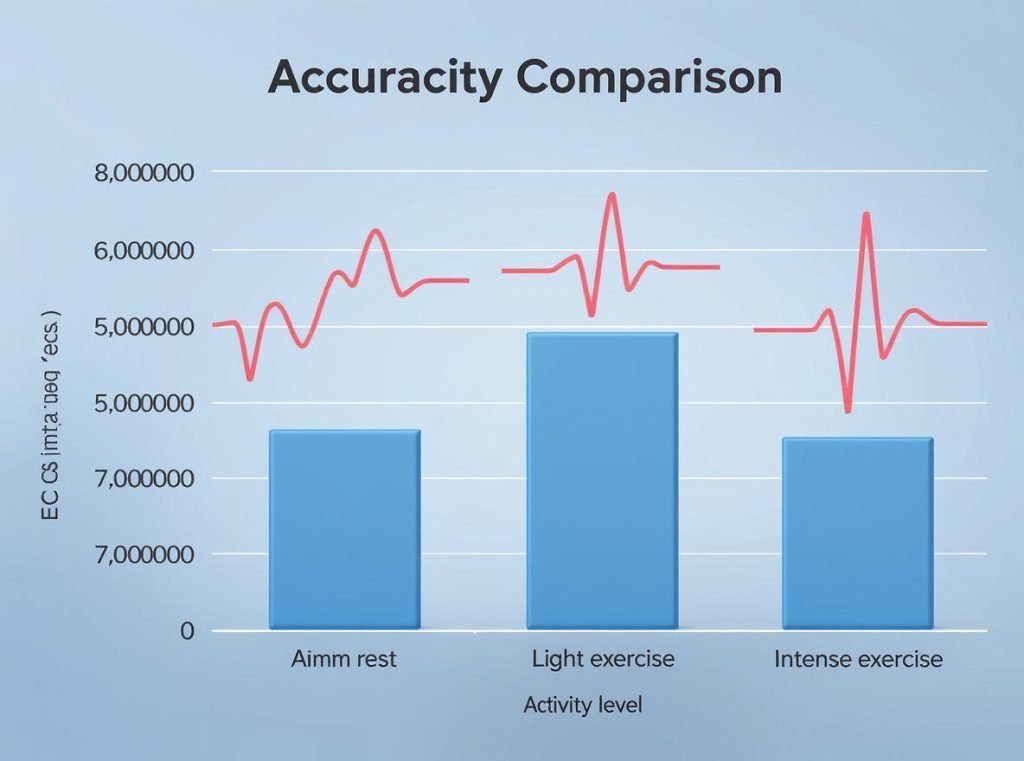
Accuracy performance varies significantly across different activity levels and measurement scenarios:
Resting conditions provide the highest accuracy rates, with leading devices consistently achieving 95-98% accuracy compared to medical equipment. The lack of movement allows sensors to capture clean, stable signals from blood volume changes without interference.
Moderate exercise maintains excellent accuracy, with most quality devices showing mean absolute percentage error (MAPE) below 10%. Walking, light jogging, and steady-state cardio activities typically maintain 90-95% accuracy rates.
High-intensity exercise presents more challenges, with accuracy sometimes dropping to 85-90% during activities above 150 BPM. Some devices may underestimate heart rate by 6-30% during vigorous exercise due to motion artifacts and rapid physiological changes.
| Activity Level | Accuracy Range | Typical Performance | Limiting Factors |
|---|---|---|---|
| Resting (60-100 BPM) | 94-100% | 95-98% accuracy | Minimal – optimal conditions |
| Light exercise (100-140 BPM) | 90-95% | 92-94% accuracy | Minor motion artifacts |
| Moderate exercise (140-160 BPM) | 85-92% | 88-90% accuracy | Increased movement, sweat |
| High intensity (160+ BPM) | 80-90% | 85-87% accuracy | Significant motion, rapid changes |
Comparative studies demonstrate that professional-grade devices from established manufacturers consistently outperform budget alternatives. Apple Watch and TomTom devices showed no statistical difference from ECG readings (p>0.05), while Garmin devices demonstrated excellent correlation with medical-grade monitors across diverse user populations.
What Factors Can Affect Smartwatch Heart Rate Accuracy?
Several environmental, physical, and technical factors significantly impact how accurately your smartwatch can detect heart rate measurements.
Understanding these variables helps optimize device performance and interpret readings more accurately. Proper awareness of limiting factors ensures you receive the most reliable data from your smartwatch investment.
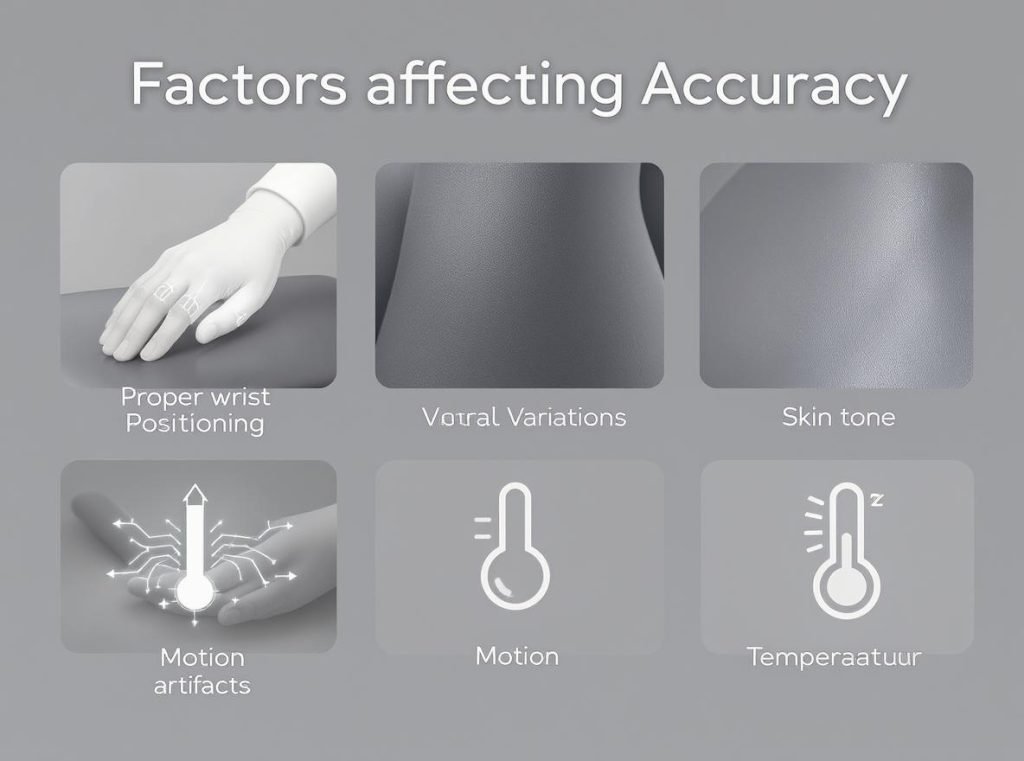
Physical and physiological factors create the most significant variations in measurement accuracy across different users and conditions.
Skin characteristics influence light penetration and reflection patterns. Research shows that skin thickness can dampen PPG signal amplitude by up to 40%, while skin tone may affect accuracy in some cases, though modern algorithms increasingly compensate for these variations.
Body composition factors include wrist circumference, subcutaneous fat thickness, and blood vessel depth. Users with larger wrists or higher body fat percentages may experience reduced signal strength, requiring more sophisticated algorithms for accurate measurement.
Individual physiological variations affect sensor performance:
- Blood vessel size and depth: Larger, superficial vessels provide stronger signals
- Hair density: Wrist hair can create barriers between sensor and skin
- Tattoos: May interfere with light penetration and reflection patterns
- Skin moisture and temperature: Cold conditions reduce blood flow to extremities
Device and positioning factors significantly impact measurement reliability:
Watch placement determines sensor-to-skin contact quality. Optimal positioning requires placement 1-2 finger widths above the wrist bone where blood vessels are closer to the surface and soft tissue provides better light transmission.
Strap tightness must balance secure contact with comfortable circulation. The band should be snug enough to prevent movement but loose enough to allow normal blood flow – no light should be visible between sensor and skin.
Environmental conditions create measurement challenges:
- Temperature extremes: Cold weather reduces peripheral blood flow
- Bright sunlight: Can interfere with optical sensors despite ambient light compensation
- High humidity: May affect sensor contact and introduce artifacts
- Altitude changes: Can temporarily affect heart rate patterns and sensor performance
How Do Smartwatches Handle Heart Rate Variability and Irregular Rhythms?
Advanced smartwatches extend beyond basic heart rate measurement to analyze patterns and variations that provide deeper health insights and medical applications.
Heart Rate Variability (HRV) measurement represents sophisticated PPG technology application. Modern smartwatches track HRV by measuring precise timing variations between heartbeats, though with some limitations compared to medical-grade ECG equipment.
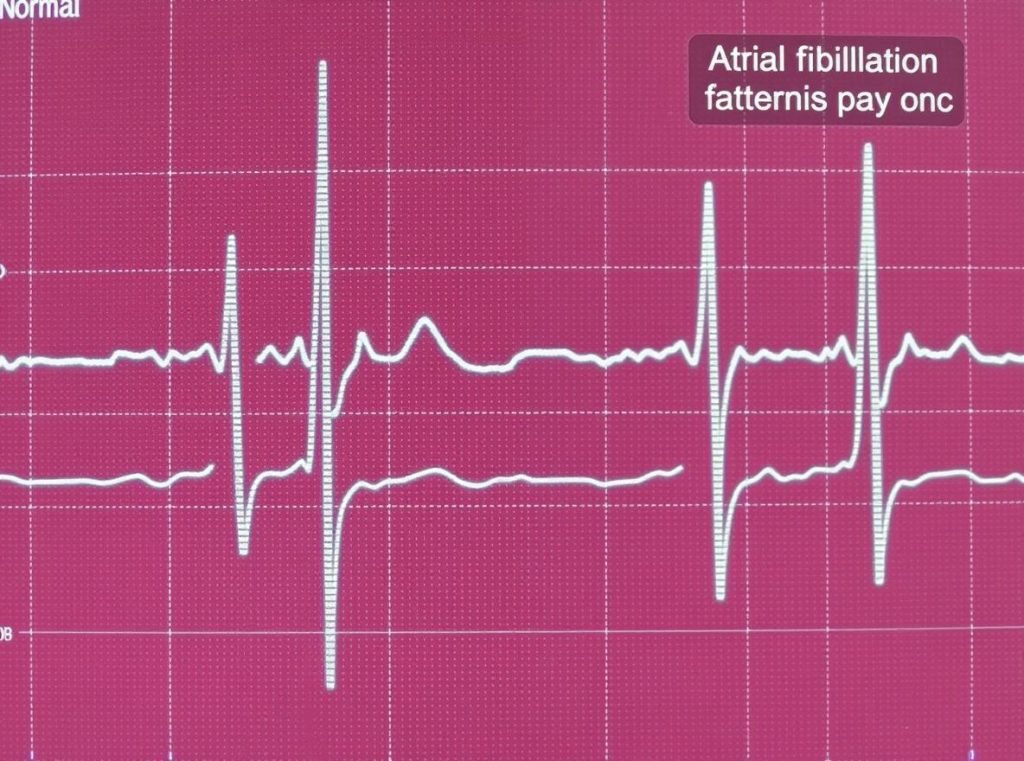
HRV analysis provides valuable insights into autonomic nervous system function and overall cardiovascular health. Research shows smartwatch-derived HRV demonstrates excellent concordance for global variability markers (correlation >0.96) when compared to clinical equipment, making consumer devices valuable tools for trend monitoring.
Smartwatches analyze several HRV components with varying accuracy levels:
Time-domain measurements show good accuracy for overall variability assessment, including RMSSD (root mean square of successive differences) and SDNN (standard deviation of normal-to-normal intervals). These metrics help assess overall heart rate variability trends.
Frequency-domain analysis provides moderate accuracy for low-frequency components but shows limitations for high-frequency components that assess short-term variability patterns requiring more precise timing measurements.
Irregular rhythm detection represents one of the most impressive smartwatch capabilities, particularly for atrial fibrillation screening:
Atrial fibrillation detection achieves remarkable clinical accuracy:
- Sensitivity: 87-98% for detecting AFib episodes when present
- Specificity: 85-99% for ruling out AFib when not present
- Positive Predictive Value: 84-98% when AFib is detected by the device
Clinical validation studies demonstrate that smartwatch AFib detection capabilities rival some medical devices, making them valuable screening tools for early detection of this common and serious cardiac condition.
Limitations include challenges detecting other arrhythmias like supraventricular tachycardia, which maintain regular rhythm patterns that PPG sensors struggle to differentiate from normal sinus rhythm.
| Rhythm Type | Detection Accuracy | Clinical Significance | Limitations |
|---|---|---|---|
| Atrial Fibrillation | 87-98% sensitivity | High – stroke risk factor | May miss brief episodes |
| Normal Sinus Rhythm | 85-99% specificity | Baseline reference | None significant |
| Other Arrhythmias | Limited accuracy | Variable | Regular patterns difficult to detect |
What Are the Limitations of Smartwatch Heart Rate Monitoring?
While smartwatches offer impressive capabilities, understanding their limitations helps users make informed decisions about health monitoring and medical applications.
PPG measurements are impaired by motion artifacts, and most studies haven’t fully evaluated the robustness of PPG signals in 24-hour free-living situations. While continuous heart rate measurements show good accuracy, significant limitations exist for specific applications and user populations.
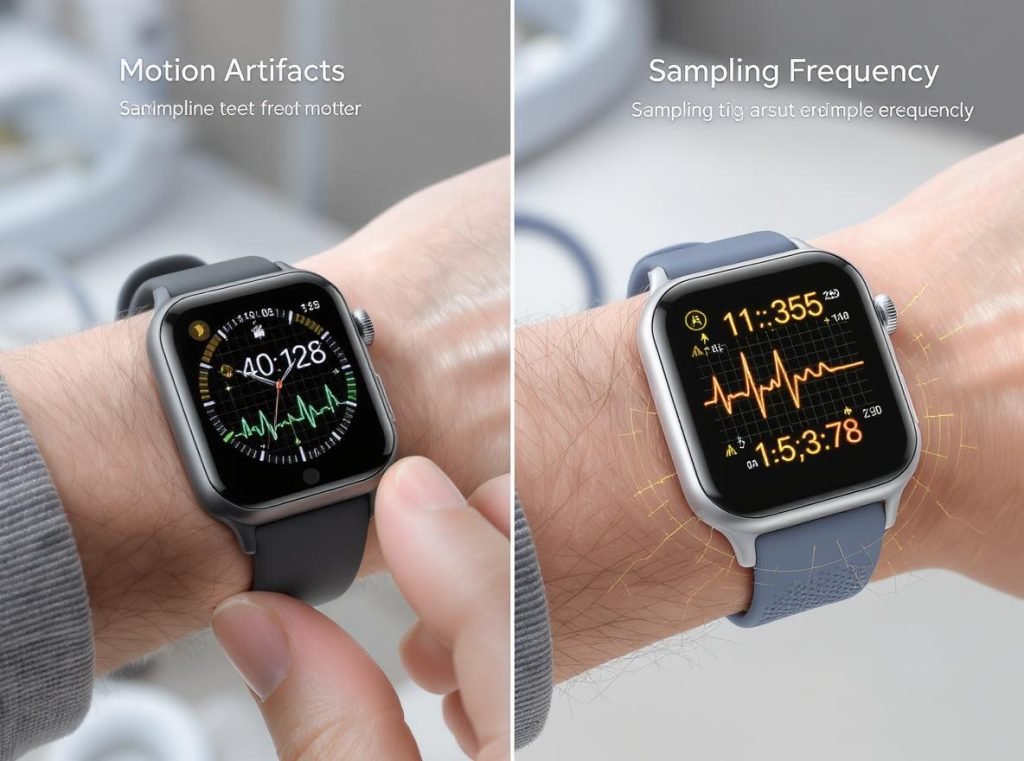
Technical limitations represent fundamental constraints of wrist-based optical sensing technology compared to medical-grade equipment.
Beat-to-beat accuracy remains less precise than ECG for individual heartbeat timing measurements. PPG sensors excel at average heart rate calculation but struggle with precise interval timing required for detailed cardiac analysis.
High heart rate underestimation occurs consistently during intense exercise above 150 BPM. Research shows devices tend to underestimate actual heart rates by 6-30% during vigorous physical activity due to motion artifacts and rapid physiological changes.
Motion sensitivity creates the most significant accuracy challenges. Unlike chest-strap monitors measuring electrical signals directly from the heart, wrist sensors rely on blood flow changes that movement can disrupt substantially.
Clinical and regulatory limitations affect medical applications:
FDA approval status varies significantly between devices. Consumer smartwatches are generally not FDA-approved for medical diagnosis, limiting their clinical utility despite impressive accuracy in research settings.
Sampling frequency constraints affect continuous monitoring capabilities. Most consumer devices sample intermittently (every 5-10 minutes) unless in active workout mode, potentially missing brief cardiac events or rhythm changes.
Algorithm variations create significant performance differences between manufacturers and models. Device selection becomes crucial for applications requiring maximum accuracy and reliability.
Individual variation factors include:
- Anatomical differences: Wrist structure affects sensor positioning and signal quality
- Skin properties: Thickness, pigmentation, and hair density influence light transmission
- Medical conditions: Certain cardiac or circulation disorders may reduce accuracy
- Medication effects: Drugs affecting heart rate or circulation can influence readings
Environmental and usage limitations:
- Contact pressure dependency: Signal quality highly dependent on proper skin contact
- Temperature sensitivity: Performance affected by ambient temperature and blood circulation
- Battery constraints: Continuous monitoring reduces device battery life significantly
- Water resistance: While most devices handle moisture, underwater accuracy may be compromised
How Can You Maximize Your Smartwatch’s Heart Rate Accuracy?
Evidence-based optimization strategies significantly improve your smartwatch’s measurement reliability and ensure you receive the most accurate heart rate data possible.
Following research-backed best practices for fit, positioning, and maintenance ensures optimal performance from your device. Small adjustments in wearing and caring for your smartwatch can dramatically improve measurement accuracy across various activities and conditions.
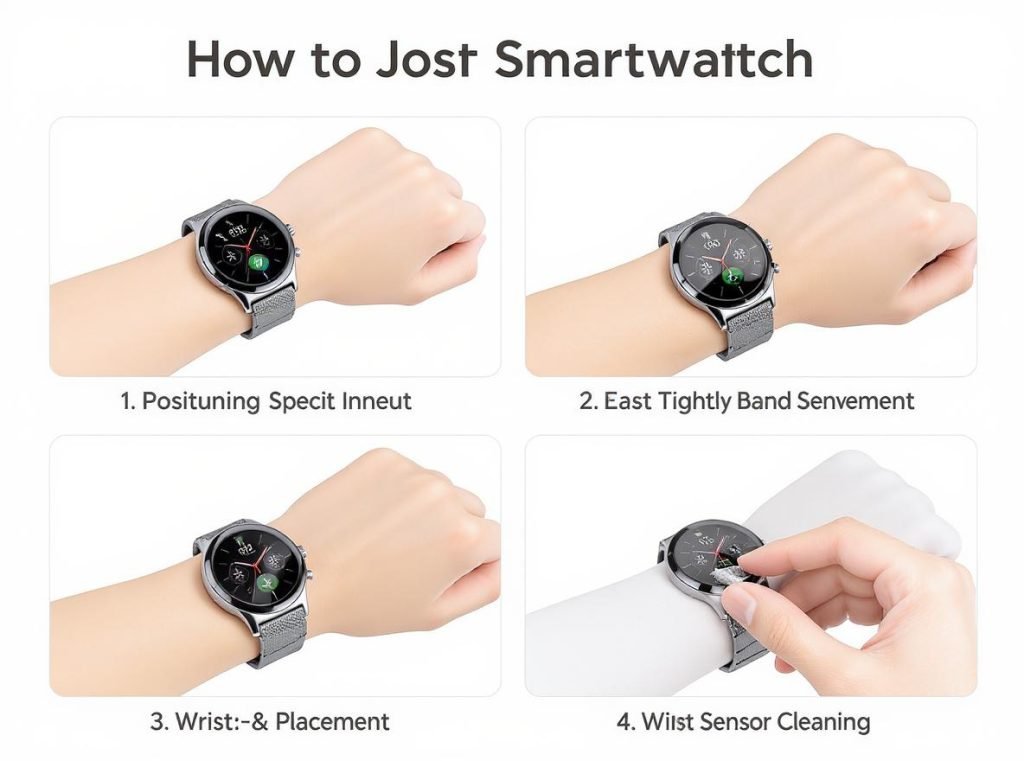
Optimal positioning and fit form the foundation of accurate measurements based on extensive user studies and manufacturer recommendations.
Proper placement requires wearing your smartwatch 1-2 finger widths above your wrist bone where there’s more soft tissue and blood vessels are closer to the surface. This positioning provides optimal light transmission and reduces interference from bone and tendons.
Correct band tightness ensures consistent sensor contact without restricting blood circulation. The band should be snug enough that no light is visible between the sensor and your skin, but loose enough to slide slightly when pushed.
Pre-exercise preparation improves initial reading accuracy:
Start heart rate tracking 1-2 minutes before exercising to allow sensors to establish baseline readings and adjust to your physiological state. This preparation time significantly improves accuracy during activity transitions.
Environmental optimization strategies address external factors affecting sensor performance:
Sensor cleanliness prevents interference from oils, lotions, or debris that can block light transmission. Clean both the watch sensor and your wrist with a soft, dry cloth before workouts and periodically throughout the day.
Temperature considerations include allowing time for circulation to normalize in cold conditions and ensuring adequate blood flow to your wrist before measurement attempts.
Advanced optimization techniques for demanding applications:
| Optimization Strategy | Implementation | Impact on Accuracy |
|---|---|---|
| Proper positioning | 1-2 finger widths above wrist bone | High – improves signal strength |
| Optimal band tightness | Snug but not restrictive | Critical – ensures consistent contact |
| Pre-activity tracking | Start 1-2 minutes early | Medium – establishes baseline |
| Regular cleaning | After each workout | High – prevents signal interference |
| Software updates | Install when available | High – algorithm improvements |
Alternative positioning options may improve accuracy for some users:
Non-dominant wrist sometimes provides better readings due to reduced movement during daily activities. Experiment with different wrists to determine which provides more consistent results for your usage patterns.
Underside positioning works better for some users, though this requires adjustable bands and may affect comfort during extended wear periods.
Professional usage recommendations for business applications:
For wholesale partners and retailers, educating customers about proper usage maximizes satisfaction and reduces return rates. Providing clear fitting instructions and optimization tips enhances the value proposition of quality smartwatch products.
Why Choose Professional-Grade Smartwatches for Heart Rate Monitoring?
Not all smartwatches deliver equivalent accuracy and reliability – selecting professional-grade devices significantly impacts health monitoring performance and customer satisfaction.
Professional-grade smartwatches incorporate advanced sensors, superior algorithms, and rigorous clinical testing to ensure consistent, accurate heart rate measurements across diverse conditions and user populations. These devices provide the reliability that health-conscious consumers demand and businesses require.
Manufacturing quality differences directly impact sensor performance, accuracy, and device longevity compared to budget alternatives.
Advanced sensor technology in professional devices includes multi-wavelength LED arrays, higher-grade photodiodes, and better-calibrated optical components. These components maintain accuracy over longer periods and perform significantly better under challenging measurement conditions.
Algorithm sophistication represents a crucial differentiator between professional and consumer-grade devices. Professional manufacturers invest heavily in machine learning algorithms, extensive clinical testing, and continuous software improvements based on real-world usage data.
Clinical validation advantages include:
- Medical-grade testing ensuring performance meets clinical accuracy standards
- FDA clearance for specific medical applications and atrial fibrillation detection
- Research collaboration with medical institutions for algorithm development
- Continuous improvement through firmware updates and performance optimization
Key technical advantages of professional-grade devices:
Higher sampling rates allow professional devices to sample at 1000Hz compared to consumer devices’ lower frequencies, providing more precise beat-to-beat measurements and better motion artifact rejection.
Advanced motion compensation algorithms maintain accuracy during exercise and daily activities through sophisticated signal processing and machine learning techniques.
Multi-sensor integration combines PPG with additional sensors like accelerometers and gyroscopes for comprehensive motion artifact filtering and enhanced measurement reliability.
| Professional Feature | Benefit | Business Impact |
|---|---|---|
| Clinical validation | Medical-grade accuracy | Reduced customer complaints |
| Advanced algorithms | Better motion compensation | Higher user satisfaction |
| Multi-wavelength sensors | Improved accuracy across skin tones | Broader market appeal |
| Regulatory approval | Medical application support | Premium positioning |
| Continuous updates | Long-term performance improvement | Extended product lifecycle |
Osmarto’s commitment to professional standards reflects industry-leading manufacturing practices and quality control processes. Our devices undergo extensive testing across diverse user populations to ensure reliable performance for wholesale partners and their customers worldwide.
Business considerations for wholesale partners:
Quality assurance reduces customer service issues and return rates, protecting profit margins and brand reputation in competitive markets. Professional-grade devices provide consistent performance that builds customer loyalty and generates positive reviews.
Market differentiation through advanced features and clinical accuracy supports premium pricing strategies and helps establish market leadership in health-focused segments.
Technical support and documentation from professional manufacturers ensures partners can effectively market device capabilities and provide knowledgeable customer support.
Summary
Smartwatches achieve remarkable heart rate accuracy through photoplethysmography (PPG) technology, using green LED lights to detect blood volume changes with 94-100% accuracy during rest conditions. While performance varies with movement and environmental factors, proper fit and professional-grade devices maximize reliability for both personal health monitoring and business applications requiring consistent performance.
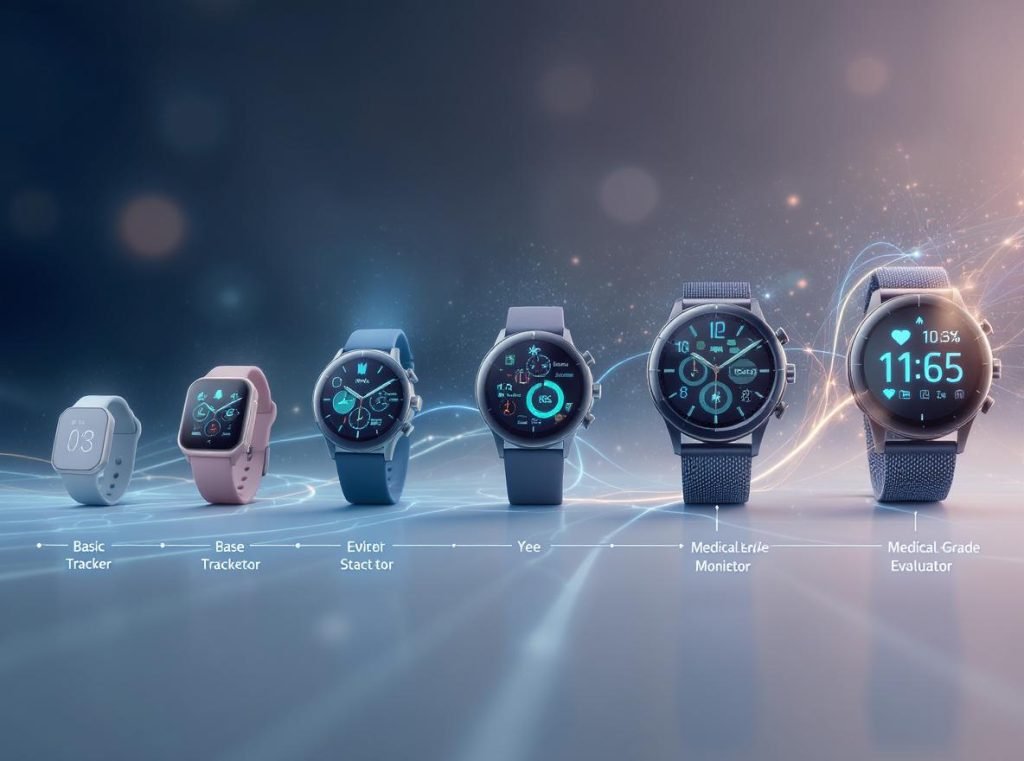
Ready to explore professional-grade smartwatch solutions that deliver medical-level accuracy for your customers? Contact Osmarto today to discover how our clinically-validated heart rate monitoring technology can enhance your product offerings and satisfy your customers’ health monitoring needs. Send us an inquiry to learn about our wholesale opportunities and technical specifications.