Skip to content
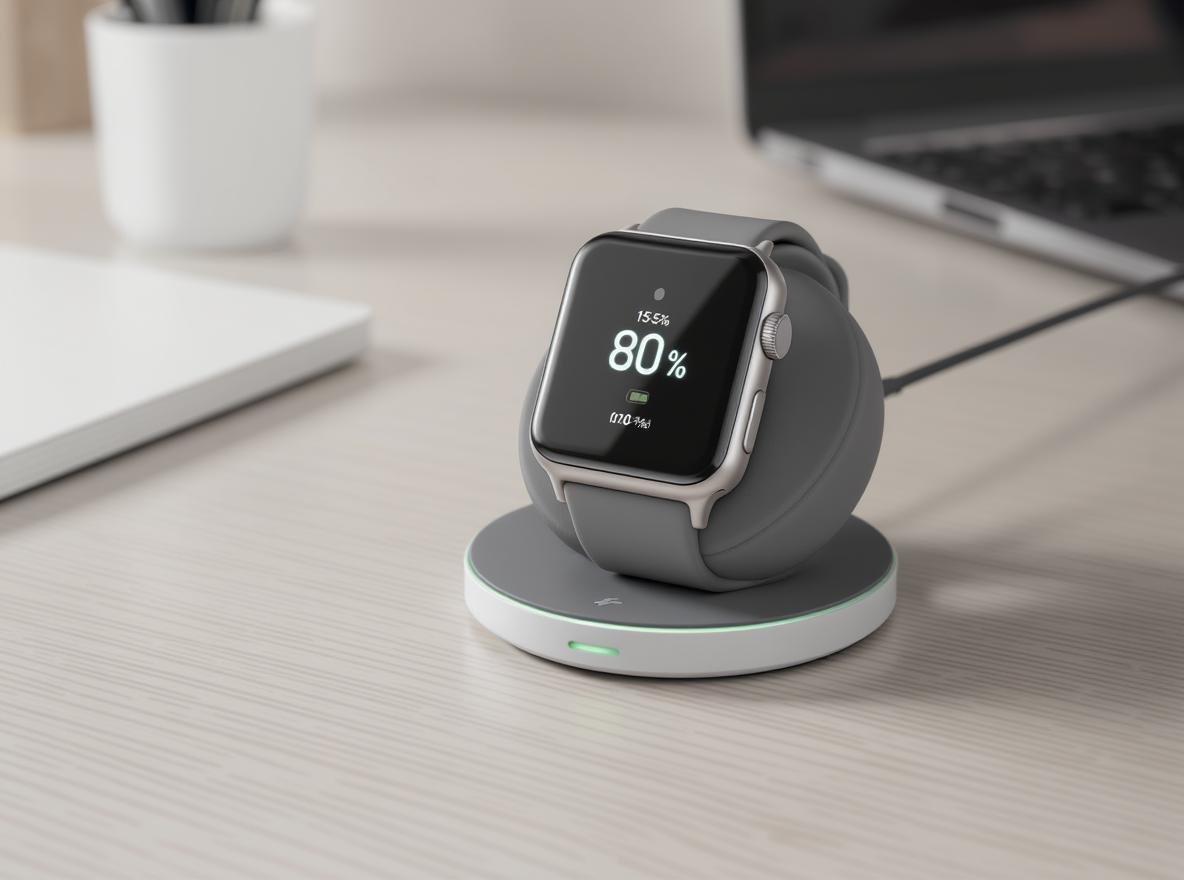
Your smartwatch’s battery performance directly impacts your daily experience, and improper charging habits can reduce its lifespan by up to 50%. Understanding lithium-ion battery science and implementing proven charging strategies will help you maximize your wearable technology investment and ensure years of reliable performance.
The key to optimal smartwatch battery health lies in maintaining charge levels between 20-80%, using manufacturer-approved chargers, avoiding extreme temperatures, and implementing strategic charging schedules. Research from Battery University shows that batteries kept at full charge degrade twice as fast as those maintained in the optimal 40-80% range.
Ready to transform your smartwatch’s battery performance and extend its lifespan significantly? Let’s explore the scientifically-proven techniques that leading manufacturers and battery experts recommend.
What’s the Optimal Charging Range for Smartwatch Batteries?
Understanding the ideal charging range prevents the most common battery degradation issues that affect smartwatch performance and longevity over time.
Keep your smartwatch battery between 20-80% charge for maximum longevity. Research from Battery University demonstrates that lithium-ion batteries experience minimal electrochemical stress within this range, while batteries maintained at full charge degrade twice as fast as those kept between 40-80%. This 20-80% rule represents the optimal balance between usable capacity and battery lifespan.

The science behind this recommendation relates directly to lithium-ion battery chemistry. When batteries reach extreme charge levels—either very low or completely full—the internal chemical processes create stress that gradually reduces capacity and accelerates aging.
Major manufacturers implement similar recommendations across industries. Tesla suggests 80% for daily use, while some automotive manufacturers like Rivian recommend even more conservative 70% limits for maximum battery preservation.
Why voltage extremes damage batteries:
- Full charge (100%) creates high voltage stress on battery cells
- Near-empty charge (0-10%) causes deep discharge damage
- Partial charging cycles generate less heat and chemical stress
- The 20-80% range minimizes both voltage extremes simultaneously
| Charge Range | Battery Stress Level | Degradation Rate | Recommended Use |
|---|---|---|---|
| 0-20% | Very High | 3x normal | Emergency only |
| 20-80% | Minimal | Baseline | Daily operation |
| 80-100% | Moderate | 1.5x normal | Before extended use |
For Osmarto smartwatch users, this approach can extend battery life from the typical 2-3 years to 4-5 years of reliable service. If you’re a wholesaler or retailer looking to provide customers with superior battery longevity, contact us to learn about our advanced battery management systems that automatically optimize charging within this ideal range.
Should You Charge Your Smartwatch Every Night?
The timing and frequency of charging sessions significantly impact long-term battery health, daily usability, and overall device performance.
Overnight charging is generally safe with modern smartwatches, but it’s not always optimal for battery health. Apple explicitly acknowledges overnight charging safety, as devices use trickle charging from 80-100% to prevent overcharging. However, prolonged periods at 100% charge create unnecessary battery stress that can be avoided with strategic charging schedules.

Modern smartwatches include sophisticated charging protection mechanisms. Apple Watch, Samsung Galaxy Watches, and other premium devices employ intelligent charging algorithms that learn your usage patterns and delay charging past 80% until just before you typically remove the device.
Optimized charging strategies based on usage patterns:
- Light users (basic notifications, minimal tracking): Charge every 2-3 days when battery reaches 20%
- Moderate users (regular notifications, some fitness tracking): Partial charging during morning routines or after workouts
- Heavy users (GPS tracking, continuous monitoring): Multiple partial charges throughout the day, avoiding overnight 100% maintenance
Apple’s Optimized Battery Charging represents the gold standard for intelligent charging. This feature delays charging past 80% until just before your typical wake time, reducing time spent at full charge and extending overall battery lifespan.
The key principle involves avoiding both complete discharge cycles and prolonged 100% charge states. Research consistently shows that partial charging throughout the day proves superior to overnight charging for long-term battery health.
For businesses sourcing smartwatches, battery longevity directly affects customer satisfaction and warranty costs. Osmarto’s wholesale smartwatches feature intelligent charging algorithms similar to premium brands, automatically optimizing battery health while ensuring reliable daily performance—perfect for retailers who want to offer superior products with extended lifespans.
What Type of Charger Should You Use for Your Smartwatch?
Charger selection plays a crucial role in battery health, charging safety, and overall device longevity, with significant implications for long-term performance.
Always use manufacturer-approved chargers or certified replacements that match your smartwatch’s specifications. Research indicates that 38% of uncertified chargers exceed safe voltage limits, potentially causing permanent battery damage or complete device failure. The ideal specification for most smartwatches is 5V/1A, and exceeding these parameters can accelerate battery degradation.

Generic and third-party chargers often lack proper voltage regulation, temperature monitoring, and safety features found in original equipment. This deficiency can lead to overheating, irregular charging cycles, and premature battery failure that voids warranties.
Smartwatch charging methods and specifications:
- Magnetic charging docks with metal contact pins (most common method)
- Wireless Qi charging for compatible devices (slightly less efficient, generates more heat)
- Proprietary charging bases specific to individual manufacturers
Quality charger characteristics include:
- Precise voltage and amperage matching (typically 5V/1A)
- Built-in overcurrent and overvoltage protection
- Temperature monitoring and thermal cutoffs
- Manufacturer certification and compliance testing
- Consistent power delivery without voltage fluctuations
Fast charging vs. standard charging considerations:
| Charging Method | Efficiency | Heat Generation | Battery Impact | Best Use Case |
|---|---|---|---|---|
| Standard (5V/1A) | High | Minimal | Optimal longevity | Daily charging |
| Fast charging | Moderate | Increased | Accelerated aging | Emergency situations |
| Wireless charging | Lower | Higher | Moderate impact | Convenience charging |
Temperature management during charging proves equally critical. Studies show that charging in temperatures above 95°F (35°C) can cause permanent capacity loss, while charging below freezing may damage battery cells.
Osmarto provides premium charging solutions with comprehensive safety features in every wholesale order. Our charging accessories undergo rigorous testing to ensure optimal performance and safety, giving your customers confidence in their investment while protecting your business from warranty issues.
How Do Environmental Factors Affect Smartwatch Battery Health?
Temperature, humidity, and storage conditions significantly impact battery chemistry, performance, and longevity at the molecular level.
Maintain your smartwatch between 32-95°F (0-35°C) during charging and operation for optimal battery health. Extreme temperatures cause permanent chemical changes in lithium-ion batteries that reduce capacity and accelerate degradation. Research shows that heat accelerates chemical aging processes, while cold temperatures can cause immediate performance issues and long-term damage.

Environmental factors affect battery performance through multiple mechanisms. High temperatures accelerate chemical reactions that break down battery components, while extremely cold conditions slow ion movement and can cause permanent structural damage if charging occurs below freezing.
Temperature effects on battery performance:
Cold weather impacts:
- Reduced battery capacity and voltage output
- Sluggish device performance and unexpected shutdowns
- Potential for permanent damage with repeated cold exposure
- Slower charging rates and incomplete charge cycles
Heat damage consequences:
- Accelerated chemical aging and capacity loss
- Risk of battery swelling or thermal runaway
- Permanent reduction in maximum charge capacity
- Shortened overall battery lifespan
Optimal environmental conditions:
- Charging temperature: 68-77°F (20-25°C) for best results
- Storage temperature: 50-68°F (10-20°C) for long-term storage
- Humidity levels: 45-65% relative humidity prevents condensation
- Ventilation: Well-ventilated areas that dissipate charging heat
Seasonal protection strategies:
- Remove smartwatch before hot showers, saunas, or extreme heat exposure
- Allow device to reach room temperature before charging after cold exposure
- Avoid charging in vehicles during hot weather (interior temperatures can exceed 140°F)
- Store unused devices at 50% charge in cool, dry locations
Professional users in extreme climates should consider temperature-resistant models with enhanced environmental protection. Many industrial and military-grade smartwatches include extended temperature ranges and improved thermal management.
For distributors and retailers serving diverse climate markets, Osmarto smartwatches undergo comprehensive environmental testing from -20°F to 140°F (-29°C to 60°C). Our devices maintain reliable performance across extreme conditions, making them ideal for customers in challenging environments. Contact us to learn about our climate-resilient models perfect for global market distribution.
What Are the Signs Your Smartwatch Battery Needs Attention?
Recognizing early warning signs prevents complete battery failure, safety hazards, and helps maintain optimal device performance throughout its lifespan.
Watch for dramatically reduced battery life requiring multiple daily charges, slow charging performance, unexpected shutdowns, or physical swelling around the battery area. If your battery percentage displays seem inconsistent, perform a monthly calibration cycle (complete discharge to 0%, then uninterrupted charge to 100%) to recalibrate the battery management system.

Battery degradation typically occurs gradually over 2-3 years of normal use, making symptoms easy to overlook initially. However, sudden changes often indicate immediate attention requirements or potential safety concerns.
Critical warning signs requiring immediate action:
- Physical battery swelling causing watch back to bulge or separate
- Excessive heat generation during charging or normal operation
- Rapid discharge losing 50%+ charge within hours of light use
- Charging failure unable to reach or maintain full charge
- Performance degradation sluggish response or frequent app crashes
Progressive degradation indicators:
- Battery life reduced from typical 2-3 days to requiring daily charging
- Charging time increased by 50% or more compared to when new
- Inconsistent battery percentage readings or sudden drops
- Device shutdowns at 10-20% reported battery level
Diagnostic steps for battery assessment:
- Software update: Install latest firmware for battery optimizations
- Reset charging habits: Return to manufacturer recommendations (20-80% range)
- Clean charging contacts: Remove debris or corrosion from connections
- Calibration cycle: Monthly complete discharge/charge for system accuracy
- Professional evaluation: Contact manufacturer if problems persist after optimization
Battery replacement considerations:
Most quality smartwatches deliver 3-5 years of reliable service before requiring battery replacement. However, proper charging practices can extend this timeline significantly. Replacement becomes necessary when battery capacity drops below 70% of original performance, typically indicated by requiring multiple daily charges for normal use.
Safety protocols for swollen batteries:
If physical swelling occurs, discontinue use immediately and seek professional service. Swollen lithium-ion batteries pose fire and chemical hazards that require proper disposal procedures.
For wholesale partners, Osmarto provides comprehensive battery health documentation, diagnostic tools, and replacement programs that support long-term customer relationships. Our detailed battery monitoring features help identify issues early, reducing warranty claims and improving customer satisfaction.
How Can You Extend Your Smartwatch Battery Life Between Charges?
Smart usage optimization combined with strategic settings management significantly extends daily battery performance without sacrificing essential functionality.
Optimize display brightness (reduce by 10-20%), disable unnecessary notifications, use power-saving modes during low activity periods, and manage GPS and continuous health monitoring features strategically. Research shows that display optimization alone can extend battery life by 30-40%, while connectivity management provides additional 20-25% improvements.

Battery life optimization involves understanding which features consume the most power and balancing functionality with consumption based on individual usage patterns and requirements.
High-impact optimization strategies:
Display management (40% of battery consumption):
- Reduce brightness by 10-20% from maximum settings
- Shorten screen timeout to 10-15 seconds
- Disable always-on display when not essential
- Use dark themes and watch faces to reduce OLED power consumption
Connectivity control (25% of battery consumption):
- Turn off WiFi when Bluetooth phone connection suffices
- Disable unused Bluetooth connections and pairing searches
- Use airplane mode during sleep or extended non-use periods
- Limit background app refresh and data synchronization
Health monitoring optimization (20% of battery consumption):
- Reduce continuous heart rate monitoring from every second to every 5-10 minutes
- Disable 24/7 SpO2 monitoring when not medically necessary
- Turn off stress monitoring and irregular heart rhythm detection for casual users
- Use manual workout tracking instead of automatic exercise detection
Feature-specific power consumption:
| Feature | Battery Impact | Optimization Strategy | Power Savings |
|---|---|---|---|
| GPS tracking | Very High (50%+ drain) | Use only during specific activities | 40-60% |
| Always-on display | High (30% drain) | Enable only when necessary | 25-35% |
| Continuous heart rate | Moderate (15% drain) | Adjust frequency to 5-minute intervals | 10-15% |
| Push notifications | Moderate (10% drain) | Limit to essential apps only | 8-12% |
| Basic timekeeping | Very Low (2% drain) | Minimal optimization needed | N/A |
Advanced power management techniques:
Many modern smartwatches include adaptive battery learning systems that automatically adjust power consumption based on usage patterns. Allowing these systems to optimize over 2-3 weeks often provides significant battery improvements without manual intervention.
Notification management strategies:
- Disable vibration for non-critical alerts (saves 15-20% battery)
- Use “Do Not Disturb” scheduling during sleep and focus periods
- Limit notifications to essential apps (calls, messages, calendar)
- Turn off social media and entertainment app notifications
For retailers seeking smartwatches with superior battery management, Osmarto offers models with advanced power optimization algorithms that learn user behavior patterns and automatically adjust settings for maximum efficiency. Our wholesale devices include comprehensive power management guides that help customers achieve 4-7 day battery life with optimized settings.
What Advanced Charging Techniques Do Battery Experts Recommend?
Professional battery management techniques based on lithium-ion chemistry research can significantly extend smartwatch battery lifespan beyond typical consumer practices.
Implement partial charging cycles (20-80% range), perform monthly calibration cycles, use slow charging when possible, and leverage optimized battery charging features available in modern devices. Research from Battery University shows that slow charging generates less heat stress and can extend battery lifespan by 50-100% compared to fast charging methods.

Expert techniques address the specific electrochemical needs of lithium-ion batteries, requiring more attention but providing substantial longevity benefits for users who depend heavily on their smartwatches.
Professional battery management protocols:
Staged charging approach:
- Daily use: Charge to 80% for normal activities
- Extended activities: Charge to 100% only before GPS tracking or long workouts
- Storage periods: Maintain 50% charge for devices not used for weeks
- Travel preparation: Full charge acceptable before extended periods away from chargers
Temperature-controlled charging:
- Monitor device temperature during charging (should remain cool to touch)
- Avoid charging immediately after intensive workouts or heat exposure
- Allow 10-15 minutes cooling period if device feels warm
- Never charge in direct sunlight or hot environments (cars, windowsills)
Calibration and maintenance cycles:
- Monthly complete discharge (5%) to full charge (100%) for battery meter accuracy
- Quarterly storage at 50% charge for 24 hours to balance cell voltages
- Annual professional battery health assessment for heavily-used devices
Advanced charging schedule examples:
| User Profile | Daily Routine | Optimal Charging Strategy | Expected Battery Life |
|---|---|---|---|
| Business Professional | Moderate notifications, minimal fitness tracking | 80% nightly charge, 100% before travel | 4-5 years |
| Fitness Enthusiast | Heavy GPS, continuous heart rate monitoring | Multiple partial charges, 100% before workouts | 3-4 years |
| Casual User | Basic notifications, occasional activity tracking | Every 2-3 days to 80%, avoid overcharging | 5-6 years |
Optimized Battery Charging technology:
Modern smartwatches from Apple, Samsung, and other premium manufacturers include machine learning algorithms that study usage patterns and delay charging past 80% until just before typical removal times. This feature reduces time spent at maximum charge, significantly extending battery lifespan.
Slow vs. fast charging impact:
Research consistently demonstrates that slow charging (standard 5V/1A) generates less heat and chemical stress compared to fast charging methods. While fast charging offers convenience, regular use can reduce battery lifespan by 20-30% compared to standard charging speeds.
Professional storage protocols:
For devices stored long-term or seasonal use:
- Charge to exactly 50% before storage
- Store in cool, dry environment (50-68°F, 45-65% humidity)
- Check and recharge to 50% every 3-6 months
- Avoid storage at 0% or 100% charge levels
Battery conditioning techniques:
Some professionals implement strategic full cycles that recalibrate battery management systems, helping maintain accurate percentage readings and optimal performance characteristics. However, these should be limited to monthly frequency to avoid unnecessary stress.
Osmarto’s wholesale smartwatches include detailed professional battery management guides and support resources that help retailers educate customers about advanced battery care techniques. Our devices feature intelligent charging controllers that automatically implement many professional techniques, improving customer satisfaction and reducing warranty claims while extending product lifespans significantly.
Summary
Proper smartwatch charging involves maintaining 20-80% charge levels, using manufacturer-approved chargers, controlling environmental factors, and implementing intelligent charging schedules based on lithium-ion battery science. Research shows that following these practices can extend battery life from 2-3 years to 4-6 years while maintaining optimal daily performance. Environmental protection, usage optimization, and advanced charging techniques provide additional longevity benefits that maximize your wearable technology investment.
Ready to offer your customers smartwatches with superior battery performance and extended lifespans? Contact Osmarto today to discuss wholesale opportunities and discover our advanced battery management technologies that automatically implement professional charging techniques, setting our devices apart in the competitive wearable market while reducing your warranty costs and improving customer satisfaction.