Skip to content
In a globalized world where language barriers can make or break business deals, translation earbuds have emerged as game-changing technology. Whether you’re negotiating with international suppliers or serving diverse customers, you’ve probably wondered if these tiny devices can truly break down communication barriers in real-time.
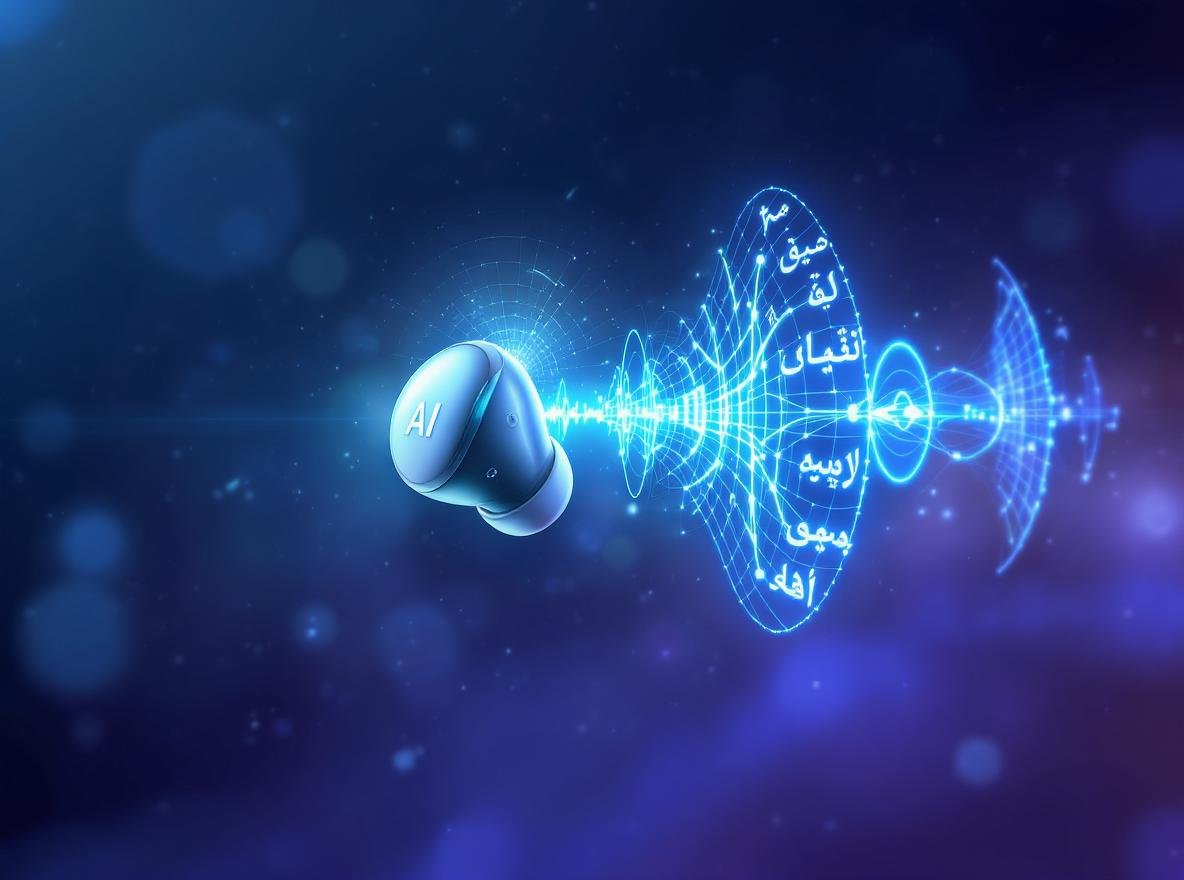
Translation earbuds use artificial intelligence, automatic speech recognition, and machine learning to capture spoken language through advanced microphones, process it through AI-powered translation engines, and deliver the translated audio directly to your ear within 0.5-3 seconds. This technology combines multiple complex systems working together seamlessly to enable natural conversations across language barriers.
But there’s much more to understand about how these remarkable devices actually work behind the scenes and why they’re becoming essential tools for international business.
What Technology Powers Real-Time Translation in Earbuds?
Understanding the core technology helps you appreciate why translation earbuds have become so effective for business communication.
Translation earbuds integrate four key technologies: Automatic Speech Recognition (ASR), Natural Language Processing (NLP), Machine Translation engines, and Text-to-Speech synthesis, all powered by advanced AI algorithms that work together to process and translate speech in real-time.
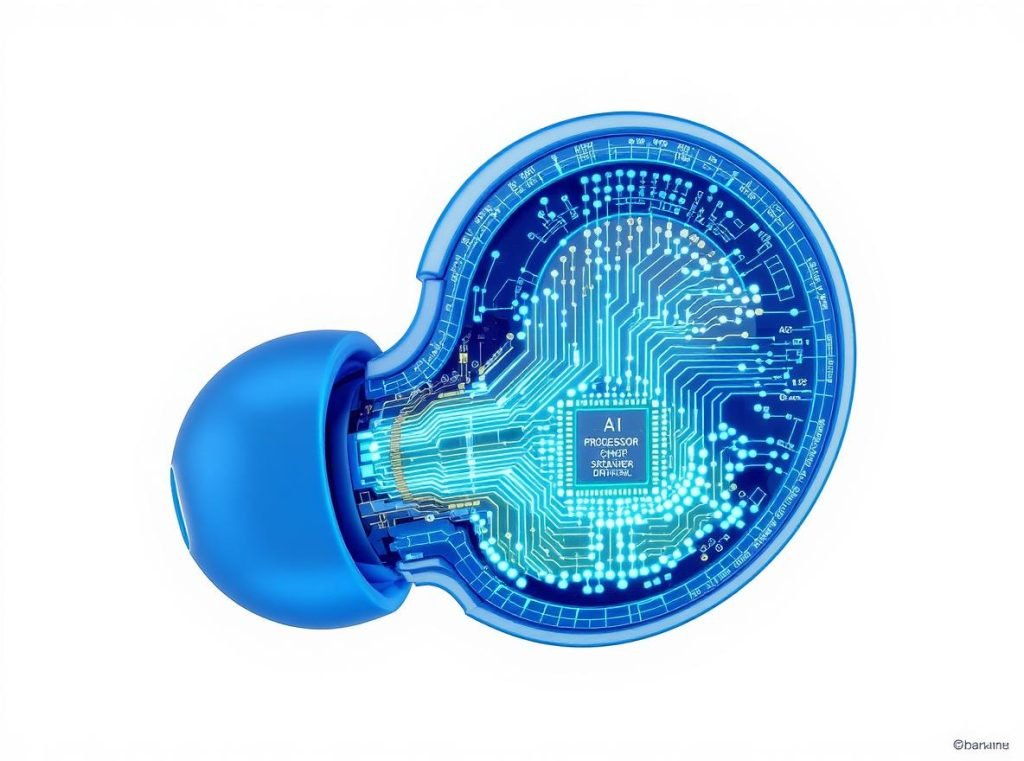
The foundation starts with sophisticated microphone arrays. Modern translation earbuds feature dual microphones with beamforming technology and directional voice recognition that isolate the speaker’s voice while filtering out background noise like traffic and ambient sounds. This ensures clear audio capture even in busy environments like trade shows or factory visits.
The AI processing happens through multiple translation engines working simultaneously. Leading translation earbuds are powered by six major translation engines including DeepL, Google, Microsoft, iFlytek, AmiVoice, and Hoya, providing redundancy and improved accuracy by cross-referencing translations across a global network of 15 servers.
Here’s how each technology component contributes:
| Technology Component | Function | Business Impact |
|---|---|---|
| ASR (Speech Recognition) | Converts speech to text | Accurate capture of spoken words |
| NLP (Language Processing) | Understands context and meaning | Better translation of business terms |
| Machine Translation | Converts text between languages | Core translation functionality |
| Text-to-Speech | Converts translated text to audio | Natural-sounding output |
The processing speed is crucial for natural conversation flow. Premium devices can achieve response times as fast as 0.3 seconds for simultaneous interpretation mode, while maintaining accuracy rates of up to 95% for common business languages. The system dynamically selects the best translation engine for each specific language pair and context, ensuring optimal results for your business communications.
How Fast Are Real-Time Translation Earbuds?
Speed determines whether translation earbuds can support natural business conversations or create awkward pauses that disrupt communication flow.
Modern translation earbuds deliver translations within 0.5-3 seconds, with premium models achieving response times as fast as 0.3 seconds for simultaneous interpretation, making conversations feel nearly natural and suitable for business meetings and negotiations.

The Timekettle WT2 Edge processes translations in as little as 0.3 seconds for simultaneous interpretation mode, while maintaining approximately 3-5 seconds latency during phone calls. Touch-activated models provide translation within 0.5-3 seconds when you touch the sensor area, which is fast enough for most business scenarios.
The speed varies based on several factors:
- Sentence complexity: Simple phrases translate faster than complex business terminology
- Language pair: Common language combinations process quicker through optimized engines
- Internet connection: Cloud-based processing depends on stable connectivity
- Audio quality: Clear speech enables faster recognition and processing
For business applications, this speed enables you to maintain conversation rhythm during:
- Product demonstrations with international clients
- Technical discussions with overseas suppliers
- Real-time negotiations without losing momentum
- Customer service interactions across language barriers
Advanced models even offer adjustable playback speeds from 0.75x (slow) to 2x (fast), providing a synchronized audio-visual experience for ultra-fast translation when time is critical.
What Translation Modes Do These Earbuds Offer?
Different business scenarios require different translation approaches, and modern earbuds provide multiple modes to handle various communication needs effectively.
Translation earbuds typically offer four main modes: Touch Mode for controlled one-on-one conversations, Simultaneous Mode for natural two-way communication, Speaker Mode for group presentations, and Listen Mode for understanding lectures or presentations without interaction.
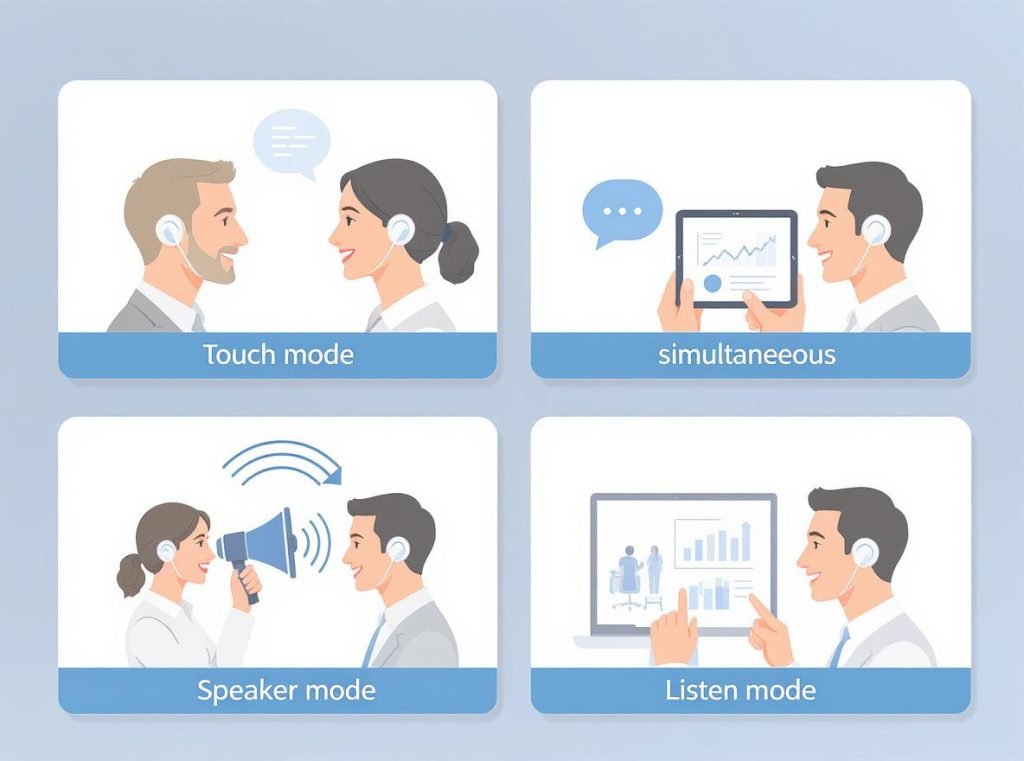
Touch Mode requires users to tap the earbuds to activate translation, making it ideal for turn-taking scenarios and noisy environments where precise control is needed. Each person wears one earbud and touches the sensor to speak, with the other person hearing the translation. This mode works perfectly for:
- Face-to-face client meetings requiring precise communication
- Supplier negotiations where accuracy is critical
- Product quality discussions with technical details
- Contract discussions requiring careful consideration
Simultaneous Mode enables continuous two-way translation without pausing, doubling conversation efficiency compared to traditional turn-taking methods. Both parties wear one earbud each and can speak naturally while receiving real-time translations. This proves invaluable for:
- Lengthy business meetings and presentations
- Natural relationship-building conversations
- Complex technical discussions requiring back-and-forth dialogue
- Multi-person conversations with up to 6 participants
Speaker Mode allows one person to wear the earbud while translations are broadcast through a connected smartphone or Bluetooth speaker. This mode serves group scenarios where multiple people need to hear translations:
- Team presentations to international partners
- Group product demonstrations and training sessions
- Conference calls with overseas clients
- Factory tours with visiting international buyers
Listen Mode provides passive translation for understanding content without interaction, automatically recognizing sentence breaks and continuously playing translations. This proves valuable for:
- Industry conferences in foreign languages
- Technical presentations from international suppliers
- Understanding customer feedback in various languages
- Market research in international trade shows
How Many Languages Can Translation Earbuds Handle?
Language coverage determines whether translation earbuds can serve your global business needs across different markets and regions effectively.
Modern translation earbuds support between 42-144 languages, with leading models like the Timekettle WT2 Edge supporting 42 languages and 95 accents covering approximately 85% of the world’s population, while newer models claim support for up to 144 languages and accents.

Premium translation earbuds support comprehensive language coverage including all major commercial languages:
- European markets: English, German, French, Spanish, Italian, Portuguese, Dutch, Polish, Russian
- Asian markets: Chinese (Mandarin/Cantonese), Japanese, Korean, Hindi, Thai, Vietnamese, Indonesian, Malay
- Middle Eastern markets: Arabic, Hebrew, Turkish, Persian
- Latin American markets: Spanish, Portuguese, Brazilian Portuguese
- Emerging markets: Swahili, and other regional languages important for global trade
The extensive language coverage ensures users can communicate effectively in most global destinations and business environments. Some newer models like the ANFIER M6 and Wooask series claim support for 144 languages and accents, providing even broader coverage for businesses operating in diverse international markets.
Accuracy varies by language pair, with major business languages typically achieving 90-98% accuracy for common business terminology, while less common languages may have 70-85% accuracy rates depending on the quality of training data available.
Do Translation Earbuds Work Without Internet Connection?
Internet dependency can be a critical factor when doing business in areas with poor connectivity or when traveling internationally to remote locations.
Most translation earbuds require internet connection for optimal performance, but premium models offer offline translation packages for 13-20 major language pairs, allowing basic business communication even without connectivity, though with reduced accuracy and language options.
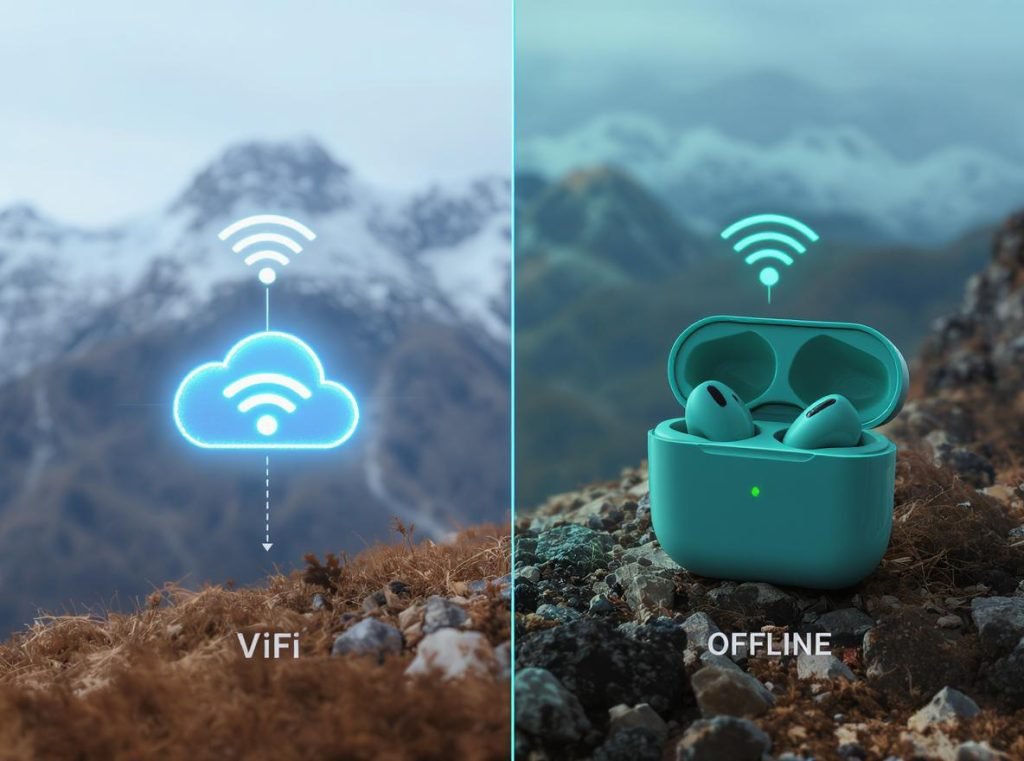
Leading models like the Timekettle M3 and WT2 Edge support 13 offline language pairs covering the most common business language combinations. This offline capability typically includes:
- English ↔ Chinese, Japanese, Korean, French, Spanish, Russian, German
- Popular regional pairs for international trade
- Essential business language combinations for global commerce
The offline mode limitations include:
- Reduced vocabulary compared to online mode with cloud access
- Less accurate context understanding for complex business terms
- Slower processing for intricate sentences and technical discussions
- No access to specialized business terminology updates
For business applications, offline mode works effectively for:
- Basic negotiations and price discussions
- Simple product descriptions and specifications
- Essential customer service phrases and common interactions
- Emergency communication during international travel
However, for technical discussions, complex contract negotiations, or detailed product presentations, internet connectivity remains essential for optimal accuracy and comprehensive vocabulary coverage. The Timekettle M3 can even intelligently switch between online and offline translation when network conditions are weak, ensuring continuous communication capability.
Cloud-based processing provides access to constantly updated translation engines, specialized business terminology databases, and improved accuracy through machine learning algorithms that continuously enhance performance based on global usage patterns.
What Are the Accuracy Limitations of Translation Earbuds?
Understanding accuracy limitations helps set realistic expectations and identify situations where translation earbuds excel versus where human interpreters remain necessary for critical business communications.
Translation earbuds achieve 90-98% accuracy for common business conversations in major languages, but struggle with complex sentences, idioms, technical jargon, and cultural context, making them excellent for routine business communication but requiring human backup for critical negotiations.
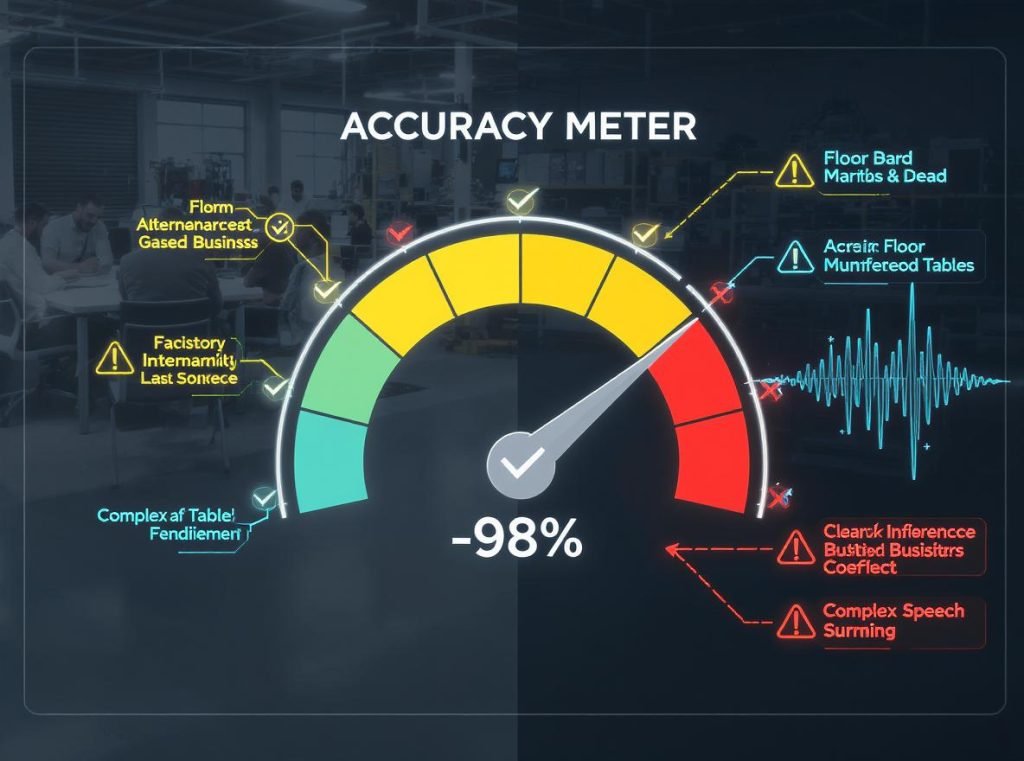
Complex Language Structures present ongoing difficulties. Translation earbuds struggle with idioms, slang, poetry, and highly specialized terminology. For instance, saying “it’s raining cats and dogs” might be translated literally, leading to confusion in business contexts. Regional dialects and heavy accents can also reduce accuracy, as AI models are typically trained on standard forms of languages.
Background Noise and Environmental Factors significantly impact performance despite advanced noise-cancellation technology. Very noisy environments like factory floors, construction zones, or crowded trade shows can affect translation quality. The microphones must effectively isolate the speaker’s voice from ambient sounds, which becomes challenging in complex acoustic environments.
Common accuracy challenges include:
- Industry-specific terminology: Manufacturing terms, technical specifications, compliance language
- Cultural references: Business customs, local market conditions, regulatory contexts
- Complex sentence structures: Legal language, detailed contracts, multi-clause explanations
- Emotional nuance: Negotiation subtleties, relationship-building conversations
- Speed of speech: Very rapid speakers can cause noticeable lag and reduced accuracy
Accuracy performs best with:
- Clear, simple sentences under 15 words
- Standard business vocabulary and common phrases
- Normal conversation speeds without heavy accents
- Quiet environments with minimal background interference
- Major language pairs with extensive AI training data
For critical business situations, consider this accuracy hierarchy:
| Scenario Type | Recommended Approach | Earbud Suitability |
|---|---|---|
| Initial client meetings | Translation earbuds + backup translator | High |
| Product demonstrations | Translation earbuds primary | High |
| Contract negotiations | Professional interpreter required | Low |
| Technical specifications | Translation earbuds + written backup | Medium |
| Casual business dining | Translation earbuds sufficient | High |
How Do Translation Earbuds Compare to Traditional Methods?
Comparing translation earbuds to traditional interpretation methods helps determine when each approach provides the best value and effectiveness for business communication needs.
Translation earbuds offer instant availability and lower costs than human interpreters, making them perfect for routine business interactions, while human interpreters remain superior for complex negotiations, cultural nuance, and critical business decisions where accuracy is paramount.
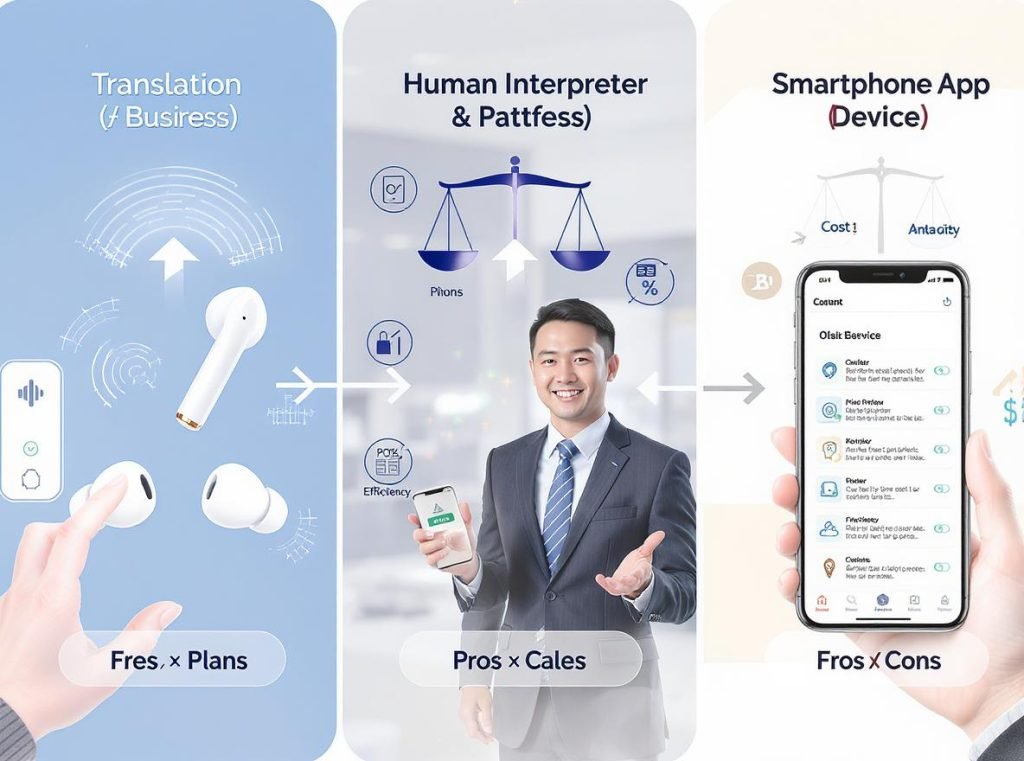
Hands-free operation eliminates the need to hold devices or look at screens constantly, allowing for more natural eye contact and body language during conversations. Users can engage in extended discussions without the awkward pauses required by app-based solutions that rely on turn-taking.
Privacy and intimacy represent key advantages, as translations are delivered directly to the user’s ear without broadcasting to others nearby. This proves particularly valuable in business settings or confidential conversations where discretion is important.
Here’s how different translation methods compare across key business factors:
| Factor | Translation Earbuds | Human Interpreters | Translation Apps |
|---|---|---|---|
| Cost per use | $0 after purchase | $200-500+ per day | Free-$10/month |
| Availability | Instant, 24/7 | Scheduled, limited | Instant, 24/7 |
| Accuracy | 90-98% common phrases | 95-99+ professional | 70-85% average |
| Cultural context | Limited understanding | Excellent insight | Very limited |
| Privacy | High confidentiality | Requires trust | Data concerns |
| Convenience | Extremely high | Moderate logistics | High accessibility |
Translation earbuds excel in these business scenarios:
- Daily supplier communications and routine inquiries
- Customer service interactions and support calls
- Product inquiries and basic technical specifications
- Trade show conversations and international networking
- Travel-related business interactions and logistics
Human interpreters remain essential for:
- High-stakes contract negotiations and legal discussions
- Complex technical presentations requiring industry expertise
- Sensitive partnership agreements and confidential matters
- Cultural relationship building and diplomatic communications
- Medical, legal, or regulatory compliance discussions
The cost advantage of translation earbuds becomes significant for businesses with regular international communication. A $200-450 investment in quality translation earbuds can replace thousands of dollars in interpreter fees for routine interactions while providing immediate availability for unexpected international opportunities.
What Should Businesses Consider When Choosing Translation Earbuds?
Selecting the right translation earbuds for business use requires evaluating specific features that impact professional communication effectiveness, reliability, and return on investment.
Businesses should prioritize translation earbuds with multiple engine support, offline capabilities for key languages, professional battery life of 12-25 hours, advanced noise cancellation for clear audio in business environments, and comprehensive language coverage for target markets.
Translation Engine Quality and Accuracy
Look for earbuds powered by multiple professional engines. Leading models integrate six major translation engines including DeepL, Google, Microsoft, iFlytek, AmiVoice, and Hoya, providing backup options and improved accuracy through cross-referencing. This multi-engine approach allows dynamic selection of the best translation engine for each specific language pair and context.
Battery Performance for Business Use
Business applications demand all-day reliability. Premium models offer impressive battery performance:
- 12-25 hours continuous translation time with charging cases
- Quick-charging capabilities for urgent meetings and time-sensitive situations
- Portable charging cases for multi-day business trips and extended use
- Battery level indicators to prevent mid-meeting failures and communication breakdowns
Audio Quality and Environmental Adaptation
Professional communication requires superior audio performance:
- Advanced dual-microphone beamforming technology for factory visits and noisy environments
- Directional voice recognition for accurate capture during group meetings
- Volume controls suitable for various meeting environments and acoustic conditions
- Comfortable ergonomic fit for extended business conversations and all-day wear
Language Coverage for Global Markets
Evaluate language support based on your specific international business requirements:
- Core languages for your primary international markets and target regions
- Offline support for regions with poor connectivity or remote manufacturing locations
- Regional dialect recognition for local market engagement and cultural adaptation
- Specialized business vocabulary coverage for your industry sector
Business Integration and Reliability Features
- Companion app compatibility with existing business devices and systems
- Multi-user support for team environments and shared device scenarios
- Data privacy features for confidential business conversations and sensitive negotiations
- Group communication capabilities supporting up to 6-person multilingual meetings
Professional Support and Warranty
- Comprehensive warranty coverage appropriate for business investment and usage intensity
- Technical support availability in your business time zones for immediate assistance
- Regular firmware updates for improving accuracy and adding new features
- Replacement device availability for business continuity and minimal downtime
Consider total cost of ownership including device cost, app subscriptions, and potential productivity gains from improved international communication efficiency.
Summary
Translation earbuds work by combining AI-powered speech recognition, multiple translation engines, and real-time audio processing to deliver translations within 0.3-3 seconds. These devices offer four communication modes, support 42-144 languages with offline capabilities, and achieve 90-98% accuracy for common business conversations, making them valuable tools for international commerce while requiring human backup for complex negotiations and cultural nuance.
Ready to break down language barriers in your international business operations? At Osmarto, we understand the critical importance of clear communication in global trade and the growing demand for innovative audio solutions. Whether you’re looking to integrate translation technology into your product offerings or need reliable headphone manufacturing expertise for your international business expansion, our team can help you develop the perfect audio solutions. Contact us today to discuss wholesale opportunities and explore how our headphone manufacturing capabilities can support your global communication needs and enhance your product portfolio with cutting-edge audio technology.