Skip to content
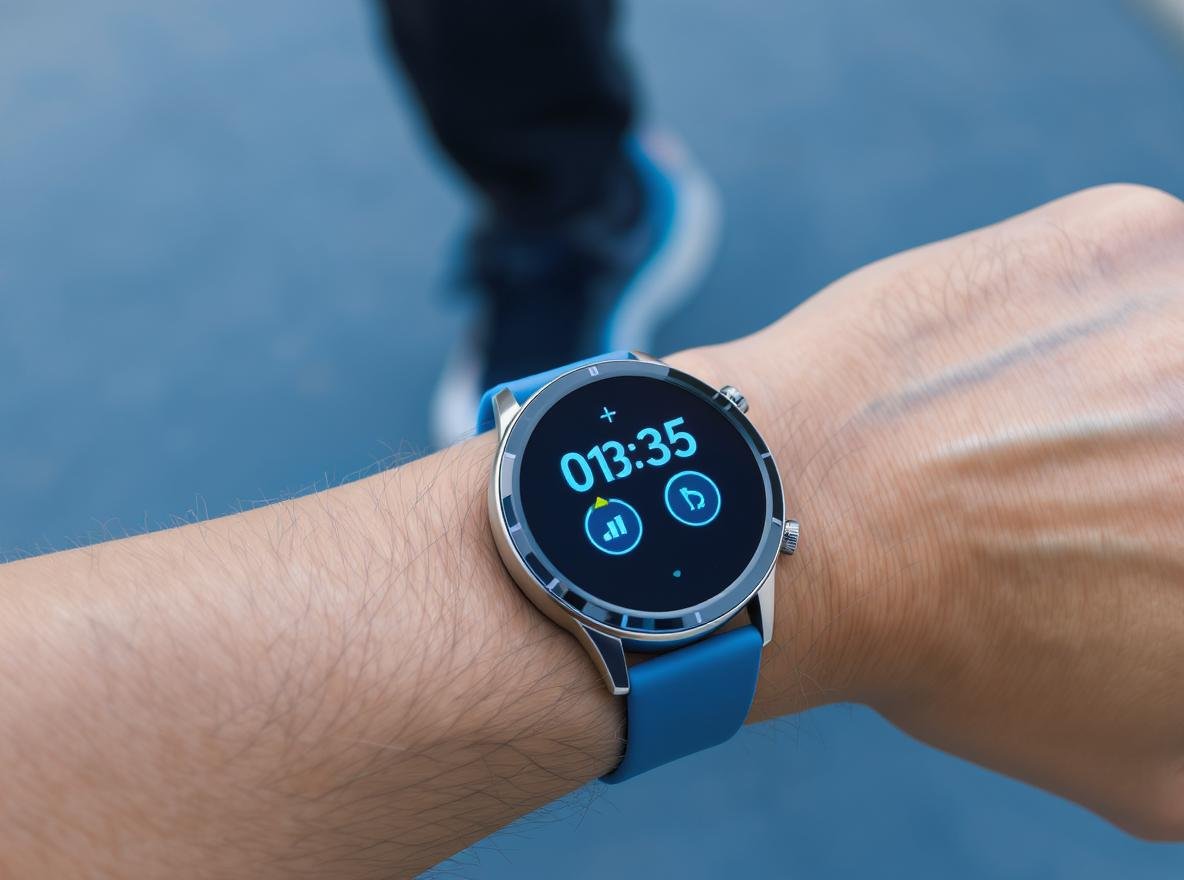
You strap on your smartwatch every morning, trusting it to count every step you take. But are those numbers really accurate? With millions of people relying on these devices for health tracking, step accuracy has become a crucial concern for wholesalers and retailers in the wearable technology market.
Smartwatch step counting accuracy varies dramatically, ranging from 39% to 99.7% depending on brand and conditions. Premium devices like Garmin achieve exceptional 95-99% accuracy, while Apple Watch delivers consistent 90-95% precision. However, budget models and certain conditions can significantly impact reliability, making accuracy a critical factor for wholesale buyers.
Understanding smartwatch step accuracy isn’t just about personal fitness—it’s essential knowledge for businesses in the wearable technology industry.
How Do Smartwatches Actually Count Your Steps?
Modern smartwatches rely on sophisticated sensor technology to translate your arm movements into step counts, but the accuracy depends heavily on the quality of these components.
Smartwatches use three-axis accelerometers as their primary step detection technology, measuring acceleration changes in forward/backward, left/right, and up/down directions. Advanced models incorporate gyroscopes for orientation detection and use machine learning algorithms to distinguish actual walking patterns from random arm movements.
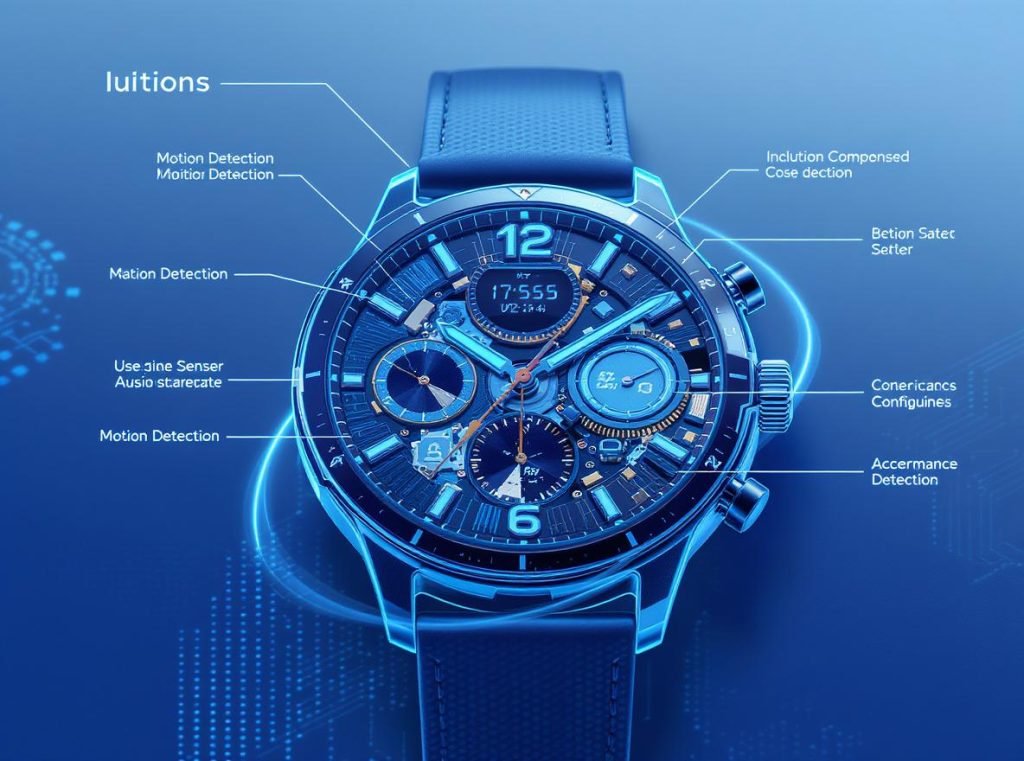
The core technology centers on accelerometer sensors that detect the distinctive patterns created when you walk. As your arm naturally swings with each step, the accelerometer captures these movement signatures and feeds the data to processing algorithms.
Premium smartwatches enhance this basic system with additional sensors. Gyroscopes measure rotational movement to help distinguish between intentional walking and incidental arm gestures like typing or washing hands. GPS integration provides ground truth validation for outdoor activities, allowing devices to cross-reference step counts with actual distance traveled.
The algorithm processing represents the most critical component. Modern devices employ machine learning to adapt to individual walking styles over time, improving accuracy through personalized calibration. These algorithms must filter out false positives while capturing genuine steps, even during activities that restrict natural arm movement.
| Sensor Type | Function | Accuracy Impact |
|---|---|---|
| 3-Axis Accelerometer | Primary step detection through movement patterns | Critical – Foundation of all step counting |
| Gyroscope | Orientation and rotational movement detection | High – Reduces false positives |
| GPS | Distance validation for outdoor activities | Medium – Provides verification data |
| Machine Learning Algorithms | Personalized pattern recognition | Critical – Determines final precision |
Each arm swing typically counts for two steps, based on natural gait patterns where opposite arms and legs move together. This relationship explains why restricted arm movement significantly impacts accuracy across all device types.
What Factors Affect Step Counting Accuracy Most?
Multiple variables influence step counting precision, with some factors causing accuracy to drop below 50% even on premium devices.
Device placement, walking conditions, and environmental factors dramatically impact accuracy. Proper fit is crucial—loose devices undercount by up to 50%, while restricted arm movement from carrying items or pushing strollers can reduce accuracy to similar levels. Walking speed also plays a critical role, with devices performing poorly at speeds below 0.8 m/s.
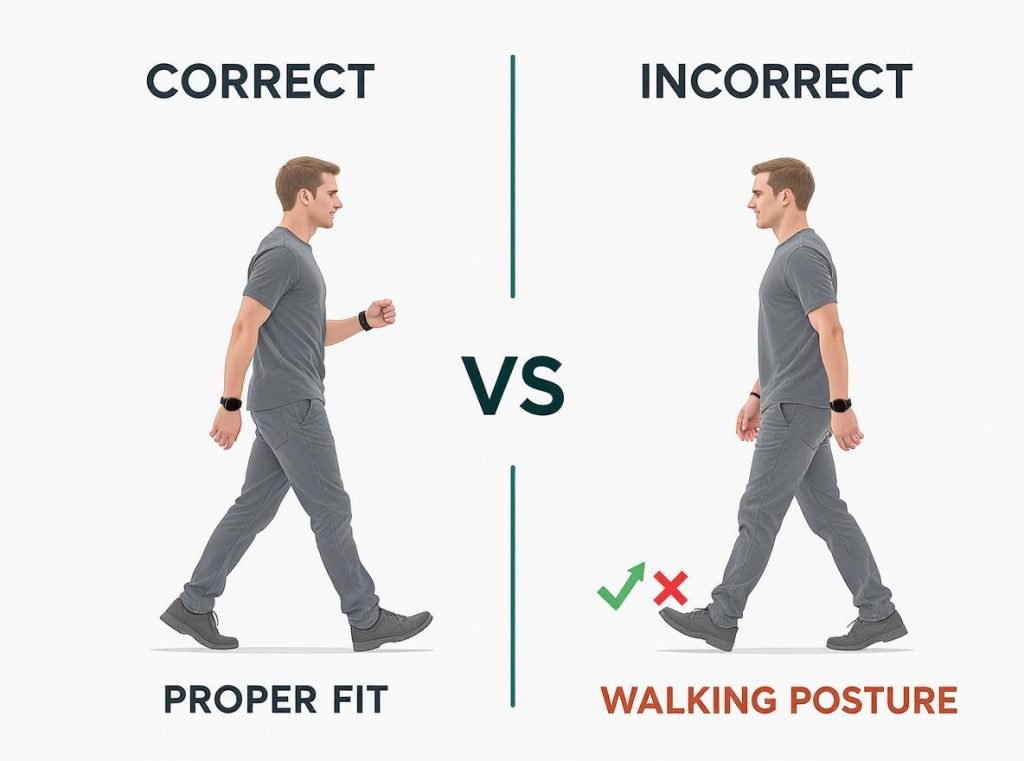
Device placement and fit represent the most controllable accuracy factors. The smartwatch should sit snugly on your wrist, typically one finger-width above the wrist bone. Too loose allows excessive movement that triggers false readings, while too tight restricts natural arm movement patterns that algorithms depend on for accurate detection.
Wrist selection significantly impacts performance. Wearing the device on your non-dominant hand reduces false positives from daily activities like typing, writing, or cooking. Some users report improved accuracy by setting the device to opposite handedness settings, which reduces sensitivity to non-walking movements.
Walking conditions create substantial accuracy variations:
- Natural arm swing produces optimal results
- Carrying bags, pushing strollers, or keeping hands in pockets reduces accuracy by 15-50%
- Very slow walking (elderly users, assistive devices) challenges most algorithms
- Running typically shows higher accuracy than casual walking
Environmental factors also influence performance. Indoor environments rely solely on motion sensors, while outdoor GPS-enabled tracking provides validation data that improves overall precision. Temperature extremes can affect both battery performance and sensor sensitivity, particularly in freezing conditions.
Activity-specific challenges include household tasks, short movement bursts (walking to the refrigerator), and repetitive arm motions that don’t involve actual steps. Understanding these limitations helps set realistic expectations for different use cases.
Which Smartwatch Brands Deliver the Highest Step Accuracy?
Independent testing reveals dramatic accuracy differences between manufacturers, with some devices achieving near-perfect precision while others struggle with basic step detection.
Garmin consistently leads accuracy testing, with the Forerunner 265 achieving 99.7% precision (missing only 15 steps in controlled tests). Samsung and Huawei devices deliver excellent 98% accuracy, while Apple Watch maintains reliable 90-95% consistency across models. However, some Fitbit models showed accuracy as low as 39% in comparative testing.
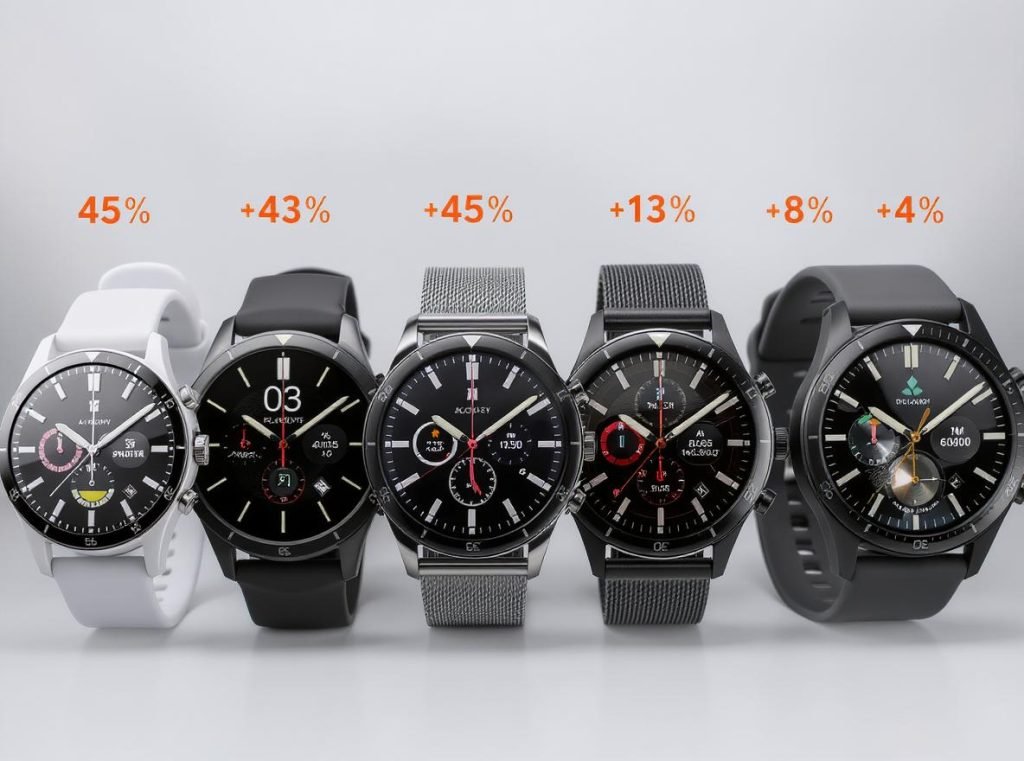
The accuracy hierarchy based on comprehensive testing data:
Premium Tier (95-99% Accuracy)
- Garmin Forerunner series: 99.7% accuracy leader
- Garmin Vivosmart HR+: Consistent across all conditions
- Samsung Galaxy Watch: 98% accuracy rating
- Huawei devices: Excellent algorithm performance
Reliable Mid-Tier (90-95% Accuracy)
- Apple Watch (all generations): Consistent 90-95% performance
- Newer Fitbit models (Sense, Charge 5): 94-99% depending on activity
- Quality fitness-focused brands
Concerning Performance (Below 90%)
- Polar A360: 52-78% accuracy range
- Older Fitbit models: Some showing 39% accuracy
- Budget generic brands: Highly variable
Garmin’s dominance stems from their focus on fitness and outdoor activities, leading to superior sensor quality and algorithm development. Users and professional reviewers consistently cite Garmin as the “gold standard” for fitness tracking accuracy across multiple metrics.
| Brand | Best Model | Accuracy Range | Key Strengths |
|---|---|---|---|
| Garmin | Forerunner 265 | 95-99.7% | Superior algorithms, outdoor focus |
| Samsung | Galaxy Watch | 95-98% | Excellent sensors, smart features |
| Apple | Watch Series 8+ | 90-95% | Consistent performance, ecosystem integration |
| Huawei | Watch GT series | 90-98% | Advanced algorithms, good value |
For wholesale buyers, these accuracy differences represent significant value propositions that directly impact customer satisfaction and return rates.
How Accurate Are Budget Smartwatches for Step Tracking?
Budget smartwatches present a complex accuracy picture that affects purchasing decisions for cost-conscious consumers and bulk buyers targeting different market segments.
Budget smartwatches typically achieve 80-90% step counting accuracy under optimal conditions, though performance degrades more significantly than premium models in challenging scenarios. The Amazfit Band 7 exemplifies good budget performance at under $50, while generic brands may show wider variation between individual units.
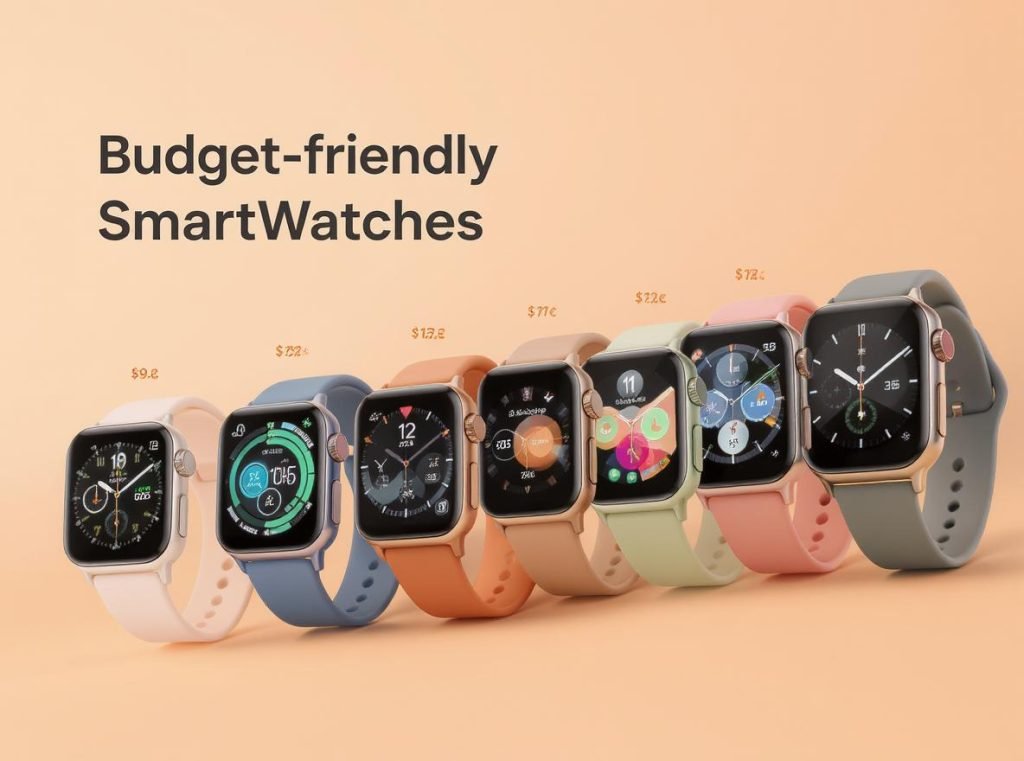
The accuracy gap between budget and premium models stems from several cost-reduction strategies:
Lower-grade sensors represent the primary compromise. Budget accelerometers often have higher noise levels and reduced sensitivity, leading to missed steps during slow walking or over-counting during non-walking activities. The three-axis accelerometer technology itself is mature and inexpensive, but sensor quality variations significantly impact precision.
Algorithm sophistication varies dramatically across price points. Budget devices typically use basic movement detection rather than machine learning pattern recognition, resulting in more false positives and missed genuine steps. They lack the computational power for real-time algorithm improvements that premium devices offer.
Quality control consistency affects batch-to-batch performance. Premium brands maintain strict manufacturing tolerances, while budget manufacturers may show wider performance variations between identical model units.
Acceptable Performance Scenarios:
- Normal-paced walking on flat surfaces
- Consistent wearing habits
- Users with regular gait patterns
- Basic fitness goal tracking
Challenging Scenarios for Budget Devices:
- Very slow or irregular walking speeds
- Activities requiring restricted arm movement
- Complex movement patterns
- Users requiring medical-grade precision
For wholesalers targeting different market segments, understanding these performance profiles helps match products to customer needs and price sensitivity while managing return expectations.
Can Environmental Conditions Impact Step Accuracy?
Environmental factors create accuracy variations that many users and retailers don’t anticipate, affecting device performance in measurable ways.
Temperature extremes, seasonal behavior changes, and indoor/outdoor environments significantly impact step counting accuracy. Research shows people walk faster in extreme temperatures (below 10°C or above 30°C), which can confuse algorithms calibrated for normal walking speeds. Cold weather may reduce sensor sensitivity by 5-10%.
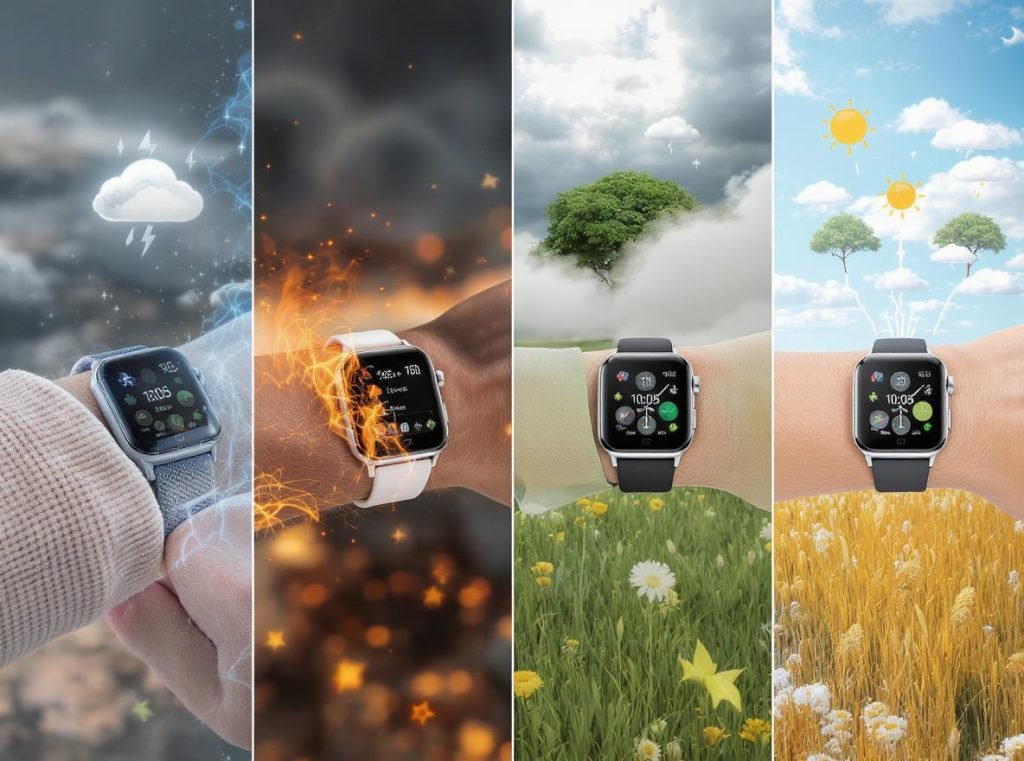
Temperature effects extend beyond simple sensor performance. Extreme cold can impact battery life and sensor responsiveness, while users naturally modify their walking patterns in harsh weather conditions. People tend to walk faster in extreme temperatures, take shorter strides on icy surfaces, or limit outdoor activity entirely.
Seasonal variations create longer-term accuracy challenges. Winter weather increases indoor activity where GPS validation isn’t available, forcing devices to rely entirely on motion sensors. Summer heat may cause users to modify their exercise patterns, potentially affecting the device’s learning algorithms.
Environmental accuracy factors include:
Weather-Related Changes:
- Modified walking speeds in extreme temperatures
- Altered gait patterns on ice, snow, or wet surfaces
- Increased indoor activity during poor weather
- Clothing thickness affecting device placement
Activity Pattern Shifts:
- Seasonal exercise routine changes
- Different walking surfaces (sand, gravel, stairs)
- Elevation changes affecting movement patterns
- Indoor treadmill versus outdoor walking variations
Device Performance Factors:
- Battery efficiency in temperature extremes
- Sensor calibration drift over time
- Humidity effects on some sensor types
- Electromagnetic interference in certain environments
Understanding these environmental impacts helps both users optimize their device usage and retailers prepare customers for seasonal accuracy variations.
How Do Professional Athletes Use Smartwatch Step Data?
Professional sports applications demand accuracy levels that exceed typical consumer requirements, revealing the true capabilities and limitations of current smartwatch technology.
Professional athletes require 98%+ step counting accuracy and often use multiple devices for verification. They integrate step data with advanced metrics like heart rate variability, training load, and recovery indicators rather than focusing on simple daily step goals. Elite athletes generate 15,000-25,000 steps daily during peak training, making small accuracy errors compound significantly.
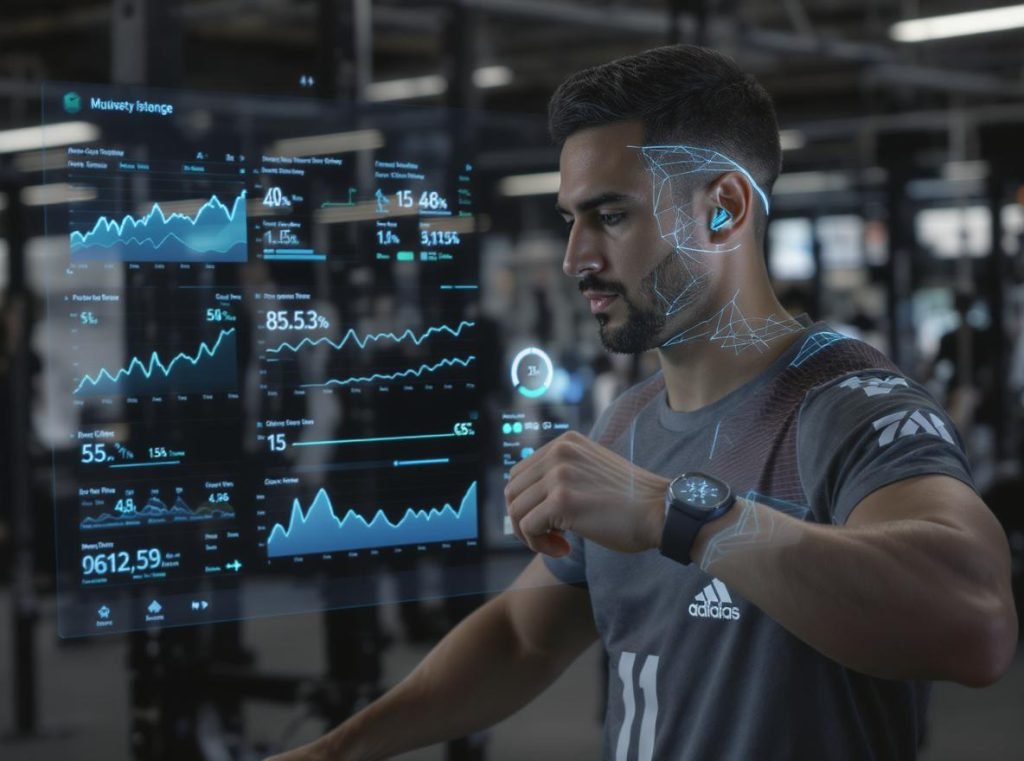
Professional usage differs fundamentally from consumer applications. Athletes and coaches use step data for load management, injury prevention, and performance optimization rather than basic fitness motivation. The margin for error acceptable to recreational users becomes problematic when managing training loads worth millions of dollars in athlete development.
Elite sports teams employ sophisticated verification systems:
Multi-Device Validation:
- Primary smartwatch for continuous monitoring
- GPS devices for outdoor training verification
- Laboratory-grade motion capture for precision validation
- Manual counting during specific test periods
Advanced Metrics Integration:
- Step cadence and stride length analysis
- Ground contact time measurements
- Gait asymmetry detection
- Training load distribution patterns
Performance Applications:
- Overtraining prevention through volume monitoring
- Recovery assessment via movement pattern analysis
- Injury risk evaluation through gait changes
- Competitive advantage through micro-optimization
The Garmin Enduro 3 exemplifies professional-grade capabilities, providing detailed gait analysis including step cadence, stride length, and ground contact time—metrics far more valuable than simple step counts for performance optimization.
| Sport Category | Daily Step Range | Accuracy Requirements | Primary Monitoring Focus |
|---|---|---|---|
| Endurance Sports | 20,000-30,000 | 98%+ | Volume consistency and patterns |
| Team Sports | 15,000-25,000 | 95%+ | Intensity distribution analysis |
| Strength Sports | 8,000-15,000 | 90%+ | Recovery and load management |
For manufacturers targeting professional markets, these demanding requirements drive innovation in sensor technology and algorithm development.
What Are the Business Implications of Step Accuracy?
Step counting accuracy directly impacts business success across multiple industries, creating financial consequences that extend far beyond individual user satisfaction.
Accurate step counting drives customer retention and brand reputation, while inaccurate devices lead to 15-20% of smartwatch returns within 30 days. Corporate wellness programs and insurance companies increasingly rely on step data for premium calculations, making accuracy a significant financial factor for both providers and participants.

Customer satisfaction correlates strongly with perceived accuracy, creating a halo effect where step counting performance influences overall product perception. Users who discover significant counting errors often lose trust in all device features, even if other functions perform well.
Return and warranty costs increase substantially with poor accuracy. Industry data indicates step counting complaints represent a major portion of early returns, making accuracy a direct cost factor for retailers. Social media amplification means individual accuracy problems can damage brand perception far beyond the actual problem scope.
Corporate Wellness Impact:
- Employee engagement in step-based challenges
- Fair competition in workplace fitness programs
- Insurance premium calculations based on activity data
- Healthcare cost reduction program effectiveness
Healthcare Integration Consequences:
- Patient compliance monitoring accuracy
- Clinical trial data reliability
- FDA clearance requirements for medical applications
- Healthcare provider confidence in wearable data
Regulatory and Legal Considerations:
- Emerging accuracy standards for health applications
- Consumer protection regulations for fitness claims
- Insurance industry requirements for activity tracking
- Potential liability for inaccurate health data
| Business Sector | Accuracy Impact | Financial Consequences |
|---|---|---|
| Retail/Wholesale | Customer satisfaction, returns | Direct revenue impact |
| Corporate Wellness | Program participation, fairness | Employee engagement costs |
| Healthcare | Patient monitoring, compliance | Treatment effectiveness |
| Insurance | Risk assessment, premiums | Actuarial accuracy |
For businesses like Osmarto, investing in quality sensors and algorithm development provides competitive advantages that justify premium pricing while reducing long-term support costs and building brand credibility in the global wholesale market.
How Can Users Improve Their Smartwatch Step Accuracy?
Proper setup and usage techniques can improve step counting accuracy by 5-10% across all smartwatch brands and price points, making these optimizations valuable for both users and customer support teams.
Users can significantly improve accuracy through proper device calibration, consistent wearing techniques, and understanding activity-specific limitations. Apple Watch users should calibrate by walking outdoors for at least 20 minutes with GPS enabled, while all users benefit from accurate personal information settings and regular software updates.
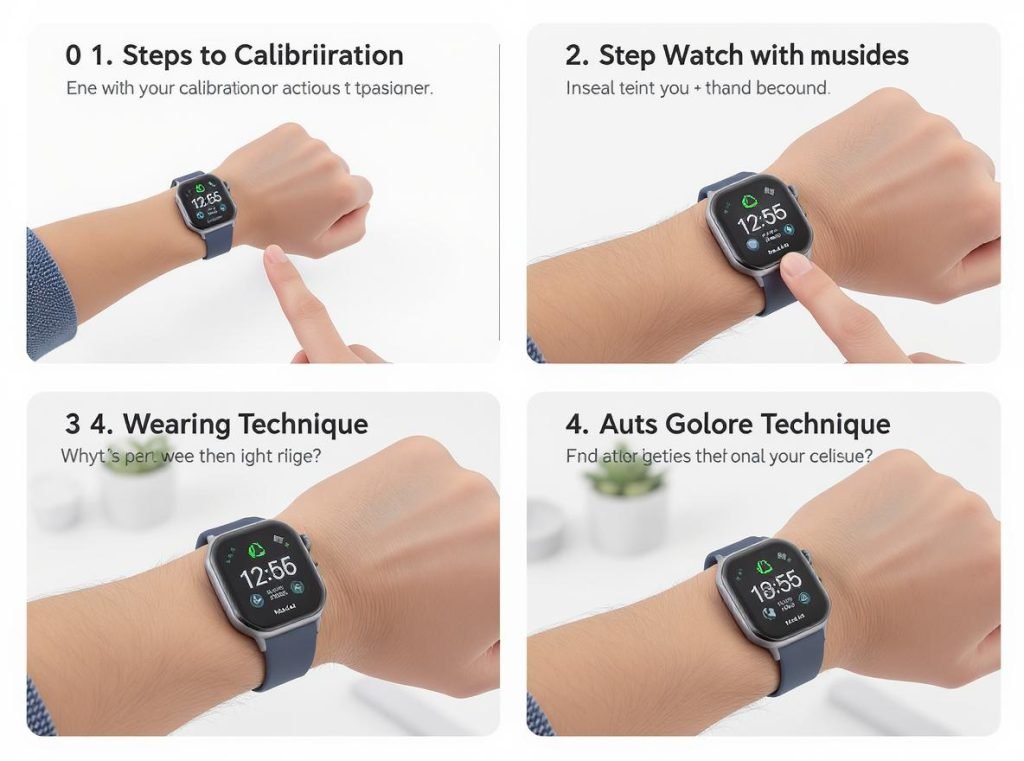
Device calibration represents the most impactful improvement technique. Most smartwatches offer calibration routines that involve walking known distances while the device learns your specific gait characteristics. This personalization dramatically improves accuracy for individual movement patterns.
Accurate personal information improves algorithm performance significantly. Height, weight, age, and dominant hand settings influence step detection algorithms, making precise data entry crucial for optimal performance.
Essential Setup Optimization:
- Complete manufacturer calibration routines
- Verify personal information accuracy (height, weight, age)
- Set correct dominant hand preference
- Enable GPS calibration for outdoor walking
- Update to latest firmware versions
Wearing Technique Best Practices:
- Position device one finger-width above wrist bone
- Ensure snug but comfortable fit
- Wear on non-dominant wrist for consistency
- Maintain consistent daily placement
- Avoid switching wrists frequently
Activity-Specific Improvements:
- Allow natural arm swing during walking
- Use dedicated workout modes for restricted movement activities
- Manually pause tracking during extended stationary periods
- Enable airplane mode in vehicles to reduce false movement detection
- Remove device during non-walking exercises to prevent false counting
Maintenance and Updates:
- Install firmware updates promptly for algorithm improvements
- Restart device weekly to clear temporary calibration issues
- Re-calibrate after significant weight changes or injury recovery
- Monitor accuracy periodically through manual counting verification
| Optimization Category | Potential Improvement | Implementation Difficulty |
|---|---|---|
| Proper Calibration | 5-15% accuracy gain | Easy – one-time setup |
| Correct Wearing | 3-8% accuracy gain | Easy – daily habit |
| Activity Awareness | 10-20% accuracy gain | Medium – behavioral changes |
| Regular Maintenance | 2-5% accuracy gain | Easy – periodic updates |
These optimization techniques provide valuable information for customer support teams and product training materials, helping users maximize their device performance while reducing accuracy-related complaints and returns.
Summary
Smartwatch step accuracy varies dramatically from 39% to 99.7% depending on brand quality and usage conditions. Garmin leads with exceptional 95-99% precision, while Apple Watch delivers consistent 90-95% accuracy. Proper calibration, wearing technique, and understanding environmental factors can improve performance by 5-15%, making informed product selection and user education crucial for wholesale success.
Ready to source high-accuracy smartwatches that deliver reliable step tracking for your customers? Contact Osmarto today for wholesale pricing on our precision-engineered smartwatch collection. Our devices combine proven sensor technology with competitive pricing, perfect for retailers and distributors seeking dependable fitness tracking products that minimize returns and maximize customer satisfaction. Send us your inquiry to discover how our smartwatch solutions can enhance your product portfolio with industry-leading accuracy standards.