Skip to content
Whether you’re managing a busy schedule, need gentle wake-up calls, or require precise timing for professional tasks, you’ve likely wondered about smartwatch alarm and timer capabilities. As the global wearable technology market continues expanding, understanding these core features has become essential for wholesalers, distributors, and retailers serving diverse customer needs worldwide.
Yes, modern smartwatches offer comprehensive timer and alarm functionality that operates independently of your smartphone. Most devices support 8-10+ simultaneous alarms, countdown timers, stopwatch functions, and advanced features like smart wake technology and haptic vibration alerts that won’t disturb others.
Let’s explore everything you need to know about smartwatch timing features and why they’re becoming indispensable for today’s connected consumers.
What Timer and Alarm Features Do Modern Smartwatches Include?
Understanding the full scope of timing capabilities helps businesses position their smartwatch offerings effectively in competitive markets.
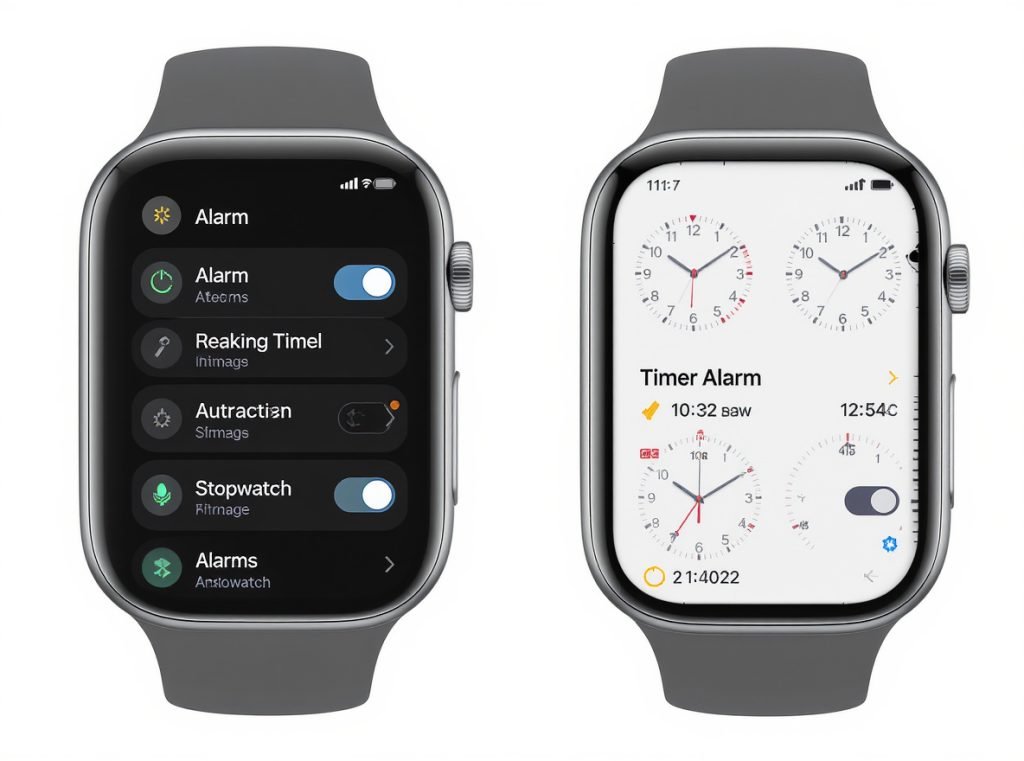
Contemporary smartwatches provide four essential timing functions: multiple customizable alarms with repeating schedules, simultaneous countdown timers, precision stopwatch capabilities, and smart wake technology that monitors sleep cycles for optimal wake-up timing.
Core Functionality Overview
Multiple Alarm Support
Most modern smartwatches support 8-10+ individual alarms with extensive customization options. Users can set repeating schedules (daily, weekly, or custom patterns), add descriptive labels for different purposes, and choose from various sound and vibration combinations.
Advanced Timer Capabilities
Professional-grade timer features include multiple simultaneous countdowns, preset duration options (1, 5, 10, 15 minutes), custom naming for different tasks, and voice activation for hands-free operation during activities.
Smart Wake Technology
Premium models like Samsung Galaxy Watch and Fitbit devices offer sleep stage tracking that triggers alarms during lighter sleep phases, resulting in more natural and refreshed wake-ups compared to traditional fixed-time alarms.
| Feature Category | Capabilities | Business Value |
|---|---|---|
| Alarms | 8-10+ individual alarms, custom schedules | Meeting management, shift scheduling |
| Timers | Multiple simultaneous, voice control | Productivity tracking, task management |
| Stopwatch | Millisecond precision, lap timing | Professional timing, fitness coaching |
| Smart Wake | Sleep cycle monitoring | Health-conscious consumer appeal |
How Do You Set Alarms on Different Smartwatch Brands?
Each major manufacturer offers distinct approaches to alarm setup, affecting user experience and customer satisfaction across different market segments.
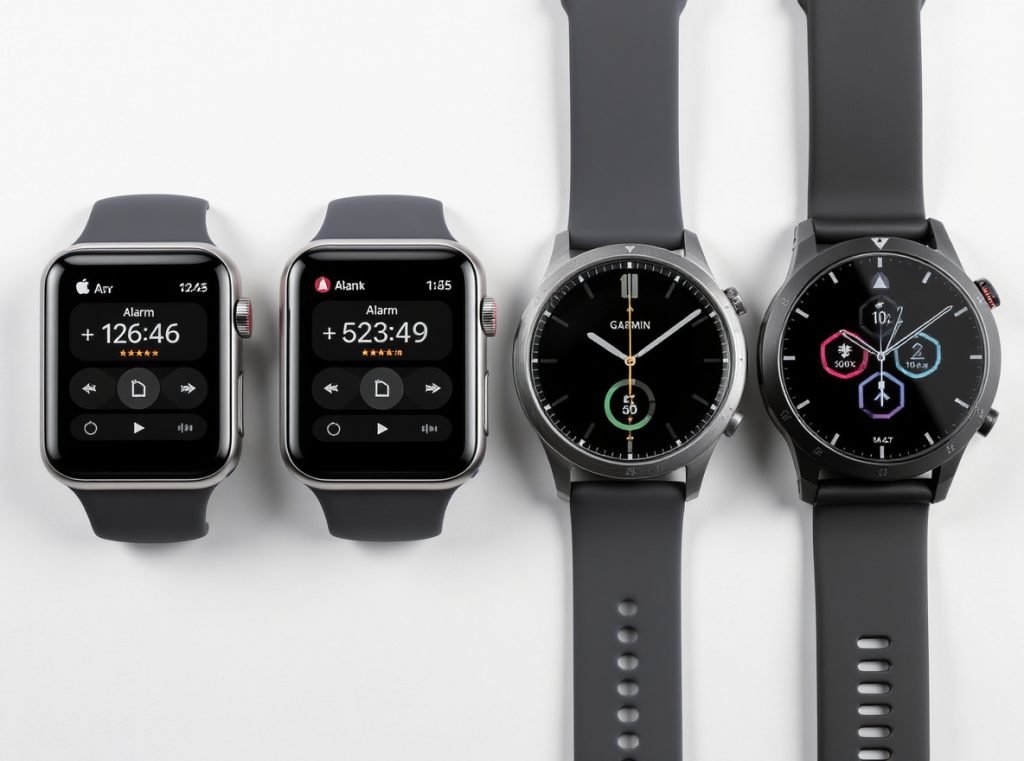
Alarm setup methods vary by brand but generally involve either direct watch interface controls, voice commands, or smartphone app synchronization. Most processes require just a few taps or simple voice instructions.
Brand-Specific Setup Methods
Apple Watch Process
Apple emphasizes simplicity with Siri integration: “Set alarm for 6 AM” or “Set repeating alarm for weekdays.” Manual setup involves opening the Alarms app, tapping the + button, setting time with the Digital Crown, and configuring repeat schedules, custom labels, and snooze options.
Samsung Galaxy Watch Method
Samsung offers comprehensive customization through voice commands (“Hey Bixby, set timer for 10 minutes”) or manual setup by swiping up from the watch face, finding the Alarm app, and configuring time, date, custom vibration patterns, and sound selections.
Garmin Watch Setup
Garmin devices (Fenix, Forerunner, Venu series) typically use the Menu/Back button to access Clocks/Alarms settings. Users can also configure alarms through the Garmin Connect smartphone app for easier management across multiple devices.
Wear OS Devices
Google’s Wear OS maintains consistency across manufacturers, allowing users to open the Alarm app, tap Add, and set times with options for one-time or repeating alarms plus sound and vibration customization.
Can Smartwatches Wake You Up Without Disturbing Others?
Silent wake-up functionality has become a crucial selling point, especially for customers in shared living spaces or those with irregular schedules.
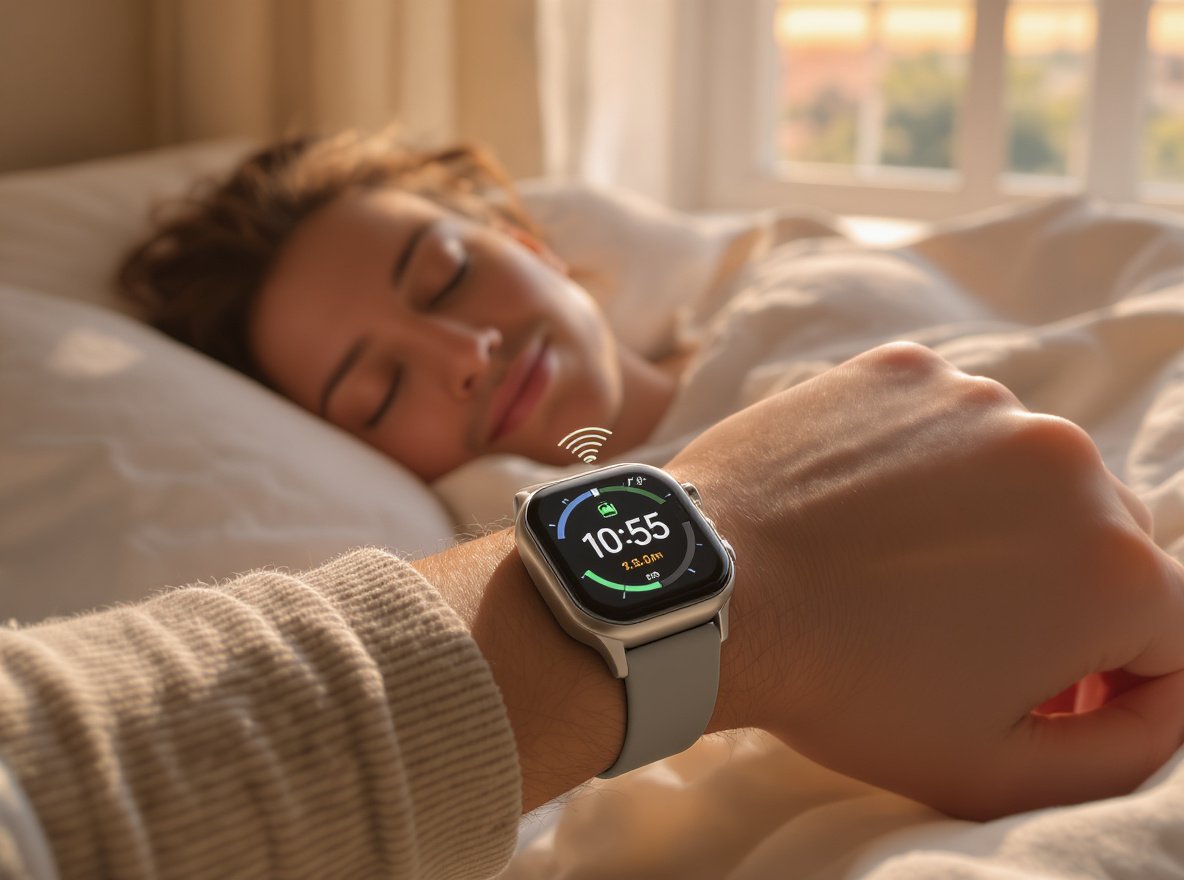
Smartwatches use sophisticated haptic vibration motors to deliver tactile alerts directly to your wrist, providing effective wake-up calls without audible sounds that might disturb sleeping partners, roommates, or family members.
Vibration Strength Comparison
Research shows significant variation in vibration strength across different models, directly impacting wake-up effectiveness for various user types.
Strongest Vibration Models:
- Samsung Galaxy Watch 4 Classic and Galaxy Watch Ultra (most powerful)
- Apple Watch Series 10 (strong, reliable)
- Fitbit Versa 3 and Amazfit T-Rex series (fitness-focused strength)
Moderate Strength Options:
- Samsung Galaxy Watch 6/7 (balanced performance)
- Google Pixel Watch (adequate for most users)
Silent Mode Implementation
Apple Watch users can enable Silent Mode for vibration-only alerts, while Samsung Galaxy Watch models allow complete sound disabling while maintaining customizable vibration patterns. This feature particularly appeals to healthcare workers, early-rising professionals, and parents who need reliable wake-up calls without household disruption.
Do Smartwatch Alarms Work When Disconnected From Your Phone?
Independence from smartphone connectivity is critical for users who need reliable timing regardless of device status or connection availability.
Smartwatch alarms and timers function completely independently of phone connections. The watch’s internal clock and memory store all alarm settings locally, ensuring reliable operation even when phones are dead, turned off, or out of range.
Standalone Operation Benefits
Modern smartwatches contain dedicated processors, memory storage, and real-time clock systems that maintain timing functions as core device features rather than smartphone-dependent applications.
Reliable Operation During:
- Phone battery failures or power-off situations
- Bluetooth connectivity interruptions
- Airplane mode or travel without phones
- Range separation beyond Bluetooth limits
- Emergency situations requiring independent timing
Separation Alert Features
Many smartwatches offer phone separation notifications, using the same vibration system as alarms to alert users when they’ve moved too far from their connected device. This prevents accidental phone abandonment while maintaining alarm independence.
What Advanced Features Set Modern Smartwatches Apart?
Premium timing features distinguish high-end models from basic alternatives, creating opportunities for businesses to target different customer segments effectively.
Advanced smartwatches now incorporate sleep cycle monitoring for optimal wake timing, interval training timers for fitness applications, workplace productivity integration, and smart home connectivity for automated daily routines.
Professional-Grade Capabilities
Precision Timing Standards
Apple Watch maintains 50-millisecond accuracy to Coordinated Universal Time (UTC) through GPS satellite synchronization and temperature-controlled crystal oscillators, exceeding most traditional timepiece precision for professional applications.
Workplace Integration Features
- Meeting time management with discrete transition alerts
- Task time-boxing using Pomodoro-style techniques
- Break reminder compliance for workplace regulations
- Deadline notifications without phone disruption
Health and Wellness Applications
- Medication reminder alarms with custom scheduling
- Hydration timing alerts throughout the day
- Standing reminders for sedentary work environments
- Sleep optimization through smart wake technology
Interval Training and Fitness Integration
Advanced models offer sophisticated workout timing including automated work/rest cycles, heart rate-based timing adjustments, and workout-specific countdown sequences that appeal to fitness enthusiasts and professional athletes.
How Accurate Are Smartwatch Timers for Professional Use?
Timing precision matters significantly for business applications, professional services, and time-sensitive operations across various industries.
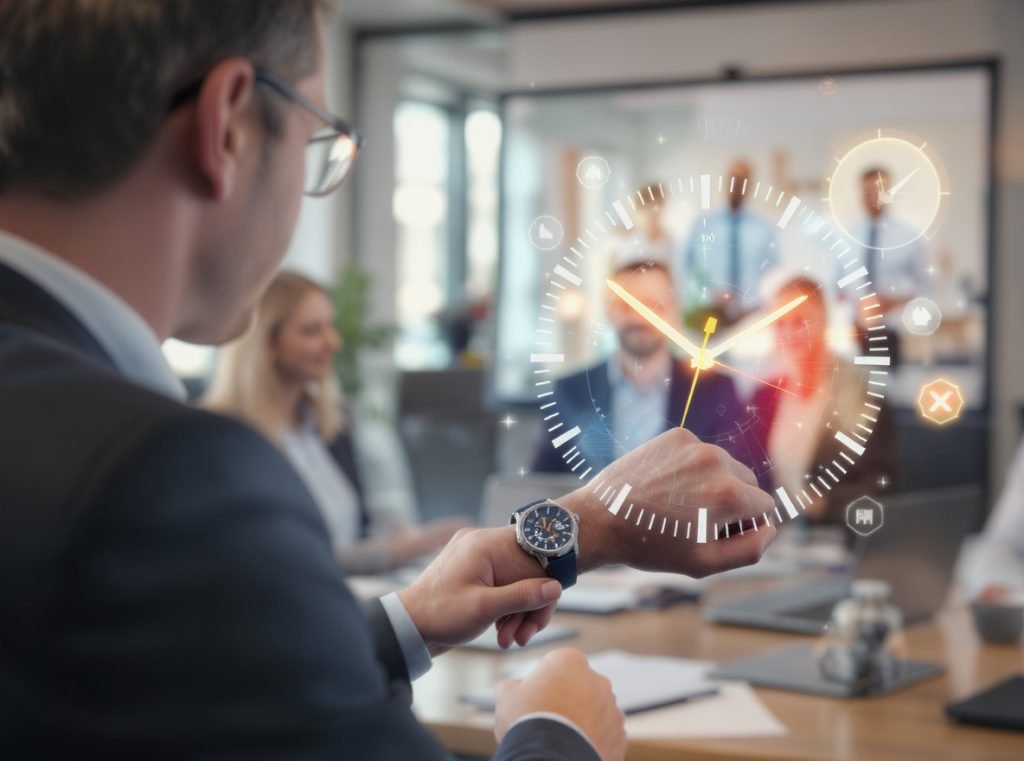
Modern smartwatches deliver accuracy sufficient for most professional timing needs, typically maintaining precision within seconds per month. Consumer models display timing to tenth-of-second precision during active use, making them suitable for business presentations, medical procedures, and productivity tracking.
Professional Application Examples
Healthcare Settings
Medical professionals rely on smartwatch timers for patient examination timing, medication interval tracking, procedure duration monitoring, and shift change reminders. The discrete vibration alerts work effectively even in noisy clinical environments.
Business Presentations
Smartwatch timers help presenters manage time allocation without obvious clock-watching behavior. Countdown warnings at predetermined intervals enable smooth presentation flow and professional time management.
Manufacturing and Quality Control
Industrial applications include vibration alerts for process timing, ensuring workers receive critical timing signals even in loud manufacturing environments where audio alerts might be missed.
How Do Smartwatch Timers Compare to Traditional Methods?
Understanding competitive advantages helps businesses articulate value propositions when marketing smartwatch products to different customer segments.
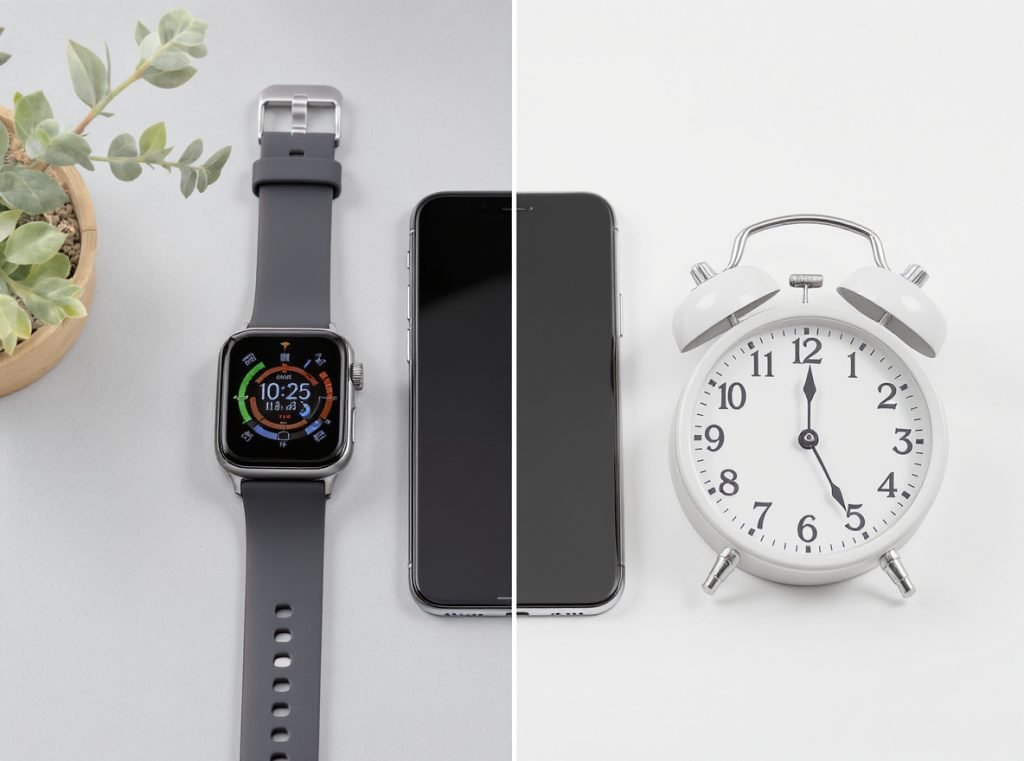
Smartwatches offer superior convenience, integration, and discretion compared to traditional timing methods, though they require battery management and may have limitations for users preferring larger displays or louder audio alerts.
Comprehensive Comparison Analysis
Advantages Over Smartphone Timers:
- Always accessible without finding or unlocking phone
- Independent operation during phone battery failures
- Less socially disruptive in meetings or quiet environments
- Hands-free voice control during activities
- Works reliably during Bluetooth disconnections
Advantages Over Traditional Alarm Clocks:
- Portable timing that travels with the user
- Silent vibration options for shared spaces
- Multiple simultaneous alarms and timers
- Smart features like sleep cycle optimization
- Integration with other health and productivity apps
Considerations for Different Users:
- Battery dependency requires regular charging schedules
- Small screen size may challenge users with vision difficulties
- Initial cost investment higher than basic alternatives
- Comfort considerations for overnight wear during sleep
| Comparison Factor | Smartwatch | Smartphone | Traditional Clock |
|---|---|---|---|
| Portability | Always on wrist | Requires carrying/finding | Stationary |
| Silent Operation | Vibration alerts | Limited vibration | None |
| Independence | Works without phone | Requires battery/power | Requires power |
| Multiple Alarms | 8-10+ simultaneous | Unlimited | Usually 1-2 |
| Smart Features | Sleep tracking, voice control | Apps, connectivity | Basic timing only |
What Should Wholesale Businesses Know About Market Demand?
For distributors, wholesalers, and retailers in the global smartwatch market, understanding timing feature preferences helps with inventory planning and customer education strategies.
Timer and alarm functionality represents fundamental value propositions that customers actively evaluate when choosing smartwatch brands. These features often determine customer satisfaction and repeat purchase behavior in competitive markets.

Target Market Preferences
Fitness Enthusiast Segment
This growing market prioritizes interval training timers, precision stopwatch functions, and vibration strength for workout environments. Premium models with robust haptic feedback and sweat-resistant designs command higher margins.
Business Professional Market
Corporate users need discrete meeting alerts, reliable independence from phones, and professional appearance. Features like silent vibration and customizable alarm scheduling appeal to executives and healthcare workers.
Health-Conscious Consumers
This segment values smart wake technology, medication reminders, and wellness integration. Models offering sleep cycle optimization and health app connectivity see strong demand growth.
Quality Differentiators for Wholesale Success
Critical Performance Factors:
- Vibration motor strength and pattern customization
- Battery life during active timer and alarm use
- Voice recognition accuracy for hands-free operation
- Build quality for reliable daily wear
- App ecosystem integration capabilities
Customer Education Opportunities
Retailers can demonstrate value by teaching customers to set multiple daily alarms, use voice commands effectively, customize vibration patterns for different situations, and integrate timing features with smartphone productivity applications.
At Osmarto, we understand that timing reliability, intuitive interfaces, and robust battery performance are essential for success in global wholesale markets. Our manufacturing process emphasizes these core features while maintaining competitive pricing for distributors worldwide.
Are There Any Limitations Wholesale Partners Should Understand?
Honest assessment of smartwatch timing limitations helps businesses set appropriate customer expectations and reduce return rates.
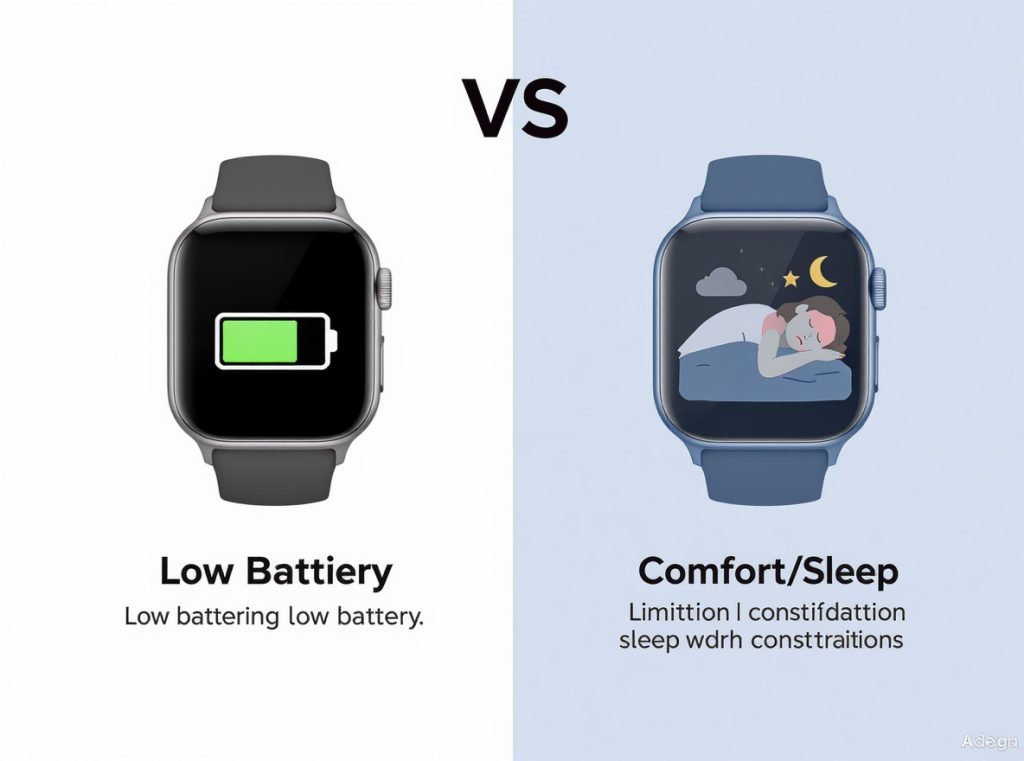
While smartwatch timing features excel in convenience and integration, some limitations include battery dependency, potential comfort issues during sleep wear, limited audio volume compared to traditional alarms, and screen brightness considerations for nighttime use.
Common Customer Concerns
Battery Management Requirements
Unlike traditional alarm clocks, smartwatches require regular charging. Wholesale partners should educate customers about typical 1-2 day battery life and recommend charging routines that don’t interfere with alarm reliability.
Comfort and Sleep Considerations
Some users find wrist wear uncomfortable during sleep, potentially limiting alarm effectiveness. Adjustable bands and lightweight designs help address these concerns for different wrist sizes and preferences.
Volume and Alert Strength Variations
Heavy sleepers may need combination audio and vibration alerts. Understanding vibration strength differences between models helps match products to customer sleep patterns and sensitivity levels.
Solution Strategies for Retailers
Product Positioning Recommendations:
- Offer models with varying vibration strengths for different user types
- Bundle smartwatches with charging accessories for convenience
- Provide clear battery life specifications for timing-dependent use cases
- Demonstrate alarm setup processes during sales interactions
Summary
Modern smartwatches absolutely provide comprehensive timer and alarm capabilities that often surpass traditional timepieces in functionality, convenience, and integration features. From multiple customizable alarms and independent operation to silent wake-up technology and professional-grade timing precision, these devices serve as powerful time management tools for diverse personal and business applications.
Ready to explore wholesale smartwatch opportunities that meet growing global demand for advanced timing features? Contact Osmarto today to discover how our reliable, feature-rich smartwatch solutions can enhance your product portfolio and satisfy customers across fitness, business, and lifestyle market segments.