Skip to content
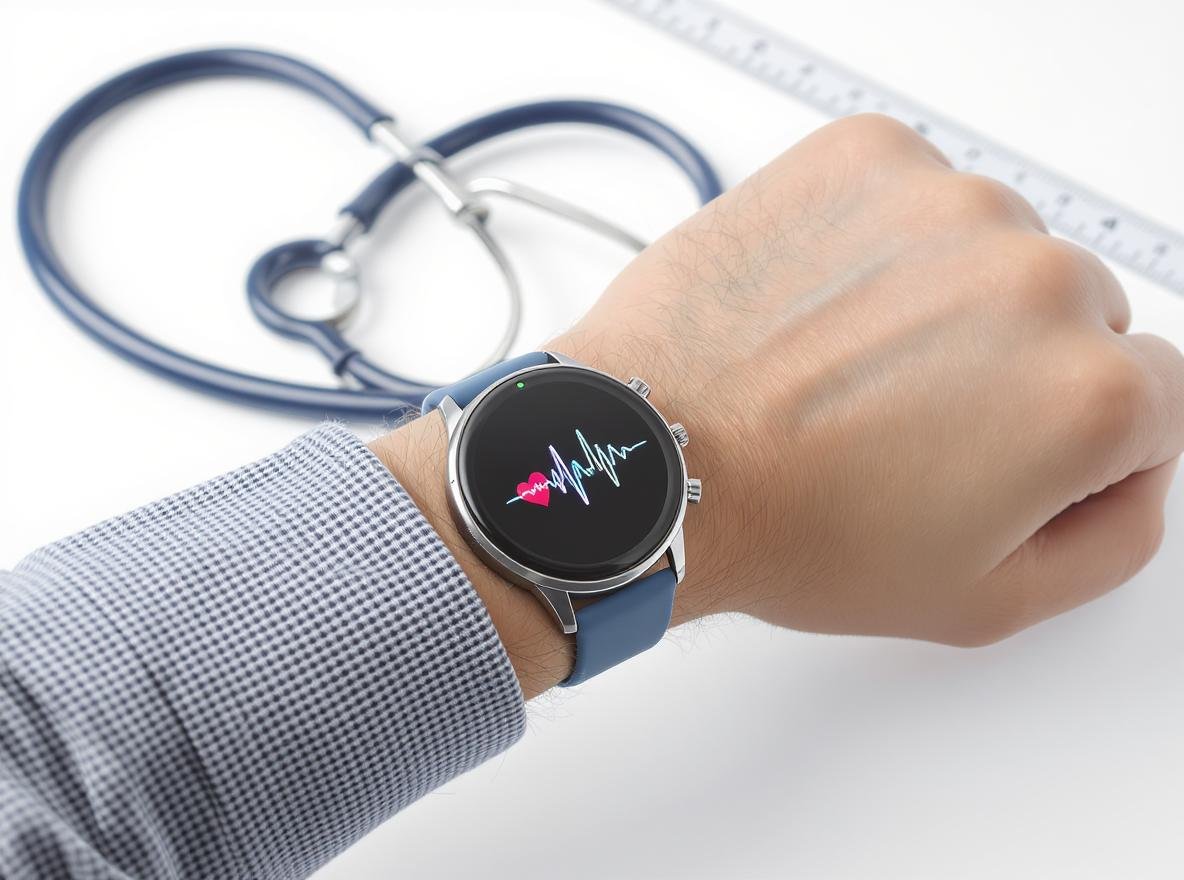
If you have a pacemaker and love technology, you’re probably wondering whether it’s safe to wear a smartwatch. This concern affects millions of people worldwide who depend on pacemakers while wanting to enjoy modern wearable technology benefits.
You can wear a smartwatch with a pacemaker, but you must follow specific safety guidelines. The FDA recommends keeping smartwatches at least six inches away from your pacemaker to prevent electromagnetic interference. Modern pacemakers are designed with shielding against most electromagnetic interference, and clinical studies show minimal risk when devices are used properly with appropriate distance.
Let’s explore everything you need to know about safely combining pacemakers with smartwatch technology.
Do Smartwatches Actually Interfere with Pacemakers?
Understanding the real risks helps you make informed decisions about your health and technology choices.
Yes, certain smartwatch technologies can interfere with pacemakers, particularly bioimpedance sensing and strong magnetic components. However, clinical studies on devices like Apple Watch Series 6 and Samsung Galaxy Watch showed no electromagnetic interference in 171 patients across 684 tests when proper precautions were followed.
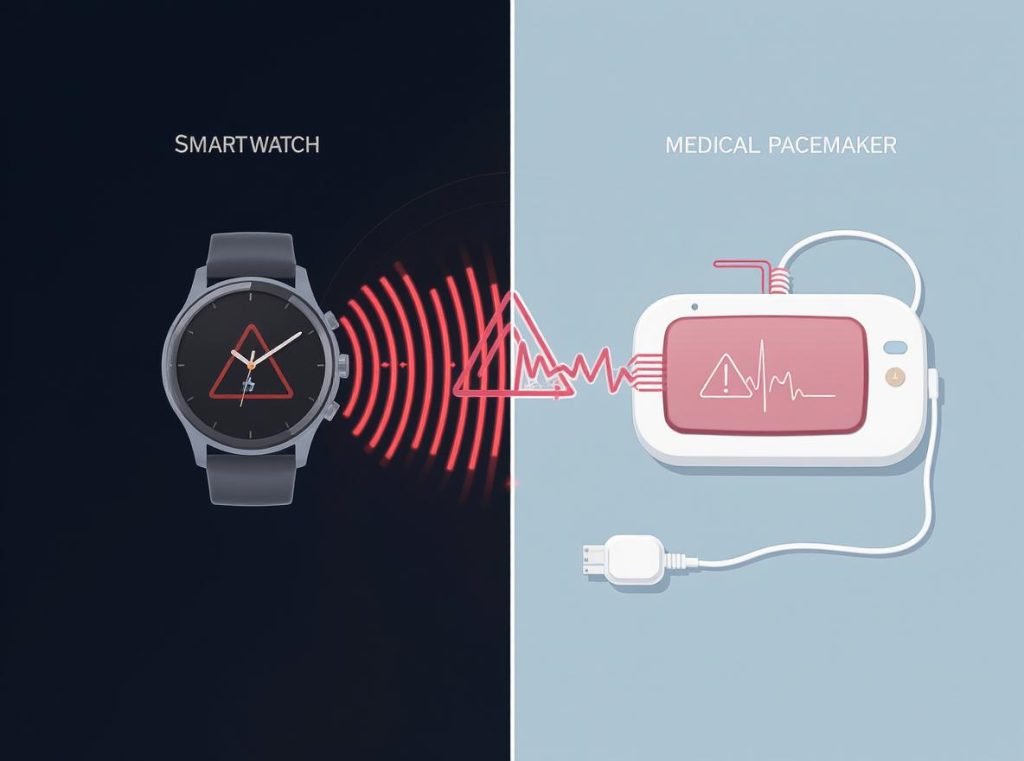
The interference risk depends heavily on the specific technology used:
Low Risk Technologies:
- Basic fitness tracking and step counting
- GPS monitoring and navigation
- Standard Bluetooth connectivity
- LED-based heart rate monitoring
Higher Risk Technologies:
- Bioimpedance sensing used in Samsung Galaxy Watch 4, some Fitbit models, and smart rings
- Strong magnetic charging systems and magnetic wristband clasps
- Body composition measurement features
| Technology Type | Risk Level | Common Applications |
|---|---|---|
| LED heart rate sensors | Low | Basic fitness tracking |
| GPS/Bluetooth | Low | Navigation, connectivity |
| Bioimpedance sensing | High | Body composition, stress monitoring |
| Magnetic charging | Medium-High | Wireless charging systems |
University of Utah research found that bioimpedance technology can generate electrical interference exceeding FDA guidelines. This technology sends small electrical currents through your body to measure body composition, stress levels, and other metrics.
However, don’t panic about all smartwatches. Most basic fitness tracking features pose minimal risk when you maintain proper distance from your pacemaker implant site.
What Distance Should You Maintain Between Your Smartwatch and Pacemaker?
Proper spacing is the most critical safety measure for pacemaker patients using smartwatches.
The FDA recommends keeping smartwatches at least six inches (15 centimeters) away from your pacemaker during normal use. For wireless charging, increase this distance to 12 inches (30 centimeters) to ensure complete safety.
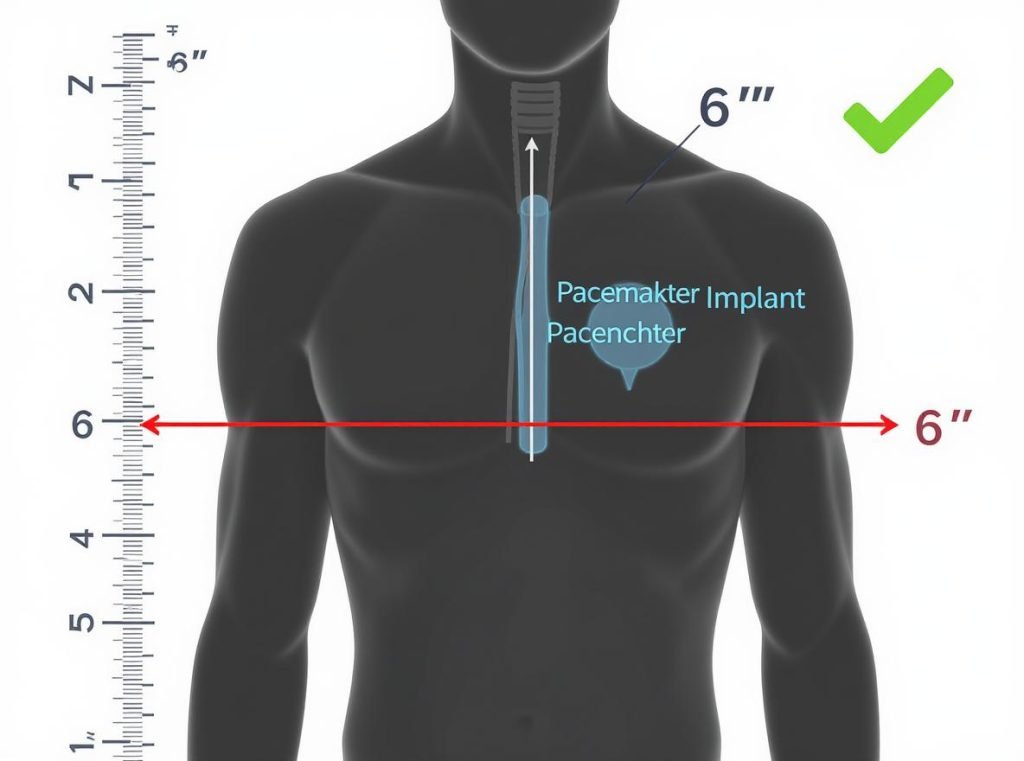
This distance requirement means:
- Wear your smartwatch on the wrist opposite to your pacemaker implant side
- Never place the device in a breast pocket near your pacemaker
- Avoid holding the smartwatch directly over your chest area
- Keep charging stations away from your bed if you sleep near your pacemaker
Why distance matters: Research shows that Fitbit and Apple Watch magnetic wristbands can deactivate ICDs at distances as close as 2.4 and 2.0 centimeters respectively. The six-inch rule provides a significant safety buffer.
Distance guidelines for different activities:
- Normal wearing: Minimum 6 inches (15 cm)
- Wireless charging: Minimum 12 inches (30 cm)
- Device storage: Keep away from pacemaker side completely
- Exercise activities: Maintain distance even during active movement
The distance rule applies consistently regardless of your activity level. Whether you’re exercising, sleeping, or working at a desk, maintain this minimum separation to prevent potential interference.
Remember that both proximity and duration matter for electromagnetic interference. Even brief close contact should be avoided to prevent triggering your pacemaker’s magnet mode or other protective responses.
Which Smartwatch Features Are Most Concerning for Pacemaker Users?
Not all smartwatch functions present equal risks to pacemaker patients, and understanding these differences helps you make informed choices.
Bioimpedance sensing technology poses the highest risk, followed by strong magnetic components in charging systems. Basic fitness tracking features like step counting and LED heart rate monitoring are generally much safer for pacemaker patients.
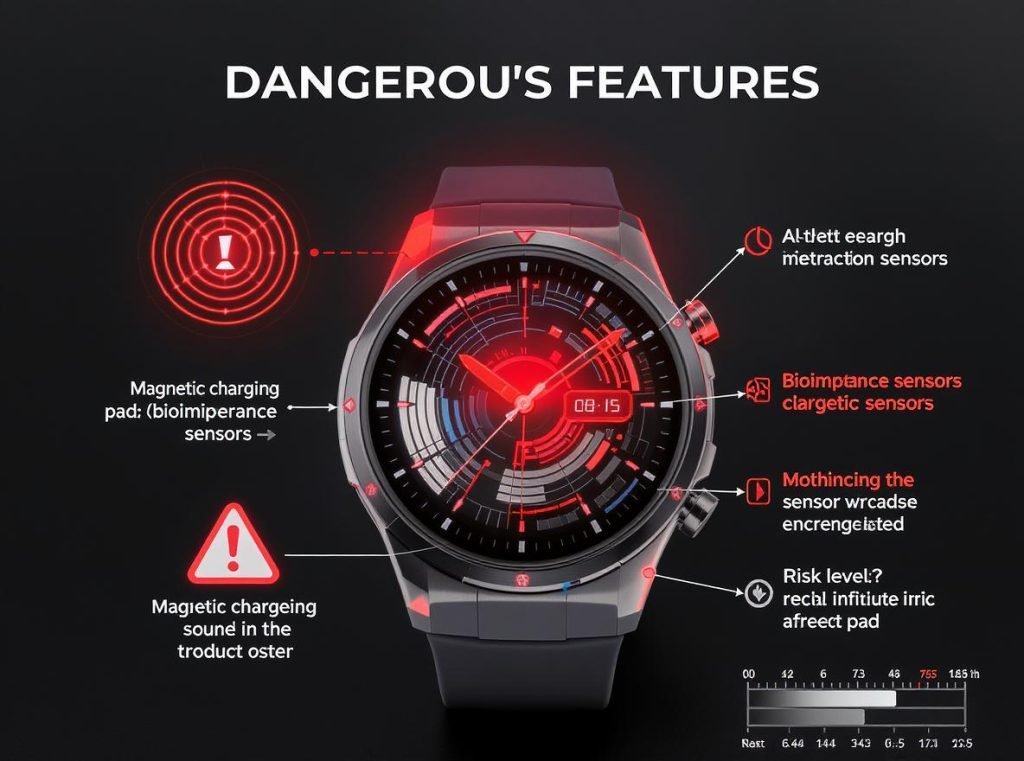
Highest Risk Features:
Bioimpedance Technology: This represents the most significant concern for pacemaker patients. It’s used for:
- Body composition analysis (fat/muscle percentage)
- Stress level monitoring
- Blood pressure estimation
- Hydration tracking
Strong Magnetic Components: These can trigger your pacemaker’s magnet mode:
- Wireless charging systems (especially MagSafe-style)
- Magnetic wristband clasps and connectors
- Magnetic mounting systems
Medium Risk Features:
| Feature | Risk Level | Safety Considerations |
|---|---|---|
| Cellular connectivity | Medium | Higher power radio frequencies than Wi-Fi |
| NFC payments | Medium | Electromagnetic pulses during transactions |
| Always-on displays | Low-Medium | Continuous power draw, minimal EMF |
| Wi-Fi syncing | Low-Medium | Periodic high-power transmission |
Lower Risk Features:
- LED heart rate monitoring: Uses light sensors with minimal electromagnetic output
- Step counting: Accelerometer-based with no radio signal transmission
- Sleep tracking: Passive monitoring with low electromagnetic activity
- Basic time display: Fundamental electronic function with minimal emissions
Important note about bioimpedance: This technology sends electrical currents through your body, which can interfere with your pacemaker’s normal operation. Devices with this feature include newer Samsung Galaxy Watches, some Fitbit models, and various smart rings.
When evaluating smartwatch options, prioritize devices without bioimpedance sensing if you have a pacemaker. Many manufacturers now clearly label products that include this technology.
Are There Specific Smartwatch Brands That Are Safer for Pacemaker Patients?
Different manufacturers approach medical device compatibility with varying levels of testing and awareness, though proper usage distance remains more important than brand selection.
Based on clinical research and electromagnetic compatibility testing, some brands show better safety profiles for pacemaker patients. However, the key factor remains avoiding bioimpedance features and maintaining proper distance rather than brand loyalty.
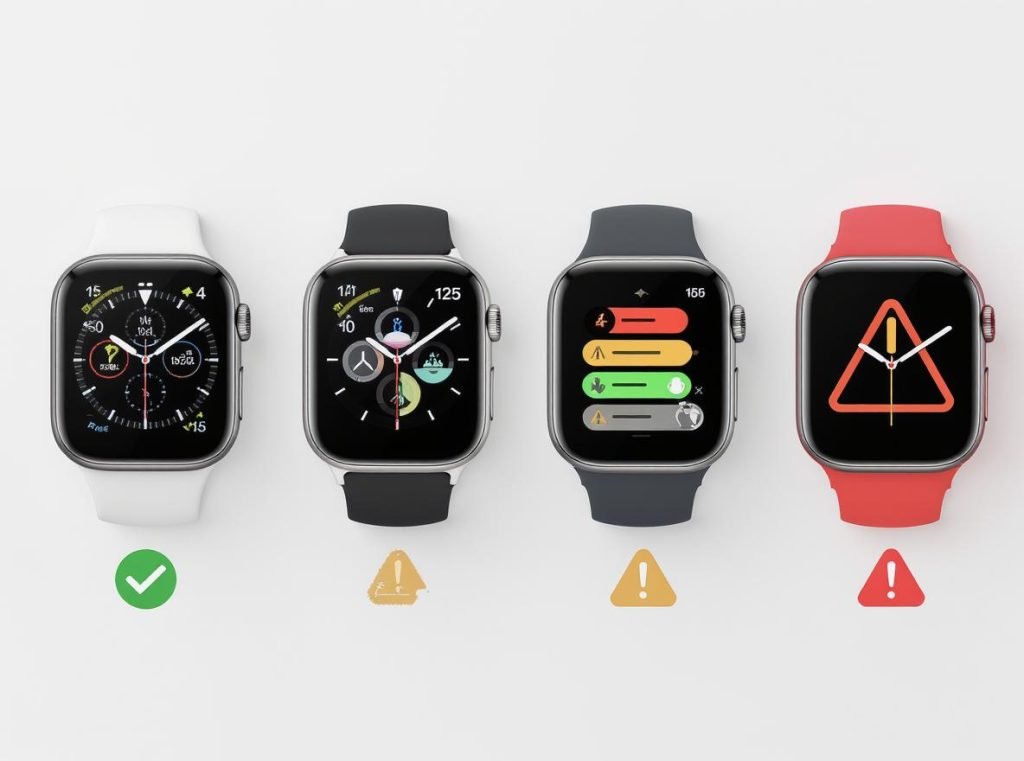
Generally Safer Options:
Apple Watch (without bioimpedance features):
- Extensive clinical testing showing minimal interference in 171-patient study
- Comprehensive warnings about medical device compatibility
- Clear documentation of safe distance requirements
- No bioimpedance sensing in current models
Garmin Devices:
- Focus on basic fitness tracking without controversial sensing technologies
- No reported interference issues in user communities
- Strong reputation among athletes with cardiac devices
- Clear electromagnetic compatibility guidelines
Basic Fitbit Models:
- Entry-level devices without bioimpedance sensing
- Lower power consumption than advanced smartwatches
- Simple fitness tracking functionality
Exercise Caution With:
| Brand/Model | Concern | Recommendation |
|---|---|---|
| Samsung Galaxy Watch 4+ | Bioimpedance sensing | Avoid or disable body composition features |
| Advanced Fitbit models | Some include bioimpedance | Check specifications carefully |
| Smart rings | Often use bioimpedance | Generally not recommended |
| Generic/budget brands | Limited safety testing | Insufficient electromagnetic compatibility data |
Key Considerations: Most major manufacturers now include specific warnings about pacemaker interference in their product documentation. Apple, Samsung, and Garmin all provide detailed guidance on safe usage with cardiac devices.
The reality is that electromagnetic interference depends more on specific features and usage patterns than brand reputation. Any smartwatch with bioimpedance sensing poses risks, while basic fitness trackers from any reputable manufacturer are generally safer when used at proper distances.
For wholesale customers, Osmarto ensures our smartwatch designs consider electromagnetic compatibility standards, though we always recommend individual medical consultation for cardiac device patients.
What Should You Do If You Experience Symptoms While Wearing a Smartwatch?
Quick recognition and response to potential interference symptoms protects your health and provides valuable information for your medical team.
If you experience dizziness, palpitations, chest discomfort, irregular heartbeat, or feeling faint while wearing a smartwatch, immediately remove the device and move it several feet away. Contact your cardiologist promptly, especially if symptoms persist beyond a few minutes.
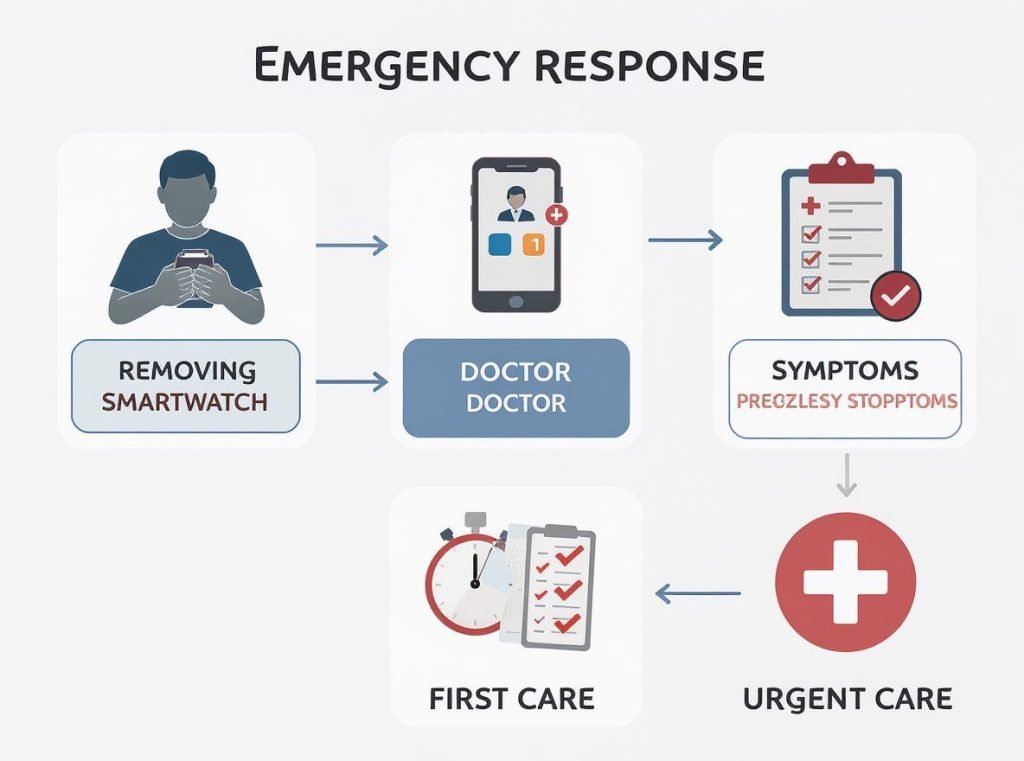
Immediate Response Protocol:
- Remove the smartwatch immediately and place it at least 10 feet away
- Sit down safely and assess your symptoms
- Check your pulse manually for irregularities
- Note the time and circumstances for medical reporting
- Contact your healthcare provider if symptoms persist or worsen
Symptoms Requiring Immediate Medical Attention:
- Sudden onset of rapid or extremely slow heartbeat
- Chest pain or pressure that feels different from normal
- Dizziness severe enough to affect balance
- Shortness of breath that coincides with device use
- Any sensation suggesting pacemaker malfunction
Documentation for Medical Teams:
Create a detailed record including:
- Exact time symptoms began and ended
- Smartwatch features active during incident
- Distance between watch and pacemaker
- Duration of device use before symptoms
- Other electronic devices nearby
Important Context: Most symptoms resolve quickly once the interference source is removed. However, never assume symptoms are definitely device-related without professional evaluation, as other medical conditions can cause similar sensations.
Follow-up Actions:
- Schedule a pacemaker interrogation to check for recorded interference events
- Discuss the incident with your cardiologist during your next appointment
- Consider reporting the incident to the device manufacturer
- Evaluate whether to continue using the smartwatch or switch to alternatives
Your cardiologist may want to download data from your pacemaker to check for electromagnetic interference events. This objective data helps determine whether the smartwatch actually affected your device’s function or if symptoms had other causes.
How Can You Test if Your Smartwatch Affects Your Specific Pacemaker?
Professional testing provides personalized safety guidance tailored to your specific pacemaker model and medical situation.
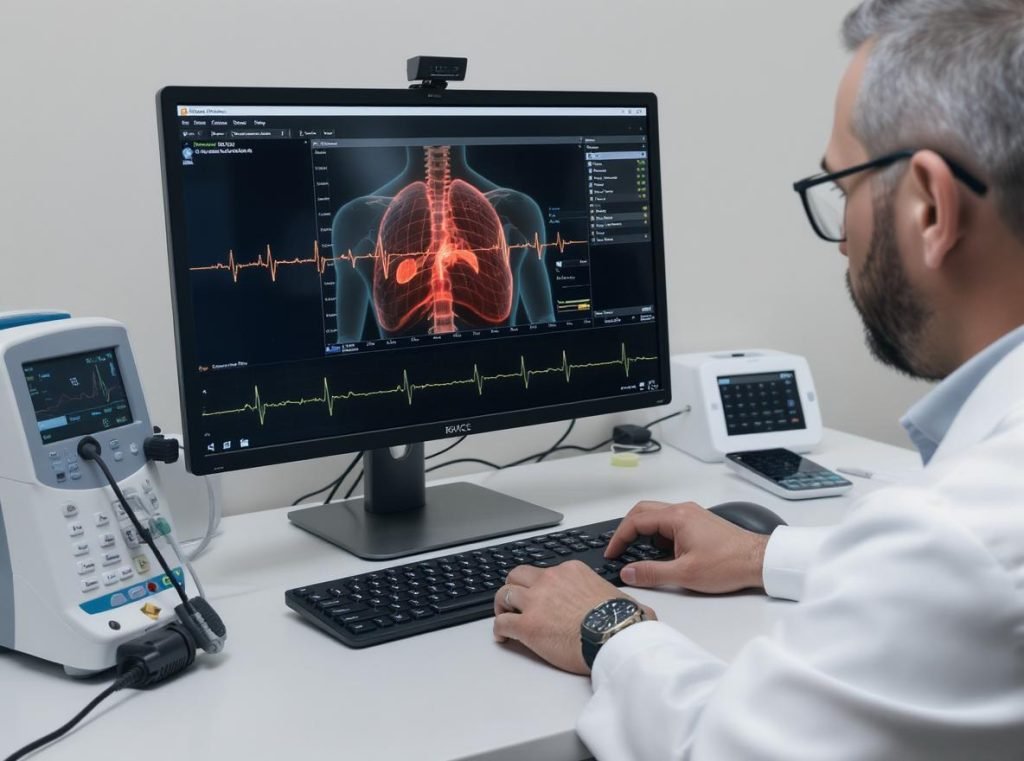
Schedule a supervised testing appointment with your cardiologist while wearing your smartwatch. Medical professionals can monitor your pacemaker function in real-time to detect any interference patterns specific to your device combination and provide personalized safety recommendations.
Pre-Appointment Preparation:
- Bring your fully charged smartwatch and any accessories
- Prepare a list of features you use most frequently
- Note any symptoms you’ve experienced during previous use
- Research your specific pacemaker model’s electromagnetic sensitivity
Professional Testing Process:
Baseline Assessment:
- Cardiologist interrogates your pacemaker to establish normal function
- Review of your device’s sensitivity settings and programming
- Discussion of your typical smartwatch usage patterns
Supervised Testing Scenarios:
| Test Phase | Distance | Duration | Features Tested |
|---|---|---|---|
| Normal wearing | 6+ inches | 10-15 minutes | Basic functions, notifications |
| Closer proximity | 4-5 inches | 2-3 minutes | Test interference threshold |
| Feature activation | Normal distance | 5 minutes each | GPS, Wi-Fi, different sensors |
| Charging simulation | Various distances | 3-5 minutes | Magnetic field effects |
What Your Doctor Will Monitor:
- Pacemaker sensing function and threshold changes
- Any mode switching or protective responses
- Battery current drain or unusual electrical activity
- Heart rhythm changes during different test phases
Personalized Recommendations: Based on testing results, your cardiologist will provide specific guidance about:
- Safe features for your particular situation
- Optimal wearing practices for your pacemaker model
- Signs of interference specific to your device
- Follow-up monitoring schedule if needed
Important Variables: Pacemaker technology varies significantly between manufacturers (Medtronic, Abbott, Boston Scientific, Biotronik) and generations. Newer devices often include better electromagnetic shielding, but individual sensitivity can vary based on implant location and programming settings.
Remember that what’s safe for one pacemaker patient may not apply to another, making individualized testing valuable for peace of mind and optimal safety.
What Alternatives Exist for Pacemaker Patients Who Want Fitness Tracking?
Multiple proven options provide comprehensive health monitoring while maintaining safe distances from your pacemaker implant.
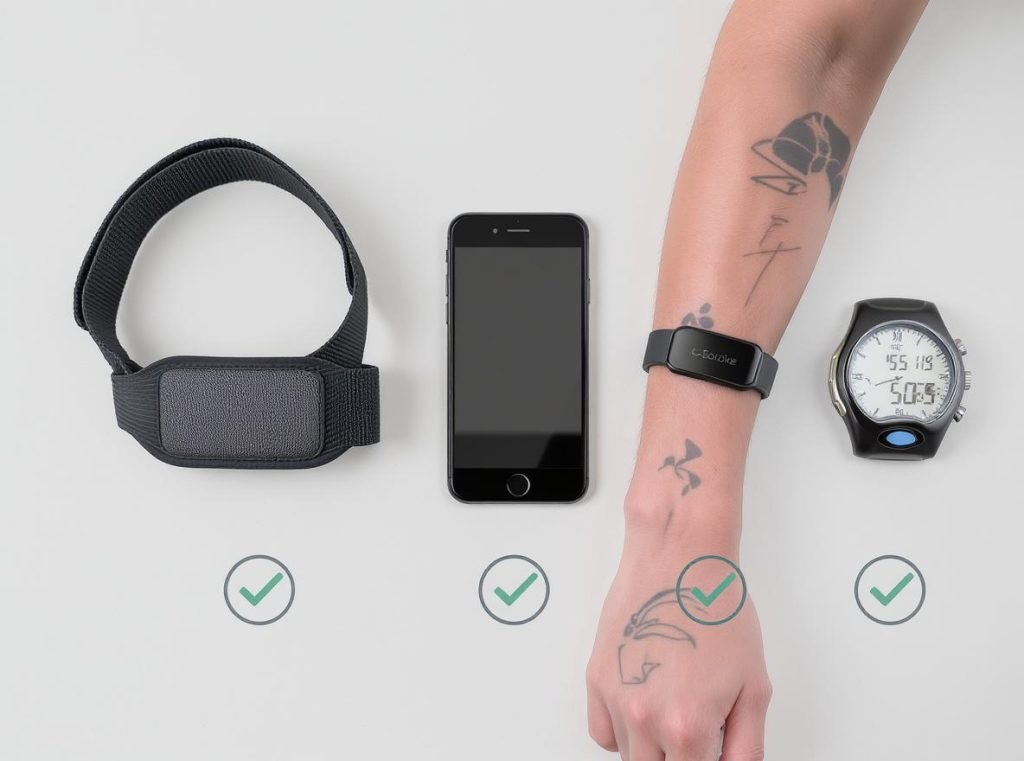
Chest-worn heart rate monitors, smartphone-based tracking, and alternative wearable placements offer excellent fitness monitoring without wrist-based electromagnetic interference concerns. These solutions often provide more accurate data than smartwatches while maintaining optimal safety for cardiac device patients.
Chest Strap Heart Rate Monitors:
These devices naturally maintain safe distance from chest-implanted pacemakers:
- Polar and Garmin chest straps: Provide highly accurate heart rate data during exercise
- Compatible with most fitness apps: Sync with smartphone health platforms
- No magnetic charging concerns: Use replaceable batteries
- Real-time workout monitoring: Connect to gym equipment and fitness apps
Note: Some users report occasional interference with chest straps, so individual testing remains important.
Smartphone-Based Tracking Solutions:
| Tracking Method | Accuracy | Safety | Limitations |
|---|---|---|---|
| Built-in step counter | High | Excellent | Requires carrying phone |
| GPS workout tracking | Excellent | Perfect | Battery drain during long activities |
| Health app integration | Good | Perfect | Manual input for some metrics |
| Camera heart rate apps | Moderate | Excellent | Less convenient than wearables |
Alternative Wearable Placements:
Upper Arm Monitors:
- Devices like Scosche Rhythm+ attach to your upper arm
- Maintain safe distance from chest-implanted pacemakers
- Provide accurate heart rate monitoring during exercise
- Compatible with most fitness apps and equipment
Ankle-Worn Fitness Trackers:
- Maximum possible distance from chest pacemakers
- Excellent for step counting and basic activity tracking
- Some models include GPS for outdoor activities
- Limited heart rate accuracy compared to chest or wrist placement
Smart Clothing Options:
- Fitness shirts with embedded heart rate sensors
- Maintain appropriate distance from pacemakers
- Provide continuous monitoring during workouts
- Growing market with improving technology
Traditional Alternatives:
- Manual pulse checking: Learn proper technique for accurate readings
- Blood pressure cuffs: Separate devices for cardiovascular monitoring
- Basic pedometers: Simple, reliable step counting without electromagnetic concerns
For wholesale partners interested in serving the cardiac device market, Osmarto can discuss fitness tracking solutions that prioritize medical device compatibility. This growing market segment values safety-first approaches to wearable technology.
Should You Inform Your Doctor About Your Smartwatch Use?
Comprehensive communication with your medical team ensures optimal cardiac care and safety monitoring for all your technology choices.
Yes, always inform your cardiologist about any wearable device use during routine appointments. Complete information about potential electromagnetic interference sources helps medical professionals properly interpret pacemaker function tests and provide accurate safety guidance tailored to your specific situation.

Essential Information to Share:
Device Details:
- Specific smartwatch model and manufacturer
- Features you use regularly (GPS, heart rate monitoring, notifications)
- Frequency and duration of daily wear
- Any symptoms or concerns you’ve experienced
Usage Patterns:
- How you maintain distance from your pacemaker
- Charging habits and locations
- Exercise activities while wearing the device
- Any other electronic devices you use regularly
Medical Documentation Benefits:
Your healthcare team should record smartwatch use in your medical records for several important reasons:
- Emergency situations: Other providers need to understand potential interference sources
- Pacemaker programming: Settings may need adjustment based on your technology use
- Symptom correlation: Helps identify patterns between device use and any cardiac events
- Future device decisions: Informs recommendations for pacemaker upgrades or replacements
Important Questions for Your Cardiologist:
| Question Category | Specific Inquiries |
|---|---|
| Device Compatibility | How sensitive is my pacemaker model to electromagnetic fields? |
| Feature Safety | Are there specific smartwatch functions I should avoid completely? |
| Monitoring Schedule | Should I have more frequent pacemaker checks due to wearable use? |
| Symptom Recognition | What warning signs should prompt immediate device removal? |
| Technology Updates | Are newer pacemaker models less susceptible to interference? |
Enhanced Monitoring Considerations:
Some cardiologists recommend more frequent pacemaker interrogations for patients using multiple electronic devices. This proactive approach can detect interference effects early and allow for safety recommendation adjustments.
Pacemaker Upgrade Discussions: If your current device is particularly sensitive to electromagnetic fields, ask about newer pacemaker technologies with improved shielding. Modern devices often include better protection against consumer electronics interference.
Home Monitoring Integration: Many pacemakers now include remote monitoring capabilities. Discuss how smartwatch data might complement (not replace) your pacemaker’s home monitoring system for comprehensive cardiac care.
Open communication about your technology preferences helps your medical team provide the best possible care while supporting your quality of life goals.
How Is Smartwatch Technology Evolving to Address Pacemaker Compatibility?
Industry awareness and collaborative research drive significant improvements in medical device compatibility for consumer wearable technology.
Manufacturers increasingly recognize pacemaker compatibility as a critical design consideration. Future developments include improved electromagnetic shielding, lower-power wireless systems, and alternative sensing technologies that reduce interference risks for cardiac device patients.
Current Industry Developments:
Enhanced Electromagnetic Compatibility:
- Better shielding around wireless components and charging systems
- Lower-power Bluetooth and Wi-Fi implementations that reduce interference potential
- More precise electromagnetic field control during device operation
- Improved antenna design to minimize spurious emissions
Alternative Charging Technologies:
- Solar charging capabilities: Reduce dependence on magnetic wireless charging
- Kinetic energy harvesting: Generate power from natural arm movement
- Improved battery efficiency: Extend time between charging cycles
- Wired charging options: Alternative to magnetic systems for sensitive users
Medical Device Collaboration:
| Development Area | Timeline | Impact |
|---|---|---|
| Pacemaker-safe bioimpedance | 3-5 years | Enable body composition tracking |
| Medical device detection | Research phase | Automatic power reduction near implants |
| Distance sensing alerts | 2-3 years | Warning when too close to chest |
| Medical mode settings | Currently available | Reduced EMF output options |
Regulatory and Standards Evolution:
- Stricter electromagnetic compatibility testing requirements
- Enhanced labeling standards for medical device warnings
- Industry collaboration between wearable and medical device manufacturers
- Updated FDA guidance on consumer electronics and implanted devices
Future Pacemaker Improvements:
The medical device industry continues advancing pacemaker technology with:
- Enhanced electromagnetic shielding: Better protection against consumer electronics
- Improved interference detection: More sophisticated filtering of external signals
- Adaptive programming: Automatic adjustment to electromagnetic environments
- Better patient alerts: Enhanced notification systems for interference detection
Research Directions:
- Development of sensing technologies that don’t interfere with cardiac devices
- Integration possibilities between fitness trackers and pacemaker monitoring
- Enhanced remote monitoring that incorporates lifestyle data safely
- Collaborative standards development between technology and medical industries
Market Response: Major manufacturers like Apple, Samsung, and Garmin now maintain dedicated teams focused on medical device compatibility. This investment reflects growing awareness of the cardiac device patient market.
For wholesale customers, these developments represent opportunities to serve health-conscious consumers with cardiac devices. Osmarto stays current with electromagnetic compatibility advances to offer products that meet evolving safety standards.
Summary
Smartwatch use with pacemakers requires careful attention to safety guidelines, but millions of patients successfully combine both technologies. Maintain at least six inches of distance, avoid bioimpedance sensing features, and communicate openly with your healthcare team about device use for optimal safety.
Ready to explore pacemaker-compatible smartwatch options for your customers? Contact Osmarto today to discuss wholesale solutions that prioritize both innovation and medical device safety. Our team understands the unique requirements of health-conscious consumers and can help you serve this important market segment with confidence and expertise.