Skip to content
Planning to travel with your smartwatch but unsure about airport security rules? You’re not alone. Many travelers worry about damaging their valuable devices or facing delays at security checkpoints when carrying electronic wearables.
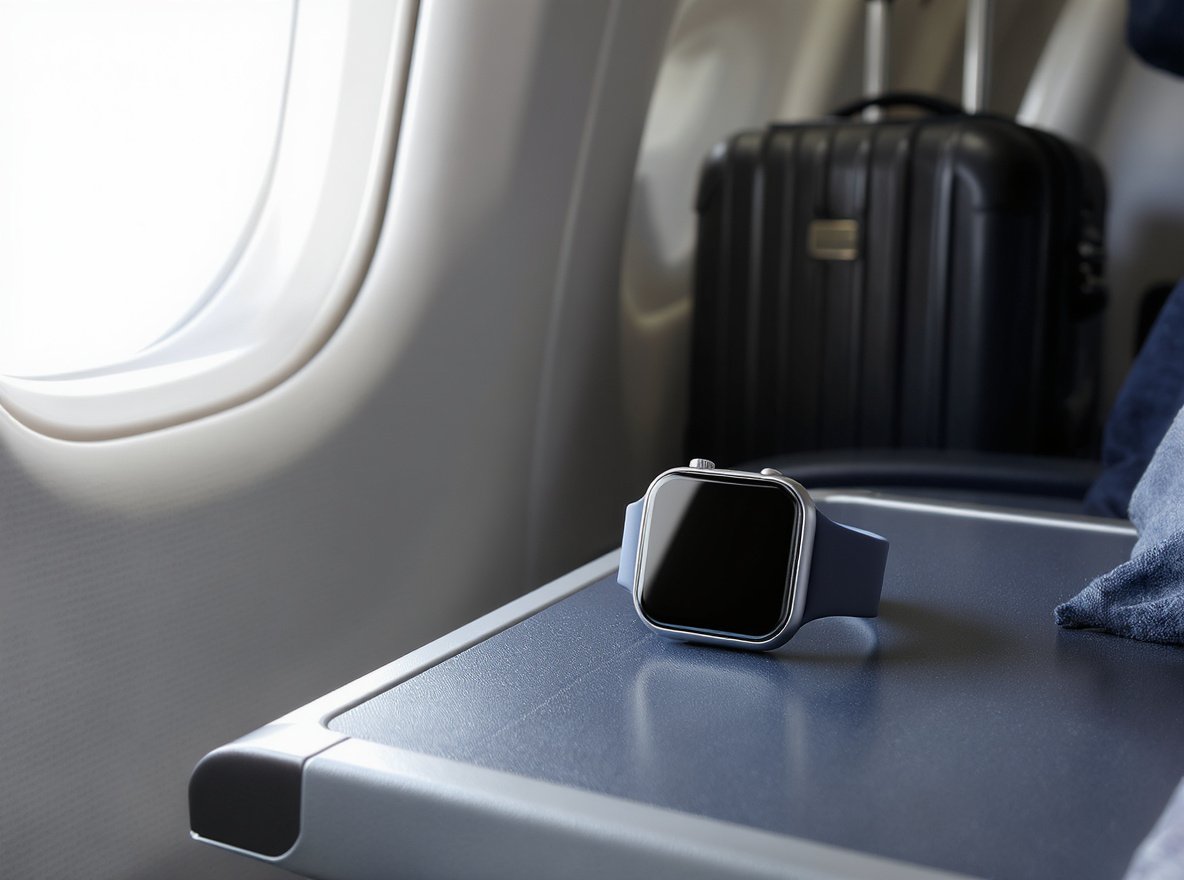
Smartwatches must travel in carry-on luggage only – never in checked bags. TSA’s 2025 regulations specifically ban all lithium-ion batteries (including those in smartwatches) from checked luggage due to fire risks. All electronic devices with lithium batteries must travel in your carry-on baggage.
But there’s more to consider than just basic rules. Let’s dive deeper into the best practices, security procedures, and expert tips to ensure your smartwatch travels safely.
Do I Need to Remove My Smartwatch at Airport Security?
Understanding security screening procedures helps you move through checkpoints efficiently and protects your device from unnecessary handling.
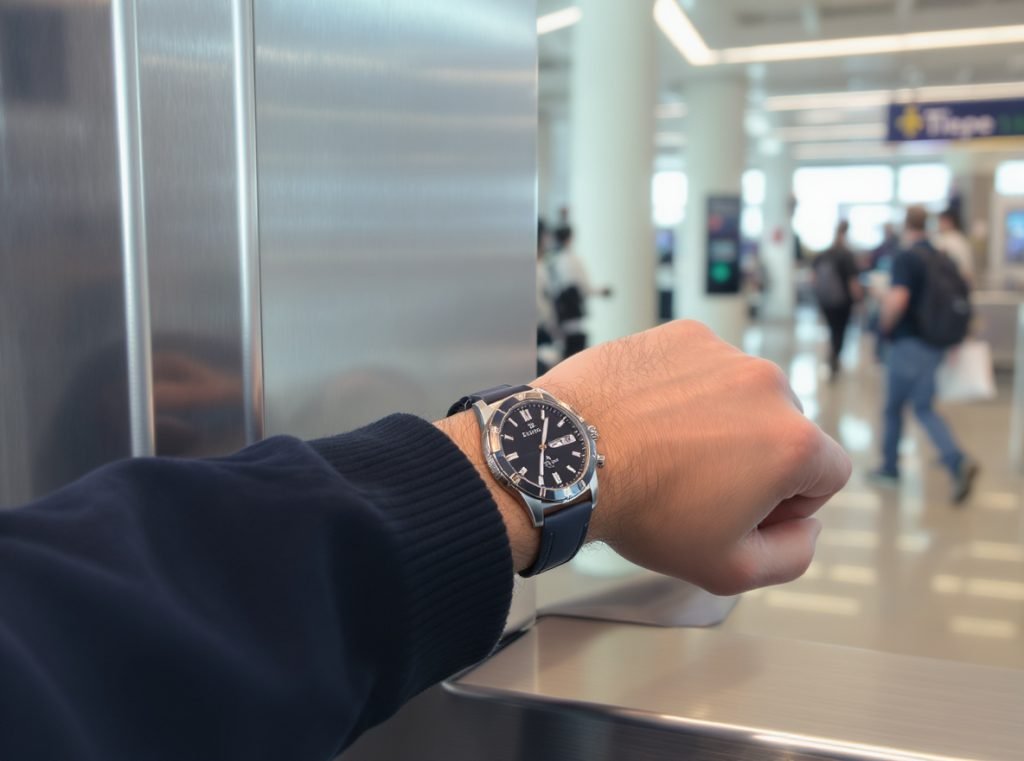
Most travelers can keep their smartwatch on during security screening. Modern smartwatches typically pass through both metal detectors and body scanners without issue. TSA doesn’t have specific rules requiring smartwatch removal, and agents generally allow them to stay on your wrist.
Security Screening Variations
Different security technologies handle smartwatches differently:
- Standard metal detectors: Usually allow smartwatches to stay on your wrist
- Body scanners: Often require all electronic devices to be removed
- TSA PreCheck lanes: Generally more lenient with small electronics
Some security officers may ask you to remove your smartwatch if it appears bulky or resembles other electronic devices that require separate screening.
| Scanner Type | Removal Required | Additional Notes |
|---|---|---|
| Metal Detector | Usually No | May trigger if watch has significant metal content |
| Body Scanner | Often Yes | All electronics typically removed |
| TSA PreCheck | Rarely | Expedited screening with fewer removals |
Should I Pack My Smartwatch in Checked or Carry-On Luggage?
The choice between checked and carry-on luggage can significantly impact your smartwatch’s safety and your travel experience.
Always pack your smartwatch in carry-on luggage. Checked baggage poses risks of theft, damage, and loss that make carry-on the only sensible choice for valuable electronics.

Why Carry-On Is Mandatory
The TSA’s updated 2025 regulations make this choice simple – smartwatches cannot legally travel in checked luggage:
Fire Safety Regulations: Lithium-ion batteries in checked luggage pose fire risks in cargo holds where crews cannot respond quickly to emergencies. This regulation applies to all battery-powered devices including smartwatches, fitness trackers, phones, and tablets.
Gate-Check Procedures: If your carry-on bag gets gate-checked due to space limitations, you must remove your smartwatch and any other battery-powered devices before the bag goes into the cargo hold.
- TSA mandates all lithium batteries stay in the cabin
- Cargo hold fires from batteries cannot be controlled
- Violation can result in confiscation or legal penalties
- No exceptions for small devices like smartwatches
Additional Safety Benefits
Beyond regulatory compliance, carry-on storage offers practical advantages:
- Theft rates are higher in checked luggage areas
- Temperature extremes in cargo holds can damage batteries
- Lost luggage means losing your expensive device
- You have no control over handling once bags are checked
Professional Travel Advice
Aviation industry professionals strongly recommend: “NEVER put your valuable stuff like watches, money, laptops, jewellery in your checked bag.” This guidance comes from experience with damaged and stolen items.
Keep your smartwatch with you at all times during travel. Wear it or store it securely in your carry-on bag’s interior pockets.
What Are the Battery Restrictions for Smartwatches on Flights?
Understanding battery regulations ensures compliance with airline safety requirements and prevents confiscation at security.
Smartwatch batteries are well within safe limits for air travel. Most smartwatches contain lithium-ion batteries under 100 watt-hours, making them acceptable in both carry-on and checked luggage without special restrictions.

Battery Safety Classifications
The FAA states that “Most consumer personal electronic devices containing batteries are allowed in carry-on and checked baggage, including but not limited to cell phones, smart phones, data loggers, PDAs, electronic games, tablets, laptop computers, cameras, camcorders, watches, calculators, etc.”
Smartwatch batteries typically range from 0.5 to 2 watt-hours, far below the 100 watt-hour limit for unrestricted transport.
However, airlines may impose quantity restrictions:
- Multiple devices might require declaration
- Some carriers limit total battery capacity per passenger
- Business travelers with multiple smartwatches should check airline policies
Can Security Scanners Damage My Smartwatch?
Concerns about X-ray and scanner damage are common among travelers carrying expensive electronics.
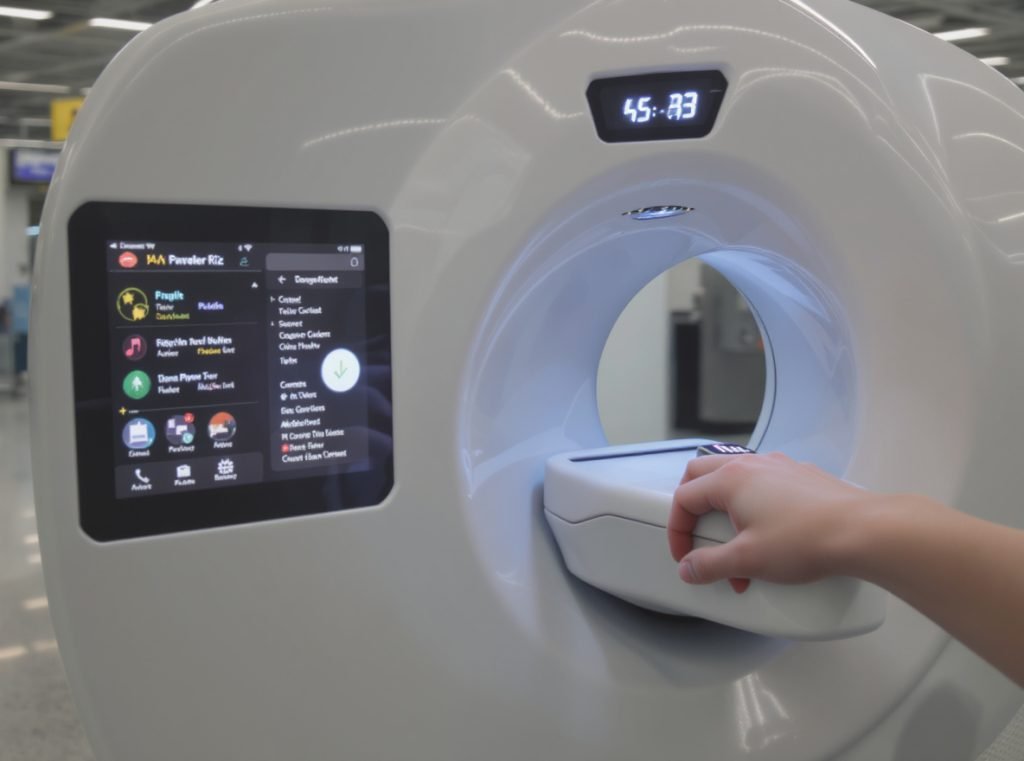
Airport security scanners cannot damage smartwatches. X-ray scanners and metal detectors use mild X-ray doses that are insufficient to harm electronic devices. The electromagnetic radiation from these scanners doesn’t affect the internal components of modern smartwatches.
Scanner Safety Science
Security experts confirm that even cargo X-ray scanners, which are 33,000 times more powerful than airport luggage scanners, don’t damage electronic devices. The wavelength of X-rays allows them to pass between molecules without affecting electronic functionality.
Your smartwatch components are designed to withstand much stronger electromagnetic fields than those generated by airport security equipment.
Common scanner concerns and realities:
- X-ray damage: Impossible at airport scanner power levels
- Data loss: No risk to stored information or settings
- Battery drain: Minimal impact on battery life
- Screen damage: Scanners don’t affect display technology
How Should I Prepare My Smartwatch for Travel?
Proper preparation prevents problems and ensures smooth travel experiences with your wearable technology.
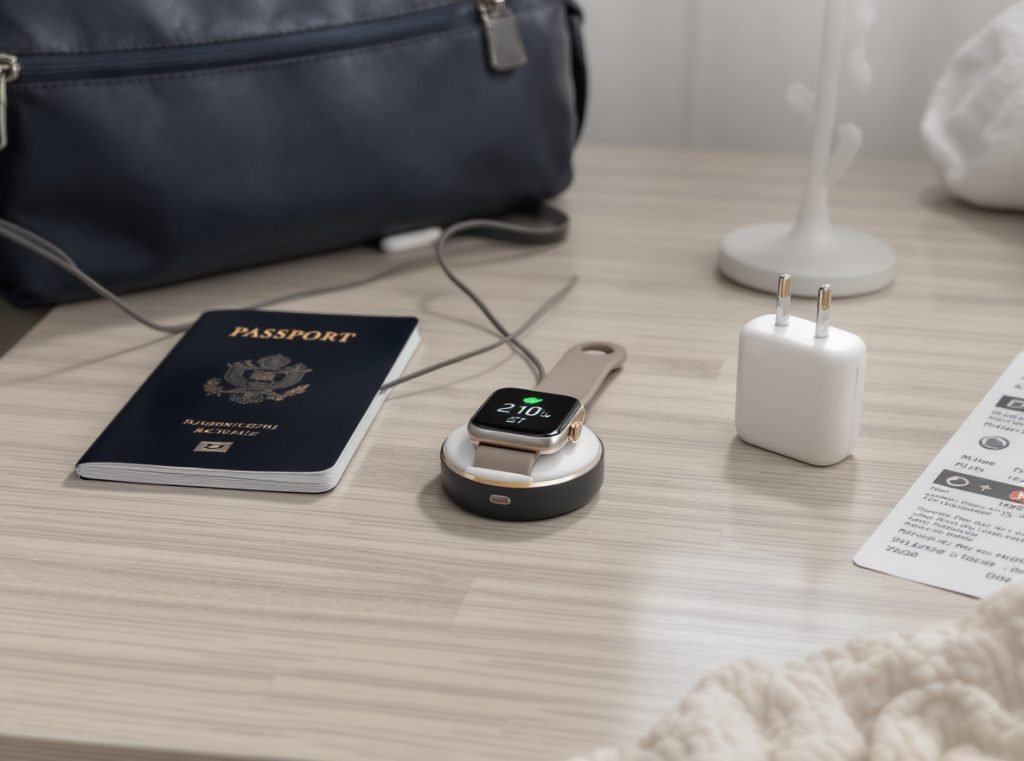
Fully charge your smartwatch before travel, enable low power mode for long flights, download offline content, and understand international cellular compatibility limitations.
Pre-Travel Checklist
Complete these essential steps before heading to the airport:
Battery and Software Preparation
- Charge to 100% battery capacity (Apple Watch typically lasts 18-36 hours)
- Install latest firmware updates for security and functionality
- Enable low power mode to extend battery life during flights
- Turn off unnecessary features like always-on display
Content and Connectivity
- Download offline maps and travel apps before departure
- Check cellular compatibility for your destination (North American smartwatches may not work with European networks)
- Sync important data to your smartphone or cloud storage
- Set up multiple time zone displays for easier schedule management
| Preparation Step | Why Important | Time Required |
|---|---|---|
| Full Charge | Avoid dead battery during travel | 1-2 hours |
| Software Update | Latest security features | 15-30 minutes |
| Data Backup | Protect against loss | 5-10 minutes |
What If My Smartwatch Gets Flagged During Security?
Knowing how to handle security complications reduces stress and delays during screening.
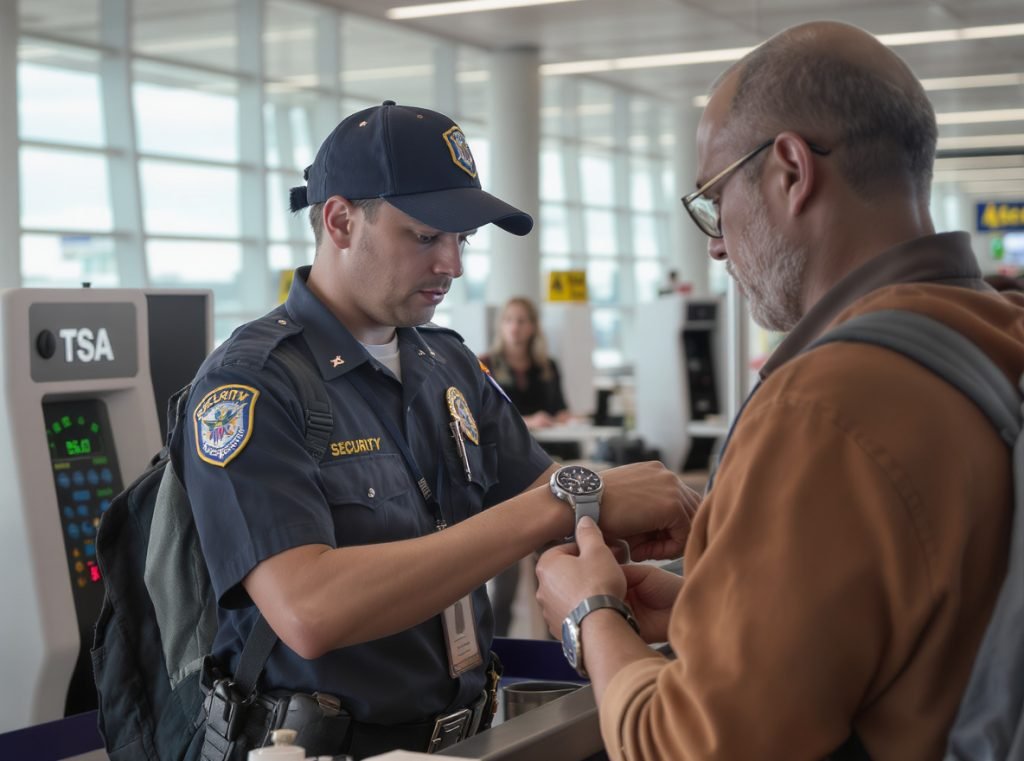
Stay calm and cooperate fully with TSA agents. Being flagged doesn’t necessarily indicate a problem – it could be random selection or due to factors like perspiration, which can trigger body scanners.
Common Security Scenarios
TSA officers have final authority in the screening process and may occasionally request additional steps:
Power-On Demonstrations
TSA officers may ask you to power up your smartwatch to demonstrate functionality. Keep your device charged enough to show it’s working properly. Powerless devices will not be permitted onboard.
Physical Inspection Procedures
- Manual inspection of the device exterior
- Swab testing for explosive residues
- Questions about device functions and features
- Temporary removal for detailed examination
Removal Best Practices
If asked to remove your smartwatch, place it in a small dish or secure container rather than loose in a bin to prevent loss or damage during screening.
Best Response Practices
- Remain patient and polite with security staff
- Explain your device’s basic functions if asked
- Provide any requested demonstrations
- Never argue with security decisions
Are There Special Considerations for Business Travelers?
Business travelers often carry multiple devices and face unique challenges when traveling with smartwatches.
Business travelers should maintain detailed device inventories, understand customs declarations for expensive watches, and consider insurance coverage for valuable wearables during frequent travel.

Business Travel Enhancement Features
Modern smartwatches offer several features that streamline business travel:
Flight Management
- Install airline apps with gate change and delay notifications
- Enable boarding pass storage for quick access
- Set up flight tracking for real-time updates
- Configure calendar complications for meeting reminders
Payment and Productivity
- Enable mobile payment functionality for airport purchases
- Set up expense tracking for business travel
- Use schedule management across multiple time zones
- Configure VPN access for secure business communications
Security Protocols
- Use screen locks and PINs to protect business data
- Enable wrist detection for automatic locking
- Avoid storing confidential information on devices traveling internationally
- Be aware that customs officials can inspect electronic devices
| Feature Category | Business Benefit | Setup Time |
|---|---|---|
| Flight Notifications | Real-time gate changes | 10 minutes |
| Mobile Payments | Streamlined purchases | 5 minutes |
| Security Features | Data protection | 15 minutes |
How Do I Protect My Smartwatch During Extended Travel?
Long trips and multiple flights require additional protection strategies for valuable wearable devices.
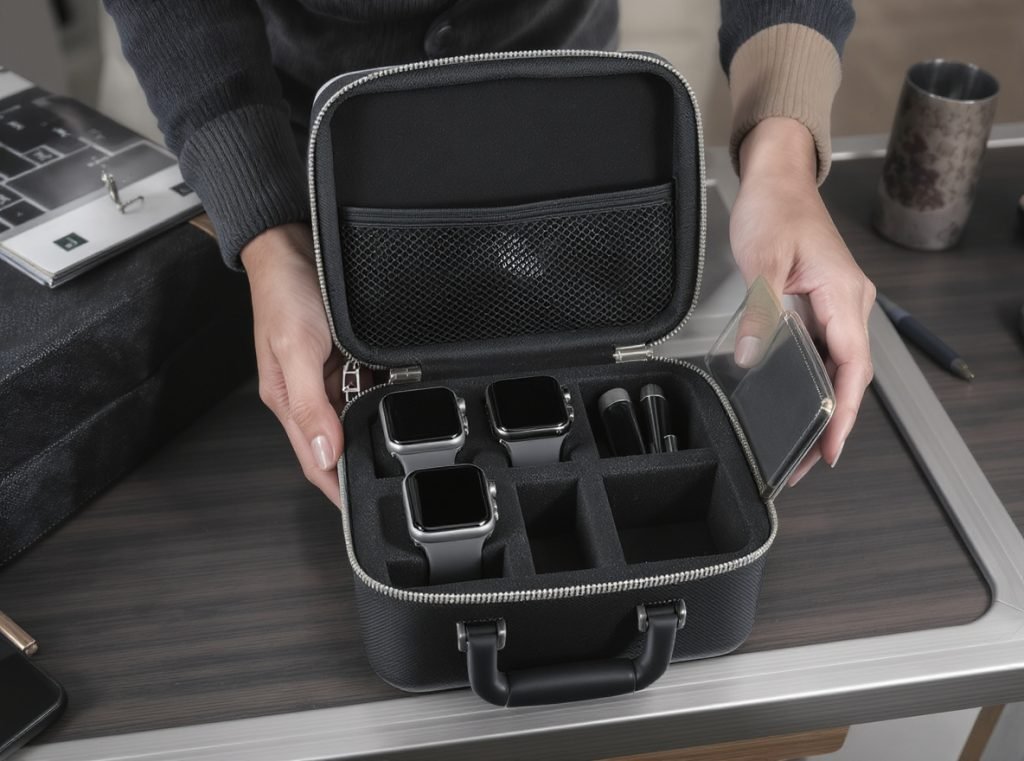
Use quality travel cases, avoid extreme temperatures, pack appropriate chargers with dual voltage capability, and maintain devices in carry-on luggage where conditions are more stable.
Physical Protection Strategies
Extended travel requires enhanced protection measures:
Storage Solutions
- Invest in quality travel cases with shock-absorbing materials
- Use cases with individual compartments to prevent scratches
- Store in climate-controlled environments when possible
- Keep watches in carry-on luggage for stable conditions
Environmental Considerations
Extreme temperatures and humidity can affect watch mechanics and battery performance. Cargo holds experience significant temperature fluctuations that can damage electronic components.
Charging and Maintenance
- Pack USB travel chargers for charging during stops
- Monitor battery percentage and charge proactively
- Bring portable chargers in your carry-on for long travel days
- Use dual voltage chargers for international destinations
What Should Wholesalers Know About Smartwatch Travel Regulations?
Business partners in the smartwatch industry need comprehensive understanding of travel regulations for product samples and demonstrations.
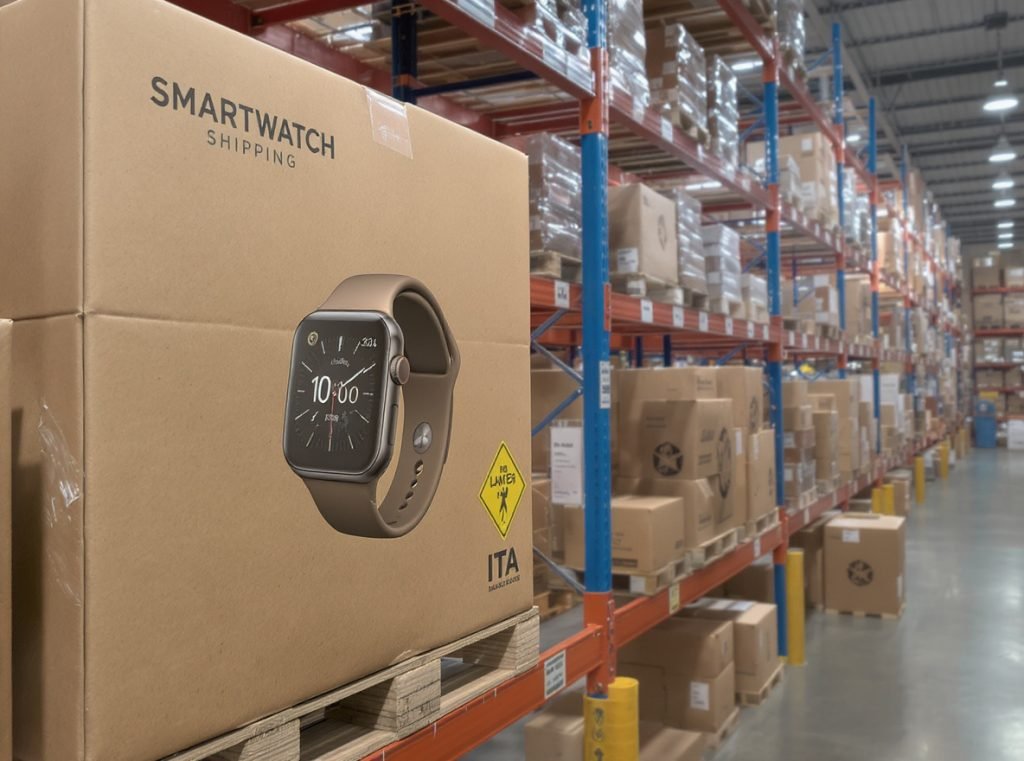
Wholesalers and distributors should understand quantity limits, customs procedures, and documentation requirements when traveling with multiple smartwatch units for business purposes.
Shipping and Logistics Compliance
International smartwatch distribution involves complex regulatory requirements:
Lithium Battery Shipping Regulations
- Bulk shipments require IATA dangerous goods compliance
- Air transport limitations restrict standalone batteries to cargo aircraft only
- Batteries must be shipped at 30% or less state of charge
- Documentation requires UN3481 handling labels and Shipper’s Declaration
Safety Certifications
- CE marking mandatory for European distribution
- FCC certification required for US markets
- Each destination country has specific electronics regulations
- Export controls may apply to devices with encryption capabilities
Customs and Import Procedures
Different countries impose varying regulations on electronics imports. Research destination requirements thoroughly and maintain proper business documentation for commercial samples.
At Osmarto, we provide comprehensive regulatory support for our wholesale partners. Our international compliance team ensures all shipments meet destination requirements, from IATA battery regulations to country-specific certifications. We handle complex documentation and provide certified testing reports for seamless customs clearance worldwide.
Summary
Smartwatches must travel in carry-on luggage due to TSA’s 2025 lithium battery ban for checked bags. Security screening rarely requires removal, and X-ray scanners cannot damage electronic components. Proper preparation with full charging, offline content downloads, and international compatibility checks ensures smooth travel experiences.
For wholesale partners seeking reliable smartwatch suppliers with comprehensive regulatory compliance, contact Osmarto’s international sales team. We provide complete documentation packages, IATA-compliant shipping solutions, and worldwide certification support for distributors and retailers.
Ready to partner with a trusted smartwatch manufacturer? Send us an inquiry today and discover why Osmarto leads in international compliance and wholesale support for the global smartwatch market.