Skip to content
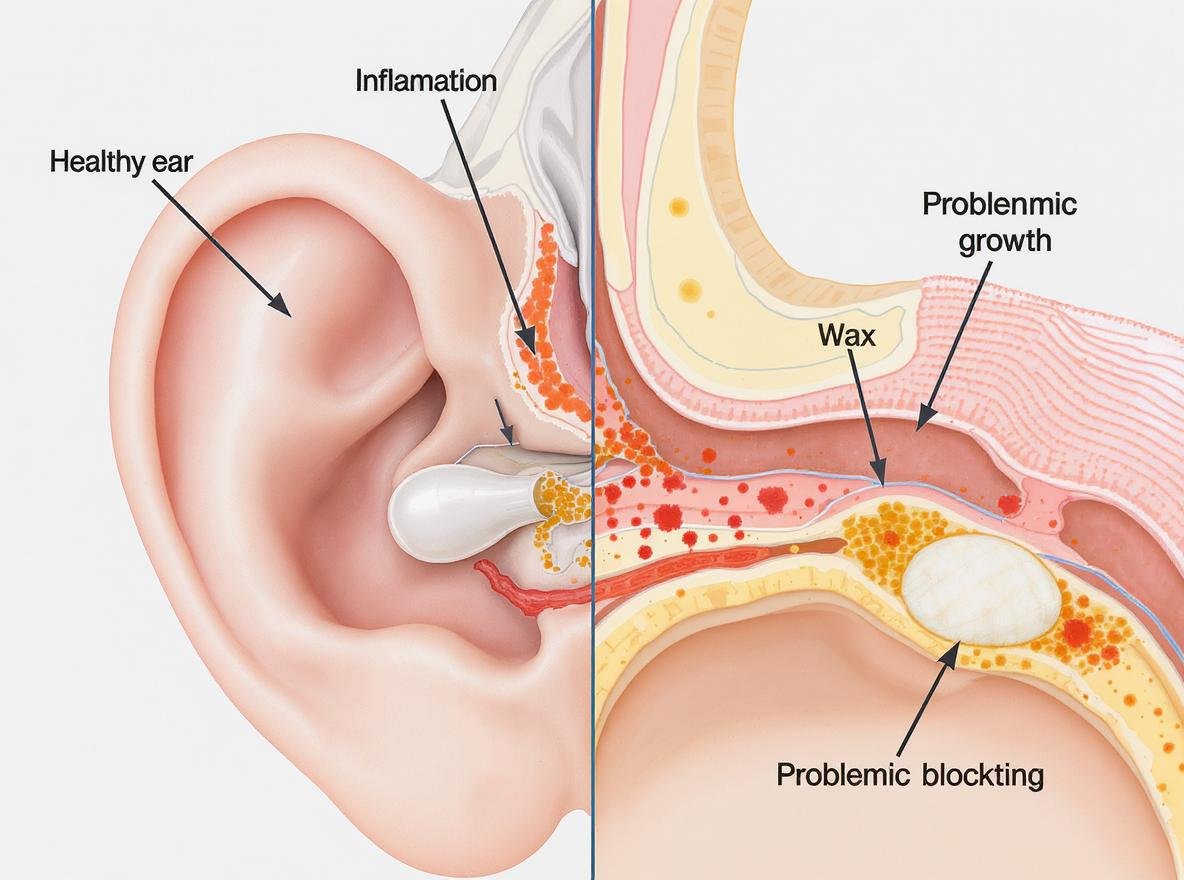
If you’re experiencing ear discomfort, unusual wax buildup, or recurring infections since using earbuds more frequently, you’re not alone. Many users worry about potential ear health risks from prolonged earbud use, and these concerns are backed by medical evidence.
Yes, earbuds can contribute to both ear infections and wax buildup. Studies show dirty earbuds can harbor up to 2,700 times more bacteria than an average cutting board, while the tight seal blocks natural airflow and wax drainage. However, with proper hygiene practices and quality earbuds, these risks are largely preventable.
Understanding the relationship between earbuds and ear health will help you make informed decisions for your audio needs and protect your hearing long-term.
How Do Earbuds Actually Cause Wax Buildup?
Understanding the mechanics behind earbud-related wax buildup helps explain why this issue has become increasingly common in our headphone-centric world.
Earbuds disrupt your ear’s natural self-cleaning system through physical obstruction and interference with natural wax migration. Your ears use jaw movement and skin migration to move earwax outward, but earbuds create a barrier that traps wax inside where it accumulates over time.
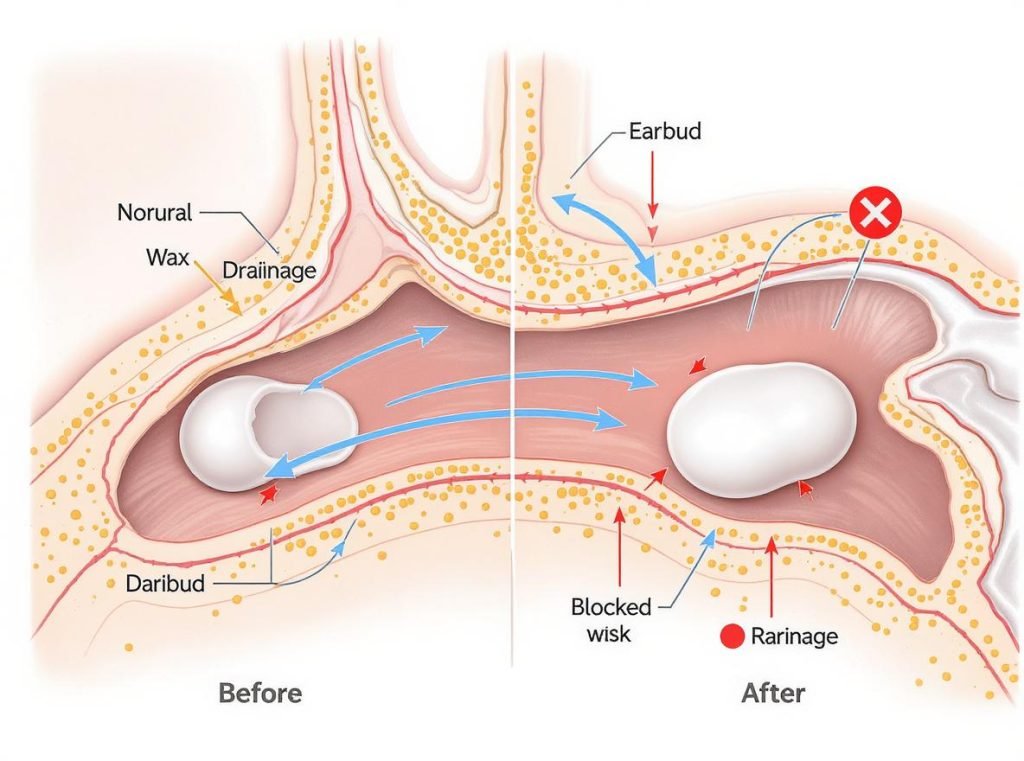
Your ears are naturally self-cleaning systems designed to protect against debris and bacteria. However, when you insert earbuds into your ear canal, they create a physical barrier that prevents earwax from naturally draining out. The snug fit essentially traps the wax inside, where it can accumulate over time.
Regular insertion of earbuds can push existing earwax further into the ear canal, potentially causing impaction. This is similar to what happens when people use cotton swabs incorrectly, creating a compacted mass that’s difficult to remove naturally.
Your body may interpret earbuds as foreign objects and respond by producing more earwax as a protective mechanism. This creates a problematic cycle where more wax is produced but less can escape due to the physical obstruction.
The airflow restriction is equally concerning. Earbuds restrict natural airflow in the ear canal, contributing to moisture retention and creating an environment where wax becomes stickier and harder to remove naturally.
| Usage Pattern | Wax Buildup Risk | Natural Drainage Impact | Recommended Action |
|---|---|---|---|
| 1-2 hours daily | Low | Minimal interference | Weekly cleaning, ear breaks |
| 3-5 hours daily | Moderate | Significant blockage | Daily cleaning, periodic checks |
| 6+ hours daily | High | Severely compromised | Professional assessment, alternatives |
Medical professionals have noted increased cases of earwax impaction correlating with the rise in earbud usage, particularly among younger demographics who use them for extended periods daily.
Can Dirty Earbuds Really Cause Ear Infections?
The connection between contaminated earbuds and ear infections is supported by alarming microbiological evidence that highlights the critical importance of proper hygiene.
Dirty earbuds can harbor dangerous levels of bacteria – up to 2,700 times more than an average cutting board. When inserted into ears, these microorganisms are introduced directly into the ear canal, where the warm, moist environment created by earbuds provides perfect conditions for bacterial and fungal growth.

The bacterial transfer process is straightforward but dangerous. Earbuds collect bacteria, fungi, earwax, and dirt over time through regular use and environmental exposure. Each insertion introduces these contaminants directly into your ear canal, bypassing many of your body’s natural protective barriers.
The moisture trapping effect significantly amplifies infection risks. Earbuds create a warm, moist environment that’s ideal for bacterial and fungal growth. This is especially problematic during exercise when sweat accumulates, or in humid environments where condensation builds up inside the ear canal.
Frequent earbud insertion can cause micro-abrasions in the delicate ear canal skin. These tiny wounds create entry points for bacteria that would normally be blocked by intact skin barriers. The combination of compromised skin integrity and bacterial exposure dramatically increases infection probability.
Common infection pathways include:
- Direct bacterial transfer from contaminated surfaces
- Moisture retention promoting microbial growth
- Skin barrier compromise from repeated insertion
- Earwax impaction trapping bacteria and debris
The most concerning aspect is how quickly infections can develop. In the warm, sealed environment created by earbuds, bacterial populations can multiply rapidly, sometimes causing symptoms within 24-48 hours of exposure.
Sharing earbuds multiplies these risks exponentially, as it introduces foreign bacteria from another person’s ears and potentially transmits infections between users.
What Are the Warning Signs of Earbud-Related Ear Problems?
Recognizing early symptoms of earbud-related ear issues can prevent minor problems from escalating into serious complications requiring medical intervention.
Key warning signs progress from mild discomfort to serious infection symptoms. Early signs include ear fullness, itching, and visible wax on earbuds. Advanced symptoms include severe pain, discharge, fever, and hearing changes that require immediate medical attention.
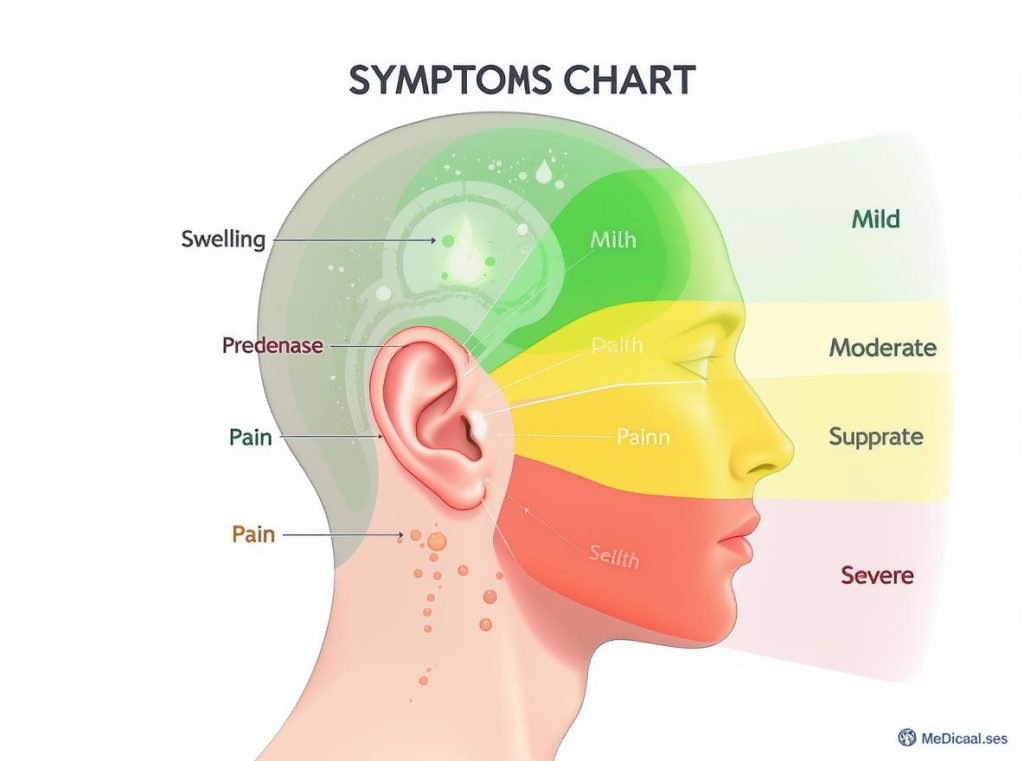
Early warning signs often develop gradually and may be dismissed as minor irritation:
Feeling of fullness or pressure in the ear that persists after removing earbuds indicates blocked drainage or early wax impaction. Itching or irritation in the ear canal suggests skin irritation or early inflammatory response. Reduced hearing or muffled sounds may indicate wax buildup or early infection. Visible earwax or debris on earbud tips after use shows your ears are producing excess wax or cannot drain properly.
Infection warning signs require more serious attention:
Ear pain that worsens when pulling on the ear is characteristic of external ear infections (otitis externa). Redness or swelling around the ear canal opening indicates active inflammation. Any discharge or fluid draining from the ear, especially if discolored or foul-smelling, suggests bacterial infection. Persistent pain that doesn’t improve within 2-3 days needs medical evaluation.
Advanced symptoms requiring immediate medical care:
| Symptom Category | Warning Signs | Urgency Level | Action Required |
|---|---|---|---|
| Mild | Fullness, itching, visible wax | Low | Clean earbuds, monitor |
| Moderate | Pain, discharge, muffled hearing | Medium | Stop use, see doctor |
| Severe | Fever, severe pain, hearing loss | High | Immediate medical care |
| Emergency | Dizziness, balance issues, blood | Critical | Emergency room |
Fever accompanying ear symptoms indicates the infection may be spreading beyond the ear canal. Severe pain that doesn’t respond to over-the-counter pain relievers suggests significant inflammation or potential complications. Sudden hearing loss or persistent ringing (tinnitus) may indicate inner ear involvement or eardrum damage.
Children and elderly individuals may show different symptom patterns, with less obvious early signs but more rapid progression to serious complications.
How Often Should You Clean Your Earbuds to Prevent Problems?
Establishing evidence-based cleaning routines is essential for preventing both infections and wax buildup while maintaining optimal earbud performance and longevity.
Clean earbuds weekly with isopropyl alcohol for regular users, daily for heavy users or after exercise, and immediately after any exposure to moisture or contamination. The frequency should increase based on usage patterns, environmental exposure, and individual risk factors.
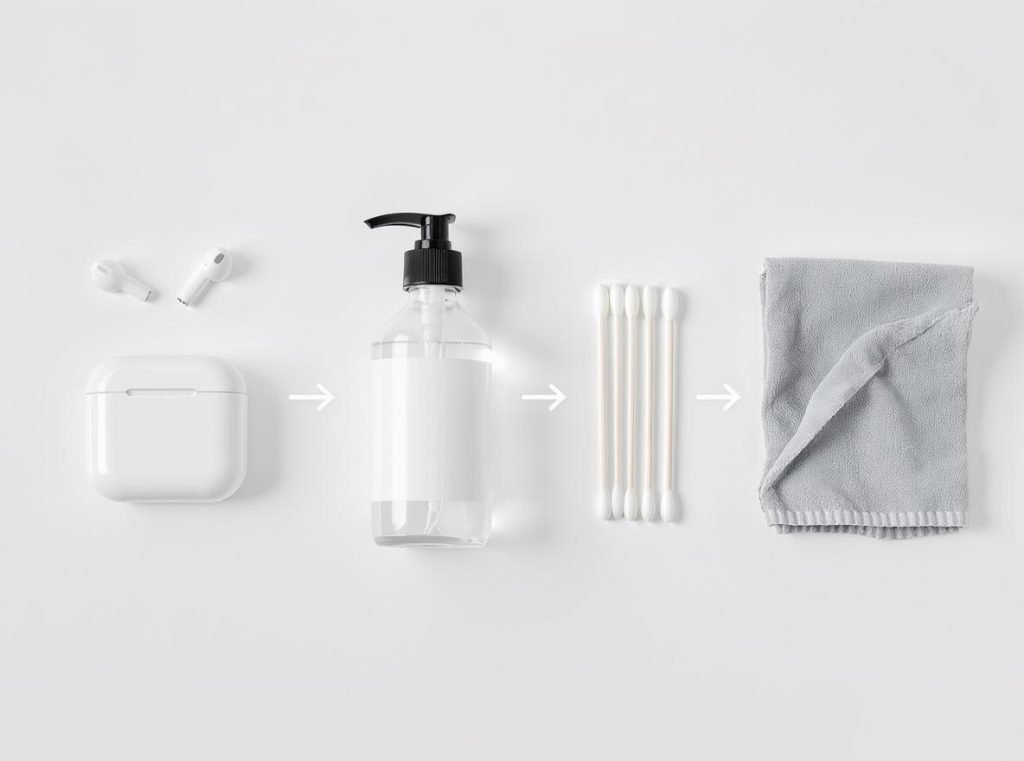
Research-backed cleaning frequencies vary by usage pattern and risk factors:
Daily users who wear earbuds for more than 4 hours should clean after each workout session or when exposed to sweat, and perform thorough weekly deep cleaning. Regular users wearing earbuds 1-4 hours daily need weekly cleaning or after 72 hours of cumulative use. Occasional users can maintain monthly cleaning schedules but should inspect regularly for visible debris or contamination.
Post-exercise cleaning is non-negotiable. Always clean immediately after sweating, as moisture accelerates bacterial growth exponentially. The warm, moist environment created by exercise provides ideal conditions for microbial multiplication within hours.
Proper cleaning technique involves using 70% isopropyl alcohol on cotton swabs to clean all surfaces that contact your ears. Remove silicone tips and wash with soapy water, allowing complete drying before reattachment. Use cotton swabs or toothpicks for hard-to-reach crevices, being gentle to avoid component damage.
Deep cleaning process for maximum effectiveness:
- Disassemble removable components completely
- Clean each part separately with appropriate solutions
- Allow 24-hour drying time for moisture-sensitive areas
- Inspect for wear or damage during cleaning
- Replace worn components immediately
Storage hygiene significantly impacts contamination levels. Keep earbuds in clean, dry cases when not in use, avoiding pockets, bags, or areas where they collect lint, dust, or moisture. UV sanitizing cases provide additional disinfection for power users or shared environments.
For wholesale buyers and distributors, offering cleaning kits alongside earbud purchases helps end users maintain proper hygiene and reduces warranty claims related to hygiene-related failures.
Are Over-Ear Headphones Safer Than Earbuds for Ear Health?
Medical evidence consistently shows over-ear headphones offer superior ear health outcomes compared to earbuds, making them the preferred choice for extended listening sessions.
Over-ear headphones are significantly safer for ear health because they maintain natural ear canal airflow, keep sound sources further from eardrums, reduce infection risks through minimal direct contact, and don’t interfere with natural wax drainage processes.
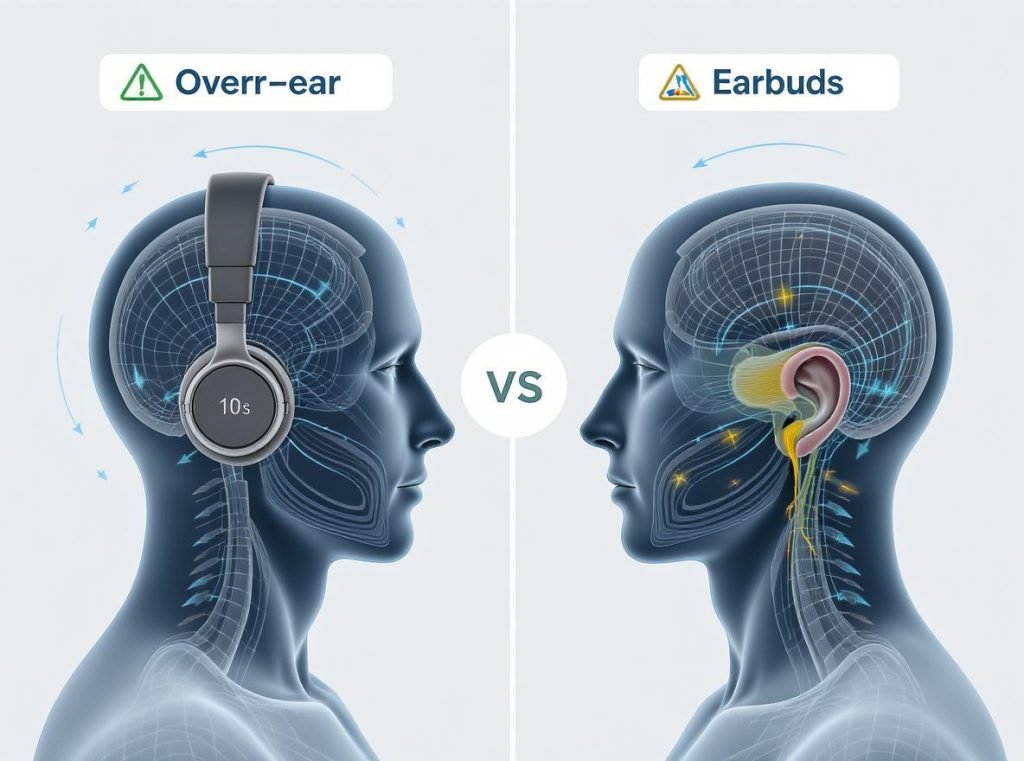
The fundamental design differences create dramatically different health profiles:
Over-ear headphones keep the sound source further from your eardrums, reducing direct sound pressure and potential hearing damage. They don’t block the ear canal’s natural cleaning process, allowing normal wax migration and airflow. Better air circulation reduces moisture buildup that promotes bacterial growth.
In contrast, earbuds create sealed environments with poor airflow that trap moisture and bacteria. They may cause irritation and increase infection risk through direct ear canal contact. Higher risk of wax impaction occurs due to physical obstruction of natural drainage.
| Health Factor | Over-Ear Headphones | Earbuds | Medical Recommendation |
|---|---|---|---|
| Sound Pressure | Lower, dispersed | Higher, concentrated | Over-ear preferred |
| Infection Risk | Minimal contact | Direct contamination | Over-ear safer |
| Wax Buildup | No interference | Blocks drainage | Over-ear better |
| Airflow | Natural circulation | Restricted/blocked | Over-ear healthier |
| Long-term Use | Generally safe | Requires precautions | Over-ear recommended |
Professional audio users and individuals with existing ear problems benefit most from over-ear designs. They’re particularly recommended for office environments, long conference calls, and extended entertainment use.
However, over-ear headphones aren’t perfect solutions. Weight and comfort during extended use can cause headaches or neck strain. Larger size impacts portability for mobile professionals. Heat buildup around ears during warm weather or exercise can be uncomfortable.
For businesses purchasing audio equipment in bulk, offering both options allows employees to choose based on their specific use cases, health considerations, and work requirements while maintaining audio quality standards.
What’s the Best Way to Prevent Earbud-Related Ear Problems?
Implementing comprehensive, evidence-based prevention strategies ensures safe earbud use while maintaining the convenience and audio quality that modern users demand.
Prevention requires a multi-layered approach combining proper hygiene, responsible usage patterns, appropriate equipment selection, and regular health monitoring. Follow the 60-60 rule, maintain strict cleaning routines, choose properly fitting earbuds, and take regular listening breaks.
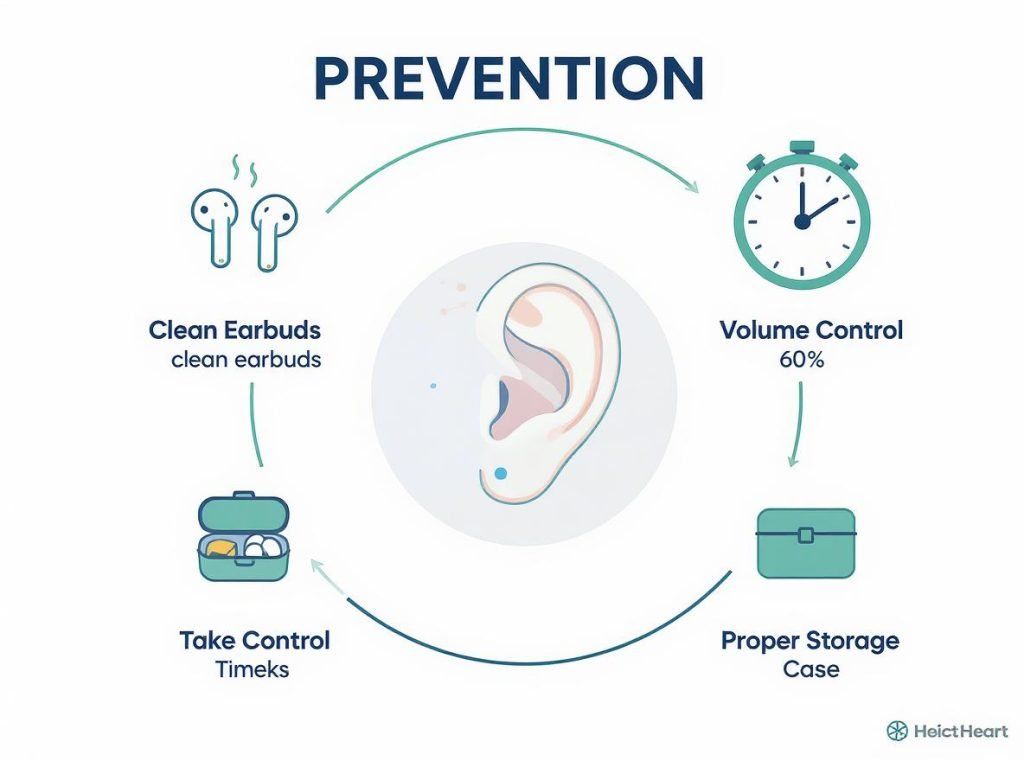
Proper fit serves as the foundation of safe earbud use. Earbuds that are too large create excessive pressure and potential tissue damage, while those too small don’t seal properly and may be pushed deeper during use, increasing impaction risks.
Professional fitting guidelines include testing multiple ear tip sizes to find the perfect seal without forcing insertion. Ensure earbuds stay secure during normal head movements without causing discomfort. Replace worn or damaged ear tips immediately as they compromise both fit and hygiene.
The 60-60 rule provides evidence-based volume and duration guidelines: listen at no more than 60% volume for no more than 60 minutes at a time. This prevents both hearing damage and reduces the time earbuds spend blocking natural ear processes.
Break schedules for extended use become critical for ear health:
- Remove earbuds for 15 minutes every 2 hours of continuous use
- This allows ear canals to air out, reducing infection risk significantly
- Alternate between earbuds and speakers when possible
- Use over-ear headphones for very long sessions (4+ hours)
Hygiene protocols must be strictly maintained:
- Clean earbuds weekly with 70% isopropyl alcohol
- Never share earbuds with others under any circumstances
- Remove earbuds immediately after exercise or sweating
- Store in clean, dry cases away from contaminants
Advanced prevention strategies for power users:
- Invest in earbuds with antimicrobial coatings that resist bacterial growth
- Use UV sanitizing cases for additional daily disinfection
- Keep backup pairs to allow thorough drying between uses
- Consider custom-molded ear tips for perfect fit and reduced irritation
Environmental awareness helps minimize additional risks:
- Avoid using earbuds in dusty or excessively humid conditions
- Remove earbuds before swimming or showering always
- Clean hands before handling earbuds to prevent contamination transfer
- Replace earbuds showing signs of material degradation or wear
Earbuds should be completely avoided during active ear infections, and it’s better not to use them until infections heal completely to prevent complications and allow proper recovery.
When Should You See a Doctor About Earbud-Related Ear Issues?
Knowing when to seek professional medical help prevents minor earbud-related issues from developing into serious complications requiring extensive treatment or causing permanent damage.
Seek immediate medical attention for severe ear pain lasting more than 2-3 days, any discharge containing pus or blood, sudden hearing loss, fever above 100.4°F with ear symptoms, or signs of infection spreading. Professional intervention prevents complications and ensures proper treatment.
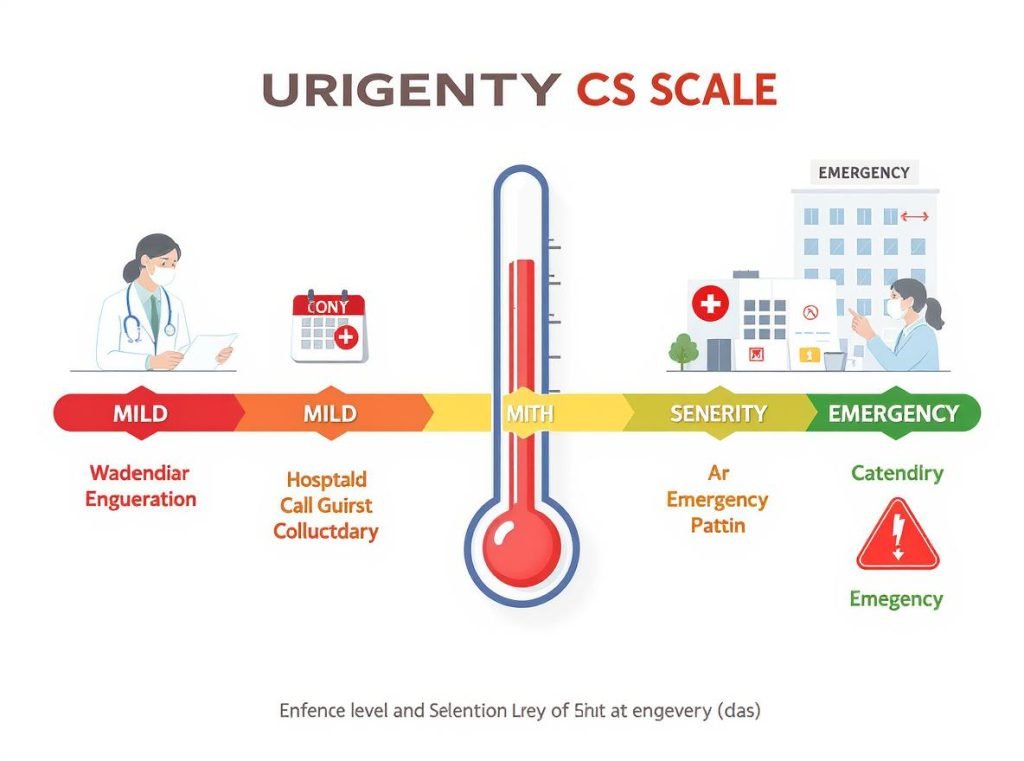
Urgent medical situations requiring immediate care:
Severe ear pain that doesn’t improve within 2-3 days or worsens despite over-the-counter pain relief indicates potential serious infection or complications. Any discharge of pus or blood from the ear suggests advanced infection or possible eardrum damage. Sudden hearing loss or significant hearing reduction requires emergency evaluation to prevent permanent damage.
High fever (over 100.4°F/38°C) accompanying ear symptoms indicates the infection may be spreading systemically. Signs of infection spreading, such as redness or swelling behind the ear, suggest potential complications requiring aggressive treatment.
Special considerations for vulnerable populations:
Children under 6 months with any ear symptoms need immediate medical evaluation. Persistent crying or irritability in children may indicate ear pain they cannot communicate. Symptoms lasting more than 24 hours in children require professional assessment.
Elderly individuals may show subtle symptoms that progress rapidly, requiring earlier intervention than younger adults.
Chronic issues requiring medical evaluation:
Recurring ear infections suggest underlying problems that need professional management. Chronic feeling of fullness in ears may indicate persistent wax impaction or structural issues. Ongoing hearing problems that don’t resolve with basic care need audiological evaluation.
| Symptom Severity | Timeframe | Action Required | Urgency Level |
|---|---|---|---|
| Mild discomfort | 1-2 days | Monitor, basic care | Low |
| Moderate pain | 2-3 days | Medical consultation | Medium |
| Severe symptoms | Immediate | Emergency care | High |
| Life-threatening | Immediate | Emergency room | Critical |
Professional treatments vary by severity and may include prescription antibiotic drops for bacterial infections, oral antibiotics for systemic infections, professional earwax removal using specialized instruments, or surgical intervention for severe complications.
Early intervention almost always results in better outcomes and prevents the need for more aggressive treatments later.
Summary
Earbuds can indeed cause both ear infections and wax buildup, but these problems are preventable with proper care and evidence-based hygiene practices. The key factors include choosing properly fitting earbuds, maintaining strict cleaning routines with weekly alcohol disinfection, following the 60-60 rule for safe listening, taking regular breaks to allow ear ventilation, and monitoring for early warning signs. While over-ear headphones offer inherently lower health risks, quality earbuds used responsibly provide safe, convenient audio solutions for personal and professional applications.

For wholesale buyers, distributors, and retailers seeking to provide customers with safe, high-quality audio solutions, Osmarto offers professionally engineered earbuds with antimicrobial coatings and comprehensive fitting options. Our design team understands the critical balance between audio performance and ear health, creating products that minimize infection risks while delivering exceptional sound quality for business and personal use.
Contact Osmarto today to discuss bulk earbud orders that prioritize both user safety and audio excellence. Our experienced team can help you select the right products for your target market and provide comprehensive guidance on customer education about proper earbud care, hygiene practices, and safe listening habits that protect long-term hearing health.