Skip to content
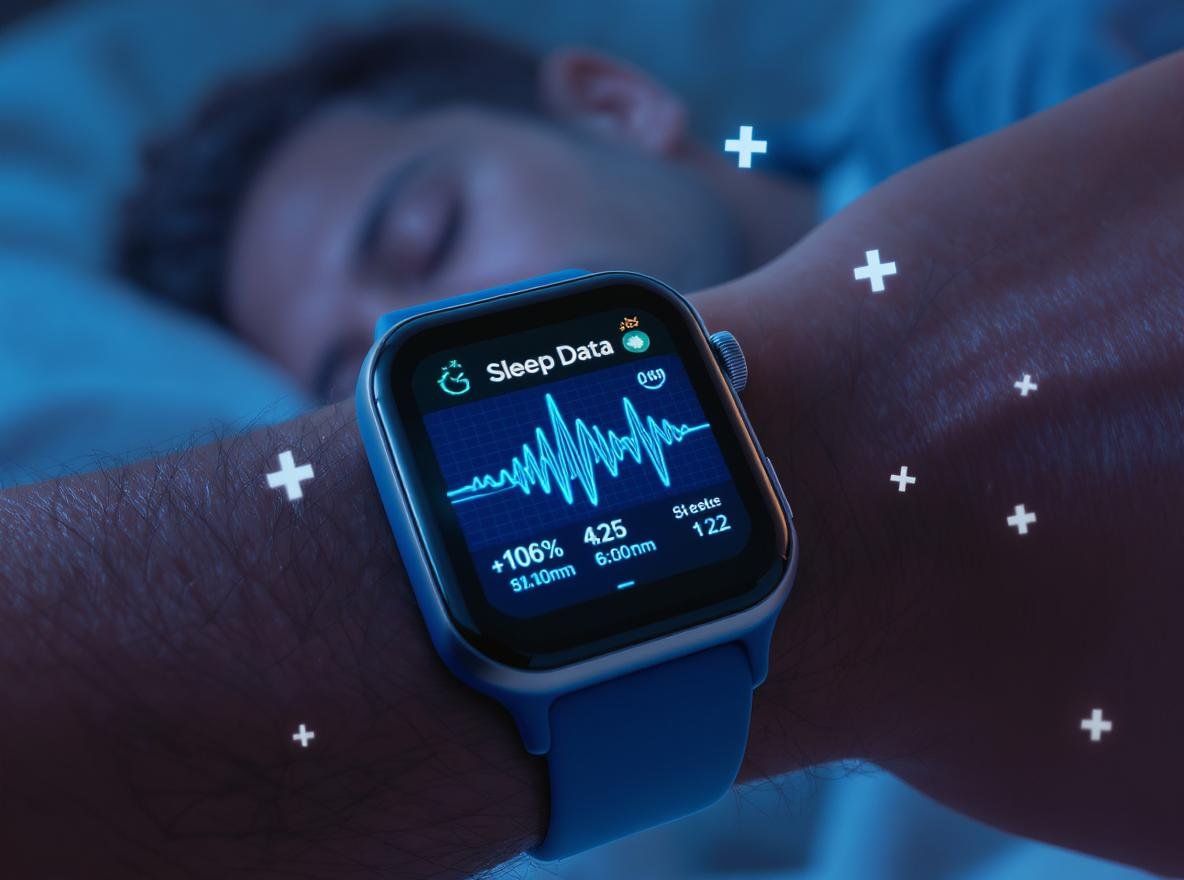
Sleep apnea affects up to 1 billion adults worldwide, yet an estimated 80% of moderate-to-severe cases remain undiagnosed. If you’re experiencing fatigue, loud snoring, or breathing interruptions during sleep, you might wonder if your smartwatch could help identify these concerning symptoms before they silently erode your health.
Yes, certain smartwatches can now help detect signs of sleep apnea through FDA-approved features that monitor breathing patterns, blood oxygen levels, and wrist movements during sleep. While not providing medical diagnoses, Apple and Samsung devices offer the first consumer wearables authorized to screen for moderate-to-severe obstructive sleep apnea and prompt users to seek professional medical evaluation.
Let’s explore how this groundbreaking technology works and what it means for businesses in the rapidly expanding health-wearable market.
How Do Smartwatches Detect Sleep Apnea?
Understanding the sophisticated technology behind sleep apnea detection helps businesses make informed decisions about health-monitoring wearables for wholesale and distribution opportunities.
Smartwatches detect sleep apnea using multiple advanced sensors including accelerometers for breathing disturbance detection, blood oxygen monitors for SpO₂ fluctuations, and photoplethysmography for heart rate variations—all processed through machine learning algorithms to identify patterns consistent with obstructive sleep apnea episodes.

The detection process involves sophisticated multi-modal sensing approaches that analyze several physiological data points simultaneously. Apple’s algorithm reviews 10 nights of wrist motion data within a 30-day window, labeling breathing disturbances as “elevated” or “not elevated.” If more than half the monitored nights show elevated disturbances, the watch issues a sleep apnea alert.
Samsung’s approach focuses on blood oxygen fluctuations, tracking SpO₂ drops of 3-4% or greater during sleep. Two four-hour recordings within 10 days feed a machine-learning model that estimates an apnea-hypopnea index (eAHI), providing a clinical-grade assessment metric.
Key Detection Technologies:
- Wrist Motion Analysis: Accelerometer data captures tiny wrist movements linked to interrupted breathing patterns
- Blood Oxygen Monitoring: SpO₂ sensors detect oxygen desaturation events characteristic of apnea episodes
- Pulse-Wave Analysis: Photoplethysmography tracks cyclic heart rate variations that correlate strongly with sleep apnea (r = 0.81)
- Inertial Measurement: Advanced algorithms filter accelerometer and gyroscope signals in the respiratory frequency band (0.13-0.70 Hz)
Different manufacturers employ varying technological approaches:
| Technology Method | Primary Sensor | Detection Focus | Accuracy Range |
|---|---|---|---|
| Apple Motion Analysis | Accelerometer | Breathing disturbances | 66.3% sensitivity, 98.5% specificity |
| Samsung SpO₂ Tracking | Blood oxygen sensor | Oxygen desaturation | 82.7% sensitivity, 88-92% specificity |
| Research PPG Analysis | Heart rate monitor | Pulse wave variations | 82% sensitivity, 89% specificity |
Which Smartwatches Have FDA-Approved Sleep Apnea Detection?
Knowing which devices offer medically validated sleep apnea detection is crucial for businesses seeking reliable, regulatory-compliant health monitoring solutions.
Currently, only Apple Watch Series 9, Series 10, and Ultra 2 models, along with Samsung Galaxy Watch 7, Watch Ultra, and Watch 6 series (with Wear OS 5.0+), have received FDA authorization for sleep apnea detection features as of 2024.

Samsung Galaxy Watch devices were the first consumer smartwatches to receive FDA authorization through the De Novo pathway (DEN230041) in February 2024, designed to detect signs of moderate-to-severe obstructive sleep apnea in adults 22 years of age and older.
Apple Watch received FDA 510(k) clearance (K240929) in September 2024, making sleep apnea detection available on compatible models with watchOS 11 across 150+ regions globally.
Regulatory Validation Process:
The FDA authorization involves rigorous clinical testing to ensure medical device standards. Samsung’s pivotal study included 573 participants, while Apple’s validation involved 1,448 users, both demonstrating clinically relevant accuracy compared to traditional polysomnography.
International Expansion:
- Samsung’s feature now holds CE marking, Health Canada, ANVISA, and HSA approvals covering 70 markets
- Apple’s international rollout continues expanding regulatory clearances
- No other consumer smartwatch brands currently hold FDA clearance for sleep apnea risk notifications
Clinical Validation Results:
- Both devices focus on moderate-to-severe OSA detection (AHI ≥ 15)
- Validation studies excluded certain populations including night-shift workers, cardiac arrhythmia patients, and those with existing OSA diagnoses
- Accuracy demonstrates reasonable specificity with fewer false positives but may miss mild OSA cases
How Accurate Are Smartwatch Sleep Apnea Detections?
Business decision-makers need comprehensive accuracy data to understand the reliability and market positioning of smartwatch sleep apnea detection for wholesale distribution.
Clinical studies show smartwatch sleep apnea detection achieves 66-83% sensitivity and 88-98% specificity when compared to gold-standard polysomnography, with correlation coefficients ranging from 0.81-0.84 against clinical sleep study results.

Accuracy varies significantly based on detection methodology and individual factors. Apple’s motion-based approach shows higher specificity (98.5%) but lower sensitivity (66.3%), meaning fewer false positives but potentially missed cases. Samsung’s SpO₂-focused method demonstrates more balanced performance with 82.7% sensitivity and 88-92% specificity.
Comprehensive Accuracy Data:
Research validation across multiple studies provides robust accuracy benchmarks for business evaluation:
| Study/Device | Participants | Detection Method | Correlation to PSG | Sensitivity | Specificity | Key Notes |
|---|---|---|---|---|---|---|
| Samsung FDA Pivotal | 573 | SpO₂ + Motion | r ≈ 0.83 | 82.7% | 88-92% | 2 nights, eAHI >15/h cutoff |
| Apple FDA Study | 1,448 | Accelerometer | — | 66.3% | 98.5% | 10 nights over 30 days |
| PPG CVHR Research | 41 | Heart rate variation | r = 0.81 | 82% | 89% | Multi-brand transferable |
| IMU Respiratory Analysis | 122 | Accelerometer + Gyroscope | r = 0.84 | 85% | 89% | Prototype algorithm |
Factors Affecting Accuracy:
Device positioning and user compliance significantly impact detection reliability. Loose-fitting bands, dark tattoos, hair coverage, or darker skin tones can degrade sensor accuracy, particularly for SpO₂ measurements.
Sleep duration requirements also influence results—both devices require minimum four-hour sleep periods for reliable analysis, with Samsung needing two separate monitoring sessions within 10 days.
Clinical Context:
- Devices excel at identifying moderate-to-severe cases (AHI ≥ 15) but may miss mild sleep apnea
- Performance drops with certain medical conditions, medications, or acute respiratory illness
- Validation focuses on specific adult age ranges (Apple ≥18 years, Samsung ≥22 years)
What Are the Limitations of Smartwatch Sleep Apnea Detection?
Understanding comprehensive device limitations helps businesses set appropriate customer expectations and identify market positioning opportunities in wholesale distribution.
Smartwatch sleep apnea detection serves as screening tools rather than diagnostic devices, with limitations including population restrictions, sensor challenges, mild case detection gaps, and regulatory geofencing that affects global market deployment.

The technology operates under specific constraints that businesses must communicate clearly to end customers. Both Apple and Samsung devices carry FDA labeling as “over-the-counter devices to assess risk” rather than medical diagnostic tools.
Population and Usage Restrictions:
Clinical validation excluded several important groups, creating market limitations for certain customer segments. Night-shift workers, individuals with cardiac arrhythmias, COPD, pregnancy, or acute respiratory illnesses were not included in pivotal trials.
Technical and Sensor Limitations:
- Dark tattoos, excessive hair, or darker skin tones may interfere with SpO₂ accuracy
- Loose watch bands or improper positioning compromises motion detection
- Battery drain increases with continuous SpO₂ monitoring
- Minimum sleep duration requirements (4+ hours) for reliable analysis
- Environmental factors like altitude or sleep position may affect readings
Detection Scope Constraints:
Current algorithms focus primarily on moderate-to-severe obstructive sleep apnea, potentially missing mild cases that still require medical attention. Central sleep apnea and other sleep disorders remain outside detection capabilities.
Regulatory and Geographic Limitations:
- Features may disable when traveling to countries without regulatory clearance
- Different approval timelines create market access challenges
- Varying international regulatory requirements affect global distribution
| Limitation Category | Specific Constraints | Business Impact |
|---|---|---|
| Population Scope | Adults only, no prior OSA diagnosis | Reduced target market |
| Technical Accuracy | Skin tone/tattoo interference | Customer satisfaction concerns |
| Detection Range | Moderate-severe OSA focus | Limited clinical utility |
| Geographic Access | Regulatory approval variations | Market expansion challenges |
How Should Users Respond to Sleep Apnea Alerts?
Proper response protocols are essential for businesses educating wholesale customers about smartwatch sleep apnea features and appropriate next steps for end users.
Users receiving sleep apnea alerts should avoid panic, export detailed data reports, consult healthcare professionals promptly, follow medical recommendations for testing, and continue regular monitoring while avoiding self-diagnosis or treatment decisions based solely on smartwatch alerts.

When smartwatches detect potential sleep apnea patterns, the response should be measured and medically appropriate. The technology serves as an early warning system designed to prompt professional medical evaluation rather than provide definitive answers.
Immediate Response Steps:
Document alert information comprehensively including dates, severity indicators, and any related symptoms like daytime fatigue, loud snoring, or witnessed breathing interruptions. Both Apple Health and Samsung Health Monitor generate PDF reports summarizing breathing disturbances or estimated AHI data for the past 90 days.
Export and organize data systematically for healthcare provider consultation. These reports provide valuable trend information that can inform medical decision-making about sleep study recommendations.
Medical Follow-up Process:
- Schedule consultation with primary care physician or sleep specialist within 1-2 weeks
- Share exported smartwatch data during medical appointments
- Discuss comprehensive sleep quality concerns and symptoms
- Consider formal sleep testing (home sleep test or polysomnography) if recommended
- Explore treatment options based on professional diagnosis
Important Medical Considerations:
Avoid lifestyle changes or treatment decisions based solely on smartwatch alerts. Professional medical guidance ensures appropriate diagnostic approaches and treatment planning tailored to individual circumstances.
Continue consistent monitoring throughout the medical evaluation process. Regular data collection provides healthcare providers with longitudinal trend information that can inform treatment decisions.
Treatment Integration Opportunities:
- Future updates may integrate with telehealth platforms
- Potential CPAP compliance tracking capabilities
- AI-driven lifestyle coaching within watch applications
- Automated referral systems for healthcare coordination
What’s the Future of Smartwatch Sleep Health Monitoring?
The rapidly evolving landscape of wearable sleep monitoring technology presents significant growth opportunities for businesses in the smartwatch wholesale market.
Future smartwatch sleep monitoring will integrate multimodal sensing, advanced machine learning, global regulatory expansion, and direct healthcare system integration, creating substantial market opportunities for wholesale distributors and retailers in the expanding health-tech sector.

Technology advancement continues rapidly across multiple fronts. Enhanced sensor fusion combining motion, SpO₂, acoustic snore profiling, heart rate variability, and skin temperature promises more comprehensive sleep analysis and respiratory event scoring.
Emerging Technology Trends:
Machine learning advances enable context-aware algorithms that personalize detection thresholds based on individual factors like age, BMI, altitude, and comorbidities. This personalization approach will reduce false negatives in mild OSA cases while maintaining specificity.
Multimodal sensing integration represents the next generation of sleep monitoring. Upcoming devices aim to coordinate wrist-worn sensors with smartphone microphones for snore detection, creating comprehensive sleep assessment ecosystems.
Global Market Expansion:
- Samsung’s sleep apnea feature now covers 70 international markets with regulatory approvals
- Apple’s global rollout continues expanding across 150+ regions
- Additional smartwatch manufacturers pursuing similar regulatory pathways
- Growing consumer awareness driving demand for health-monitoring wearables
Healthcare Integration Opportunities:
Direct integration with medical systems creates new B2B market segments. Automated referral systems, telehealth coordination, and professional data sharing capabilities offer enhanced value propositions for healthcare-focused distribution channels.
Business Market Implications:
- Premium positioning opportunities for health-certified devices
- Professional integration creates institutional sales channels
- Technology validation improves consumer confidence and adoption
- Expanding regulatory approvals enable global market penetration
| Future Development | Timeline | Market Impact |
|---|---|---|
| Multimodal Sensing | 2025-2026 | Enhanced accuracy, premium pricing |
| Global Regulatory Expansion | Ongoing | International market access |
| Healthcare Integration | 2026-2027 | B2B institutional opportunities |
| AI Personalization | 2025-2026 | Improved user experience, retention |
Summary
Smartwatches can indeed help detect signs of sleep apnea through FDA-approved features from Apple and Samsung that monitor breathing patterns, blood oxygen fluctuations, and movement during sleep. With clinical accuracy rates of 66-83% sensitivity and 88-98% specificity, these devices serve as valuable screening tools that prompt users toward professional medical evaluation for the estimated 80% of undiagnosed moderate-to-severe sleep apnea cases worldwide.

For businesses in the smartwatch wholesale market, sleep apnea detection represents a significant value-added feature addressing the growing intersection of consumer health awareness and wearable technology. As regulatory approvals expand globally and technology continues advancing toward multimodal sensing and healthcare integration, substantial opportunities await distributors, retailers, and brand manufacturers worldwide.
Ready to capitalize on the health-wearable technology boom? Contact Osmarto today to explore premium smartwatch wholesale opportunities featuring advanced sleep monitoring capabilities. Our experienced team provides comprehensive support for wholesale partners, distributors, and retailers looking to meet growing market demand for medically-validated wearable health technology. Send us your inquiry to discover competitive pricing, technical specifications, and partnership opportunities in this rapidly expanding market sector.