Skip to content
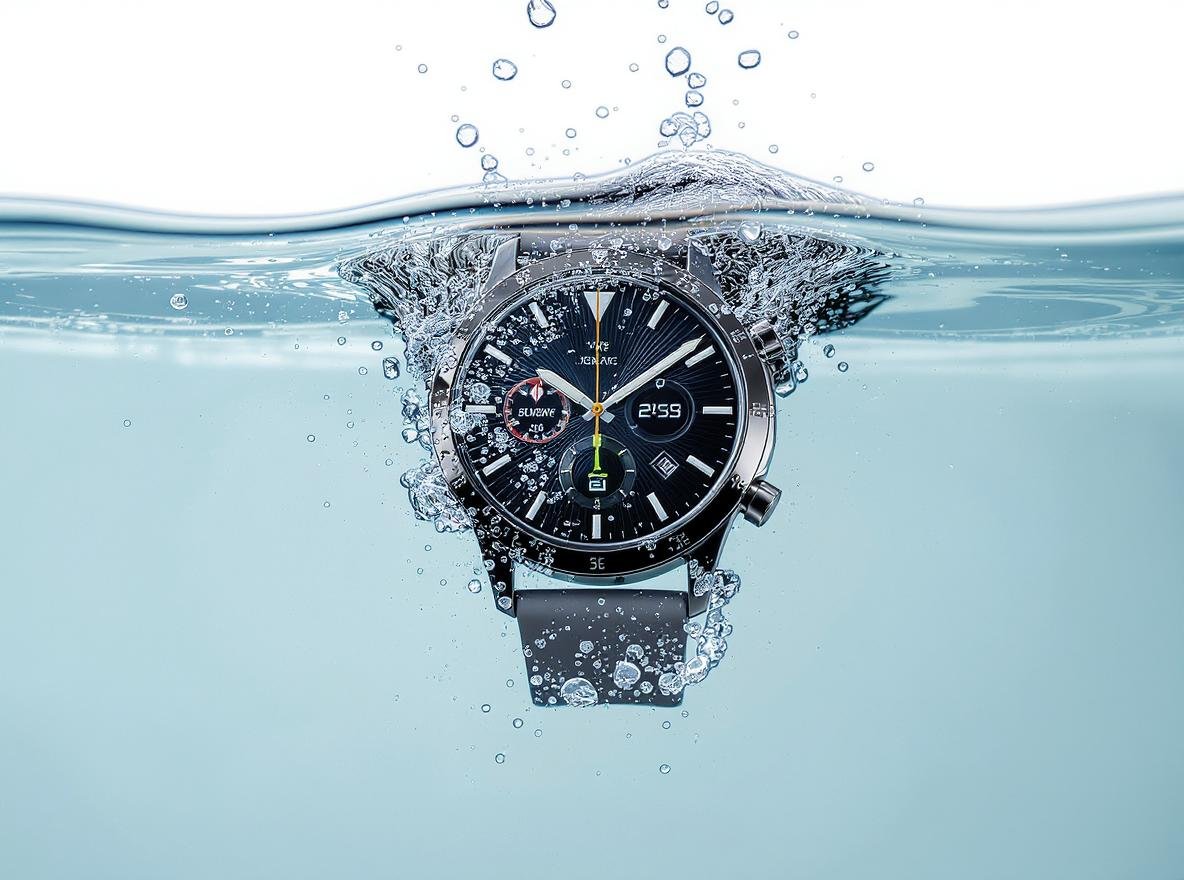
You’re shopping for a smartwatch and see terms like “waterproof” and “water-resistant” everywhere. The confusion is real – which one actually protects your investment from water damage? This distinction could mean the difference between a functional device and an expensive paperweight after your next shower.
Most smartwatches are water-resistant, not waterproof. The U.S. Federal Trade Commission discourages “waterproof” claims because they imply absolute protection under all conditions. Water resistance provides measurable protection through IP and ATM ratings, with 5ATM being the minimum for swimming activities and 10ATM+ required for serious water sports.
Let’s dive deeper into what these ratings really mean for your smartwatch purchase and how to make the right choice for your wholesale business.
What’s the Real Difference Between Waterproof and Water-Resistant?
Most people use these terms interchangeably, but the Federal Trade Commission has specific guidance that affects how manufacturers can market their devices.
The U.S. Federal Trade Commission discourages unqualified use of “waterproof” in marketing because it implies an absolute barrier to water under all normal use conditions – a claim few consumer devices can meet. Water-resistant signifies that products withstand water only to rated limits and with proper care.
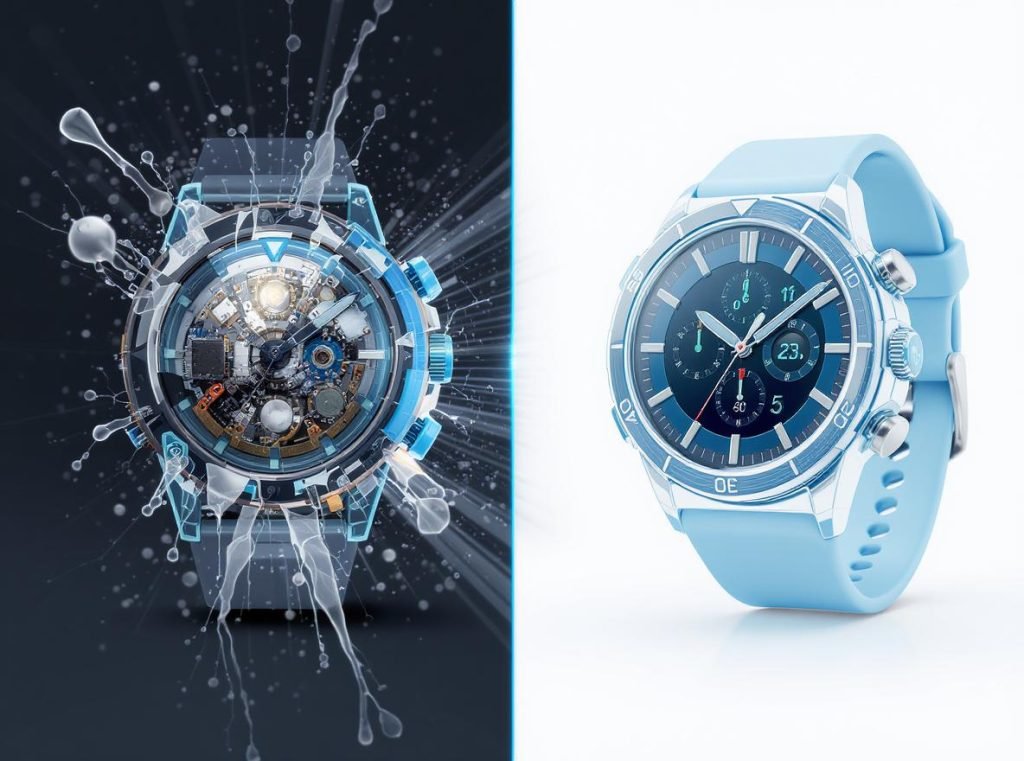
This regulatory distinction exists because “waterproof” creates unrealistic consumer expectations. Even premium diving watches eventually lose their water resistance due to seal degradation, temperature cycling, and normal wear patterns.
Water resistance provides measurable, testable protection levels through standardized laboratory testing. IP ratings use static water pressure testing, while ATM ratings simulate depth pressure scenarios. These controlled conditions give concrete data about device capabilities.
The smartwatch industry has largely adopted water-resistant terminology to align with FTC guidance and provide accurate consumer information. Reputable manufacturers like Apple, Samsung, and Garmin focus on specific resistance ratings rather than absolute waterproof claims.
Understanding this regulatory framework helps wholesale buyers avoid legal liability issues. Marketing materials claiming “waterproof” without qualification could expose retailers to FTC enforcement actions and consumer lawsuits.
For your wholesale business, this distinction protects against warranty claims and builds customer trust through accurate product descriptions.
How Do IP Ratings Work for Smartwatches?
IP ratings provide standardized protection measurements, but understanding the testing limitations reveals what protection you actually get.
IP ratings use a two-digit system from IEC 60529 standard where the first digit represents dust protection (0-6) and the second digit represents water protection (0-8). However, IP tests use static water only – moving water from showers or swimming creates higher pressure than laboratory test conditions.
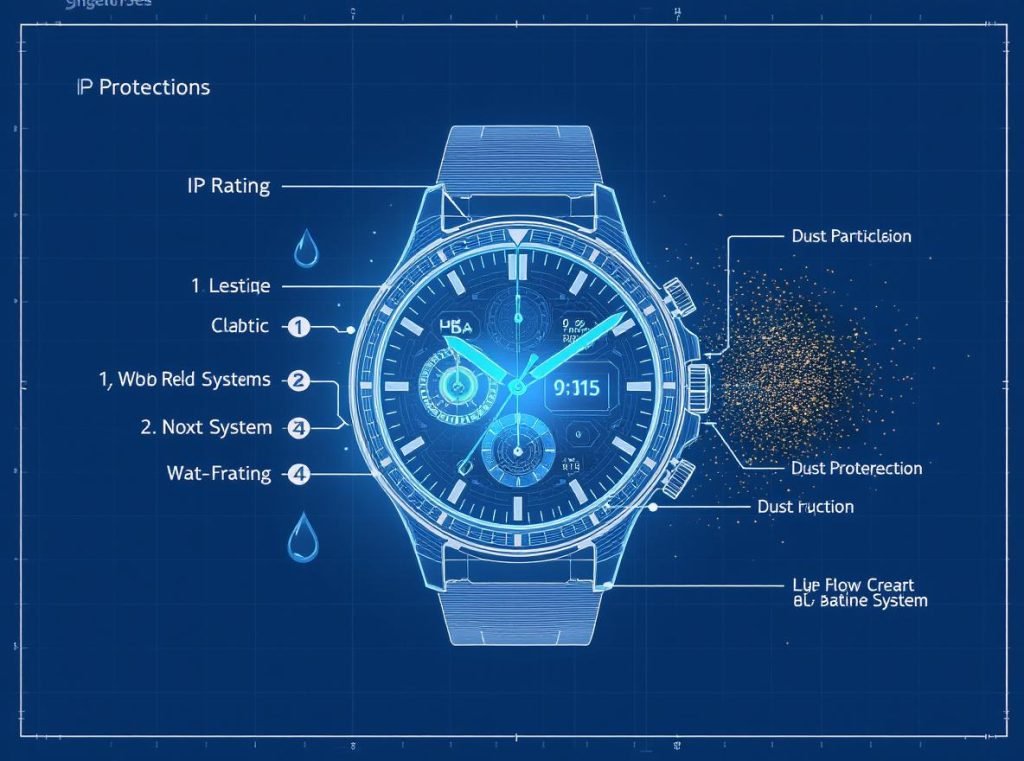
The IP system comes from the International Electrotechnical Commission and provides consistent testing across electronic devices. Here’s what the water protection numbers mean:
Common IP ratings for smartwatches:
- IPX7: Protected against brief immersion up to 1 meter for 30 minutes
- IP68: Protected against continuous immersion beyond 1 meter under manufacturer-specified conditions
The key limitation is that IP tests assume stationary water pressure. Real-world scenarios like shower jets, swimming movements, or wave action create dynamic pressures that exceed static test conditions.
An “X” in the first position means dust protection wasn’t tested, while “6” indicates complete dust-tight protection. For smartwatches, look for full IP68 ratings rather than IPX7 or IPX8 designations.
| IP Rating | Dust Protection | Water Protection | Real-World Limits |
|---|---|---|---|
| IPX7 | Not tested | Brief immersion (1m, 30min) | Splash only, no swimming |
| IP68 | Dust-tight | Continuous immersion (varies by maker) | Pool swimming, avoid high-pressure water |
Remember that IP68 specifications vary between manufacturers. Samsung Galaxy Watch 5 Pro rates IP68 with specific guidance for swimming up to 30 minutes at 1.5 meters depth, while discouraging surfing and high-velocity water jets.
What Do ATM Ratings Tell You About Water Resistance?
ATM ratings provide clearer guidance for real-world activities and come from traditional watchmaking standards with decades of proven testing.
ATM stands for “atmospheres” and measures water pressure resistance. One ATM equals approximately 10 meters of static water depth pressure. ATM ratings assume new gaskets and stationary water conditions, with 5ATM being the minimum recommended for pool swimming activities.
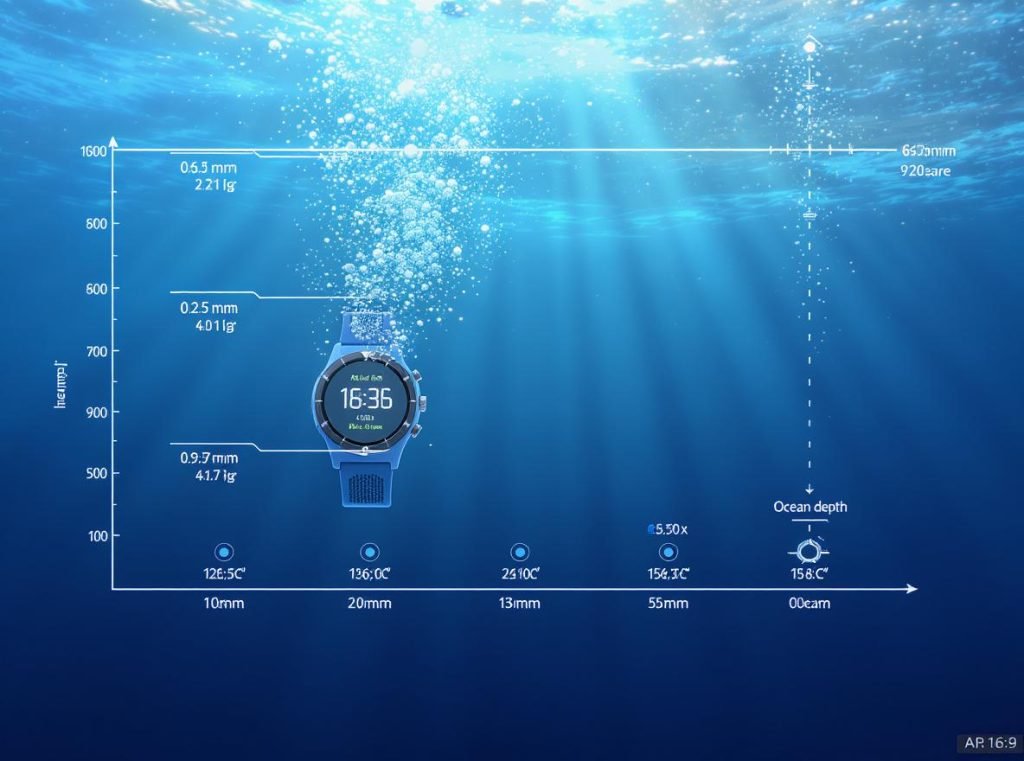
The ATM system directly relates to depth and pressure scenarios you encounter in real use. Unlike IP ratings focused on ingress protection, ATM ratings connect to specific activities and depth limitations.
3ATM (30 meters): Suitable for handwashing and light rain exposure. Swimming and showering exceed pressure limits and risk water damage.
5ATM (50 meters): The industry standard for swimming activities. Safe for pool laps, showering, and shallow water activities. Most fitness-focused smartwatches start at this level.
10ATM (100 meters): Professional-grade protection suitable for surfing, snorkeling, and high-speed water sports. Garmin Fenix 6 and Instinct 3 models provide this level consistently.
20ATM+ with dive certification: Required for recreational scuba diving. Apple Watch Ultra achieves 100ATM with EN 13319 diving standard compliance for depths up to 40 meters.
The key advantage is activity-specific guidance. While IP68 requires interpreting manufacturer specifications, ATM ratings directly correspond to depth limits and approved activities.
Testing protocols follow ISO 22810:2010 standards with pressurized immersion at rated depth for 10-20 minutes, plus thermal shock testing to ensure seals survive temperature transitions.
For wholesale buyers, ATM ratings simplify customer education and reduce warranty claims through clear activity guidelines.
Which Smartwatch Brands Offer the Best Water Protection?
Different manufacturers approach water resistance with varying engineering commitments and testing standards.
Apple leads premium protection with Watch Ultra 2 featuring 100ATM rating and EN 13319 diving certification. Samsung provides reliable IP68/5ATM protection across Galaxy Watch models. Garmin excels in sports applications with consistent 10ATM ratings and robust seal engineering.
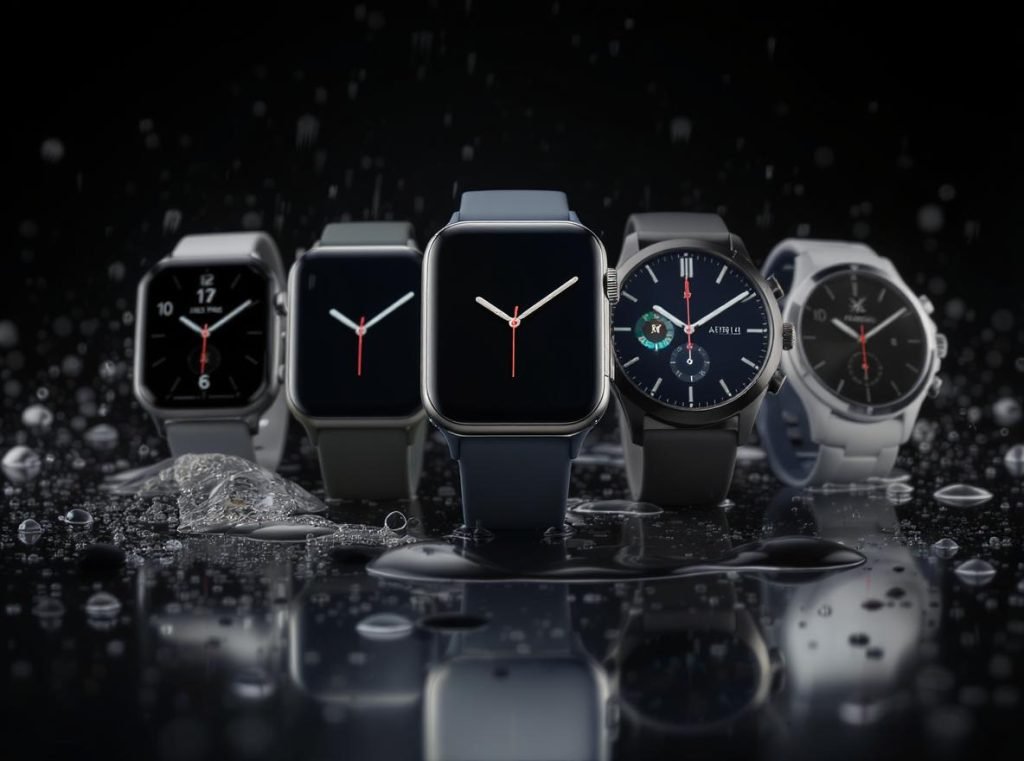
Brand-specific protection analysis based on current model specifications:
Apple Water Resistance Engineering
Apple Watch Series 2-9 achieve WR50m via ISO 22810 testing with built-in water ejection features. The Ultra series adds EN 13319 diving compliance for recreational scuba to 40 meters. Apple explicitly approves water skiing and high-speed water sports for Ultra models.
Samsung Galaxy Watch Protection
IP68 rating with 5ATM depth protection across Watch 5 and Watch 5 Pro models. Samsung includes Water Lock mode for automatic water expulsion and recommends limiting swimming sessions to 30 minutes at 1.5 meter maximum depth.
Garmin Sports-Focused Design
Fenix 6 and Instinct 3 deliver consistent 10ATM protection with metal buttons featuring O-ring seals. MIL-STD-810 thermal shock testing ensures seal integrity across temperature extremes. Garmin FAQ specifically approves surfing and snorkeling activities.
Budget Brand Considerations
Entry-level brands typically provide 3ATM or basic IP67 protection suitable for daily wear but requiring careful water exposure management.
| Brand Category | Typical Protection | Best Applications | Quality Indicators |
|---|---|---|---|
| Premium (Apple Ultra, Garmin Fenix) | 10-100ATM + certifications | Professional use, diving, sports | Third-party testing, robust seals |
| Mid-range (Galaxy Watch, Apple SE) | 5ATM, IP68 | Swimming, fitness, daily wear | Manufacturer testing, water ejection |
| Budget (Generic brands) | 3ATM, IP67 | Basic daily use, light water | Basic seals, limited warranties |
Quality indicators include third-party certification documents, detailed activity guidance, and comprehensive warranty coverage for water damage within rated limits.
What Activities Are Safe with Water-Resistant Smartwatches?
Understanding real-world activity limitations prevents customer disappointment and protects your wholesale business from warranty claims.
Water-resistant smartwatches handle different activities based on their specific ratings and engineering. Basic 3ATM/IP67 devices work for handwashing and rain, 5ATM/IP68 models handle swimming and showering, while 10ATM+ watches support surfing and snorkeling activities.
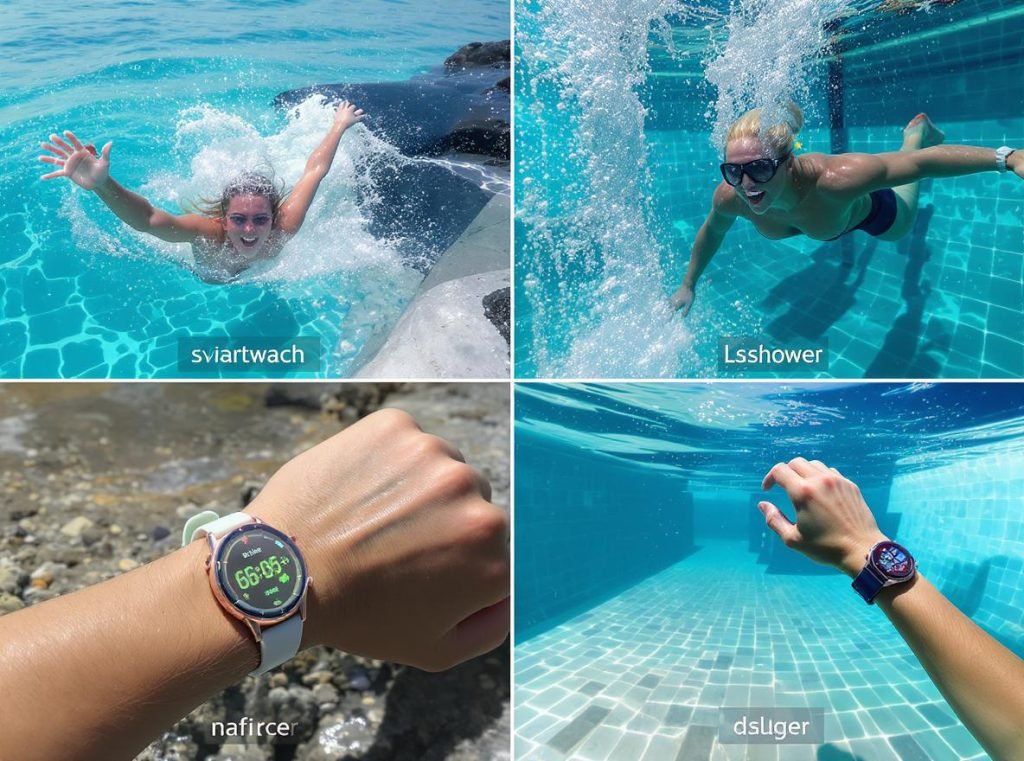
Activity-specific guidance based on manufacturer recommendations and testing standards:
Basic Protection Activities (3ATM/IPX7)
- Handwashing and dish washing with brief water contact
- Light rain exposure and accidental splashes
- Brief submersion from drops or spills
- Avoid: Swimming, showering, sustained water contact
Swimming Protection Activities (5ATM/IP68)
- Pool swimming with lap counting features
- Shower use with warm freshwater (avoid soap contact with sensors)
- Beach activities with saltwater rinse afterward
- Light snorkeling in shallow water under 1.5 meters
Advanced Protection Activities (10ATM+)
- Professional swimming training and competition
- Surfing and high-speed water sports
- Snorkeling and free diving to rated depths
- Water skiing and jet ski activities (if manufacturer approved)
Dive-Certified Activities (20ATM+ with EN 13319)
- Recreational scuba diving to 40 meters maximum
- Technical diving with appropriate dive computer features
- Commercial diving applications within certification limits
Critical limitations apply regardless of rating level. Hot water accelerates seal degradation faster than cold water exposure. Soap, chlorine, and saltwater chemicals degrade rubber gaskets over time without proper rinsing.
Impact damage from drops compromises water resistance even in high-rated devices by affecting microscopic case tolerances and seal compression.
| Activity Type | Minimum Rating | Key Risks | Maintenance Required |
|---|---|---|---|
| Daily wear | 3ATM/IP67 | Soap damage, impact | Monthly visual inspection |
| Swimming | 5ATM/IP68 | Chemical exposure, thermal shock | Freshwater rinse after use |
| Water sports | 10ATM+ | High-pressure impact, seal fatigue | Annual pressure testing |
| Diving | 20ATM+ dive certified | Rapid pressure changes, helium exposure | Professional service required |
For wholesale customers, provide clear activity matrices based on each model’s certified capabilities to reduce returns and build customer confidence.
How to Test and Maintain Smartwatch Water Resistance?
Proper maintenance extends water resistance life and prevents unexpected failures that could damage your wholesale reputation.
Regular visual inspection of seals and gaskets, avoiding extreme temperature changes, and annual professional pressure testing maintain optimal water resistance. Simple DIY checks like the fog test can detect early seal degradation before water damage occurs.
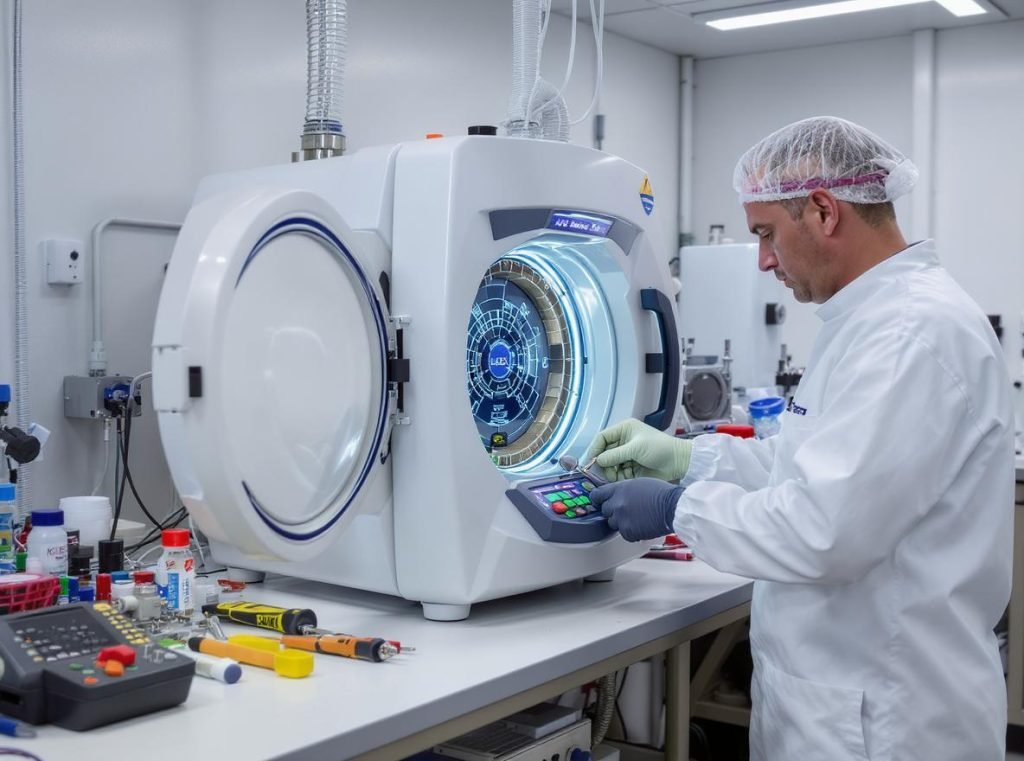
Manufacturers test water resistance under controlled laboratory conditions, but real-world use introduces variables that affect long-term performance:
Visual Inspection Protocol
- Crown and button seals for cracks, hardening, or debris accumulation
- Charging port covers for proper closure and gasket condition
- Case back gaskets for damage or foreign material buildup
- Screen edges for gap development or adhesive failure
Temperature Management Best Practices
Extreme temperature transitions cause material expansion and contraction, potentially compromising seals. Moving from hot saunas to cold water creates maximum stress on gasket materials.
Chemical Exposure Prevention
Chlorine, saltwater, soap, and cleaning products degrade rubber seals progressively. Rinse devices with fresh water immediately after exposure to chemicals or saltwater environments.
DIY Testing Methods
- Fog check: Look for persistent condensation under crystal after temperature transitions
- Speaker functionality: Test built-in water ejection features (Apple and Samsung models)
- Button response: Verify all controls function normally after water exposure
Professional Service Options
- Annual pressure testing at authorized service centers ($20-50)
- Gasket replacement and lubrication every 2-3 years ($50-100)
- Complete seal inspection after impact damage or deep water exposure
| Maintenance Task | Frequency | Cost Range | Failure Prevention |
|---|---|---|---|
| Visual inspection | Monthly | Free | Early problem detection |
| Fresh water rinse | After each water exposure | Free | Chemical damage prevention |
| Professional pressure test | Annually | $20-50 | Verified protection levels |
| Complete gasket service | Every 2-3 years | $50-100 | Restored original performance |
For wholesale operations, offering maintenance education to retailers adds value and differentiates your business while reducing warranty claim exposure.
What Should Wholesale Buyers Look for in Water-Resistant Smartwatches?
Smart wholesale purchasing requires understanding technical specifications, regulatory compliance, and market demand patterns for water-resistant features.
Focus on third-party certified ratings (IP68 minimum, 5ATM preferred), comprehensive test documentation, quality gasket materials, and clear activity limitations. Avoid products with unqualified “waterproof” claims that could expose retailers to FTC regulatory issues.
Critical Evaluation Criteria for Wholesale Sourcing
Technical Specification Verification
Verify both IP and ATM ratings from recognized testing organizations like IEC or ISO. Look for additional certifications such as EN 13319 for diving watches or MIL-STD-810 for military-grade environmental protection.
Documentation Quality Assessment
Comprehensive user manuals with specific activity guidelines indicate serious engineering investment. Vague marketing language or missing technical specifications suggest lower quality manufacturing.
Regulatory Compliance Verification
Marketing materials must comply with FTC guidance on waterproof claims. Request documentation showing compliance with 16 CFR §24.3 to avoid legal liability issues.
Build Quality Indicators
- Gasket materials: Premium silicone or fluoroelastomer outperform basic rubber seals
- Button mechanisms: Screw-down or O-ring sealed buttons provide superior protection
- Charging port design: Secure covers or sealed magnetic connections reduce failure points
Supplier Quality Assurance
- Third-party test reports with pressure curves and failure data
- Batch testing documentation and quality control certificates
- Technical support availability for retailer questions
- After-sales service capabilities including gasket replacement
Market Demand Segmentation
- Budget segment: 3ATM/IP67 minimum for basic daily protection
- Fitness segment: 5ATM/IP68 standard enabling swimming capabilities
- Premium segment: 10ATM+ with sports certifications for serious athletes
Seasonal and Regional Considerations
Water resistance becomes crucial during summer months and holiday gift seasons. Beach communities prioritize saltwater resistance, while urban markets focus on shower and rain protection.
| Procurement Factor | Quality Indicator | Risk Mitigation |
|---|---|---|
| Certification documents | Third-party lab reports | Legal protection from false claims |
| Warranty coverage | Water damage inclusion | Customer confidence building |
| Technical support | Engineering team access | Retailer education capability |
| Batch consistency | QC documentation | Reduced failure rates |
Supplier Due Diligence Questions
- “Provide ISO 22810 or IEC 60529 test reports for verification”
- “Which third-party laboratory performed certification testing?”
- “What is the acceptable quality level (AQL) for water resistance failures?”
- “Are gasket replacement kits available for after-sales service?”
- “Is liquid damage covered when devices are used within stated ratings?”
For high-volume orders, request pre-production samples for independent testing verification to ensure specifications match actual performance before committing to large inventory purchases.
Summary
Smartwatches are water-resistant rather than waterproof, with protection levels defined by IP and ATM ratings backed by standardized testing. The FTC discourages absolute waterproof claims, making water resistance the accurate industry standard. 5ATM represents the minimum for swimming activities, while 10ATM+ ratings suit serious water sports and professional applications. Understanding these specifications helps wholesale buyers match products to market needs while avoiding regulatory compliance issues.
Ready to source premium water-resistant smartwatches with verified certifications for your business? Contact Osmarto today for competitive wholesale pricing on IP68 and 5ATM+ certified smartwatch models. Our technical team provides detailed test documentation and regulatory compliance support to help you build a trusted water-resistant smartwatch inventory. Send us your specific market requirements for customized product recommendations and volume pricing that meets your business needs.