Skip to content
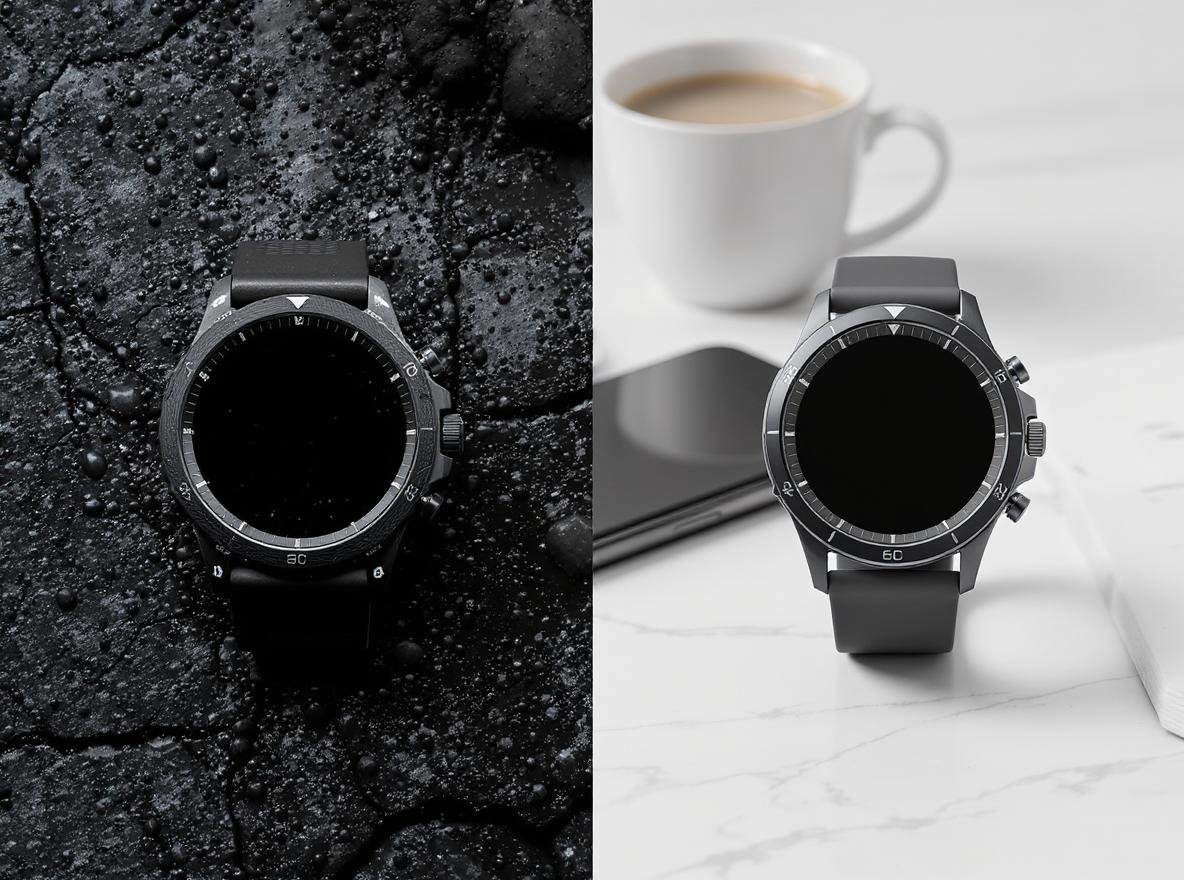
Choosing between rugged and standard smartwatches dramatically affects device longevity, operational costs, and performance reliability. While standard models dominate consumer markets with advanced connectivity, rugged alternatives deliver superior value in demanding applications where durability matters most.
Rugged smartwatches significantly outperform standard models with 5-60+ day battery life versus 1-4 days, MIL-STD-810H military certification, and proven field durability. However, standard models excel in smart connectivity, app ecosystems, and everyday convenience features. For businesses and outdoor users, rugged models provide superior long-term value through reduced replacement costs and enhanced reliability.
Let’s examine the comprehensive data to determine which category suits your specific needs or wholesale business requirements.
What Exactly Makes a Smartwatch “Rugged”?
Understanding military-grade certifications and construction standards reveals why rugged smartwatches command premium pricing and dedicated professional markets.
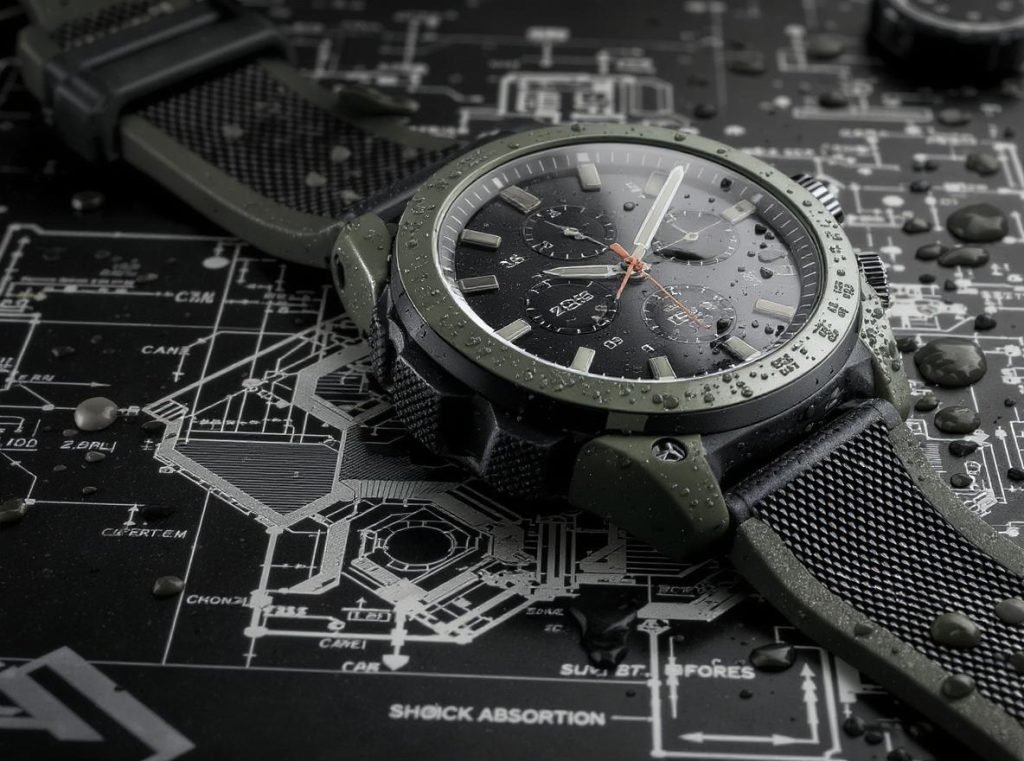
Rugged smartwatches achieve certification through MIL-STD-810G/H compliance involving 29 environmental tests including shock, vibration, temperature extremes, humidity, salt fog, and dust exposure. These devices feature reinforced construction with stainless steel unibodies, titanium frames, and specialized protective structures.
Military-Grade Certifications and Testing Standards
MIL-STD-810H certification requires passing rigorous testing protocols that simulate real-world conditions far beyond typical consumer use scenarios. These comprehensive evaluations ensure reliable performance in extreme environments.
Key certification requirements include:
- 26 drop tests from 4+ feet onto concrete surfaces
- Temperature tolerance from -40°F to 158°F (-40°C to 70°C)
- Vibration resistance across multiple frequency ranges
- Salt spray, humidity, and dust exposure testing
Advanced Construction Materials and Design
G-Shock employs a unique triple-protection structure with floating modules that absorb impacts rather than transferring them to delicate electronics. This innovative approach has proven effective across 40+ years of shock resistance development.
| Component | Standard Smartwatch | Rugged Smartwatch |
|---|---|---|
| Display Protection | Regular glass/plastic | Corning Gorilla Glass/Sapphire crystal |
| Case Construction | Aluminum/plastic | Stainless steel unibody/Titanium frame |
| Water Resistance | IP65-IP67 (basic splash) | IP68/IP69K (100+ meter submersion) |
| Impact Protection | Basic shock absorption | Triple-protection floating modules |
Modern rugged watches like the Amazfit T-Rex 3 operate reliably in temperatures from -22°F to 158°F, while standard smartwatches typically fail outside 32°F to 95°F ranges, demonstrating the substantial performance gap in extreme conditions.
How Do Battery Life and Performance Compare?
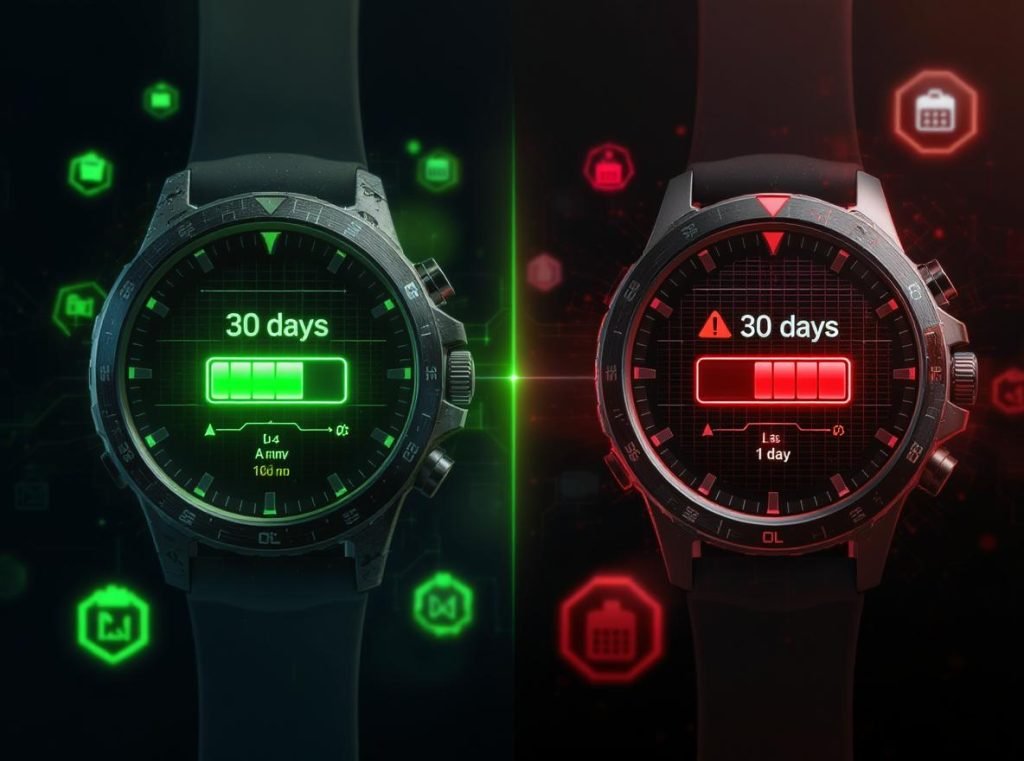
Battery performance represents the most dramatic difference between categories, with rugged models delivering exponentially longer operational periods that eliminate daily charging requirements.
Rugged smartwatches provide 10-30 times longer battery life than standard models, with premium units like the Garmin Enduro 3 lasting 36-90 days with solar charging, while standard models like the Apple Watch SE require daily charging after 18-24 hours of use.
Exceptional Battery Performance Data
Real-world testing reveals substantial battery life advantages that transform user experience and reduce operational demands:
Rugged Smartwatch Leaders:
- Garmin Enduro 3: 36-90 days with solar charging
- G-Shock GPR-H1000: 60+ days normal use, 2 years power-saving mode
- Amazfit T-Rex 3: 24+ days typical operation
- Suunto Vertical: 60+ days with solar assistance
Standard Model Limitations:
- Apple Watch Ultra 2: 36 hours maximum performance
- Samsung Galaxy Watch 7: 40-48 hours typical usage
- Apple Watch SE: 18-24 hours standard operation
Solar Charging and Power Management
Advanced rugged models incorporate solar charging technology that extends battery life indefinitely under proper conditions. This capability proves essential for extended outdoor activities, professional applications, and situations where regular charging access remains unavailable.
Solar-enabled devices automatically adjust power consumption based on available light conditions, ensuring optimal performance while maximizing operational duration.
Which Features Matter Most for Different Users?
Feature priorities vary significantly across user segments, affecting purchase decisions and determining optimal product positioning for wholesale distribution strategies.
Standard smartwatches excel in communication integration, comprehensive app ecosystems, and daily convenience features, while rugged models prioritize specialized outdoor sensors, navigation tools, emergency functions, and extended operational capabilities for professional applications.
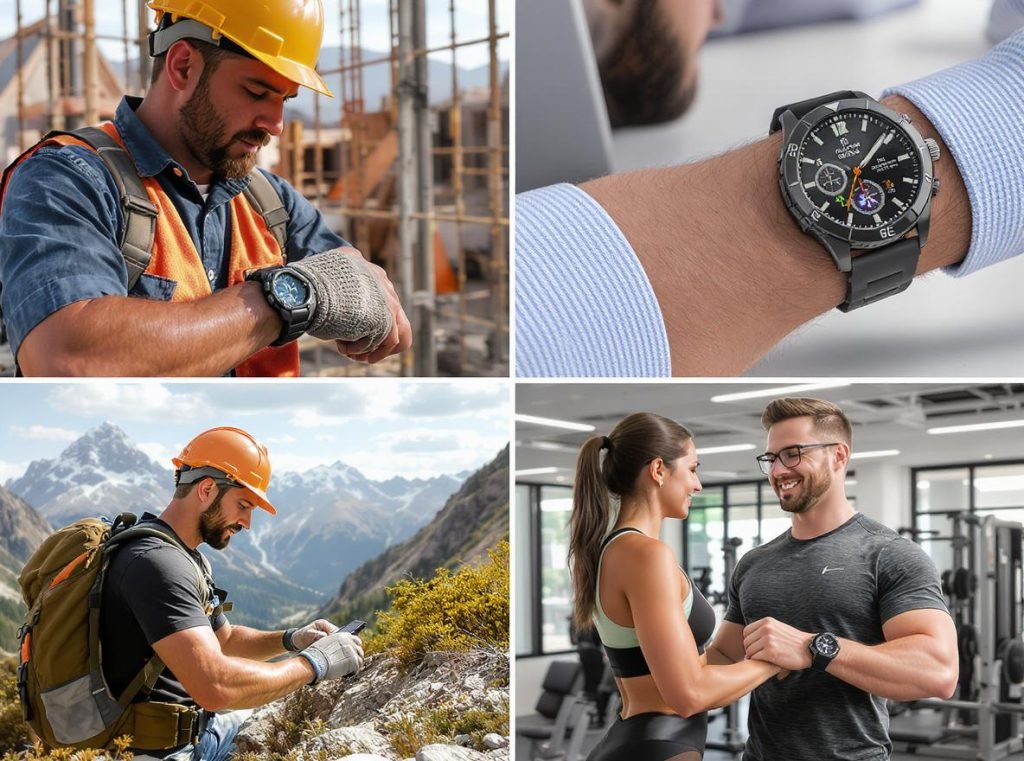
Professional and Industrial Applications
Enterprise users prioritize reliability, durability, and extended battery life to minimize operational disruptions and maintenance requirements.
Essential business features include:
- 8+ hour minimum battery life for complete work shifts
- Glove-compatible touchscreens for industrial environments
- NFC and barcode scanning for inventory management
- Screen visibility exceeding 2000 nits for outdoor readability
Outdoor and Adventure Capabilities
Rugged smartwatches serve as essential equipment for outdoor enthusiasts, providing specialized functions unavailable in standard consumer devices.
Critical outdoor features encompass:
| Feature Category | Rugged Advantage | Standard Limitation |
|---|---|---|
| Navigation | Built-in GPS with offline mapping | Requires phone connectivity |
| Environmental | Barometric altimeter, compass, weather prediction | Basic sensors only |
| Power Management | Solar charging capability | Daily charging required |
| Water Resistance | 200m+ diving capability | Basic splash protection |
Smart Connectivity Trade-offs
Standard models dominate in smartphone integration and digital lifestyle features, offering comprehensive notification systems, voice assistants, payment processing, and thousands of third-party applications. However, rugged models focus on core functionality with basic alerts and limited app ecosystems.
This specialization creates distinct market segments where feature priorities determine optimal product selection.
What Are the Cost Considerations for Businesses?
Total cost of ownership analysis reveals surprising long-term value advantages for rugged smartwatches despite higher initial purchase prices, particularly in business applications where device reliability directly impacts operational efficiency.
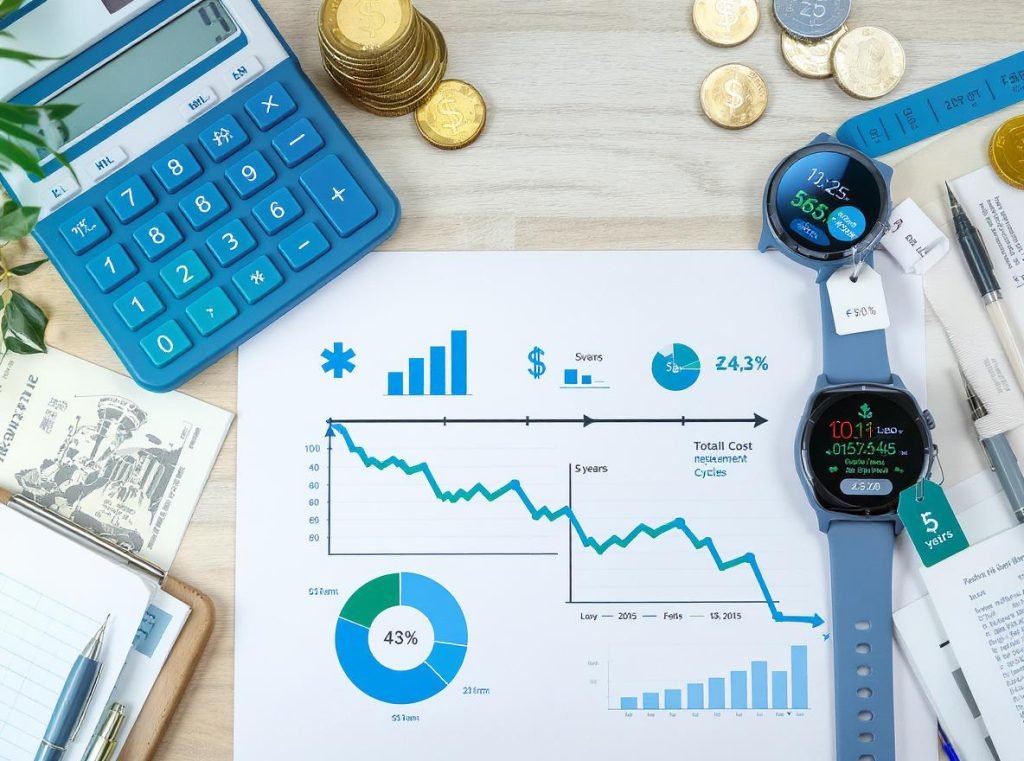
Business cost analysis over 5 years shows rugged smartwatches costing $600 total versus $1,067 for standard models due to extended device lifespans (7 years vs 3 years) and reduced replacement frequency, resulting in 44% lower total ownership costs.
Comprehensive Cost Analysis
Detailed financial comparison demonstrates substantial long-term savings through reduced replacement cycles and enhanced durability performance:
5-Year Total Cost Breakdown:
| Cost Factor | Rugged Smartwatch | Standard Smartwatch |
|---|---|---|
| Initial Purchase | $350 | $400 |
| Device Lifespan | 7 years | 3 years |
| Replacements (5 years) | 0.7 units | 1.7 units |
| Total Investment | $600 | $1,067 |
| Annual Cost | $120 | $213 |
Wholesale Pricing and Market Positioning
Understanding wholesale pricing structures enables optimal inventory decisions and competitive market positioning strategies.
Wholesale pricing ranges:
- Entry-level rugged models: $50-150 wholesale ($100-300 retail)
- Premium rugged units: $200-400 wholesale ($400-800 retail)
- Volume discounts: 35-50% off retail for 100+ unit orders
- Retailer profit margins: 30-40% standard industry rates
Chinese OEM partnerships offer competitive advantages with 30-70% cost savings compared to established brands, while maintaining quality standards through proper certification verification processes.
How Do Durability Test Results Compare in Real-World Use?
Laboratory certifications provide baseline expectations, but field performance data reveals the true operational advantages that justify premium pricing and specialized market positioning.
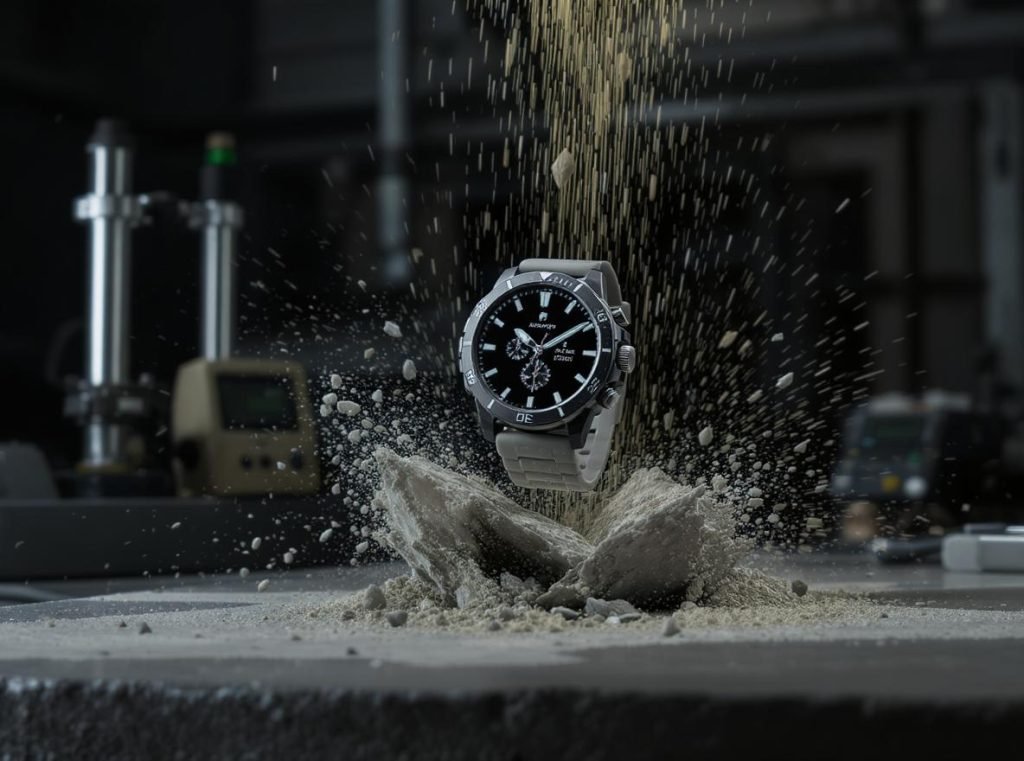
Independent durability testing shows rugged smartwatches surviving extreme abuse including truck run-overs and helicopter drops, while standard models frequently suffer screen cracks and water damage in challenging environments, demonstrating measurable performance gaps in real-world applications.
Military-Standard Testing Protocols
MIL-STD-810H certification requires comprehensive evaluation across multiple environmental conditions that exceed typical consumer use scenarios by substantial margins.
Standardized testing includes:
- 26 drop tests from 4+ feet onto concrete surfaces
- Multi-frequency vibration exposure testing
- Altitude simulation and underwater pressure resistance
- Salt spray, humidity, dust, and temperature cycling
Field Performance Evidence
Real-world durability evidence demonstrates substantial performance advantages in demanding applications where device failure creates operational disruptions or safety concerns.
Documented field performance:
- G-Shock watches maintain functionality after extreme impacts and environmental exposure
- Garmin and Suunto rugged models survive multi-day expeditions in harsh conditions
- Standard smartwatches show frequent failures in challenging environments
However, field testing reveals important limitations. Even military-certified devices have operational boundaries, and “rugged” designation doesn’t guarantee indestructibility under deliberate abuse or extreme misuse scenarios.
Professional User Feedback
Industrial workers, outdoor professionals, and military personnel consistently report higher satisfaction rates with rugged models due to reliability advantages that reduce equipment-related operational disruptions and replacement costs.
What Should Wholesale Buyers Consider When Choosing?
Strategic inventory decisions require understanding target market demographics, pricing structures, and competitive positioning to maximize profitability and customer satisfaction in diverse market segments.
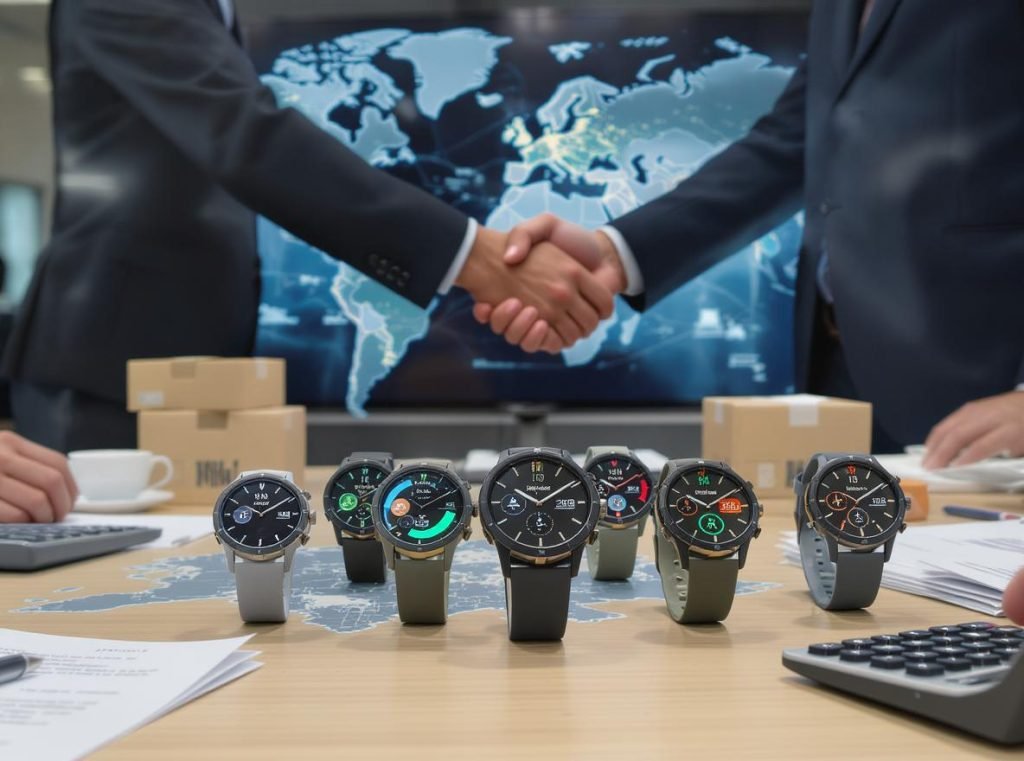
Wholesale buyers should prioritize mid-range rugged models ($200-400 wholesale) that balance durability with smart features for optimal profit margins, while focusing on industrial suppliers, outdoor retailers, and premium market segments where durability justifies premium pricing.
Target Market Analysis and Segmentation
Successful wholesale strategies require matching product categories with appropriate customer demographics and market positioning.
High-value rugged market segments:
- Industrial and construction equipment suppliers
- Outdoor gear and adventure equipment retailers
- Military, tactical, and first responder suppliers
- Professional service and enterprise customers
Standard model opportunities:
- General electronics and consumer technology stores
- Fashion and lifestyle retailers targeting style-conscious consumers
- Budget-conscious consumer markets seeking affordability
- Corporate bulk purchase programs for office environments
Supply Chain and Quality Considerations
Wholesale sourcing requires balancing cost optimization with quality assurance and certification verification to maintain customer satisfaction and brand reputation.
Critical evaluation criteria:
- IP rating minimum of IP65 for dust and water protection
- Battery life extending beyond 8+ hours for professional applications
- Screen brightness exceeding 2000 nits for outdoor visibility
- Temperature operating ranges suitable for target environments
Sourcing strategy recommendations:
- Chinese manufacturers provide competitive pricing advantages
- Minimum order quantities typically range from 100-1000 units
- Customization options include private labeling and OEM/ODM services
- Third-party testing verification ensures claimed certifications accuracy
Inventory Strategy and Seasonal Considerations
Market demand patterns influence optimal stocking ratios and seasonal inventory management for maximum profitability and reduced carrying costs.
Consider stocking ratios of 30% rugged to 70% standard for general markets, or 60% rugged to 40% standard for specialized outdoor and professional retailers. Spring and summer months typically show increased rugged watch demand, while standard models maintain consistent year-round sales patterns.
Summary
Rugged smartwatches deliver superior durability, battery life, and long-term cost-effectiveness with proven advantages in demanding environments, while standard models excel in smart connectivity and everyday convenience features. The choice depends on intended applications, target markets, and whether operational reliability outweighs advanced connectivity features for your specific requirements.
Ready to explore premium rugged smartwatch wholesale opportunities? Osmarto specializes in manufacturing military-grade smartwatches that meet MIL-STD-810H standards while maintaining competitive wholesale pricing for global distributors. Our rugged models deliver 20+ day battery life, comprehensive outdoor features, and proven field durability that reduces replacement costs and maximizes customer satisfaction. Contact us today to discuss bulk orders, private labeling options, and partnership opportunities that match your market positioning strategy. Let’s build your profitable smartwatch business together with products that deliver measurable performance advantages.