Skip to content
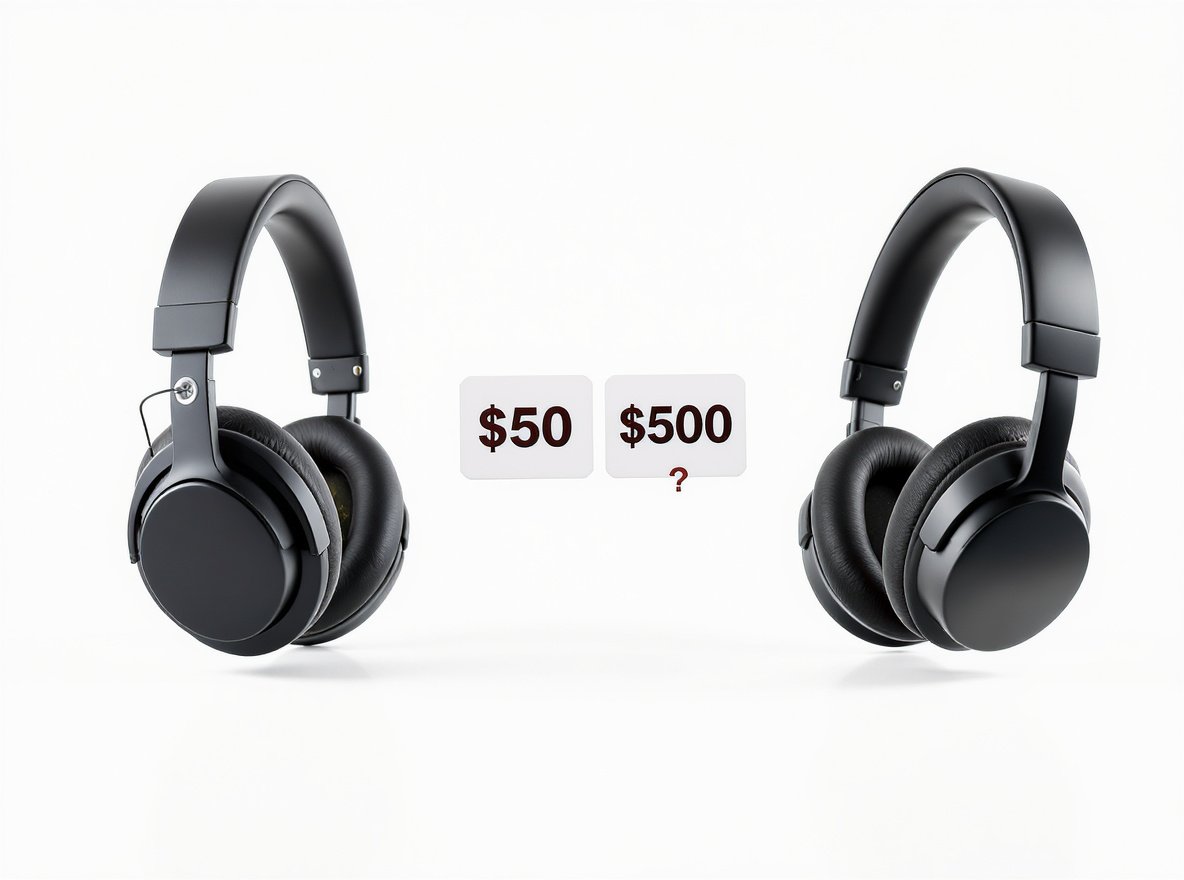
You’ve been staring at that premium headphone price tag, wondering if the cost truly matches the value. While budget options flood the market, expensive models promise superior sound quality and advanced features that seem to justify their steep prices.
The answer isn’t straightforward – expensive headphones can deliver superior performance, but the value varies dramatically based on your needs. For most consumers, the sweet spot lies between $100-$300, where you get the best balance of performance and value, while spending beyond $300 often hits diminishing returns.
If you’re considering investing in premium audio gear or sourcing quality headphones for your wholesale business, let’s explore what actually justifies those higher price tags.
What Actually Makes Headphones Expensive?
Understanding the true cost drivers helps you appreciate why premium headphones command higher wholesale and retail prices.
Expensive headphones cost significantly more due to advanced driver technology, premium materials like beryllium, extensive R&D investment, and precise manufacturing processes. Dynamic drivers in budget headphones cost under $0.20, while premium beryllium or planar magnetic drivers can exceed $3 per unit.
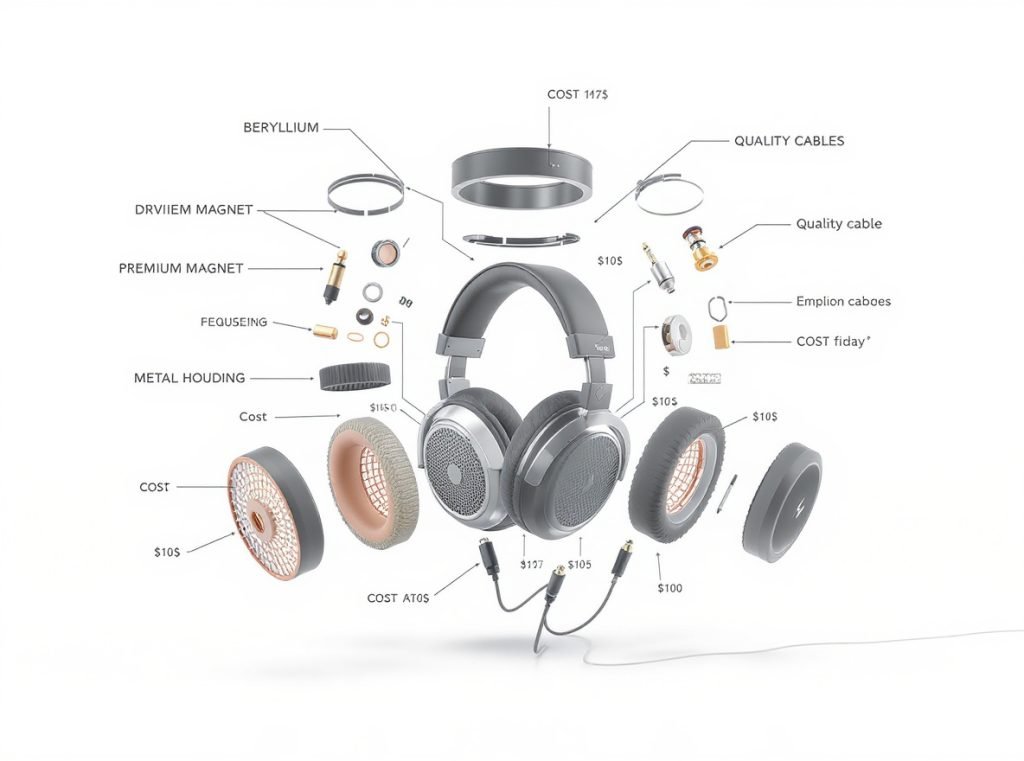
The manufacturing cost breakdown reveals dramatic differences between price tiers:
Advanced Driver Technology
Premium headphones use sophisticated drivers that budget models simply cannot match. Planar magnetic drivers require ultra-thin diaphragms with embedded wire patterns suspended between arrays of precisely positioned magnets, using rare-earth magnets arranged with diaphragms thinner than human hair.
Electrostatic drivers take complexity even further, using electrically charged membranes that literally float in an electrical field, requiring specialized amplification and manufacturing facilities that resemble clean rooms.
Premium Materials Selection
High-end headphones employ what industry experts call a “chemist’s wish list” of materials:
- Beryllium diaphragms: Lighter than aluminum but stiffer than steel, though toxic if improperly handled and costing more per gram than many precious metals
- High-purity copper or pure silver cables with complex geometries
- CNC-machined aluminum housings, exotic woods, and premium leather padding
- Advanced composite materials that can add $0.10 to $1.00 for housing alone
Research and Development Investment
Companies invest years in acoustic research using equipment that costs more than a small house. Building an anechoic chamber – a room so quiet you can hear your nervous system – can cost millions. These R&D costs are amortized across production runs, meaning higher volumes significantly reduce per-unit costs.
| Cost Component | Budget Headphones | Premium Headphones |
|---|---|---|
| Driver Technology | <$0.20 dynamic drivers | >$3 planar/beryllium drivers |
| Materials | Basic plastics | Beryllium, exotic metals |
| R&D Investment | Minimal | Millions in acoustic research |
| Manufacturing Precision | Mass production | Clean room assembly |
Do Expensive Headphones Really Sound Better?
The relationship between price and sound quality isn’t linear, with blind testing revealing surprising truths about audio performance.
Yes, expensive headphones typically sound better, but blind testing shows that premium headphones costing five times more than budget models are at best 25-35% better, not five times better. The improvement curve flattens significantly beyond certain price points.
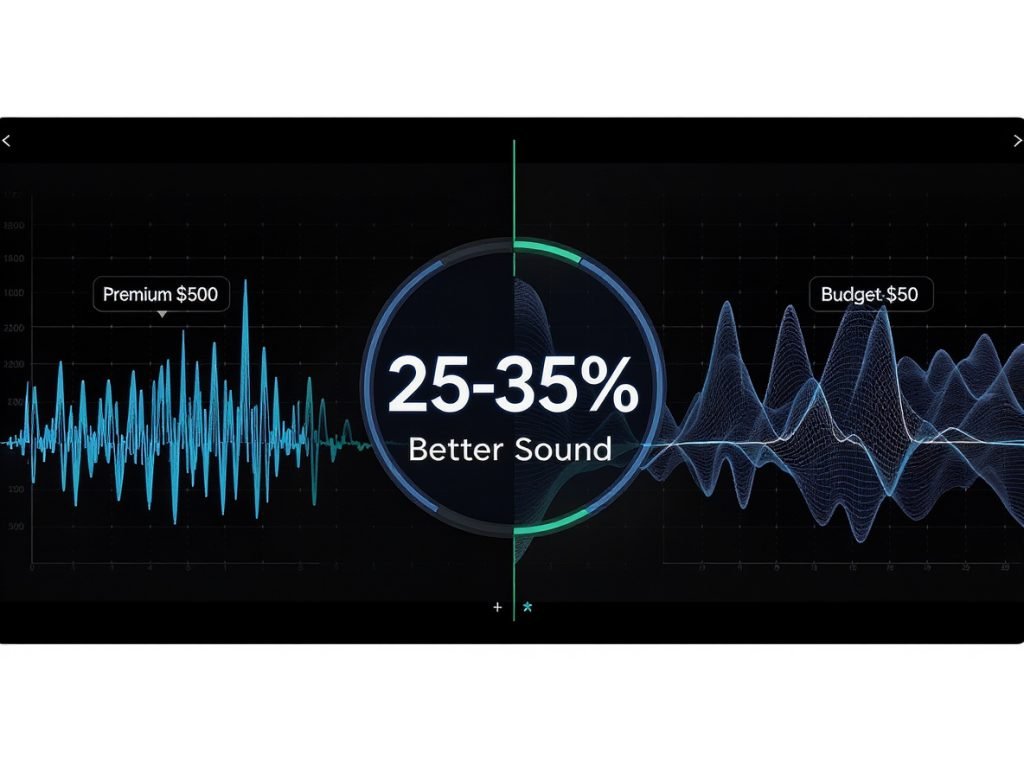
Sound quality improvements manifest in measurable ways:
Frequency Response and Detail Retrieval
Premium headphones excel at instrument separation and detail retrieval that budget models miss entirely. You discover proper soundstage imaging where you can pinpoint instrument locations in three-dimensional space.
The Diminishing Returns Reality
Multiple industry sources confirm that as prices rise, enhancements in sound quality become minimal, primarily reflecting improvements in materials or construction rather than actual sound performance. Audio store professionals candidly admit that when customers have $4,400 budgets, they can’t just recommend better or cheaper alternatives.
Technical Advantages of Premium Drivers
Planar magnetic headphones offer several benefits over dynamic drivers:
- Lower distortion and linear frequency response
- Superior bass response due to magnetic force strength
- More even air displacement reducing phase distortion
- However, they’re heavier and often require more power to drive properly
The Sweet Spot Analysis
Research consistently points to the $100-$300 range as offering the best price-to-performance ratio. In this tier, manufacturers focus on fundamental sound quality rather than fancy materials, and the jump in audio quality really can be drastic compared to sub-$100 options.
Are Premium Materials Worth the Extra Cost?
Material quality differences extend beyond aesthetics, directly impacting both performance and long-term value proposition.
Premium materials provide measurable acoustic benefits, but practical advantages may not justify substantial cost increases for most listeners. Beryllium is technically superior to titanium, staying pistonic throughout frequency ranges where titanium relies on diaphragm breakup, but the cost differential is significant.
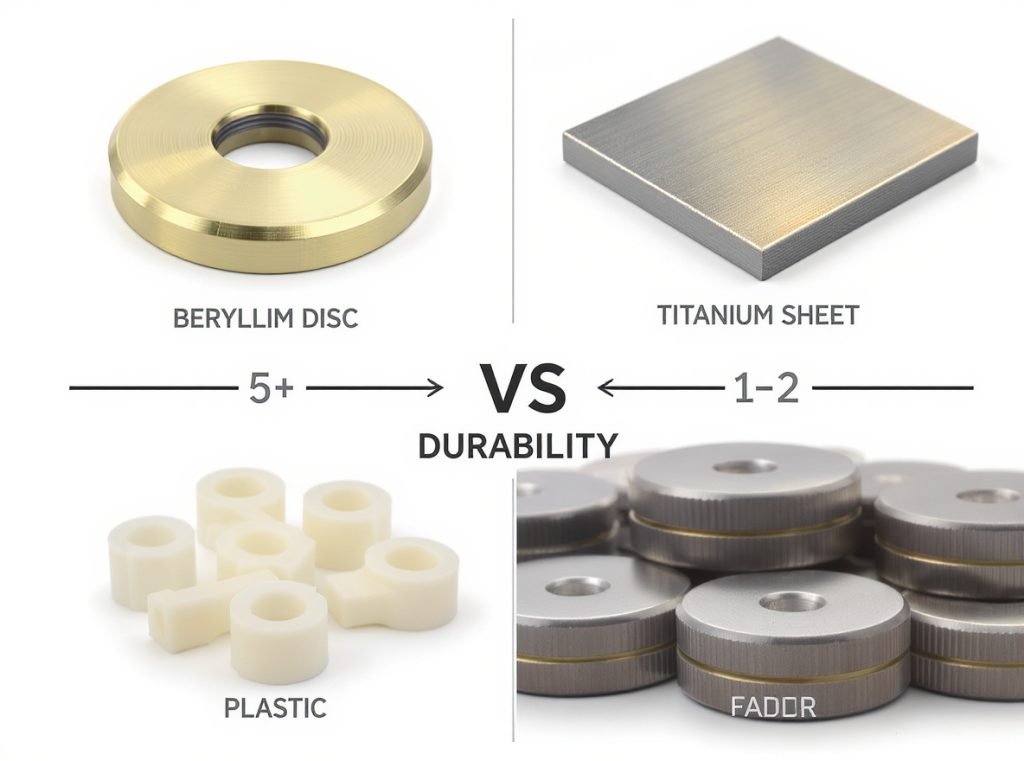
Material performance varies dramatically:
Beryllium vs. Alternative Materials
While beryllium drivers offer superior acoustic properties, the manufacturing complexity and material toxicity create substantial cost premiums. Titanium gets its upper-frequency response from diaphragm breakup, while beryllium maintains accurate signal tracking throughout the same range.
Construction Quality Impact
Premium materials affect durability and user experience:
- High-grade aluminum housings reduce resonance for cleaner sound
- Memory foam padding maintains comfort during extended sessions
- Kevlar-reinforced cables prevent the cable failures common in budget models
- CNC-machined components ensure consistent tolerances
Long-term Value Considerations
Premium materials often provide better total cost of ownership:
| Material Type | Acoustic Benefit | Durability Impact | Cost Premium |
|---|---|---|---|
| Beryllium Drivers | Superior frequency response | Maintains performance decades | High |
| Aluminum Housing | Reduced resonance | Resists wear and damage | Moderate |
| Premium Cables | No sound impact | Prevents common failure point | Low-Moderate |
| Memory Foam | Comfort enhancement | Maintains shape over time | Low |
For wholesale operations, these durability improvements translate to reduced warranty claims and higher customer satisfaction rates.
What Advanced Features Justify Higher Prices?
Modern expensive headphones incorporate sophisticated technology that provides genuine functional benefits beyond basic audio reproduction.
Advanced features like adaptive ANC, high-quality Bluetooth codecs, spatial audio processing, and biometric monitoring justify higher prices through enhanced functionality. Premium models offer hybrid ANC systems using multiple microphones with adaptive environmental adjustment.

Feature sophistication varies dramatically across price ranges:
Active Noise Cancellation Evolution
Modern ANC technology has become increasingly sophisticated, with premium systems offering:
- Adaptive ANC that adjusts based on environment automatically
- Transparency modes for situational awareness without removing headphones
- Superior low-frequency noise cancellation performance
- Hybrid systems using multiple microphones for comprehensive ambient sound management
Advanced Connectivity Features
Premium headphones include sophisticated wireless technology:
- High-quality Bluetooth codecs (aptX, LDAC) for near-lossless transmission
- Multipoint pairing capabilities for seamless device switching
- Low-latency codecs optimized for gaming and video applications
- Extended battery life reaching 30-60 hours in some models
Smart Integration and Processing
Higher-end models incorporate:
- Spatial audio and 3D sound processing for immersive experiences
- Voice assistant integration with always-listening capabilities
- Biometric monitoring including heart rate and activity tracking
- Personalized sound profiles based on hearing tests and preferences
These features require substantial development investment and specialized components that directly contribute to manufacturing costs while providing tangible benefits for users requiring advanced functionality.
When Are Cheap Headphones Actually Better Value?
Despite premium advantages, budget options make compelling sense in specific circumstances and represent excellent business opportunities.
Budget headphones have significantly improved, with many sub-$100 options offering active noise cancellation for as low as $29 and premium features previously found in headphones costing 3-4x more. Sometimes personal preference trumps technical superiority.

Several scenarios strongly favor budget headphones:
The $50-$100 Sweet Spot Performance
Modern budget headphones deliver surprising capabilities:
- Active noise cancellation in sub-$50 models
- 30-60 hour battery life matching premium competitors
- High-quality Bluetooth codecs previously exclusive to flagship models
- Comfortable designs suitable for extended wear
Specific Use Cases Where Budget Wins
Budget options excel in practical scenarios:
Casual Listening: For streaming music and podcasts, expensive headphones offer minimal practical benefits over well-designed budget alternatives.
Active Lifestyles: Budget pricing reduces replacement anxiety during exercise, travel, or other high-wear situations where damage or loss is likely.
Multiple Device Strategy: Lower costs enable purchasing different headphones optimized for different scenarios rather than one expensive pair.
The Comfort and Preference Factor
Audio enthusiasts report preferring their $200 models over $4,400 electrostatic headphones, proving that sound signature preference remains highly individual. Sometimes the goal is finding something you’re happy with, not something to marry for life.
| Use Case | Why Budget Works | Recommended Price Range |
|---|---|---|
| Background Music | Adequate fidelity | $29-$50 |
| Podcast/Audiobooks | Voice clarity priority | $50-$100 |
| Exercise/Travel | Replacement anxiety reduction | $30-$80 |
| Testing Preferences | Discovery before major investment | $50-$150 |
How Much Should You Actually Spend on Headphones?
Finding optimal value requires balancing needs, expectations, and budget constraints with available performance at different price tiers.
Recommended spending varies significantly by use case: casual listeners find optimal value at $50-$100, music enthusiasts discover the sweet spot at $100-$300, and only serious audiophiles or professionals should consider spending beyond $300, where diminishing returns become significant.
Price tier analysis reveals distinct value propositions:
Casual Listeners: $50-$100
Focus on comfort, battery life, and basic features. Brands like Anker, JLab, and 1More offer excellent value with surprising feature sets including ANC and extended battery life.
Music Enthusiasts: $100-$300
This represents the price-to-performance sweet spot where manufacturers focus on fundamental sound quality. Consider models like Sony WH-1000XM series and Sennheiser HD 6XX series that deliver reference-quality performance.
Audiophiles: $300-$1000
For those seeking reference-quality sound reproduction, but diminishing returns become significant beyond this point. Only justified when specific technical requirements demand premium components.
Professional Use: $500+
Professional applications may justify higher costs through specific technical requirements, but most users won’t perceive meaningful improvements over well-designed mid-range alternatives.
The 2025 Reality Check
Audio technology has advanced dramatically, with budget brands catching up to premium players. Features like ANC, advanced Bluetooth codecs, and high-quality sound reproduction are no longer exclusive to flagship models, making expensive options harder to justify for most users.
What Should Wholesalers Know About Premium Headphone Markets?
The premium headphone market presents unique opportunities and challenges for wholesale buyers targeting quality-conscious customers worldwide.
The global headphones market reached $45.26 billion in 2025, with the premium segment growing at 10.95% CAGR. However, the $151-350 segment accounts for 42.8% of market revenue, while the $51-150 segment is growing fastest at 33.8% CAGR, indicating strong demand for mid-range products.
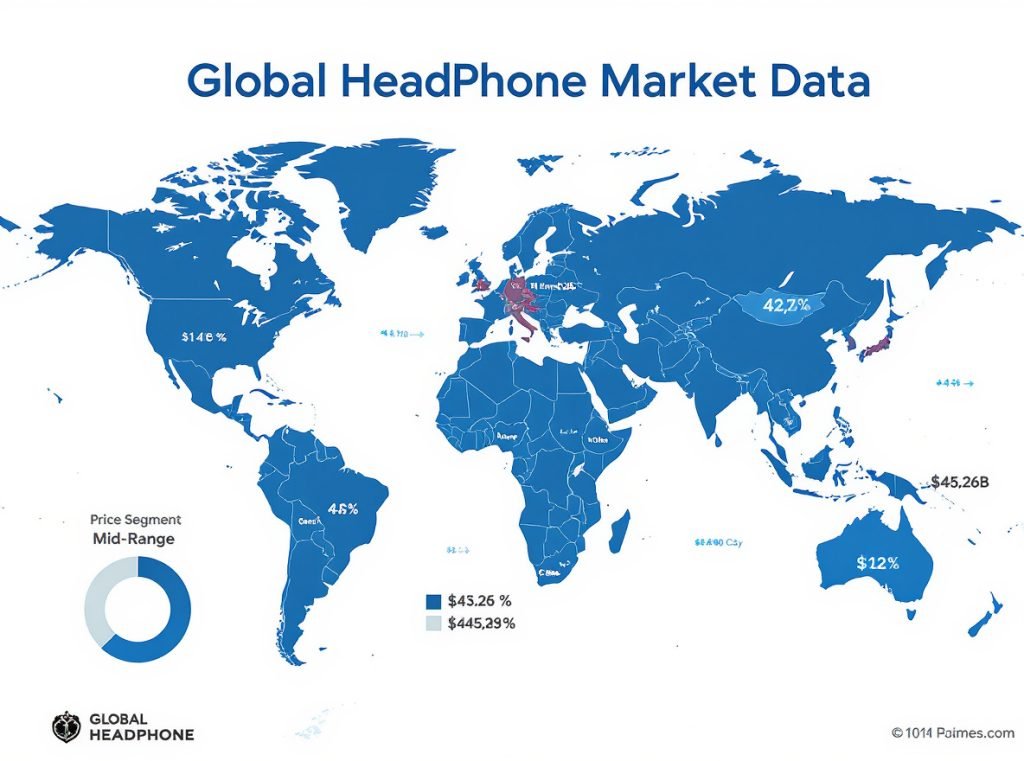
Market dynamics reveal strategic opportunities:
Price Segment Revenue Analysis
Market data shows clear preferences:
- $51-150 segment: Fastest growing at 33.8% CAGR
- $151-350 segment: Largest revenue share at 42.8%
- Premium $500+ segment: Smaller volume, higher margins
- Ultra-premium $1000+ segment: Niche market with limited growth
Regional Market Considerations
Geographic variations affect wholesale strategies:
- China leads global revenue at $10.2 billion, offering manufacturing advantages
- North America growing at 10.6% CAGR with premium preference
- Developing markets show price sensitivity, favoring $50-150 range
- Bulk purchasing trends favor competitive pricing over ultra-premium features
B2B Market Insights for Wholesalers
Wholesale considerations include:
- MOQs range from 1-5,000 units depending on price point and manufacturer
- Premium components represent ~50% of production costs in high-end models
- Mid-range products drive most revenue and growth, suggesting optimal focus area
- Competitive pricing more important than ultra-premium features for volume sales
Future Market Projections
Wireless headphones are projected to reach $270.6 billion by 2035, with continued growth in the mid-range segment representing the best wholesale opportunities for sustainable business growth.
| Market Segment | Revenue Share | Growth Rate | Wholesale Opportunity |
|---|---|---|---|
| $51-150 | Growing | 33.8% CAGR | Highest volume potential |
| $151-350 | 42.8% | Stable | Best profit margins |
| $350+ | Small | Moderate | Niche/specialty |
Summary
Expensive headphones aren’t automatically worth their premium prices, with the relationship between cost and performance being complex and non-linear. While premium models offer superior materials, advanced drivers, and additional features, blind testing reveals that headphones costing five times more deliver at best 25-35% better performance. The optimal strategy matches spending to actual needs: casual listeners should focus on the $50-$100 range, enthusiasts find excellent value in the $100-$300 bracket, and only professionals or serious audiophiles should consider higher investments where diminishing returns hit hard.
Ready to explore the optimal headphone price segments for your wholesale business? Contact Osmarto to discuss how our manufacturing expertise can help you access high-quality audio products that balance performance with competitive pricing, targeting the fast-growing mid-range market where demand and profitability converge.