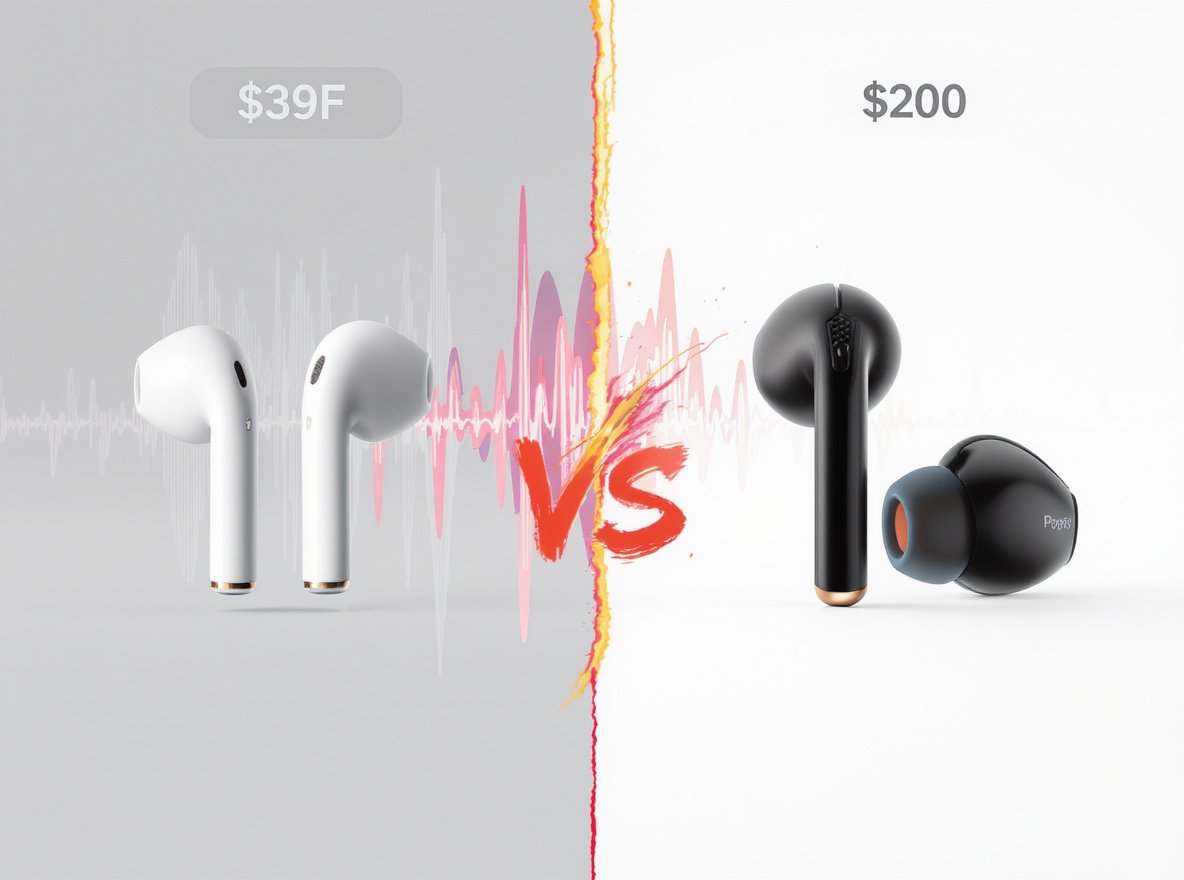
You’re evaluating inventory options, comparing a $30 pair of earbuds with a $200 premium set. The price difference is significant, but recent industry testing reveals a surprising truth: the performance gap has narrowed dramatically. For wholesalers and retailers, understanding this shift isn’t just about product knowledge—it’s about strategic positioning in a rapidly evolving market.
Recent blind testing shows that budget earbuds often outperform premium models in subjective listening tests. While expensive earbuds excel in build quality and advanced features, many users find $30-75 models deliver surprisingly competitive sound quality and essential functionality that satisfies their needs perfectly.
Let’s explore the data-driven reality of what separates budget earbuds from premium alternatives, helping you make informed inventory decisions for your business.
What Makes Earbuds Expensive in the First Place?
Understanding manufacturing cost breakdowns reveals why some earbuds command premium prices while others deliver value.
Premium earbuds justify higher costs through superior driver technology ($0.20 for basic PET vs $3+ for beryllium drivers), advanced materials, sophisticated Bluetooth SoCs ($0.80-$2.50), and extensive quality control processes that add $0.10-$0.30 per unit in testing costs.
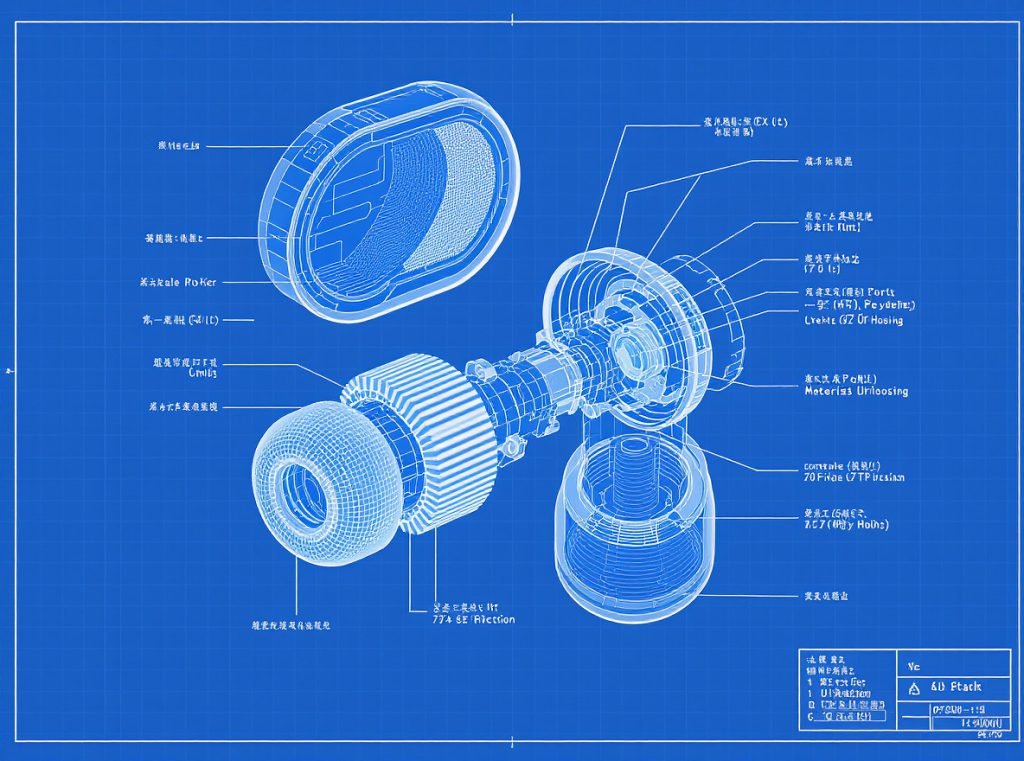
The foundation starts with driver technology—the heart of any earbud. Budget models typically use basic PET drivers costing around $0.20, while premium options incorporate beryllium or hybrid dynamic/armature units exceeding $3 per driver. The latest flagship models now feature xMEMS drivers, representing significant technological advancement over traditional components.
Housing materials create another major cost differential:
- Budget tier: Basic ABS plastic housing (~$0.10 per unit)
- Premium tier: Metal housings, ceramic components, or premium plastics ($1+ per unit)
- Advanced assembly: Complex multi-driver setups requiring skilled labor ($1.50 vs $0.50 for basic assembly)
| Component | Budget Cost | Premium Cost | Performance Impact |
|---|---|---|---|
| Drivers | $0.20 (PET) | $3.00+ (Beryllium/xMEMS) | Frequency response, clarity |
| Housing | $0.10 (ABS plastic) | $1.00+ (Metal/ceramic) | Durability, acoustics |
| Bluetooth SoC | $0.30 (Basic) | $2.50 (Advanced codecs) | Connection quality, features |
| Quality Testing | Minimal | $0.10-$0.30 | Consistency, failure rates |
Advanced circuitry in premium earbuds includes sophisticated Bluetooth SoCs supporting high-quality codecs like LDAC and aptX, plus dedicated chips for active noise cancellation—all adding substantial component costs.
For wholesale operations, these cost structures explain pricing tiers and help justify different margin expectations across product categories.
Do More Expensive Earbuds Actually Sound Better?
Industry testing reveals surprising results that challenge traditional assumptions about price-performance relationships.
Independent blind testing shows budget earbuds frequently outperform premium models in subjective listening tests. Notably, $200+ AirPods Pro 2 received no top ratings from any tester, while earbuds costing one-fifth the price consistently ranked highest in user preference studies.

Recent audio expert testing comparing budget models like the Tozo T6 against flagship Sony WF-1000XM4 revealed that many $30-50 earbuds follow optimal frequency response curves more closely than expensive alternatives.
The reality breaks down into several key areas:
Sound accuracy: Many budget earbuds now deliver surprisingly balanced frequency response that satisfies casual listeners. Professional audio testing shows certain budget models actually adhere better to industry-standard target curves than premium competitors.
Build quality differences: Premium earbuds consistently excel in materials and construction, using reinforced cables, corrosion-resistant components, and precision engineering that withstand repeated daily use.
Advanced features remain the clearest differentiator:
- Adaptive noise cancellation: Premium models offer world-class ANC rivaling over-ear headphones
- Spatial audio: Head tracking and 3D soundscapes exclusive to high-end models
- Multipoint connectivity: Seamless switching between 3+ devices
- Premium codec support: LDAC, aptX Lossless for high-resolution audio
For most consumers streaming standard-quality music, these technical advantages provide minimal perceivable benefit, explaining why budget options score well in real-world testing.
How Much Should You Really Spend on Earbuds?
Industry data reveals optimal price points based on actual performance testing and consumer satisfaction metrics.
Audio experts recommend the $50-100 sweet spot for most consumers, where significant improvements in build quality and features occur without diminishing returns. The global earphones market, valued at $71.4 billion and projected to reach $163.8 billion by 2030, shows strong demand across all price segments.

Price-performance analysis breaks into clear tiers:
Budget Tier ($30-75)
Exceptional value models like the JLab Go Pop ANC ($30) now include active noise cancellation, while the Anker Soundcore Life A1 ($49) offers wireless charging—features once exclusive to premium segments.
Mid-Range ($75-150)
This range represents the optimal balance for most users, offering significant improvements in build quality, app support, codec compatibility, and enhanced noise cancellation performance.
Premium ($150-400)
Reserved for audiophiles, professionals, and heavy daily users who benefit from top-tier sound quality, advanced features, superior materials, and comprehensive app ecosystems.
| Price Range | Market Share | Recommended For | Key Benefits |
|---|---|---|---|
| $30-75 | 40% | Casual listeners, active users | Essential features, good value |
| $75-150 | 40% | Daily commuters, enthusiasts | Balanced performance, premium features |
| $150-400 | 20% | Audiophiles, professionals | Top-tier quality, advanced technology |
Seasonal demand patterns show budget models peak during back-to-school periods, while premium earbuds see highest sales during holiday seasons—critical timing information for inventory planning.
Are Budget Earbuds Good Enough for Most People?
Current market analysis confirms that modern budget earbuds satisfy the majority of consumer needs effectively.
Yes, budget earbuds now offer decent sound quality, essential features like water resistance and wireless charging, acceptable 4-8 hour battery life, and basic touch controls that satisfy casual listeners, podcast enthusiasts, and phone call users.

The dramatic improvement in budget earbud capabilities stems from manufacturing advances and component cost reductions. Models in the $30-75 range now include features previously exclusive to premium segments.
Budget earbuds excel in specific use cases:
Active lifestyle compatibility: Lower replacement costs make them ideal for gym use, running, and outdoor activities where damage or loss risks are higher. Sweat resistance and secure fit designs now standard across budget tiers.
Essential connectivity: Modern budget models provide reliable Bluetooth connections, adequate microphone quality for calls, and basic touch controls that function consistently for everyday tasks.
Casual content consumption: For podcasts, audiobooks, and standard streaming music, budget earbuds deliver perfectly adequate audio quality without the premium features casual listeners won’t utilize.
Budget model limitations remain in specific areas: build quality typically features rougher seams and cheaper plastics, touch controls may be less responsive than premium alternatives, and advanced features like sophisticated ANC remain limited.
However, for the estimated 60-70% of consumers who prioritize value over premium features, well-chosen budget earbuds provide entirely sufficient performance.
What Do You Actually Get with Premium Earbuds?
Premium earbuds justify their higher investment through measurable improvements across multiple performance categories.
Premium models deliver world-class active noise cancellation, spatial audio with head tracking, multipoint Bluetooth connectivity, premium codec support, superior microphone quality, 8+ hour battery life with ANC, and professional-grade materials that withstand extensive daily use.
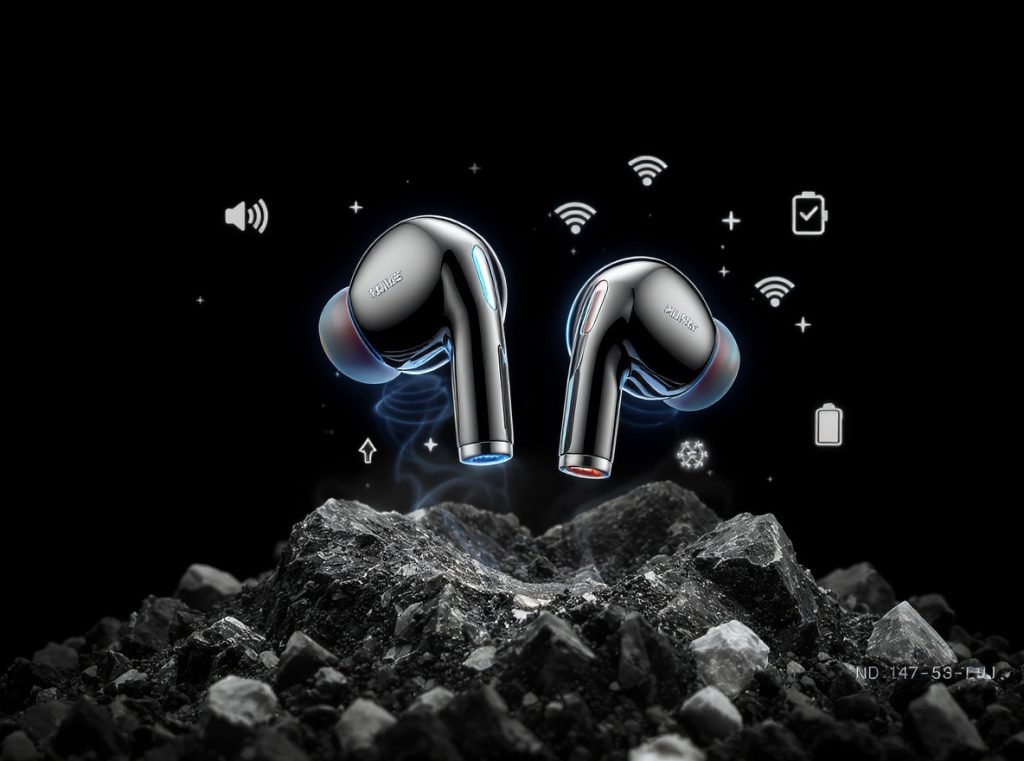
The feature advantages create genuine value for specific user categories:
Professional applications: Content creators, musicians, and business professionals benefit from superior microphone arrays, extended battery life, and reliable connectivity during critical work situations.
Commuter-focused features: Advanced ANC technology in premium models now rivals over-ear headphones, providing significant noise reduction in aircraft, trains, and urban environments.
Audiophile performance: Premium codec support (LDAC, aptX Lossless) enables high-resolution audio playback for users with quality source material and discerning listening preferences.
Enhanced user experience elements include:
- Ergonomic design: Multiple ear tip sizes, wing tip options, and balanced weight distribution for extended wear comfort
- Intuitive controls: Properly calibrated touch panels with customizable gesture mapping
- Comprehensive apps: Detailed EQ settings, firmware updates, and personalization options
- Extended warranty: Superior customer support and longer coverage periods
For wholesale buyers, premium models typically offer 40-60% profit margins compared to 15-25% on budget options, making them crucial for overall business profitability despite lower sales volume.
Which Type Should Your Business Stock?
Strategic inventory allocation based on market data and consumer behavior patterns optimizes both sales volume and profit margins.
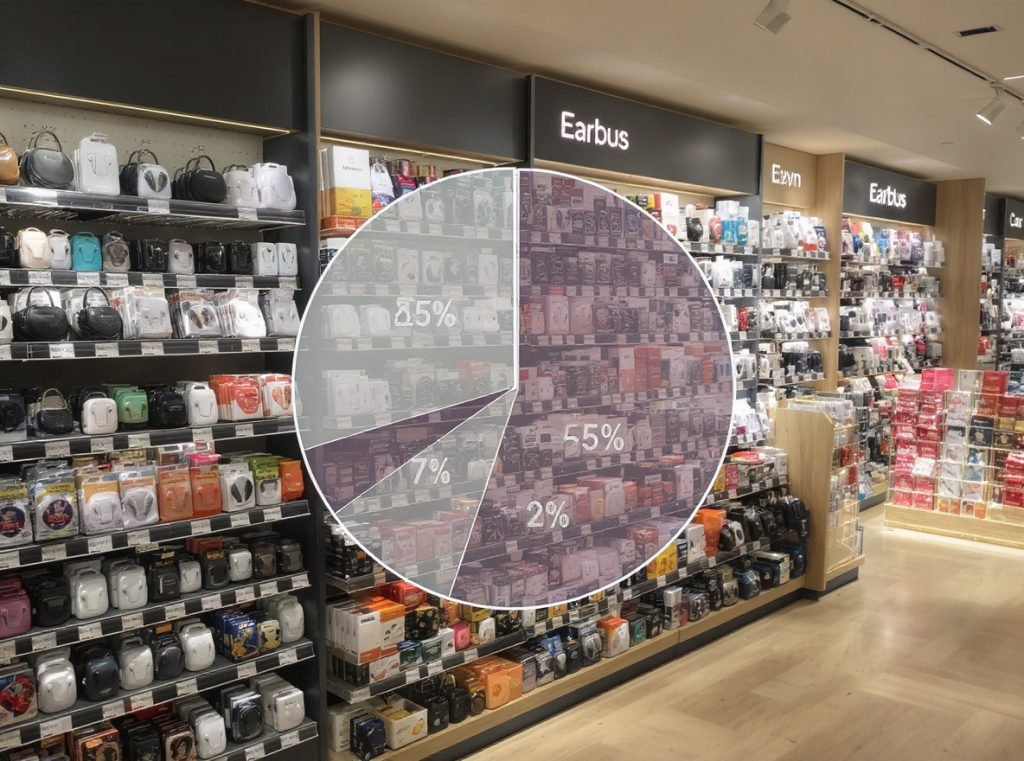
Successful audio retailers maintain balanced inventory: 40% budget tier ($30-75), 40% mid-range ($75-150), and 20% premium ($150-400). This distribution aligns with consumer demand patterns while maximizing profit potential across different customer segments.
Budget Tier Strategy (40% of inventory)
Focus on high-volume, price-conscious consumers with models like Sony WF-C500, JLab Go Pop ANC, and Anker Soundcore Life A1. These products offer 15-25% margins but generate consistent turnover and customer acquisition.
Mid-Range Focus (40% of inventory)
Target the value-conscious majority with Sony WF-C700N, Anker Soundcore P40i, and Samsung Galaxy Buds FE. This segment represents optimal balance of features, performance, and profitability.
Premium Selection (20% of inventory)
Stock flagship models like Apple AirPods Pro 2, Sony WF-1000XM5, and Bose QuietComfort Ultra for enthusiasts and professionals. While volume is lower, margins of 40-60% significantly impact overall profitability.
| Business Considerations | Impact on Strategy |
|---|---|
| Customer Demographics | Urban professionals prefer mid-range; students gravitate toward budget |
| Seasonal Patterns | Budget peaks back-to-school; premium peaks holidays |
| Profit Optimization | Premium margins (40-60%) vs budget margins (15-25%) |
| Market Growth | 10.7% annual growth projected through 2030 |
Geographic and demographic factors influence optimal product mix. Electronics stores in shopping centers might emphasize premium options, while discount retailers focus on value propositions.
Understanding that different price tiers effectively serve different genuine needs allows retailers to position products honestly while maximizing customer satisfaction and business profitability.
Summary
The earbuds market has fundamentally shifted, with budget models now delivering surprisingly competitive performance that satisfies most consumer needs. While premium earbuds provide measurable advantages in specific areas, the value proposition has become more nuanced than simple price-equals-quality assumptions.

For wholesale businesses, success lies in understanding these performance realities and stocking appropriate product mixes that serve different customer segments effectively. The key is matching genuine user needs with honest value propositions across all price tiers.
Ready to capitalize on the evolving earbuds market with inventory that delivers real value to your customers? Contact Osmarto today to explore our comprehensive range of earbuds across all price points, backed by manufacturing expertise and competitive wholesale pricing designed to support your business growth in this dynamic market.