Skip to content
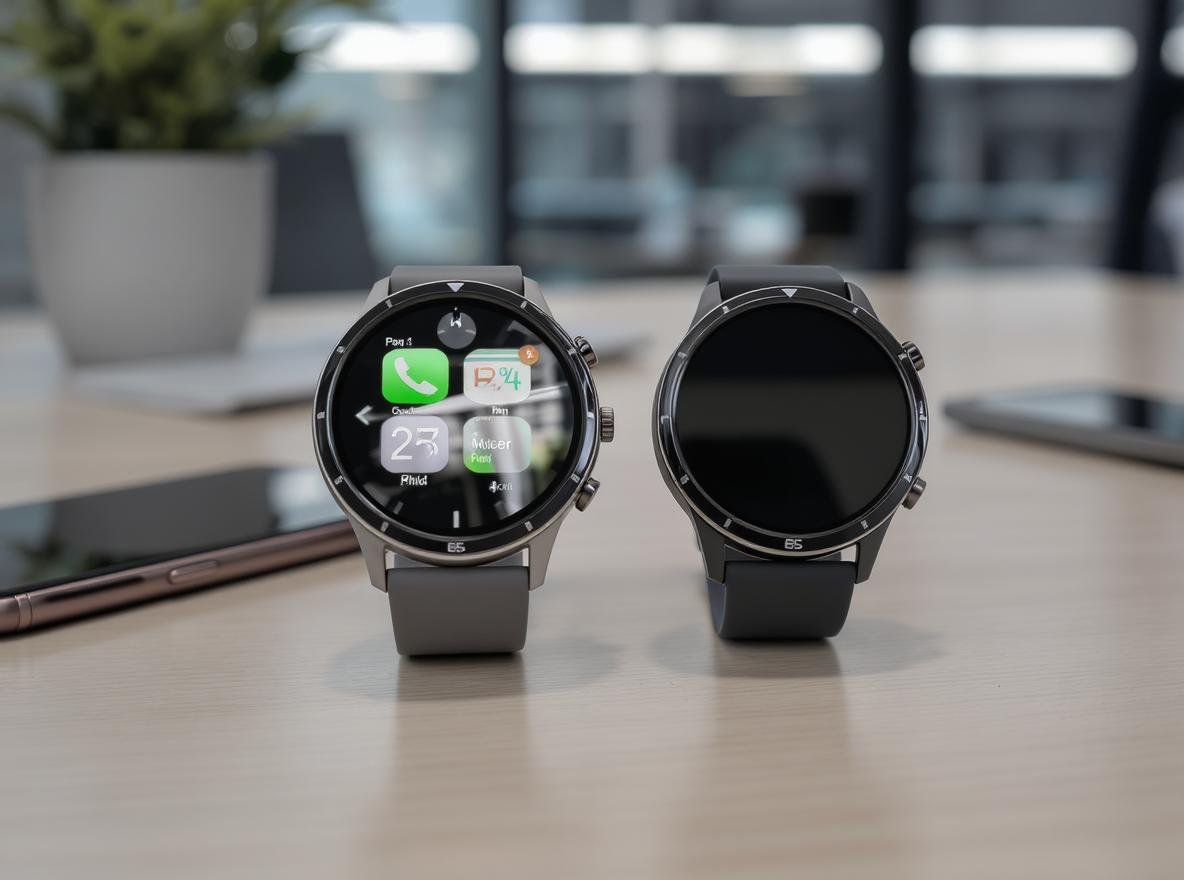
Choosing the right smartwatch ecosystem affects your daily productivity, health monitoring, and device connectivity for years to come. With Apple dominating premium markets and Samsung leading Android compatibility, understanding their ecosystem differences is crucial for making an informed decision.
Apple Watch excels in seamless iOS integration and medical-grade health accuracy, while Samsung Galaxy Watch provides superior battery life, broader device compatibility, and comprehensive smart home control. Your smartphone choice and specific needs determine the winner.
Let’s explore what makes each ecosystem unique and help you choose the perfect smartwatch solution for your business or personal use.
Which Ecosystem Offers Better Smartphone Integration?
Understanding smartphone compatibility is fundamental when choosing a smartwatch ecosystem, especially for businesses managing multiple devices or international operations.
Apple Watch requires iPhone and delivers unparalleled iOS integration, while Samsung Galaxy Watch works with Android devices and offers limited iPhone compatibility with reduced functionality.
Apple’s Seamless iPhone Integration
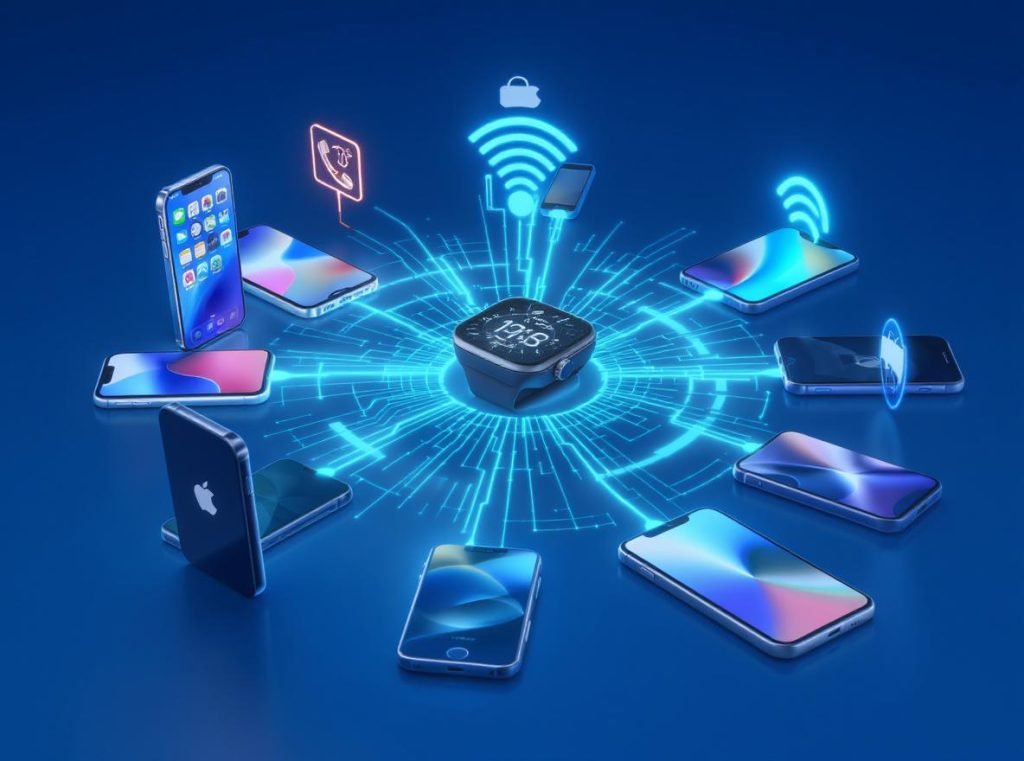
Apple Watch exclusively pairs with iPhones, creating deeply integrated experiences that feel like natural extensions of your phone. The ecosystem integration includes features that work effortlessly without complex setup.
Key integration benefits:
- Universal Clipboard: Copy text on iPhone and paste directly on Apple Watch
- Handoff: Start emails or tasks on one device and continue seamlessly on another
- Automatic unlocking: Apple Watch unlocks iPhone, Mac, and other Apple devices when worn
- Focus Modes: Automatically sync Do Not Disturb and work modes across all devices
- AirDrop: Instant file sharing between all Apple devices in your ecosystem
Samsung’s Flexible Android Approach
Samsung Galaxy Watch offers broader compatibility by working with any Android device, though optimal features require Samsung smartphones. The flexibility comes with setup complexity but provides more device choice.
| Phone Compatibility | Integration Level | Available Features |
|---|---|---|
| Samsung Galaxy | Full ecosystem | All features, Samsung Pay, complete health sync |
| Other Android | Most features | Limited Samsung Pay, basic health tracking |
| iPhone | Basic functionality | No Samsung Pay, restricted notifications |
Samsung’s ecosystem shines with features like Samsung Multi Control for managing tablets and phones using laptop keyboards, and SmartThings integration built directly into Samsung devices for seamless smart home control.
How Do App Ecosystems Compare?
App availability directly impacts your smartwatch’s usefulness, particularly for business productivity, health monitoring, and entertainment applications.
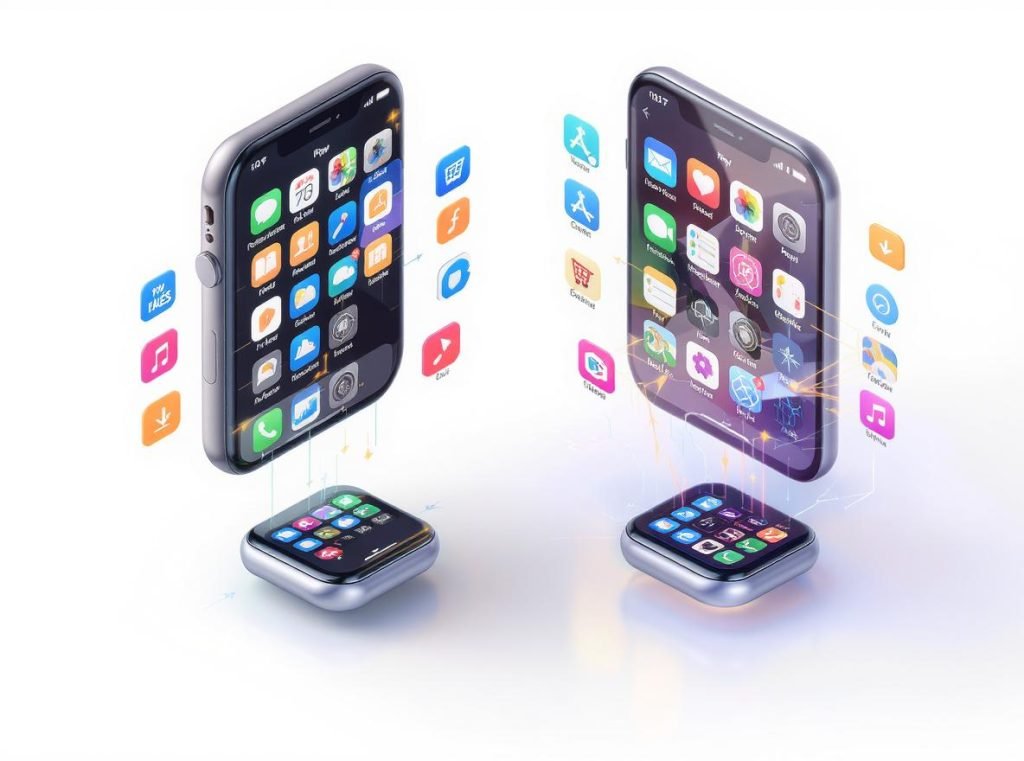
Apple Watch dominates with over 20,000 native apps from major brands, while Samsung Galaxy Watch offers approximately 5,000+ apps through Wear OS but includes unique side-loading capabilities for power users.
Apple’s Mature App Landscape
Apple Watch benefits from a robust third-party ecosystem with consistent quality standards. Major brands prioritize Apple Watch development due to higher user engagement and spending patterns.
Popular business and productivity applications include:
- Microsoft Office suite for document access
- Slack for team communication and notifications
- Todoist for task management and reminders
- Zoom for quick meeting access and controls
- Banking apps with secure transaction capabilities
- Nike, Starbucks, NBA, and ESPN with dedicated watch experiences
Samsung’s Growing but Flexible Platform
Samsung Galaxy Watch runs Wear OS, providing Google Play Store access with growing but limited selection compared to Apple. However, it offers unique advantages for technical users.
The platform strengths include:
- Google services integration (Maps, Assistant, Pay)
- Side-loading capability: Install third-party apps not available in official stores
- Samsung-specific productivity tools and SmartThings integration
- Essential communication platforms with cross-platform compatibility
For businesses requiring specialized applications not available in official stores, Samsung’s side-loading capability provides significant flexibility that Apple’s closed system cannot match.
Which Ecosystem Provides Better Health and Fitness Features?
Health monitoring capabilities have become crucial differentiators, especially for businesses implementing employee wellness programs or individuals prioritizing medical-grade accuracy.
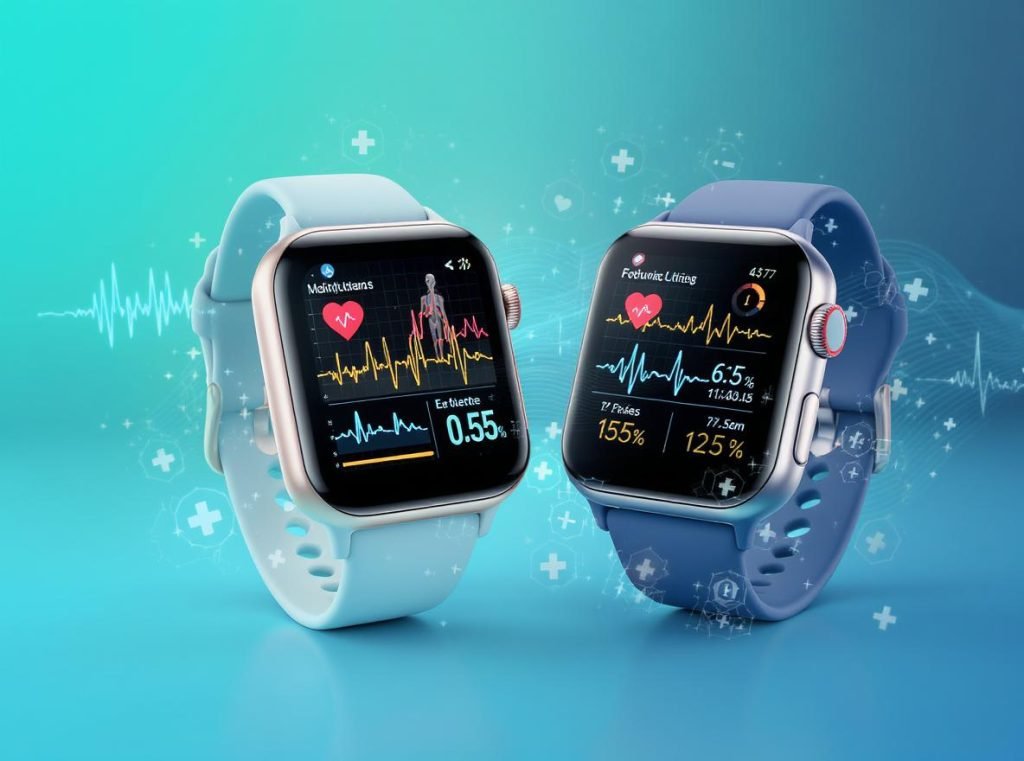
Apple Watch leads in medical-grade accuracy and FDA-approved health monitoring, while Samsung Galaxy Watch offers more comprehensive health features including body composition analysis but with lower accuracy ratings.
Apple’s Medical-Grade Precision
Apple Watch prioritizes clinical accuracy and healthcare system integration, making it valuable for users requiring reliable health data for medical purposes.
Medical-grade features include:
- FDA-cleared ECG readings with irregular heart rhythm detection
- Superior heart rate accuracy: Significantly outperforms Samsung when compared to clinical standards
- Sleep apnea detection (available in Series 10)
- Fall detection and crash detection with automatic emergency services contact
- Blood oxygen monitoring (though currently disabled in US due to patent disputes)
- Seamless integration with Apple Health app and healthcare provider systems
Samsung’s Feature-Rich Health Monitoring
Samsung offers broader health monitoring capabilities with innovative features, though accuracy concerns affect reliability for medical applications.
Comprehensive health features include:
- Body composition analysis: Measures body fat, muscle mass, and water percentage using bioelectrical impedance
- Blood pressure estimation: Available with compatible Galaxy Watch models after proper calibration
- Advanced sleep tracking: Detailed REM, light, and deep sleep analysis with insights
- Temperature sensing and skin monitoring: Environmental and health-related measurements
- Stress management: Guided breathing exercises and stress level monitoring
However, Samsung’s heart rate tracking accuracy is notably lower than Apple Watch, which affects all dependent health metrics and limits reliability for medical or fitness applications requiring precise data.
How Do Battery Life and Performance Compare?
Battery performance directly impacts daily usability and operational costs, particularly important for businesses managing multiple devices or users requiring extended usage periods.
Samsung Galaxy Watch delivers superior battery life with 40-72 hours of usage depending on model, while Apple Watch provides 18-24 hours but with more consistent performance throughout the battery cycle.
Samsung’s Battery Life Leadership
Samsung significantly outperforms Apple in battery endurance across all model comparisons:
| Watch Model | Normal Usage | Power Saving Mode | GPS Tracking |
|---|---|---|---|
| Galaxy Watch Ultra | 48-72 hours | Up to 100 hours | 15+ hours |
| Galaxy Watch 7 | 40-48 hours | 60+ hours | 12+ hours |
| Apple Watch Series 10 | 18-24 hours | N/A | 11 hours |
| Apple Watch Ultra 2 | Up to 36 hours | 72 hours | 15 hours |
Apple’s Optimized Performance Consistency
While Apple Watch has shorter battery life, it delivers consistent performance throughout the battery cycle. The optimization ensures smooth operation without performance degradation as battery levels decrease.
Apple’s performance advantages:
- Consistent speed and responsiveness regardless of battery level
- Optimized power management preventing unexpected shutdowns
- Predictable daily charging routine for reliable scheduling
- Fast wireless charging capability reducing downtime
- S10 chip with neural engine provides AI-enhanced performance
Samsung’s Exynos W1000 processor delivers 3x faster performance with efficient multitasking but occasionally experiences lag or freezing, particularly during complex operations or when running multiple applications simultaneously.
Which Ecosystem Offers Better Business Value?
For wholesale buyers, businesses, and organizations, understanding total cost of ownership, scalability, and productivity impact is essential for making informed purchasing decisions.
Apple Watch provides premium brand recognition and seamless integration for iPhone-centric businesses, while Samsung Galaxy Watch offers better value for mixed-device environments and organizations prioritizing flexibility.
Apple’s Premium Business Integration
Apple Watch commands premium pricing but delivers measurable business benefits through ecosystem integration and user satisfaction.
Business advantages include:
- 20% higher employee retention and 5% productivity boost in businesses using Apple ecosystem
- Strong brand recognition and perceived value for client-facing roles
- Universal device management through single Apple ID system
- Enhanced security with end-to-end encryption and privacy focus
- Consistent software updates for 4-5 years extending device lifespan
- Higher resale value retention protecting investment
Samsung’s Flexible Business Solutions
Samsung provides comprehensive business solutions with cost advantages and broader compatibility for diverse technology environments.
| Business Feature | Apple Watch | Samsung Galaxy Watch |
|---|---|---|
| Initial Cost | Premium pricing | Competitive pricing |
| Device Compatibility | iPhone only | Android + limited iPhone |
| Security Platform | Built-in encryption | Samsung Knox enterprise |
| Windows Integration | Limited | Samsung Flow, Link to Windows |
| Total Cost of Ownership | Higher upfront, longer lifespan | Lower upfront, competitive maintenance |
For businesses serving diverse smartphone users or operating in cost-sensitive environments, Samsung’s broader compatibility and competitive pricing offer practical advantages over Apple’s premium but restricted approach.
What About Smart Home and IoT Integration?
Smart home connectivity increasingly matters for personal convenience and business automation, from office environment control to employee productivity enhancement.
Samsung Galaxy Watch leads in comprehensive smart home integration through SmartThings compatibility supporting thousands of devices, while Apple Watch excels in secure HomeKit automation with stronger privacy protection.

Samsung’s SmartThings Ecosystem Dominance
Samsung’s smart home integration covers the broadest range of devices and brands, making it ideal for diverse smart home and office setups.
SmartThings capabilities include:
- Extensive device compatibility across brands and protocols
- Complete home integration from TVs and refrigerators to washing machines and air conditioners
- SmartThings app built into Samsung phone operating systems
- Advanced automation rules and customizable scenes
- Real-time monitoring and energy usage tracking
- Matter 1.4 support with improved NFC setup capabilities
Apple’s HomeKit Security Focus
Apple’s HomeKit prioritizes security and seamless integration within the Apple ecosystem, though supporting fewer devices overall.
HomeKit advantages:
- End-to-end encryption for all smart home communications
- No separate hub required – Apple devices act as control centers
- Seamless Siri voice control integration from Apple Watch
- Automatic home/away detection for intelligent automation
- Thread and Matter protocol support improving third-party compatibility
- Local processing maintaining privacy and reducing cloud dependencies
For businesses prioritizing security and privacy in smart office environments, Apple’s approach provides superior protection, while Samsung offers greater flexibility for comprehensive automation across diverse device ecosystems.
How Do Voice Assistants and AI Features Compare?
Voice control and AI capabilities significantly impact daily usability and business productivity, particularly for hands-free operation and intelligent task automation.
Apple Watch Siri provides deeper iOS integration and enhanced privacy through on-device processing, while Samsung Galaxy Watch offers multiple AI assistant options including superior multilingual support through Google Assistant and Gemini.
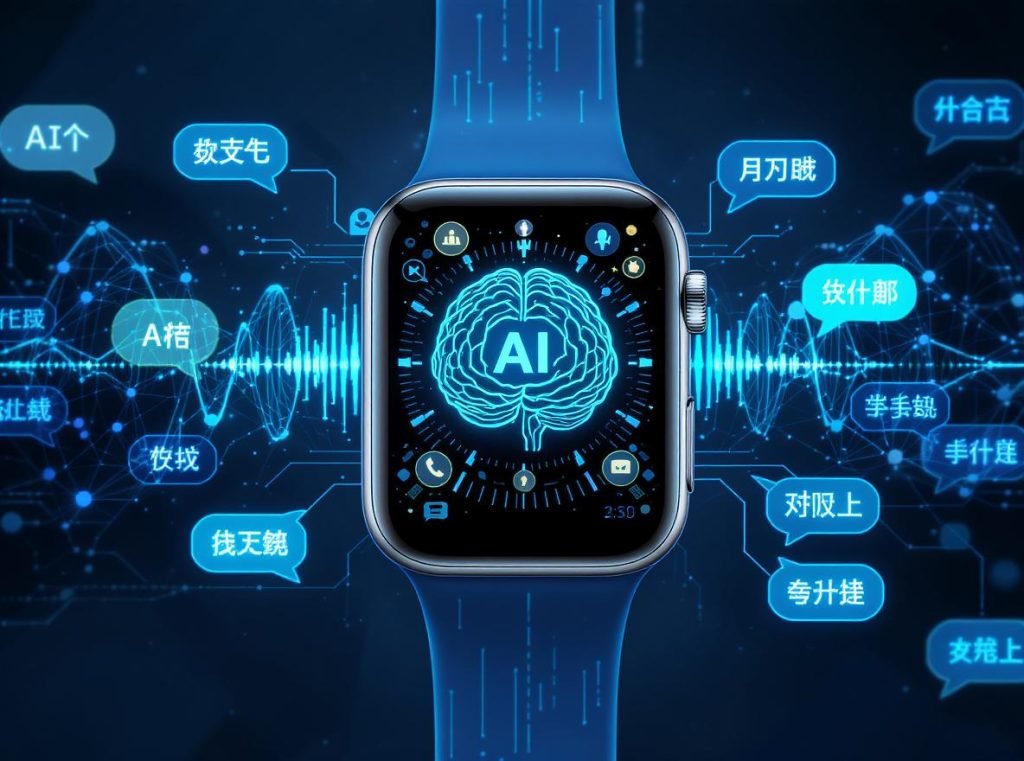
Apple’s Integrated Siri Experience
Siri on Apple Watch leverages ecosystem integration for comprehensive functionality while maintaining privacy through on-device processing.
Siri capabilities include:
- Apple Intelligence integration bringing enhanced contextual awareness
- On-device processing for faster response times and privacy protection
- Seamless Apple ecosystem control across devices and services
- ChatGPT integration available for complex queries and advanced tasks
- Type to Siri option for silent interaction in professional environments
- Natural conversation flow with context awareness across Apple devices
Samsung’s Multiple AI Assistant Options
Samsung provides flexibility by supporting multiple AI assistants, each offering different strengths for various use cases and user preferences.
AI assistant options:
- Bixby: Samsung’s native assistant with specialized device control capabilities
- Google Assistant: Superior voice recognition and broader knowledge base for general queries
- Google Gemini: Latest AI integration with advanced conversational capabilities and real-time processing
- Galaxy AI: Cross-app functionality and smart reply features for enhanced productivity
- Multilingual support: Better international language support and real-time translation capabilities
For businesses operating internationally or requiring diverse AI capabilities, Samsung’s multiple assistant approach provides practical advantages over Apple’s single but deeply integrated Siri system.
Which Ecosystem Better Supports Business Communication?
Communication features directly impact professional effectiveness and productivity, especially for managers, sales teams, and mobile professionals requiring reliable connectivity.
Apple Watch provides superior email and messaging integration for iPhone users with seamless call handoff, while Samsung Galaxy Watch offers better standalone communication features and cross-platform compatibility.
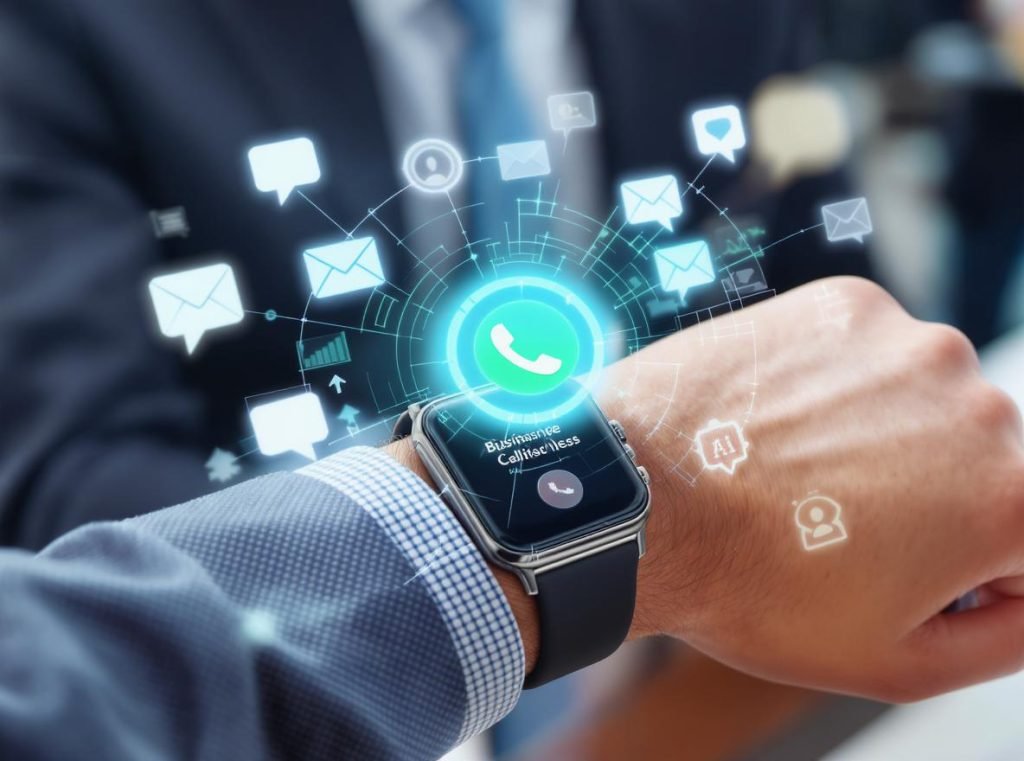
Apple’s Seamless Communication Flow
Apple Watch excels in communication continuity across the Apple ecosystem, providing professional-grade features for iPhone-centric business environments.
Communication strengths include:
- Seamless call handoff between iPhone, Mac, and Apple Watch for uninterrupted conversations
- iMessage synchronization across all devices with rich media support
- Full email composition and reply capability with intelligent notifications
- FaceTime audio calls directly from the watch for professional meetings
- Professional communication app integration (Microsoft Teams, Slack, Zoom)
- Calendar and meeting management with automatic scheduling updates
Samsung’s Independent Communication Capabilities
Samsung Galaxy Watch offers more standalone communication options and broader platform compatibility for diverse business environments.
| Communication Feature | Apple Watch | Samsung Galaxy Watch |
|---|---|---|
| Cross-platform messaging | iPhone only | Android + limited iPhone |
| Standalone calling | Requires iPhone | Independent LTE capability |
| Email composition | Full integration | Basic composition |
| AI communication features | Limited | Galaxy AI tone adjustment |
| Third-party app support | Extensive iOS apps | Growing Android selection |
Samsung’s Galaxy AI communication features provide professional tone adjustment and smart reply suggestions, while voice recording and transcription capabilities offer additional productivity tools for business users requiring documentation and follow-up capabilities.
Summary
The choice between Apple Watch and Samsung Galaxy Watch ecosystems depends on your smartphone preference, specific feature requirements, and budget considerations. Apple Watch dominates in medical-grade health accuracy, seamless iOS integration, and premium user experience, making it ideal for iPhone users prioritizing consistency and clinical-grade monitoring. Samsung Galaxy Watch leads in battery life, device compatibility, comprehensive smart home integration, and cost-effectiveness, better serving diverse technology environments and Android users.

For wholesale buyers and businesses, consider your target market’s smartphone ecosystem, required features, and total cost of ownership. Apple Watch commands premium pricing but delivers measurable productivity benefits and brand recognition, while Samsung Galaxy Watch offers practical advantages for mixed-device environments and international operations requiring multilingual AI support.
Ready to explore smart watch wholesale opportunities that align with your target market’s ecosystem preferences? Osmarto specializes in providing high-quality smart watches designed for global distribution, offering various models that complement both Apple and Android ecosystems. Our comprehensive product range covers multiple price points and feature sets to meet diverse market demands. Contact our wholesale team today to discuss custom orders, competitive bulk pricing, and how we can support your smart watch business growth with ecosystem-compatible solutions.