Skip to content
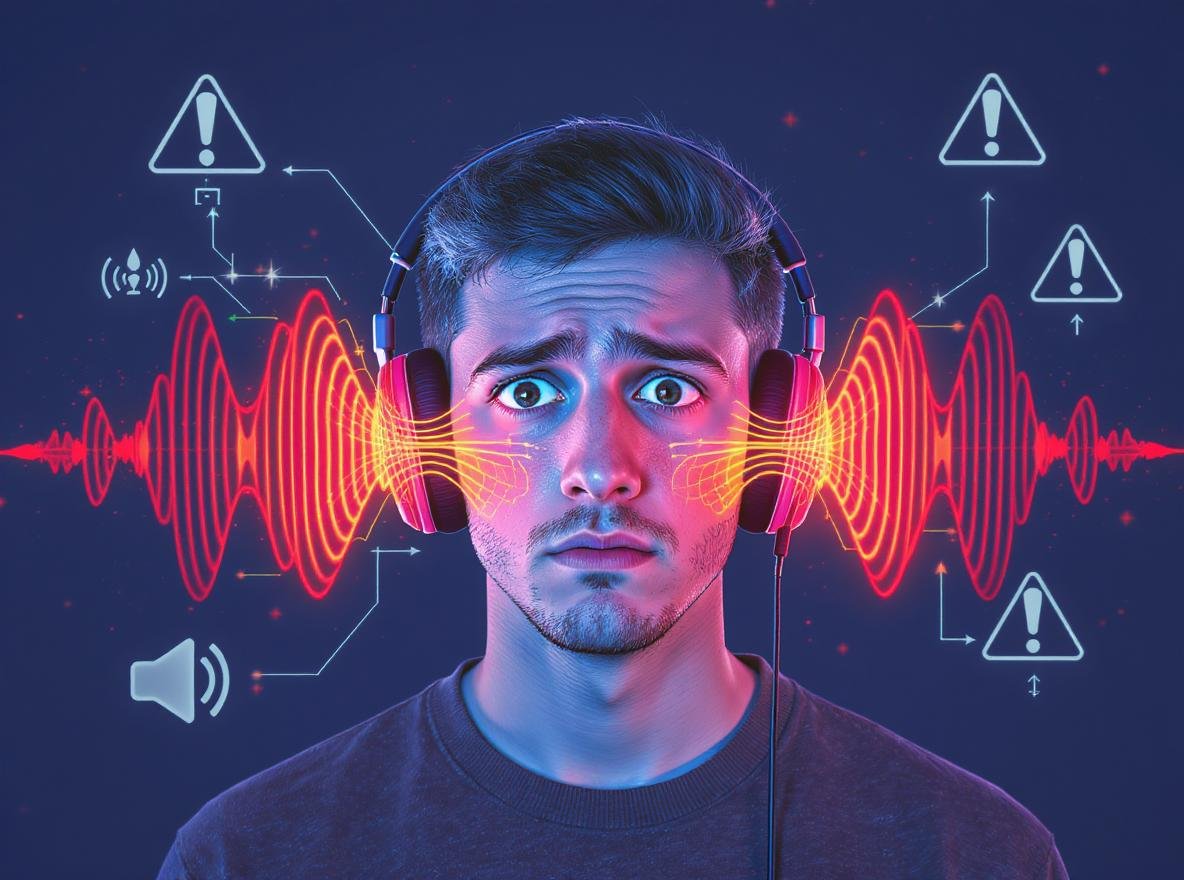
In our digital world, headphones and earbuds have become essential accessories for work, entertainment, and communication. However, growing concerns about hearing damage have left many wondering if their daily audio habits are putting their long-term hearing health at risk.
Headphones and earbuds can be harmful to your hearing, but the risk depends primarily on how you use them rather than the devices themselves. The key factors are volume level and duration of exposure—listening at high volumes or for extended periods can cause permanent, irreversible hearing damage.
Let’s explore everything you need to know about protecting your ears while enjoying your favorite audio content.
How Serious Is the Current Hearing Loss Crisis Among Young People?
The statistics surrounding headphone-related hearing damage paint an alarming picture that affects businesses and consumers worldwide.
Understanding these trends helps audio equipment suppliers recognize the urgency of promoting safer listening practices and products.
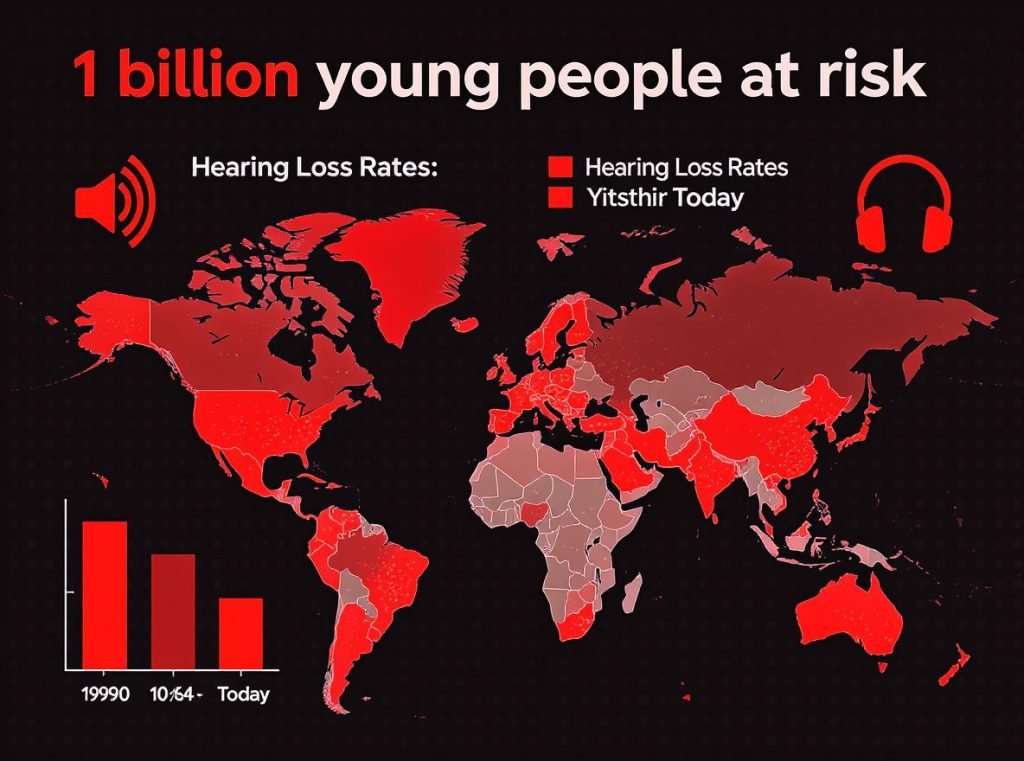
Over 1 billion young people aged 12-35 are at risk of hearing loss due to unsafe listening practices. Among teenagers, hearing loss rates have increased by 30% since the 1990s, with experts attributing much of this rise to regular headphone use.
Recent comprehensive research reveals the scope of this crisis:
A 2022 study published in BMJ Global Health analyzed over 30 studies involving nearly 20,000 participants and found that 48% of teens and young adults are exposed to unsafe noise levels through entertainment venues, while 24% use personal listening devices at dangerous volumes.
The generational impact is staggering: 1 in 5 teenagers now experience some form of hearing loss, representing a dramatic increase from previous decades. This trend directly correlates with the widespread adoption of personal audio devices and streaming services.
Regional variations show global concern:
Research from 2024 in Japan reveals that 40% of respondents express anxiety about hearing loss from headphone use, with 61% of people in their 20s using these devices daily. A Nigerian study found that 17.6% of prolonged headphone users had hearing loss compared to just 7.4% of non-users.
Key contributing factors:
- Longer daily listening sessions due to remote work and entertainment
- Higher volume levels to compete with environmental noise
- Earlier introduction of personal audio devices to children
- Improved audio quality encouraging extended listening sessions
For businesses in the audio industry, these statistics represent both a challenge and an opportunity to lead in promoting hearing-safe products and education.
How Do Headphones and Earbuds Actually Damage Your Hearing?
Understanding the mechanics of noise-induced hearing loss explains why proper headphone usage is crucial for long-term auditory health.
Noise-Induced Hearing Loss (NIHL) occurs when loud sounds damage the delicate hair cells in your inner ear that convert sound waves into electrical signals for your brain. These microscopic hair cells cannot regenerate—once damaged, the hearing loss is permanent.
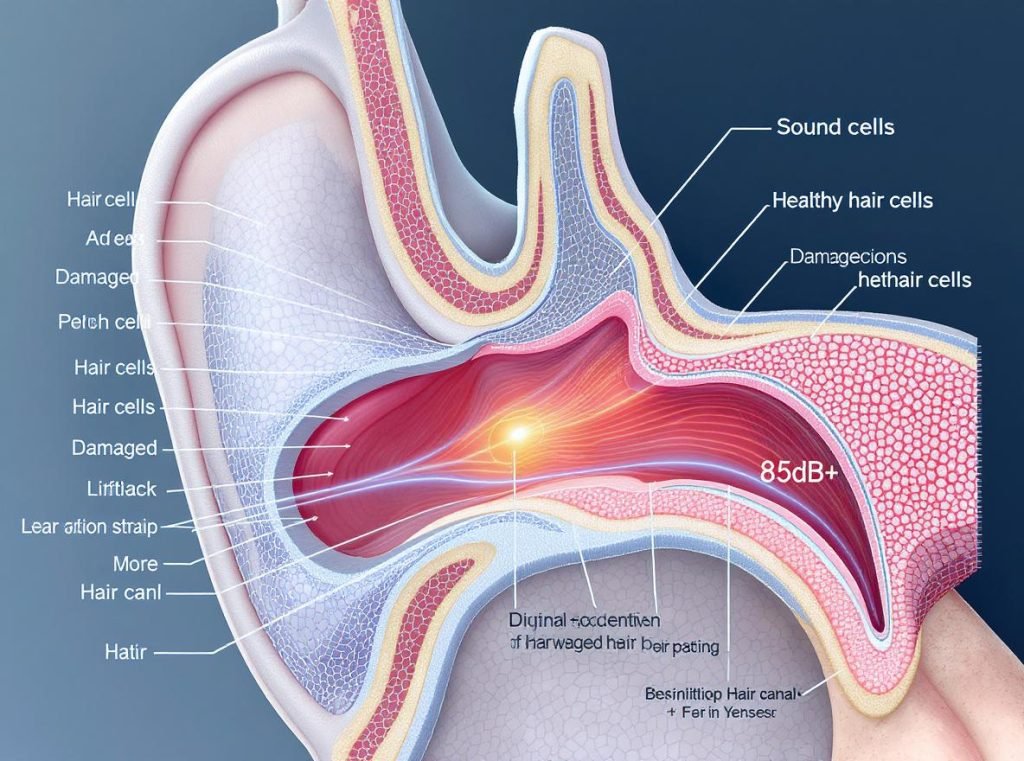
The damage process is straightforward but devastating:
Most personal audio devices can reach volumes of 100-120 decibels (dB), equivalent to a rock concert or chainsaw. When you consider that sounds above 85 dB can cause hearing damage, and many people listen at volumes exceeding 105 dB, the potential for harm becomes clear.
The physical damage mechanism: Sound waves physically assault these fragile hair cells, causing them to break down over time. The louder the volume and longer the exposure, the more extensive the damage becomes.
Unlike other cells in your body, these hair cells in your inner ear cannot repair or replace themselves. This is why noise-induced hearing loss is permanent and cumulative—each instance of damage adds up over time.
Critical damage thresholds:
| Volume Level | Safe Daily Exposure | Damage Risk | Common Examples |
|---|---|---|---|
| 70 dB | Unlimited | Minimal | Normal conversation |
| 85 dB | 8 hours maximum | Moderate | City traffic, workplace limit |
| 88 dB | 4 hours maximum | Significant | Loud restaurant |
| 91 dB | 2 hours maximum | High | Lawnmower, shouting |
| 94 dB | 1 hour maximum | Very high | Motorcycle, power tools |
| 100+ dB | Minutes only | Severe | Rock concert, headphones at high volume |
The damage is both immediate and cumulative. Even brief exposures to extremely loud sounds can cause instant permanent damage, while prolonged exposure to moderately loud sounds creates gradual deterioration over months and years.
Are Earbuds More Dangerous Than Over-Ear Headphones?
The design differences between earbuds and over-ear headphones significantly impact their potential for hearing damage, making this crucial information for both consumers and industry professionals.
Earbuds pose greater risks than over-ear headphones due to their proximity to the eardrum, delivering sound 6-9 decibels louder than over-ear models. This closeness means less air space to buffer sound waves before they reach your sensitive hearing structures.
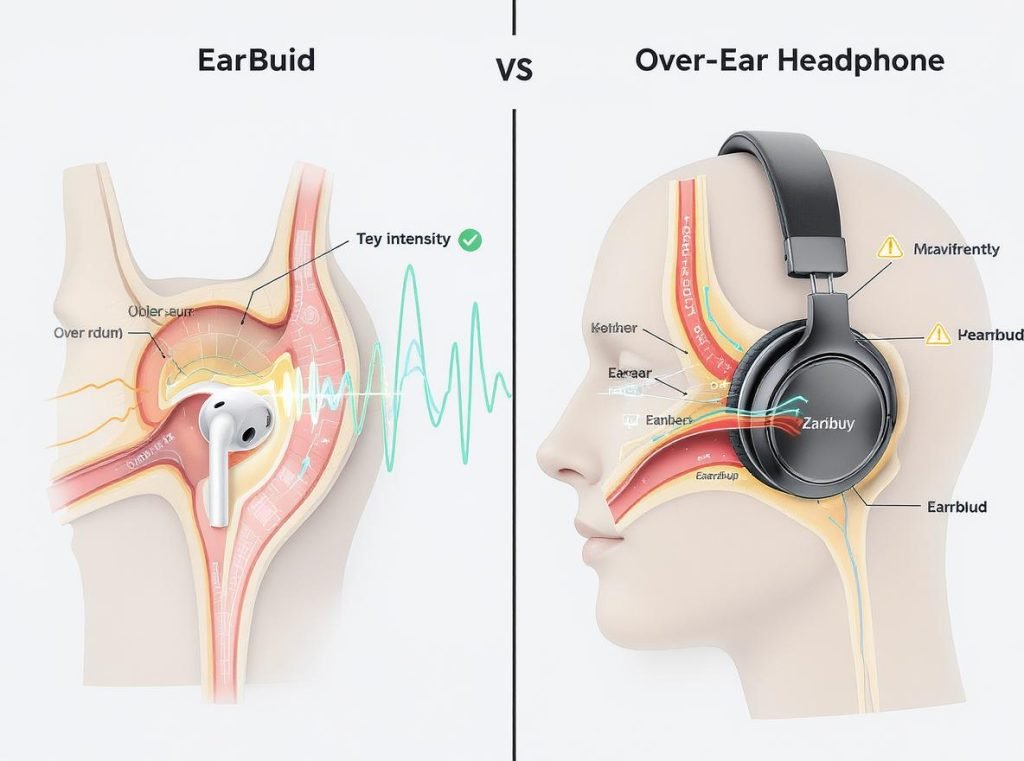
Proximity and intensity factors:
Earbuds sit directly in the ear canal, creating several unique risks that over-ear headphones don’t present. The direct delivery of sound into the ear canal increases the intensity reaching your inner ear significantly.
Many bundled earbuds have poor bass response, tempting users to increase volume to compensate for the perceived lack of audio quality. This volume compensation often pushes listening levels well beyond safe thresholds.
Sound isolation comparison:
Over-ear headphones create better seals that block ambient noise, allowing for lower listening volumes. Poorly fitting earbuds often leak sound, causing users to turn up the volume in noisy environments to overcome both the external noise and the sound leakage.
However, design quality matters more than type: Well-designed earbuds with proper noise isolation can be safer than over-ear headphones played at high volumes. The key is understanding these differences and choosing products accordingly.
Additional earbud-specific risks:
- Earwax complications: Regular earbud use can push earwax deeper into the ear canal
- Infection risk: Shared or poorly cleaned earbuds can harbor bacteria
- Fit issues: Poor-fitting earbuds require higher volumes for perceived quality
For wholesale buyers, consider stocking both types with emphasis on quality noise isolation features that reduce the need for volume compensation.
What Are the Exact Safe Volume Levels and Listening Guidelines?
Precise safety guidelines based on current research help prevent hearing damage while maintaining enjoyable listening experiences.
The “60/60 Rule” remains the gold standard: listen at no more than 60% of maximum volume for no more than 60 minutes at a time. For children, limits are stricter—no more than 75 dB compared to 85 dB for adults.
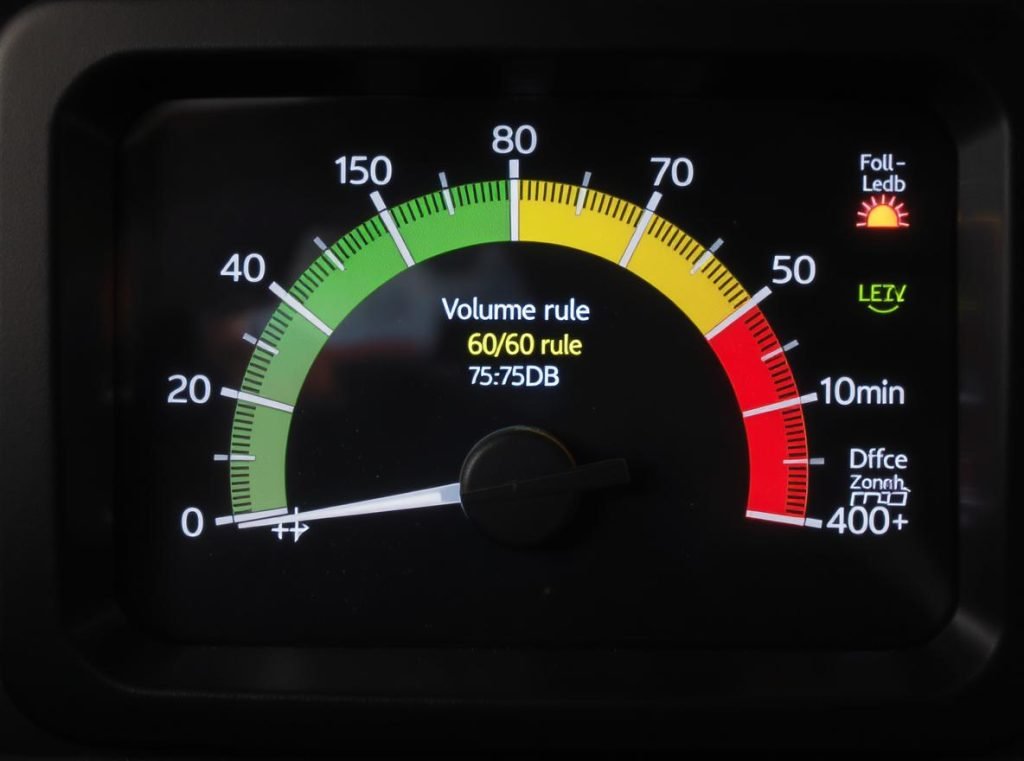
Detailed safety thresholds:
For Adults:
- Below 70 dB: Safe for unlimited duration
- 85 dB: Safe for up to 8 hours daily (workplace safety limit)
- 88 dB: Safe for up to 4 hours daily
- 91 dB: Safe for up to 2 hours daily
- 94 dB: Safe for up to 1 hour daily
- 100+ dB: Can cause permanent damage in minutes
For Children and Teenagers:
- Maximum 75 dB (equivalent to normal conversation)
- Strict 60/60 rule enforcement
- Regular hearing screenings at ages 11-14, 15-17, and 18-21
- Parental supervision of listening habits strongly recommended
Practical volume assessment techniques:
- If others can hear your music from arm’s length away, it’s too loud
- You should be able to hear normal conversation around you
- Your ears shouldn’t feel fatigued or experience ringing after listening
- Use device volume limiting features and hearing health apps
Break scheduling for extended use:
- 5-minute breaks every 30 minutes of listening
- 10-minute breaks every hour for extended sessions
- Complete rest periods after high-volume exposure
- Overnight recovery for ears after concerts or loud events
The WHO-ITU standard recommends default volume limits of 70-85 dB, though this isn’t mandated in many countries including the US. Forward-thinking companies are implementing these limits voluntarily.
How Can You Recognize Early Warning Signs of Hearing Damage?
Identifying symptoms of hearing damage early allows for immediate intervention before permanent harm occurs.
Watch for these critical warning signs: ringing in your ears (tinnitus) after listening sessions, muffled hearing or feeling like sounds are distant, difficulty understanding conversations in noisy environments, and needing to increase device volume more than before.
Immediate post-listening symptoms:
- Tinnitus (ear ringing) that persists after removing headphones
- Muffled hearing sensation or “cotton-in-ears” feeling
- Ear pressure or discomfort during or after use
- Hypersensitivity to certain sounds
- Difficulty hearing normal conversation levels
Progressive changes over time:
- Asking people to repeat themselves more frequently
- Difficulty hearing high-pitched sounds (birds chirping, phone ringing)
- Needing to increase TV or music volume progressively
- Struggling to follow conversations in noisy environments
- Missing important sounds like alarms, doorbells, or car horns
Physical and comfort indicators:
- Ear discharge or infections from prolonged earbud use
- Persistent earwax buildup or blockage sensations
- Balance problems or dizziness related to inner ear changes
- Fatigue from listening effort in normal situations
When to seek immediate professional help:
- Symptoms persist more than 24 hours after noise exposure
- Progressive hearing difficulty over weeks or months
- Sudden hearing loss or dramatic change in one or both ears
- Persistent tinnitus that interferes with daily activities
- Pain or discharge from the ears
Self-monitoring techniques:
- Test hearing in quiet environments regularly
- Notice volume increase patterns on your devices over time
- Pay attention to ear comfort during and after use
- Monitor conversation difficulty in various environments
Early intervention can prevent further damage and, in some cases, allow partial recovery. If you experience any warning signs, reduce listening volume immediately and consider consulting an audiologist.
What Headphone Features Actually Protect Your Hearing?
Modern headphone technology offers specific features designed to reduce hearing damage risk while maintaining audio quality.
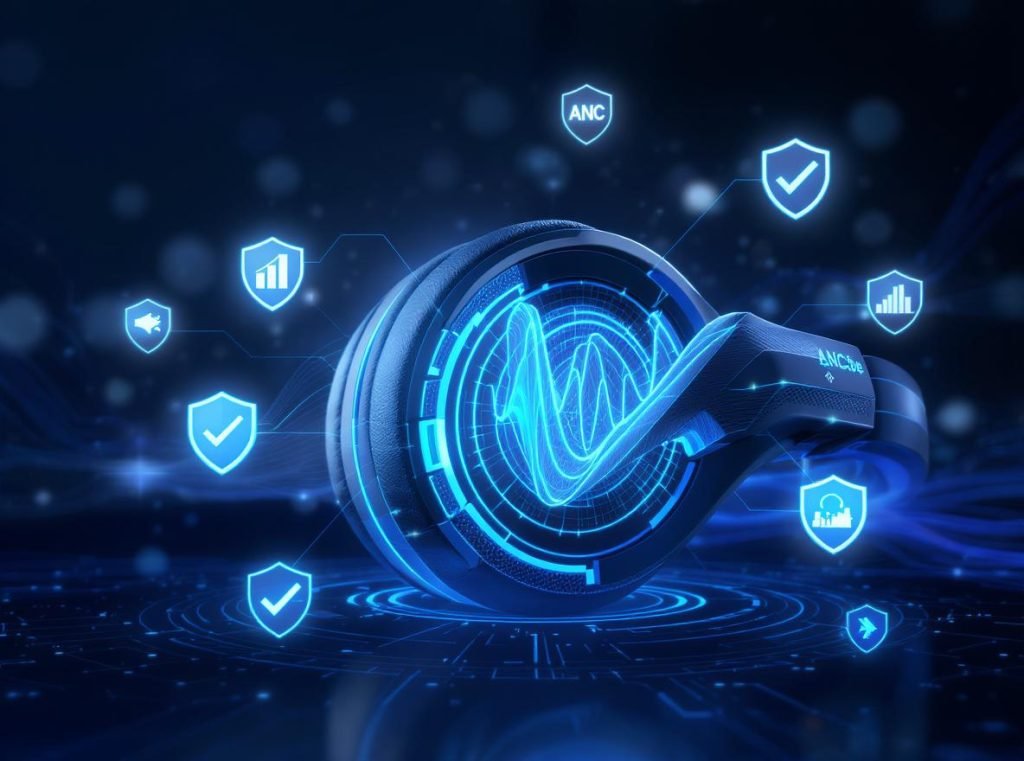
Active noise cancellation (ANC) technology significantly reduces hearing damage risk by eliminating the need for volume compensation against background noise. Research shows that noise-canceling headphones can reduce preferred listening levels by up to 10 dB in noisy environments.
Essential protective technologies:
Active Noise Cancellation:
ANC technology works by generating sound waves that cancel out ambient noise, allowing you to hear your audio clearly at lower volumes. This is particularly effective for commuting, travel, and noisy work environments.
Studies demonstrate that ANC can reduce the harmful effects of frequent exposure to loud sounds through portable music players in combination with earphones, significantly mitigating recreational noise-induced hearing loss risk.
Volume Limiting Technology:
- Hardware-based volume limiters that cap output at safe levels (typically 85 dB for children)
- More reliable than software-based limits that can be bypassed
- Parental control features for children’s devices
- Smart volume adjustment based on listening duration
Advanced Protective Features:
- Hearing health monitoring through companion apps
- Break reminders and usage time tracking
- Adaptive sound control adjusting to environment
- Personalized sound profiles based on hearing assessment
| Feature | Hearing Protection Benefit | Best Applications |
|---|---|---|
| Active Noise Cancellation | Reduces volume needs by up to 10 dB | Travel, noisy environments, extended use |
| Volume Limiting | Prevents accidental dangerous levels | Children’s products, workplace safety |
| Comfort Design | Encourages healthy usage patterns | Extended listening sessions |
| App Integration | Provides usage monitoring and education | Health-conscious consumers |
| Noise Isolation | Natural ambient sound blocking | All environments, energy efficient |
Quality certifications to prioritize:
- WHO-compliant volume standards
- Pediatric audiologist recommendations
- Safety certifications from recognized health organizations
- Third-party hearing safety testing
Passive protection features:
Well-designed ear cups or ear tips that create good seals help block external noise naturally, reducing the need to increase volume. This passive noise isolation is energy-efficient and works without batteries.
For distributors and retailers, highlighting these protective features appeals to increasingly health-conscious consumers and differentiates your product lineup. The “safe listening” market is growing, with companies specifically targeting hearing protection as a primary selling point.
How Do Age-Specific Needs Affect Headphone Safety?
Different age groups require tailored approaches to hearing protection due to varying susceptibility to damage and usage patterns.
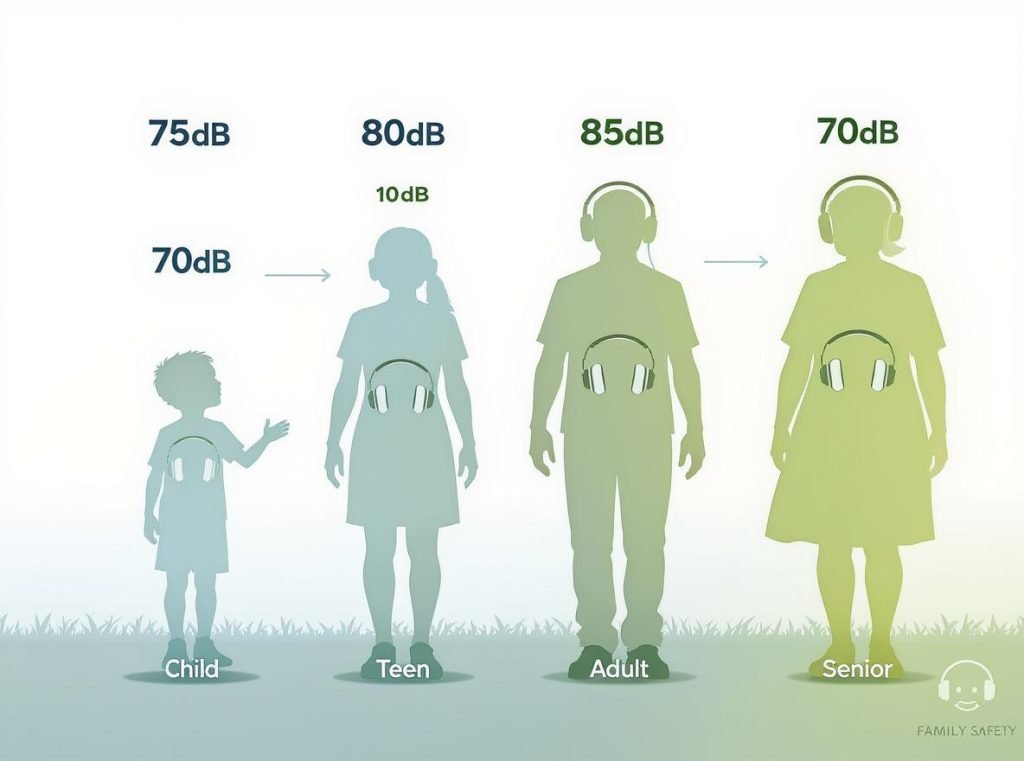
Children and teenagers face the highest risk of hearing damage from audio devices due to developing auditory systems and often less cautious usage habits. Children’s developing ear structures are more susceptible to damage, requiring extra protection with volume never exceeding 75dB.
Children (Ages 6-12):
Physiological vulnerabilities: Developing ear structures are more susceptible to damage than adult ears. The auditory system continues developing through childhood, making early damage particularly concerning for long-term hearing health.
Recommended safety measures:
- Maximum 75 dB (equivalent to normal conversation)
- Adult supervision of listening habits strongly recommended
- Volume-limiting headphones as the preferred option
- 30-45 minute maximum sessions followed by breaks
- Educational approaches using games and visual aids
Teenagers (Ages 13-19):
This age group shows the highest rates of unsafe listening practices, with social pressures often overriding safety concerns. Built-in safety features become essential since direct supervision is less practical.
Critical intervention strategies:
- Regular hearing screenings at ages 11-14, 15-17, and 18-21
- Peer-influence education programs that address social aspects
- 85 dB maximum with strict time limits
- Technology solutions that don’t compromise social acceptance
Adults (Ages 20-64):
Workplace considerations become important, with many adults using headphones for extended periods during work hours. Occupational hearing safety standards should apply to personal device use.
Key adult factors:
- 85 dB for 8 hours maximum daily exposure
- Cumulative lifetime exposure awareness
- Existing hearing damage from youth may compound current risks
- Regular hearing assessments to track changes
Seniors (Ages 65+):
Age-related hearing loss (presbycusis) may mask early signs of device-related damage. Volume requirements may increase due to natural hearing decline, creating additional risk.
Special senior considerations:
- More conservative limits due to existing hearing changes
- Professional hearing evaluations before increased headphone use
- Focus on preserving remaining hearing rather than enhancement
- Medical device interactions with hearing aids requiring guidance
Business implications for different age segments:
- Family-oriented retail requires age-appropriate product recommendations
- Workplace safety programs should include personal audio device guidelines
- Educational materials should be tailored to developmental stages
- Product marketing should emphasize age-specific safety features
For businesses serving diverse age groups, offering age-appropriate products and educational materials demonstrates comprehensive customer care and builds long-term brand loyalty while addressing the growing concern about hearing health across all demographics.
What Should Audio Equipment Businesses Know About the Hearing Safety Market?
The growing awareness of hearing health creates significant opportunities and responsibilities for businesses in the audio equipment industry.
The “safe listening” market is rapidly expanding, with increasing consumer demand for products that balance audio quality with hearing protection. Companies positioning themselves as health-conscious alternatives gain competitive advantages in this growing market segment.

Market demand and consumer behavior trends:
Research shows that 40% of respondents express anxiety about hearing loss from headphone use, creating substantial demand for safer audio solutions. Consumer research before purchases increasingly includes safety features, volume limiting capabilities, and health certifications.
Business opportunities in the safety-focused market:
Product differentiation strategies:
- WHO-compliant volume standards as a selling point
- Built-in safety features highlighted in marketing
- Age-appropriate product lines for different safety needs
- Health certifications from recognized organizations
Educational marketing approaches:
Companies should provide clear guidance on safe listening practices and the risks of hearing damage, particularly for products marketed to young people. This educational responsibility also serves as effective marketing.
Key business implementation strategies:
Inventory and product selection:
- Prioritize manufacturers with proven safety commitments
- Stock products with protective features across price ranges
- Include both budget and premium safety-focused options
- Maintain comprehensive age-specific product lines
Customer service excellence:
- Train staff on hearing safety basics and product features
- Provide professional fitting services for optimal comfort and safety
- Offer product education beyond basic specifications
- Maintain long-term customer relationships through health-focused communication
Marketing and compliance considerations:
- Include appropriate safety warnings with all products
- Document commitment to customer hearing health in company materials
- Stay updated on safety research and regulatory changes
- Build relationships with health professionals for credible endorsements
Regulatory landscape and standards:
The WHO-ITU standard recommends default volume limits of 70-85 dB, though this isn’t mandated in many countries including the US. Forward-thinking companies are implementing these limits voluntarily, positioning themselves ahead of potential future regulations.
Partnership opportunities:
- Collaborate with audiologists for product endorsements
- Partner with schools and employers for safety education programs
- Work with health organizations for credible safety certifications
- Engage with regulatory bodies on developing safety standards
For wholesale partners looking to align with responsible manufacturers, businesses should prioritize suppliers who demonstrate genuine commitment to hearing safety through product design, educational materials, and ongoing research support.
The hearing safety market represents not just a business opportunity, but a chance to make a meaningful impact on public health while building sustainable competitive advantages.
How Can Wholesale Customers Capitalize on the Hearing Safety Trend?
Smart wholesale customers can differentiate themselves and capture growing market share by positioning safety-focused audio products strategically.
Businesses that proactively address hearing safety concerns can capture a significant share of the growing health-conscious consumer market while building trust and long-term customer relationships.

Market positioning strategies for retailers:
Educational leadership approach: Position your business as a trusted source of hearing health information. Provide comprehensive safety guidelines with every product, create educational content for customers, and train staff to discuss hearing safety knowledgeably.
Product curation for safety: Stock products with proven protective features, offer age-appropriate options, and maintain inventory that spans both budget and premium safety-focused categories.
Target market expansion opportunities:
Healthcare and wellness sector: Hospitals, clinics, and wellness centers increasingly need safe audio solutions for patient care and staff use. This B2B market values safety certifications and professional-grade features.
Educational institutions: Schools and universities require safe audio products for students of all ages. This market demands volume-limited options and bulk purchasing arrangements.
Corporate wellness programs: Companies implementing employee wellness initiatives represent a growing market for safe workplace audio solutions.
Competitive advantages in the safety market:
Certification and compliance emphasis: Highlight WHO-compliant products, safety certifications, and third-party testing results. These credentials differentiate your offerings from generic competitors.
Professional service integration: Offer hearing health assessments, product fitting services, and ongoing safety education. These value-added services justify premium pricing and increase customer loyalty.
Long-term relationship building: Safety-conscious customers tend to be more loyal and less price-sensitive when they trust your commitment to their health. Focus on relationship building rather than transactional sales.
Marketing and communication strategies:
- Emphasize safety statistics in marketing materials
- Share customer success stories related to hearing protection
- Provide comparison charts showing safety features across products
- Create educational content that establishes expertise
Partnership opportunities with Osmarto:
As a manufacturer committed to hearing safety, Osmarto provides wholesale partners with comprehensive support for entering and succeeding in the safety-focused market. Our products incorporate the latest protective technologies while maintaining the audio quality your customers demand.
Contact Osmarto today to discuss how our hearing-safe product lines can differentiate your business, attract health-conscious customers, and build a sustainable competitive advantage in the growing audio safety market.
Summary
Headphones and earbuds aren’t inherently dangerous, but improper use causes permanent hearing damage. The key factors are volume levels (under 85dB for adults, 75dB for children), listening duration following the 60/60 rule, and choosing products with protective features like noise cancellation. With over 1 billion young people at risk, the market for hearing-safe audio products continues expanding rapidly.
Ready to capitalize on the growing hearing safety market? Contact Osmarto today to explore our comprehensive range of WHO-compliant, hearing-safe headphones designed to protect your customers while delivering exceptional audio quality. Let’s build a safer listening future together.