Ever wondered why some headphones can transform a noisy airplane into a peaceful oasis? You’re constantly battling unwanted background noise that disrupts your music, calls, or concentration. This audio pollution affects your productivity and listening experience daily. Noise-cancelling headphones solve this problem using sophisticated technology that actively fights unwanted sounds.
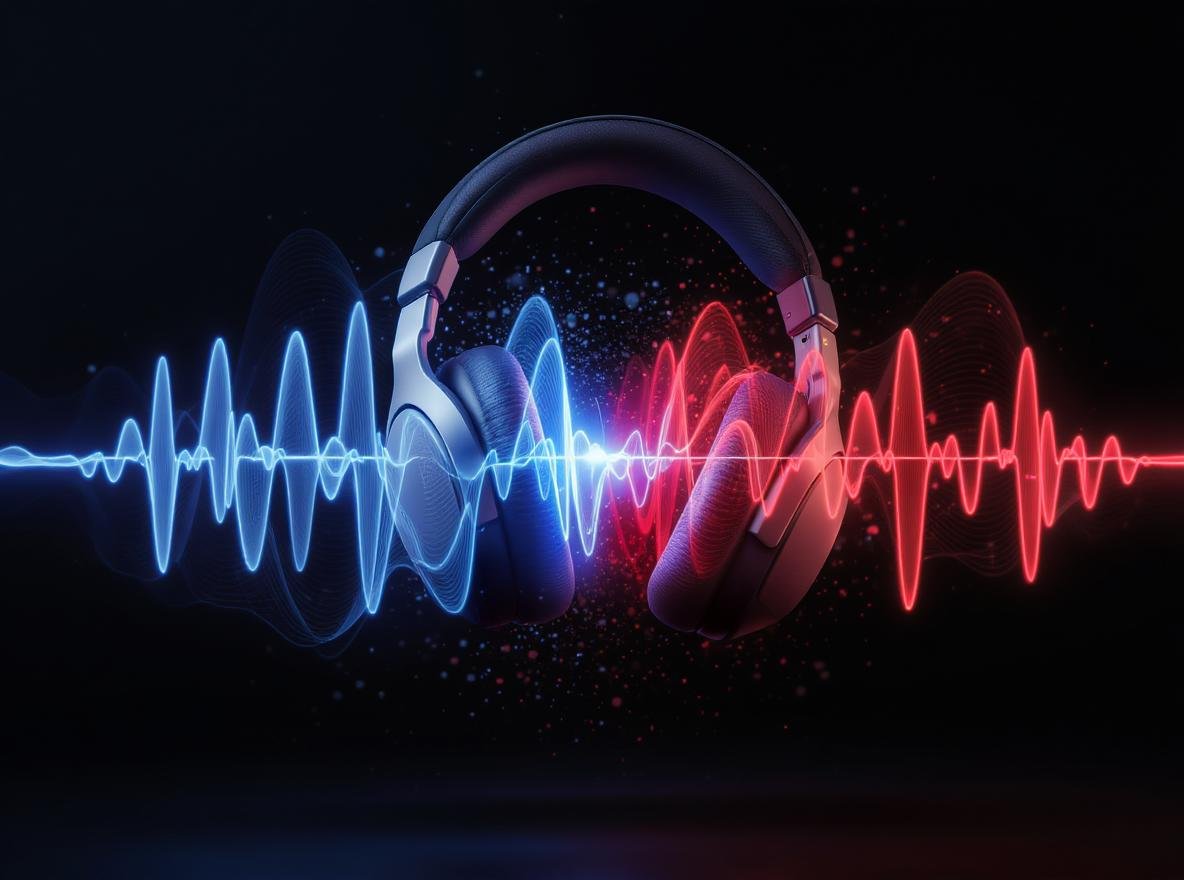
Noise-cancelling headphones work by using built-in microphones to detect external sounds, then generating “anti-noise” sound waves exactly 180 degrees out of phase that cancel out unwanted noise through destructive interference. This active noise control technology, combined with passive sound isolation, can reduce ambient noise by up to 30 decibels in low-frequency ranges.
Let’s dive deep into the fascinating science behind this technology and explore everything you need to know about how noise-cancelling headphones transform your audio experience.
What Is Active Noise Cancellation Technology?
Understanding active noise cancellation helps you appreciate why these headphones represent a breakthrough in audio engineering. This technology goes far beyond simple physical barriers to create electronically controlled quiet zones.
Active Noise Cancellation (ANC) is an electronic technology that uses microphones, digital signal processors, and speakers to actively counteract unwanted ambient sounds by generating precise inverse sound waves that cancel out noise through destructive interference before it reaches your eardrums.
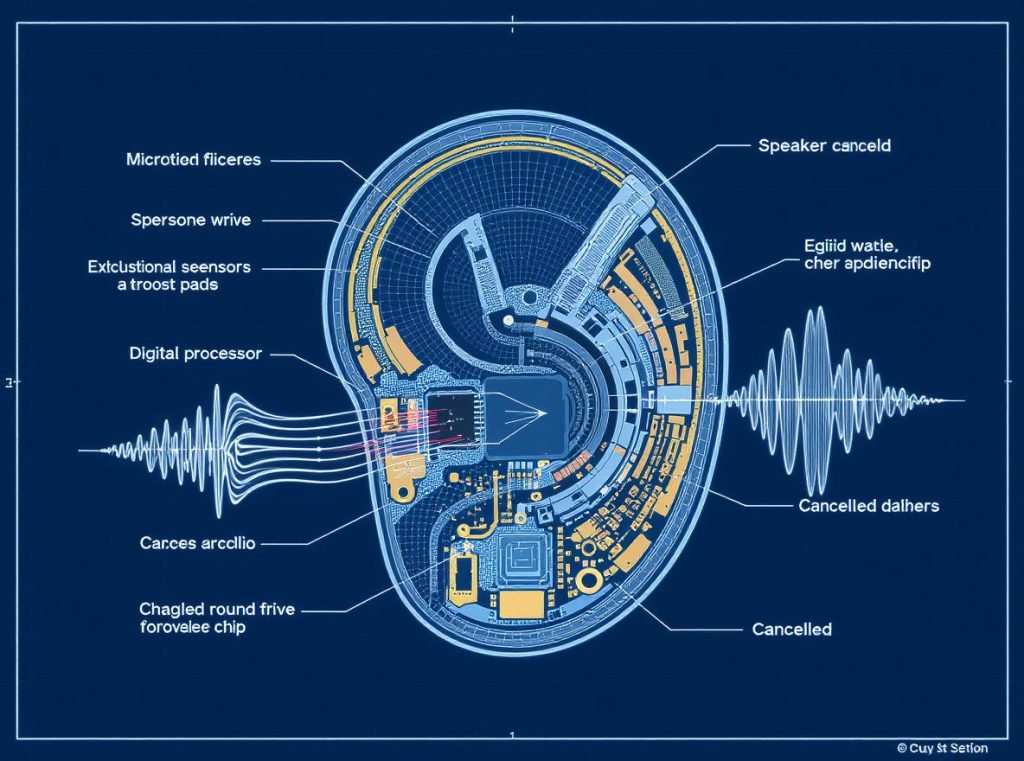
The core principle relies on destructive interference – when two sound waves of equal amplitude but opposite phase (180 degrees out of phase) meet, they effectively cancel each other out. Your headphones create “anti-noise” that neutralizes incoming environmental sounds in real-time.
Modern ANC systems operate through three distinct configurations:
Feedforward ANC places microphones outside the ear cups to detect noise before it reaches your ears. This configuration excels at mid-frequency cancellation and provides excellent performance for consistent environmental sounds.
Feedback ANC positions microphones inside the ear cups, closer to your actual hearing position. This setup offers more accurate noise cancellation based on what you’re truly experiencing, though it can be less effective against sudden noise changes.
Hybrid ANC combines both approaches for optimal performance across all frequency ranges. Premium models like Sony’s WH-1000XM6 use this hybrid approach with advanced QN3 processors that are seven times faster than previous generations.
The entire process happens incredibly quickly – typically within 1-2 milliseconds – ensuring seamless noise cancellation without noticeable delays.
How Do the Microphones and Processors Work Together?
The collaboration between microphones and digital signal processors forms the technological heart of noise-cancelling headphones. This partnership determines how effectively your headphones can identify and eliminate unwanted environmental sounds.
Multiple strategically positioned microphones continuously monitor ambient noise at rates of 10,000-50,000 measurements per second, while advanced digital signal processors analyze these sounds in real-time and calculate the exact inverse waveform needed to cancel detected noise within milliseconds.
The microphone array serves distinct functions depending on placement:
External microphones capture environmental noise before it reaches the headphone housing. These sensors provide early warning of incoming sounds, allowing the processor maximum time to generate appropriate anti-noise signals.
Internal microphones monitor the acoustic environment within the ear cup itself. They detect any noise that penetrates the physical barriers and help fine-tune the cancellation effect for optimal performance.
The digital signal processor performs millions of calculations per second during active operation:
| Processing Stage | Function | Typical Duration |
|---|---|---|
| Noise Detection | Microphones capture ambient sound | Continuous sampling |
| Wave Analysis | Processor identifies frequency, amplitude, and phase | 0.5-1.0 milliseconds |
| Inverse Calculation | System calculates precise opposite waveform | 0.5-1.0 milliseconds |
| Signal Generation | Anti-noise transmitted through speakers | 0.5-1.0 milliseconds |
Phase compensation represents a critical aspect of processor function. The system must account for physical properties like speaker placement, ear cup design, and the slight delay between detection and response. Modern processors use predictive algorithms to ensure anti-noise arrives at precisely the right moment for optimal cancellation.
This sophisticated coordination enables noise-cancelling headphones to maintain effectiveness even in changing acoustic environments.
What’s the Difference Between Active and Passive Noise Isolation?
Many consumers confuse active noise cancellation with passive noise isolation, but understanding both technologies helps you make informed decisions about headphone selection for different environments and use cases.
Passive noise isolation relies on physical design and materials to block sound transmission, while active noise cancellation uses electronic processing to generate sound waves that cancel ambient noise. Premium headphones combine both approaches for comprehensive noise reduction across all frequency ranges.
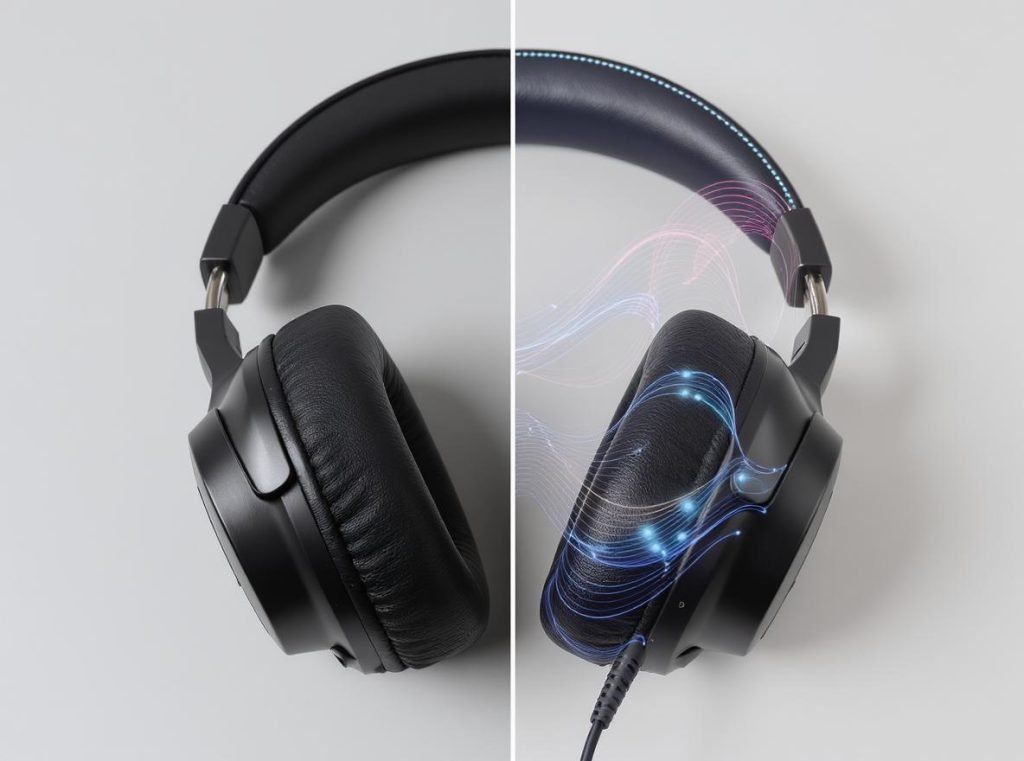
Passive noise isolation functions like sophisticated earplugs:
Over-ear headphones create physical barriers using dense materials and tight-fitting ear cups that completely surround your ears. The cushioning forms an acoustic seal that prevents external sounds from reaching your eardrums naturally.
In-ear headphones achieve isolation by creating seals within your ear canals. Properly fitted ear tips block the canal opening, preventing sound transmission through physical obstruction.
Active noise cancellation takes an electronic approach:
• Microphones detect incoming ambient noise continuously
• Processors analyze sound patterns and generate inverse signals
• Speakers produce anti-noise that cancels unwanted sounds
• Real-time adjustment maintains effectiveness across varying conditions
Effectiveness comparison across frequency ranges:
| Frequency Range | Passive Isolation | Active Cancellation | Combined Effect |
|---|---|---|---|
| Low (20-200 Hz) | Limited | Excellent (up to 30dB reduction) | Outstanding |
| Mid (200-2000 Hz) | Good | Good | Very Good |
| High (2000+ Hz) | Excellent | Limited | Excellent |
Environmental suitability:
Passive isolation excels against sudden, sharp sounds like breaking glass, door slams, or high-pitched voices. Active cancellation performs best against consistent, low-frequency noise like airplane engines, air conditioning systems, or traffic hum.
The most effective noise-cancelling headphones integrate both technologies seamlessly, providing comprehensive protection across the entire audible spectrum while maintaining natural sound quality for your desired audio content.
Why Do Some Frequencies Get Cancelled Better Than Others?
The effectiveness of active noise cancellation varies dramatically across different sound frequencies due to fundamental physics limitations and current technological constraints that affect real-world performance.
Low-frequency sounds (20Hz-1000Hz) achieve the best cancellation because their longer wavelengths provide processing systems adequate time to detect, analyze, and generate accurate inverse waves, while high-frequency sounds above 2000Hz cycle too quickly for current electronics to respond effectively.
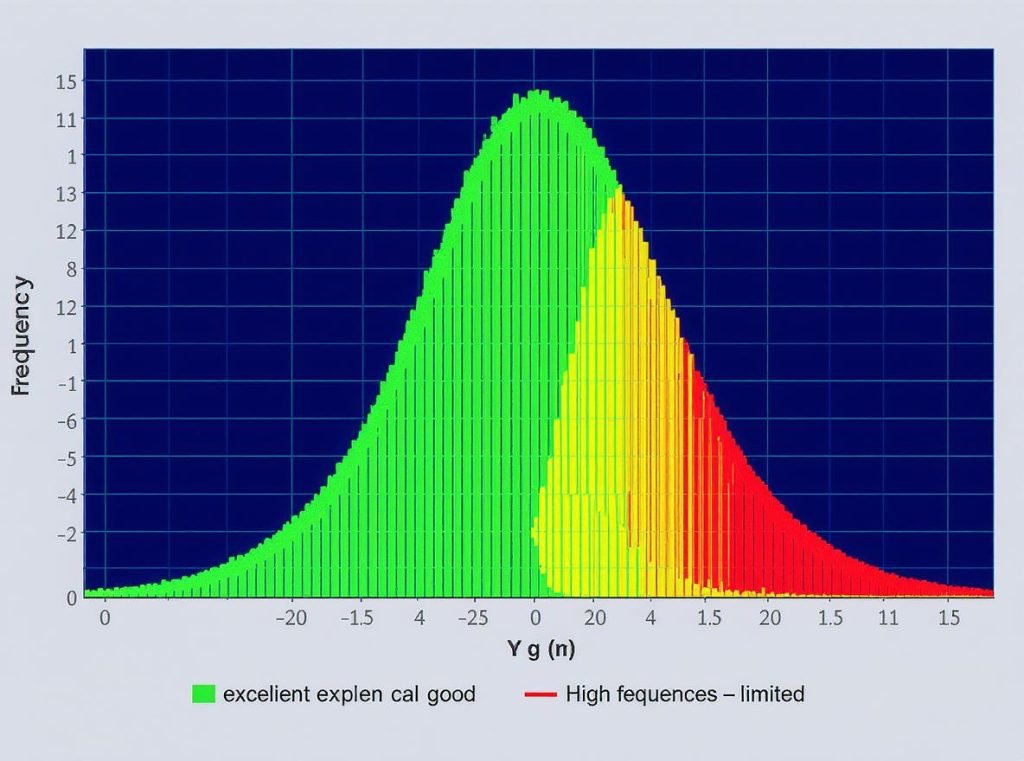
Physics of frequency limitations:
Low-frequency sounds offer several advantages for active cancellation:
Wavelength characteristics provide crucial processing time. A 100Hz sound wave measures approximately 11 feet long, giving electronics substantial time to detect the pattern and generate appropriate anti-noise before the wave cycle completes.
Predictable patterns in low-frequency noise make them easier to track and cancel. Engine noise, HVAC systems, and traffic sounds maintain relatively consistent frequencies that processors can analyze and counter effectively.
Processing speed requirements become manageable with longer wave cycles, allowing current digital signal processors to keep pace with the cancellation demands.
High-frequency sounds present significant challenges:
• Rapid cycling at frequencies above 2000Hz creates wave periods of 0.5 milliseconds or less
• Processing delays become significant relative to these short wave periods
• Timing precision requirements exceed current technological capabilities
• Complex waveforms from voices or sudden sounds contain multiple frequencies simultaneously
Real-world cancellation performance:
Excellent cancellation (70-90% noise reduction):
- Commercial aircraft engines (low-frequency drone)
- Air conditioning and ventilation systems
- Highway traffic noise and vehicle engines
- Train travel and subway sounds
Moderate cancellation (40-70% noise reduction):
- Office environments with distant conversation
- Computer fan noise and electronic humming
- Consistent machinery operation
Limited cancellation (10-30% noise reduction):
- Human voices and conversation
- Sudden loud noises like door slams
- High-pitched sounds like alarms or whistles
- Irregular environmental sounds
Understanding these limitations helps set realistic expectations and choose appropriate environments for maximum noise-cancelling effectiveness.
Do Noise-Cancelling Headphones Affect Sound Quality?
The relationship between active noise cancellation and audio fidelity involves complex engineering trade-offs that modern manufacturers have largely mastered through advanced processing and careful acoustic design.
Modern premium noise-cancelling headphones maintain excellent sound quality when properly engineered, though the ANC circuitry can potentially introduce subtle changes in frequency response, processing artifacts, or battery-dependent performance variations that require careful design optimization.
Potential sound quality impacts:
Processing effects from ANC circuitry can introduce slight audio coloration in lower-quality implementations. Some users report subtle compression or frequency response changes when noise cancellation activates, particularly affecting high-frequency detail retrieval.
Background artifacts may appear as low-level hiss or digital processing noise in budget models with less sophisticated electronics. Premium manufacturers invest heavily in clean signal processing to minimize these effects.
Battery dependency creates another consideration since many headphones experience reduced performance or altered sound signatures when battery power depletes. Quality designs maintain consistent performance regardless of power status.
Modern engineering solutions:
Premium manufacturers like Sony, Bose, and others have developed sophisticated approaches to preserve audio quality:
• Advanced digital signal processing minimizes artifacts through high-quality DACs and clean signal paths
• Separate audio and ANC circuits prevent interference between noise cancellation and music reproduction
• Frequency response compensation accounts for ANC-induced changes through careful tuning
• Adaptive algorithms adjust cancellation strength based on environmental conditions
Professional considerations for wholesale buyers:
| Feature Category | Consumer Priority | Professional/Business Priority |
|---|---|---|
| ANC Effectiveness | Maximum reduction | Balanced with awareness needs |
| Sound Quality | Entertainment focus | Critical accuracy for calls |
| Battery Performance | Convenience | Reliability during long use |
| Build Quality | Comfort | Durability for frequent travel |
Quality suppliers like Osmarto focus on delivering headphones that excel in both noise cancellation and audio reproduction, ensuring business customers receive products that satisfy diverse professional and consumer requirements without compromising either performance aspect.
Can You Use Noise-Cancelling Headphones Without Music?
Active noise cancellation operates independently of audio playback, making noise-cancelling headphones valuable tools for creating quiet environments even without music or other content playing.
Yes, noise-cancelling headphones function effectively without any audio content, as the ANC technology works independently to reduce ambient noise by 15-30 decibels, creating quieter environments ideal for concentration, sleep, rest, or hearing protection in noisy settings.
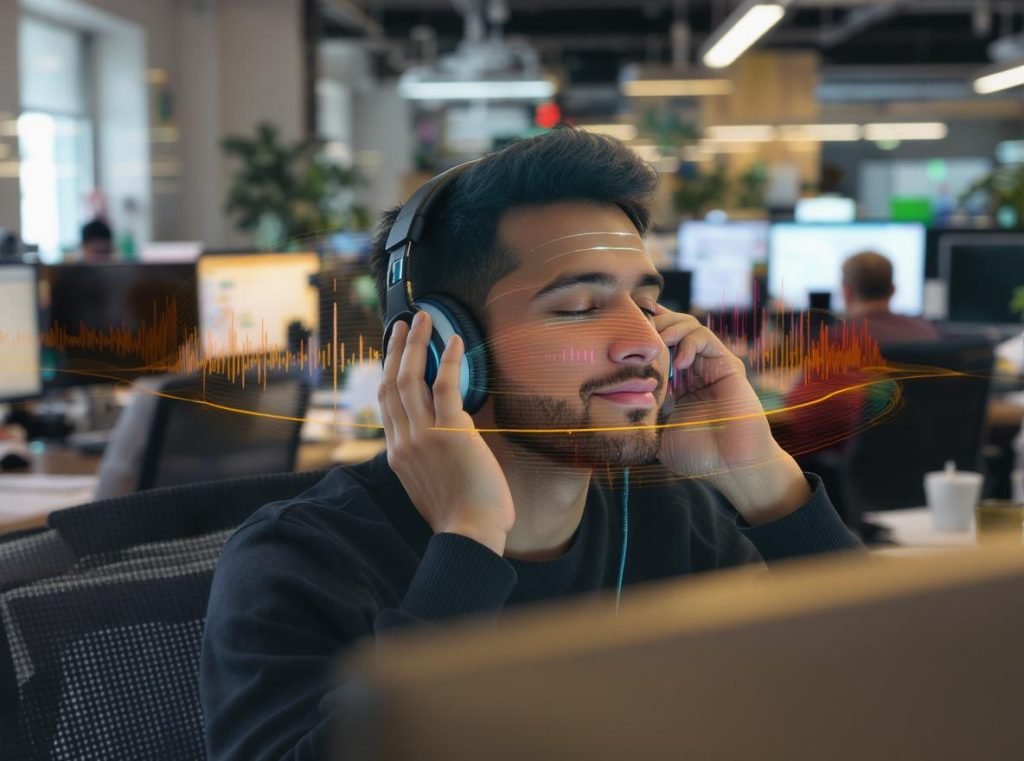
Standalone noise cancellation applications:
Concentration enhancement benefits students, professionals, and remote workers in noisy environments. Open office spaces, busy cafés, or shared workspaces become more conducive to focused tasks when ambient distractions are significantly reduced.
Sleep and rest improvement helps travelers and shift workers manage challenging acoustic environments. Hotels near busy streets, airplane cabins, or urban apartments become more restful with effective noise reduction.
Hearing protection provides an alternative to traditional earplugs in moderately loud environments. Construction sites, factory floors, or concert venues benefit from ANC technology while maintaining some environmental awareness.
Meditation and relaxation support becomes possible in urban environments where complete quiet is impossible. Parks, public spaces, or home environments with traffic noise become more suitable for mindfulness practices.
Important considerations for standalone use:
• Battery consumption continues during ANC-only operation, though typically at lower rates than full audio playback
• Environmental awareness becomes reduced, requiring caution in situations demanding audio alertness
• Pressure sensations some users experience may be more noticeable without audio content to mask the effect
• Effectiveness limitations remain the same – high-frequency or sudden sounds won’t be eliminated completely
Business applications:
Companies providing noise-cancelling headphones for employee wellness can highlight standalone benefits for productivity enhancement, stress reduction, and hearing protection in noisy work environments.
The versatility of using ANC without audio content makes these headphones valuable tools beyond entertainment, supporting various professional and personal wellness applications.
How Much Do Good Noise-Cancelling Headphones Cost?
Understanding pricing tiers for noise-cancelling headphones helps businesses and consumers make informed purchasing decisions based on performance requirements, build quality, and intended use applications.
Quality noise-cancelling headphones range from $100-$500+ depending on ANC sophistication, build materials, and feature sets. Budget models ($100-$200) offer basic functionality, mid-range options ($200-$400) provide excellent value with advanced features, while premium models ($400-$500+) deliver flagship performance and luxury materials.
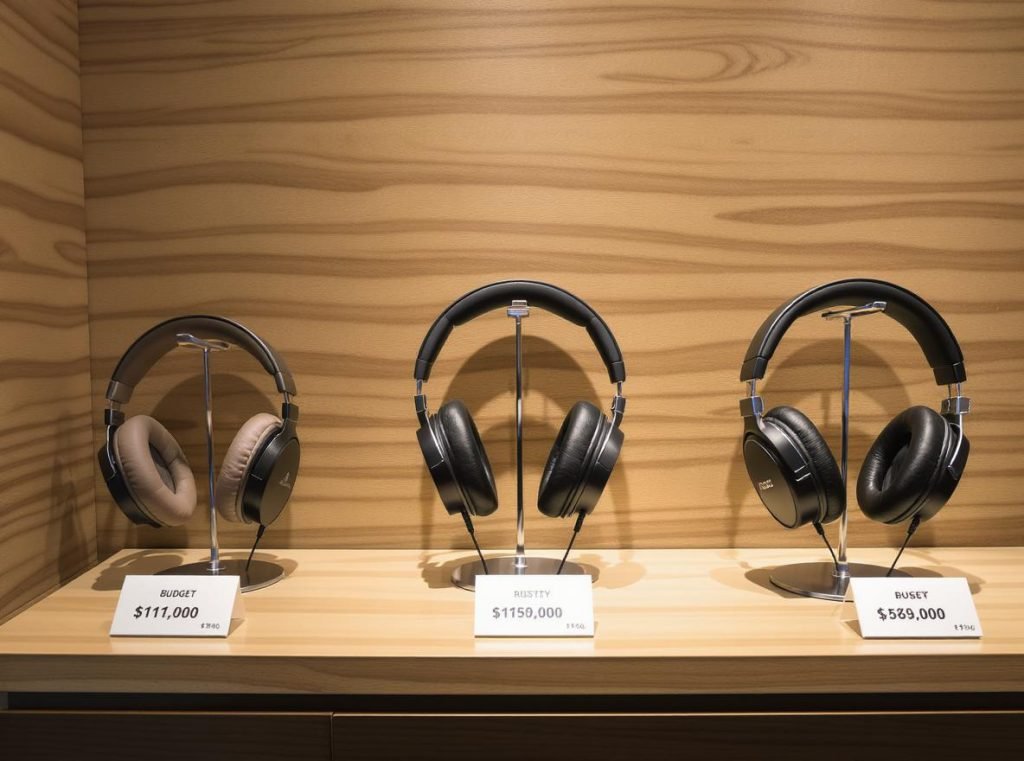
Budget tier ($100-$200) characteristics:
Basic ANC implementation with simple noise cancellation algorithms provides moderate effectiveness against consistent low-frequency sounds. Build quality typically features plastic construction with adequate padding for reasonable comfort during shorter use periods.
Features include:
• Fundamental noise cancellation without advanced customization
• Standard Bluetooth connectivity with basic codecs
• 15-25 hour battery life for extended use
• Simple control schemes without app integration
• Acceptable sound quality for casual listening
Mid-range tier ($200-$400) advantages:
Advanced ANC systems with multiple modes and environmental adaptation provide significantly improved noise cancellation across various situations. Enhanced build quality incorporates mixed materials for better durability and comfort.
Enhanced features:
• Sophisticated noise cancellation with adaptive algorithms
• Premium wireless connectivity supporting high-quality audio codecs
• 25-35 hour battery life with quick charging capabilities
• Comprehensive app control for personalization
• Superior sound quality balancing entertainment and communication needs
Premium tier ($400-$500+) excellence:
Professional-grade ANC with cutting-edge processors and hybrid microphone systems deliver best-in-class noise cancellation performance. Luxury materials and precision engineering ensure exceptional comfort and durability.
Advanced capabilities:
• Industry-leading noise cancellation with real-time adaptation
• Premium materials including metal components and leather cushioning
• 30-40+ hour battery life with rapid charging technology
• Advanced features like spatial audio and transparency modes
• Audiophile-quality sound reproduction
Wholesale considerations for distributors:
| Price Tier | Wholesale Margin | Target Market | Volume Potential |
|---|---|---|---|
| Budget | 40-50% | Price-conscious consumers | High volume |
| Mid-range | 35-45% | Quality-focused buyers | Moderate volume |
| Premium | 30-40% | Enthusiasts and professionals | Lower volume, higher value |
Osmarto provides competitive wholesale pricing across all tiers, enabling distributors and retailers to offer customers excellent value while maintaining healthy profit margins. Our product range covers essential functionality through premium performance, supporting diverse market segments and business requirements.
Are There Any Health Concerns With Noise-Cancelling Headphones?
Recent research and clinical observations have raised questions about potential health effects from extensive noise-cancelling headphone use, though scientific consensus indicates these devices are generally safe when used appropriately.
Noise-cancelling headphones are generally safe for most users, but some people may experience mild pressure sensations from ANC activation, reduced environmental awareness in safety-critical situations, or potential auditory processing concerns with excessive use, though research on long-term effects remains limited.
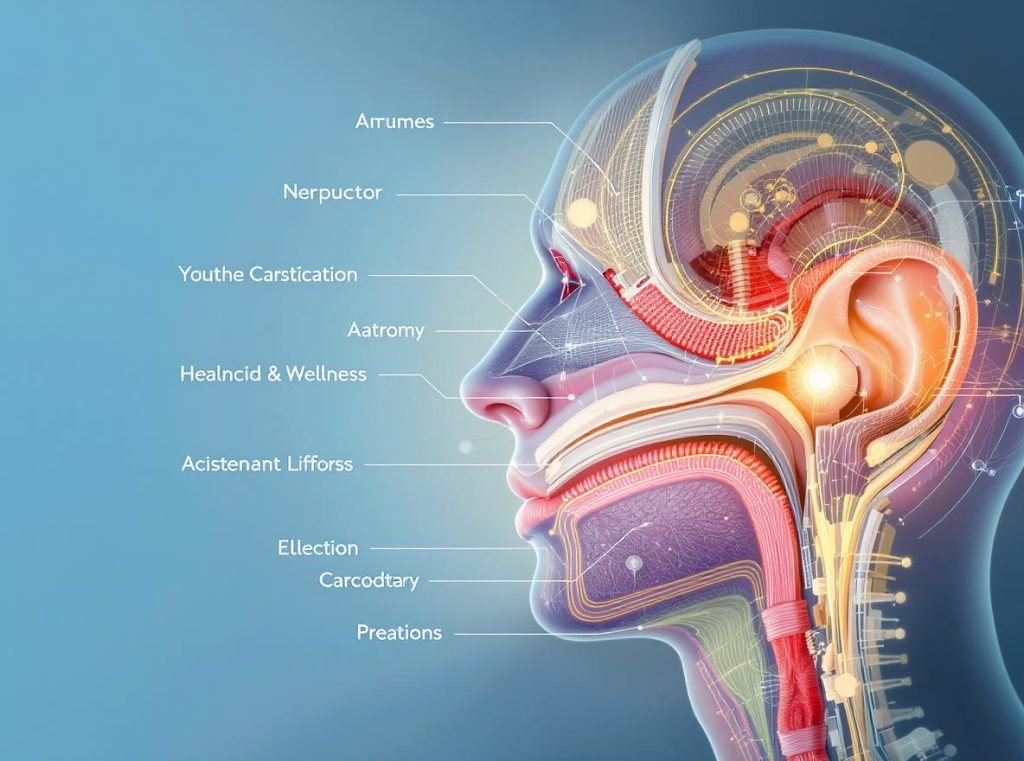
Common physical effects:
Pressure sensations affect some users when ANC technology activates. This feeling, similar to altitude changes in aircraft, occurs because the brain interprets sudden low-frequency noise reduction as pressure differential changes.
The sensation typically:
• Appears immediately when activating noise cancellation
• Diminishes after 10-15 minutes as users adapt
• Varies significantly between individuals and headphone models
• Can be minimized through gradual ANC introduction and breaks
Recent auditory processing concerns:
Emerging research suggests potential links between excessive ANC use and auditory processing disorder (APD), though scientific evidence remains preliminary. Some audiologists report increased APD cases among young adults who use noise-cancelling headphones extensively.
Important context:
• Research is ongoing and causation has not been established
• Cases primarily involve extremely heavy usage patterns
• Most users experience no adverse effects with moderate use
• Benefits often outweigh potential risks for appropriate applications
Hearing protection benefits:
Volume reduction advantages actually support hearing health by allowing lower listening levels in noisy environments. Traditional approaches require higher volumes to overcome background noise, potentially causing hearing damage over time.
Studies confirm that ANC technology:
• Reduces the need for dangerous volume levels
• Protects against chronic noise exposure
• Supports better hearing conservation in loud environments
• Poses no significant health risks with responsible use
Safe usage recommendations:
• Follow the 60/60 rule: maximum 60% volume for 60 minutes at a time
• Take regular breaks during extended listening sessions
• Balance ANC use with natural sound exposure throughout the day
• Choose quality headphones with proper fit and comfort features
• Use transparency modes when environmental awareness is necessary
Business and workplace considerations:
Companies providing noise-cancelling headphones should establish usage guidelines, particularly in environments where safety depends on hearing ambient sounds like alarms, machinery, or vehicle traffic.
Quality manufacturers like Osmarto design products with user safety prioritized, implementing features like automatic volume limiting, transparency modes, and comfortable ergonomics that support healthy usage patterns across professional and personal applications.
Summary
Noise-cancelling headphones work through sophisticated active noise cancellation technology that combines microphones, digital signal processors, and speakers to generate precise anti-noise signals that cancel unwanted ambient sounds through destructive interference. The technology excels at reducing consistent low-frequency noise by up to 30 decibels while passive isolation handles higher frequencies, creating comprehensive noise reduction across the audible spectrum.
Understanding the science behind ANC technology, frequency limitations, and proper usage helps you make informed decisions for personal or business audio solution needs.
Ready to source professional-grade noise-cancelling headphones for your business? Contact Osmarto today for competitive wholesale pricing on advanced headphone solutions that combine cutting-edge ANC technology with superior build quality. Our experienced team helps distributors, retailers, and brand manufacturers find the perfect noise-cancelling models for diverse customer requirements and market segments. Send us your inquiry to discover how Osmarto can become your trusted supplier for premium audio products.