Skip to content
Wondering if your next smartwatch purchase will keep up with your busy schedule? Battery life remains one of the most critical factors when choosing a smartwatch for business operations. Your customers expect devices that won’t die mid-day during important meetings or tracking sessions.
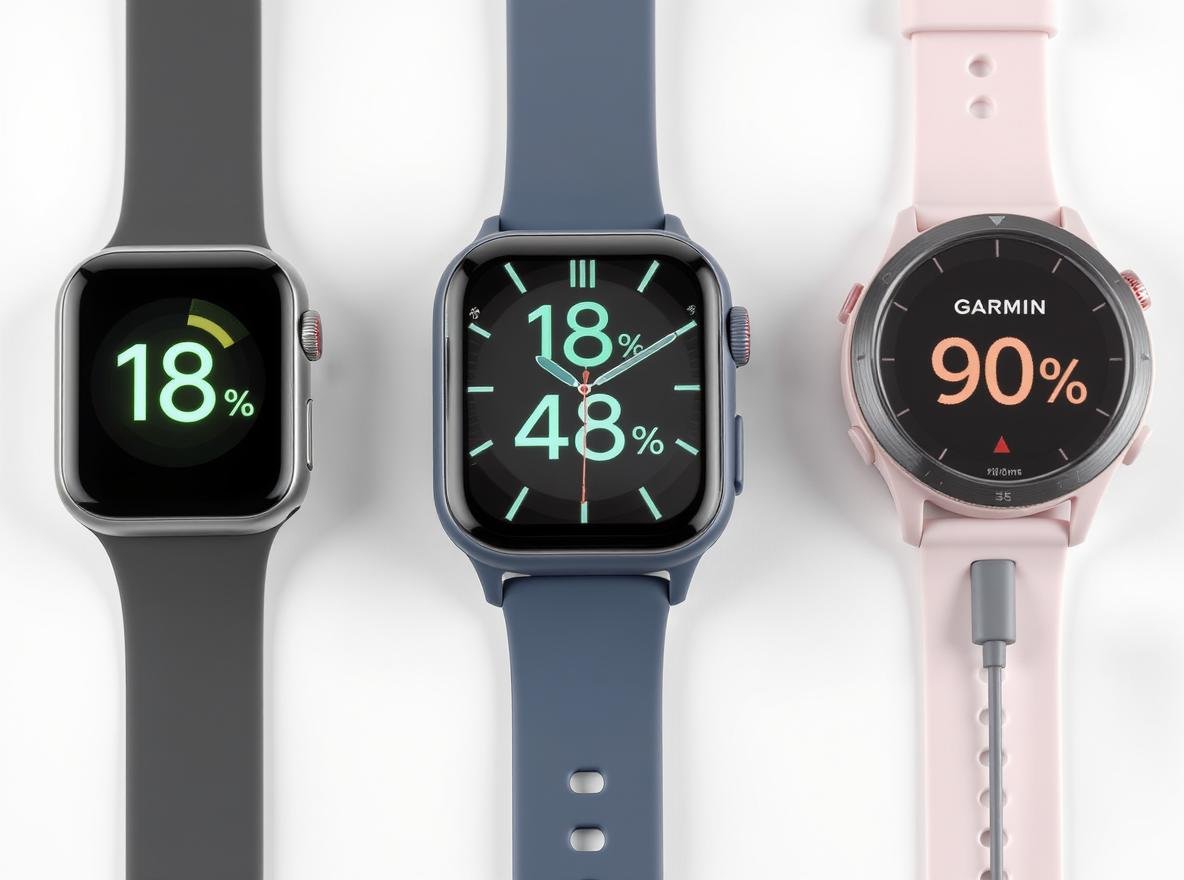
Smartwatch batteries typically last between 18 hours to 90 days on a single charge, depending on the category and features. Feature-rich models like Apple Watch and Samsung Galaxy require daily charging (18-36 hours), while Garmin outdoor watches can run for weeks or months with solar charging capabilities.
Ready to discover which smartwatch battery performance matches your business needs? Let’s explore the complete landscape of smartwatch battery life across different categories and price points.
What Are the Different Battery Life Categories for Smartwatches?
Understanding the five main smartwatch categories helps you select the right products for different customer segments and price points.
Smartwatch battery life falls into five distinct categories: full smartwatches (24-36 hours), rugged Ultra models (48-72 hours), budget smartwatches (7-15 days), hybrid watches (15-30 days), and outdoor GPS watches (15-90 days with solar).

The smartwatch market divides into clear battery performance tiers:
Full Smartwatches (WatchOS/Wear OS)
Apple Watch Series 9/10, Pixel Watch 3, and Galaxy Watch 6 deliver 24-36 hours with always-on display disabled, dropping to 18-30 hours with AOD enabled. These models prioritize rich app ecosystems and bright AMOLED screens over battery longevity.
Rugged “Ultra” Smartwatches
Apple Watch Ultra 2 and Galaxy Watch Ultra extend runtime to 48-72 hours through larger battery cells (542-590 mAh) while maintaining power-hungry displays and full feature sets.
| Category | Battery Life | Target Market | Key Examples |
|---|---|---|---|
| Full Smartwatches | 18-36 hours | Tech enthusiasts, professionals | Apple Watch Series 10, Galaxy Watch 6 |
| Ultra Models | 48-72 hours | Outdoor professionals, travelers | Apple Watch Ultra 2, Galaxy Watch Ultra |
| Budget Smartwatches | 7-15 days | Cost-conscious consumers | Amazfit GTS 4 Mini, Redmi Watch 4 |
| Hybrid Watches | 15-30 days | Traditional watch users | Withings ScanWatch 2, Fitbit Inspire 3 |
| Outdoor GPS | 15-90 days | Athletes, adventurers | Garmin Fenix 8 Solar, Enduro 3 |
This segmentation creates distinct wholesale opportunities for different market segments and price points.
How Long Do Apple Watch Batteries Actually Last?
Apple dominates the premium smartwatch segment, making their real-world battery performance crucial for business buyers targeting high-end customers.
Apple Watch Series 10 provides up to 18 hours of mixed usage, with fast USB-C charging reaching 80% capacity in 45 minutes. Low-power mode extends usage to 36 hours, while the Ultra 2 model delivers 36-60 hours depending on settings.

Current Apple Watch battery specifications:
- Watch Series 10: 18 hours standard, 36 hours low-power mode
- Watch SE 2: 18 hours standard, 36 hours low-power mode
- Watch Ultra 2: 36 hours standard, 60-72 hours low-power mode
Fast Charging Advantages
Apple’s new USB-C fast charging puck (5W) represents a significant improvement, enabling 0-80% charging in approximately 45 minutes. This addresses the daily charging requirement by making quick top-ups practical during short breaks.
Real-World Performance Considerations
Sleep tracking users still need daily charging even with the Series 10, as overnight monitoring combined with daytime usage pushes battery limits. The Ultra 2’s larger battery provides more comfortable multi-day usage for business travelers.
What Makes Samsung Galaxy Watch Battery Performance Competitive?
Samsung offers strong competition in the Android ecosystem with battery life that often exceeds Apple’s offerings through larger battery cells and efficient processors.
Samsung Galaxy Watch Ultra delivers 24-36 hours in normal mode and up to 60 hours in power-saving mode, while standard Galaxy Watch 6 models provide 30-40 hours depending on always-on display usage.

Samsung’s current battery performance breakdown:
| Model | Battery Size | Real-World Life | Charging Speed |
|---|---|---|---|
| Galaxy Watch 6 (44mm) | 425 mAh | 30h (AOD on), 40h (AOD off) | 10W wireless (75 min full) |
| Galaxy Watch 5 Pro | 590 mAh | 48-56h mixed use, 2-3 days light | 10W wireless |
| Galaxy Watch Ultra | 590 mAh | 24-36h normal, 60h power saver | 10W (upgrading to 15W) |
2025 Charging Improvements
Samsung’s upcoming Galaxy Watch 7 will feature 15W Qi2 wireless charging, reducing full charge time to approximately 45 minutes and matching Apple’s fast charging convenience.
Business Application Benefits
The extended battery life makes Samsung watches particularly attractive for international business travelers and professionals working extended shifts who need reliable multi-day performance.
Why Do Garmin Watches Achieve Weeks of Battery Life?
Garmin dominates the long-battery-life segment through specialized display technology and optimized software that appeals to outdoor professionals and athletes.
Garmin watches achieve 15-40 days of battery life through Memory-in-Pixel (MIP) displays that consume only 1-5% of AMOLED power consumption, combined with custom lightweight operating systems and optional solar charging capabilities.

Technical Advantages Behind Garmin’s Longevity
Memory-in-Pixel displays remain readable in direct sunlight while drawing minimal power compared to AMOLED screens. The proprietary Garmin OS avoids power-hungry background apps that drain conventional smartwatch batteries.
Key performance examples:
- Garmin Enduro 3: 36 days standard, up to 90 days with solar charging
- Garmin Fenix 8 Solar: 15-40 days depending on solar exposure
- Garmin Instinct 2 Solar: 30+ days with solar assistance
Solar Charging Impact
Premium Garmin models feature solar panels contributing 20-40% additional charge in bright outdoor conditions. Users report extending Enduro 3 usage to three months with consistent sun exposure.
Market Positioning for Wholesale
Garmin’s exceptional battery life creates compelling value propositions for:
- Outdoor recreation retailers
- Professional equipment suppliers
- Markets with limited charging infrastructure
- Customers prioritizing reliability over smartphone features
How Do Budget Smartwatches Compare for Battery Performance?
Budget-friendly smartwatches often deliver superior battery life compared to premium models, creating attractive wholesale opportunities for cost-conscious markets.
Budget smartwatches like Amazfit GTS 4 Mini and Redmi Watch 4 provide 7-15 days of typical usage by using simple RTOS firmware, modest 200-300 mAh batteries, and low-power displays that prioritize efficiency over advanced features.

Competitive Advantages of Budget Models
Lower-cost smartwatches achieve extended battery life through strategic feature limitations:
- Simple real-time operating systems avoiding power-hungry apps
- Basic TFT or low-power AMOLED displays
- No cellular connectivity reducing radio power consumption
- Focused fitness tracking without multimedia capabilities
Performance Examples
- Amazfit GTS 4 Mini: 15 days typical usage, 45 days battery-saver mode
- Xiaomi Redmi Watch 4: 7-12 days standard usage
- Fitbit Inspire 3: 10+ days with basic fitness tracking
Wholesale Market Opportunities
Budget models with superior battery life offer compelling advantages:
- Lower wholesale costs with competitive battery performance
- Reduced customer support issues related to charging frequency
- Strong selling points for practical, everyday users
- Appeal to developing markets where charging infrastructure is limited
What Daily Usage Habits Impact Smartwatch Battery Life?
Real-world usage patterns dramatically affect battery performance, making customer education essential for managing expectations and satisfaction.
Heavy usage including always-on displays, dual-band GPS tracking, LTE streaming, and frequent SpO₂ scans can reduce battery life by 15-30% daily, while optimized settings and moderate usage maximize longevity across all smartwatch categories.

High-Drain Features and Their Impact
| Setting/Behavior | Battery Impact | Optimization Strategy |
|---|---|---|
| Always-on display at max brightness | -15 to 25% per day | Dim AOD or use raise-to-wake indoors |
| Dual-band GPS during workouts | -4 to 10% per hour | Use connected GPS via phone for short activities |
| LTE music streaming | -20% per workout session | Download playlists, toggle LTE to auto |
| High-frequency SpO₂ scanning | -5 to 8% daily | Schedule for sleep monitoring only |
| Animation-heavy watch faces | -3 to 5% daily | Use static faces during busy workdays |
Customer Education Opportunities
Retailers can add value by educating customers about:
- Ambient temperature effects on charging and battery longevity
- The relationship between screen brightness and battery drain
- Benefits of power-saving modes during extended activities
- Proper charging habits to maximize battery lifespan
Understanding these factors helps wholesale buyers set realistic expectations and reduce return rates due to battery performance concerns.
How Does Fast Charging Technology Affect User Experience?
Fast charging capabilities increasingly influence purchasing decisions as manufacturers address shorter battery life through rapid replenishment solutions.
Modern fast charging reaches 0-80% capacity in 45-60 minutes across premium smartwatch models, with Apple’s USB-C puck, Samsung’s 15W wireless charging, and specialized solutions making brief charging sessions practical during daily routines.

Charging Speed Comparison Across Brands
Current fast charging capabilities:
- Apple Watch Series 10: 0-80% in 45 minutes (USB-C 5W puck)
- Samsung Galaxy Watch 7: 0-100% in 45 minutes (15W Qi2 wireless)
- OnePlus Watch 2: 0-100% in under 60 minutes (7.5W VOOC)
Business Impact Considerations
Fast charging provides practical advantages for professional users who can achieve 20-25% charge restoration during a 15-minute coffee break, equivalent to approximately 6 hours of usage.
Technical Considerations for Wholesale
Fast charging generates more heat, potentially affecting long-term battery health. Recommend occasional overnight slow charging to maximize battery longevity and reduce warranty claims.
Market Positioning Benefits
Fast charging serves as a key differentiator for:
- Business professional target markets
- Healthcare workers requiring reliable devices
- Travel and hospitality applications
- Time-sensitive professional environments
Which Smartwatch Category Offers the Best Value for Different Markets?
Different smartwatch categories serve distinct market segments with varying priorities for battery life, features, and price points.
The “best” battery life depends on customer priorities: Garmin outdoor models provide 30-90 days for adventure users, Ultra watches offer 48-72 hours for professionals needing multi-day reliability, while budget models deliver 7-15 days for cost-conscious everyday users.

Category Recommendations by Market Segment
Need Weeks, Not Apps?
Garmin Instinct 2 Solar or Enduro 3 (30-90 days) serve:
- Outdoor recreation markets
- Professional field workers
- Military and emergency services
- Developing markets with limited charging access
Want Smart Features Plus Multi-Day Life?
Ultra models (Apple Watch Ultra 2, Galaxy Watch Ultra) with 48-72 hours appeal to:
- Business travelers
- Healthcare professionals
- Tech enthusiasts wanting extended reliability
Budget-Minded Step Tracking?
Amazfit GTS 4 Mini or Xiaomi Redmi Watch 4 (10-20 days, under $100) target:
- Price-sensitive consumers
- First-time smartwatch buyers
- Markets prioritizing basic fitness tracking
- Gift and promotional markets
Always Connected, Rich Ecosystem?
Standard Apple Watch or Galaxy Watch models provide premium app experiences with nightly charging requirements for:
- Smartphone power users
- Premium consumer segments
- Corporate and enterprise markets
- Fashion-conscious buyers
Summary
Smartwatch battery life varies dramatically from Apple Watch’s 18-hour daily charging requirement to Garmin’s impressive 90-day solar-powered endurance. Understanding these categories—from Ultra models lasting 2-3 days to budget watches running 1-2 weeks—helps you match products to customer needs and price expectations.

Ready to source smartwatches with optimal battery performance for your target markets? Contact Osmarto today for wholesale pricing on our complete range of smartwatch solutions. Our technical team understands the battery performance requirements across different market segments and can help you identify the perfect products for your customers’ specific needs and usage patterns.