Skip to content
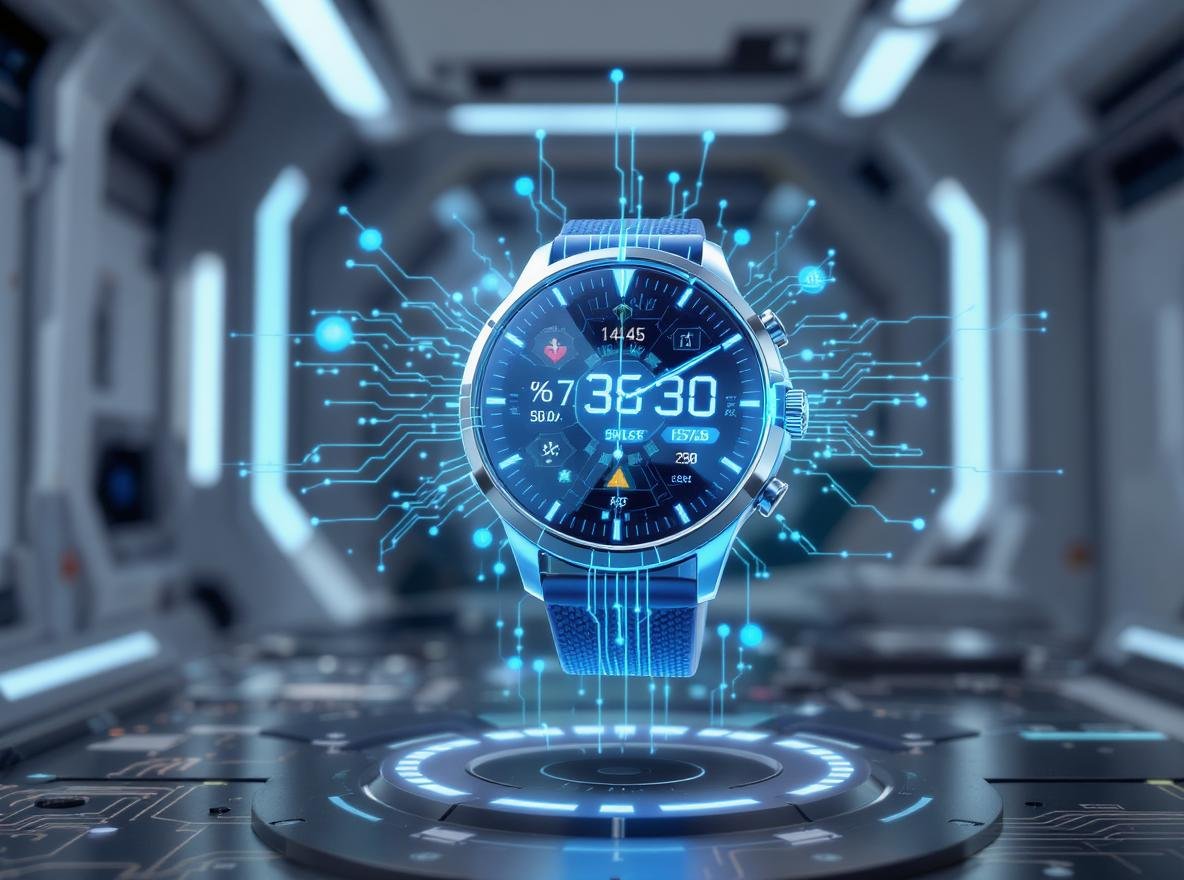
Are you wondering what all the fuss is about with smartwatches? You’re not alone. These wrist-worn devices have revolutionized how we interact with technology daily, but many people still don’t fully understand what they are or how they function.
A smartwatch is a wearable micro-computer with a touchscreen interface, embedded operating system, wireless connectivity modules, and an array of sensors designed to deliver notifications, run applications, and gather contextual health and activity data while worn on the wrist.
Let’s dive deeper into everything you need to know about these fascinating devices.
What Are the Main Components of a Smartwatch?
Understanding smartwatch components helps explain why these devices are so versatile and popular among consumers worldwide.
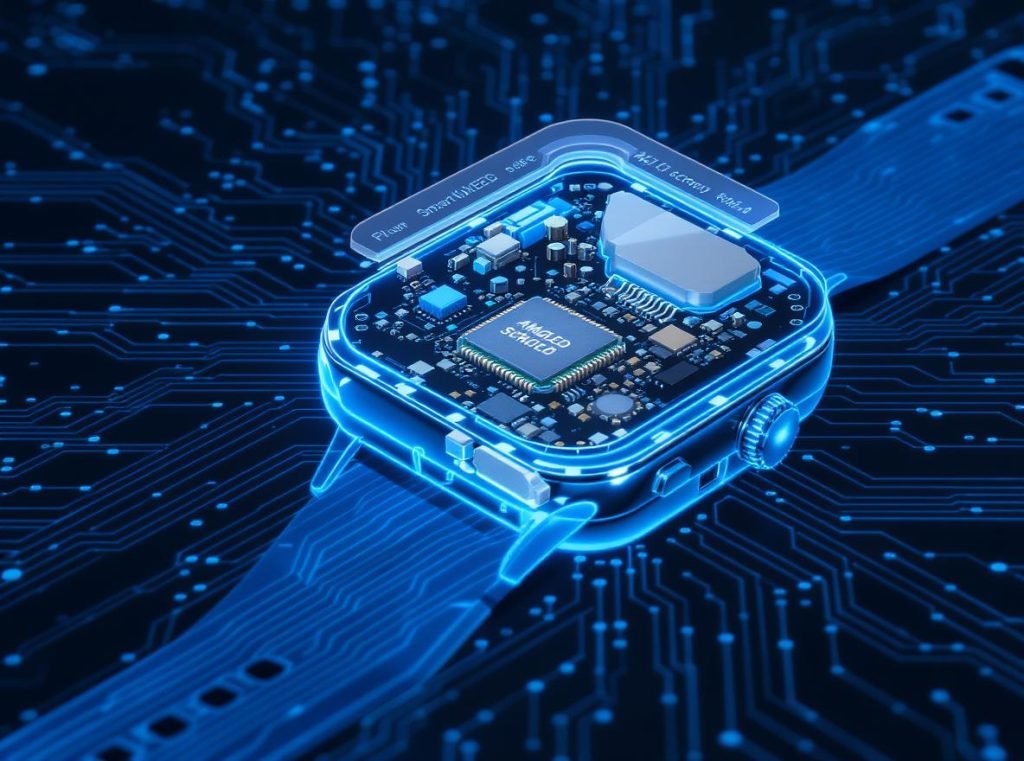
Modern smartwatches contain several key components: a System-on-Chip (SoC) processor, touchscreen display (AMOLED/LTPO or LCD), lithium-ion battery, wireless connectivity modules (Bluetooth 5.x LE, WiFi, NFC, GPS, optional LTE/eSIM), multiple sensors including accelerometer and photoplethysmography (PPG), and flash storage memory. These components work together through real-time task scheduling to create a miniature computer on your wrist.
System Architecture
The heart of any smartwatch is its System-on-Chip processor, such as the Qualcomm Snapdragon Wear 4100+ or Apple S9 SiP, designed for low power consumption while managing all device operations. These processors execute the operating system (Wear OS, watchOS) and manage peripherals through efficient task scheduling.
The display technology has evolved significantly, with premium models featuring LTPO AMOLED screens offering 1000+ nit brightness with always-on display capabilities. Entry-level models typically use TFT LCD or monochrome MIP displays for better battery conservation.
Memory components include LPDDR4 RAM (512MB-2GB) for active operations and UFS/eMMC flash storage (4-64GB) for apps, music, and data. Most consumer smartwatches today offer sufficient storage for essential applications and offline music streaming.
Advanced Connectivity Options
| Connection Type | Technology | Purpose | Range/Coverage |
|---|---|---|---|
| Bluetooth LE | 5.x standard | Phone pairing and data sync | 10-30 meters |
| WiFi | 802.11n dual-band | Internet access when away from phone | Local network coverage |
| Cellular | LTE Cat-M1/eSIM | Independent calling and data | Carrier network coverage |
| NFC | Near Field Communication | Contactless payments and access | 2-4 centimeters |
| GPS/GNSS | Multi-band satellite | Navigation and location tracking | Global coverage |
How Do Smartwatch Sensors Actually Work?
Sensors are what make smartwatches truly “smart” by enabling health monitoring and activity tracking capabilities.
Smartwatches use multiple advanced sensors including 3-axis accelerometers, gyroscopes, photoplethysmography (PPG) heart rate monitors, SpO₂ sensors, GPS/GNSS, barometric pressure sensors, and ECG electrodes. These sensors employ MEMS technology and optical sensing to collect precise data about your movement, location, vital signs, and environment, then process this information through sensor fusion algorithms to provide meaningful insights.
Heart Rate and Health Monitoring Technology
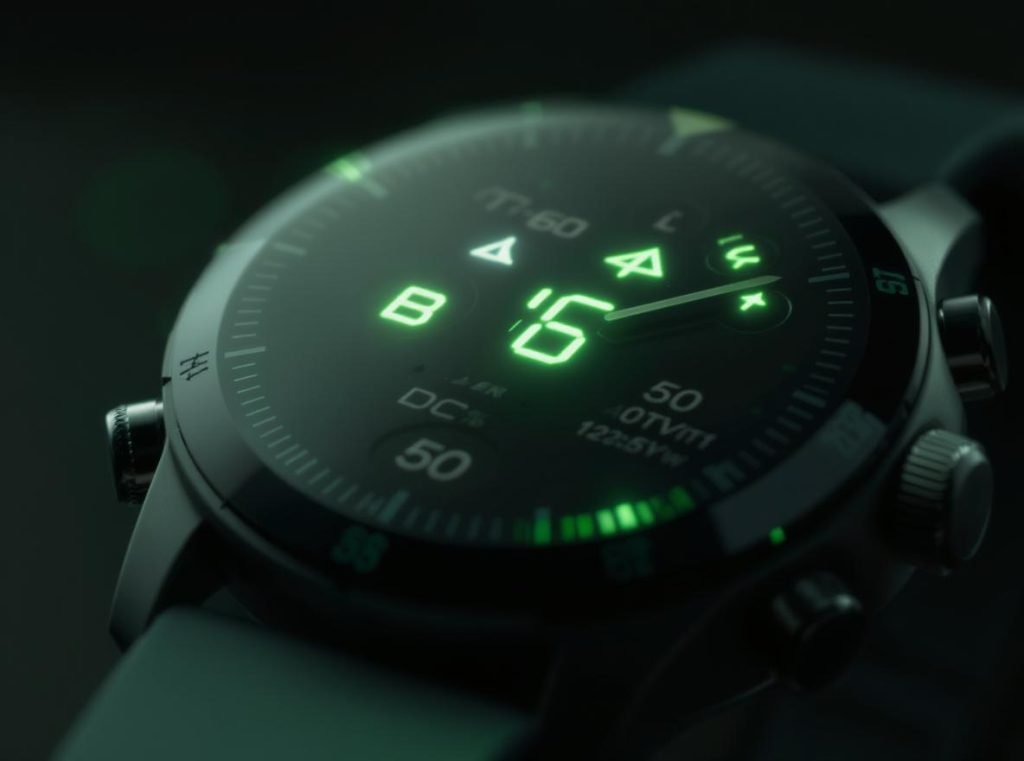
Heart rate sensors work through photoplethysmography (PPG) technology, using green and infrared LEDs that shine light onto the skin while photodiodes detect the amount of reflected light. Advanced algorithms analyze changes in light absorption caused by blood volume pulse through wrist capillaries to calculate accurate heart rate readings.
SpO₂ sensors use dual-wavelength technology (660nm and 940nm) PPG to determine blood oxygen saturation levels. This technology helps monitor altitude adaptation and can detect potential respiratory issues.
Modern premium smartwatches also include ECG electrodes that capture cardiac electrical signals sampled at ≥256 Hz, providing single-lead ECG waveforms for more comprehensive heart health monitoring.
Motion Detection and Navigation Systems
3-axis accelerometers use piezo-resistive MEMS technology to detect linear motion, enabling step counting with ≥95% accuracy when combined with gyroscopes. Gyroscopes utilize MEMS Coriolis-effect sensors to measure rotation, enabling:
- Precise hand gesture recognition
- Fall detection for safety alerts
- Activity type identification
- Sleep pattern analysis
Environmental and Location Sensors
| Sensor Type | Technology | Primary Function | Accuracy Level |
|---|---|---|---|
| Barometer/Altimeter | MEMS pressure sensor | Floor climbing, weather trends | ±1 meter elevation |
| GPS/GNSS | Multi-band satellite triangulation | Route tracking, geofencing | Sub-meter precision |
| Skin Temperature | NTC thermistor or IR sensor | Fever detection, cycle tracking | ±0.1°C accuracy |
| Ambient Light | Photodiode sensor | Auto-brightness adjustment | Adaptive response |
GPS modules in modern smartwatches work independently of your phone using multi-band satellite reception to mitigate ionospheric error. Combined with barometric pressure sensors, they provide accurate elevation tracking for hiking and climbing activities.
What Can You Actually Do with a Smartwatch?
The functionality of modern smartwatches extends far beyond simple timekeeping, making them valuable tools for personal and professional use.
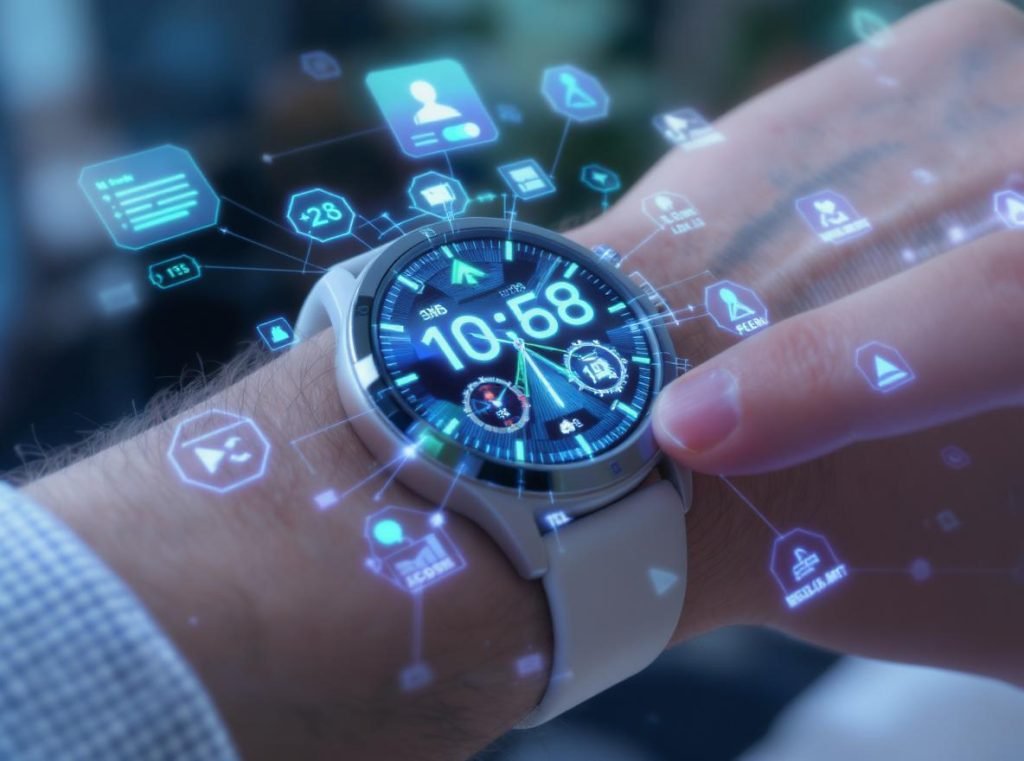
Smartwatches enable comprehensive communication, productivity enhancement, health monitoring, navigation, contactless payments, smart home control, and industry-specific applications. Advanced models with cellular connectivity can make VoLTE calls and stream music independently, while enterprise applications are driving adoption in manufacturing, healthcare, and field services.
Communication and Productivity Features
Modern smartwatches serve as powerful communication hubs:
- Voice calls and quick-reply messaging with dictation capabilities
- Calendar alerts and task management with 20% faster context switching
- Voice memos and walkie-talkie functionality for teams
- Email notifications with smart filtering
Studies show that smartwatch task management reduced mean time to repair on automotive assembly lines by 35%, while call center productivity increased 4% through activity nudges.
Advanced Health and Fitness Capabilities
Today’s smartwatches function as comprehensive health monitoring devices:
- Continuous 24×7 heart rate monitoring with HRV analysis
- VO₂ max estimation for fitness assessment
- Multi-stage sleep tracking with REM analysis
- Blood oxygen level measurement and altitude adaptation
- Stress level detection through heart rate variability
- ECG readings for cardiac health (premium models)
- Skin temperature monitoring for fever detection
- Menstrual cycle tracking with hormonal insights
Smart Integration and IoT Control
| Feature Category | Capabilities | Business Impact |
|---|---|---|
| Navigation & Travel | Turn-by-turn haptic directions, transit integration | Enhanced safety for field workers |
| Payments & Access | NFC wallet, building access, 2FA tokens | Faster transactions, improved security |
| Smart Home Control | HVAC, lighting, garage doors, security cameras | Operational efficiency in facilities |
| Industry Applications | Assembly alerts, patient monitoring, hospitality tickets | Sector-specific productivity gains |
How Do Smartwatches Connect to Your Phone?
The connection between smartwatches and smartphones is crucial for most functionality and user experience.
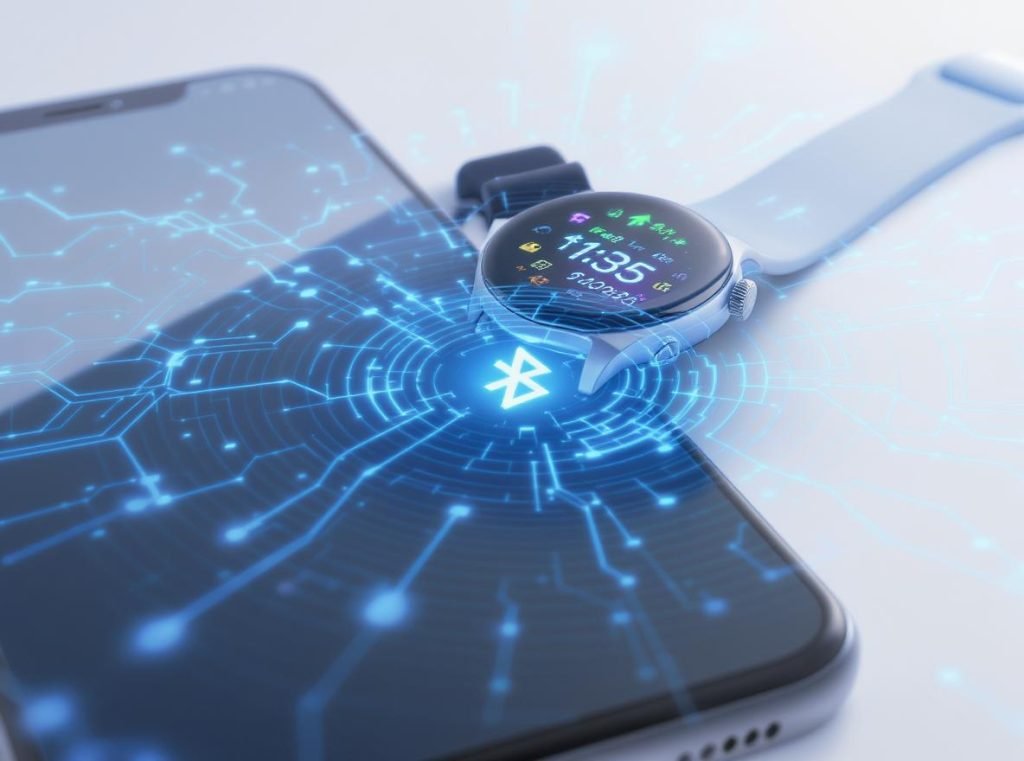
Smartwatches connect to smartphones primarily via Bluetooth LE technology using AES-encrypted pairing through companion apps. When out of Bluetooth range, devices can utilize WiFi relay and cloud push notifications (APNs/Firebase) for message continuity. LTE-enabled models with eSIM profiles can operate completely independently for VoLTE calls and data streaming.
Bluetooth LE Pairing Process
The connection process involves companion apps (Galaxy Wearable, Wear OS, Apple Watch app) that exchange AES-encrypted keys and establish Bluetooth GATT communication protocols. Once paired, the watch automatically syncs with your phone for:
- Real-time notification mirroring
- Music playback control and streaming
- Camera remote functionality
- Continuous health data synchronization
Multi-Mode Connectivity Architecture
| Connection Mode | Range | Battery Impact | Primary Use Case |
|---|---|---|---|
| Bluetooth LE 5.x | ≤10 meters | Baseline consumption | Office work, workouts |
| WiFi 2.4/5GHz | Building-wide | +8% per hour | Campus roaming, home use |
| LTE/eSIM | Nationwide | 1.5-2x battery drain | Independent operation, running |
Advanced Connectivity Features
LTE-enabled smartwatches integrate Cat-M1/LTE modems and eSIM technology, allowing them to place VoLTE calls and access internet services without phone dependency. This standalone capability is particularly valuable for:
- Outdoor activities and sports
- Emergency situations
- Field work environments
- Travel scenarios where phone access is limited
WiFi connectivity extends functionality when Bluetooth range is exceeded, automatically connecting to previously synced networks and maintaining access to cloud services and notifications.
What’s the Difference Between Basic and Advanced Smartwatches?
Understanding the various tiers of smartwatch functionality helps buyers make informed decisions for their specific needs.
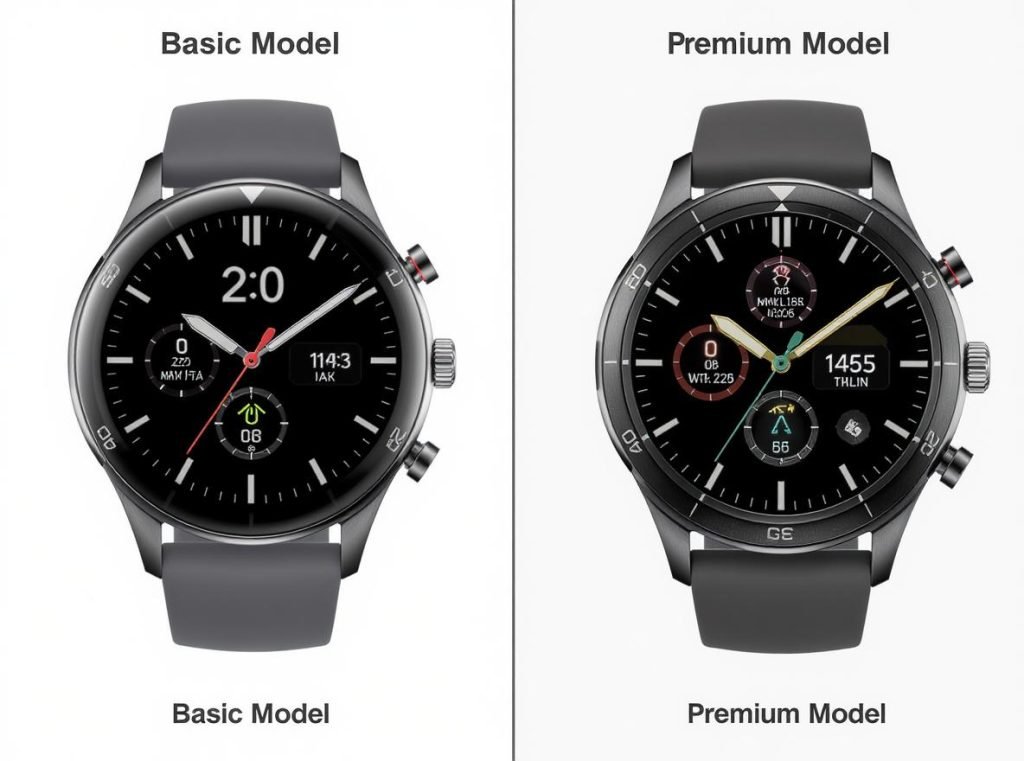
Entry-level smartwatches focus on basic fitness tracking and notifications with 7-10 day battery life, while advanced flagship models include comprehensive health sensors, cellular connectivity, full app ecosystems, and premium materials. The technology gap between budget and premium models has narrowed significantly, making advanced features more accessible.
Entry-Level vs Premium Specifications
| Feature Category | Entry/Budget (<$150) | Advanced/Flagship (>$350) |
|---|---|---|
| Display Technology | TFT LCD or monochrome MIP | LTPO AMOLED 1000+ nit with AOD |
| Health Sensors | Basic HR, accelerometer | Multi-band GNSS, ECG, SpO₂, skin temp |
| Connectivity | Bluetooth LE 4.x only | Bluetooth 5.3, dual-band WiFi, NFC, LTE |
| Operating System | Proprietary firmware | Full app store with OTA updates |
| Voice Assistant | None or basic commands | Siri/Google Assistant/Bixby integration |
| Battery Performance | 7-10 days (limited functions) | 18h-3 days smart mode, 14+ days power saving |
| Build Materials | Plastic case, IP67 rating | Titanium/steel, 10 ATM + MIL-STD-810H |
| Target Users | First-time buyers, fitness enthusiasts | Professionals, athletes, tech enthusiasts |
Popular Model Examples by Category
Entry-Level Leaders:
- Amazfit Bip series: 30+ day battery, GPS, under $100
- Huami GTR series: AMOLED display, comprehensive fitness tracking
- Realme Watch series: Affordable AMOLED, basic smart features
Mid-Range Champions:
- Samsung Galaxy Watch FE: Comprehensive health tracking, Wear OS
- OnePlus Watch 2: 72-hour battery, dual-engine architecture
- TicWatch Pro 5: Dual-layer display, extended battery modes
Premium Flagship Models:
- Apple Watch Series 10: 45mm, advanced health sensors, ECG
- Samsung Galaxy Watch 7: 44mm, comprehensive health suite
- Google Pixel Watch 3: Fitbit integration, Wear OS 5
- Garmin Fenix 7 Solar: 24-day battery, professional sports features
Feature Evolution Trends
The smartwatch market has seen rapid feature democratization, with previously premium capabilities like GPS, heart rate monitoring, and color displays becoming standard in budget models. However, flagship devices maintain advantages in build quality, battery optimization, and advanced health sensors like ECG and blood oxygen monitoring.
How Long Do Smartwatch Batteries Last?
Battery performance remains a critical consideration for potential smartwatch users, affecting daily usability and convenience.
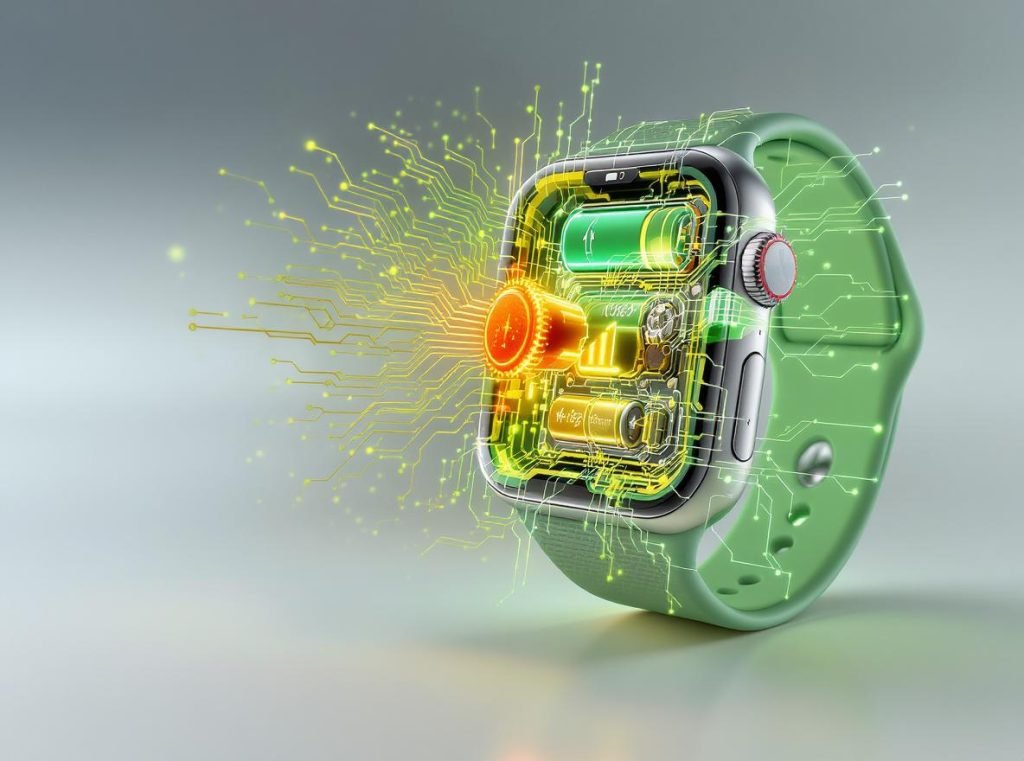
Modern smartwatches typically provide 18 hours to 56+ days of battery life depending on the model, features enabled, and usage patterns. Display technology and GPS usage are the primary battery drain factors, with AMOLED displays consuming up to 70% of power during active use.
Real-World Battery Performance Data
Based on 2025 testing data, here’s how popular smartwatch models perform:
| Model | Smart Mode | Power Saving | GPS Workout | Battery Capacity |
|---|---|---|---|---|
| Apple Watch Series 10 (45mm) | 18 hours | 36 hours | 7 hours | 308 mAh |
| Samsung Galaxy Watch 7 (44mm) | 40 hours | 72 hours | 10 hours | 425 mAh |
| Google Pixel Watch 3 (45mm) | 48 hours | 72 hours | ~10 hours | 306 mAh |
| OnePlus Watch 2 | 72 hours | 12 days | – | 500 mAh |
| Garmin Fenix 7 Solar | 24 days | 56+ days | 70 hours | 450 mAh |
| Garmin Instinct Solar 2 | 56 days | Unlimited (solar) | 30 hours | 450 mAh |
Battery Consumption Factors
Several key elements significantly impact smartwatch battery performance:
- Display Usage: AMOLED always-on displays account for up to 70% of power consumption
- GPS Tracking: Standard GPS sampling drains ~45 mAh/h, while multi-band GPS consumes ~60 mAh/h
- LTE Connectivity: Voice calls consume 350-400 mW, typically halving battery life
- Sensor Frequency: Continuous health monitoring vs. periodic sampling affects longevity
- App Activity: Background processes and notifications create additional power draw
Advanced Power Management Technologies
Modern smartwatches employ sophisticated power-saving techniques:
- Dual-Battery Architecture: TicWatch Pro 5 uses ultra-low-power FSTN LCD overlay for 45-day standby
- Solar Charging: Garmin models can achieve unlimited battery life in optimal conditions
- LTPO Displays: Variable refresh rates from 1Hz to 120Hz optimize power consumption
- Smart Power Modes: Automatic feature limitation based on remaining battery percentage
Charging Technologies and Times
| Charging Method | Typical Power | Full Charge Time | Example Models |
|---|---|---|---|
| Magnetic Pogo-Pin | 5-7.5W | 2.5 hours | Apple Watch Series 10 |
| Qi Wireless | 5W | 1.8 hours to 80% | Galaxy Watch 7 |
| Fast Charging | 10W+ | 1-1.5 hours | OnePlus Watch 2 |
| Solar Enhancement | Variable | Extends runtime | Garmin Fenix/Instinct series |
Are Smartwatches Worth the Investment for Businesses?
For wholesale buyers and retailers, understanding the market value and customer demand for smartwatches is essential for business success.
Smartwatches represent a rapidly expanding market with proven ROI in enterprise applications, delivering measurable benefits including faster decision loops, improved worker safety, hands-free workflow optimization, and enhanced compliance tracking. Studies show ROI payback periods under 12 months in manufacturing and field service applications.

Documented Enterprise Benefits
Real-world implementation data demonstrates significant business value:
- Magna International: Reduced assembly line reaction time from 10 minutes to 3 minutes using wrist alerts, saving $2.5M annually in downtime costs
- German Utility Company: Field engineers using haptic job cards completed service calls 18% faster with hands-free workflow
- Malaysian SME Pilot: Continuous SpO₂ and temperature screening reduced workplace flu outbreaks by 12% across 35 companies
- Deloitte Call Center Study: Smartwatch activity nudges reduced sedentary time by 27 minutes per shift, increasing productivity by 4%
ROI Calculation Framework
ROI = (Net Annual Benefit – Implementation Cost) ÷ Implementation Cost
Typical Cost Components:
- Device hardware: $250-400 per unit
- Mobile Device Management (MDM) licensing: $3/device/month
- Custom companion app development: $40,000-80,000
- Training and deployment: $15,000-25,000
Measurable Benefits:
- Reduced equipment downtime costs
- Lower healthcare premiums through wellness programs
- Productivity improvements from faster communication
- Decreased safety incident costs
- Improved compliance and audit trail accuracy
Industry-Specific Applications
| Industry Sector | Primary Use Cases | Typical ROI Period |
|---|---|---|
| Manufacturing | Assembly alerts, safety monitoring, quality control | 8-12 months |
| Healthcare | Patient vital relays, staff communication, hygiene compliance | 10-14 months |
| Field Services | Work order management, GPS tracking, hands-free reporting | 6-10 months |
| Logistics | Package tracking, route optimization, driver safety | 9-12 months |
| Hospitality | Guest service tickets, staff coordination, contactless access | 12-18 months |
Enterprise Adoption Considerations
Key Success Enablers:
- Permanent availability with reliable haptic alerts
- Transparent health data analytics for HR insights
- Durable MIL-STD rated casings for harsh environments
- Integration with existing enterprise software systems
Common Implementation Barriers:
- Battery anxiety requiring 2+ day battery life models
- Privacy concerns addressed through clear opt-in policies and anonymized dashboards
- RF interference in industrial environments requiring fallback workflows
- Total cost of ownership managed through lease-to-own contracts
What Should You Look for When Choosing a Smartwatch Supplier?
Selecting the right manufacturing partner is crucial for businesses entering the smartwatch market.
Critical factors when selecting a smartwatch supplier include platform SDK flexibility, security certifications (FIPS 140-2, ISO 27001), supply chain stability, enterprise MDM support, and total cost of ownership analysis. Experienced suppliers should demonstrate comprehensive quality assurance, regulatory compliance, and proven enterprise deployment capabilities.
Essential Supplier Evaluation Criteria
| Criterion | Why It Matters | Evaluation Method |
|---|---|---|
| Platform & SDK | Determines app flexibility and customization potential | Confirm full API documentation, FOTA update cadence |
| Battery & Rugged Specs | Drives uptime in field environments | Request third-party test reports (IP rating, MIL-STD) |
| Security Certifications | Protects corporate and personal data | Verify FIPS 140-2, ISO 27001 in cloud infrastructure |
| Supply Chain Stability | Prevents inventory shortages | Audit tier-1 component sourcing, forecast windows |
| Enterprise Support | Essential for MDM and bulk operations | Check Knox/Zero-Touch enrollment, 24×7 SLA |
| Technology Roadmap | Ensures product longevity | Seek 3-year OS update commitment, spare part availability |
Critical Supplier Qualification Questions
Technical Capabilities:
- Does the vendor provide hardened OS images with remote lock/wipe functionality?
- Are LTE band options certified for target carriers across all deployment regions?
- Is the battery user-replaceable or service-swappable for fleets over 500 units?
- Are custom watch faces and kiosk modes supported for brand consistency?
Quality Assurance Standards:
- ISO 9001 quality management system certification
- CE, FCC, and regional regulatory approvals for target markets
- Comprehensive testing procedures including stress, thermal, and durability testing
- Quality control documentation and batch traceability systems
Manufacturing and Customization Capabilities
Production Assessment:
- Manufacturing capacity and scalability for large orders
- OEM/ODM customization options for hardware and software
- Research and development capabilities for product innovation
- Component sourcing relationships and supply chain resilience
Service and Support Infrastructure:
- Technical support availability and response times
- Warranty terms and replacement policies
- Training programs for deployment teams
- After-sales service network coverage
Total Cost of Ownership Analysis
Comprehensive Cost Calculation:
- Initial hardware costs per unit
- eSIM data plan fees for cellular models
- MDM licensing and management software
- Accessory replacement and loss provisions
- Staff training and deployment expenses
- Ongoing support and maintenance costs
At Osmarto, we understand these complex requirements and have built our capabilities around delivering enterprise-grade smartwatch solutions. Our comprehensive approach includes rigorous quality control, extensive customization options, proven supply chain management, and dedicated enterprise support teams to ensure your success in deploying smartwatch technology.
Summary
Smartwatches have evolved from simple notification devices to sophisticated wearable computers featuring advanced sensors, multiple connectivity options, and comprehensive health monitoring capabilities. The technology combines System-on-Chip processors, AMOLED displays, multi-sensor arrays, and intelligent power management to deliver enterprise-grade functionality in a compact wrist-worn form factor. Understanding their technical architecture, connectivity methods, battery performance characteristics, and enterprise applications helps both consumers and businesses make informed procurement decisions.
Ready to explore premium smartwatch solutions for your business? Contact Osmarto today to discuss your specific requirements and discover how our comprehensive OEM/ODM smartwatch capabilities can help you succeed in this rapidly expanding market. Our team of wearable technology experts is prepared to assist you with product customization, quality assurance, regulatory compliance, and ongoing support to ensure your business thrives in the competitive smartwatch industry.