Your smartwatch touches your skin 24/7, collecting sweat, bacteria, and grime. Research reveals smartwatch bands harbor 30 times more bacteria than a toilet seat, with 95% contaminated. That’s not just gross—it affects your health and device performance.
To clean your smartwatch, turn it off and wipe the screen with a microfiber cloth lightly dampened with water. For the body, use 70% isopropyl alcohol wipes to disinfect. Remove the band and clean according to material: silicone bands wash with one drop of soap per cup of water, metal bands need gentle brushing with a soft toothbrush, leather requires specialized leather cleaner applied with a cotton sock, and nylon bands can be hand-washed with mild soap.
Keep reading to discover material-specific cleaning techniques, maintenance schedules that extend your smartwatch’s 2-5 year lifespan, and critical mistakes that damage devices or void warranties.
What Cleaning Supplies Do You Need for Your Smartwatch?
Most supplies are common household items, but using the right tools prevents damage. Many people grab harsh chemicals or abrasive materials that scratch screens or degrade sensitive components.
You need a microfiber cloth, 70% isopropyl alcohol wipes, mild liquid soap (dish or hand soap), distilled white vinegar for stubborn residue, cotton swabs, a soft-bristled toothbrush, and specialized leather cleaner with conditioner for leather bands. Avoid paper towels, abrasive sponges, compressed air, and harsh chemical cleaners.
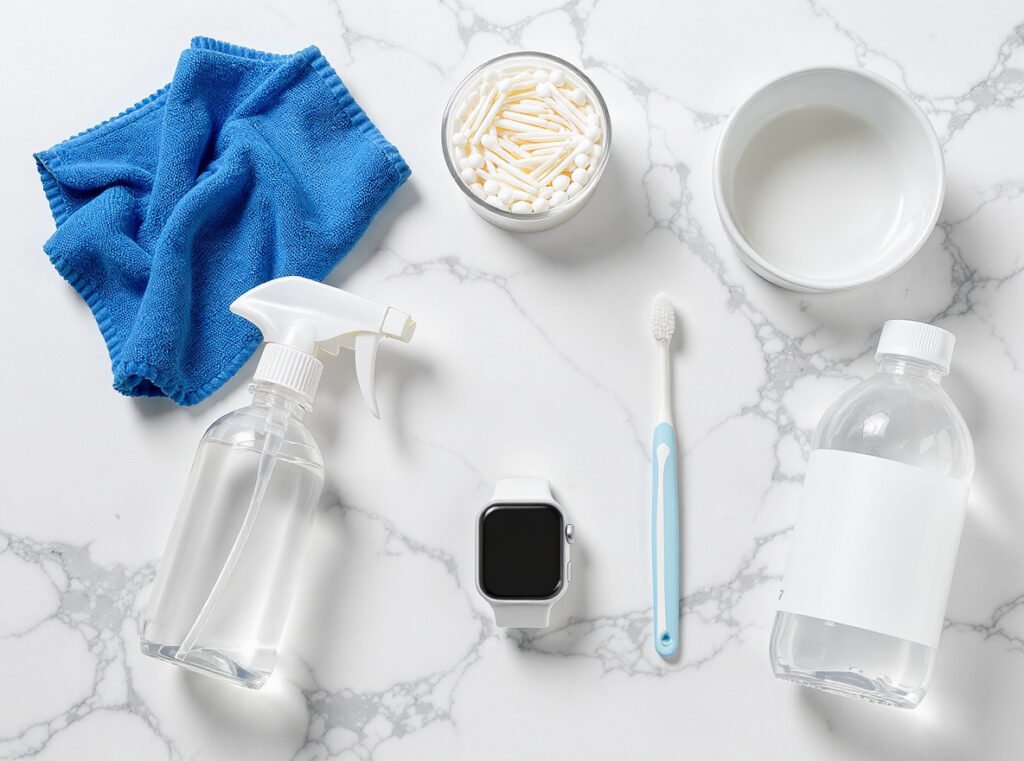
Essential Cleaning Arsenal
| Item | Primary Use | Application Area |
|---|---|---|
| Microfiber cloth | Daily screen wiping | Display, watch body |
| 70% isopropyl alcohol wipes | Weekly disinfection | Hard surfaces, back sensors |
| Mild liquid soap | Deep band cleaning | Silicone, nylon, metal bands |
| Soft-bristled toothbrush | Detailed scrubbing | Crevices, metal links, fabric weave |
| Cotton swabs (Q-Tips) | Precision cleaning | Ports, sensor grooves, tight corners |
| Distilled white vinegar | Stubborn residue | Mineral deposits, tough stains |
| Cotton sock (clean) | Leather care | Applying cleaner to leather bands |
The microfiber cloth is your daily workhorse. Unlike paper towels that leave lint and can scratch glass over time, microfiber safely removes fingerprints and surface dirt without damage.
Unused coffee filters work as a lint-free alternative when microfiber isn’t available. For businesses distributing smartwatches, bundling a basic cleaning kit with purchases enhances customer satisfaction and protects your products long-term.
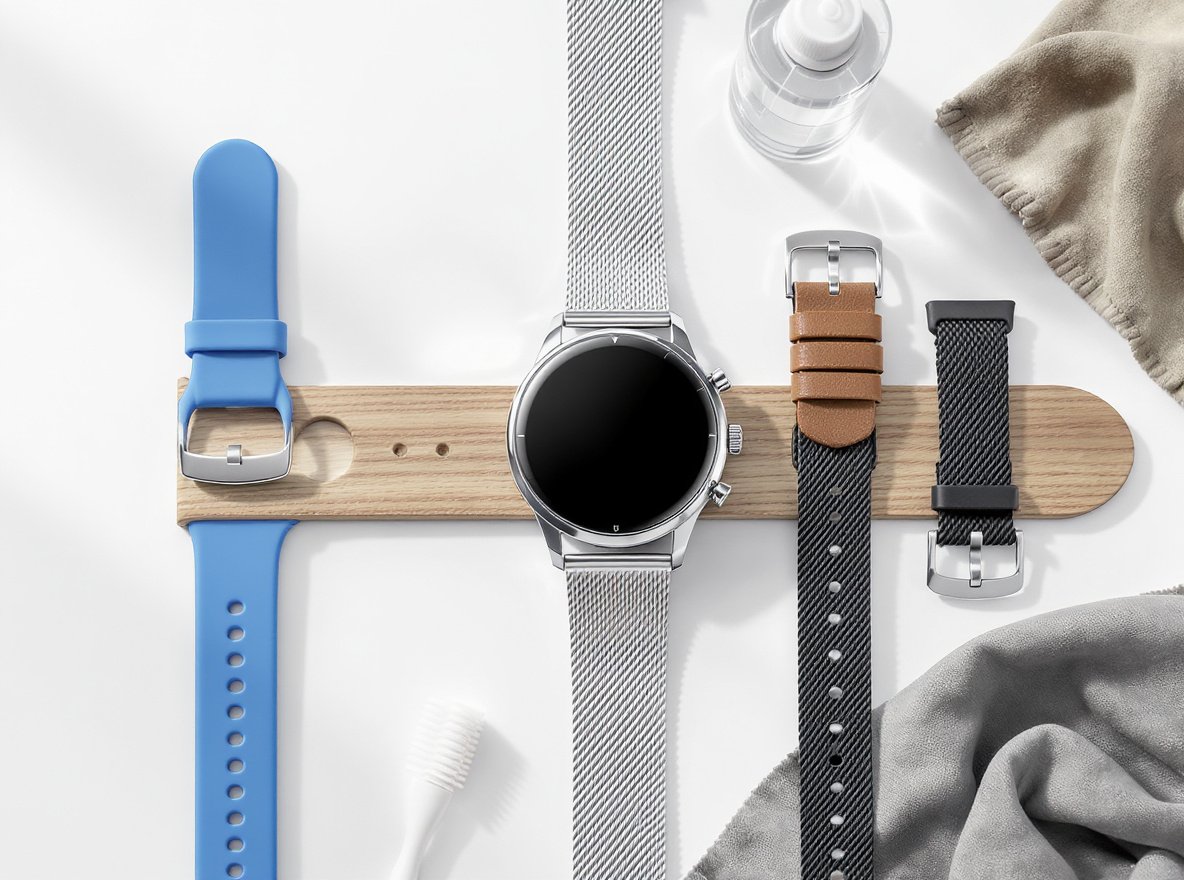
How Do You Clean Different Types of Smartwatch Bands?
Each band material demands specific care methods. Using the wrong technique permanently damages expensive bands, causes skin irritation, or voids manufacturer warranties.
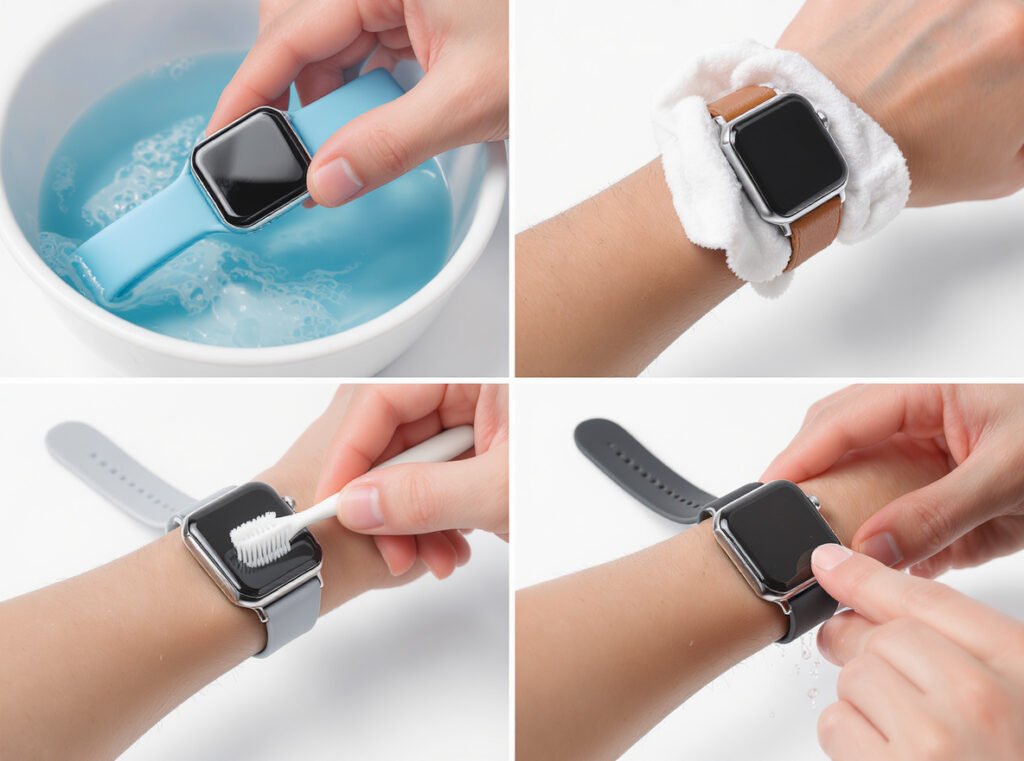
Silicone bands need heavily diluted soap solution (one drop per cup), metal bands require gentle brushing and immediate drying, leather bands must only use specialized leather cleaner applied with a cotton sock, and nylon bands can be hand-washed with mild soap and air-dried flat. Always detach bands from the watch body before any wet cleaning.
Silicone and Rubber Bands
Silicone is the most resilient material but still requires proper technique. Remove the band from your watch completely. Create a heavily diluted soap solution using exactly one drop of soap per cup of water. Too much soap leaves residue that irritates skin.
Soak the band briefly—5 to 10 minutes maximum. Gently scrub with a soft cloth or sponge, paying attention to the underside where sweat accumulates. Rinse thoroughly under clean running water until all soap is gone.
For stubborn stains or discoloration, mix baking soda with water to create a paste. Rub gently with your fingers, then wipe off with a wet cloth. Pat dry with a lint-free towel and air dry completely before reattaching.
Silicone bands dominate the market for fitness and active users. For wholesalers, they represent your highest-volume product line due to affordability and durability.
Leather Bands
Leather requires the most careful approach. Never soak leather in water or use regular soap—both cause irreversible damage, cracking, and discoloration.
Always use an all-purpose leather cleaner and conditioner specifically designed for leather goods. Before full application, test a small hidden area first to check for any discoloration reaction.
Apply the leather cleaner to a clean white cotton sock (not directly to the band). Rub gently into the leather surface and let it dry for a few minutes. Buff with a clean part of the sock to restore shine.
Never use alcohol-based cleaners on leather. Alcohol dries out natural oils, causing the leather to crack and age prematurely. For regular maintenance, simply wipe with a dry cloth after each use.
Leather bands add a premium, professional aesthetic ideal for business-oriented smartwatch models. When sourcing inventory, consider leather options for corporate and executive market segments.
Stainless Steel and Metal Bands
Metal bands are durable but accumulate dirt in tiny crevices between links. Create a mild soap and water solution. Use a soft-bristled toothbrush to gently scrub between links, around clasps, and under decorative elements.
Clean with a soft, damp cloth regularly for maintenance. For deeper cleaning, briefly immerse in the soap solution, scrub gently, then rinse quickly under warm water.
Critical step: Dry immediately and thoroughly. Water spots form if metal isn’t dried properly. Pat with a microfiber cloth and let air dry completely before reassembly.
Check and tighten screws or pins regularly during cleaning. Loose connections cause bands to detach unexpectedly. For discoloration or tarnishing, use specialized stainless steel cleaner sparingly—these contain chemicals that can damage protective coatings if overused.
Metal mesh or Milanese-style bands trap particles between woven strands. The toothbrush technique works exceptionally well here, reaching areas fingers cannot.
Nylon and Fabric Bands
Nylon and fabric absorb sweat and odors more readily than other materials. They require more frequent washing but handle moisture well.
Remove the band and hand-wash it in a sink with mild soap and lukewarm water. Never use hot water—it can shrink or distort the fabric weave. Gently rub the fabric together or use a soft-bristled toothbrush for scrubbing.
Rinse thoroughly under clean water until no soap remains. Press—don’t wring—with a lint-free towel to remove excess water. Wringing distorts the shape and damages the weave structure.
Critical warning: Never use fabric softeners. They contain chemicals that damage nylon fibers and reduce the band’s durability.
Air dry flat in a well-ventilated area away from direct sunlight or heat sources. Never use a dryer or place near radiators—high heat shrinks fabric bands permanently.
For brands offering customizable options, nylon provides excellent opportunities for color variety, pattern designs, and logo branding at affordable price points.
How Often Should You Clean Your Smartwatch?
Cleaning frequency directly impacts device lifespan and hygiene. Studies show that insufficient cleaning allows bacterial colonies to flourish, potentially causing skin infections or contact dermatitis.
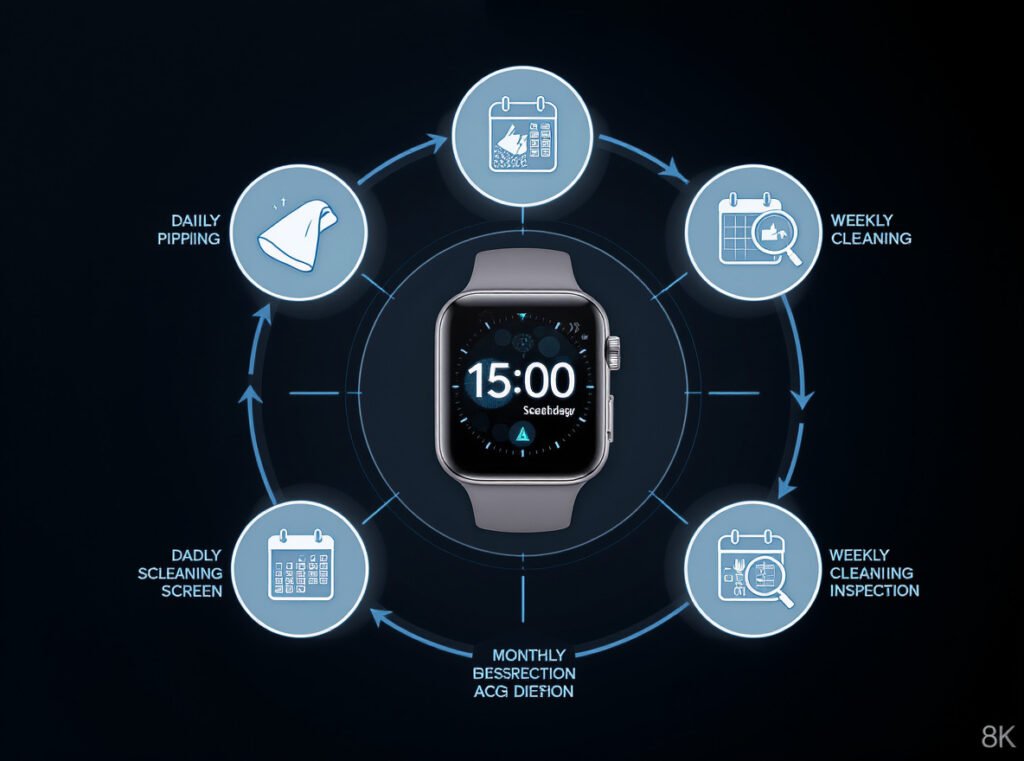
Clean your smartwatch screen daily with a dry microfiber cloth. Wipe the back sensors and band after every workout or sweating. Perform a thorough deep clean at least once weekly for regular users, more frequently for active lifestyles. Disinfect the entire device weekly using 70% isopropyl alcohol wipes.
Daily Quick Maintenance
Every evening, spend 30 seconds wiping your smartwatch screen and back with a dry microfiber cloth. This prevents buildup before it becomes problematic.
The back sensor area where the device contacts your skin accumulates oils, lotions, and sweat. A quick daily wipe maintains sensor accuracy for heart rate monitoring, blood oxygen measurement, and sleep tracking.
Post-Workout Deep Clean
Exercise accelerates bacterial growth and dirt accumulation exponentially. After gym sessions, running, cycling, or any activity that causes sweating, immediately remove your watch.
Clean both the device and your wrist with soap and water. Sweat combined with sunscreen, lotion, or environmental pollutants creates a film that affects sensor accuracy and causes skin irritation.
Use a cotton swab lightly dampened with water to clean sensor grooves where fingers can’t reach. This attention to detail prevents the crusty buildup many users neglect until it affects performance.
Weekly Maintenance Routine
Set aside 10 minutes each week for comprehensive cleaning:
- Power off the smartwatch completely
- Remove the band using the release mechanism
- Wipe the screen with a lightly dampened microfiber cloth
- Disinfect the watch body with 70% isopropyl alcohol wipes
- Clean the band according to its specific material type
- Clean charging contacts with a dry cotton swab
- Inspect for wear, damage, or loose components
- Dry everything completely before reassembling
This weekly routine extends device lifespan significantly. For wholesale partners and retailers, educating end-users about this schedule reduces return rates, warranty claims, and negative reviews.
Monthly Deep Inspection
Once monthly, perform a detailed inspection beyond cleaning:
- Examine band attachment points for wear or loosening
- Check the screen for micro-scratches or damage
- Test all buttons and crown for proper responsiveness
- Verify water resistance seals if frequently exposed to water
- Update software for bug fixes and performance improvements
- Consider a factory reset to clear temporary files and refresh system performance
- Back up important data before any reset
For active users or those in humid climates, increase cleaning frequency accordingly. Light-colored bands show dirt faster but all materials accumulate bacteria at similar rates regardless of visible soiling.
What Should You Avoid When Cleaning a Smartwatch?
Certain cleaning methods cause permanent damage that warranties don’t cover. Many common household products seem harmless but destroy smartwatch components, seals, or finishes.
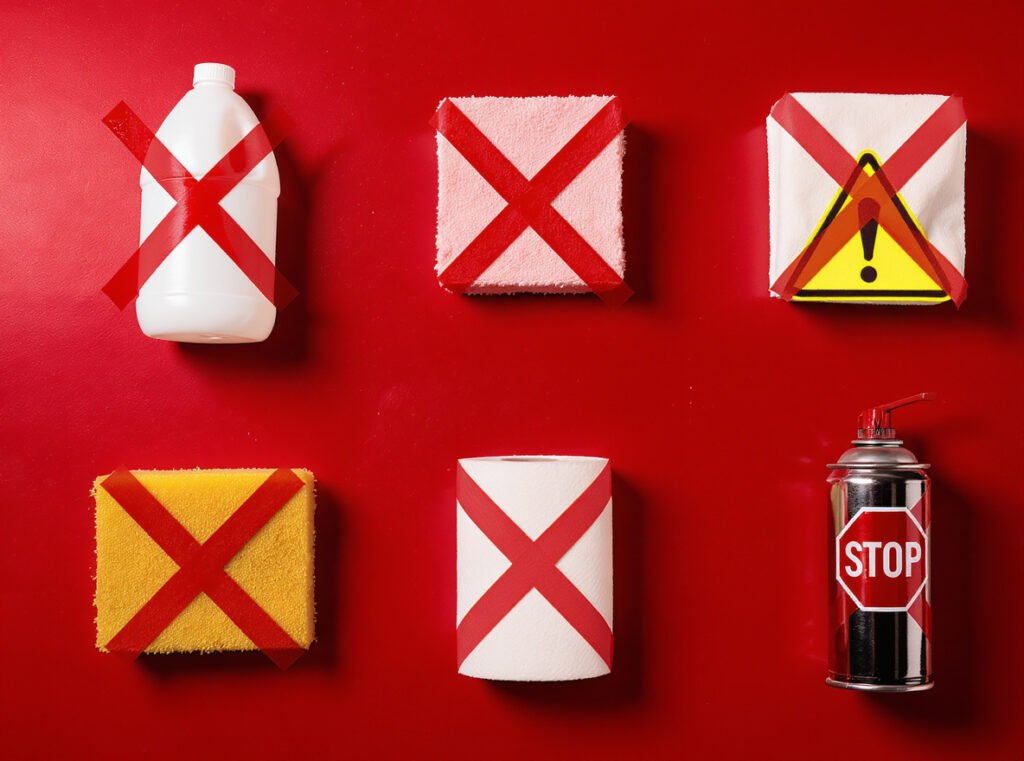
Never use soap directly on any smartwatch surface (damages water-resistant seals and causes skin irritation), bleach, hydrogen peroxide, harsh chemical cleaners, abrasive materials like sponges or scrubbing pads, compressed air, paper towels, or ultrasonic cleaners. Never submerge non-waterproof models in water or spray cleaning agents directly onto the device.
Prohibited Cleaning Substances
| Substance | Why It’s Harmful | What It Damages |
|---|---|---|
| Soap (direct application) | Degrades water-resistant seals, causes skin irritation | Gaskets, protective barriers |
| Bleach or hydrogen peroxide | Extremely harsh oxidizers | All materials, coatings, plastics |
| Window cleaners | Contains ammonia | Oleophobic screen coating |
| Abrasive cleaners | Scratches surfaces | Display glass, metal finishes |
| Concentrated alcohol (>70%) | Too aggressive for regular use | Rubber seals, plastic components |
| Fabric softener | Damages synthetic fibers | Nylon bands |
Samsung, Apple, and other major manufacturers explicitly prohibit soap use on smartwatch surfaces. Soap residue builds up under bands and around seals, creating sticky films that attract more dirt and potentially compromise water resistance over time.
Dangerous Physical Cleaning Practices
Paper towels seem convenient but contain wood fibers that microscopically scratch glass displays over repeated use. Always choose microfiber or lint-free cloths specifically designed for electronics.
Compressed air appears ideal for blowing out crevices, but the high pressure can force moisture deeper into the device, dislodge internal components, or damage delicate sensors. Use cotton swabs for precision cleaning instead.
Never insert sharp objects like toothpicks, pins, or needles into ports, speaker grilles, or button gaps. You risk puncturing water-resistant membranes, damaging internal components, or creating entry points for moisture.
Abrasive materials like sponges, scrubbing pads, or rough cloths scratch protective coatings on screens and metal surfaces. Even “soft” sponges contain materials harder than smartwatch glass coatings.
Critical Water-Related Warnings
Check your smartwatch’s water resistance rating before any wet cleaning. IP67 means splash-resistant and can handle brief submersion (up to 1 meter for 30 minutes), but it’s not designed for swimming or showering.
IP68 offers better protection with deeper submersion capabilities, but water resistance isn’t permanent. Seals degrade over time due to temperature changes, impacts, aging, and chemical exposure. Older devices need more caution regardless of original ratings.
Never submerge non-waterproof or water-resistant models in cleaning solutions. Even IP68-rated devices shouldn’t remain wet for extended periods. Salt water, chlorinated pools, hot water, and soapy water all degrade seals faster than fresh water.
Avoid cleaning while charging or when the device is powered on. Moisture and active electronics create short-circuit risks and can trigger unintended touchscreen inputs that change settings or delete data.
Material-Specific Mistakes
Never use alcohol-based cleaners, disinfectants, or hand sanitizers on leather bands. Alcohol strips natural oils from leather, causing immediate drying, cracking, and premature aging.
Counterintuitively, silicone-based cleaners damage silicone bands. They create a slippery residue that attracts dirt and degrades the material’s structural integrity over time.
Don’t use the same cleaning method for all band types. Each material requires specific care—treating them identically leads to damage, warranty voidance, and customer dissatisfaction for your business.
How Do You Maintain Your Smartwatch for Long-Term Performance?
Proper maintenance extends your smartwatch’s typical 2-5 year lifespan and maintains optimal functionality. Well-maintained devices retain resale value and reduce total cost of ownership.
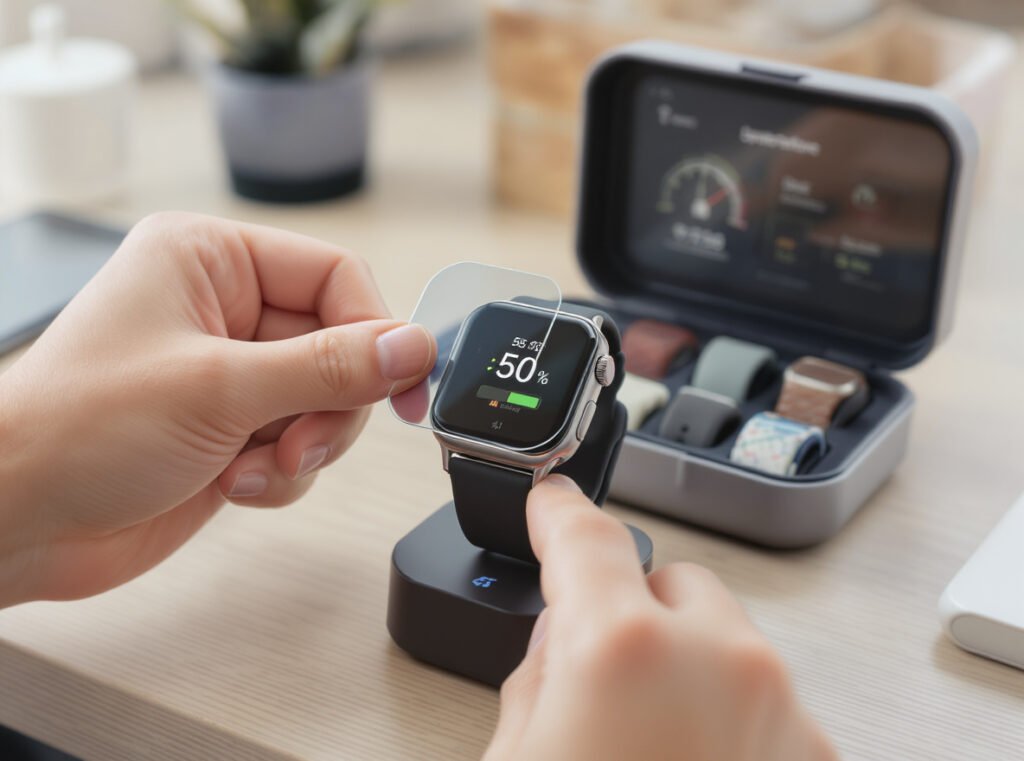
Maintain your smartwatch by installing software updates promptly, avoiding complete battery depletion or overcharging, storing at 50% charge during extended non-use, using screen protectors, avoiding extreme temperatures, rotating between multiple bands, and cleaning charging contacts regularly. These practices prevent hardware failures and preserve performance.
Battery Care for Longevity
Battery degradation is inevitable, but proper charging habits slow the process significantly. Avoid letting your battery fully drain repeatedly—this stresses lithium-ion cells and reduces overall capacity.
Charge when the battery reaches 20-30% for optimal health. Don’t leave it charging overnight constantly, as maintaining 100% charge for extended periods generates heat and accelerates degradation.
Use the original charger when possible. Third-party chargers may not provide proper voltage regulation, potentially damaging the battery or creating safety risks.
For extended storage periods (weeks or months), maintain a 50% charge level. Completely dead or fully charged states stress battery chemistry during dormancy, reducing capacity when you resume use.
Clean charging contacts regularly during your weekly maintenance routine. Dirt, oils, and residue create resistance that generates heat and reduces charging efficiency. Use a dry cotton swab to gently wipe contact points.
Software Maintenance Strategy
Install updates promptly when manufacturers release them. Updates include bug fixes, security patches, and performance improvements that maintain smooth operation and protect against vulnerabilities.
Every few months, perform a factory reset to clear accumulated temporary files, cached data, and background processes that slow performance over time. This refresh returns the device to like-new responsiveness.
Always back up important data before resets. Health data, activity history, and custom settings can be lost without proper backup procedures.
A well-maintained smartwatch should exhibit smooth operation without glitches or delays, stable battery life without significant degradation, and accurate sensor readings for health monitoring features.
Physical Protection Strategies
Use quality screen protectors from day one. Tempered glass protectors cost little but prevent expensive screen replacements. For distributors and retailers, offering screen protectors as accessories increases average order value and protects your customers’ investments.
Remove your smartwatch during high-risk activities:
- Heavy lifting or manual labor
- Contact sports or high-impact activities
- Swimming in chlorinated or salt water (even if water-resistant)
- Exposure to extreme heat, cold, or humidity
- Working with harsh chemicals or solvents
Store properly when not wearing the device. Keep it in a cool, dry place away from direct sunlight. Extreme temperatures damage batteries, screens, and internal components.
Avoid extreme environmental conditions whenever possible. High humidity, temperature fluctuations, and direct sunlight exposure accelerate component degradation and seal failures.
Band Rotation Benefits
Owning multiple bands serves both practical and health purposes. Alternating bands allows each to fully dry between uses, preventing bacterial growth and material degradation.
Different situations demand different band types:
- Silicone for workouts, sports, and active daily wear
- Metal or leather for professional meetings and formal occasions
- Nylon for casual outdoor activities and travel
For brand manufacturers and wholesalers, this creates natural upselling opportunities. Bundle packages with multiple band options at attractive pricing points to increase customer lifetime value.
Regular band rotation also extends the life of each band. Constant wear causes faster breakdown of materials, especially with sweat exposure and environmental factors.
Can You Use Disinfectants on Your Smartwatch?
Post-pandemic awareness has increased focus on device hygiene. Not all disinfectants are safe for electronics, and improper use damages sensitive components.
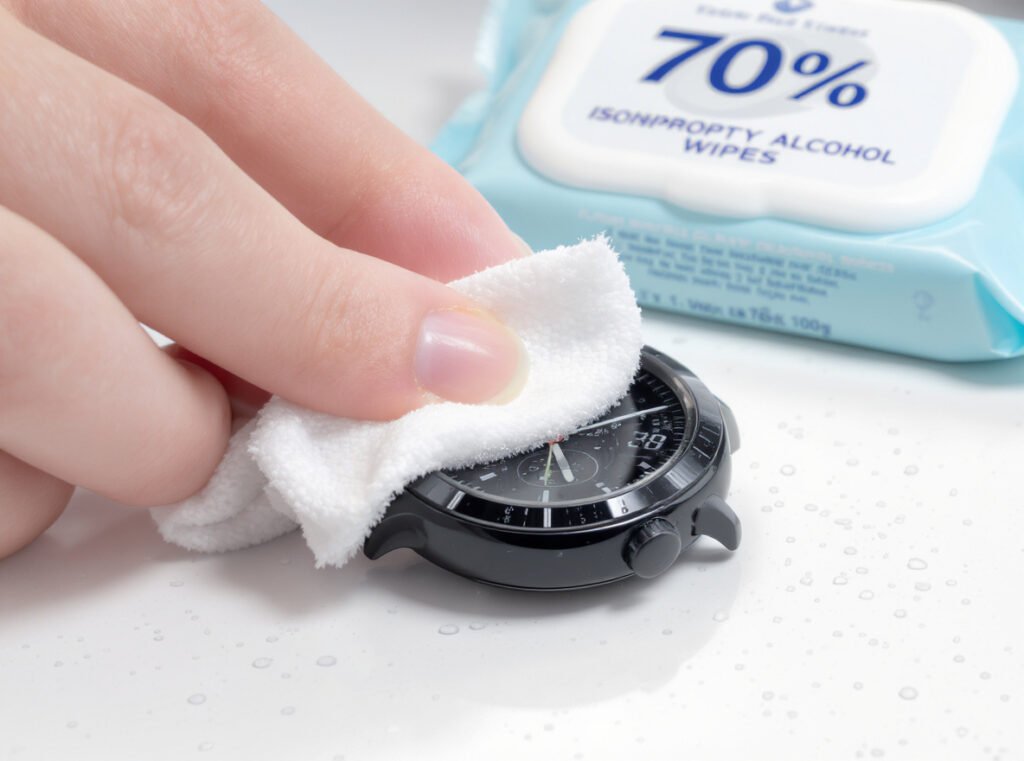
You can safely use 70% isopropyl alcohol wipes, 75% ethyl alcohol wipes, or Clorox Disinfecting Wipes on your smartwatch’s hard exterior surfaces. Apple, Samsung, and other manufacturers officially endorse these products. Never use disinfectants on fabric or leather bands, avoid getting moisture in openings, and always check your specific manufacturer’s guidelines first.
Approved Disinfection Products
Major manufacturers explicitly approve specific disinfectant types. Apple officially endorses 70% isopropyl alcohol wipes, 75% ethyl alcohol wipes, and Clorox Disinfecting Wipes for cleaning hard, nonporous surfaces of their devices.
Samsung and other leading brands provide similar guidance. Always verify your specific manufacturer’s recommendations before using any disinfectant—guidelines vary by model and generation.
Use only pre-moistened wipes or lightly dampened cloths. Never spray liquids directly onto the device, as this increases moisture intrusion risks into speakers, microphones, buttons, and ports.
Safe Disinfection Process
Follow this procedure for effective sanitization without damage:
- Power off your smartwatch completely and disconnect from any charger
- Remove the band if it’s not compatible with disinfectants
- Take a pre-moistened 70% isopropyl alcohol wipe
- Gently wipe the watch body, screen, and back sensor area
- Use a cotton swab dampened with alcohol for detailed areas and crevices
- Avoid getting excess moisture in openings like speakers or buttons
- Let the device air dry for 2-3 minutes
- Wipe with a dry microfiber cloth if any streaks remain
This process kills most bacteria and viruses without harming your device. The alcohol evaporates quickly, minimizing moisture exposure time.
Important Safety Cautions
Never use disinfectants on fabric or leather bands. Alcohol damages natural leather oils and can fade or weaken fabric materials. Clean these bands using their specific care methods instead.
Repeated alcohol use can potentially damage rubber seals over time, compromising water resistance. While manufacturers approve this method, understand that it may gradually degrade protective barriers with very frequent use.
Higher concentrations of alcohol (above 75%) are too aggressive for regular smartwatch maintenance. Stick to the 70% concentration specifically approved by manufacturers.
Bleach, hydrogen peroxide, and harsh chemical disinfectants are never safe for smartwatches. They cause irreversible damage to plastics, coatings, and seals.
Disinfection Frequency Guidelines
During flu season, pandemic situations, or if you’re immunocompromised, daily disinfection makes sense for added hygiene protection.
Under normal circumstances, weekly disinfection combined with daily cleaning provides adequate sanitation without excessive wear on materials.
Over-disinfecting accelerates material degradation unnecessarily. Find a balance based on your environment, health concerns, and usage patterns. Healthcare workers or those in high-exposure environments need more frequent disinfection than office workers.
What Are Common Smartwatch Cleaning Mistakes?
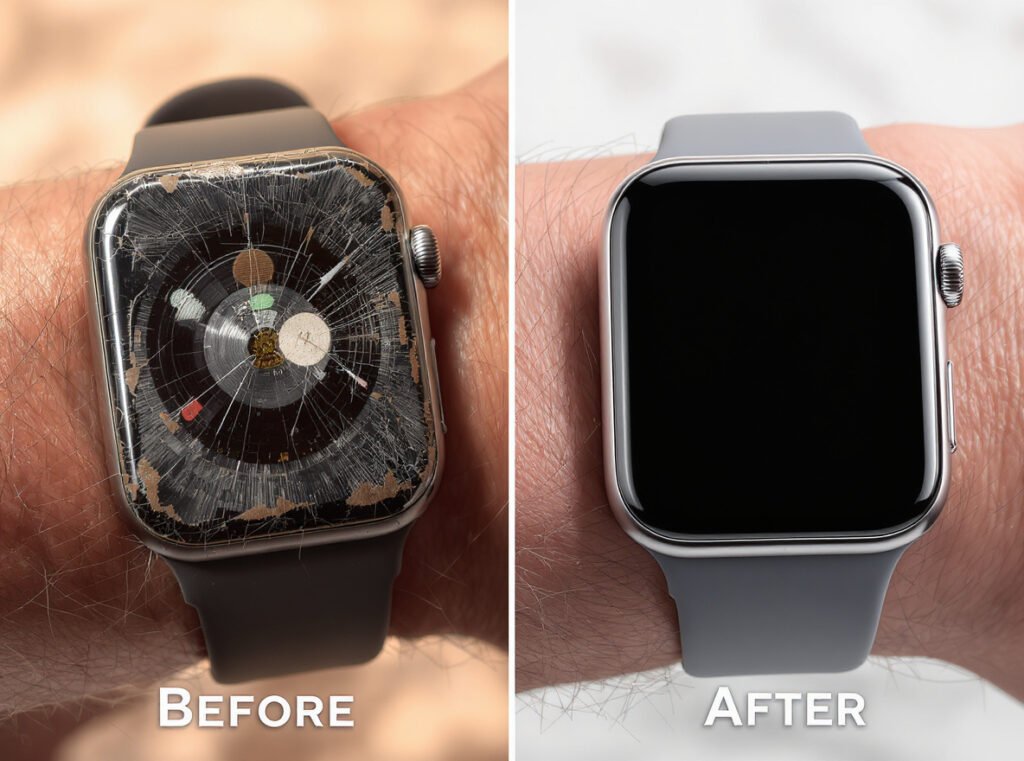
Even well-intentioned users damage their devices through improper cleaning techniques. Recognizing these errors saves money, prevents warranty voidance, and protects your investment.
Common mistakes include using soap directly on any smartwatch surface, cleaning while the device is charging or powered on, using harsh chemicals or abrasive materials, applying cleaning products directly instead of to cloths, not drying thoroughly before reassembly, treating all bands the same, using paper towels that scratch screens, and neglecting to clean back sensors regularly.
Critical Errors That Damage Devices
Using soap directly on smartwatch surfaces tops the list of damaging mistakes. Soap degrades water-resistant seals and leaves residue that causes skin irritation. Manufacturers explicitly prohibit this practice, yet many users assume soap is safe because it’s gentle on skin.
Cleaning while charging or powered on creates multiple risks. Moisture triggers unintended touchscreen responses, potentially changing settings, deleting data, or initiating factory resets. Electrical short-circuit risks increase when active components contact moisture.
Applying cleaning products directly to the device rather than to cleaning cloths results in excess liquid that seeps into ports, speakers, and button gaps. Always dampen the cloth, never the device.
Using paper towels instead of lint-free cloths seems harmless but causes cumulative micro-scratching over time. Wood fibers in paper products are harder than protective screen coatings.
Material-Specific Errors
Treating all bands identically damages expensive leather, degrades fabric integrity, or causes metal tarnishing. Each material requires specific cleaning methods—ignoring these differences leads to premature replacement needs.
Using water on leather bands without proper technique causes water staining, stiffness, and cracking. Leather needs specialized cleaners, not soap and water.
Applying leather conditioner without testing a hidden area first risks visible discoloration on the entire band. Always spot-test cleaning products before full application.
Using fabric softener on nylon bands damages synthetic fibers and reduces durability. Fabric softeners contain chemicals incompatible with technical textiles.
Neglected Maintenance Areas
Many users forget to clean back sensors where the device contacts skin. This area accumulates the highest concentration of oils, lotions, sweat, and dead skin cells—creating a barrier that affects heart rate accuracy, blood oxygen readings, and sleep tracking quality.
Failing to remove all soap residue during band cleaning leaves sticky films that attract more dirt and create breeding grounds for bacteria. Thorough rinsing is essential.
Not drying thoroughly before reassembly traps moisture between the band and watch body, accelerating corrosion on metal components and creating bacterial growth conditions.
Ignoring manufacturer guidelines voids warranties and causes preventable damage. Each brand provides specific cleaning instructions for their devices—follow them religiously to maintain warranty coverage.
For Businesses: Preventing Customer Mistakes
When distributing smartwatches wholesale, include clear care instructions in your packaging. Create simple infographics or quick-start guides that outline proper cleaning methods for each band material type.
Provide material-specific cleaning recommendations based on your inventory. If you sell primarily silicone band models to fitness retailers, emphasize post-workout cleaning protocols.
Educate your retail partners so they can guide end customers correctly. Proper education reduces returns, warranty claims, and negative reviews—protecting your business reputation and profitability.
Summary
Proper smartwatch cleaning protects health, extends the typical 2-5 year device lifespan, and maintains functionality. Use microfiber cloths daily, 70% isopropyl alcohol wipes weekly, and material-specific methods for bands. Never use soap directly on devices, avoid harsh chemicals and abrasive materials, and always check manufacturer guidelines. Regular maintenance prevents the bacterial buildup that contaminates 95% of smartwatch bands.
For wholesale buyers, distributors, and retailers, these maintenance practices directly impact customer satisfaction and reduce return rates. Well-maintained inventory retains value and generates positive reviews that drive repeat business.
Ready to source high-quality smartwatches designed for durability and easy maintenance? Contact Osmarto today for competitive wholesale pricing on smartwatches with replaceable, easy-to-clean bands. As a leading manufacturer, we supply wholesalers, distributors, and brand manufacturers worldwide with reliable devices built for long-term performance. Our team provides comprehensive product support, including cleaning guidelines, customer education materials, and technical specifications. Send us your inquiry to discuss bulk orders, customization options, private labeling, and pricing structures that maximize your profit margins while delivering exceptional value to your customers.