Skip to content
Are you torn between buying Shokz bone conduction headphones or sticking with traditional earbuds? This technology debate has confused many consumers and business buyers alike. Both options deliver audio, but they work completely differently and serve distinct purposes.
Shokz bone conduction headphones transmit sound through skull vibrations while keeping ears open, offering superior situational awareness and all-day comfort. Traditional earbuds provide significantly better sound quality and noise isolation but can block crucial environmental sounds. Your choice depends on priorities: safety and awareness versus audio fidelity and immersion.
Let’s dive deeper into this comparison to help you make the right decision for your business needs.
What Technology Makes Shokz Bone Conduction Different?
Understanding the core technology difference helps explain why these headphones perform so differently from traditional earbuds in professional environments.
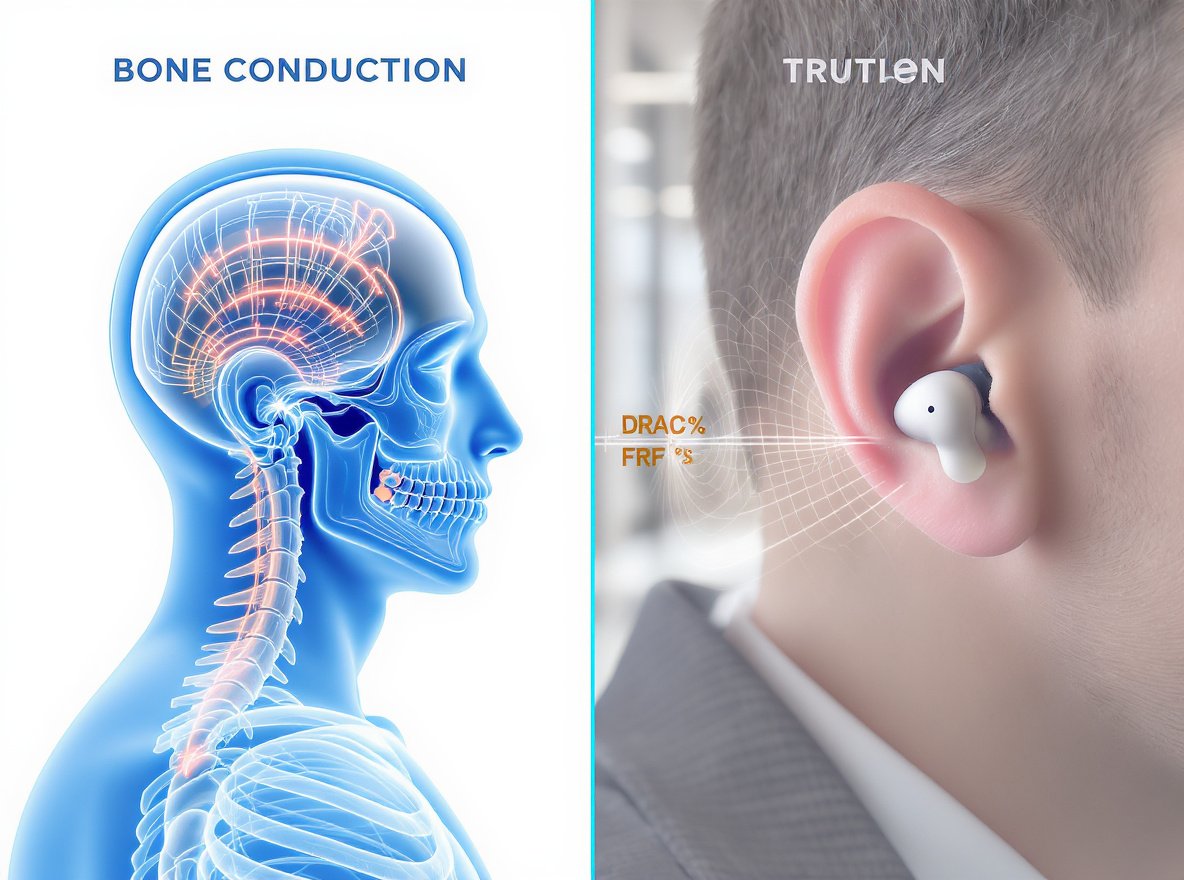
Shokz bone conduction headphones use specialized transducers positioned on cheekbones that convert sound into mechanical vibrations, which travel through temporal bone directly to the cochlea, bypassing eardrums entirely. This leaves ear canals completely open to environmental sounds while delivering clear audio.

Traditional earbuds operate through air conduction, where sound waves travel through air into the ear canal, causing eardrums to vibrate. This vibration passes through middle ear bones before reaching the cochlea.
The bone conduction process involves several precise steps:
- Transducers convert electrical audio signals into mechanical vibrations
- Vibrations travel through cheekbones and temporal skull bones
- Sound waves reach the cochlea directly without eardrum involvement
- Your brain processes audio as if it originated inside your head
The key distinction is that bone conduction headphones leave your ears completely open to ambient sound, while traditional earbuds create a seal that blocks external noise.
This fundamental difference affects everything from workplace safety to professional communication. While traditional earbuds isolate you from surroundings, Shokz open-ear technology keeps you connected to your environment.
Which Offers Better Sound Quality for Professional Use?
Sound quality remains the most critical factor for many business buyers, especially those purchasing headphones for professional audio applications or customer-facing roles.
Traditional earbuds significantly outperform bone conduction headphones in sound quality, delivering full-spectrum audio from 20Hz to 20kHz with excellent bass response and audiophile-grade clarity. Bone conduction headphones face inherent limitations, particularly in bass frequencies below 60Hz.

The Shokz OpenRun Pro 2, despite featuring dual-driver technology, still cannot match the dynamic range and bass response of premium earbuds, producing virtually no sub-bass below 60Hz.
Here’s how they compare across different professional audio requirements:
| Audio Aspect | Traditional Earbuds | Bone Conduction |
|---|---|---|
| Frequency Range | 20Hz – 20kHz (full spectrum) | Limited below 60Hz |
| Bass Response | Excellent, deep impact | Virtually no sub-bass |
| Treble Clarity | Crystal clear highs | Good but less detailed |
| Maximum Volume | Can reach very high levels | Moderate maximum volume |
| Audio Privacy | Complete isolation | Sound leakage possible |
Professional Call Quality Comparison
Traditional earbuds excel in professional calling scenarios with advanced multi-microphone arrays and sophisticated noise cancellation. Premium models like the Sony WF-1000XM5 feature six-microphone systems with dual feedback mics for superior voice clarity in noisy environments.
Bone conduction headphones provide decent call quality but with limitations. The Shokz OpenRun Pro 2 includes dual wind-resistant microphones with AI noise reduction that filters 96.5% of background noise. However, voice quality can sound “muddled and distorted” compared to premium earbuds.
For wholesale buyers considering bulk purchases for different professional applications, traditional earbuds work better for music production, customer service centers, and executive communications requiring premium audio quality.
How Do Safety Features Compare Between Both Options?
Safety considerations have become increasingly important for businesses providing headphones to employees, especially in industrial, construction, or outdoor work environments where situational awareness can prevent accidents.
Bone conduction headphones provide complete situational awareness, making them ideal for safety-critical environments where users need to hear approaching vehicles, emergency sirens, and workplace communications while listening to audio. This feature makes them particularly valuable for construction workers, security personnel, and outdoor athletes.
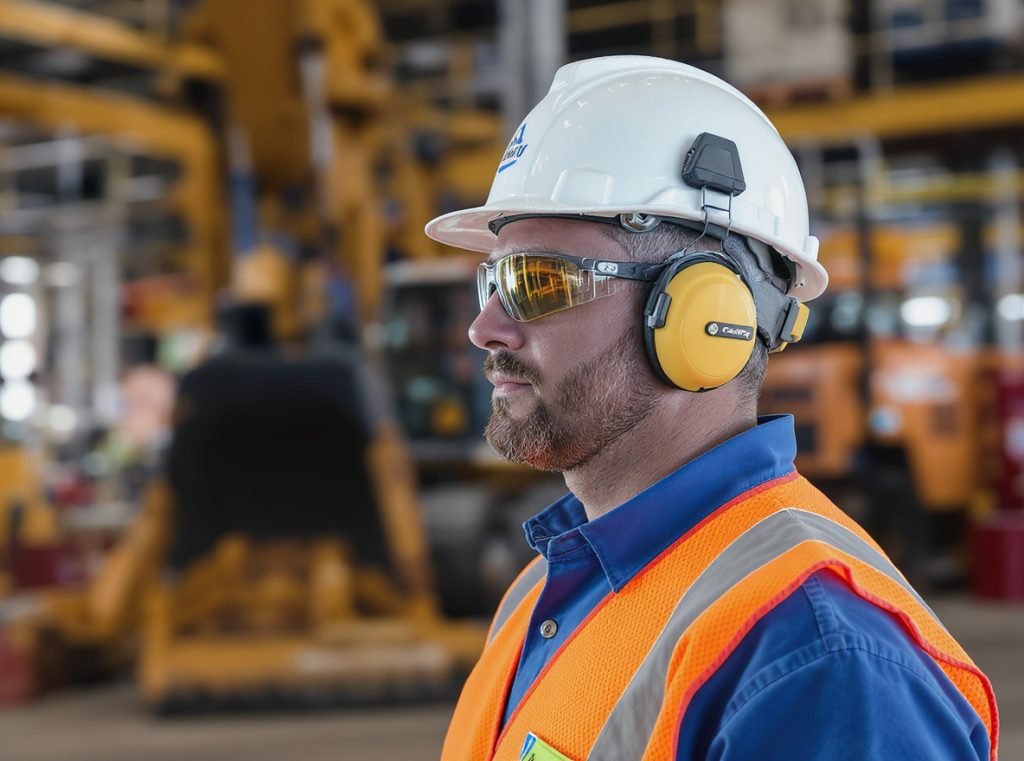
Studies show that cyclists using sealed earbuds had 34% slower hazard reaction times compared to those using bone conduction alternatives. This research demonstrates the measurable safety advantage of maintaining environmental awareness.
Hearing Health Protection
Bone conduction technology is generally safer for long-term hearing health because it bypasses the eardrums, reducing the risk of damage from direct sound pressure. The open-ear design also encourages users to keep volume at safer levels since external noise doesn’t need to be overcome.
Traditional earbuds can potentially cause hearing damage through prolonged exposure to high volumes, especially when users increase volume to overcome ambient noise.
Safety benefits comparison:
- Workplace accident prevention: Bone conduction allows workers to hear machinery, alarms, and colleague warnings
- Emergency response: Users remain aware of sirens, announcements, and evacuation signals
- Traffic safety: Outdoor workers and commuters hear approaching vehicles
- Long-term hearing preservation: Reduced risk of volume-induced hearing damage
For businesses prioritizing employee safety and regulatory compliance, bone conduction technology offers clear advantages in manufacturing, construction, security, and field work environments.
Which Provides Better Comfort for Extended Use?
Comfort during long wearing periods directly affects productivity and user satisfaction, making it a crucial consideration for wholesale buyers equipping employees for full work shifts.
Bone conduction headphones excel in extended use comfort due to their lightweight design (typically 26-32 grams) and absence of ear canal pressure. The Shokz OpenRun Pro weighs just 29 grams and can be worn comfortably for 8-10 hours without ear fatigue.
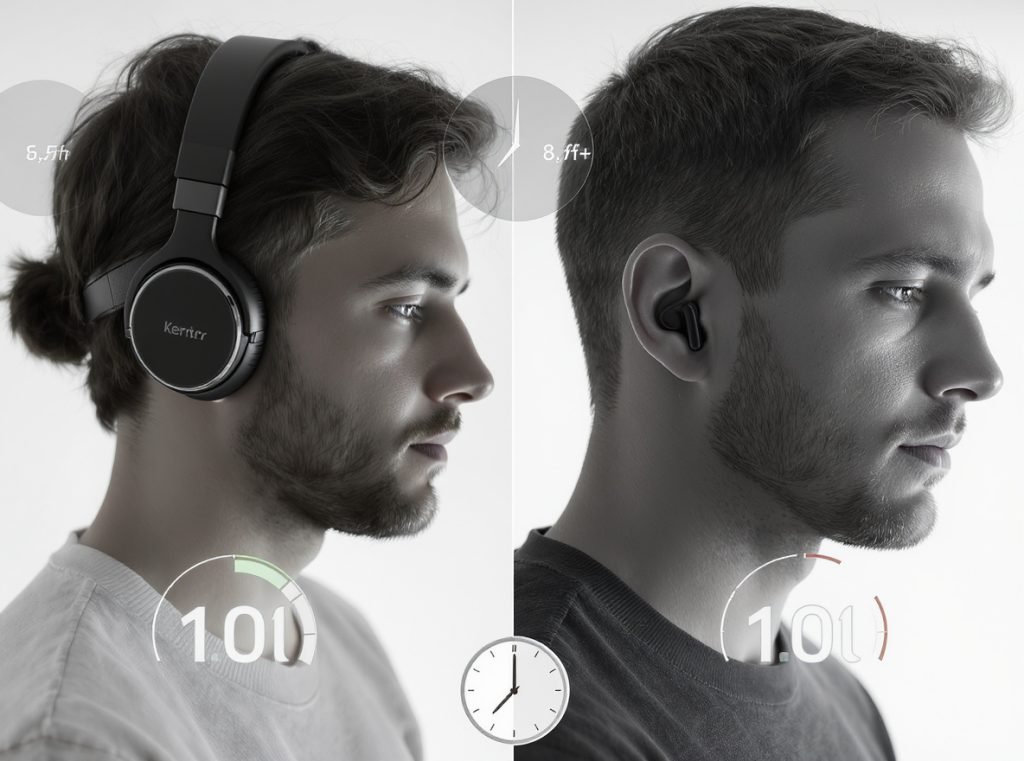
Traditional earbuds may cause ear fatigue during extended use, particularly in-ear models that create pressure within the ear canal. However, premium models with ergonomic design and multiple ear tip sizes can provide excellent comfort for many users.
Hygiene Considerations for Shared Equipment
Bone conduction headphones offer superior hygiene since they don’t contact the ear canal, eliminating risks of wax buildup, bacterial infections, or ear irritation. This makes them particularly suitable for healthcare workers and users with sensitive ear canals.
Traditional earbuds require regular cleaning and can contribute to ear infections if not properly maintained, especially with shared use in professional environments.
Comfort factors for different work scenarios:
- 8+ hour shifts: Bone conduction prevents ear pressure and fatigue
- Physical labor: Secure fit without inserting into ears
- Shared equipment: Better hygiene for multiple users
- Sensitive ears: No ear canal insertion required
- All-weather use: Comfortable even with safety equipment
This makes bone conduction particularly appealing for wholesale customers equipping multiple employees in healthcare, manufacturing, or field service roles.
How Do Battery Life and Durability Stack Up?
Battery performance and build quality directly impact total cost of ownership, especially important for bulk purchasing decisions where replacement costs and maintenance matter significantly.
Bone conduction headphones typically offer 8-12 hours of continuous use on a single charge. The Shokz OpenRun Pro 2 provides up to 12 hours of battery life, while the standard OpenRun offers 8 hours.

Traditional earbuds vary widely in battery performance, ranging from 5-12 hours per charge, with total battery life reaching 20-80 hours when including charging cases. Premium models like the Master & Dynamic MW08 offer 12 hours on the earbuds alone with 42 hours total.
Durability and Weather Protection
Bone conduction headphones generally offer superior durability with IP ratings from IP55 to IP68. The Shokz OpenSwim Pro features IP68 rating for underwater use up to 2 meters. Most models are designed for active use with sweat and weather resistance.
Traditional earbuds range from IPX4 to IP68 protection, with most premium models offering IPX4-IP55 ratings suitable for sweat and light rain protection. Swimming-specific earbuds are available but less common than bone conduction alternatives.
| Durability Feature | Bone Conduction | Traditional Earbuds |
|---|---|---|
| Typical IP Rating | IP55 – IP68 | IPX4 – IP55 |
| Water Resistance | Often waterproof | Usually splash-resistant |
| Active Use Design | Built for sports/outdoor | Varies by model |
| Replacement Risk | Connected design | Easy to lose individual pieces |
| Environmental Protection | Excellent for harsh conditions | Good for office/indoor use |
For businesses operating in challenging environments or requiring equipment durability, bone conduction often proves more economical despite higher initial costs.
What Are the Price Differences and Value Propositions?
Understanding cost implications helps wholesale buyers make informed bulk purchasing decisions that balance initial investment with long-term value and functionality.
Bone conduction headphones range from $80-$200 for quality models. The Shokz lineup offers entry-level options like the OpenMove ($80) up to premium models like the OpenRun Pro 2 ($180).

Traditional earbuds span a much wider price range from $20-$400+, offering options from basic wireless earbuds to premium audiophile models. Professional-grade earbuds for business use typically cost $150-$300.
Value Analysis by Use Case
Bone conduction offers better value for safety-critical applications where situational awareness is paramount. The technology provides unique benefits that cannot be replicated by traditional earbuds.
Traditional earbuds provide better value for audio quality and versatility, especially for users who prioritize sound fidelity, noise cancellation, and professional calling features.
Total cost of ownership considerations:
- Initial purchase cost: Bone conduction has higher entry price but narrower range
- Replacement frequency: Bone conduction’s connected design reduces loss
- Maintenance costs: Lower cleaning and hygiene requirements
- Safety compliance: Potential insurance and liability benefits
- Productivity impact: Comfort and safety features affect work efficiency
- Multi-user capability: Better hygiene for shared equipment scenarios
The specialized nature of bone conduction technology commands premium pricing, but durability and unique safety benefits often justify the investment for appropriate business applications.
Which Technology Better Suits Different Business Applications?
Different industries and professional use cases favor different headphone technologies based on specific operational requirements, safety regulations, and performance priorities.
Construction, Manufacturing, and Field Work: Bone conduction headphones are strongly recommended due to safety requirements, durability (IP67-IP68 ratings), and the need to hear machinery, alarms, and coworker communications.
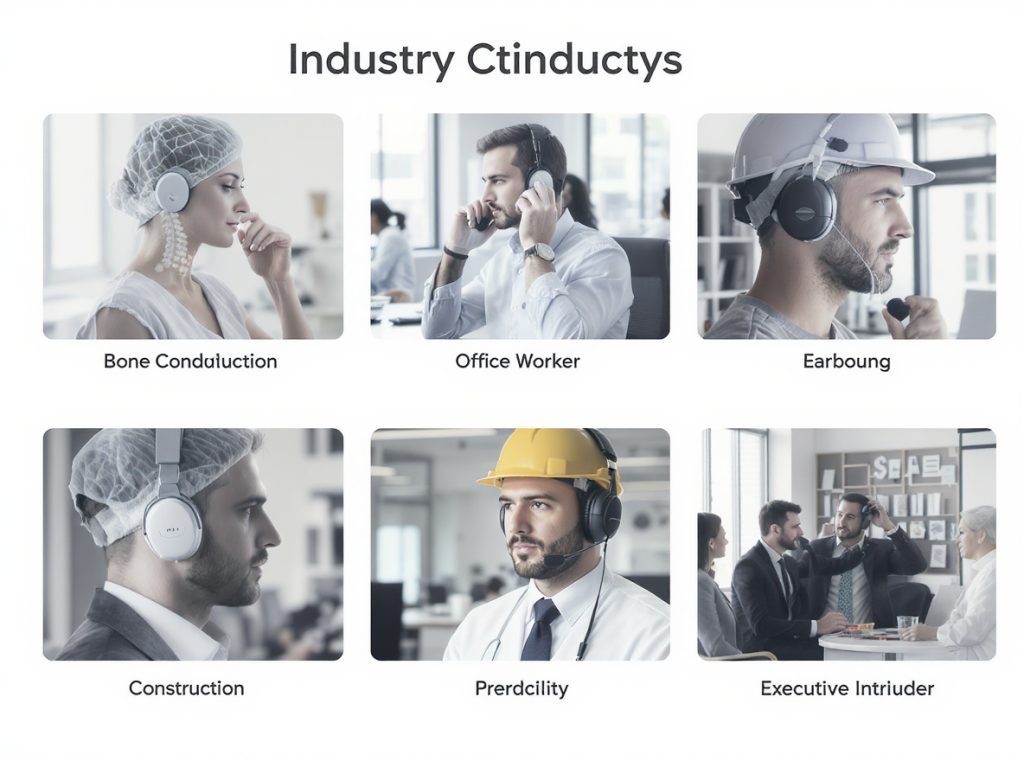
Office and Remote Work: Traditional earbuds are preferred for their superior call quality, noise cancellation for focus, and professional appearance during video conferences.
Industry-Specific Recommendations
Healthcare and Medical Settings
Bone conduction headphones offer advantages in hygiene, situational awareness for patient interactions, and comfort during long shifts. Medical professionals need to hear patient calls, alarms, and emergency communications while accessing audio information.
Security and Law Enforcement
Bone conduction technology is essential for maintaining environmental awareness while receiving communications. Security personnel must stay alert to their surroundings while receiving radio communications or audio instructions.
Executive and Client-Facing Roles
Premium earbuds are recommended for their professional appearance, exceptional call quality, and ability to create distraction-free environments for important conversations.
Application-specific decision matrix:
| Industry | Primary Need | Recommended Technology | Key Benefit |
|---|---|---|---|
| Construction | Safety awareness | Bone conduction | Hear machinery/warnings |
| Customer Service | Call clarity | Traditional earbuds | Superior audio quality |
| Healthcare | Hygiene + awareness | Bone conduction | Patient interaction capability |
| Executive/Sales | Professional image | Premium earbuds | Noise cancellation + clarity |
| Manufacturing | Safety compliance | Bone conduction | OSHA-friendly design |
| Remote Work | Focus + calls | Traditional earbuds | Noise isolation |
Businesses should evaluate their specific regulatory requirements, safety standards, and operational needs when choosing between technologies for bulk deployment.
Summary
The choice between Shokz bone conduction headphones and traditional earbuds depends entirely on your business priorities and operational requirements. Bone conduction excels in safety-critical environments, providing unmatched situational awareness, superior hygiene for shared use, and all-day comfort without ear fatigue. Traditional earbuds deliver significantly better sound quality, professional-grade call clarity, and versatile performance across audio applications. Consider your industry requirements, safety regulations, and user needs to make the optimal choice.
Ready to find the perfect headphone solution for your business? At Osmarto, we understand that different industries require different audio technologies. Whether your customers need bone conduction headphones for safety-critical applications or premium traditional earbuds for professional audio quality, our experienced team provides comprehensive wholesale solutions. As a trusted headphone manufacturer, we offer competitive pricing, quality assurance, and technical support to help distributors, retailers, and brand partners worldwide. Contact us today to discuss your bulk headphone requirements and discover how we can support your business growth with the right audio technology.