Choosing a smartwatch with accurate heart monitoring feels overwhelming when your health depends on reliable data. With dozens of brands claiming superior accuracy, finding trustworthy heart rate tracking becomes a critical decision for fitness enthusiasts and health-conscious individuals worldwide.
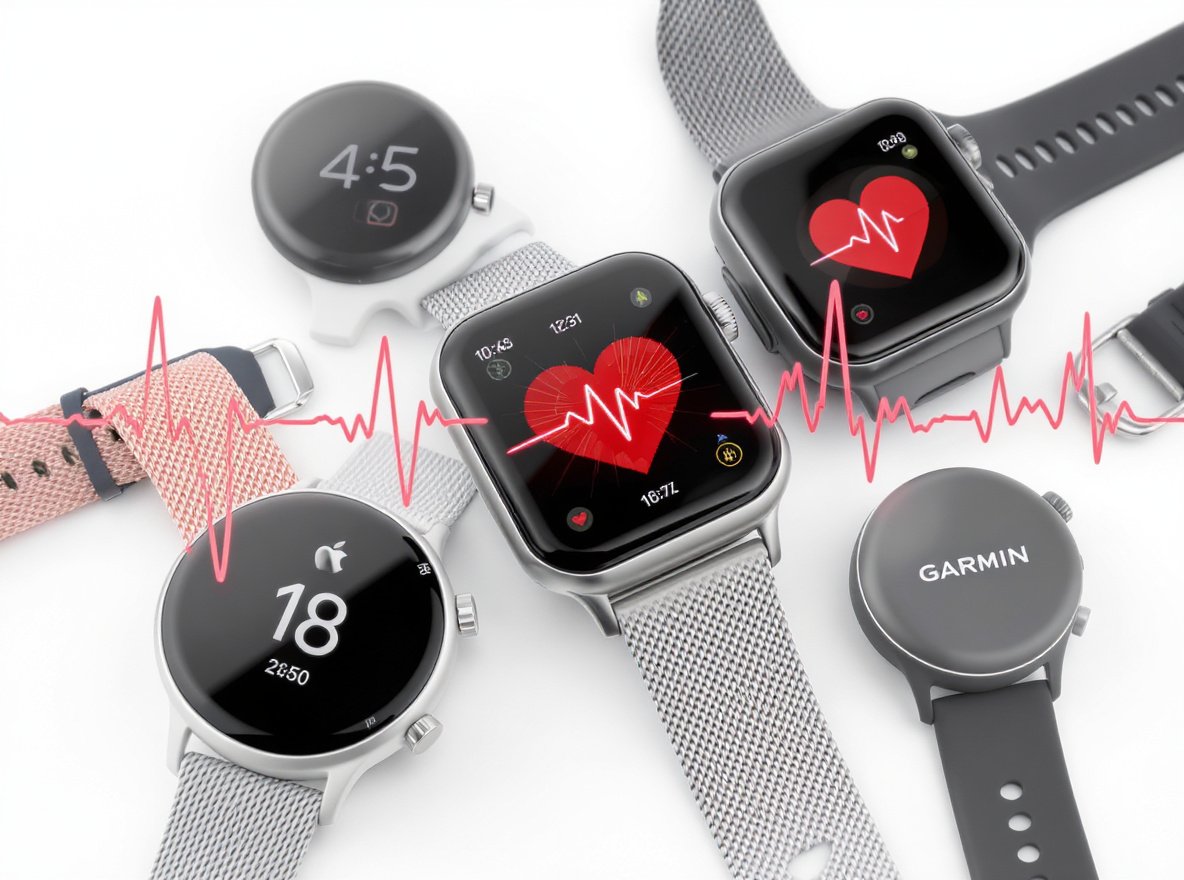
The most reliable heart monitoring smartwatches achieve 89-98% accuracy within 5 beats per minute, with Apple Watch Series 10/Ultra 2 leading at 98% accuracy during rest, Garmin Fenix 8 with Elevate Gen 5 providing exceptional sports accuracy, and Google Pixel Watch 3 matching chest strap responsiveness for heart rate changes.
Let’s explore which smartwatch brands and models deliver the most dependable heart monitoring for your specific needs.
What Makes a Smartwatch Heart Monitor Reliable?
Understanding reliability factors helps you make informed purchasing decisions for your business or personal use.
Heart monitor reliability depends on advanced optical sensors, sophisticated algorithms that filter motion artifacts, proper fit maintaining continuous skin contact, and multi-sensor integration combining optical and electrical monitoring technologies.

Key Reliability Components
Advanced Sensor Technology
The most reliable devices use photoplethysmography (PPG) with multiple light wavelengths. Apple and Garmin employ sophisticated algorithms that continuously improve accuracy, while devices like the Pixel Watch 3 utilize multi-path optical sensors for enhanced precision.
Machine Learning Algorithms
Leading brands use algorithms that adapt to individual users and filter motion artifacts. These systems distinguish heart rate signals from physiological noise, continuously learning from user patterns to improve accuracy over time.
Proper Positioning Requirements
- Watch must be worn snugly but not too tight
- Position above wrist bone for optimal contact
- Silicon bands provide better readings than other materials
- Consistent skin contact prevents light leakage interference
| Reliability Factor | Accuracy Impact | Leading Brands |
|---|---|---|
| Advanced PPG Sensors | 95-98% accuracy at rest | Apple, Garmin, Google |
| Motion Filtering | Reduces exercise errors by 60% | Apple, Garmin, Polar |
| Multi-Sensor Integration | Comprehensive cardiac monitoring | Premium devices only |
Which Brands Offer the Most Accurate Heart Monitoring?
Clinical studies reveal significant accuracy differences between smartwatch manufacturers.
Apple Watch Series 10/Ultra 2 leads with 89-98% accuracy within 5 beats per minute, achieving 98% accuracy during sedentary activities and 87% during exercise when compared to gold-standard ECG devices.
Top Performing Brands
Apple Watch Excellence
Clinical studies demonstrate Apple Watch heart rate monitors achieve accuracy to within 5 beats per minute 89-98% of the time. The combination of optical and electrical sensors enables ECG functionality and atrial fibrillation detection with 99.7% correlation to medical-grade devices.
Garmin Sports Superiority
Garmin Fenix 8 with Elevate Gen 5 technology proves most consistently aligned with chest strap monitors during over 100 comparative tests. This makes Garmin devices preferred by serious athletes requiring exceptional accuracy across varied exercise intensities.
Google Pixel Innovation
Google Pixel Watch 3 demonstrates impressive accuracy with multi-path optical sensors, performing similarly to chest straps in responding to heart rate changes and providing comprehensive heart tracking including variability analysis.
WHOOP Specialized Accuracy
Research funded by the Australian Institute of Sport found WHOOP achieves 99.7% accuracy in measuring heart rate and 99% accuracy for heart rate variability when compared to gold-standard ECG metrics.
- Samsung Galaxy Watch 8: 3.8% accuracy during indoor cycling
- Polar devices: Gold standard with chest strap technology
- Oura Ring: Near-perfect correlation (99.6%) for resting measurements
- Fitbit: Reliable for basic continuous monitoring
How Accurate Are Smartwatch Heart Monitors During Exercise?
Exercise intensity significantly impacts heart rate monitoring accuracy across all devices.
Low to moderate exercise shows highest accuracy with premium smartwatches achieving within 3-5% of chest strap monitors, while high-intensity activities reduce accuracy to approximately 87% even in top-tier Apple Watch devices.

Exercise Performance Analysis
Steady-State Activities
During walking, light jogging, or cycling, most premium smartwatches achieve accuracy within 3-5% of chest strap monitors. Apple Watch and Garmin devices consistently perform best in this category with minimal motion artifacts.
High-Intensity Challenges
Vigorous exercise presents greater difficulties due to increased motion artifacts and blood flow variations. Apple Watch maintains approximately 87% accuracy within 5 beats per minute during intense workouts, while other brands show more variability.
Interval Training Complications
Rapid heart rate changes during interval workouts cause lag in optical sensor readings. Chest strap monitors remain significantly more accurate for interval training, with smartwatches showing delays of 10-30 seconds in responding to rapid changes.
| Activity Type | Accuracy Level | Recommended Monitoring |
|---|---|---|
| Walking/Light Jogging | 95-98% | All premium brands |
| Moderate Cycling | 90-95% | Apple, Garmin preferred |
| High-Intensity Training | 80-87% | Consider chest strap backup |
| Interval Workouts | 75-85% | Chest strap recommended |
Activity-Specific Performance
Running provides most accurate results across devices due to consistent arm movement, while weightlifting shows poorest accuracy due to wrist flexion and grip pressure changes affecting sensor contact.
Do Smartwatches Work Accurately for All Skin Tones?
Skin tone compatibility affects heart rate monitoring reliability, though recent improvements address historical limitations.
Research shows mixed results with four studies reporting significant accuracy reductions for darker skin tones while four studies showed no effect, indicating device-specific differences in addressing skin tone challenges.

Skin Tone Considerations
Technical Challenges
Melanin in darker skin absorbs more light, potentially reducing signal quality needed for accurate heart rate detection. Traditional green LED sensors face particular challenges with darker skin tones affecting measurement reliability.
Manufacturer Adaptations
Garmin specifically compensates for dark skin by using more light, which may result in slightly higher battery consumption but improved accuracy. Apple Watch maintains good accuracy across skin tones according to some clinical studies.
Device-Specific Performance
Clinical evidence shows varying performance between manufacturers, with some devices maintaining consistent accuracy across all skin tones while others may show reduced reliability for individuals with darker skin.
Optimization Recommendations
- Research specific device performance for your skin tone
- Ensure proper fit and positioning for optimal contact
- Consider devices with infrared sensors over green LED sensors
- Test accuracy against manual pulse checks initially
What’s the Difference Between Optical and ECG Heart Monitoring?
Understanding these two technologies helps you choose appropriate features for comprehensive heart health monitoring.
Optical sensors use light-based detection for continuous 24/7 monitoring with 85-95% accuracy, while ECG monitors measure electrical heart activity with 98%+ accuracy for detecting irregular rhythms and cardiac conditions.

Technology Comparison
Optical Heart Rate Monitoring (PPG)
Uses light-based sensors detecting blood flow changes through skin. Provides continuous monitoring throughout the day without user intervention, making it ideal for fitness tracking, sleep monitoring, and general health awareness.
ECG Electrocardiogram Monitoring
Measures electrical heart activity requiring active user participation by placing finger on crown or sensor. Offers medical-grade precision for detecting cardiac irregularities, arrhythmias, and detailed rhythm analysis shareable with healthcare providers.
Combined Integration Benefits
Premium devices like Apple Watch Series 10 and Samsung Galaxy Watch integrate both technologies, providing continuous optical monitoring with on-demand ECG capability for comprehensive heart health assessment.
| Technology | Accuracy Rate | Primary Use | User Action |
|---|---|---|---|
| Optical (PPG) | 85-95% | Continuous fitness tracking | Passive/automatic |
| ECG | 98%+ | Medical rhythm analysis | Active finger placement |
| Combined | Variable | Complete heart monitoring | Minimal intervention |
Which Smartwatch Features Enhance Heart Monitoring Reliability?
Additional features significantly improve overall heart monitoring effectiveness and clinical utility.
Multi-sensor integration combining optical sensors, ECG, accelerometers, and temperature sensors provides superior accuracy by cross-referencing multiple data sources to filter out false readings and provide comprehensive cardiovascular insights.

Essential Advanced Features
24/7 Continuous Monitoring
Devices providing round-the-clock heart rate tracking establish personal baselines, improving accuracy of abnormal rhythm detection and fitness metrics. This enables better long-term trend analysis for health management.
Signal Quality Assessment
Advanced devices provide signal quality indicators, alerting users when readings may be compromised due to poor fit or excessive movement. This transparency helps users understand measurement reliability.
Stress and HRV Monitoring
Heart rate variability analysis provides insights into autonomic nervous system function and stress levels. Premium devices offer comprehensive stress monitoring valuable for managing work-related stress and optimizing recovery.
Healthcare Integration Capabilities
- ECG data export for healthcare provider sharing
- Irregular rhythm notifications and alerts
- Integration with health platforms and medical records
- Professional-grade data analysis and reporting
| Feature Category | Health Benefit | Business Value |
|---|---|---|
| Continuous Monitoring | Baseline establishment | Long-term health trends |
| ECG Integration | Medical-grade detection | Healthcare compliance |
| Stress Analysis | Performance optimization | Workplace wellness |
How Do You Choose the Right Heart Monitoring Smartwatch for Business?
Professional users and wholesale buyers require specific considerations when selecting heart monitoring devices.
Consider accuracy requirements matching intended use, with devices achieving 95%+ accuracy like Apple Watch or Garmin Fenix suitable for general health awareness, while medical monitoring or athletic training requires ECG capabilities or companion chest straps.

Business Selection Criteria
Accuracy Tier Requirements
For general health awareness and fitness tracking, devices achieving 95%+ accuracy suffice for most professional applications. Medical monitoring or serious athletic training demands devices with ECG capabilities or companion chest strap compatibility.
Battery Life Considerations
Garmin devices typically offer 5-14+ days of battery life, making them suitable for extended business travel or field work. Apple Watch requires daily charging but provides comprehensive smart features and ecosystem integration.
Platform Integration Needs
Apple Watch integrates seamlessly with iOS ecosystems, while Samsung Galaxy Watch works optimally with Android devices. Garmin devices offer platform-agnostic compatibility suitable for diverse business environments.
Professional Feature Requirements
- Stress monitoring and HRV tracking for work-related stress management
- Sleep quality analysis for performance optimization
- Discrete notifications maintaining professional appearance
- Activity reminders for desk work health maintenance
| Price Tier | Accuracy Level | Recommended Models | Business Use Case |
|---|---|---|---|
| Premium ($400+) | 95-98% | Apple Watch Ultra, Garmin Fenix 8 | Executive health programs |
| Mid-range ($200-400) | 90-95% | Apple Series 10, Galaxy Watch 8 | General employee wellness |
| Budget ($100-200) | 85-90% | Fitbit, basic Garmin | Large-scale deployment |
Wholesale Considerations
Target demographics determine feature requirements, with fitness enthusiasts demanding different capabilities than casual health trackers. Professional athletes require higher accuracy than general consumers seeking basic monitoring functionality.
Summary
Most reliable heart monitoring smartwatches combine advanced optical sensors, sophisticated algorithms, and proper fit requirements. Apple Watch leads overall accuracy at 89-98%, Garmin excels in sports applications, while Google Pixel Watch matches chest strap responsiveness for comprehensive health tracking.

Ready to source the most reliable heart monitoring smartwatches for your business? Contact Osmarto today to explore our comprehensive range of wholesale smartwatch solutions featuring advanced heart monitoring technologies. Our expert team helps you select devices matching your target market’s accuracy requirements and professional needs. Send us your inquiry to discover competitive pricing on premium heart monitoring smartwatches with proven clinical accuracy.