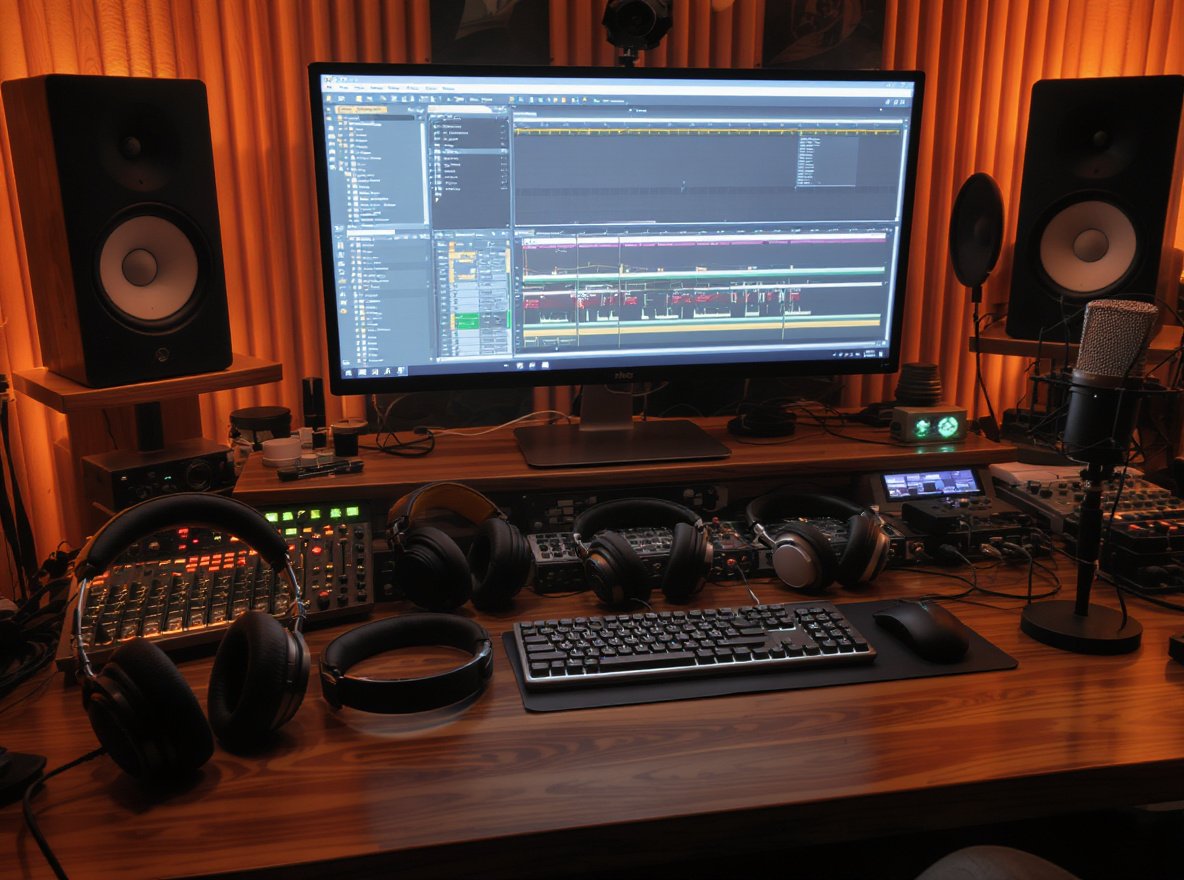
Choosing the wrong headphones for music production can ruin your mixes and waste countless hours of work. Professional producers need accurate sound reproduction to make critical decisions that will make or break their tracks.
The best headphones for music production and mixing are open-back or closed-back studio monitors with flat frequency response, excellent detail retrieval, and comfortable designs for extended sessions. Industry standards include Sennheiser HD 600/650 series, Audio-Technica ATH-M50x, Sony MDR-7506, and Beyerdynamic DT series for their proven accuracy and reliability in professional studios worldwide.
Whether you’re a seasoned producer or just starting your mixing journey, this guide will help you make the right choice.
What Makes Headphones Suitable for Music Production?
Understanding the difference between regular headphones and studio-grade models is crucial for any serious producer or audio professional.
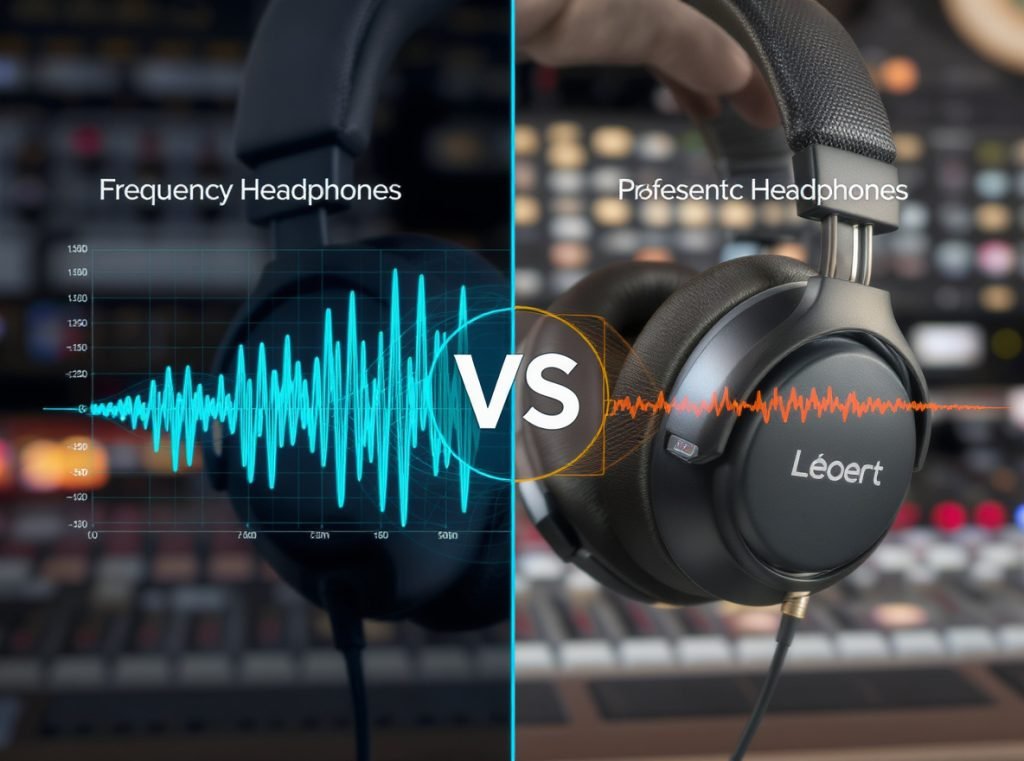
Studio headphones prioritize flat frequency response, exceptional detail retrieval, and neutral sound signature over enhanced bass or treble. They feature superior transient response, excellent stereo imaging, and professional build quality to reveal every subtle element in your mix without coloration.
Critical Production Characteristics
Professional music production headphones require several distinguishing features:
Flat Frequency Response: Unlike consumer headphones that boost bass and treble for excitement, studio headphones maintain neutrality across all frequencies. This ensures mixing decisions translate accurately across different playback systems from car stereos to club sound systems.
Detail Retrieval and Transient Response: Production headphones must reveal subtle elements like the attack of a snare drum, decay of reverb tails, and compression artifacts. Fast transient response provides accurate reproduction of percussive elements and stringed instruments.
Professional Build Quality: Studio headphones feature robust construction with replaceable components like ear pads, cables, and headbands. This serviceability ensures consistent performance throughout years of demanding professional use.
| Feature | Consumer Headphones | Studio Headphones |
|---|---|---|
| Frequency Response | V-shaped (boosted bass/treble) | Flat/Neutral across spectrum |
| Detail Resolution | Limited for entertainment | High for critical analysis |
| Build Quality | Moderate durability | Professional-grade components |
| Comfort for Sessions | 1-2 hours | 8+ hours with minimal fatigue |
| Replacement Parts | Limited availability | Readily available components |
Should You Choose Open-Back or Closed-Back Headphones for Mixing?
The choice between open-back and closed-back designs significantly impacts your mixing workflow and sound accuracy.
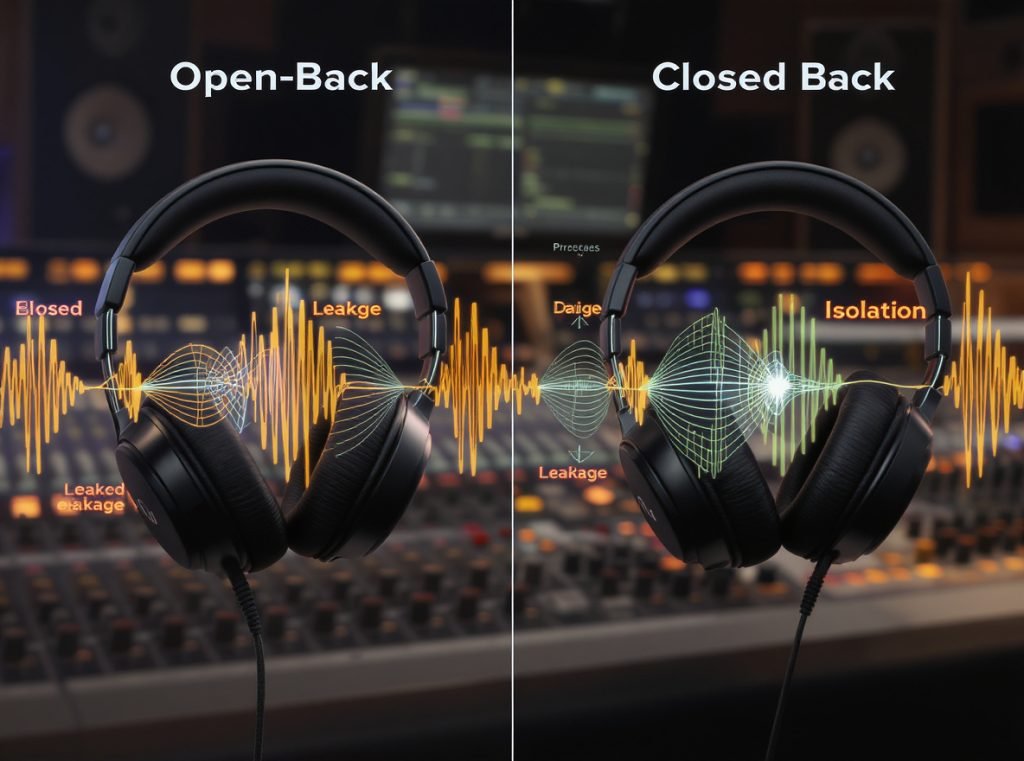
Open-back headphones are generally preferred for mixing due to their natural soundstage, reduced ear fatigue, and speaker-like listening experience. Closed-back headphones excel during recording sessions, shared studio spaces, and situations requiring sound isolation.
Open-Back Advantages for Mixing
Open-back designs provide superior mixing capabilities:
Natural Soundstage: The open design eliminates internal reflections and resonances, creating a more speaker-like listening experience. This helps engineers position instruments precisely within the stereo field.
Reduced Ear Fatigue: Better airflow prevents heat buildup during extended mixing sessions. Professional engineers often work 8-12 hour days, making comfort crucial for consistent decision-making.
Midrange Clarity: Open-back designs excel in midrange reproduction, where most vocal and instrumental content resides. This clarity helps identify frequency conflicts and balance issues.
Industry-Standard Open-Back Models
• Sennheiser HD 600/650 Series: Often called the “industry standard” for reference monitoring, offering decades-proven neutrality
• Beyerdynamic DT990 Pro: German engineering with exceptional comfort and balanced sound signature
• Audio-Technica ATH-R70x: Professional open-back alternative with detailed reproduction
• Audeze MM-500: Premium planar magnetic option for high-end mixing applications
Closed-Back Applications
Closed-back headphones serve specific production needs:
Recording Sessions: Prevents headphone bleed into sensitive microphones during overdubbing and tracking sessions.
Shared Spaces: Allows mixing in environments where open-back leakage would disturb others or where external noise requires isolation.
Bass Response: Sealed design often provides tighter, more controlled low-end reproduction, beneficial for bass-heavy genres.
Popular closed-back models include the Sony MDR-7506 (decades-old studio standard), Adam Audio H200 (exceptional neutrality), and AKG K371 (excellent value with accurate frequency response).
What Impedance Should You Choose for Production Headphones?
Impedance selection affects headphone performance, compatibility, and sound quality with different audio sources.
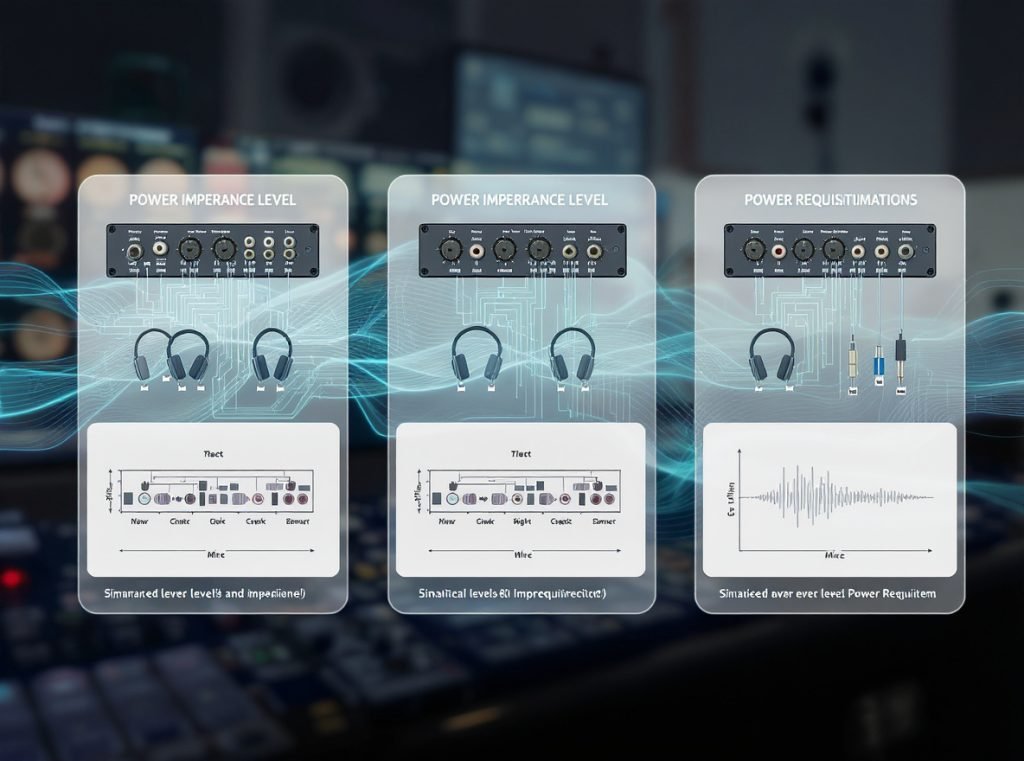
For most home studios, 80-250 ohm headphones provide optimal sound quality when paired with professional audio interfaces. Low impedance (32-63 ohms) works with mobile devices, while high impedance (300+ ohms) requires dedicated headphone amplifiers for best performance.
Understanding Impedance Categories
Low Impedance (Under 100 Ohms):
Perfect for mobile production and devices with limited power output. Popular models include Audio-Technica ATH-M50x (38 ohms) and Sony MDR-7506 (63 ohms). These work directly with smartphones, laptops, and basic audio interfaces.
Medium Impedance (100-250 Ohms):
The sweet spot for professional studios. Models like Beyerdynamic DT990 Pro (250 ohms) provide excellent sound quality with most audio interfaces while offering better detail resolution than low-impedance alternatives.
High Impedance (300+ Ohms):
Premium options requiring dedicated amplification. The Sennheiser HD 600 (300 ohms) exemplifies this category, offering superior dynamics and resolution when properly powered.
The Technical Advantage
Higher impedance often correlates with better sound quality because manufacturers can use thinner voice coils that provide superior transient response. However, this requires adequate amplification to achieve optimal dynamics and headroom.
| Impedance Range | Best Applications | Power Requirements | Typical Models |
|---|---|---|---|
| 32-63Ω | Mobile, basic interfaces | Low | ATH-M50x, MDR-7506 |
| 80-250Ω | Professional studios | Medium | DT990 Pro, HD 280 Pro |
| 300Ω+ | High-end monitoring | High | HD 600, HD 650 |
Which Headphone Brands Are Most Trusted by Professionals?
Decades of professional use have established certain manufacturers as industry leaders for reliability and sonic accuracy.
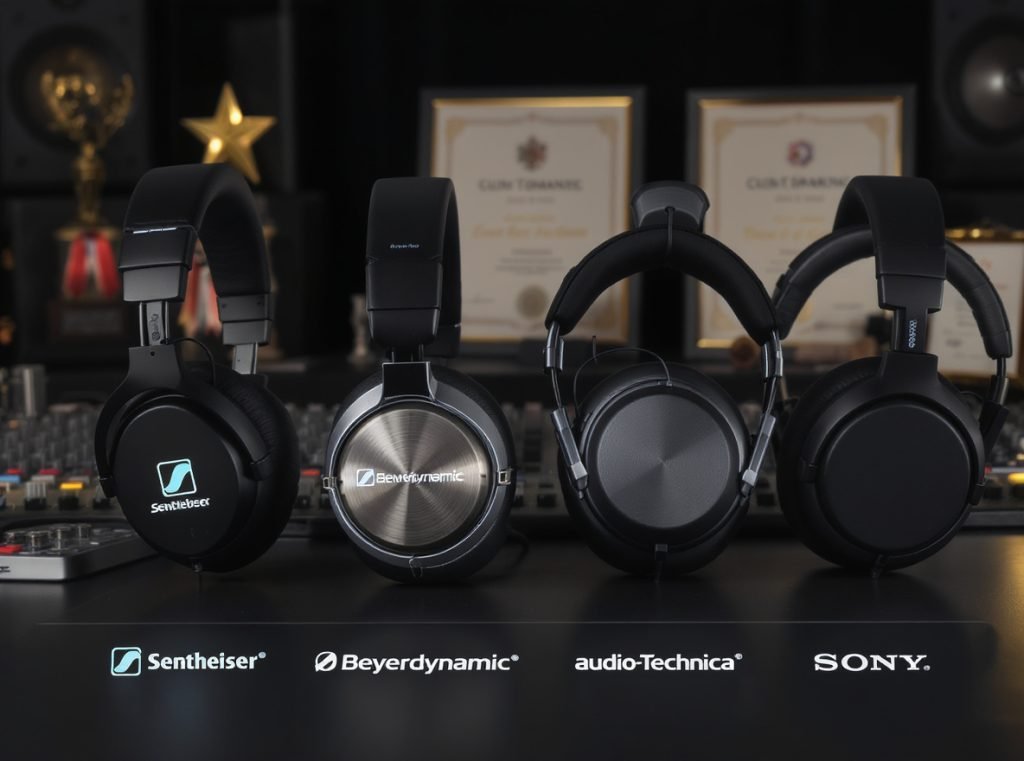
Sennheiser, Beyerdynamic, Sony, and Audio-Technica dominate professional studios worldwide. These German, Japanese, and American manufacturers prioritize accuracy over marketing gimmicks, with proven track records spanning multiple decades of professional audio applications.
Established Industry Leaders
Sennheiser (Germany): The HD 600 and HD 650 are often called industry standards for reference monitoring. Their newest HD 490 Pro continues this legacy with modern improvements while maintaining the neutral sound signature professionals trust.
Beyerdynamic (Germany): The legendary DT series (DT770, DT880, DT990) combines German engineering excellence with velour ear pads for exceptional comfort during extended sessions. Their reliability in professional environments is unmatched.
Sony (Japan): The MDR-7506 represents decades of proven reliability. Despite being an older design, many engineers continue using these as primary reference headphones due to their neutral sound and durability.
Audio-Technica (Japan): Has gained prominence with the ATH-M series, particularly the M50x offering professional performance at accessible prices. Their newer ATH-R70x provides excellent open-back alternatives for mixing applications.
Emerging Professional Brands
• Audeze: Planar magnetic specialists with MM-100 and MM-500 models designed specifically for professional use
• Adam Audio: German manufacturer bringing studio monitor expertise to headphones with the H200 model
• AKG: Austrian heritage brand with K371 and K240 Studio models favored by classical and jazz engineers
• Avantone: USA-made planar magnetic headphones offering excellent value for professional applications
For B2B customers seeking reliable headphone manufacturing partnerships, working with experienced suppliers like Osmarto ensures access to professional-grade components and competitive wholesale pricing for your brand’s audio products.
What’s the Difference Between Mixing and Mastering Headphones?
While many professionals use identical headphones for both processes, subtle differences in priorities exist between mixing and mastering applications.
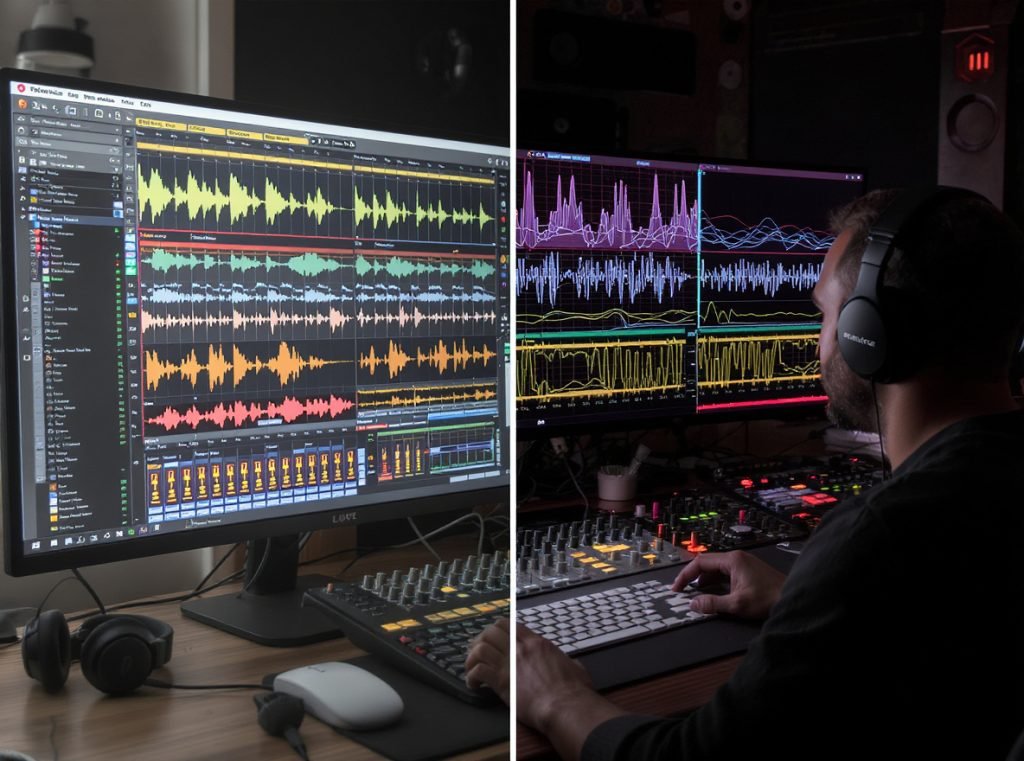
Mixing headphones emphasize detail resolution, instrument separation, and comfort for extended multitrack sessions. Mastering headphones prioritize tonal balance, subtle frequency response variations, and translation across different playback systems. Many industry professionals use the same high-quality headphones for both applications.
Mixing Requirements
Mixing headphones must excel in specific areas:
Multitrack Detail: Revealing every element in complex arrangements helps engineers balance levels, apply EQ, and position instruments in the stereo field effectively.
Extended Comfort: Mixing sessions often last 8-12 hours, requiring headphones that remain comfortable without causing fatigue that affects decision-making.
Neutral Reference: Flat frequency response prevents mix decisions based on headphone coloration rather than actual audio content.
Mastering Considerations
Mastering applications emphasize different characteristics:
- Tonal Balance: Overall frequency curve evaluation and how masters translate to various playback systems
- Subtle Resolution: Ability to hear minute changes across the frequency spectrum during mastering processing
- Translation Assessment: Understanding how the final master performs on car stereos, earbuds, and club systems
Professional Approach
Successful engineers like Andrew Scheps and Manny Marroquin have achieved commercial success using the same reference headphones for both mixing and mastering. Models like the Audeze LCD-5, MM-500, or Sennheiser HD 600 serve both applications effectively when engineers develop intimate familiarity with their characteristics.
The key is choosing headphones with sufficient resolution and neutrality for both tasks, then learning their sonic signature thoroughly through consistent use.
Can You Mix Professionally Using Only Headphones?
Professional headphone-only mixing is not only possible but increasingly common among successful engineers worldwide.
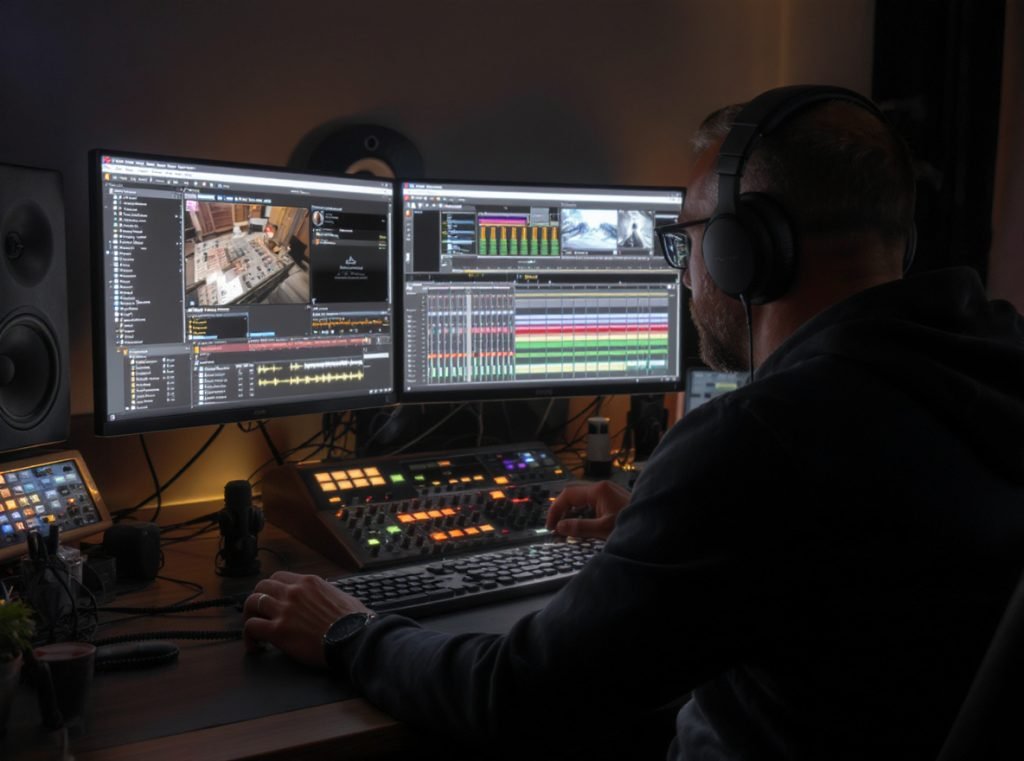
Yes, professional mixing using only headphones is entirely feasible with proper techniques and tools. Many successful engineers, including Andrew Scheps and Manny Marroquin, regularly mix exclusively on headphones and achieve commercial success with major label releases.
Headphone Mixing Advantages
Modern technology makes headphone-only mixing increasingly viable:
Consistent Environment: Headphones eliminate room acoustics variables that plague home studios with poor acoustic treatment. Every listening session provides identical sonic conditions regardless of location.
Cost Effectiveness: High-quality headphones cost significantly less than comparable monitor speakers plus professional room treatment, making professional monitoring accessible to more producers.
Flexibility: Perfect for apartment dwellers, shared spaces, and mobile production where loud monitors aren’t practical or allowed.
Technical Challenges and Solutions
Headphone mixing presents specific challenges with established solutions:
Stereo Imaging Issues: Headphones create extreme stereo separation where center-panned elements appear inside your head rather than in front. Solution: Use crossfeed plugins or specialized monitoring software to simulate speaker playback.
Bass Response Differences: Headphones cannot replicate the physical sensation of low-frequency energy in a room. Solution: Virtual monitoring software like Sonarworks SoundID Reference or Waves CLA-MX plugins simulate various speaker systems.
Translation Concerns: Mixes may not translate optimally to car stereos and home systems. Solution: Regular reference checking on multiple playback systems and developing intimate knowledge of your reference headphones.
| Challenge | Professional Solution | Software Tools |
|---|---|---|
| Stereo imaging | Crossfeed simulation | Sonarworks Reference, Waves CLA-MX |
| Bass translation | Virtual monitoring | Abbey Road Studio 3, Waves NX |
| Mix translation | Multiple references | Various speaker simulation plugins |
The most critical factor is developing intimate knowledge of your reference headphones – understanding their frequency response characteristics and how mixes translate from them to other playback systems.
What Should You Look for in Budget-Friendly Production Headphones?
Professional-quality headphones don’t require premium prices when you understand which features provide the best value.
Budget production headphones should prioritize flat frequency response, professional build quality, and long-term comfort over flashy features. Proven models under $200 include Sony MDR-7506, Audio-Technica ATH-M40x, AKG K240 Studio, and Samson SR850 for reliable professional performance.

Essential Budget Criteria
Focus on these core requirements when budget shopping:
Proven Track Record: Choose models with established professional use rather than newer products with unproven performance. The Sony MDR-7506 has maintained relevance for decades despite being an older design.
Flat Frequency Response: Even budget models should avoid excessive bass or treble boosting that colors mixing decisions. Neutral monitoring remains crucial regardless of price point.
Build Quality and Serviceability: Look for models with replaceable cables, ear pads, and robust construction that withstand regular professional use.
Budget Recommendations by Price Range
Under $100:
- Samson SR850: Surprising neutrality and detail for the price point
- OneOdio Monitor 80: Balanced sound with professional aesthetics
- Audio-Technica ATH-M40x: Professional build quality with excellent value
$100-$200:
- Sony MDR-7506: The gold standard for budget professional headphones with decades-proven reliability
- AKG K240 Studio: Semi-open design with detailed sound reproduction and comfortable fit
- Shure SRH440: Neutral monitoring with professional build quality at accessible prices
$200-$400:
- Audio-Technica ATH-M50x: Most popular closed-back studio headphones worldwide
- Beyerdynamic DT770 Pro 80Ω: German engineering with professional comfort
- Sennheiser HD 280 Pro: Excellent isolation with accurate reproduction
For wholesale buyers seeking cost-effective professional solutions, Osmarto provides competitive bulk pricing on studio-grade headphones that meet professional requirements without compromising sonic accuracy.
How Do Planar Magnetic Headphones Compare for Production?
Planar magnetic technology offers distinct advantages for critical listening and professional mixing applications.
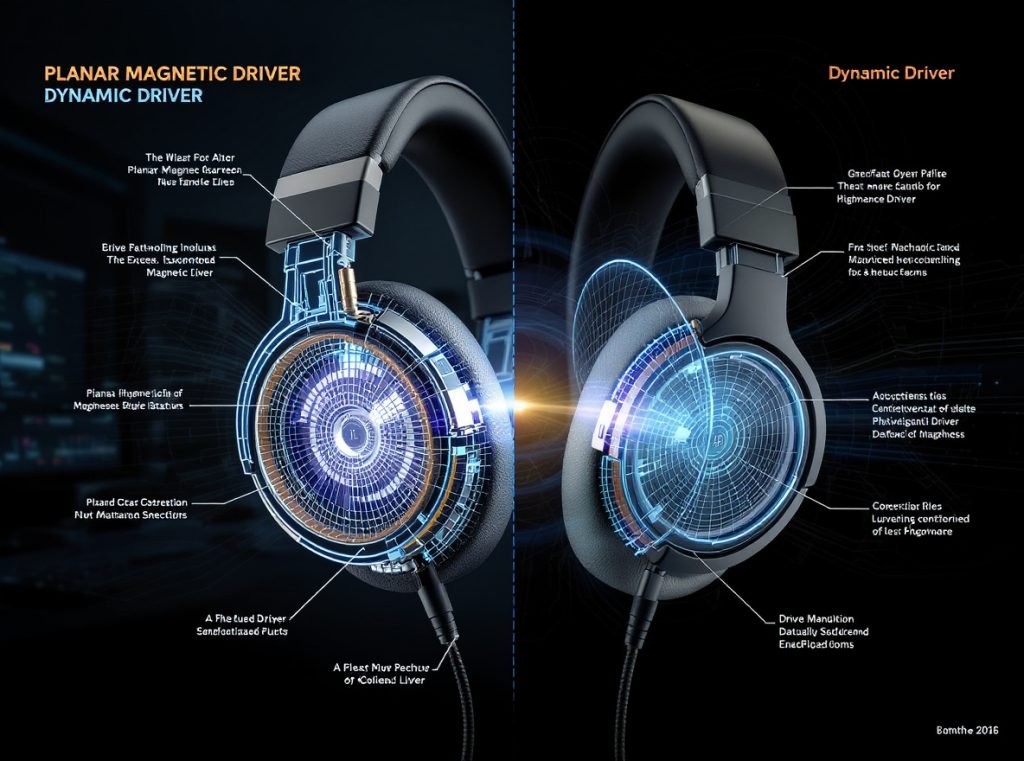
Planar magnetic headphones provide superior transient response, extended bass reproduction, reduced distortion, and faster driver response compared to traditional dynamic drivers. However, they typically require more amplification power and cost significantly more than conventional alternatives.
Planar Magnetic Advantages
This advanced technology excels in areas crucial for production:
Superior Transient Response: Lightning-fast attack and decay reproduction reveals subtle timing details, drum transients, and stringed instrument articulation that dynamic drivers may obscure.
Extended Bass Response: Larger diaphragm surface distributes force more evenly, providing cleaner low-frequency reproduction without the resonances common in dynamic designs.
Reduced Distortion: Planar drivers maintain clarity at high volumes without the harmonic distortion typical of conventional drivers, allowing confident high-volume monitoring when needed.
Consistent Performance: Unlike dynamic drivers that vary with volume levels, planar magnetics maintain their sonic signature across the entire dynamic range.
Professional Planar Models
Production-Focused Options:
- Audeze MM-100 ($399): Designed specifically for professional use with balanced frequency response
- Audeze MM-500 ($1,699): Premium option for high-end mixing and mastering applications
- Avantone Planar ($399): USA-manufactured with excellent value and professional reliability
Considerations for Professional Use
While impressive, planar magnetics aren’t perfect for every situation:
• Power Requirements: Most models need dedicated headphone amplifiers for optimal performance, though newer models like MM-100 work with standard audio interfaces
• Weight Factor: Heavier construction may cause fatigue during extended sessions compared to lightweight dynamic alternatives
• Price Premium: Significantly more expensive than comparable dynamic headphones, requiring larger investment
• Service Complexity: More difficult and expensive to repair than traditional dynamic designs
What Accessories Do You Need for Professional Headphone Monitoring?
Professional headphone setups require additional equipment to maximize performance and support efficient workflow.
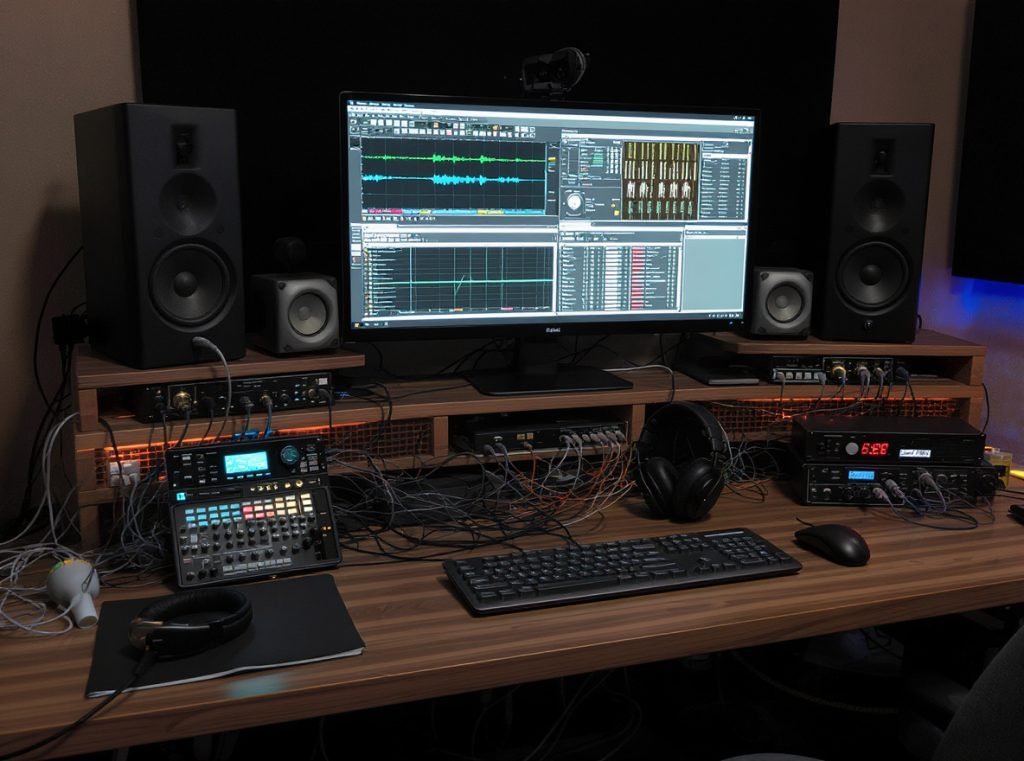
Essential accessories include dedicated headphone amplifiers for high-impedance models, calibration software for frequency response correction, and monitoring controllers for seamless switching between headphones and speakers. These tools transform basic headphones into comprehensive professional monitoring systems.
Critical Professional Accessories
Headphone Amplifiers:
High-impedance models like Sennheiser HD 600 (300 ohms) require clean, powerful amplification to reach full potential. Professional options include rack-mount systems with multiple outputs and individual volume controls for collaborative sessions.
Calibration Software:
Sonarworks SoundID Reference corrects frequency response variations in any headphone model, providing more accurate monitoring. This software proves particularly valuable when working with headphones that aren’t perfectly neutral.
Monitoring Controllers:
Professional switching systems like Genelec 9320A provide seamless transitions between headphones and speakers, essential for comprehensive mix checking. These often include talkback functionality and multiple headphone outputs.
Supporting Equipment
Professional facilities employ additional monitoring tools:
Multi-Channel Distribution:
Client sessions require multiple headphone feeds with independent volume and mix control. Behringer, Rolls, and Focusrite offer affordable solutions for multiple headphone outputs.
Cable Management:
Balanced cables improve signal integrity for high-end applications, while proper cable management prevents damage and maintains organized workflow.
Comfort Enhancements:
Velour ear pad replacements often provide superior comfort compared to leather alternatives during extended sessions. Professional headphone stands maintain organization and prevent cable stress.
| Accessory Category | Purpose | Professional Examples |
|---|---|---|
| Amplification | Power high-impedance models | FiiO K5 Pro, SPL Phonitor |
| Calibration | Frequency response correction | Sonarworks SoundID Reference |
| Monitoring Control | Speaker/headphone switching | Genelec 9320A, Avid MTRX |
| Distribution | Multiple headphone feeds | Behringer HA400, Focusrite HP60 |
How Do You Maintain and Extend Headphone Lifespan?
Proper maintenance practices significantly extend professional headphone life while maintaining consistent sonic performance.
Regular cleaning, proper storage, cable management, and proactive replacement of wear items like ear pads ensure professional headphones perform optimally for years. Quality models with user-replaceable components provide better long-term value than disposable alternatives.
Daily Maintenance Practices
Simple habits preserve your professional investment:
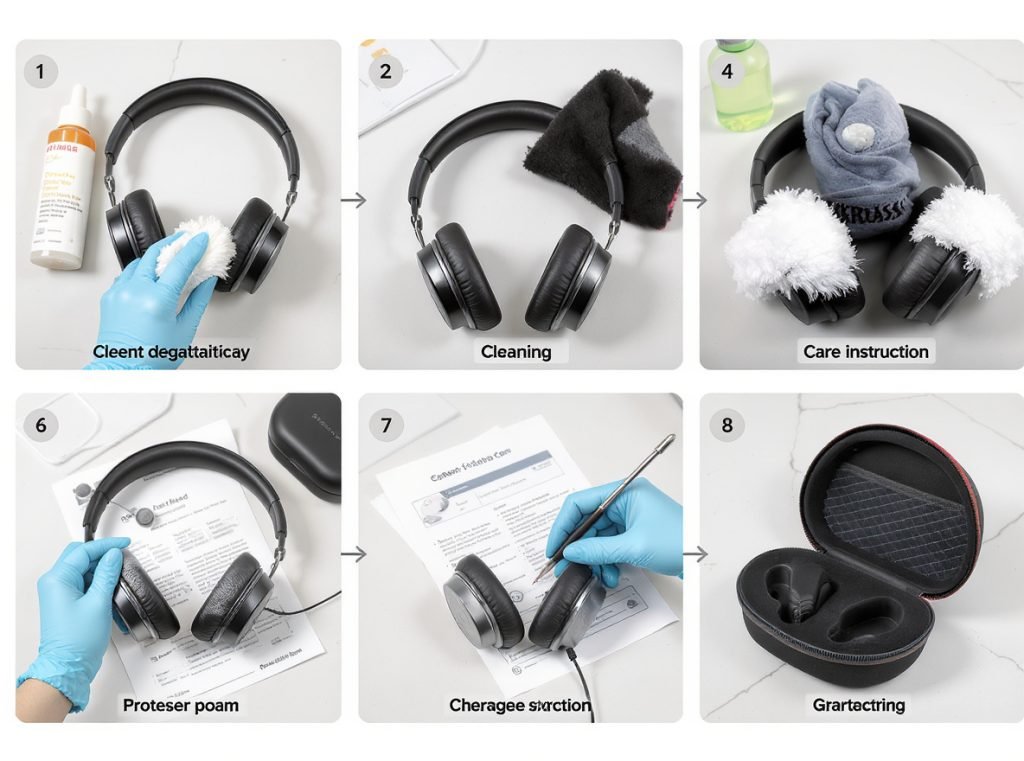
Hygiene and Cleaning: Remove ear pads regularly and clean with appropriate solutions, avoiding harsh chemicals that damage materials. Use soft brushes to remove dust from driver grilles, particularly important for open-back designs where debris affects performance.
Proper Storage: Use protective cases or dedicated headphone stands to prevent physical damage and dust accumulation. Avoid extreme temperatures and humidity that affect driver performance and degrade materials.
Volume Management: Keep monitoring levels reasonable (around 60% maximum) to prevent driver damage and protect hearing. Excessive levels damage drivers permanently and cause hearing loss that affects mixing judgment.
Long-Term Care Strategies
• Annual Ear Pad Replacement: Fresh padding maintains comfort and acoustic seal integrity
• Cable Inspection: Replace damaged cables before intermittent connections develop, always pulling connectors rather than cables
• Professional Servicing: Have expensive headphones serviced by authorized technicians when mechanical issues develop
• Component Protection: Avoid physical impacts that damage delicate internal driver components
Professional Fleet Management
For B2B customers purchasing multiple units, establishing maintenance schedules and bulk replacement part orders ensures consistent performance across entire headphone fleets. Osmarto provides comprehensive support for wholesale customers including replacement parts availability and technical service coordination.
Documentation: Maintain service records for each unit, tracking usage hours and component replacements to optimize replacement scheduling and budget planning.
Standardization: Using identical headphone models across facilities simplifies maintenance procedures and parts inventory while ensuring consistent monitoring standards.
Summary
Choosing the right headphones for music production and mixing depends on your workflow, budget, and studio environment. Open-back models like Sennheiser HD 600/650 series excel at mixing with natural soundstage, while closed-back options like Sony MDR-7506 and Audio-Technica ATH-M50x provide essential isolation for recording. Focus on flat frequency response, professional build quality, and appropriate impedance matching rather than marketing features.
Ready to upgrade your professional monitoring setup? Contact Osmarto today for competitive wholesale pricing on studio-grade headphones that meet the demanding requirements of music production professionals worldwide. Our experienced team provides technical support and bulk purchasing solutions for distributors, retailers, and audio equipment manufacturers.