Skip to content
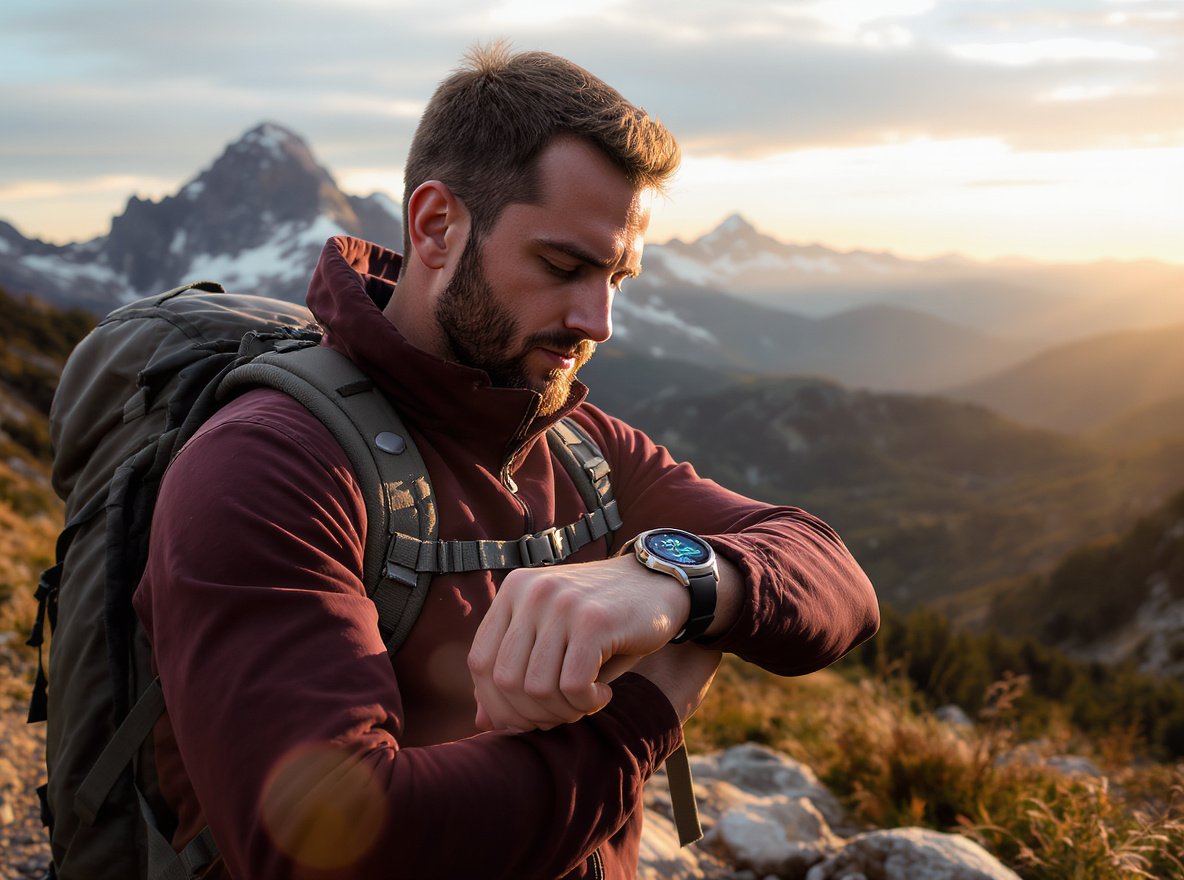
Hiking without reliable navigation can turn an adventure into a dangerous situation. Modern hikers face challenges like dense forests, steep canyons, and rapidly changing weather conditions that demand professional-grade GPS technology.
The best smartwatches with built-in GPS for hiking include the Garmin Instinct 3 Solar ($399-$499), Coros Apex 2 Pro ($450), Garmin Enduro 2 ($600-700), and Coros Vertix 2S ($700). These models offer dual-frequency GPS accuracy, 38-150 hours of battery life, offline topographic maps, and ABC sensors (altimeter, barometer, compass) essential for backcountry safety.
Whether you’re planning day hikes or multi-day expeditions, choosing the right GPS smartwatch provides critical safety features and navigation capabilities that smartphones simply cannot match.
Why Do Hikers Need GPS Smartwatches?
Many hikers underestimate the significant advantages GPS watches provide over smartphones for outdoor navigation. The performance differences are substantial and potentially life-saving.
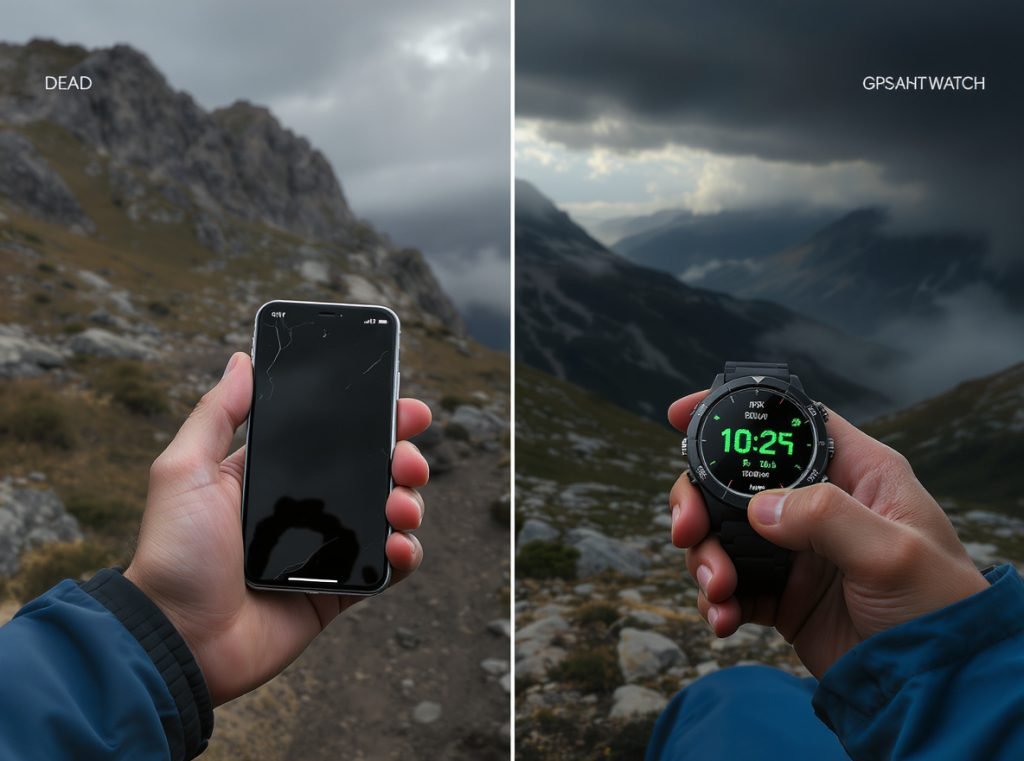
GPS smartwatches are 5 times more power-efficient than smartphones for tracking, offer superior weather resistance, provide hands-free navigation, and can extend your phone’s battery life by several days. A typical smartwatch tracks GPS for 72 hours at 1-second intervals with a 3.2Wh battery, while smartphones only manage 40 hours at 5-second intervals with a 17Wh battery.
Critical advantages for hikers include:
Superior Battery Efficiency and Reliability
GPS watches demonstrate remarkable power efficiency compared to smartphones. While your phone drains quickly using GPS continuously, quality hiking watches provide days or weeks of operation on a single charge.
Weather resistance becomes crucial during unexpected storms or river crossings. GPS watches feature excellent waterproofing and physical button controls that remain functional when touchscreen phones become problematic in rain or cold conditions.
Hands-Free Navigation Benefits
Unlike phones requiring you to stop and check maps, GPS watches provide glanceable navigation data on your wrist. This allows maintaining pace while keeping both hands free for trekking poles, climbing, or emergency situations.
Emergency situations benefit from dedicated SOS features and automatic incident detection. Many GPS watches can transmit precise coordinates to rescue services, potentially saving lives in remote locations where phone service is unavailable.
Extended Phone Battery Conservation
By handling GPS tracking duties, your watch can extend phone battery life by several days in the field. This potentially eliminates the need for heavy power banks during multi-day adventures.
What Features Should You Look for in a Hiking GPS Smartwatch?
Not all GPS watches meet the demanding requirements of serious hiking applications. Specific technical features determine whether a watch enhances or hinders your outdoor adventures.
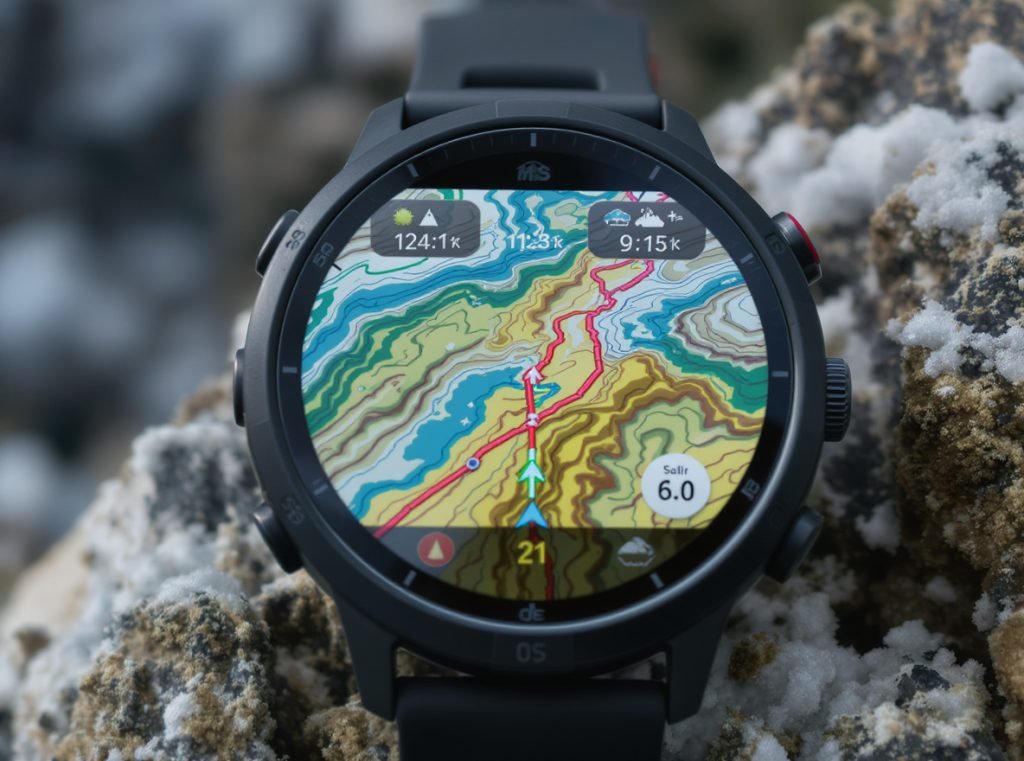
Essential hiking GPS watch features include: dual-frequency (multi-band) GPS for 3-5 meter accuracy, ABC sensors (altimeter, barometer, compass), 20+ hour GPS battery life, offline topographic mapping, breadcrumb navigation, weather resistance 100m+, and emergency SOS capabilities with incident detection.
Technical specifications that matter most:
Dual-Frequency GPS Technology
Modern dual-frequency GPS provides exceptional accuracy even in challenging terrain like dense forests and deep valleys. This technology significantly reduces signal interference compared to single-band GPS systems.
Multi-satellite system support (GPS, GLONASS, Galileo) ensures reliable positioning across global hiking destinations. Faster satellite acquisition means quicker startup times when beginning hikes.
| ABC Sensors for Backcountry Navigation | Sensor Type | Function | Hiking Application | Accuracy Requirements |
|---|---|---|---|---|
| Altimeter | Elevation tracking | Route progress, safety | ±1 meter precision | |
| Barometer | Weather prediction | Storm warnings | Pressure trend alerts | |
| Compass | Directional guidance | Off-trail navigation | Automatic declination |
Battery Performance Standards
Premium models achieve 100+ hours in GPS mode for extended expeditions. Mid-range options typically offer 20-40 hours, sufficient for most day hiking adventures.
Solar charging capability can extend operation indefinitely under ideal conditions. Expect 10-50% daily charge recovery depending on sun exposure above treeline.
Advanced Navigation Features
- Offline topographic maps with contour lines and trail information
- Breadcrumb navigation for route following and backtracking
- Turn-by-turn directions on established trail systems
- Waypoint management for marking critical locations
- Route deviation alerts for safety
Which GPS Smartwatch Brands Are Best for Hiking?
The hiking GPS watch market features three dominant brands, each with distinct advantages for outdoor enthusiasts and specific technical strengths.
Garmin leads with the most comprehensive ecosystem featuring ClimbPro, extensive mapping, and excellent companion apps. Coros excels in battery life and value proposition. Suunto offers traditional outdoor sports expertise with robust build quality for ultra-endurance activities and extreme conditions.
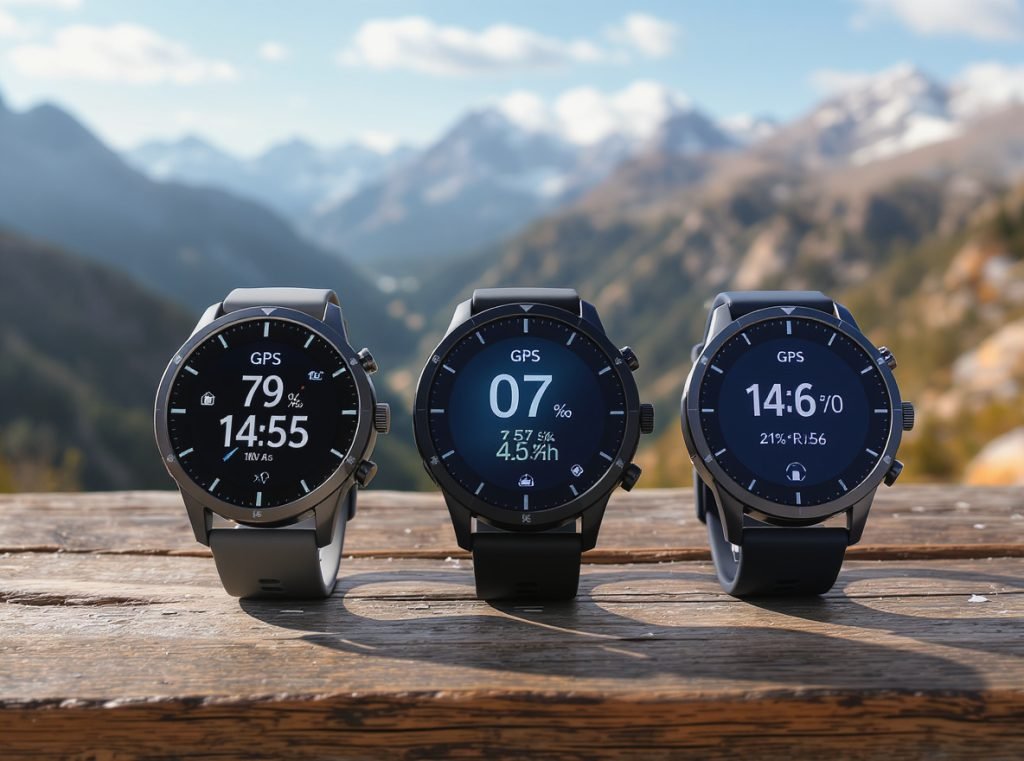
Brand-specific advantages breakdown:
Garmin: The Gold Standard
Garmin dominates outdoor GPS technology with decades of specialized experience. Their watches include the most comprehensive feature sets with detailed topographic maps, extensive trail databases, and superior companion app integration.
The Garmin Connect ecosystem provides seamless route planning, training analysis, and community features. ClimbPro technology shows upcoming elevation changes and grades, helping pace climbing efforts on challenging ascents.
Navigation accuracy consistently ranks highest among professional outdoor reviewers. Garmin’s dual-frequency GPS implementation provides exceptional precision across varied terrain conditions.
Coros: Battery Life Champions
Coros watches often outlast competitors by significant margins while offering competitive features at lower price points. The Vertix 2S delivers 118 hours of GPS tracking – nearly five full days of continuous operation.
- Exceptional power management algorithms
- Lightweight titanium construction reduces wrist fatigue
- Simple, focused interface prioritizes essential functions
- Superior value proposition for serious hikers
Suunto: Traditional Outdoor Excellence
Finnish engineering ensures exceptional cold weather performance and durability. Suunto watches maintain accuracy in sub-zero temperatures where other brands struggle.
Professional-grade sensor accuracy appeals to technical mountaineers and expedition leaders. Barometric altimeters and digital compasses provide surveying-level precision for critical navigation decisions.
What Are the Top GPS Smartwatches for Day Hiking?
Single-day hiking adventures require reliable GPS tracking without the extended battery demands of multi-day expeditions. Current market leaders excel in this category with proven performance.
The best day hiking GPS watches include the Garmin Instinct 3 Solar ($399-$499), Coros Apex 2 Pro ($450), and Garmin Forerunner 165 ($250). These models offer 19-66 hours of GPS tracking, dual-frequency accuracy, comfortable wear, and essential ABC sensors for hikes under 12 hours.
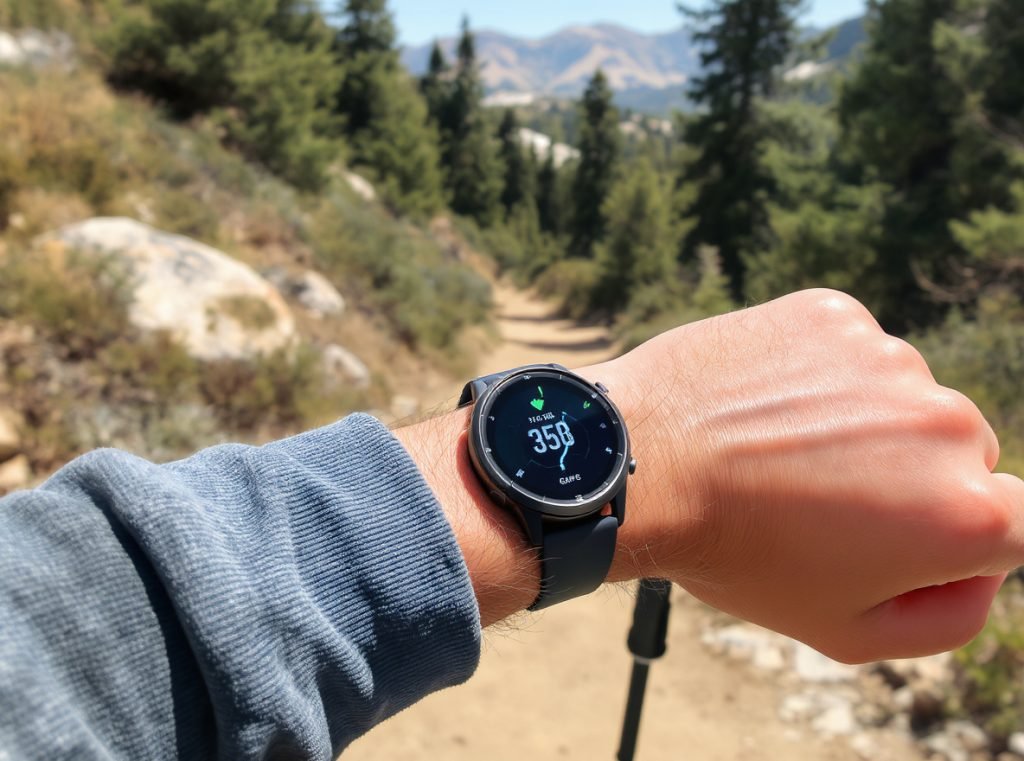
Detailed day hiking recommendations:
Garmin Instinct 3 Solar – Best Overall Choice
This rugged watch represents the optimal balance of features, battery life, and pricing for most hikers. Solar charging provides 28 days of smartwatch operation and up to 130 hours in GPS mode.
Built-in LED flashlight offers emergency illumination during unexpected darkness. Incident detection automatically transmits location data during accidents or falls, potentially saving lives in remote areas.
The monochrome display remains clearly readable in bright sunlight while consuming minimal power. Comprehensive ABC sensors provide professional-grade environmental monitoring.
Coros Apex 2 Pro – Superior Accuracy
Excellent value proposition featuring dual-frequency GPS technology for 3-5 meter accuracy even in challenging conditions. The 66-hour GPS battery life easily handles the longest day adventures.
Large 1.3-inch display and comfortable nylon band design optimize usability during extended wear. Superior GPS accuracy makes this ideal for off-trail exploration and precise route recording.
| Budget-Friendly Day Hiking Options | Watch Model | GPS Battery | Key Features | Price Range |
|---|---|---|---|---|
| Garmin Forerunner 165 | 19 hours | AMOLED display, accurate tracking | $250 | |
| Coros Pace 3 | 38 hours | Offline maps, 30g weight | $229 | |
| Amazfit T-Rex 3 | 42 hours | 1.5″ AMOLED, offline mapping | $280 |
Smart Feature Integration
Modern day hiking watches balance outdoor functionality with smart connectivity. Weather alerts, text notifications, and emergency communication enhance safety without overwhelming complexity.
Smartphone integration enables route downloading and sharing through companion apps. This approach provides premium mapping features without requiring expensive watch storage upgrades.
Which Smartwatches Are Best for Multi-Day Hiking?
Extended backcountry expeditions demand watches with exceptional battery endurance, comprehensive navigation capabilities, and reliability under extreme conditions. Only premium models meet these professional requirements.
Multi-day hiking requires GPS watches with 60+ hours of tracking, solar charging, offline topographic maps, and expedition features. Top choices include the Garmin Enduro 2 ($600-700), Coros Vertix 2S ($700), and Garmin Fenix 8 Solar Sapphire ($800-900), designed specifically for extended wilderness adventures.
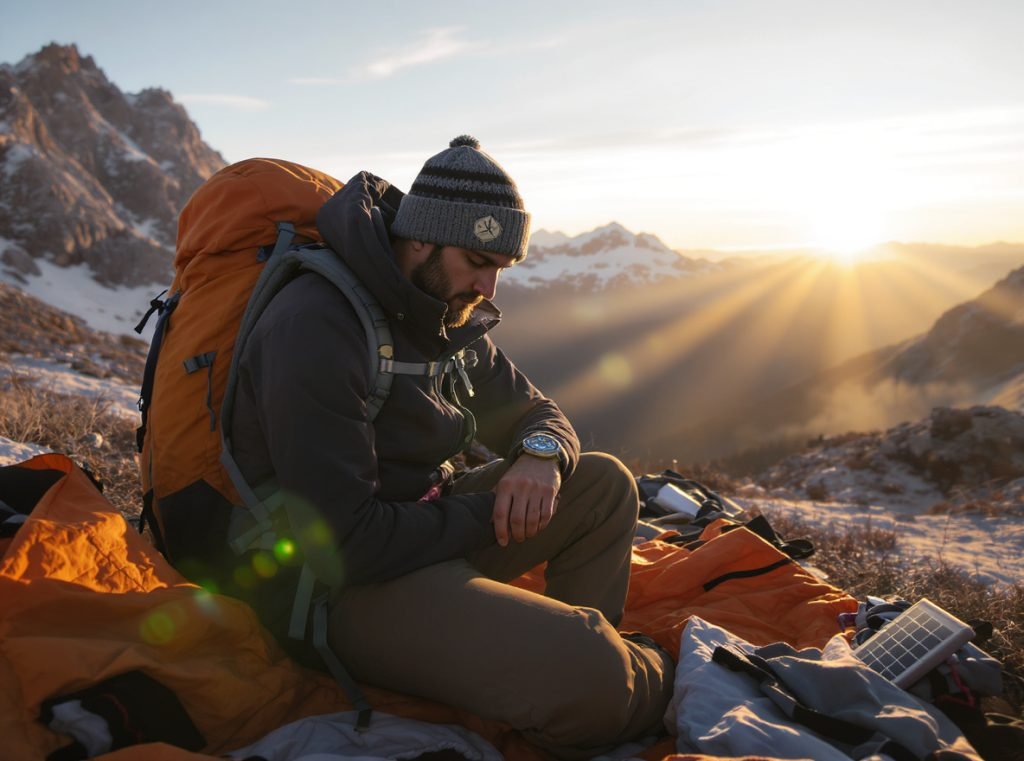
Premium expedition watch specifications:
Garmin Enduro 2 – Ultimate Endurance Champion
The pinnacle of endurance GPS technology, delivering 110-150 hours of GPS tracking with solar charging capability. This watch can theoretically operate indefinitely with adequate sun exposure above treeline.
Full topographic mapping includes detailed trail information, contour lines, and points of interest. The sapphire crystal display resists scratching from rock contact while maintaining readability in harsh conditions.
UltraTrac mode extends battery life to 200+ hours by reducing GPS sampling frequency. This emergency mode provides basic tracking for extended survival situations.
Coros Vertix 2S – Extreme Condition Specialist
Built for the harshest environments with titanium construction rated to -22°F operational temperature. SpO2 monitoring and nutrition tracking support high-altitude expeditions.
Advanced expedition features include customizable data screens, comprehensive training metrics, and detailed recovery analysis. The 118-hour GPS battery life supports nearly five days of continuous tracking.
Solar Charging Performance Reality
- Direct sunlight required for meaningful power generation
- Cloudy conditions provide minimal charging benefit
- Forest canopies reduce solar efficiency significantly
- Best performance during summer hiking above treeline
Advanced Navigation for Extended Trips
Route planning integration with platforms like Garmin Connect enables complex multi-day itineraries. Upload GPX files from popular hiking websites or create custom routes using detailed topographic data.
Waypoint navigation supports hundreds of saved locations for marking water sources, campsites, emergency exits, and scenic viewpoints. Comprehensive breadcrumb tracking ensures safe return navigation even in whiteout conditions.
How Important Is Battery Life for Hiking GPS Watches?
Battery performance often determines whether a GPS watch enhances or compromises your hiking safety and experience. Understanding power consumption patterns helps optimize watch selection and usage strategies.
Battery life is the most critical factor for hiking GPS watches. GPS tracking consumes 5-10x more power than normal smartwatch operation. Premium models achieve 100+ hours continuous GPS tracking, while budget options provide 15-25 hours. Solar charging can extend operation indefinitely under ideal conditions.
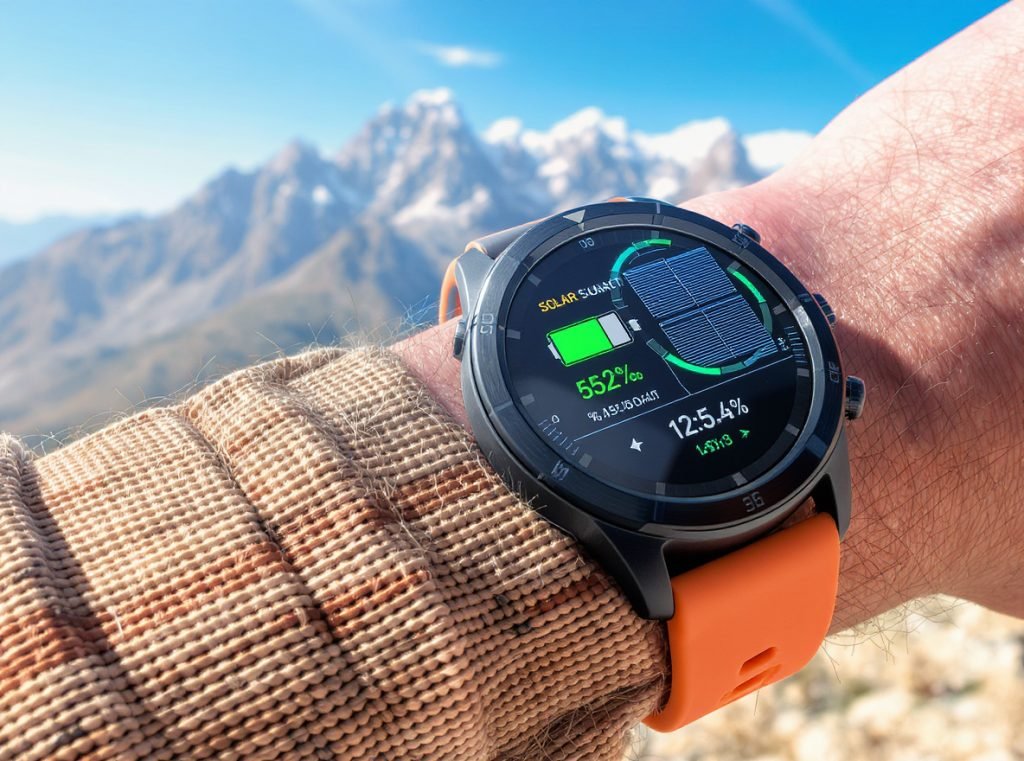
Power management strategies and realistic expectations:
GPS Tracking Power Consumption
Screen brightness significantly impacts battery duration. AMOLED displays offer superior visibility but consume 20-30% more power than monochrome alternatives during GPS activities.
Recording frequency affects battery life dramatically. One-second GPS intervals provide detailed tracks but drain batteries quickly. Smart recording modes optimize power usage without sacrificing critical accuracy.
Battery Performance Across Price Ranges
Premium expedition watches: 80-150 hours GPS tracking
Mid-range hiking models: 30-60 hours GPS operation
Budget outdoor watches: 15-30 hours GPS functionality
Solar charging bonus: 10-50% daily recovery potential
Emergency Power Management Modes
- Expedition mode: GPS tracking only, 100+ hours operation
- UltraTrac mode: Reduced GPS frequency, extends battery 2-3x
- Power-saving features: Disable unnecessary sensors and notifications
- Watch-only mode: Basic timekeeping for weeks without charging
Solar Charging Realistic Expectations
Solar panels require direct sunlight for meaningful energy generation. Dense forest canopies or cloudy mountain weather provide minimal charging benefit.
High-altitude hiking above treeline offers optimal solar charging conditions. Summer expeditions can achieve near-unlimited battery operation with proper power management.
What About GPS Accuracy and Navigation Features?
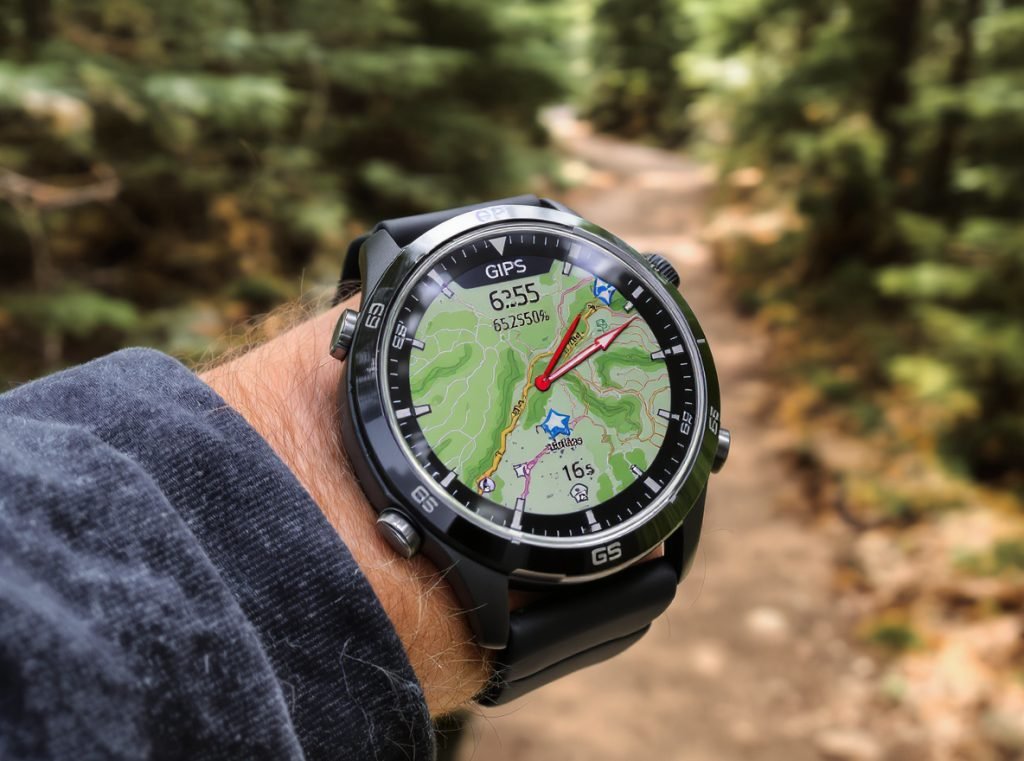
Navigation precision can determine the difference between successful adventures and dangerous emergencies. Modern GPS watches offer varying levels of accuracy and comprehensive navigation capabilities.
Modern hiking GPS watches achieve 3-5 meter accuracy under optimal conditions using dual-frequency GPS and multi-satellite systems. Premium models include offline topographic maps, breadcrumb navigation, turn-by-turn directions, and route deviation alerts essential for backcountry safety and navigation confidence.
Technical accuracy and navigation breakdown:
Dual-Frequency GPS Performance
Dual-band GPS technology delivers impressive accuracy across challenging terrains. Dense forest environments occasionally cause slight tracking deviations, but performance remains superior to single-frequency systems.
Multi-satellite integration (GPS + GLONASS + Galileo) provides faster satellite acquisition and improved accuracy in northern latitudes. European hiking destinations benefit particularly from Galileo satellite integration.
| Real-World Accuracy Testing Results | Terrain Type | Typical Accuracy | Best Performers | Challenging Factors |
|---|---|---|---|---|
| Open terrain | 2-3 meters | All major brands | Minimal interference | |
| Dense forest | 5-8 meters | Garmin, Coros | Canopy signal blocking | |
| Deep canyons | 8-15 meters | Dual-frequency GPS | Steep walls reflect signals | |
| Mountain peaks | 1-3 meters | All brands excel | Clear satellite visibility |
Advanced Navigation Capabilities
Breadcrumb navigation allows following pre-loaded routes with real-time guidance and off-course alerts. This feature proves invaluable for returning to starting points and following established trail systems safely.
Topographic mapping varies significantly between manufacturers. Garmin provides the most detailed trail information and points of interest, while Coros focuses on essential navigation elements and battery efficiency.
Route Planning and Integration
Companion app integration enables detailed route creation and sharing across popular platforms. Garmin Connect, Coros Training Hub, and Suunto App provide comprehensive planning tools.
GPX file compatibility allows importing routes from hiking websites, guidebooks, and community resources. This flexibility supports expedition planning and route sharing with hiking partners.
Are There Budget-Friendly Options for Hiking GPS Watches?
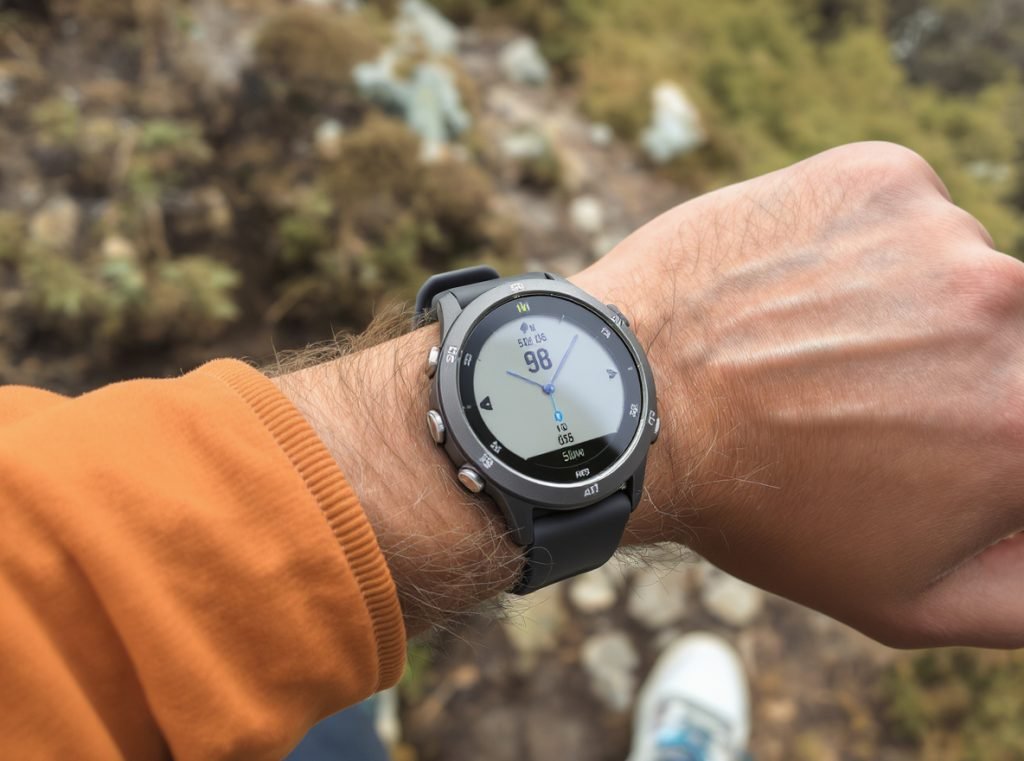
Quality GPS navigation doesn’t require premium pricing. Several affordable options provide essential hiking features and reliable performance without breaking expedition budgets.
Budget hiking GPS watches under $300 include the Coros Pace 3 ($229), Amazfit T-Rex 3 ($280), and Garmin Forerunner 55 ($179-199). These models offer 15-42 hours of GPS tracking, basic navigation features, and essential safety functions while maintaining reliable positioning accuracy.
Value-focused hiking watch analysis:
Coros Pace 3 – Exceptional Budget Champion
Outstanding value offering 38 hours of GPS tracking, offline maps, and robust construction in an ultra-lightweight 30-gram package. This represents perhaps the best price-to-performance ratio available.
Dual-frequency GPS provides accuracy comparable to premium models. The simple interface focuses on essential hiking functions without overwhelming complexity or unnecessary smart features.
Amazfit T-Rex 3 – Feature-Rich Budget Option
Impressive specification list including 42 hours GPS tracking, 1.5-inch AMOLED display, and offline mapping capabilities. Despite occasional software quirks, it delivers remarkable capability for the $280 price point.
Military-standard durability testing ensures reliability in harsh hiking conditions. The large, vibrant display remains clearly visible in challenging lighting conditions.
Essential vs. Premium Feature Trade-offs
Budget watches focus on core GPS functionality rather than advanced smart integrations. Acceptable compromises include plastic construction instead of titanium and limited third-party app support.
These trade-offs significantly reduce costs while maintaining essential hiking safety features. Emergency SOS functionality, weather alerts, and activity tracking remain available across all price ranges.
Value Optimization Strategies
- Purchase previous-generation models when new versions release
- Consider certified refurbished watches from manufacturers
- Focus on essential navigation features rather than premium upgrades
- Leverage seasonal sales during outdoor gear promotions
How Do You Choose the Right GPS Watch for Your Hiking Style?
Different hiking approaches require different technological capabilities and feature priorities. Understanding your specific outdoor patterns prevents over-spending on unnecessary functions while ensuring critical needs are met.
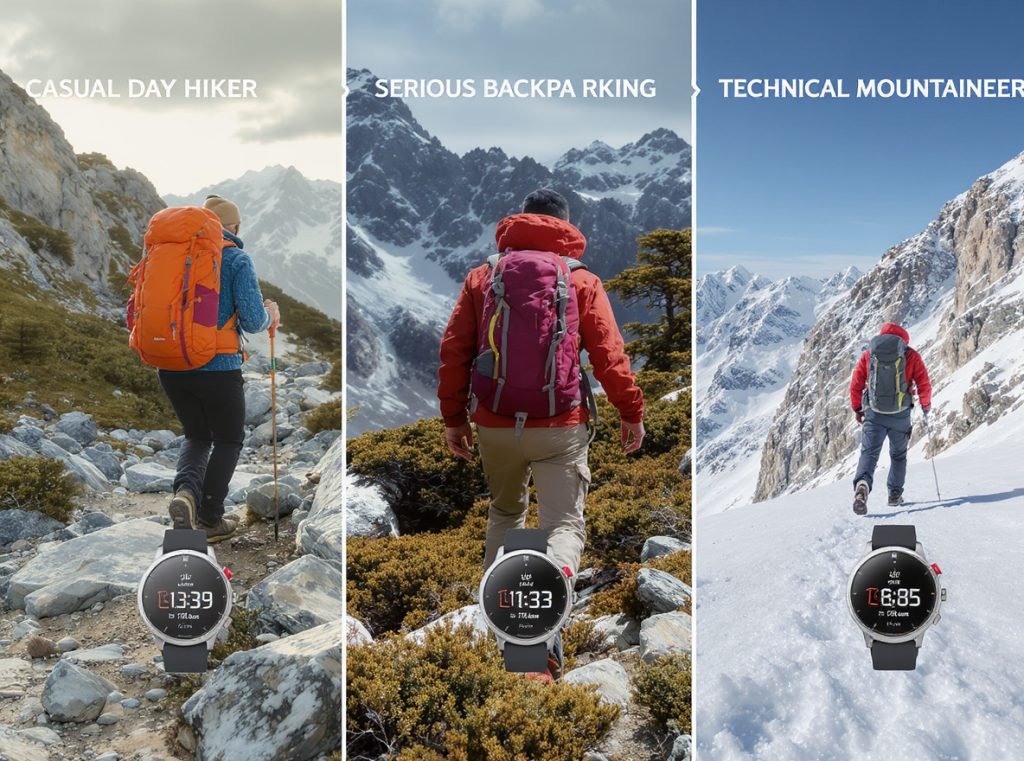
Choose GPS watches based on hiking frequency, trip duration, terrain complexity, and technical requirements. Casual day hikers need basic GPS tracking and 12+ hour battery life. Serious backpackers require comprehensive navigation, 40+ hour batteries, and detailed mapping. Technical mountaineers need barometric sensors, route planning, and emergency communication features.
Hiking style-specific considerations:
Casual Day Hiker Requirements
Weekend warriors exploring marked trails need reliable GPS tracking and basic safety features. Simple navigation suffices for well-maintained trail systems with clear signage and established routes.
Battery demands remain modest for 4-8 hour adventures. Standard GPS watches provide sufficient power for typical recreational hiking activities without premium pricing.
Smart notification integration enhances convenience without overwhelming complexity. Weather updates, emergency alerts, and basic communication provide useful connectivity for family coordination.
Serious Backpacker Specifications
Multi-day adventures demand comprehensive navigation capabilities and extended battery endurance. Detailed topographic maps become essential for route planning, safety, and emergency situations.
Weather monitoring prevents dangerous situations during rapidly changing mountain conditions. Barometric pressure trend analysis provides storm warnings hours before visual confirmation.
Advanced training metrics optimize hiking performance and recovery planning. VO2 max tracking, training load analysis, and recovery advisors enhance fitness development for challenging expeditions.
Technical Mountaineer Professional Features
- Altimeter precision: ±1 meter accuracy for technical route finding
- Compass functionality: Automatic declination adjustment for global use
- Route planning: Custom GPX file support and waypoint management
- Weather station: Comprehensive barometric pressure and temperature trends
- Emergency systems: Incident detection, automatic SOS, location transmission
Activity-Specific Feature Priorities
Trail running emphasizes lightweight construction and secure, comfortable band systems. GPS accuracy matters less than weight distribution and stability during high-impact activities.
Photography hiking benefits from comprehensive waypoint marking capabilities. Tag specific photo locations for future reference, sharing with other photographers, and creating detailed location databases.
Fishing and hunting applications require specialized mapping features, tide charts, and wildlife activity periods. Some GPS watches include dedicated modes for these outdoor pursuits.
Summary
The best GPS smartwatch for hiking depends on your specific outdoor needs, hiking frequency, and adventure complexity. Premium models like the Garmin Enduro 2 ($600-700) and Coros Vertix 2S ($700) provide comprehensive expedition features, while excellent budget options like the Coros Pace 3 ($229) offer essential GPS functionality for recreational hikers.
Looking to supply your retail customers with professional-grade GPS smartwatches? Osmarto specializes in manufacturing high-quality outdoor smartwatches featuring advanced GPS technology, extended battery performance, and rugged construction perfect for hiking and expedition use. Our wholesale solutions provide retailers, distributors, and brand partners with competitive pricing and customizable specifications. Contact us today to discuss your GPS smartwatch inventory needs and discover how we can help your customers stay safe and navigate confidently on every outdoor adventure.