Dead smartwatch batteries are frustrating, especially during important business meetings or outdoor activities. You need reliable wearable technology that keeps up with your demanding schedule without constant charging interruptions.
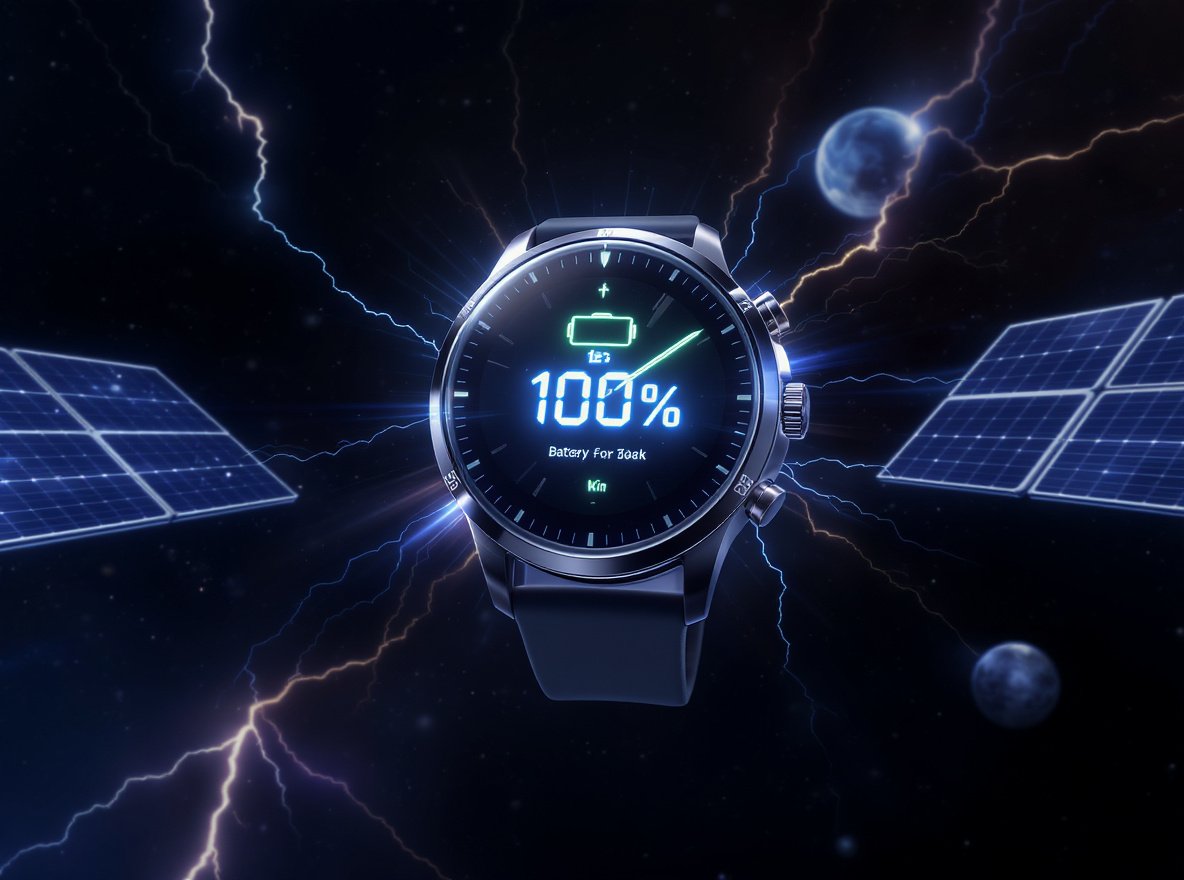
The smartwatches with the longest battery life can achieve 30-40 days of operation, with the Garmin Enduro 3 leading at 36 days (90 days with solar charging) and the Garmin Instinct 2X Solar offering potentially unlimited operation with just 3 hours of daily sunlight exposure.
Let’s explore the top long-lasting smartwatch options and help you choose the perfect device for your business needs.
What Smartwatch Brand Has the Best Battery Life?
Understanding which brands prioritize battery longevity helps you make informed wholesale purchasing decisions for your customers.
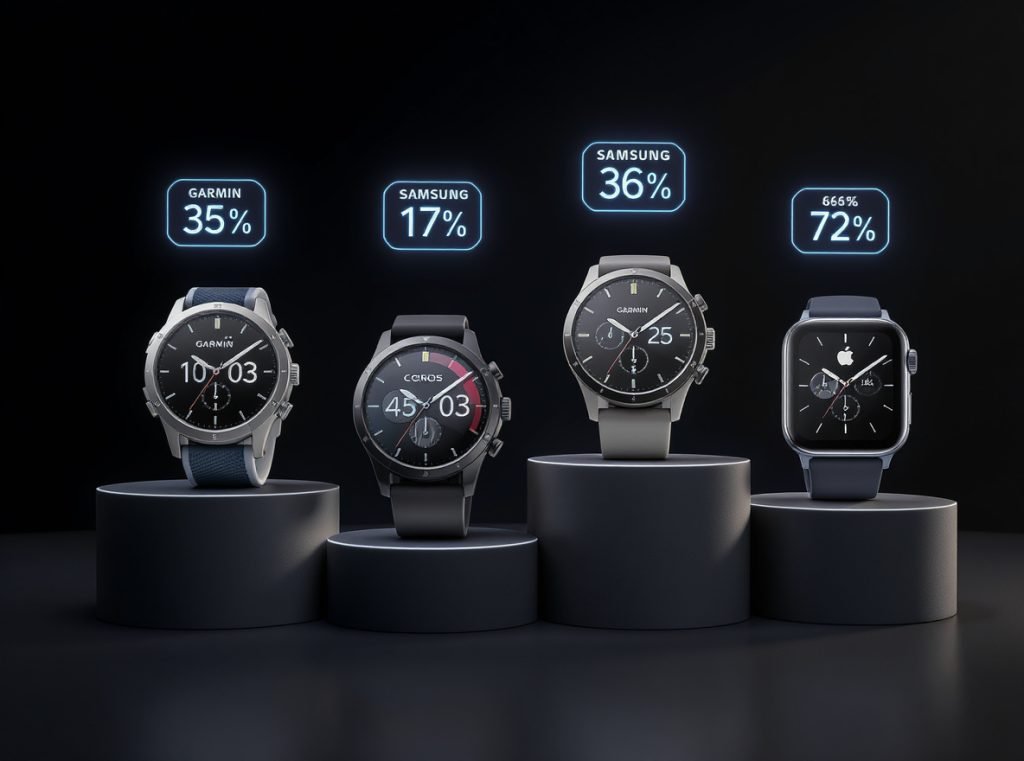
Garmin absolutely dominates the battery life category, with the Garmin Enduro 3 delivering 36 days of standard use (90 days with solar) and the Instinct 2X Solar achieving 40+ days with unlimited potential through solar charging. COROS follows as a strong second choice for athletes, with models like the VERTIX 2S offering 40 days of operation.
When sourcing smartwatches for your retail business, consider these updated brand categories:
Ultra-Long Range Champions (30+ days)
- Garmin Enduro 3: 36 days (90 days solar)
- Garmin Instinct 2X Solar: 40+ days (unlimited with solar)
- COROS VERTIX 2S: 40 days
- Withings ScanWatch 2: 30 days (hybrid design)
Extended Range Leaders (15-30 days)
- Amazfit T-Rex 3: 27 days
- COROS PACE 3: 15-17 days
- Various Amazfit models: 12-24 days
Premium Wear OS Category (3-5 days)
- OnePlus Watch 3: 5 days (16 days power saver)
- OnePlus Watch 2: 4 days (12 days power saver)
- Samsung Galaxy Watch Ultra: 3 days
| Brand Category | 2025 Leaders | Battery Range | Wholesale Market Appeal |
|---|---|---|---|
| Ultra-Endurance | Garmin, COROS | 30-90 days | Premium outdoor segment |
| Extended Life | Amazfit, Withings | 15-30 days | Health-conscious consumers |
| Smart Features | OnePlus, Samsung | 3-5 days | Tech-savvy mainstream |
| Daily Charge | Apple, Google | 1-2 days | Feature-rich users |
How Long Should a Smartwatch Battery Last Per Day?
Battery expectations vary significantly based on usage patterns and target customer demographics.
A quality smartwatch should provide at least 24-48 hours of moderate usage for mainstream models. Current 2025 expectations show Apple Watch Series 10 delivering 18 hours (36 hours in low power), Samsung Galaxy Watch 7 providing 40-48 hours, and Google Pixel Watch 3 achieving 24-48 hours depending on size.
Current real-world battery performance by category:
Mainstream Smartwatch Performance (2025 data)
- Apple Watch Series 10: 18 hours standard (36 hours low power mode)
- Samsung Galaxy Watch 7: 40-48 hours (72+ hours power saver)
- Google Pixel Watch 3: 48 hours (45mm) / 24 hours (41mm)
- OnePlus Watch 3: 5 days standard (16 days power saver)
Usage Pattern Impact on Battery Life
- Light usage (notifications only): 2-5 days typical
- Moderate usage (health tracking, workouts): 24-48 hours
- Heavy usage (GPS, always-on display): Daily charging required
Light Usage (2-7 days battery life)
- Basic notifications and time display
- Minimal app usage and GPS tracking
- Heart rate monitoring only during workouts
- Limited always-on display usage
Moderate Usage (1-3 days battery life)
- Regular app interactions and messaging
- Daily GPS tracking for 30-60 minutes
- Continuous heart rate and sleep monitoring
- Music streaming via Bluetooth
Heavy Usage (Daily charging required)
- Constant GPS tracking and navigation
- Frequent voice calls and messaging
- Always-on display with maximum brightness
- Multiple daily workout tracking sessions
For wholesale buyers, understanding these usage patterns helps you stock appropriate models for different customer segments. Business users often prefer 3-7 day battery life for reliability, while fitness enthusiasts may accept daily charging for advanced features.
Which Smartwatch Has 30 Days Battery Life?
Extended battery life appeals to customers who prioritize convenience over cutting-edge features.
Only four smartwatch models currently achieve true 30+ day battery life in 2025: the Withings ScanWatch 2 (30 days), Garmin Enduro 3 (36 days, 90 days with solar), Garmin Instinct 2X Solar (40+ days), and COROS VERTIX 2S (40 days).
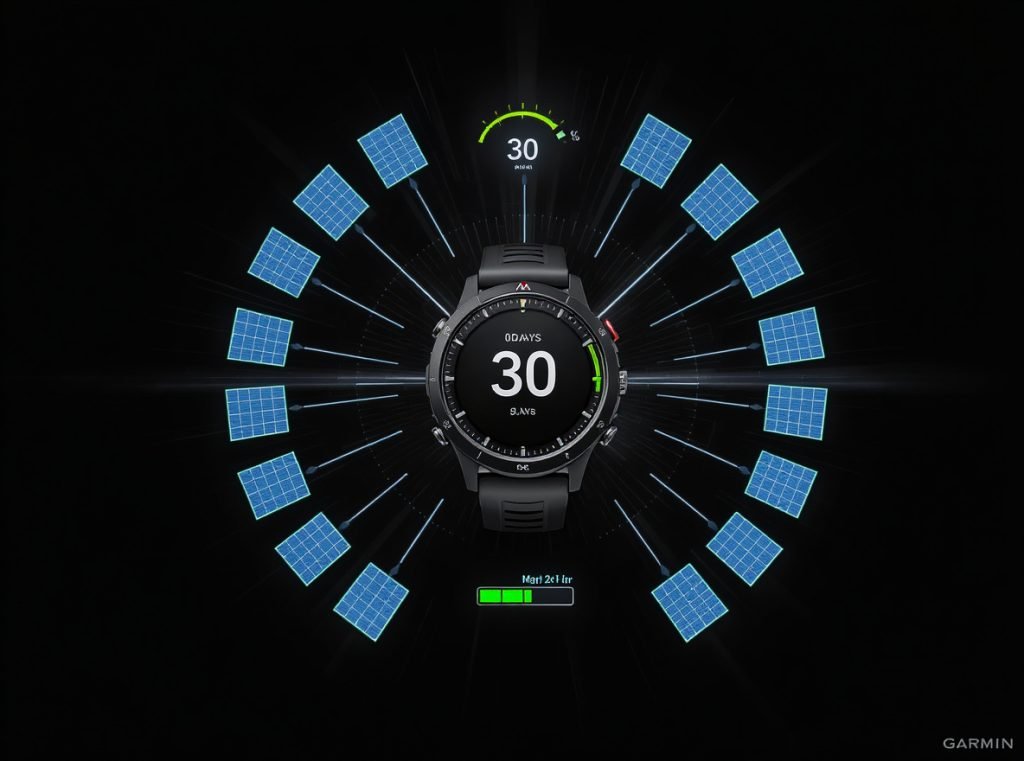
The exclusive 30+ day battery club includes:
Confirmed 30+ Day Champions
- COROS VERTIX 2S: 40 days – Ultimate endurance sports watch
- Garmin Instinct 2X Solar: 40+ days (unlimited with sufficient solar exposure)
- Garmin Enduro 3: 36 days standard (90 days with solar charging)
- Withings ScanWatch 2: 30 days (hybrid analog-digital design)
Extended Range Models (20-30 days)
- Amazfit T-Rex 3: 27 days rugged outdoor design
- Various Amazfit GTR series: 20-24 days depending on model
Solar-Powered Models (Unlimited potential)
- Garmin Instinct Solar: Unlimited in battery saver mode
- Garmin Fenix Solar series: Extended operation with sun exposure
- Citizen CZ Smart Solar: Hybrid functionality with solar charging
Ultra-Efficient Models (20-30 days)
- Amazfit Bip 3 Pro: 30 days typical usage
- Fitbit Versa Lite: 28 days with minimal features
- Mobvoi TicWatch Pro series: 30 days in essential mode
| Model Type | Maximum Battery | Real-World Usage | Best For |
|---|---|---|---|
| Solar Hybrid | Unlimited | 15-45 days | Outdoor workers |
| Ultra-Basic Smart | 30 days | 14-21 days | Notification-focused users |
| Fitness-First | 21 days | 10-14 days | Health monitoring priority |
These extended-battery models appeal to specific market segments: outdoor professionals, travelers, and users who frequently forget to charge devices. When sourcing for wholesale, consider your regional customer preferences and lifestyle patterns.
What Drains Smartwatch Battery Most?
Understanding battery drain factors helps you educate customers and recommend appropriate models.
Always-on displays are the biggest battery killers, accounting for up to 35% of total power consumption. GPS tracking during workouts consumes approximately 30% of battery capacity, while continuous heart rate monitoring adds another 15% drain to daily usage.
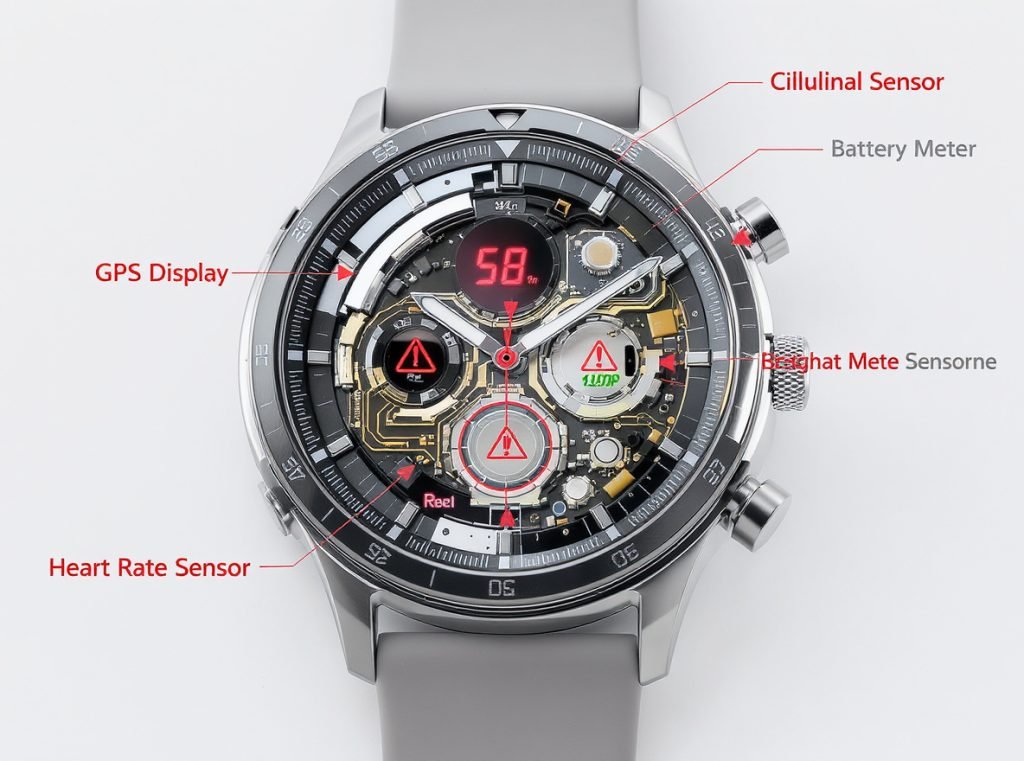
Based on 2025 testing data, the major battery consumption factors are:
Highest Impact Drains (30-35% each)
- Always-on display (AOD): Can reduce battery life by 50-100%
- Active GPS tracking: Drains full battery in 6-12 hours of continuous use
- Cellular connectivity: 40-60% faster battery depletion
Moderate Impact Features (10-20% each)
- Continuous heart rate monitoring: 15% additional consumption
- High screen brightness: 12% impact on daily usage
- Sleep tracking with sensors: 10-20% overnight consumption
- Frequent notification handling: 10-15% daily increase
High-Drain Features
- GPS tracking: 50-70% faster battery depletion
- Always-on display: 30-40% additional consumption
- Music streaming: 20-30% increased usage
- Cellular connectivity: 40-60% faster drain
Moderate-Drain Activities
- Continuous heart rate monitoring: 15-25% impact
- Sleep tracking with sensors: 10-20% overnight usage
- Frequent app notifications: 10-15% daily increase
- Voice assistant usage: 5-10% per interaction
Battery Optimization Strategies
- Disable GPS when not needed for workouts
- Use raise-to-wake instead of always-on display
- Limit notification sources to essential apps
- Lower screen brightness and timeout duration
- Enable power-saving modes during extended use
For wholesale customers, providing battery optimization guidance adds value to your smartwatch sales. Consider creating user guides or training materials that help end-users maximize their device performance.
How Do I Choose a Smartwatch With Good Battery Life?
Selecting the right battery performance requires balancing features with longevity expectations.
Choose smartwatches with proven battery technology and realistic manufacturer claims. The OnePlus Watch 3 leads Wear OS devices with 5 days of actual use, while Garmin models with MIP displays consistently deliver 2-6 weeks of operation through superior power management.
2025 selection criteria for maximum battery performance:
Display Technology Impact
- MIP displays (Garmin, COROS): 2-6 weeks battery life
- Hybrid analog-digital (Withings): 3-4 weeks operation
- Efficient AMOLED with dual-chip (OnePlus): 3-5 days
- Standard AMOLED (Apple, Samsung, Google): 1-2 days typical
Key Technical Specifications
- Battery capacity: Look for 500mAh+ in larger models
- Dual-chipset systems: OnePlus architecture optimization
- Solar charging capability: Garmin’s unlimited potential
- Power management software: Proven optimization track record
Proven Performance Leaders by Use Case
- Maximum endurance: Garmin Enduro 3 (36-90 days)
- Best Wear OS battery: OnePlus Watch 3 (5 days)
- Hybrid longevity: Withings ScanWatch 2 (30 days)
- Athletic performance: COROS VERTIX 2S (40 days)
Technical Specifications to Consider
- Battery capacity (measured in mAh)
- Processor efficiency and power management
- Display technology (e-ink vs. OLED vs. LCD)
- Available power saving modes and customization
Feature vs. Battery Trade-offs
- Color displays reduce battery life vs. monochrome
- Touchscreens consume more power than button-only interfaces
- Advanced health sensors increase background power draw
- Third-party app support typically reduces efficiency
Brand Reliability Factors
- Manufacturer battery life testing standards
- Real-world user reviews and independent testing
- Software update history and optimization improvements
- Warranty coverage for battery performance degradation
| Priority Level | Recommended Battery Life | Suitable Features | Target Customers |
|---|---|---|---|
| Maximum Longevity | 14+ days | Basic smart features | Business travelers |
| Balanced Performance | 5-10 days | Moderate health tracking | Active professionals |
| Feature-Rich | 2-4 days | Full smartphone integration | Tech enthusiasts |
Which Budget Smartwatch Has Best Battery Life?
Affordable options can still deliver impressive battery performance for cost-conscious customers.
Budget smartwatches often deliver superior battery life compared to premium models. The Amazfit T-Rex 3 at $199 provides 27 days of operation, while the COROS PACE 3 offers 17 days of reliable performance for serious athletes.
Top 2025 budget performers with exceptional battery life:
Best Value Champions Under $300
- Amazfit T-Rex 3: 27 days battery, $199 retail price
- COROS PACE 3: 15-17 days, lightweight athletic design
- Amazfit GTR series: 12-24 days, various price points
- CMF Watch Pro: Week-long battery, competitive pricing
Premium Models Worth the Investment
- OnePlus Watch 3 ($350): Best Wear OS battery at 5 days
- Garmin Enduro 3 ($899): Ultimate 36-90 day performance
- Withings ScanWatch 2: 30-day hybrid design premium
Budget vs. Premium Battery Analysis
Budget devices frequently outperform expensive models because they use simpler displays, fewer power-hungry sensors, and optimized software focused on efficiency rather than features.
| Price Range | Battery Champions | Typical Performance | Best For |
|---|---|---|---|
| Under $200 | Amazfit T-Rex 3 | 20-27 days | Outdoor enthusiasts |
| $200-$400 | COROS PACE 3, OnePlus Watch 3 | 5-17 days | Athletes, tech users |
| $400+ | Garmin Enduro 3 | 30-90 days | Professional/extreme use |
When sourcing budget smartwatches for wholesale, focus on manufacturers with proven quality control and software support. Many budget devices deliver excellent battery life but lack long-term software updates or reliable customer service.
For your Osmarto wholesale business, consider developing relationships with manufacturers who can provide consistent battery performance specifications and realistic usage estimates for your retail customers.
Are Expensive Smartwatches Worth It for Battery Life?
Premium pricing doesn’t always correlate with longer battery performance.
Premium smartwatches prioritize advanced features over battery longevity, but they offer superior power management and faster charging. The sweet spot for battery performance often lies in mid-range models that balance essential smart features with efficient power consumption.
2025 premium smartwatch battery reality:
High-End Model Performance
- Most $300+ smartwatches: 1-3 days typical operation
- Apple, Samsung flagships: Focus on features over battery
- Premium Garmin models: Exception with 2-6 weeks performance
- OnePlus Watch 3: Rare premium model with 5-day battery
Value Analysis by Price Point
- $50-$150 budget models: Often 7-21 days performance
- $150-$300 mid-range: Frequently 3-7 days operation
- $300+ premium models: Usually 1-3 days despite high cost
- $500+ specialized (Garmin): 14-90 days for outdoor focus
Premium Advantages Despite Lower Battery Life
- Advanced power management and optimization algorithms
- Faster wireless charging (30-80 minutes full charge)
- Better long-term battery health protection
- Regular software updates improving efficiency over time
- Superior build quality extending overall device lifespan
Advantages of High-End Models
- Superior power management and optimization
- Faster wireless charging capabilities
- Better build quality and component longevity
- Regular software updates improving efficiency
- Advanced battery health monitoring and protection
Potential Disadvantages
- Feature-rich interfaces consume more power
- Premium displays (OLED, high-resolution) drain batteries faster
- Complex operating systems require more processing power
- Higher price doesn’t guarantee longer battery life
Cost vs. Performance Analysis
- $300+ models: Often 1-3 days battery life
- $150-$300 models: Frequently 3-7 days operation
- $50-$150 models: Sometimes 7-21 days performance
The sweet spot for battery-focused customers often lies in mid-range models that balance essential smart features with efficient power consumption.
What’s the Future of Smartwatch Battery Technology?
Emerging technologies promise significant improvements in wearable device power management.
Solid-state battery technology promises revolutionary improvements, with Samsung preparing mass production for 2026 that could deliver 200 watt-hours per liter energy density. AI-optimized power management and advanced solar integration are extending current smartwatch operation time significantly.
Breakthrough technologies arriving 2025-2026:
Solid-State Battery Revolution
- Samsung mass production planned for 2026
- 200 watt-hours per liter energy density potential
- Matching full-size lithium-ion performance in smartwatch form
- Projected to enable week-long battery life with full features
Current Solar Technology Advances
- Garmin’s unlimited operation with 3 hours daily sunlight
- Integration becoming standard in outdoor-focused models
- Supplemental charging extending device operation significantly
AI-Powered Optimization
- Machine learning predicting user behavior patterns
- Dynamic power consumption optimization
- Potential 20-30% battery life extension through software
- Smart feature activation based on usage patterns
Market Growth Projections
The smartwatch battery market is expanding from $1.5 billion in 2023 to projected $5.3 billion by 2032, driven by these technological breakthroughs and increasing consumer demand for extended battery performance.
For wholesale buyers, staying informed about battery technology trends helps you anticipate customer demands and stock future-ready products.
Summary
The longest-lasting smartwatches in 2025 are led by the Garmin Enduro 3 (36-90 days), COROS VERTIX 2S (40 days), and Garmin Instinct 2X Solar (unlimited with solar). For mainstream users, the OnePlus Watch 3 delivers the best Wear OS battery life at 5 days. Budget options like the Amazfit T-Rex 3 provide exceptional 27-day performance at $199. Consider your customers’ usage patterns, feature priorities, and price sensitivity when selecting smartwatch inventory for maximum market appeal.
Ready to source high-performance smartwatches with industry-leading battery life for your wholesale business? Contact Osmarto today for competitive pricing on the latest long-lasting smartwatch models. We help distributors, retailers, and brand manufacturers access cutting-edge wearable technology that keeps customers satisfied with reliable, extended battery performance that reduces charging anxiety and maximizes user satisfaction.