Skip to content
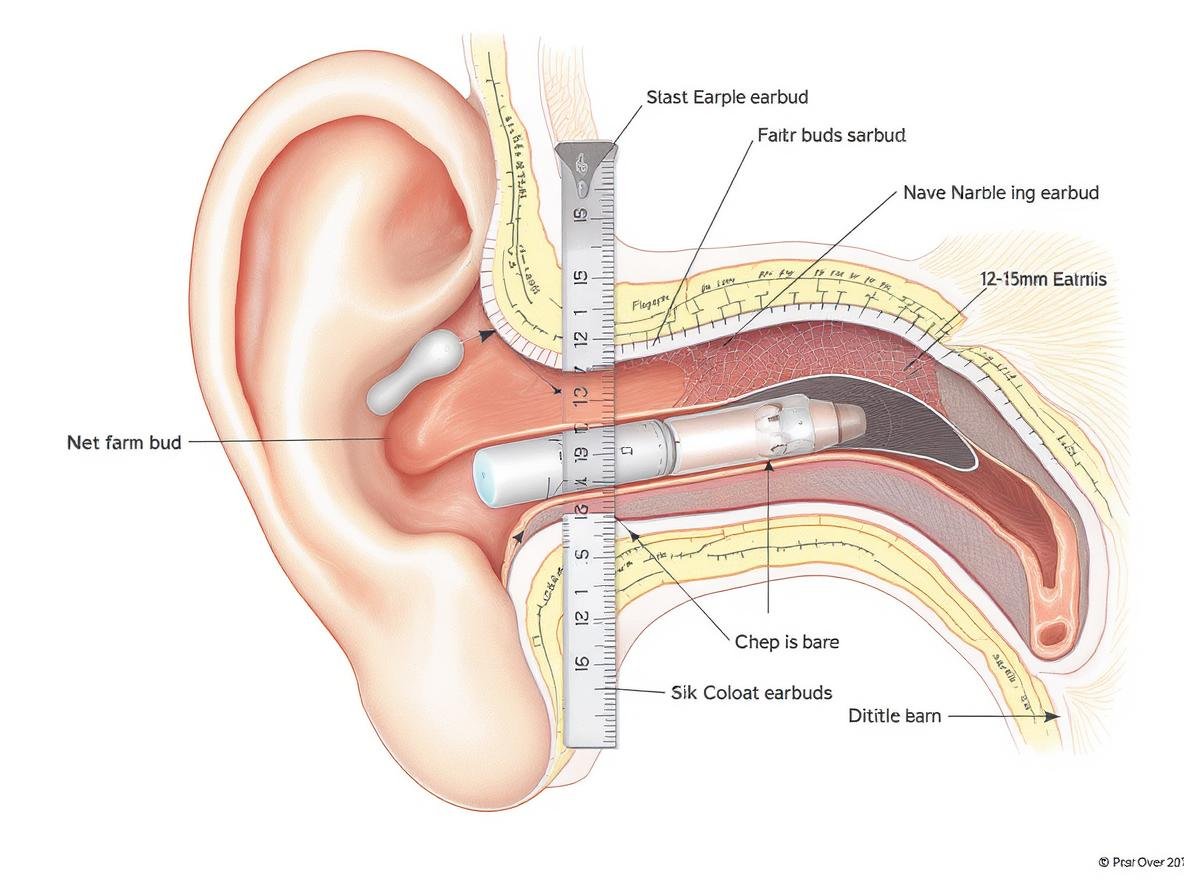
Are you concerned about whether you’re inserting your earbuds too deep into your ear canal? This common worry affects millions of people who use earbuds daily for work, entertainment, or communication. The wrong earbud depth can lead to hearing damage, discomfort, and poor sound quality that forces you to increase volumes to dangerous levels.
Professional audiologists recommend that earbuds should only penetrate 12-15mm into the ear canal, with their outer edge positioned approximately 2-3mm inside the ear canal entrance. This shallow placement protects your hearing while maintaining optimal audio quality.
But understanding proper earbud placement involves more than just depth – let’s explore everything you need to know about safe earbud use based on the latest medical research.
What Is the Safe Depth for Earbuds in Your Ear Canal?
Many people wonder about the exact safe distance their earbuds can go into their ear canal without causing damage or hearing loss.
The scientifically recommended safe depth for earbuds is 12-15mm into the ear canal, which means the outer edge should sit only 2-3mm inside your ear canal entrance. This positioning achieves optimal sound delivery while maintaining critical safety margins from your eardrum.
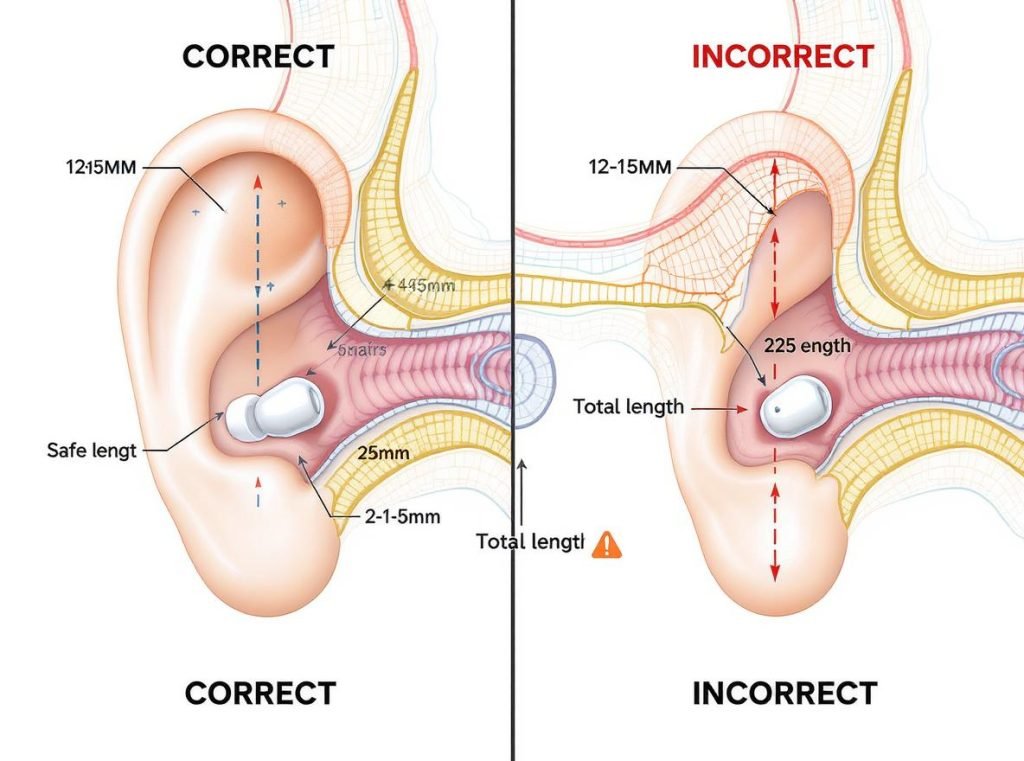
The human ear canal averages 25mm in length from the outer opening to the tympanic membrane (eardrum). Professional research shows that going beyond the recommended 15mm depth significantly increases risks to your ear health and hearing function.
Understanding ear canal anatomy helps explain why this depth matters. Your ear canal consists of two distinct sections: the outer cartilaginous portion (approximately 8mm) and the inner bony portion (approximately 16mm). The canal narrows at the isthmus, located about 20mm from the opening, which represents the narrowest point.
Critical Safety Measurements:
- Average ear canal length: 25mm
- Safe earbud insertion: 12-15mm maximum
- Danger zone: Beyond 20mm (near eardrum)
- Individual variation range: Significant differences exist
| Ear Canal Section | Distance from Opening | Earbud Safety Level |
|---|---|---|
| Outer Cartilage | 0-8mm | Safe zone |
| Safe Insertion | 12-15mm | Recommended max |
| Isthmus Narrowing | 20mm | Danger threshold |
| Eardrum Location | 25mm average | Never exceed |
Why Does Earbud Depth Matter for Your Hearing Health?
Understanding why proper earbud depth is crucial helps you protect your long-term hearing health and prevent permanent damage.
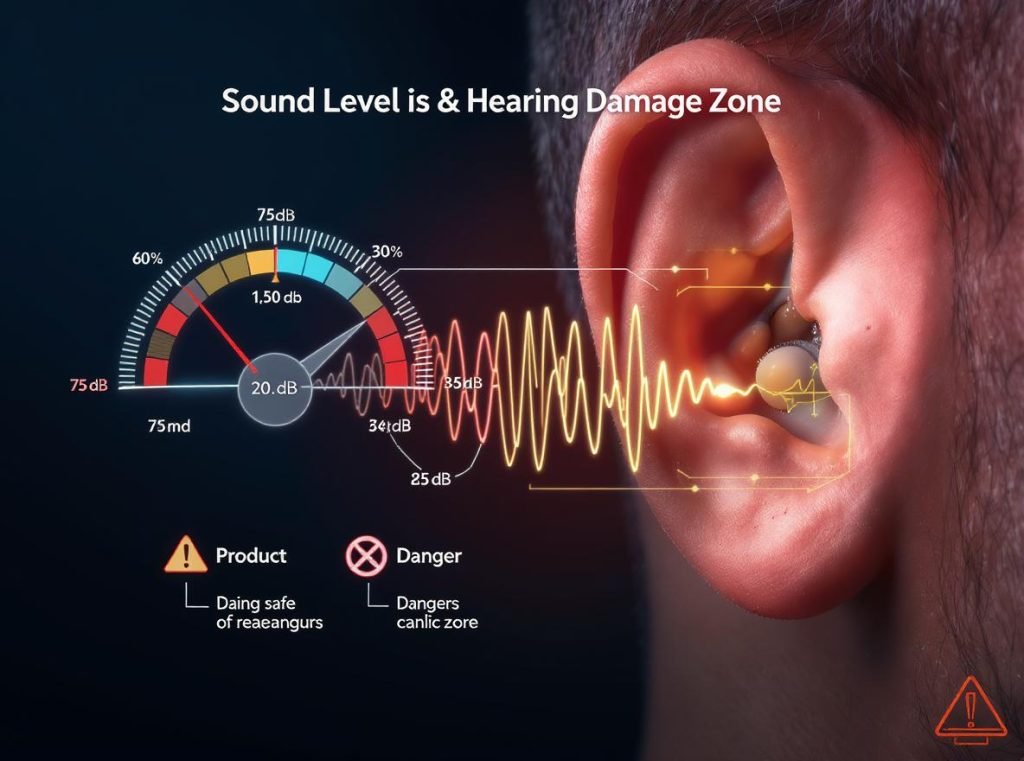
Incorrect earbud depth can cause noise-induced hearing loss, force dangerous volume increases, create ear infections, and potentially damage your eardrum. Research shows that improper fit forces users to increase volumes above 85dB, while proper insertion maintains safe levels below 75dB.
Hearing Protection Science:
Professional studies demonstrate that canal earphones with proper depth and noise cancellation maintain preferred listening levels below 75dB. However, improper fit forces users to increase volumes to dangerous levels exceeding 85dB – this difference can mean the distinction between safe listening and permanent hearing damage.
Sound Quality Impact:
Incorrect depth placement significantly affects audio performance. Shallow insertion reduces sound levels by 2-6dB at higher frequencies, resulting in tinny, treble-heavy sound with poor bass response. This forces users to compensate with higher volumes, creating a dangerous cycle.
Medical Consequences:
- Immediate risks: Ear canal irritation and micro-injuries
- Short-term effects: Temporary hearing threshold shifts
- Long-term damage: Permanent noise-induced hearing loss
- Infection risks: Deep canal contamination and bacterial growth
The World Health Organization’s research supports the 60/60 rule: listen at no more than 60% maximum volume for no more than 60 minutes at a time, with proper earbud depth making this guideline achievable and effective.
What Happens When Earbuds Go Too Deep?
Many users experience problems when their earbuds penetrate too far into the ear canal without realizing the serious health implications.
When earbuds exceed the safe 15mm depth, you may experience pain, acoustic pressure buildup, temporary hearing loss, earwax impaction, increased infection risk, and potential eardrum damage from concentrated sound pressure or physical contact.
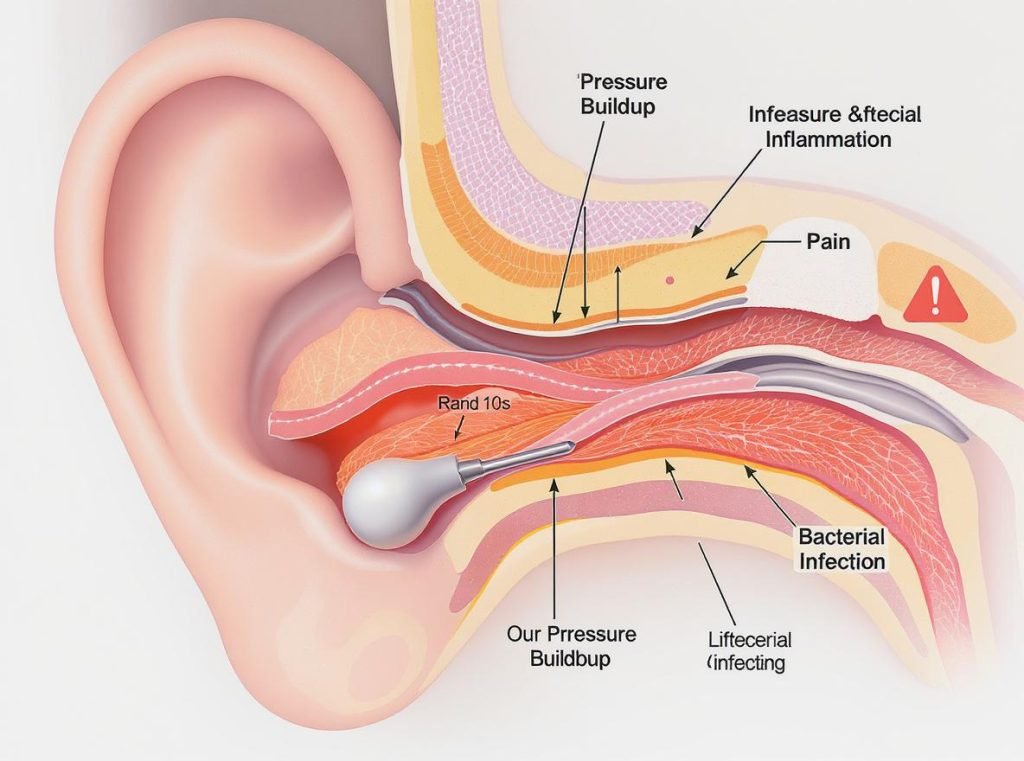
Immediate Physical Symptoms:
Deep insertion creates unnaturally intense pressure from low frequencies, leading to discomfort and distorted sound perception. The concentrated sound pressure at excessive depths can cause immediate acoustic trauma.
Medical Warning Signs:
- Overly intense bass or pressure sensations during music playback
- Sharp or dull pain in the ear canal during or after use
- Feeling of fullness that persists after earbud removal
- Temporary hearing changes or muffled perception
- Difficulty removing earbuds without significant discomfort
Scientific Evidence of Damage:
Research shows that excessive insertion depth increases risks by introducing bacteria into sensitive canal areas while potentially causing micro-injuries to delicate ear tissues. The acoustic pressure concentration at improper depths can exceed safe exposure limits even at moderate volume settings.
Long-term Health Consequences:
- Chronic ear canal inflammation and sensitivity
- Permanent hearing threshold shifts in affected frequencies
- Increased susceptibility to bacterial and fungal infections
- Earwax impaction from deep canal irritation
- Acoustic trauma from concentrated sound pressure
If you experience any of these symptoms, remove your earbuds immediately and allow your ears to rest. Persistent problems beyond 24 hours require professional medical evaluation.
How Can You Tell If Your Earbuds Are Too Deep?
Recognizing when your earbuds have exceeded safe insertion depth helps prevent immediate and long-term ear damage.
Your earbuds are too deep if you experience any discomfort, need to push them in forcefully, feel excessive bass pressure, have difficulty with removal, or notice any hearing changes after use. Professional guidelines indicate that proper insertion should feel natural and comfortable.
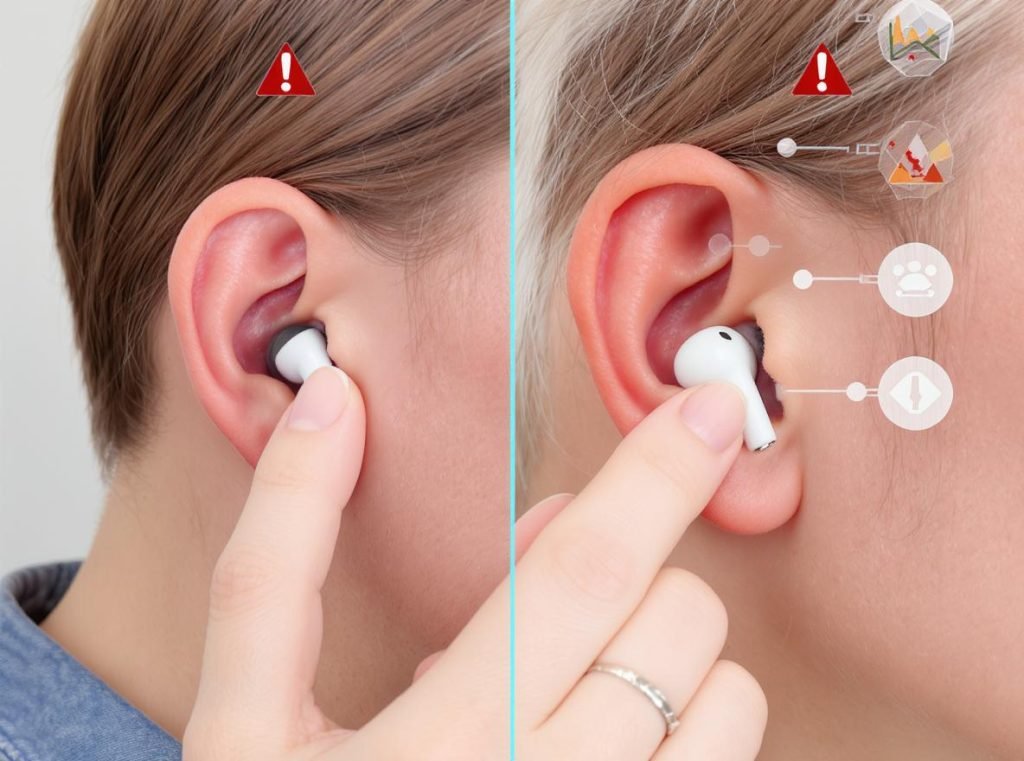
Physical Assessment Methods:
The insertion process should feel natural and comfortable throughout. If you need to push hard or twist aggressively to achieve what you think is a proper seal, you’re likely exceeding safe depth limits.
Audio Quality Indicators:
Proper depth creates balanced sound without excessive pressure sensations. Warning signs include overly intense bass that creates physical discomfort, distorted sound at normal volumes, and acoustic feedback or unusual resonance effects.
Professional Testing Criteria:
- Comfort test: No pain or pressure during 15-minute wear
- Security test: Earbuds stay in place during normal head movement
- Audio test: Clear, balanced sound without forcing volumes higher
- Removal test: Easy extraction without resistance or discomfort
Visual Confirmation:
Using a mirror, you should see most of the earbud housing remaining outside your ear canal. If the entire tip disappears inside your ear, you’ve definitely exceeded safe insertion depth.
Medical Research Benchmarks:
Studies show that the first bend of the ear canal occurs at approximately 12mm depth in 81% of people, serving as a natural landmark for safe insertion limits that most earbuds should not exceed.
What Are the Best Practices for Safe Earbud Insertion?
Following medically-approved insertion techniques ensures both safety and optimal audio performance for your daily listening needs.
Best practices include selecting the correct tip size for your anatomy, inserting at the proper angle following your ear canal’s natural curve, stopping at the recommended 12-15mm depth, and never forcing insertion when you encounter resistance.
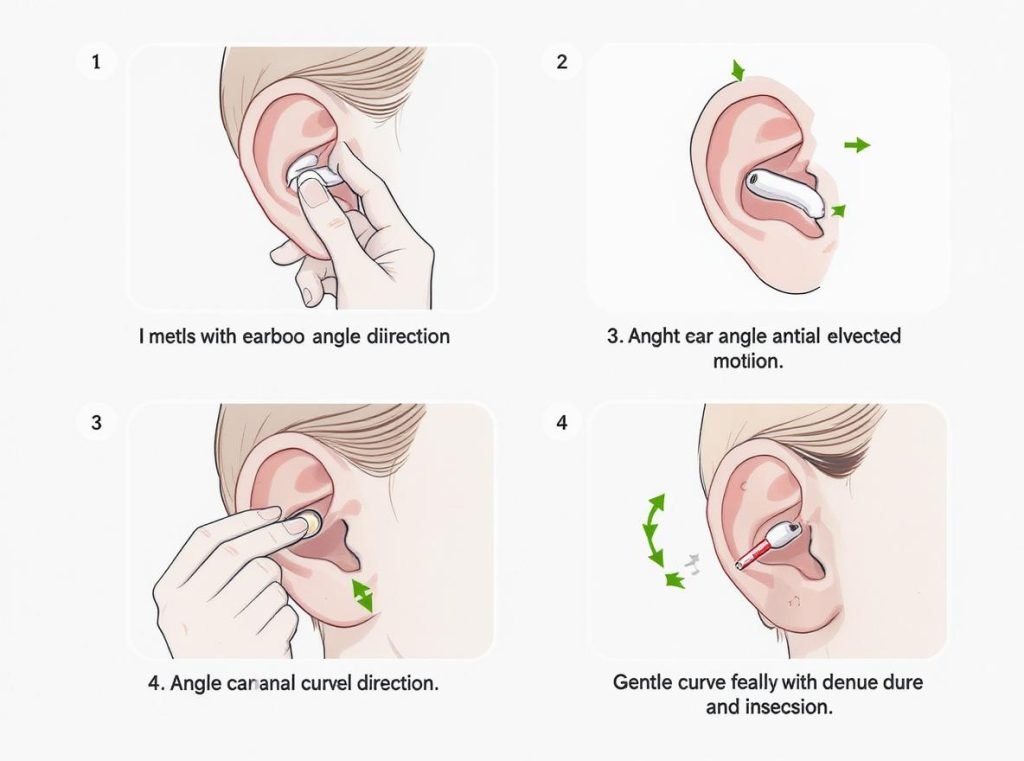
Professional Insertion Technique:
Start by selecting the appropriate ear tip size from the provided options. Most earbuds include small, medium, and large tips designed to accommodate anatomical variations.
Step-by-Step Safe Method:
- Choose proper tip size – Test all sizes to find optimal comfort and seal
- Angle correctly – Insert forward and upward, following natural ear canal curve
- Use gentle pressure – Apply slight twisting motion while gradually inserting
- Stop at comfortable seal – Cease insertion when secure fit is achieved
- Verify depth – Ensure most of housing remains visible outside ear
Tip Size Selection Science:
Research shows that proper sizing is critical for both safety and audio quality. Tips too small won’t create adequate seal, while oversized tips can cause discomfort or collapse within the canal, forcing deeper insertion.
Volume Control Integration:
Follow evidence-based guidelines: maintain exposure below 80dB for 8 hours daily, use the 60/60 rule, and take regular listening breaks. Proper insertion depth makes these safety standards achievable without compromising audio enjoyment.
Remember that your ear canals may differ in size, requiring different tip sizes for each ear – this is completely normal and should be accommodated for optimal safety and comfort.
Which Earbud Types Are Safest for Your Ears?
Different earbud designs offer varying levels of safety and comfort based on medical research and professional recommendations.
The safest earbuds feature active noise cancellation technology, shallow-insertion designs, multiple tip size options, and built-in volume limiting features. Research shows these combinations maintain listening levels below 75dB even in noisy environments.
Active Noise Cancellation Advantage:
Scientific studies demonstrate that noise-cancelling earbuds allow for safer listening by reducing background noise, enabling lower volume settings. These devices maintain listening levels below 75dB even in challenging acoustic environments, compared to over 85dB required with standard earbuds.
Design Safety Rankings:
Based on medical research and professional recommendations:
- Shallow-insertion earbuds: Safest option with built-in depth limitations
- Active noise-cancelling models: Reduce need for dangerous volume levels
- Standard in-ear monitors: Safe when properly fitted and used
- Deep-insertion models: Require careful technique and professional guidance
Alternative Technologies:
- Over-ear headphones: Generally safer as they don’t create canal seal pressure
- Bone conduction earbuds: Eliminate insertion risks entirely by sitting on temples
- Custom-fitted options: Professional ear impressions ensure perfect, safe fit
Professional Manufacturing Standards:
At Osmarto, we prioritize safety-first design principles including clear depth marking on tips, comprehensive size ranges, educational materials, and collaboration with audiologists to ensure our wholesale partners receive products that protect end-user hearing health.
How Do You Choose the Right Earbud Tip Size?
Selecting the correct earbud tip size is crucial for achieving safe insertion depth while maintaining audio quality and comfort.
Choose earbud tips using scientific testing methods: start with medium size, wear for 15 minutes during normal activity, assess comfort and security, and select the largest size that remains comfortable without requiring excessive insertion force.
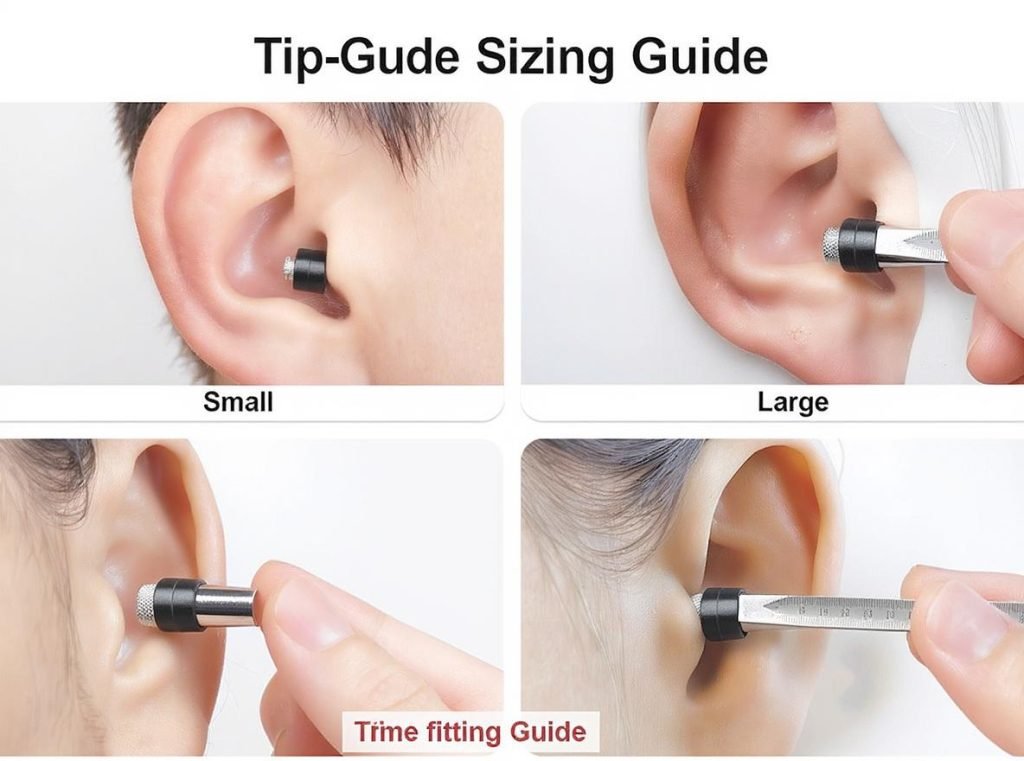
Evidence-Based Size Selection:
Most earbuds include small, medium, and large tips designed to accommodate the significant anatomical variation between individuals. Research shows ear canal areas can range from 34-106mm² at typical measurement locations.
Professional Testing Protocol:
- Begin with medium tips (pre-installed on most devices)
- Conduct 15-minute wear test during normal head movements
- Assess comfort level – no pain or excessive pressure
- Evaluate security – earbuds stay in place without adjustment
- Test audio quality – balanced sound without volume forcing
- Adjust size if needed based on test results
Size Assessment Criteria:
- Too Small: Falls out easily, poor sound isolation, requires frequent readjustment, thin or tinny audio quality
- Perfect Fit: Stays secure during movement, comfortable seal without pressure, good bass response indicating proper acoustic coupling
- Too Large: Painful insertion, excessive pressure sensation, difficult removal, forces over-insertion
Material Science Considerations:
- Silicone tips: Offer durability, easy cleaning, and consistent sizing
- Foam tips: Provide superior comfort and adaptive seal but require replacement more frequently
- Hybrid designs: Combine benefits of different materials for optimal performance
Professional audiologists often recommend foam tips for users concerned about insertion depth, as they provide excellent seal with minimal penetration requirements.
What Should You Do If You Experience Ear Discomfort?
Knowing how to respond appropriately to ear discomfort can prevent minor issues from developing into serious medical problems.
If you experience any ear discomfort, immediately remove your earbuds, allow your ears to rest in a quiet environment, avoid reinserting until symptoms completely resolve, and seek professional medical evaluation if problems persist beyond 24-48 hours.
Immediate Response Protocol:
Stop using earbuds as soon as you notice any discomfort, pain, or unusual sensations. Research shows that continued use during discomfort significantly increases risk of permanent damage.
First Aid Measures:
- Remove earbuds gently without forcing or twisting motions
- Rest ears in quiet environment to allow natural recovery
- Avoid inserting anything else into the ear canal
- Monitor symptom progression over several hours
- Document duration and severity for potential medical consultation
Medical Consultation Indicators:
Seek professional help from an audiologist or ENT specialist if you experience:
- Persistent pain or pressure lasting more than 24 hours after removal
- Hearing changes that don’t resolve within 48 hours
- Discharge, bleeding, or visible irritation in the ear canal
- Recurring infections or chronic discomfort patterns
- Tinnitus (ear ringing) that continues beyond temporary exposure
Recovery and Prevention:
Most minor ear canal irritation resolves within 24-48 hours of discontinuing use. During recovery, maintain ear hygiene without using cotton swabs, allow natural air circulation, and consider professional fitting assessment before resuming earbud use.
Professional audiologists can provide custom ear impressions for perfectly fitted earbuds, eliminating depth and comfort concerns while optimizing both safety and sound quality.
How Can Businesses Ensure Customer Safety?
As responsible manufacturers and distributors in the audio industry, ensuring customer safety requires comprehensive education and quality-focused product design.
Businesses should provide evidence-based safety guidelines, offer complete tip size ranges with professional fitting guidance, include clear insertion depth markings, and design products with built-in safety features like volume limiting and shallow-insertion engineering.
Educational Responsibility Standards:
At Osmarto, we believe customer education is as important as product quality. Every wholesale shipment includes comprehensive safety documentation based on current medical research and professional audiologist recommendations.
Manufacturing Safety Integration:
- Design-limited insertion depth through engineering constraints
- Clear visual depth indicators on earbud tips and housings
- Comprehensive tip size ranges including specialty options
- Volume limiting technology with user override capabilities
- Professional installation guides with anatomical reference materials
Quality Assurance Protocols:
Our manufacturing process includes testing with diverse ear canal anatomies, validation of comfort during extended wear periods, verification of easy removal mechanisms, and continuous monitoring of customer feedback for safety-related concerns.
Wholesale Partner Support:
For distributors, retailers, and brand manufacturers partnering with Osmarto, we provide:
- Complete safety documentation packages for end-user education
- Professional training materials on proper fitting techniques
- Technical support for customer safety inquiries
- Ongoing updates based on latest medical research and safety standards
Industry Leadership Commitment:
We work directly with audiologists and hearing health professionals to ensure our products meet the highest safety standards while delivering exceptional audio quality that doesn’t compromise user health.
Summary
Proper earbud depth of 12-15mm is essential for hearing safety and audio quality. Choose appropriate tip sizes, follow professional insertion techniques, and never ignore discomfort. Research-backed safety practices protect your hearing for lifelong enjoyment of music and communication.
Ready to provide your customers with medically-approved, safe earbud solutions? Contact Osmarto today to explore our range of professionally-designed earbuds that prioritize user safety without compromising audio excellence. Our wholesale team collaborates with hearing health professionals to ensure you receive products that meet the highest safety standards – send us an inquiry to discover how we can support your business with confidence.