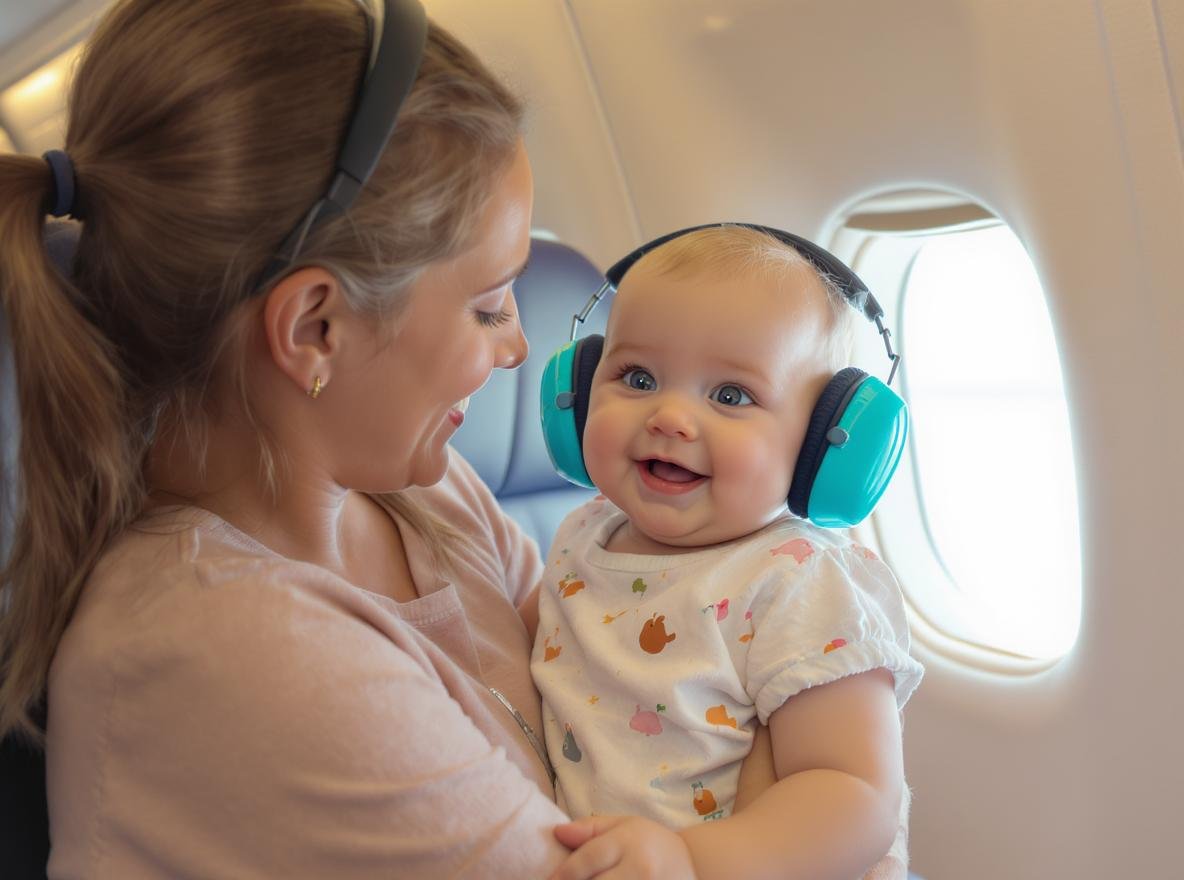
Flying with babies or toddlers creates anxiety for many parents, especially when considering their children’s sensitive hearing. The loud environment inside aircraft cabins raises important questions about protecting young ears from potential damage during flights.
Yes, babies and toddlers should always wear hearing protection during airplane takeoffs and landings, and many benefit from protection throughout the entire flight. Aircraft noise reaches 105 decibels during takeoff – loud enough to cause hearing damage in just 90 seconds. At cruising altitude, cabin noise maintains around 85-90 decibels, which can cause temporary hearing problems with extended exposure and permanent damage if sustained over eight hours.
Understanding the risks and solutions will help you make informed decisions about protecting your child’s developing auditory system while traveling.
Are Airplane Noise Levels Dangerous for Babies and Toddlers?
Understanding the specific noise levels inside aircraft is crucial for making informed decisions about your child’s hearing protection during flights.
During takeoff and landing, aircraft cabin noise reaches 105 decibels, while cruising altitude maintains approximately 85-90 decibels. These levels pose significant risks to young children because their smaller ear canals create greater sound pressure at the eardrum, making them more sensitive to loud sounds than adults.
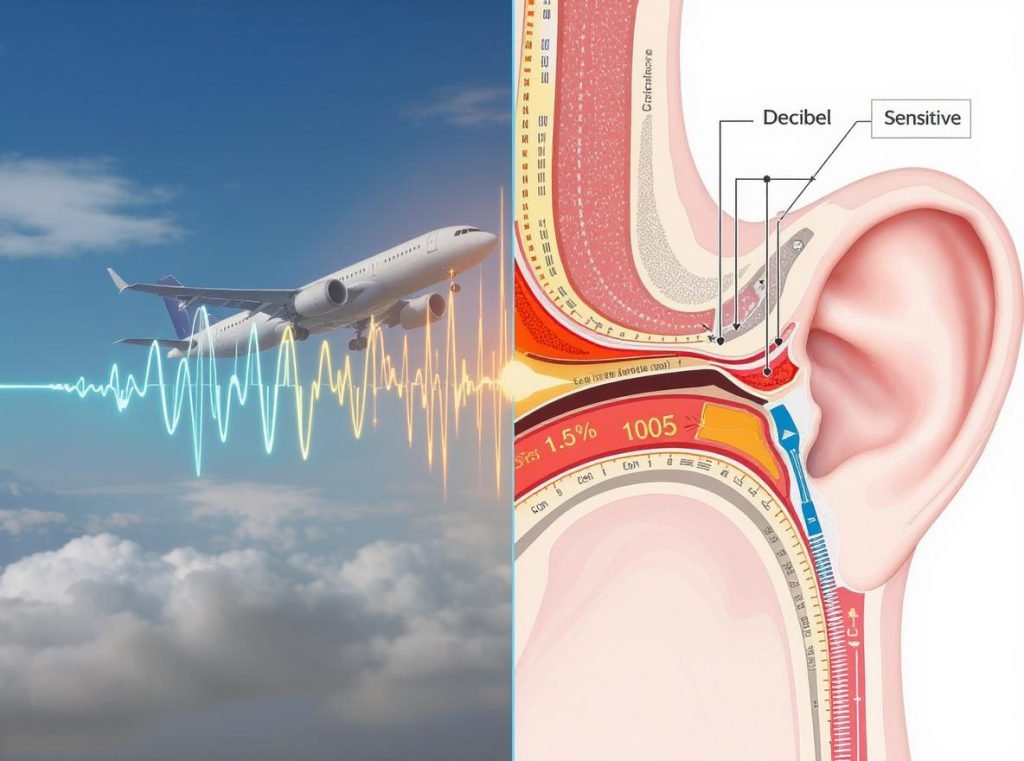
The science behind children’s increased vulnerability is clear:
Children face higher risks because their developing auditory systems are more fragile. Their smaller ear canals amplify sound pressure, creating more intense noise exposure than adults experience at the same decibel levels. Additionally, young children cannot communicate discomfort effectively, making it difficult for parents to recognize when damage might be occurring.
Here’s what the research shows about safe exposure limits:
| Noise Level | Safe Exposure Time | Aircraft Situation | Risk Level |
|---|---|---|---|
| 85 dB | 8 hours maximum | Cruising flight | Moderate risk with long exposure |
| 90 dB | 2.5 hours maximum | Standard cabin noise | High risk on long flights |
| 105 dB | 90 seconds maximum | Takeoff and landing | Immediate damage risk |
| 110 dB | 30 seconds maximum | Peak takeoff noise | Severe damage risk |
Long exposure to 85 dB can cause temporary hearing problems, and noise levels above 90 dB for eight or more hours per day may lead to permanent hearing loss. Most commercial flights exceed these safe exposure times, making hearing protection essential rather than optional.
The cumulative effect means that frequent flyers face even greater risks, as damage accumulates over time with repeated exposures.
What Age Should Children Start Wearing Headphones on Planes?
Age-appropriate hearing protection varies significantly based on your child’s developmental stage and ability to cooperate with protective equipment.
Babies and children should always wear hearing protection during takeoff and landing, with many benefiting from protection throughout the entire flight. Newborns can safely use baby earmuffs designed for ages 0-18 months, while specialized headphones are available for babies as young as 3 months.
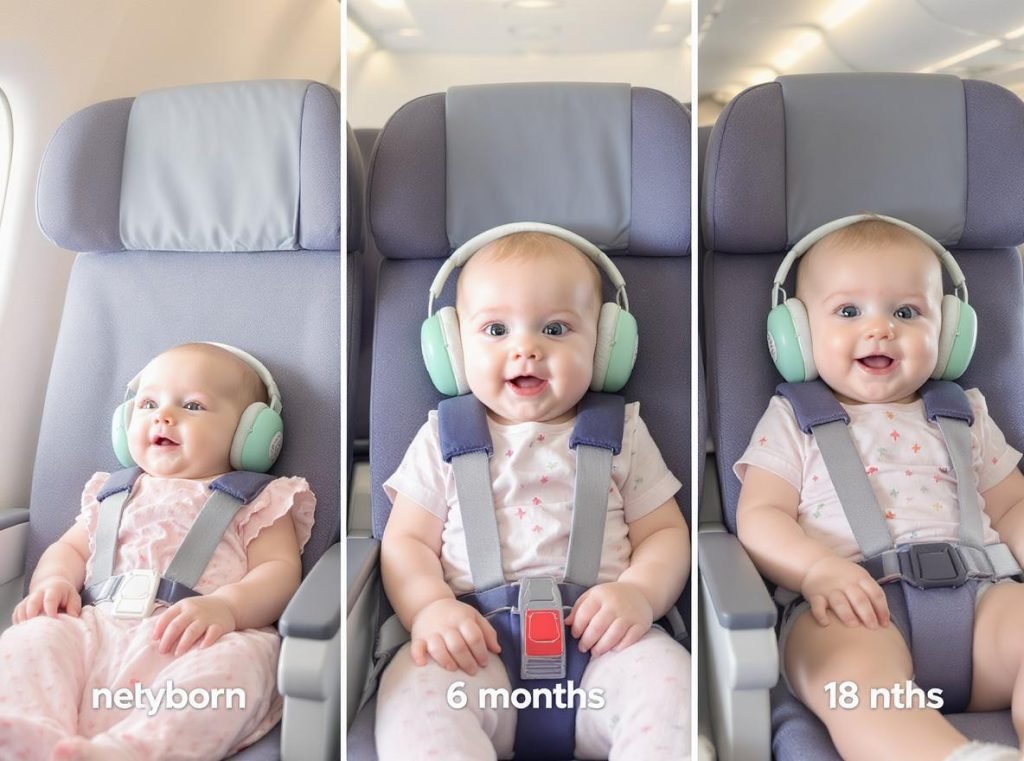
Age-Specific Recommendations:
Newborns (0-6 months):
- Baby earmuffs specifically designed for newborns are safe and effective
- Ensure proper fit without pressure on soft spots (fontanelles)
- Focus on protection during the loudest phases of flight
- Monitor for signs of discomfort or skin irritation
Infants (6-18 months):
- Kids earmuffs recommended for this age range provide better cooperation
- Look for adjustable designs that accommodate rapid head growth
- Introduce gradually at home before travel
- Combine with feeding during pressure changes for comfort
Toddlers (18+ months):
- Can transition to more sophisticated noise-canceling options
- May tolerate headphones with entertainment features
- Require volume-limited devices for safety
- Can understand simple explanations about wearing protection
The critical factor isn’t just age, but choosing protection specifically designed for your child’s developmental stage. Baby headphones must be designed for their age group – using adult ear protection, wired headphones, or standard earplugs isn’t safe for babies.
Are Regular Headphones Safe for Babies and Toddlers?
Understanding the significant safety differences between adult and children’s hearing protection is essential for making appropriate choices.
Regular adult headphones are not safe for babies and toddlers. Adult headphones don’t fit properly on smaller heads, reducing effectiveness, and lack appropriate volume limitations. Research shows that half of the “children’s headphones” on the market exceed the 85 dBA safety limit, with the worst devices producing outputs of 114 dBA.
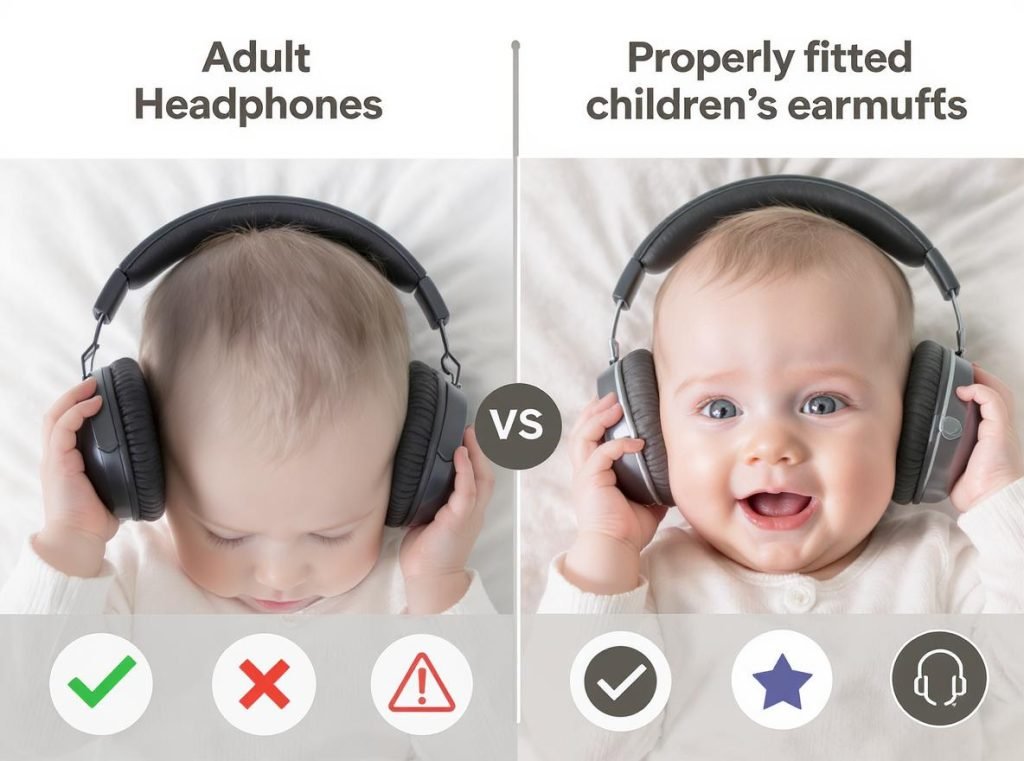
Critical Safety Concerns with Regular Headphones:
Fit and Effectiveness Issues:
- Adult headphones create gaps around small ears, reducing noise protection
- Poor fit allows dangerous noise levels to reach sensitive eardrums
- Improper seal eliminates the protective benefits entirely
- Heavy weight can cause discomfort and neck strain in young children
Volume Control Problems:
- Standard headphones lack volume limiting technology
- Children can accidentally adjust volumes to dangerous levels
- No built-in safeguards prevent hearing damage
- Maximum output often exceeds safe listening levels for any age
Safety Requirements for Children’s Audio Devices:
- Volume limiters that ensure maximum 85 dB output
- Proper fit testing for small head circumferences
- Age-appropriate controls that children cannot easily manipulate
- Certification for children’s safety standards
When selecting any audio device for children, verify that it’s specifically designed and tested for their age group. The World Health Organization considers 85 dBA the safe limit for children, but many products marketed to children fail to meet this standard.
What’s Better: Noise-Canceling Headphones or Ear Defenders for Flying?
The choice between active noise-canceling headphones and passive ear defenders depends on your specific travel needs and your child’s age and cooperation level.
For airplane travel specifically, noise-canceling headphones are generally superior because aircraft noise concentrates in lower frequencies where active noise cancellation excels. However, ear defenders provide higher overall noise reduction ratings and work better for maximum protection during the loudest phases of flight.
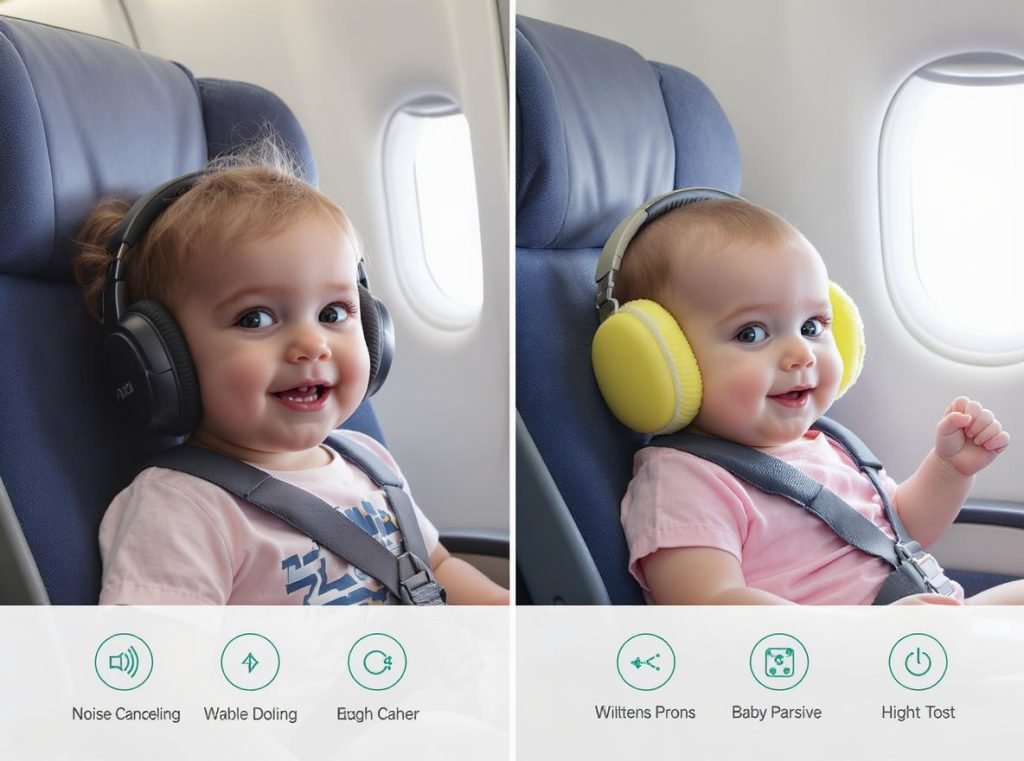
Active Noise-Canceling Headphones:
Advantages for air travel:
- Excel at blocking low-frequency airplane engine noise
- Allow children to listen to content at lower, safer volumes
- More comfortable for extended wear during long flights
- Provide entertainment value to keep children occupied
- Generally lighter weight than traditional ear defenders
Limitations to consider:
- Require batteries or charging (can fail during flight)
- More expensive to replace if damaged
- Less effective at blocking mid-frequency sounds
- Electronic components may malfunction
- Not suitable for children under 18 months
Passive Ear Defenders (Earmuffs):
Advantages for maximum protection:
- Higher noise reduction ratings (NRR up to 31 dB)
- No battery requirements – reliable throughout entire flight
- More durable construction withstands rough handling
- Better for blocking across all frequency ranges
- Less expensive and easier to replace
Considerations for travel:
- Bulkier for packing and storage
- May be less comfortable for very long flights
- No entertainment value for older children
- Can create pressure points on smaller heads
Professional Recommendation:
For maximum protection during takeoff and landing, some parents use both – doubling up with earmuffs and cotton balls or foam plugs. This approach provides the highest level of protection during the most dangerous noise periods.
How to Choose the Right Headphones for Your Child’s Flight
Selecting appropriate hearing protection requires careful consideration of safety features, fit, comfort, and practical travel considerations.
Choose headphones based on verified safety certifications, proper age-appropriate fit, and a noise reduction rating around 30 dB for optimal protection. Volume limiting to 85 dB maximum is essential, along with adjustable features that don’t put pressure on fontanelles in newborns.
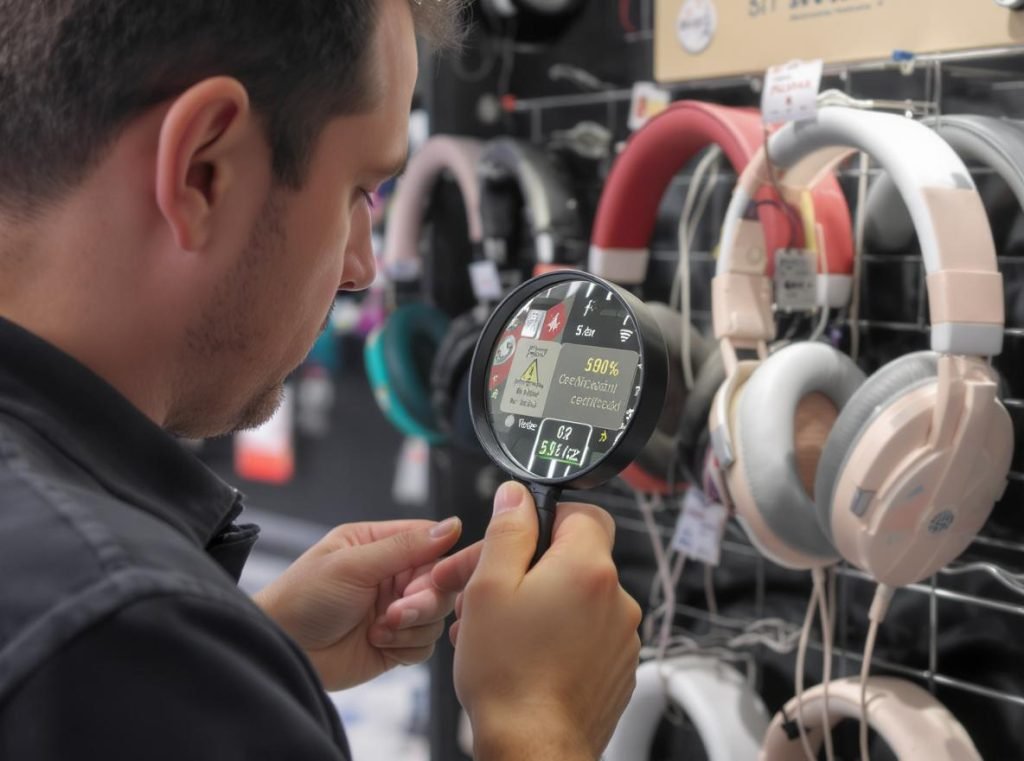
Essential Safety Features:
Certified Protection Standards:
- Look for products tested and certified for children’s use
- Verify noise reduction rating (NRR) of approximately 30 dB
- Ensure volume limiting technology caps output at 85 dB maximum
- Check for compliance with international safety standards
Age-Appropriate Fit Requirements:
- Measure your child’s head circumference if possible
- Ensure adjustable headband accommodates growth
- Verify ear cup seal without creating uncomfortable pressure
- Consider your child’s hair texture and sensitivity levels
Comfort and Durability Features:
- Soft, hypoallergenic cushioning materials
- Lightweight construction for extended wear
- Secure fit that won’t easily shake loose during movement
- Replaceable parts for long-term use
Top-Rated Options by Category:
| Product Type | Best Features | Age Range | Key Benefits |
|---|---|---|---|
| Mumba Baby Earmuffs | Highest NRR (31 dB), excellent fit | 0-18 months | Maximum protection |
| Baby Banz Earmuffs | Comfortable for sleeping | 0-24 months | Long-flight comfort |
| PuroQuiet-Plus | Effective airplane frequency protection | 2+ years | Targeted noise reduction |
| David Clark H10-13Y | Professional aviation quality | 3+ years | Frequent flyer durability |
Remember that the most effective headphones are the ones your child will consistently wear throughout the flight.
Tips for Getting Babies and Toddlers to Keep Headphones On
Success with hearing protection depends largely on preparation, patience, and understanding your child’s individual temperament and needs.
Introduce headphones gradually at home before travel, starting with short 5-minute periods and gradually increasing duration. During flights, use strategic timing, positive reinforcement, and realistic expectations – intermittent protection during the loudest phases still helps prevent noise-induced hearing loss.
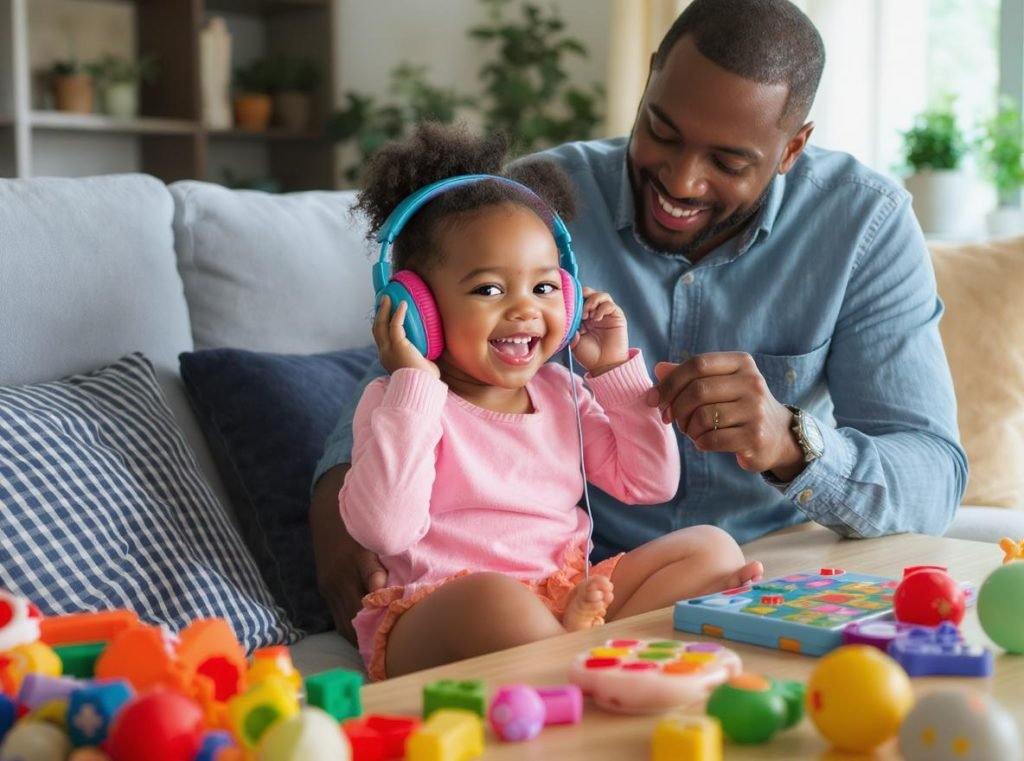
Pre-Travel Preparation Strategies:
Home Introduction Process:
- Begin familiarization 1-2 weeks before travel
- Let children explore and play with headphones as toys
- Start with very short wearing periods during enjoyable activities
- Take photos of children wearing headphones to build excitement
- Practice during quiet activities like coloring or puzzle time
Building Positive Associations:
- Choose colorful, appealing designs that children find attractive
- Allow children to participate in selecting their own protection
- Create special “airplane headphones” excitement around travel
- Associate wearing them with favorite songs or entertainment
During Flight Implementation:
Strategic Timing Approaches:
- Prioritize protection during takeoff and landing (most critical periods)
- Use feeding time strategically – cover one ear while feeding, headphones on other
- Don’t stress about constant wearing – intermittent protection still provides benefits
- Remove periodically to prevent pressure buildup and discomfort
Comfort and Encouragement:
- Stay calm and provide reassurance – children sense parental anxiety
- Offer comfort items alongside headphones
- Use positive reinforcement and praise for cooperation
- Be prepared with backup entertainment and distractions
Troubleshooting Common Problems:
- Constant removal: Try shorter periods, check fit, increase engagement
- Pressure complaints: Adjust headband, add soft padding, take regular breaks
- Complete resistance: Stay patient, don’t force, try again later in flight
Alternative Methods to Protect Baby’s Ears During Flights
When headphones aren’t practical or your child won’t cooperate, several proven alternative methods can still provide meaningful hearing protection.
Effective alternatives include cotton balls placed gently in outer ears, baby-safe earplugs designed for infants, natural pressure relief through feeding, and strategic environmental choices like seat selection away from engines.
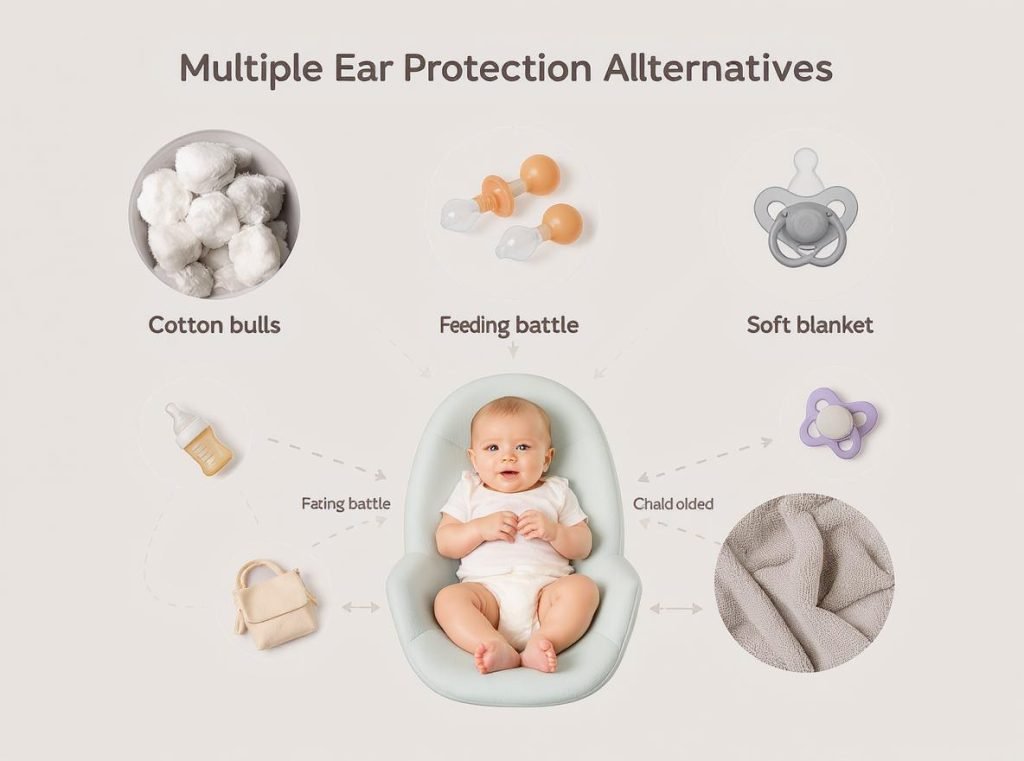
Physical Protection Alternatives:
Traditional Methods:
- Cotton balls placed gently in the outer ear provide basic sound dampening
- Small, baby-safe earplugs designed specifically for infants
- Soft blankets or clothing strategically positioned over ears during loud phases
- Combination approaches using multiple methods simultaneously
Professional-Grade Options:
- Custom-molded ear protection for frequent travelers
- Medical-grade foam plugs sized for children’s ear canals
- Silicone putty that molds to individual ear shape
- Professional consultation for special needs children
Natural Protection and Comfort Methods:
Pressure Relief Techniques:
- Breastfeeding or bottle feeding during takeoff and landing
- Pacifier use during critical pressure change periods
- Encouraging swallowing with small sips of water
- Allowing controlled crying, which naturally opens eustachian tubes
Environmental Strategies:
- Choose seats away from engines (avoid positions over wings)
- Select seats toward the front of aircraft when possible
- Book flights on newer aircraft models with better noise control
- Time flights during your child’s natural sleep periods when possible
Positioning and Comfort:
- Window seats can provide slight noise reduction from fuselage
- Aisle seats offer easier movement and distraction opportunities
- Bulkhead rows provide more space but may be noisier
- Consider your child’s preferences for visual stimulation vs. sleep
These alternatives work best when combined with realistic expectations and preparation for various scenarios during your flight.
Professional Headphone Solutions for Young Travelers
For families who travel frequently or have children with specific hearing sensitivities, investing in professional-grade aviation headphones may provide superior protection and long-term value.
Professional aviation headphones designed for children offer superior protection, communication capabilities, and durability for frequent flyers. Top-rated options include David Clark H10-13Y youth headsets, Lightspeed Sierra models, and Pilot USA child headsets designed for children between 2-10 years old.
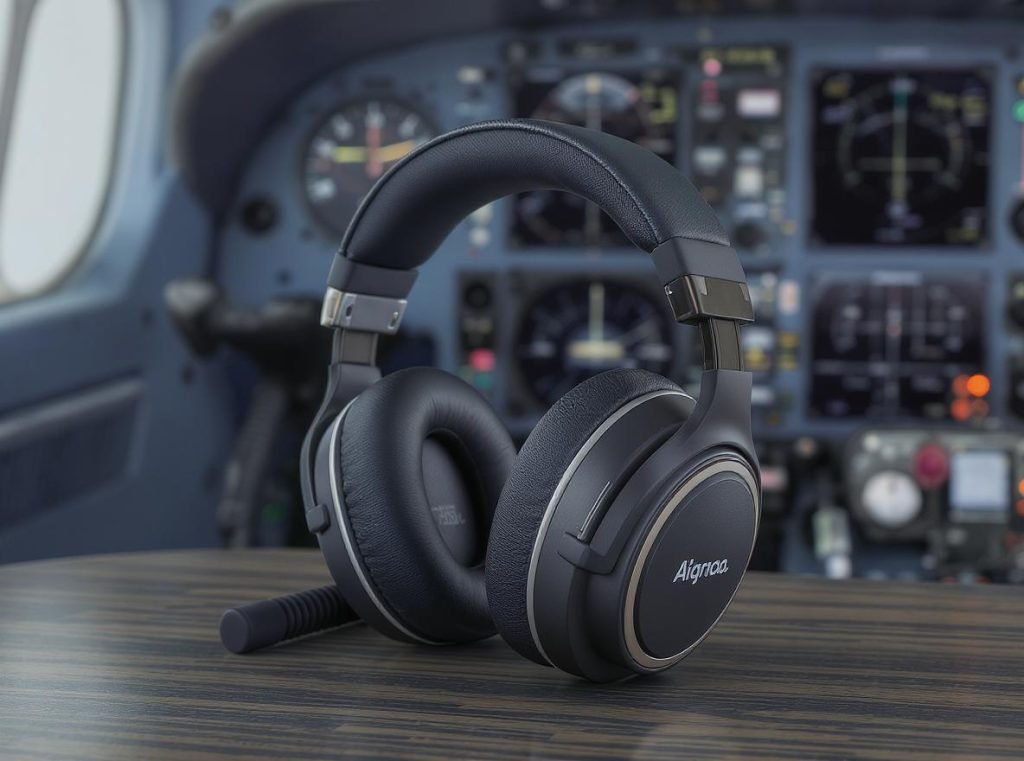
Aviation-Specific Professional Solutions:
David Clark H10-13Y Youth Headsets:
- Specifically designed for children in aircraft environments
- Professional-grade noise reduction and communication features
- Durable construction for frequent use
- Adjustable fit accommodates growth over several years
Lightspeed Sierra Models:
- Rated as top choice for children under 5 years old
- Advanced noise reduction technology
- Comfortable for extended wear during long flights
- Professional aviation quality at consumer-accessible pricing
Pilot USA Child Headsets:
- Designed specifically for children between 2-10 years old
- Multiple size adjustments for perfect fit
- Communication capabilities for family flying
- Robust construction withstands regular travel
High-Quality Consumer Alternatives:
PuroQuiet-Plus Systems:
- Effective active noise reduction specifically in airplane frequency bands
- Consumer-friendly pricing with professional-level protection
- Designed for regular travel rather than occasional use
- Entertainment compatibility for long-flight comfort
When to Consider Professional Solutions:
- Monthly or more frequent family air travel
- Children with diagnosed hearing sensitivities or special needs
- Previous negative experiences with standard consumer options
- Regular long-haul international flights requiring extended protection
- Family aircraft ownership or frequent private aviation
Investment Considerations:
- Higher upfront cost but superior long-term value for frequent travelers
- Professional fitting and consultation services available
- Often covered by insurance for medical conditions
- Resale value maintains better than consumer-grade options
Professional solutions provide the highest level of protection and comfort, making them worthwhile investments for families who prioritize hearing safety and travel frequently.
At Osmarto, we understand that protecting young travelers’ hearing requires specialized solutions. As a leading wholesale headphone manufacturer, we provide retailers and distributors worldwide with high-quality, safety-certified children’s audio products. Our commitment to hearing safety and innovative design makes us the trusted choice for businesses serving family travelers.
Summary
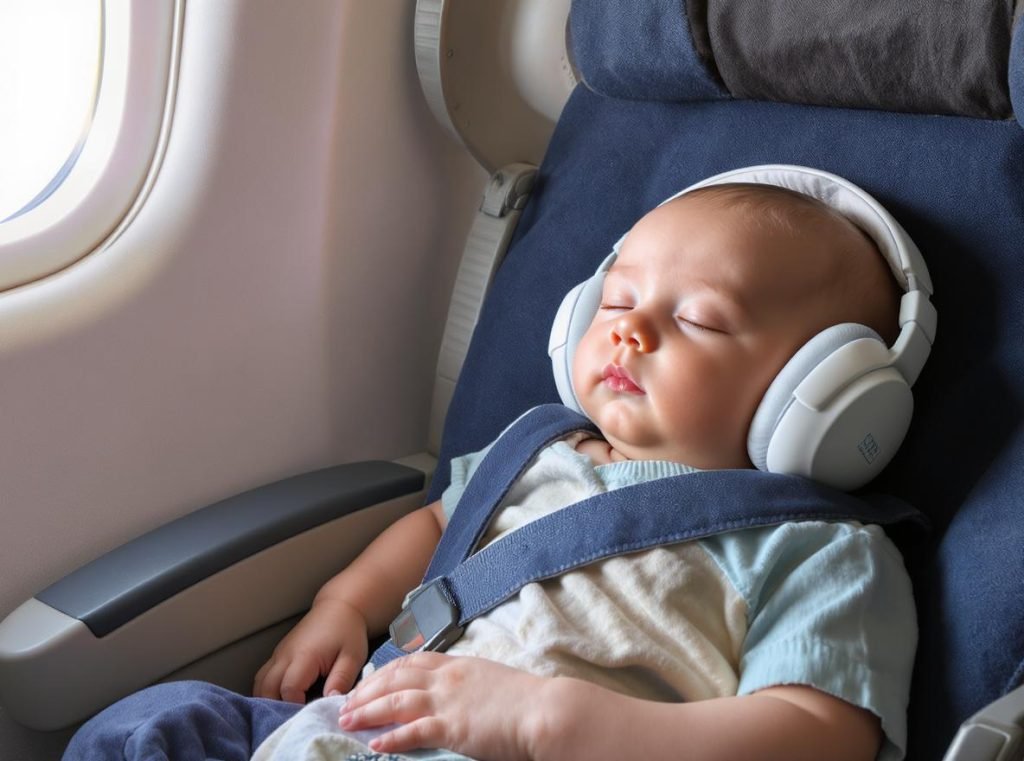
Protecting babies’ and toddlers’ hearing during air travel is both medically necessary and practically achievable. Aircraft noise reaches dangerous levels of 105 decibels during takeoff – enough to cause hearing damage in just 90 seconds – while cruising altitude maintains 85-90 decibels that can harm developing ears with extended exposure. Age-appropriate hearing protection, from newborn earmuffs to professional aviation headsets, provides essential safeguarding for young travelers’ sensitive auditory systems.
Ready to stock quality hearing protection solutions for young travelers? Contact Osmarto today for wholesale pricing on certified children’s headphones and hearing protection devices. We’re your trusted partner for safe, reliable audio products that protect families worldwide.