Skip to content
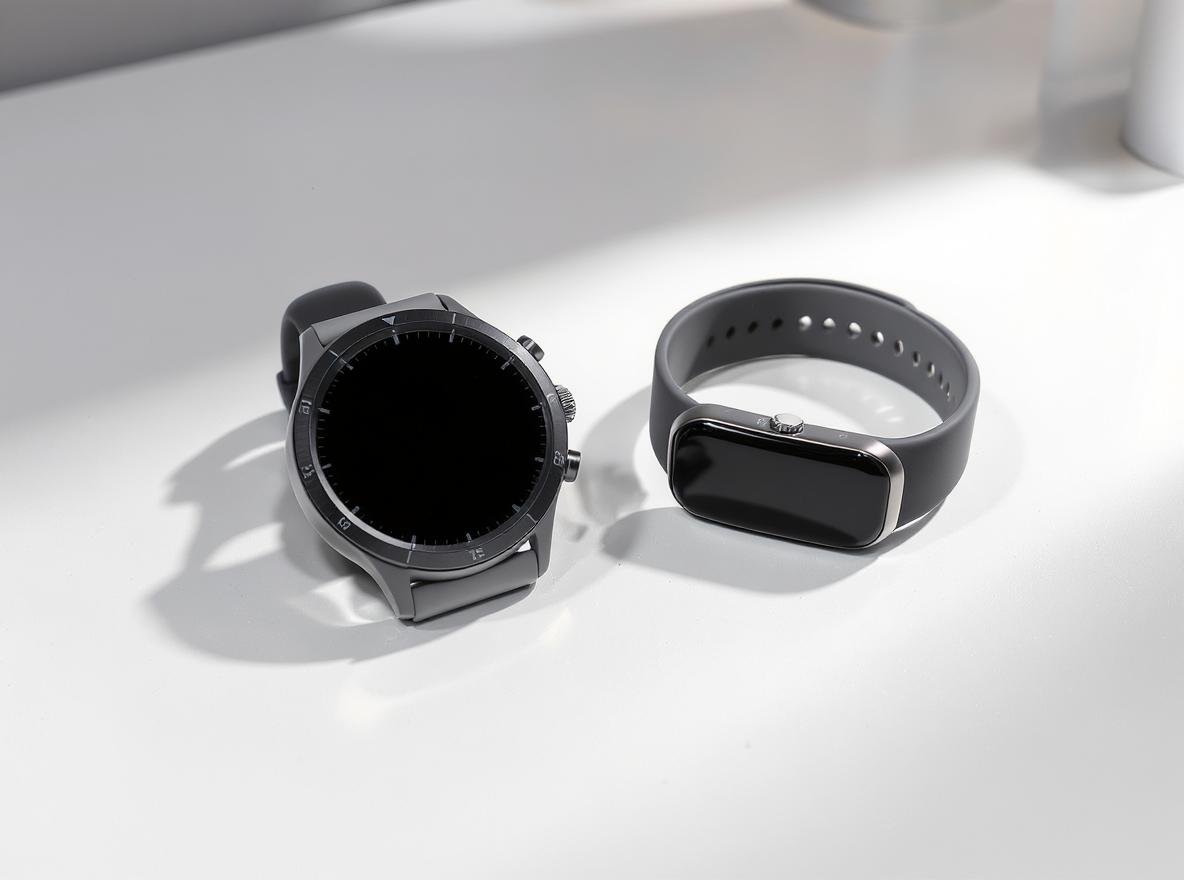
Choosing between a smartwatch and a smart band can feel overwhelming when both devices promise to track your health and keep you connected. With so many options flooding the market, business owners and distributors often struggle to understand which wearable technology their customers truly need.
The main differences between smartwatches and smart bands lie in display size, functionality, battery life, and price. Smartwatches offer larger screens (1.2-1.9 inches) with advanced features like app support and music storage, while smart bands focus on fitness tracking with longer battery life (7-21 days) and more affordable pricing ($25-$150 vs $150-$800+).
Understanding these distinctions will help you make informed decisions for your business and guide your customers toward the perfect wearable solution.
Table of Contents
ToggleWhat Makes the Display Different Between Smartwatches and Smart Bands?
The display represents the most obvious difference you’ll notice when comparing these devices. This fundamental distinction affects user experience, functionality, and overall appeal.
Smartwatches feature larger, high-resolution displays (typically 1.2-1.96 inches) with full-color AMOLED or OLED touchscreens supporting detailed app interfaces and brightness up to 3,000 nits, while smart bands have smaller displays (usually 1.47-1.62 inches) designed primarily for essential information like time, steps, and notifications.
Modern smartwatch displays use advanced OLED technology that provides several key advantages. These self-illuminating pixels deliver perfect blacks and high contrast ratios, making content easily readable even in direct sunlight. The Apple Watch Series 10, for example, offers displays reaching 2,000-3,000 nits brightness with wide viewing angles for easy readability during movement.
Smartwatch display capabilities include:
- Multi-touch gesture support for complex interactions
- High pixel density (300+ PPI) for crisp text and images
- Always-on display options for constant time visibility
- Customizable watch faces with multiple complications
Smart bands prioritize efficiency and readability over visual richness. The Xiaomi Smart Band 9 features a 1.62-inch AMOLED display optimized for basic health data viewing rather than complex app interfaces. While newer models also use AMOLED technology, the emphasis remains on simplicity and battery conservation.
| Feature | Smartwatch | Smart Band |
|---|---|---|
| Screen Size | 1.2-1.96 inches | 1.47-1.62 inches |
| Brightness | Up to 3,000 nits | 500-1,000 nits |
| Resolution | 280×280 to 416×496 pixels | Basic resolutions |
| Technology | AMOLED/OLED | AMOLED (newer models) |
| Interaction | Multi-touch gestures | Basic touch/buttons |
How Do Processing Power and Software Capabilities Compare?
The internal hardware and software ecosystem create significant performance gaps between these wearable categories. These differences determine what tasks each device can handle effectively.
Smartwatches run complex operating systems with powerful processors like Qualcomm Snapdragon W5+ Gen 1 and Samsung Exynos W1000 that support app installations, music storage, and multitasking with 1-2GB RAM, while smart bands use lightweight ARM Cortex-M4 processors with 2-8MB RAM focused on sensor data collection.
Smartwatches pack significant computing power with advanced processors. The Qualcomm Snapdragon W5+ Gen 1 offers 50% better battery efficiency and double the performance compared to previous generations. Samsung’s new Exynos W1000 provides up to 3.4x single-core performance improvements over earlier models.
RAM configurations in premium smartwatches typically range from 1-2GB, with flagship models like the Google Pixel Watch 3 featuring 2GB for smooth multitasking. Storage varies from 4-32GB, allowing local app installation and music storage for offline listening.
Popular smartwatch operating systems support extensive functionality:
- Wear OS (Google) with access to Play Store apps
- watchOS (Apple) with comprehensive health and productivity apps
- Tizen (Samsung) optimized for Galaxy ecosystem integration
- Voice assistants including Siri, Google Assistant, and Bixby
Smart bands utilize much simpler processors optimized for specific tasks. ARM Cortex-M4 processors running at 96-120MHz are common, like the TZ1201XBG found in Fitbit devices. These processors focus on efficient sensor data processing rather than complex app execution.
Smart band software prioritizes battery conservation through lightweight operating systems that handle basic functions like fitness tracking algorithms, sleep analysis, and simple user interfaces with limited customization options.
What Are the Key Differences in Health and Fitness Tracking?
Both device types prioritize health monitoring, but their approaches and capabilities vary significantly. Understanding these differences helps businesses recommend appropriate solutions for different user needs.
Premium smartwatches offer medical-grade health monitoring including ECG capability, blood oxygen monitoring, and sleep apnea detection with 94-99% accuracy rates, while smart bands focus on fundamental fitness metrics like 24/7 heart rate monitoring, step counting, and sleep tracking with exceptional consistency due to lighter weight and all-day wearability.
Smartwatches provide comprehensive health monitoring with medical-grade capabilities. The Apple Watch Series 4+ includes ECG functionality for detecting atrial fibrillation, while Samsung Galaxy Watch series offers similar cardiac monitoring. Studies show smartwatches can detect atrial fibrillation with 94.2% sensitivity and 95.3% specificity.
Advanced smartwatch health features include:
- ECG readings for heart rhythm analysis
- Blood oxygen saturation (SpO2) monitoring
- Sleep apnea detection (Apple Watch Series 10)
- Fall detection with emergency SOS capabilities
- Temperature sensing for menstrual cycle tracking
- Advanced heart rate tracking with medical accuracy
Smart bands excel in fundamental fitness metrics through specialized sensors optimized for continuous monitoring. The Amazfit Band 7 demonstrates typical performance with 18-day battery life while maintaining 24/7 health tracking. Their lighter weight and comfortable design encourage all-day wearing, leading to more consistent data collection.
Smart band health capabilities focus on:
- Continuous heart rate monitoring with good general fitness accuracy
- Sleep stage tracking including deep, light, and REM phases
- Precise step counting and distance estimation
- Calorie burn calculation based on activity levels
- Stress level monitoring through heart rate variability
- Blood oxygen measurement on newer models
While wearable devices generally have error rates up to 20% for heart rate and up to 100% variation in caloric expenditure measurements, both device types provide valuable trend data for fitness enthusiasts and health-conscious users.
How Does Battery Life Compare Between These Devices?
Battery performance represents one of the most practical considerations when choosing between smartwatches and smart bands. This factor directly affects daily usability and user satisfaction.
Smart bands deliver exceptional battery life ranging from 7-21 days due to simplified displays and efficient processors, while smartwatches typically require daily charging or last 18-72 hours depending on features used, with premium models like Garmin achieving 5-36 days through specialized optimization.
Smart bands achieve remarkable battery longevity through focused design principles. The Xiaomi Smart Band 9 delivers 21 days of typical use, while the Smart Band 8 provides 16 days with moderate features enabled. The Amazfit Band 7 offers 18 days of standard use, dropping to 5 days only when GPS tracking is heavily utilized.
Typical smart band battery performance includes:
- Budget models: 14-20 days (basic features)
- Mid-range options: 10-16 days (full feature set)
- Advanced models: 7-12 days (with GPS and advanced sensors)
- Sports-focused models: 5-7 days (with continuous GPS tracking)
Smartwatch battery performance varies dramatically based on features and usage patterns. Apple Watch Series models typically provide 18-24 hours of standard use, while the Apple Watch Ultra 2 extends this to 36 hours normal use or up to 72 hours with power-saving modes activated.
Samsung Galaxy Watch performance includes:
- Galaxy Watch 7: 40-48 hours typical usage
- Galaxy Watch Ultra: 72 hours normal use, 100 hours with power saving
Google Pixel Watch 3 offers variable performance based on size:
- 41mm model: 24 hours normal use, 36 hours with power saving
- 45mm model: 48 hours normal use, 72 hours with power saving
Garmin smartwatches achieve exceptional longevity through specialized optimization, with standard models lasting 5-14 days depending on GPS usage, solar models reaching 20+ days, and the Garmin Enduro 3 providing 36 days normal use or 90 days with solar charging.
What About Pricing and Value Proposition?
Cost considerations play a crucial role in purchasing decisions, especially for businesses buying in bulk or recommending products to price-conscious customers.
Smart bands offer exceptional value with prices ranging from $25-$150, providing core fitness tracking features at 10-20% of premium smartwatch costs, while smartwatches command premium pricing from $150-$800+ reflecting their advanced computing capabilities and comprehensive feature sets.
Smart band pricing reflects their focused functionality and efficient manufacturing. The Xiaomi Smart Band 9 retails around $40-50, while the Smart Band 8 often sells under $35, providing outstanding value with 2+ week battery life and comprehensive fitness tracking.
Smart band market segments include:
- Budget champions: $25-50 (Xiaomi Smart Band series)
- Mid-range options: $50-100 (Amazfit Band 7 around $46-50)
- Premium fitness bands: $100-150 (Fitbit Charge 6 around $150)
- Specialized sports models: $150-200 (advanced GPS and sensors)
Smartwatch pricing reflects complexity, premium materials, and comprehensive functionality. The Apple Watch Series 10 starts at $399, while Samsung Galaxy Watch 7 retails around $300-350. Google Pixel Watch 3 begins at $349, competing directly with established premium brands.
Smartwatch market tiers include:
- Budget smartwatches: $100-200 (limited functionality alternatives)
- Mid-range models: $150-300 (Apple Watch SE, older Samsung models)
- Premium options: $300-500 (current flagship models)
- Luxury/specialized: $500-1000+ (premium materials, advanced features)
| Cost Factor | Smart Band | Smartwatch |
|---|---|---|
| Entry Price | $25-50 | $150-200 |
| Best Value Models | $40-80 | $200-350 |
| Premium Options | $100-150 | $400-800+ |
| Average Replacement Cycle | 2-3 years | 3-5 years |
| Accessory Costs | Minimal | $50-200+ |
Which Device Type Suits Different Business Applications?
Understanding target markets helps businesses and distributors choose appropriate product lines for their customers. Different user segments have distinct preferences and requirements.
Smart bands suit fitness enthusiasts, budget-conscious consumers, and users seeking minimal device interaction with exceptional battery life, while smartwatches appeal to tech-savvy professionals requiring comprehensive connectivity, business productivity features, and advanced health monitoring capabilities.
Smart bands excel in specific market applications where simplicity and reliability matter most. Studies show 81% of CIOs expect wearables to become common workplace tools, with employees experiencing 8.5% productivity boosts when using appropriate wearable technology.
Ideal smart band applications include:
- Employee wellness programs tracking activity and health metrics
- Healthcare settings requiring continuous patient monitoring
- Industrial safety monitoring with basic alert capabilities
- Fitness-focused retail markets emphasizing value and battery life
- Educational institutions promoting student health awareness
Smart band target demographics encompass:
- Fitness enthusiasts and recreational athletes
- Older adults wanting simple health monitoring
- Students and budget-conscious young professionals
- Users with active outdoor lifestyles
- Cost-sensitive consumers prioritizing essential features
Smartwatches excel in professional environments requiring advanced functionality and comprehensive connectivity. Their sophisticated operating systems support complex business applications and integration with enterprise systems.
Advanced smartwatch business applications include:
- Healthcare settings with medical alert systems and hands-free communication
- Manufacturing and logistics with inventory management and safety monitoring
- Field service operations requiring work order management and GPS tracking
- Corporate environments needing meeting notifications and productivity tools
- Retail businesses utilizing contactless payments and customer interaction
Target smartwatch demographics include:
- Technology early adopters and gadget enthusiasts
- Business professionals requiring communication integration
- Urban lifestyle consumers appreciating convenience features
- Fashion-conscious users seeking customization options
- Users with comprehensive smart device ecosystems
How Do Connectivity and Smart Features Compare?
Modern wearables offer various connectivity options, but the implementation and capabilities differ significantly between smartwatches and smart bands.
Smartwatches provide comprehensive connectivity including Wi-Fi 802.11n/ac, Bluetooth 5.0+, LTE/4G cellular options, and NFC for contactless payments, enabling standalone operation with voice assistants and app ecosystems, while smart bands focus on Bluetooth Low Energy smartphone pairing for essential notifications and data synchronization.
Smartwatch connectivity enables truly independent functionality that sets them apart from simpler wearables. Many premium models can operate without smartphone proximity, making calls, sending messages, and running applications through Wi-Fi or cellular connections.
Advanced smartwatch connectivity features include:
- Independent Wi-Fi internet access for app functionality
- LTE/4G cellular service for standalone calling and data
- NFC technology supporting Apple Pay, Google Pay, and Samsung Pay
- Bluetooth 5.0+ for multiple device pairing and high-quality audio
- Voice assistant integration with Siri, Google Assistant, and Bixby
Smart feature sophistication in smartwatches encompasses comprehensive app stores with thousands of third-party applications, phone call handling through built-in speakers and microphones, text messaging with voice-to-text capabilities, and music streaming with local storage options.
The notification experience on smartwatches provides rich, interactive alerts with full message previews, app-specific notifications from social media and productivity applications, and actionable responses including replies, dismissals, and task completion.
Smart bands maintain focused connectivity approaches that prioritize battery conservation while delivering essential smart features. They primarily rely on Bluetooth Low Energy (BLE) for smartphone pairing and data synchronization through companion apps.
Smart band connectivity typically includes:
- Bluetooth Low Energy for efficient smartphone connection
- Limited Wi-Fi on newer models for firmware updates
- Basic notification mirroring from paired smartphones
- Find phone functionality and music playback control
- Activity reminders and fitness milestone celebrations
Smart band notifications focus on essential alerts including call and text notifications with caller identification, selected app alerts from smartphone applications, battery status reminders, and fitness achievement celebrations that encourage continued activity.
The fundamental difference lies in independence versus efficiency. Smartwatches can function as standalone devices with comprehensive smart capabilities, while smart bands excel as efficient smartphone companions that extend battery life while maintaining essential connectivity features.
Summary
Smartwatches and smart bands serve distinct market needs through focused approaches to wearable technology. Smart bands excel in fitness tracking accuracy, exceptional battery life (7-21 days), and outstanding value ($25-$150), making them ideal for health-focused users and budget-conscious consumers. Smartwatches provide comprehensive computing capabilities with advanced displays, powerful processors, and premium features that appeal to tech enthusiasts and business professionals.
For wholesale businesses and distributors, understanding these fundamental differences enables better inventory decisions and customer guidance. Smart bands dominate value-conscious markets emphasizing fitness and simplicity, while smartwatches capture premium segments requiring advanced functionality and business integration.
Ready to explore wholesale opportunities in the rapidly growing wearable technology market? Contact Osmarto today to discuss custom smart band and smartwatch solutions, competitive bulk pricing, and product specifications that match your target market requirements. Our experienced team specializes in helping distributors and retailers select the perfect wearable technology lineup for maximum business success and customer satisfaction.